Author Archives: Tony Scherman

Among the Musical #4: Seven Sonic Scenes of David Lindley

Photo by Harald Krichel


Before providing a couple of modest observations in regards to the music, life, and occasions of David Lindley, a person who by no means met a stringed instrument he could not grasp and who died on March 3, I’ll make two factors, each considerably contrarian.


In the flood of obituaries and tributes which have appeared since his dying at age 78, one reads advert nauseam that Lindley, a lifelong Los Angeles resident whose best years had been the Nineteen Seventies and ’80s, “assist[ed] form the sound of West Coast gentle rock,” as Guitar Player‘s author put it. While Lindley’s impression on Jackson Browne, Linda Ronstadt, and different Southern California soft-rockers was certainly appreciable, he was equally, if no more, a firebrand, particularly on his favourite instrument, the lap-steel guitar, which he primarily launched to mainstream rock. In truth, it was on a track by a type of masters of mellow, Browne’s “Running on Empty,” that Lindley gave us one in every of rock guitar’s iconic moments: the swooping lap-steel accompaniment and two scorching solos that one can, with out an excessive amount of exaggeration, be credited with rescuing Browne’s flagging profession (footnote 1).


And whereas it is true that Lindley’s legacy is primarily that of a sideman, he put collectively, and led for seven years, El Rayo-X, among the best Nineteen Eighties bands, whose 5 albums, particularly the eponymous 1981 debut and its ’82 follow-up, Win This Record, present simply as a lot pleasure in the present day as they did 40 years in the past.


Both of those underacknowledged Lindleys—the laborious rocker and the savvy bandleader—are on show within the first of a handful of snapshots I’ve culled from a half-century–plus of excellence on extra devices than Lindley may rely, together with, along with each possible type of guitar, the banjo, fiddle, mandolin, oud, bouzouki, saz, cittern, and zither. “Anything that had strings,” Lindley stated. Off we go.
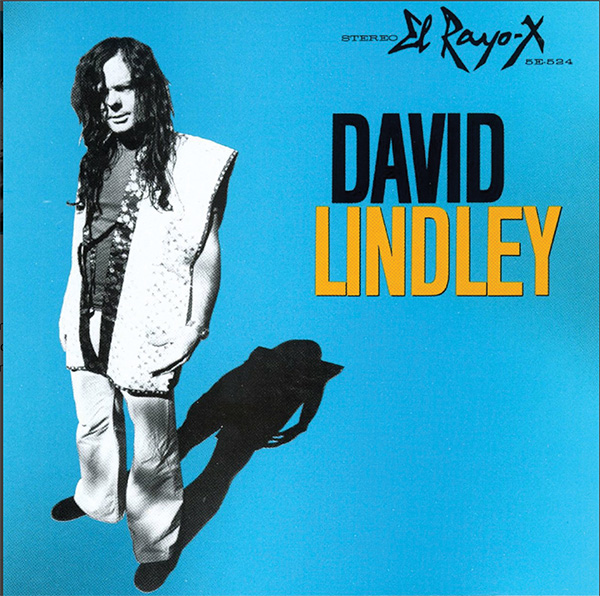


1) Ushered in by drummer Ian Wallace’s pounding uptempo tom-toms, El Rayo-X‘s third track, a canopy of “Mercury Blues,” an all-but-forgotten 1948 quantity, exhibits that this band meant enterprise from the beginning, not least on Lindley’s two blazing lap-steel solos. (Like his lifelong buddy and colleague Ry Cooder, Lindley scoured the previous for obscurities to reimagine.) A YouTube video of an all-star 1999 Red Rocks Amphitheatre efficiency of “Mercury Blues” (footnote 2) captures a beautiful reversal of the same old state of affairs: The headliners—Browne, Bonnie Raitt, Bruce Hornsby, and Shawn Colvin—are visibly delighted to face again and accompany the accompanist’s—Lindley’s—vocals and scorched-earth metal guitar (footnote 3).


2) For a hard-hitting rock drummer, Ian Wallace had an important really feel for the push and pull of reggae and was, furthermore, joined in El Rayo-X by the high quality Afro-reggae percussionist George “Ras Baboo” Pierre. Lindley’s love of reggae (which he unaccountably referred to as “insect music”) ran deep, and reggae songs account for absolutely half of El Rayo-X‘s dozen tracks, together with “Bye Bye Love” (the Everly Brothers—reggae?), “Twist and Shout” (the Isley Brothers—reggae?), and “Don’t Look Back” (the Temptations play Trenchtown?).


3) Lindley started his musical life as a 3-year-old violinist, then an achieved teenaged banjoist who gained the venerable Topanga Banjo Fiddle Contest so many occasions the judges lastly invited him to depart. As Lindley as soon as recounted to his protégé, multi-instrumentalist Ben Harper: “They instructed me, ‘Lindley, do not enter anymore.'”


Fully at residence amongst such masters as Mike Seeger and Eric Weissberg, Lindley contributes three songs to the album Feuding Banjos: Bluegrass Banjo of the Southern Mountains (out there on all the most important streaming companies), together with “Clinch Mountain Backstep” and “Bluegrass Mountain Medley,” each of which exhibit Lindley’s mastery of Scruggs-style three-finger banjo. While not on the extent of a recent grasp corresponding to Punch Brothers’ Noam Pikelny, Lindley simply polishes off the Sixteenth-note runs that outline bluegrass banjo. He frails good, too.


4) Lindley’s humor, sometimes expressed in a sotto voce, one-eyebrow-raised remark, was legendary. Occasionally he minimize free, as on “Cat Food Sandwiches,” a disquisition on the wretched delicacies served touring musicians. In a YouTube video from 2000 recorded in Basel, Switzerland, Lindley and Wally Ingram—a high quality drummer, previously of Timbuk 3—make of “Cat Food Sandwiches” a form of virtuosic “Alice’s Restaurant,” a side-splitting monolog full of spectacular enjoying.


On Lindley’s lap sits a Weissenborn, the eccentric-looking hollow-neck guitar he used for his outings on acoustic lap-steel. His fingerpicking is fascinating to look at, a perpetual-motion, high-speed windmill. But the primary attraction is the rap, which will get progressively extra revolting: “There’s opal beef, oil slick ham, thriller meat look a little bit like spam/Some type of vegetable be heat and frayed, ranch dressing, industrial grade.” Lindley yells, “Come on, Wally, let’s get us some!”


5) One of Lindley’s favourite devices was the pear-shaped, normally 11-string oud, which dates again to the eleventh century Middle East. Lindley performed the oud throughout genres and types, as he does in a 2015 YouTube video shot on the Vangarde Arts Center in Sioux City, Iowa (footnote 4). Looking grandfatherly or at the very least avuncular at 71, these well-known muttonchops gone white, Lindley sings one of many many variations of “Minglewood Blues,” first recorded in 1928 by the Memphis band Cannon’s Jug Stompers. He performs the fretless instrument with good intonation and utter sureness. (“David solely bought higher with age,” singer/songwriter/guitarist Robbie Fulks instructed me lately; footnote 5.) There’s nothing in the least jarring about Lindley’s Middle Eastern blues; reasonably, it conjures the humorous picture of a bunch of het-up Nineteen Twenties Memphians doing the Black Bottom to the previous man’s weird-looking, funky-sounding ax.


6) Ry Cooder and Lindley met as teenaged habitués of the Ash Grove folk-and-blues membership, a hub of early- and mid-’60s Los Angeles’s small however vibrant folk-music scene. (Taj Mahal, a couple of years older and equally desperate to study all he may about what was not but often known as “roots music,” additionally frequented the place.)


Lindley contributed to greater than a half-dozen Ry Cooder albums. (He’s on each observe of Cooder’s finest, 1979’s Bop Till You Drop.) In the summer time of 1995, the 2 buddies and their two musician youngsters—multi-instrumentalist Joachim Cooder and singer Rosanne Lindley—booked themselves a brief European tour, together with a July 6 live performance on the Vienna State Opera that turned the two-CD album The Cooder-Lindley Family Live on the Vienna Opera House. For the primary half of a seven-minute medley of two R&B classics, Little Milton’s “If Walls Could Talk” and Ruth Brown’s lustful come-on “5–10–15 Hours,” Cooder sings, comps, and solos on his instrument of alternative, electrical slide guitar, with Lindley unassumingly comping, most likely on his Weissenborn. Halfway by means of, Lindley sings a couple of verses, performs a brief, bracing solo, and Rosanne sashays in on “5–10–15 Hours” to wind issues up. A convivial familial night (footnote 6).


The two guitar geniuses’ partnership spanned virtually six many years. “If you want curler coasters,” Cooder stated lately, “then you definately already know one thing of what it was prefer to play with David Lindley. You needed to grasp on! But let me emphasize: I’ll keep in mind him not solely as a roller-coaster man however as a really candy man, and kindly. He as soon as gave me a Teisco gold-foil guitar pickup and stated it’d remedy my drawback with electrical guitar (footnote 7) and the extra-wide Fender Strat C neck, which could enhance my clumsy fingering. It was all very informal. Indispensable, because it turned out.”
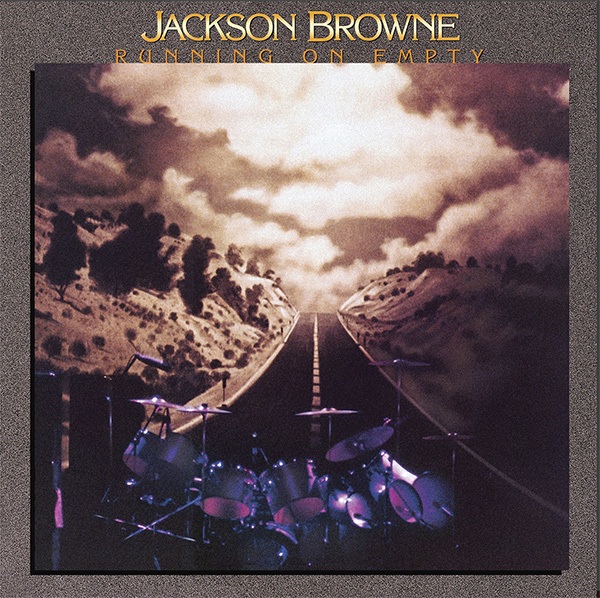


7) Lindley has virtually as lengthy and eventful a historical past with the artist with whom he’s most carefully recognized. “I performed with David for the primary time in a dressing room on the Troubadour in 1969,” Jackson Browne instructed a reporter in mid-March. “David had his fiddle with him. We began to play my track ‘These Days,’ and my world modified. His enjoying was so emotional and quick—it forged a spell over me and everybody there. It did not matter that he had by no means heard the track earlier than.”


Between 1973 and 1996, Lindley performed on each Browne album however one, from the second, For Everyman, to the eleventh (Looking East). Lindley was a daily member of Browne’s touring band till 1980, when Browne talked him into going out on his personal. (“There are occasions after I thought it was the craziest and stupidest factor I’ve ever finished,” Browne stated in 2010.) Browne coproduced, and contributed backup vocals to, the primary El Rayo-X album.


Between 1972, when his first album appeared, and the late ’70s, Browne’s star rose and commenced to descend. His fourth album, 1976’s The Pretender, hints at exhaustion and mid-’70s disillusionment (“I need to know what turned of the adjustments we waited for like to carry”). In “Running on Empty,” the exhaustion is correct there within the title.


But the power was again virtually without delay, as if willed into being (satirically, on an album in regards to the lack of power): Running on Empty, that first, title, track, kicked into fifth gear by Lindley on his Rickenbacker lap-steel. You can watch Lindley take issues into his personal palms within the vividest of the dwell “Running on Empty” movies which might be throughout YouTube. In this one (footnote 8), shot in 1978, Browne—fronting a stripped-down band: himself on vocals and rhythm guitar, Lindley, a pianist, a bassist, a drummer, and two backup singers (one the legendary Rosemary Butler)—sings his coronary heart out. Lindley’s two solos are totally completely different from these on the album; in contrast to many, if not most, rock’n’rollers, Lindley was all about improvisation, like jazz musicians a composer in actual time.


Finally, let’s leap three many years, to 2006, when Browne, now 58, and Lindley, 62, performed seven live shows in Spain, joined by percussionist Tino di Geraldo and different high Spanish musicians. On the album that captures the tour’s highlights, Love Is Strange: En Vivo con Tino (footnote 9), which was launched in 2010, Browne and Lindley attain all the way in which again to 1965, when Browne, simply 16, started his first track of observe, “These Days.” A couple of years later got here “Take It Easy,” which Browne cowrote with Glenn Frey of the yet-unborn Eagles; the track turned that band’s first hit in the summertime of ’72. On this 2006 model, Lindley performs a wealthy fiddle accompaniment, repeatedly going towards the track’s 4/4 grain with eighth-note triplet runs.


Today, when fewer and fewer musicians play precise devices, musicians like Lindley are receding into the previous, together with an immeasurably previous and wealthy custom whose diminution started in the course of the final century: the custom of creating music by hand, in actual time. Nothing will exchange the sounds Lindley made daily of his life, and that Ry Cooder (76) and Taj Mahal (81) proceed to make: the sound of fingernails, or a decide, or flesh on wound-metal strings.


Author’s Note: This article couldn’t have been written with out Nick Keil’s insights and encyclopedic musical information.


Footnote 1: The second of Lindley’s “Running on Empty” solos is nominally a duet, or one-sided dialog, with two four-bar interjections by a second guitarist, most likely Danny Kortchmar.


Footnote 2: See youtu.be/7umanpQ9sjQ. I might go as far as to recommend that it was solely Lindley’s considerably squeaky voice (and, maybe, lack of consuming ambition) that held him again from solo stardom.


Footnote 3: See youtu.be/eXHlBkg3Mzk.


Footnote 4: See youtu.be/yLq9HgGP8G8.


Footnote 5: See this month’s music characteristic on p.207.


Footnote 6: See youtu.be/ClFZbAiMSbs.


Footnote 7: The Teisco Del Ray was a Japanese-made guitar, lengthy discontinued and prized by such connoisseurs of low cost, eccentric guitars as Cooder and Lindley.


Footnote 8: See youtu.be/V4Q-447zVPY.


Footnote 9: Available on all the most important streaming companies.
Posted in Uncategorized

Among the Musical #4: Seven Sonic Scenes of David Lindley

Photo by Harald Krichel


Before providing a couple of modest observations concerning the music, life, and occasions of David Lindley, a person who by no means met a stringed instrument he could not grasp and who died on March 3, I’ll make two factors, each considerably contrarian.


In the flood of obituaries and tributes which have appeared since his demise at age 78, one reads advert nauseam that Lindley, a lifelong Los Angeles resident whose best years have been the Nineteen Seventies and ’80s, “assist[ed] form the sound of West Coast tender rock,” as Guitar Player‘s author put it. While Lindley’s influence on Jackson Browne, Linda Ronstadt, and different Southern California soft-rockers was certainly appreciable, he was equally, if no more, a firebrand, particularly on his favourite instrument, the lap-steel guitar, which he basically launched to mainstream rock. In reality, it was on a music by a type of masters of mellow, Browne’s “Running on Empty,” that Lindley gave us one among rock guitar’s iconic moments: the swooping lap-steel accompaniment and two scorching solos that one can, with out an excessive amount of exaggeration, be credited with rescuing Browne’s flagging profession (footnote 1).


And whereas it is true that Lindley’s legacy is primarily that of a sideman, he put collectively, and led for seven years, El Rayo-X, the most effective Eighties bands, whose 5 albums, particularly the eponymous 1981 debut and its ’82 follow-up, Win This Record, present simply as a lot pleasure as we speak as they did 40 years in the past.


Both of those underacknowledged Lindleys—the onerous rocker and the savvy bandleader—are on show within the first of a handful of snapshots I’ve culled from a half-century–plus of excellence on extra devices than Lindley may depend, together with, along with each conceivable form of guitar, the banjo, fiddle, mandolin, oud, bouzouki, saz, cittern, and zither. “Anything that had strings,” Lindley stated. Off we go.


1) Ushered in by drummer Ian Wallace’s pounding uptempo tom-toms, El Rayo-X‘s third music, a canopy of “Mercury Blues,” an all-but-forgotten 1948 quantity, reveals that this band meant enterprise from the beginning, not least on Lindley’s two blazing lap-steel solos. (Like his lifelong good friend and colleague Ry Cooder, Lindley scoured the previous for obscurities to reimagine.) A YouTube video of an all-star 1999 Red Rocks Amphitheatre efficiency of “Mercury Blues” (footnote 2) captures a beautiful reversal of the same old state of affairs: The headliners—Browne, Bonnie Raitt, Bruce Hornsby, and Shawn Colvin—are visibly delighted to face again and accompany the accompanist’s—Lindley’s—vocals and scorched-earth metal guitar (footnote 3).


2) For a hard-hitting rock drummer, Ian Wallace had a terrific really feel for the push and pull of reggae and was, furthermore, joined in El Rayo-X by the fantastic Afro-reggae percussionist George “Ras Baboo” Pierre. Lindley’s love of reggae (which he unaccountably referred to as “insect music”) ran deep, and reggae songs account for absolutely half of El Rayo-X‘s dozen tracks, together with “Bye Bye Love” (the Everly Brothers—reggae?), “Twist and Shout” (the Isley Brothers—reggae?), and “Don’t Look Back” (the Temptations play Trenchtown?).


3) Lindley started his musical life as a 3-year-old violinist, then an achieved teenaged banjoist who received the venerable Topanga Banjo Fiddle Contest so many occasions the judges lastly invited him to go away. As Lindley as soon as recounted to his protégé, multi-instrumentalist Ben Harper: “They instructed me, ‘Lindley, do not enter anymore.'”


Fully at residence amongst such masters as Mike Seeger and Eric Weissberg, Lindley contributes three songs to the album Feuding Banjos: Bluegrass Banjo of the Southern Mountains (accessible on all the foremost streaming providers), together with “Clinch Mountain Backstep” and “Bluegrass Mountain Medley,” each of which show Lindley’s mastery of Scruggs-style three-finger banjo. While not on the extent of a recent grasp resembling Punch Brothers’ Noam Pikelny, Lindley simply polishes off the Sixteenth-note runs that outline bluegrass banjo. He frails good, too.


4) Lindley’s humor, sometimes expressed in a sotto voce, one-eyebrow-raised remark, was legendary. Occasionally he reduce unfastened, as on “Cat Food Sandwiches,” a disquisition on the wretched delicacies served touring musicians. In a YouTube video from 2000 recorded in Basel, Switzerland, Lindley and Wally Ingram—a fantastic drummer, previously of Timbuk 3—make of “Cat Food Sandwiches” a type of virtuosic “Alice’s Restaurant,” a side-splitting monolog full of spectacular enjoying.


On Lindley’s lap sits a Weissenborn, the eccentric-looking hollow-neck guitar he used for his outings on acoustic lap-steel. His fingerpicking is fascinating to look at, a perpetual-motion, high-speed windmill. But the principle attraction is the rap, which will get progressively extra revolting: “There’s opal beef, oil slick ham, thriller meat look slightly like spam/Some form of vegetable be heat and frayed, ranch dressing, industrial grade.” Lindley yells, “Come on, Wally, let’s get us some!”


5) One of Lindley’s favourite devices was the pear-shaped, often 11-string oud, which dates again to the eleventh century Middle East. Lindley performed the oud throughout genres and kinds, as he does in a 2015 YouTube video shot on the Vangarde Arts Center in Sioux City, Iowa (footnote 4). Looking grandfatherly or at the least avuncular at 71, these well-known muttonchops gone white, Lindley sings one of many many variations of “Minglewood Blues,” first recorded in 1928 by the Memphis band Cannon’s Jug Stompers. He performs the fretless instrument with good intonation and utter sureness. (“David solely acquired higher with age,” singer/songwriter/guitarist Robbie Fulks instructed me just lately; footnote 5.) There’s nothing in the slightest degree jarring about Lindley’s Middle Eastern blues; somewhat, it conjures the humorous picture of a bunch of het-up Twenties Memphians doing the Black Bottom to the outdated man’s weird-looking, funky-sounding ax.


6) Ry Cooder and Lindley met as teenaged habitués of the Ash Grove folk-and-blues membership, a hub of early- and mid-’60s Los Angeles’s small however vibrant folk-music scene. (Taj Mahal, a couple of years older and equally desperate to be taught all he may about what was not but often known as “roots music,” additionally frequented the place.)


Lindley contributed to greater than a half-dozen Ry Cooder albums. (He’s on each monitor of Cooder’s greatest, 1979’s Bop Till You Drop.) In the summer time of 1995, the 2 buddies and their two musician kids—multi-instrumentalist Joachim Cooder and singer Rosanne Lindley—booked themselves a brief European tour, together with a July 6 live performance on the Vienna State Opera that turned the two-CD album The Cooder-Lindley Family Live on the Vienna Opera House. For the primary half of a seven-minute medley of two R&B classics, Little Milton’s “If Walls Could Talk” and Ruth Brown’s lustful come-on “5–10–15 Hours,” Cooder sings, comps, and solos on his instrument of selection, electrical slide guitar, with Lindley unassumingly comping, most likely on his Weissenborn. Halfway via, Lindley sings a couple of verses, performs a brief, bracing solo, and Rosanne sashays in on “5–10–15 Hours” to wind issues up. A convivial familial night (footnote 6).


The two guitar geniuses’ partnership spanned virtually six a long time. “If you want curler coasters,” Cooder stated just lately, “then you definately already know one thing of what it was wish to play with David Lindley. You needed to dangle on! But let me emphasize: I’ll keep in mind him not solely as a roller-coaster man however as a really candy man, and kindly. He as soon as gave me a Teisco gold-foil guitar pickup and stated it’d remedy my downside with electrical guitar (footnote 7) and the extra-wide Fender Strat C neck, which could enhance my clumsy fingering. It was all very informal. Indispensable, because it turned out.”


7) Lindley has virtually as lengthy and eventful a historical past with the artist with whom he’s most carefully recognized. “I performed with David for the primary time in a dressing room on the Troubadour in 1969,” Jackson Browne instructed a reporter in mid-March. “David had his fiddle with him. We began to play my music ‘These Days,’ and my world modified. His enjoying was so emotional and speedy—it solid a spell over me and everybody there. It did not matter that he had by no means heard the music earlier than.”


Between 1973 and 1996, Lindley performed on each Browne album however one, from the second, For Everyman, to the eleventh (Looking East). Lindley was a daily member of Browne’s touring band till 1980, when Browne talked him into going out on his personal. (“There are occasions after I thought it was the craziest and stupidest factor I’ve ever executed,” Browne stated in 2010.) Browne coproduced, and contributed backup vocals to, the primary El Rayo-X album.


Between 1972, when his first album appeared, and the late ’70s, Browne’s star rose and commenced to descend. His fourth album, 1976’s The Pretender, hints at exhaustion and mid-’70s disillusionment (“I need to know what turned of the adjustments we waited for like to carry”). In “Running on Empty,” the exhaustion is true there within the title.


But the vitality was again virtually without delay, as if willed into being (mockingly, on an album concerning the lack of vitality): Running on Empty, that first, title, music, kicked into fifth gear by Lindley on his Rickenbacker lap-steel. You can watch Lindley take issues into his personal arms within the vividest of the stay “Running on Empty” movies which are throughout YouTube. In this one (footnote 8), shot in 1978, Browne—fronting a stripped-down band: himself on vocals and rhythm guitar, Lindley, a pianist, a bassist, a drummer, and two backup singers (one the legendary Rosemary Butler)—sings his coronary heart out. Lindley’s two solos are completely completely different from these on the album; in contrast to many, if not most, rock’n’rollers, Lindley was all about improvisation, like jazz musicians a composer in actual time.


Finally, let’s leap three a long time, to 2006, when Browne, now 58, and Lindley, 62, performed seven live shows in Spain, joined by percussionist Tino di Geraldo and different prime Spanish musicians. On the album that captures the tour’s highlights, Love Is Strange: En Vivo con Tino (footnote 9), which was launched in 2010, Browne and Lindley attain all the best way again to 1965, when Browne, simply 16, started his first music of observe, “These Days.” A couple of years later got here “Take It Easy,” which Browne cowrote with Glenn Frey of the yet-unborn Eagles; the music turned that band’s first hit in the summertime of ’72. On this 2006 model, Lindley performs a wealthy fiddle accompaniment, repeatedly going in opposition to the music’s 4/4 grain with eighth-note triplet runs.


Today, when fewer and fewer musicians play precise devices, musicians like Lindley are receding into the previous, together with an immeasurably outdated and wealthy custom whose diminution started in the midst of the final century: the custom of constructing music by hand, in actual time. Nothing will change the sounds Lindley made on daily basis of his life, and that Ry Cooder (76) and Taj Mahal (81) proceed to make: the sound of fingernails, or a decide, or flesh on wound-metal strings.


Author’s Note: This article couldn’t have been written with out Nick Keil’s insights and encyclopedic musical data.


Footnote 1: The second of Lindley’s “Running on Empty” solos is nominally a duet, or one-sided dialog, with two four-bar interjections by a second guitarist, most likely Danny Kortchmar.


Footnote 2: See youtu.be/7umanpQ9sjQ. I’d go as far as to counsel that it was solely Lindley’s considerably squeaky voice (and, maybe, lack of consuming ambition) that held him again from solo stardom.


Footnote 3: See youtu.be/eXHlBkg3Mzk.


Footnote 4: See youtu.be/yLq9HgGP8G8.


Footnote 5: See this month’s music characteristic on p.207.


Footnote 6: See youtu.be/ClFZbAiMSbs.


Footnote 7: The Teisco Del Ray was a Japanese-made guitar, lengthy discontinued and prized by such connoisseurs of low cost, eccentric guitars as Cooder and Lindley.


Footnote 8: See youtu.be/V4Q-447zVPY.


Footnote 9: Available on all the foremost streaming providers.

Among The Musical #3: Footnoting Rock History with Earl Palmer

I thought-about it an thrilling discovery. It was an thrilling discovery, within the rarefied world of rock’n’roll historiography: specifically, that the nice New Orleans, later Los Angeles, drummer Earl Palmer was accountable for one of many main paradigm shifts in twentieth century American tradition: the rock’n’roll beat. The aha second got here when Earl and I have been getting ready his 1999 oral autobiography, Backbeat: Earl Palmer’s Story. Long earlier than my cantankerous interlocutor (Earl ran sizzling) unspooled his wonderful life story for me, a operating interview that swallowed the higher a part of my Nineteen Nineties, I had come to consider that Earl performed a serious position, maybe the main position, within the growth of rock’s rhythmic underpinnings, therefore of the music itself.


Walk with me by a younger Earl Palmer’s musical environment (Earl’s dates: 1924–2008). From the late Forties to the mid-’50s, rhythm & blues was the dominant pressure of African-American pop music. In the mid-to-late ’50s, R&B was pushed apart by a brand new sound: rock’n’roll. The attribute R&B rhythm was the shuffle, whose fundamental unit is 1 / 4 observe divided right into a softly performed sixteenth observe adopted by an emphatic dotted eighth observe: da-DAHH. Four such quarter notes—da-DAHH da-DAHH da-DAHH da-DAHH—make for one bar of shuffle. Ruth Brown’s 1953 smash “Mama, He Treats Your Daughter Mean” was a shuffle, as was Big Mama Thornton’s authentic ’52 tackle “Hound Dog.” So was Fats Domino’s largest hit, “Blueberry Hill” from 1956, which Earl performed on.


Compared to the shuffle’s staggered gait, the traditional rock’n’roll beat is a propulsive ahead thrust: eight eighth notes per measure, a machine-gun–like dat-dat-dat-dat-dat-dat-dat-dat. Think the Beach Boys’ “Surfin’ U.S.A.,” the Surfaris’ “Wipe Out,” or Del Shannon’s “Runaway”—paranoia set to a rock’n’roll beat.


Incidentally, the emphatic two and 4—boom-BAP-boom-BAP—which can be widespread to each the shuffle and the rock’n’roll straight-eight have a reputation: the well-known backbeat. Earl Palmer’s second innovation (which I ignored in Backbeat—the e-book—however which Jonathan Gould factors out in his wonderful 2017 biography of Otis Redding) was to show the backbeat from an thrilling kick within the pants reserved for a tune’s remaining, climactic “shout” refrain into a gradual pulse all through the tune.


Back to the straight-eight: Convinced that Earl had performed an important position in its genesis, I grilled him on the numerous mid-’50s classes he performed on, nearly all of them at New Orleans’s tiny, minimally outfitted J&M Studio, whose coterie of musicians, the so-called Studio Band, comprised rock’s first nice recording ensemble. (Earl moved to Los Angeles in 1957, the place he flourished.)


As Earl thought again over these extremely productive classes—Fats Domino, Little Richard, and Sam Cooke have been all J&M shoppers—it hit him. Got-damnit, it was throughout the ’55 and ’56 classes, for Specialty Records, by which a nearly unknown Little Richard took a blowtorch to pop music, that Earl shifted gears from the shuffle to the straight-eight. It was a very unplanned transfer, a last-ditch effort to maintain up with Richard’s manic pianistics. Let Earl inform the story:


“Most all the things I had accomplished earlier than was a shuffle or gradual triplets [the latter a staple of doo-wop tearjerkers like The Platters’ “The Great Pretender”: bop-bop-bop/bop-bop-bop/bop-bop-bop/bop-bop-bop]. Fats Domino’s early issues have been shuffles. Smiley Lewis’s issues have been shuffles. But Little Richard moved from a shuffle to that straight eighth-note feeling. You bought to recollect how Richard performed—are you able to think about matching that? I’ll let you know, the one cause I began enjoying what they arrive to name a rock’n’roll beat got here from attempting to match Richard’s proper hand. Ding-ding-ding-ding!”


A stickler may say that it was Richard, not Earl, who put the important thing within the ignition, however from the place I sat, Palmer was the massive V-8 Ford that motorvated R&B into the long run.


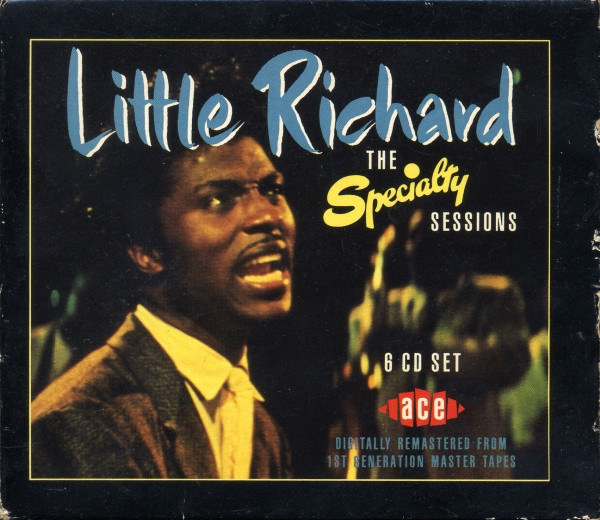
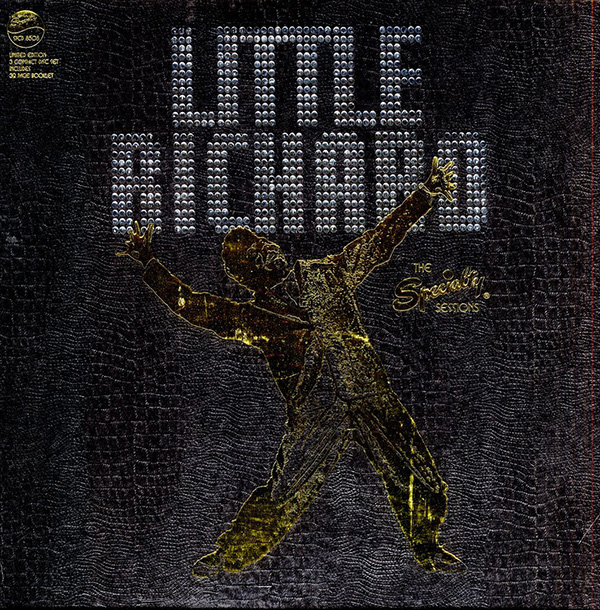
Of course, I could not simply take his phrase for it. Armed with the great 1989 field set Little Richard: The Specialty Sessions, I sat all the way down to some earnest fact-checking. Richard’s first J&M session, on September 13 and 14, 1955, yielded solely the gradual triplets of “I’m Just a Lonely Guy (All Alone)” and shuffles like “Kansas City” and “Tutti Frutti.” On the latter, Richard certainly performed a straight-eight, however the others, together with Earl, weren’t able to make the leap. Earl mentioned, “On ‘Tutti Frutti’ you’ll be able to hear me enjoying a shuffle. Listening to it now, it is easy to listen to I ought to have been enjoying that rock beat.”


I pressed on, to Richard’s subsequent J&M session, on February 7, 1956, when he lower “Long Tall Sally,” “Miss Ann,” and “Slippin’ and Slidin’.” Bingo. On “Slippin’ and Slidin’,” Earl drove the band from the very first bar with a punishing straight-eight rock’n’roll beat. Hunch confirmed: Earl Palmer invented rock & roll drumming, on February 7, 1956.


Or did he? Had anybody gotten there earlier than Earl? Talk about needle-in-the-haystack searches. Doable or not, I needed to give it a go. These have been the mid-’90s, when the document trade was spewing out CD reissues, so, hunkering down with as a lot of the music as I may get my fingers on (I really like analysis, love nothing higher), I listened, onerous, for even one occasion of that propulsive straight-eight. Nothing. I checked with the shrinking brotherhood of R&B survivors and primordial rockers, together with tenor saxophonist Red Tyler (Earl’s finest musician pal) and trumpeter/bandleader Dave Bartholomew, Earl’s first boss. Neither remembered any earlier straight-eights. Billy Vera, a contemporary rock man who went approach again, thought it attainable that some Latin music had a straight-eight pulse, however agreed that this did not actually apply to my quest. Latin music follows its personal logic, totally different from that of American pop.


I’ve at all times hewn to the scientific technique: Research a speculation till you’ve got both confirmed it or keeled over in a stupor. On the verge of the latter, I declared the case closed. Backbeat was revealed, with its privileged glimpse into the start of rock’n’roll. Earl’s account took maintain as considered one of rock’s creation myths; in his latest, authoritative biography Chuck Berry: An American Life, for example, rock historian


RJ Smith acknowledges Earl’s position, calling J&M “the birthplace of rock & roll drumming.” Earl died blissful, a Rock and Roll Hall of Fame inductee assured that he had performed a pivotal position in twentieth century American music.


The years glided by, and some months in the past, as a approach of bidding Earl Palmer a remaining goodbye, I made a decision to transcend his Backbeat account and summarize the work I’d accomplished to verify it. The consequence was the above paragraphs, which have been a pleasure to write down. Until they weren’t.


I do not know why I hadn’t accomplished this earlier, but it surely occurred to me that to be able to airtighten my case, I wanted to return to the Specialty field and hearken to the a number of pre-“Slippin’ and Slidin'” classes that Earl had not performed on. One was a demo session at Specialty’s workplace in Los Angeles, held on an unknown date in late 1955. Richard lower 9 tracks, some solo, some with an unidentified drummer. All however one, an innocuous shuffle known as “Chicken Little Baby,” stayed within the vaults. Three, because it occurred, have been early stabs at “Slippin’ and Slidin.'” On the primary, enjoying alone, Richard begins with a shuffle and step by step shifts to a straight-eight. Interesting—a harbinger of what was to come back a couple of months later. On the second, joined by the thriller drummer, Richard performs a straight-eight all through whereas the drummer settles on a form of Latin groove that verges on a straight-eight however is not the precise, full-bore bullet practice.


On the third, the drummer matches Little Richard step for step with a straight-eight beat from begin to end.


Whoops. It was not Earl Palmer who burst the chains of the shuffle. Mister Big Stuff Researcher accomplished tousled. Someone, some unknown drumnistic hero, had planted the flag on Everest earlier than Earl. Could it have been the person himself, flown out to L.A.? Not for a mere demo session. More conclusively, this was primitive, uneven drumming, not Earl’s patented steamroller groove.


Does it actually matter? If Earl Palmer hadn’t invented the rock’n’roll beat, he definitely established it, celebrated it, on a long time’ value of hits, whereas this different Joe’s innovation bought filed away. But historical past is historical past, and an emendation—a footnote—is so as. Which, if it wasn’t what I’d got down to do on this essay, is what it has was.


Do I owe it to the muse of rock historical past to enter full-bore analysis mode? Adopt heroic measures to establish that unsung pioneer? Not for what I’m getting paid. Besides, it is previous time I signed off on the lengthy Earl Palmer chapter of my life.

Among The Musical #3: Footnoting Rock History with Earl Palmer

I thought-about it an thrilling discovery. It was an thrilling discovery, within the rarefied world of rock’n’roll historiography: specifically, that the nice New Orleans, later Los Angeles, drummer Earl Palmer was chargeable for one of many main paradigm shifts in twentieth century American tradition: the rock’n’roll beat. The aha second got here when Earl and I had been making ready his 1999 oral autobiography, Backbeat: Earl Palmer’s Story. Long earlier than my cantankerous interlocutor (Earl ran scorching) unspooled his superb life story for me, a working interview that swallowed the higher a part of my Nineteen Nineties, I had come to consider that Earl performed a serious position, maybe the main position, within the improvement of rock’s rhythmic underpinnings, therefore of the music itself.


Walk with me via a younger Earl Palmer’s musical environment (Earl’s dates: 1924–2008). From the late Forties to the mid-’50s, rhythm & blues was the dominant pressure of African-American pop music. In the mid-to-late ’50s, R&B was pushed apart by a brand new sound: rock’n’roll. The attribute R&B rhythm was the shuffle, whose fundamental unit is 1 / 4 word divided right into a softly performed sixteenth word adopted by an emphatic dotted eighth word: da-DAHH. Four such quarter notes—da-DAHH da-DAHH da-DAHH da-DAHH—make for one bar of shuffle. Ruth Brown’s 1953 smash “Mama, He Treats Your Daughter Mean” was a shuffle, as was Big Mama Thornton’s unique ’52 tackle “Hound Dog.” So was Fats Domino’s largest hit, “Blueberry Hill” from 1956, which Earl performed on.


Compared to the shuffle’s staggered gait, the basic rock’n’roll beat is a propulsive ahead thrust: eight eighth notes per measure, a machine-gun–like dat-dat-dat-dat-dat-dat-dat-dat. Think the Beach Boys’ “Surfin’ U.S.A.,” the Surfaris’ “Wipe Out,” or Del Shannon’s “Runaway”—paranoia set to a rock’n’roll beat.


Incidentally, the emphatic two and 4—boom-BAP-boom-BAP—which are frequent to each the shuffle and the rock’n’roll straight-eight have a reputation: the well-known backbeat. Earl Palmer’s second innovation (which I neglected in Backbeat—the e book—however which Jonathan Gould factors out in his wonderful 2017 biography of Otis Redding) was to show the backbeat from an thrilling kick within the pants reserved for a tune’s ultimate, climactic “shout” refrain into a gradual pulse all through the tune.


Back to the straight-eight: Convinced that Earl had performed a significant position in its genesis, I grilled him on the numerous mid-’50s periods he performed on, virtually all of them at New Orleans’s tiny, minimally outfitted J&M Studio, whose coterie of musicians, the so-called Studio Band, comprised rock’s first nice recording ensemble. (Earl moved to Los Angeles in 1957, the place he flourished.)


As Earl thought again over these extremely productive periods—Fats Domino, Little Richard, and Sam Cooke had been all J&M shoppers—it hit him. Got-damnit, it was in the course of the ’55 and ’56 periods, for Specialty Records, through which a nearly unknown Little Richard took a blowtorch to pop music, that Earl shifted gears from the shuffle to the straight-eight. It was a very unplanned transfer, a last-ditch effort to maintain up with Richard’s manic pianistics. Let Earl inform the story:


“Most all the things I had performed earlier than was a shuffle or sluggish triplets [the latter a staple of doo-wop tearjerkers like The Platters’ “The Great Pretender”: bop-bop-bop/bop-bop-bop/bop-bop-bop/bop-bop-bop]. Fats Domino’s early issues had been shuffles. Smiley Lewis’s issues had been shuffles. But Little Richard moved from a shuffle to that straight eighth-note feeling. You bought to recollect how Richard performed—are you able to think about matching that? I’ll let you know, the one purpose I began taking part in what they arrive to name a rock’n’roll beat got here from attempting to match Richard’s proper hand. Ding-ding-ding-ding!”


A stickler may say that it was Richard, not Earl, who put the important thing within the ignition, however from the place I sat, Palmer was the massive V-8 Ford that motorvated R&B into the longer term.


Of course, I could not simply take his phrase for it. Armed with the fantastic 1989 field set Little Richard: The Specialty Sessions, I sat all the way down to some earnest fact-checking. Richard’s first J&M session, on September 13 and 14, 1955, yielded solely the sluggish triplets of “I’m Just a Lonely Guy (All Alone)” and shuffles like “Kansas City” and “Tutti Frutti.” On the latter, Richard certainly performed a straight-eight, however the others, together with Earl, weren’t able to make the leap. Earl stated, “On ‘Tutti Frutti’ you may hear me taking part in a shuffle. Listening to it now, it is easy to listen to I ought to have been taking part in that rock beat.”


I pressed on, to Richard’s subsequent J&M session, on February 7, 1956, when he reduce “Long Tall Sally,” “Miss Ann,” and “Slippin’ and Slidin’.” Bingo. On “Slippin’ and Slidin’,” Earl drove the band from the very first bar with a punishing straight-eight rock’n’roll beat. Hunch confirmed: Earl Palmer invented rock & roll drumming, on February 7, 1956.


Or did he? Had anybody gotten there earlier than Earl? Talk about needle-in-the-haystack searches. Doable or not, I needed to give it a go. These had been the mid-’90s, when the report trade was spewing out CD reissues, so, hunkering down with as a lot of the music as I might get my fingers on (I really like analysis, love nothing higher), I listened, arduous, for even one occasion of that propulsive straight-eight. Nothing. I checked with the shrinking brotherhood of R&B survivors and primordial rockers, together with tenor saxophonist Red Tyler (Earl’s greatest musician pal) and trumpeter/bandleader Dave Bartholomew, Earl’s first boss. Neither remembered any earlier straight-eights. Billy Vera, a contemporary rock man who went means again, thought it attainable that some Latin music had a straight-eight pulse, however agreed that this did not actually apply to my quest. Latin music follows its personal logic, totally different from that of American pop.


I’ve all the time hewn to the scientific methodology: Research a speculation till you’ve got both confirmed it or keeled over in a stupor. On the verge of the latter, I declared the case closed. Backbeat was revealed, with its privileged glimpse into the beginning of rock’n’roll. Earl’s account took maintain as certainly one of rock’s creation myths; in his current, authoritative biography Chuck Berry: An American Life, as an example, rock historian


RJ Smith acknowledges Earl’s position, calling J&M “the birthplace of rock & roll drumming.” Earl died completely satisfied, a Rock and Roll Hall of Fame inductee assured that he had performed a pivotal position in twentieth century American music.


The years glided by, and some months in the past, as a means of bidding Earl Palmer a ultimate goodbye, I made a decision to transcend his Backbeat account and summarize the work I’d performed to substantiate it. The end result was the above paragraphs, which had been a pleasure to jot down. Until they weren’t.


I do not know why I hadn’t performed this earlier, but it surely occurred to me that to be able to airtighten my case, I wanted to return to the Specialty field and take heed to the a number of pre-“Slippin’ and Slidin'” periods that Earl had not performed on. One was a demo session at Specialty’s workplace in Los Angeles, held on an unknown date in late 1955. Richard reduce 9 tracks, some solo, some with an unidentified drummer. All however one, an innocuous shuffle known as “Chicken Little Baby,” stayed within the vaults. Three, because it occurred, had been early stabs at “Slippin’ and Slidin.'” On the primary, taking part in alone, Richard begins with a shuffle and regularly shifts to a straight-eight. Interesting—a harbinger of what was to come back a couple of months later. On the second, joined by the thriller drummer, Richard performs a straight-eight right through whereas the drummer settles on a kind of Latin groove that verges on a straight-eight however is not the precise, full-bore bullet practice.


On the third, the drummer matches Little Richard step for step with a straight-eight beat from begin to end.


Whoops. It was not Earl Palmer who burst the chains of the shuffle. Mister Big Stuff Researcher performed tousled. Someone, some unknown drumnistic hero, had planted the flag on Everest earlier than Earl. Could it have been the person himself, flown out to L.A.? Not for a mere demo session. More conclusively, this was primitive, uneven drumming, not Earl’s patented steamroller groove.


Does it actually matter? If Earl Palmer hadn’t invented the rock’n’roll beat, he actually established it, celebrated it, on a long time’ price of hits, whereas this different Joe’s innovation bought filed away. But historical past is historical past, and an emendation—a footnote—is so as. Which, if it wasn’t what I’d got down to do on this essay, is what it has became.


Do I owe it to the muse of rock historical past to enter full-bore analysis mode? Adopt heroic measures to establish that unsung pioneer? Not for what I’m getting paid. Besides, it is previous time I signed off on the lengthy Earl Palmer chapter of my life.

Posted in Uncategorized

Rachael and Vilray: Carrying a Torch

As Vilray Bolles marched down Manhattan’s Second Avenue on a wet afternoon late in 2014, collaborating in an illustration in opposition to police brutality, he slipped on the moist pavement, fell onerous on his proper hand, and broke his pinky. For a guitarist, a damaged finger is usually a main, if not catastrophic, setback. But the gods had been smiling on Bolles. He was, actually, a lapsed guitarist, having all however deserted hopes of a musical profession, and the universe was giving him a nudge, not simply again into music however right into a collaboration with Rachael Price, one among up to date pop’s nice vocalists, who, when she is not singing cabaret jazz with Bolles, fronts the headlining rock band Lake Street Dive.


Rachael & Vilray have simply launched their second album collectively, I Love a Love Song!. Like its predecessor, it consists virtually solely of songs written by Vilray (footnote 1), who has a present for writing songs within the method of Cole Porter or Harold Arlen—songs composed, as John Updike put it, “in many years when Americans moved throughout the American dream.”


Born and raised in Brooklyn, the place he nonetheless lives, Vilray, 38, is “previous French American on my father’s facet,” he informed me once we spoke final fall. Vilray’s mom, who’s Nicaraguan, gave him his first guitar when he was 9. He attended Manhattan’s storied Fiorello H. LaGuardia High School for Music & Art and Performing Arts, the setting for the 1980 film musical Fame.


“High faculty is the second I found jazz,” Vilray informed me. “We had been enjoying big-band jazz for probably the most half, so I used to be doing what I’m doing on this document, which is Freddie Green–model quarter-note comping (footnote 2). I undoubtedly wasn’t aiming for virtuosity. Music for me was at all times extra about writing than guitar. Guitar is a method to an finish, the tip being songwriting. I’m not a flexible guitar participant.” Which is and is not true: Vilray is a deft, harmonically refined rhythm guitarist, a whole accompanist able to essaying the occasional solo.


“I graduated from LaGuardia by the pores and skin of my enamel. I bought my actual training at Tower Records, the place I spent all my babysitting cash. It was a whole training for me, going by AllMusic‘s jazz information, that huge thick guide of all of the jazz CDs that had been ever made, and circling issues and falling in love, particularly with sidemen. After I went by all these big-band settings, I went chronologically by the later stuff, from Bird to Pharoah Sanders, bop by onerous bop by post-bop by ’60s avantgarde.”


Vilray then attended Boston’s New England Conservatory of Music, majoring in jazz composition. That’s the place he met Price. He was selectively diligent. “I used to be very critical about chopping lessons to spend time in apply rooms, tinkering round on piano or enjoying guitar. I used to be shedding composition. But I used to be solely there for a complete of two semesters over two years. I did not come close to graduating.”


Returning to New York in 2005, he basically stop music. “I felt like I could not hack it on an financial stage.” He took an accounting job in Long Island City. “I had musician buddies who confirmed up on my doorstep and stated, ‘What’s occurring right here? You must be enjoying.’ I informed them, ‘I’m only a man with a job now.’ I used to be okay with that.”


Breaking his finger, Vilray stated, was like a divine warning shot. “It’s as if the universe was telling me, within the kindest manner attainable, ‘Your physique is a finite, breakable factor. You’d higher use it when you’ve bought it.’ In early 2015, a buddy who booked exhibits at Bar Below Rye, a tiny membership in Williamsburg, Brooklyn, informed me, ‘I’m going to guide you for a gig three months from now, so begin occupied with what you are going to play.'”


When the forged got here off, Vilray took his brother’s National resonator guitar into the Metropolitan Avenue subway station in Williamsburg, “a pleasant, reverberant area the place I might get some confidence in my singing. This was towards the tip of the lengthy period of no cellphone reception in subways, so I had an viewers. It was encouraging as hell as a result of I realized I might get throughout. Women, principally, would come as much as me crying and say, ‘My boyfriend simply left me’ or ‘I simply fell in love,’ and that the songs actually linked with them. It’s an awesome factor to have your viewers flip over each 20 minutes or much less; you’ll be able to play the identical songs time and again and actually hone them. I went after work three or 4 afternoons every week till cellphones penetrated the subway. I went from making $250 in three hours to a tenth of that. People had been in any other case engaged.”


By that point, he had performed his comeback gig. He would not bear in mind particulars, “however I believe it went high-quality. It did not make me need to by no means play one other one.” He started an informal run at Bar Below Rye, maybe two exhibits a month.


Vilray and Rachael Price had stayed in contact, particularly after Price moved to New York. “She tried to intervene, in possibly 2012, 2013,” Vilray stated. “She stated, ‘You like jazz, I like jazz, let’s play collectively.’ We did, however I used to be so rusty it simply did not go wherever. I used to be in no place to play with anyone, not to mention any individual of her caliber.”


When Price heard he was enjoying once more, she stopped by Bar Below Rye to offer ethical assist. “And that,” Vilray stated, “is how we bought began.”


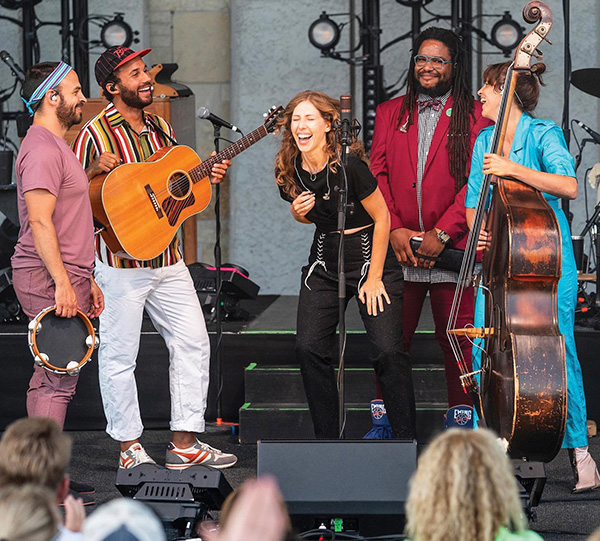
Rachel Price with Lake Street Dive


During the last decade when Vilray’s profession lay fallow, Price’s profession was gathering momentum. She and three different NEC college students based Lake Street Dive in 2004. The band scuffled till 2012, when a YouTube video of their sinuous, jazzy cowl of the Jackson 5’s “I Want You Back” went viral. Their third album, 2014’s Bad Self Portraits, went to #18 on Billboard‘s Top 200. Their fifth, Free Yourself Up, peaked at #8, by which era Lake Street Dive was headlining festivals and packing auditoriums. The band’s cardinal advantage is its extremely collective nature—5 completed musicians in a seamless mix—however Price’s thrilling alto voice and depraved onstage shimmy are the massive draw.


Price, 37, grew up within the Nashville suburb of Hendersonville, Tennessee. As just a little woman, she fell in love with Ella Fitzgerald’s voice. “From ages 5 to fifteen,” she informed me final autumn, “all I did was take heed to Ella and study her performances be aware for be aware.” She was additionally impressed by Doris Day, a topflight Nineteen Forties big-band singer earlier than she grew to become Hollywood’s cuddly housewife subsequent door.


Raised within the Baha’i Faith, which she continues to apply, Price toured the world as a baby soloist with Baha’i choirs directed by her father, himself a longtime, multifaceted musician. Several of these early performances have discovered their manner onto YouTube, they usually’re astonishing.


As an adolescent, Price studied on the Nashville Jazz Workshop, turning into intimate with present tunes and requirements. “I realized most likely 300 requirements once I was an adolescent,” she stated. “Those songs have by no means left me. It’s like studying a language in childhood.” Intent on a jazz profession, she majored in jazz voice at NEC, learning with the influential Dominique Eade. “Until I labored with Dominique, I’d been solely, actually, copying my idols,” Price stated. “Dominique helped me strip away affectations, see what was left, and construct from there.”


In 2007, Price graduated into her personal identification disaster.


“There had been only some profession paths I might see as a jazz singer. It wasn’t like within the ’30s or ’40s, when you might have a look at a lot of totally different kinds and picture your self falling into one.” As a lot as she cherished requirements, Price could not see singing them for a residing. “There wasn’t sufficient authenticity in that. I used to be fortunate to search out myself in a band the place everybody wrote unique music”—the place she invented herself in any case, as a belter able to super subtlety. Her jazz background was an incredible reward, offering her with a sonic palette that is broader, arguably, than some other rock singer right this moment.


Still, a necessity was going unmet till Price dropped in at Bar Below Rye. “Vilray’s efficiency reconnected me to jazz,” she stated. “It was a type of nights that’s actually life altering. I used to be like, ‘I do not need to do something besides sing with you on this bar for 25 individuals.’ He stated, ‘Yeah, nice,’ and we began doing exhibits, and the vibe was excellent.”


Vilray stop his day job and, due largely to Price’s star energy, the duo rose shortly to the highest of the cabaret circuit. Their first, 2019 album drew essential raves. Last November, they celebrated the second album’s launch with 4 exhibits on the ritzy Café Carlyle, the place, since 1955, Bobby Short, Eartha Kitt, Judy Collins, and others have serenaded Manhattan’s prosperous.


Footnote 1: Bolles goes by his first title professionally; it is pronounced Vill-ree.


Footnote 2: Green was the Count Basie Orchestra’s indefatigable rhythm guitarist.

Rachael and Vilray: Carrying a Torch

As Vilray Bolles marched down Manhattan’s Second Avenue on a wet afternoon late in 2014, taking part in an indication in opposition to police brutality, he slipped on the moist pavement, fell exhausting on his proper hand, and broke his pinky. For a guitarist, a damaged finger is usually a main, if not catastrophic, setback. But the gods had been smiling on Bolles. He was, in truth, a lapsed guitarist, having all however deserted hopes of a musical profession, and the universe was giving him a nudge, not simply again into music however right into a collaboration with Rachael Price, one in every of up to date pop’s nice vocalists, who, when she is not singing cabaret jazz with Bolles, fronts the headlining rock band Lake Street Dive.


Rachael & Vilray have simply launched their second album collectively, I Love a Love Song!. Like its predecessor, it consists virtually totally of songs written by Vilray (footnote 1), who has a present for writing songs within the method of Cole Porter or Harold Arlen—songs composed, as John Updike put it, “in a long time when Americans moved inside the American dream.”


Born and raised in Brooklyn, the place he nonetheless lives, Vilray, 38, is “outdated French American on my father’s facet,” he informed me after we spoke final fall. Vilray’s mom, who’s Nicaraguan, gave him his first guitar when he was 9. He attended Manhattan’s storied Fiorello H. LaGuardia High School for Music & Art and Performing Arts, the setting for the 1980 film musical Fame.


“High faculty is the second I found jazz,” Vilray informed me. “We had been taking part in big-band jazz for essentially the most half, so I used to be doing what I’m doing on this file, which is Freddie Green–type quarter-note comping (footnote 2). I undoubtedly wasn’t aiming for virtuosity. Music for me was at all times extra about writing than guitar. Guitar is a way to an finish, the top being songwriting. I’m not a flexible guitar participant.” Which is and is not true: Vilray is a deft, harmonically refined rhythm guitarist, an entire accompanist able to essaying the occasional solo.


“I graduated from LaGuardia by the pores and skin of my enamel. I bought my actual training at Tower Records, the place I spent all my babysitting cash. It was an entire training for me, going by AllMusic‘s jazz information, that large thick e-book of all of the jazz CDs that had been ever made, and circling issues and falling in love, particularly with sidemen. After I went by all these big-band settings, I went chronologically by the later stuff, from Bird to Pharoah Sanders, bop by exhausting bop by post-bop by ’60s avantgarde.”


Vilray then attended Boston’s New England Conservatory of Music, majoring in jazz composition. That’s the place he met Price. He was selectively diligent. “I used to be very critical about chopping courses to spend time in observe rooms, tinkering round on piano or taking part in guitar. I used to be shedding composition. But I used to be solely there for a complete of two semesters over two years. I did not come close to graduating.”


Returning to New York in 2005, he basically give up music. “I felt like I could not hack it on an financial stage.” He took an accounting job in Long Island City. “I had musician buddies who confirmed up on my doorstep and mentioned, ‘What’s happening right here? You must be taking part in.’ I informed them, ‘I’m only a man with a job now.’ I used to be okay with that.”


Breaking his finger, Vilray mentioned, was like a divine warning shot. “It’s as if the universe was telling me, within the kindest means potential, ‘Your physique is a finite, breakable factor. You’d higher use it when you’ve bought it.’ In early 2015, a buddy who booked exhibits at Bar Below Rye, a tiny membership in Williamsburg, Brooklyn, informed me, ‘I’m going to e-book you for a gig three months from now, so begin interested by what you are going to play.'”


When the solid got here off, Vilray took his brother’s National resonator guitar into the Metropolitan Avenue subway station in Williamsburg, “a pleasant, reverberant house the place I may get some confidence in my singing. This was towards the top of the lengthy period of no cellphone reception in subways, so I had an viewers. It was encouraging as hell as a result of I discovered I may get throughout. Women, principally, would come as much as me crying and say, ‘My boyfriend simply left me’ or ‘I simply fell in love,’ and that the songs actually related with them. It’s a fantastic factor to have your viewers flip over each 20 minutes or much less; you’ll be able to play the identical songs time and again and actually hone them. I went after work three or 4 afternoons per week till cellphones penetrated the subway. I went from making $250 in three hours to a tenth of that. People had been in any other case engaged.”


By that point, he had performed his comeback gig. He does not bear in mind particulars, “however I feel it went tremendous. It did not make me wish to by no means play one other one.” He started an off-the-cuff run at Bar Below Rye, maybe two exhibits a month.


Vilray and Rachael Price had stayed in contact, particularly after Price moved to New York. “She tried to intervene, in perhaps 2012, 2013,” Vilray mentioned. “She mentioned, ‘You like jazz, I like jazz, let’s play collectively.’ We did, however I used to be so rusty it simply did not go anyplace. I used to be in no place to play with anyone, not to mention any individual of her caliber.”


When Price heard he was taking part in once more, she stopped by Bar Below Rye to offer ethical help. “And that,” Vilray mentioned, “is how we bought began.”


Rachel Price with Lake Street Dive


During the last decade when Vilray’s profession lay fallow, Price’s profession was gathering momentum. She and three different NEC college students based Lake Street Dive in 2004. The band scuffled till 2012, when a YouTube video of their sinuous, jazzy cowl of the Jackson 5’s “I Want You Back” went viral. Their third album, 2014’s Bad Self Portraits, went to #18 on Billboard‘s Top 200. Their fifth, Free Yourself Up, peaked at #8, by which era Lake Street Dive was headlining festivals and packing auditoriums. The band’s cardinal advantage is its extremely collective nature—5 completed musicians in a seamless mix—however Price’s thrilling alto voice and depraved onstage shimmy are the large draw.


Price, 37, grew up within the Nashville suburb of Hendersonville, Tennessee. As somewhat lady, she fell in love with Ella Fitzgerald’s voice. “From ages 5 to fifteen,” she informed me final autumn, “all I did was hearken to Ella and study her performances observe for observe.” She was additionally impressed by Doris Day, a topflight Forties big-band singer earlier than she grew to become Hollywood’s cuddly housewife subsequent door.


Raised within the Baha’i Faith, which she continues to observe, Price toured the world as a toddler soloist with Baha’i choirs directed by her father, himself a longtime, multifaceted musician. Several of these early performances have discovered their means onto YouTube, they usually’re astonishing.


As a young person, Price studied on the Nashville Jazz Workshop, turning into intimate with present tunes and requirements. “I discovered in all probability 300 requirements after I was a young person,” she mentioned. “Those songs have by no means left me. It’s like studying a language in childhood.” Intent on a jazz profession, she majored in jazz voice at NEC, learning with the influential Dominique Eade. “Until I labored with Dominique, I’d been solely, actually, copying my idols,” Price mentioned. “Dominique helped me strip away affectations, see what was left, and construct from there.”


In 2007, Price graduated into her personal identification disaster.


“There had been only some profession paths I may see as a jazz singer. It wasn’t like within the ’30s or ’40s, when you can have a look at a number of completely different types and picture your self falling into one.” As a lot as she liked requirements, Price could not see singing them for a dwelling. “There wasn’t sufficient authenticity in that. I used to be fortunate to seek out myself in a band the place everybody wrote unique music”—the place she invented herself in any case, as a belter able to large subtlety. Her jazz background was an incredible present, offering her with a sonic palette that is broader, arguably, than every other rock singer right this moment.


Still, a necessity was going unmet till Price dropped in at Bar Below Rye. “Vilray’s efficiency reconnected me to jazz,” she mentioned. “It was a type of nights that’s actually life altering. I used to be like, ‘I do not wish to do something besides sing with you on this bar for 25 folks.’ He mentioned, ‘Yeah, nice,’ and we began doing exhibits, and the vibe was good.”


Vilray give up his day job and, due largely to Price’s star energy, the duo rose rapidly to the highest of the cabaret circuit. Their first, 2019 album drew vital raves. Last November, they celebrated the second album’s launch with 4 exhibits on the ritzy Café Carlyle, the place, since 1955, Bobby Short, Eartha Kitt, Judy Collins, and others have serenaded Manhattan’s prosperous.


Footnote 1: Bolles goes by his first title professionally; it is pronounced Vill-ree.


Footnote 2: Green was the Count Basie Orchestra’s indefatigable rhythm guitarist.

Rachael and Vilray: Carrying a Torch

As Vilray Bolles marched down Manhattan’s Second Avenue on a wet afternoon late in 2014, taking part in an illustration towards police brutality, he slipped on the moist pavement, fell onerous on his proper hand, and broke his pinky. For a guitarist, a damaged finger generally is a main, if not catastrophic, setback. But the gods have been smiling on Bolles. He was, in reality, a lapsed guitarist, having all however deserted hopes of a musical profession, and the universe was giving him a nudge, not simply again into music however right into a collaboration with Rachael Price, considered one of modern pop’s nice vocalists, who, when she is not singing cabaret jazz with Bolles, fronts the headlining rock band Lake Street Dive.


Rachael & Vilray have simply launched their second album collectively, I Love a Love Song!. Like its predecessor, it consists virtually completely of songs written by Vilray (footnote 1), who has a present for writing songs within the method of Cole Porter or Harold Arlen—songs composed, as John Updike put it, “in many years when Americans moved inside the American dream.”


Born and raised in Brooklyn, the place he nonetheless lives, Vilray, 38, is “previous French American on my father’s aspect,” he informed me after we spoke final fall. Vilray’s mom, who’s Nicaraguan, gave him his first guitar when he was 9. He attended Manhattan’s storied Fiorello H. LaGuardia High School for Music & Art and Performing Arts, the setting for the 1980 film musical Fame.


“High faculty is the second I found jazz,” Vilray informed me. “We have been taking part in big-band jazz for essentially the most half, so I used to be doing what I’m doing on this file, which is Freddie Green–fashion quarter-note comping (footnote 2). I positively wasn’t aiming for virtuosity. Music for me was all the time extra about writing than guitar. Guitar is a way to an finish, the tip being songwriting. I’m not a flexible guitar participant.” Which is and is not true: Vilray is a deft, harmonically subtle rhythm guitarist, a whole accompanist able to essaying the occasional solo.


“I graduated from LaGuardia by the pores and skin of my tooth. I obtained my actual schooling at Tower Records, the place I spent all my babysitting cash. It was a whole schooling for me, going by way of AllMusic‘s jazz information, that massive thick e-book of all of the jazz CDs that have been ever made, and circling issues and falling in love, particularly with sidemen. After I went by way of all these big-band settings, I went chronologically by way of the later stuff, from Bird to Pharoah Sanders, bop by way of onerous bop by way of post-bop by way of ’60s avantgarde.”


Vilray then attended Boston’s New England Conservatory of Music, majoring in jazz composition. That’s the place he met Price. He was selectively diligent. “I used to be very critical about chopping courses to spend time in observe rooms, tinkering round on piano or taking part in guitar. I used to be shedding composition. But I used to be solely there for a complete of two semesters over two years. I did not come close to graduating.”


Returning to New York in 2005, he primarily give up music. “I felt like I could not hack it on an financial stage.” He took an accounting job in Long Island City. “I had musician buddies who confirmed up on my doorstep and mentioned, ‘What’s occurring right here? You needs to be taking part in.’ I informed them, ‘I’m only a man with a job now.’ I used to be okay with that.”


Breaking his finger, Vilray mentioned, was like a divine warning shot. “It’s as if the universe was telling me, within the kindest approach attainable, ‘Your physique is a finite, breakable factor. You’d higher use it when you’ve obtained it.’ In early 2015, a good friend who booked reveals at Bar Below Rye, a tiny membership in Williamsburg, Brooklyn, informed me, ‘I’m going to e-book you for a gig three months from now, so begin fascinated with what you are going to play.'”


When the forged got here off, Vilray took his brother’s National resonator guitar into the Metropolitan Avenue subway station in Williamsburg, “a pleasant, reverberant house the place I might get some confidence in my singing. This was towards the tip of the lengthy period of no cellphone reception in subways, so I had an viewers. It was encouraging as hell as a result of I discovered I might get throughout. Women, largely, would come as much as me crying and say, ‘My boyfriend simply left me’ or ‘I simply fell in love,’ and that the songs actually related with them. It’s an excellent factor to have your viewers flip over each 20 minutes or much less; you may play the identical songs again and again and actually hone them. I went after work three or 4 afternoons per week till cellphones penetrated the subway. I went from making $250 in three hours to a tenth of that. People have been in any other case engaged.”


By that point, he had performed his comeback gig. He does not keep in mind particulars, “however I feel it went wonderful. It did not make me wish to by no means play one other one.” He started an informal run at Bar Below Rye, maybe two reveals a month.


Vilray and Rachael Price had stayed in contact, particularly after Price moved to New York. “She tried to intervene, in possibly 2012, 2013,” Vilray mentioned. “She mentioned, ‘You like jazz, I like jazz, let’s play collectively.’ We did, however I used to be so rusty it simply did not go wherever. I used to be in no place to play with anyone, not to mention someone of her caliber.”


When Price heard he was taking part in once more, she stopped by Bar Below Rye to supply ethical help. “And that,” Vilray mentioned, “is how we obtained began.”


Rachel Price with Lake Street Dive


During the last decade when Vilray’s profession lay fallow, Price’s profession was gathering momentum. She and three different NEC college students based Lake Street Dive in 2004. The band scuffled till 2012, when a YouTube video of their sinuous, jazzy cowl of the Jackson 5’s “I Want You Back” went viral. Their third album, 2014’s Bad Self Portraits, went to #18 on Billboard‘s Top 200. Their fifth, Free Yourself Up, peaked at #8, by which era Lake Street Dive was headlining festivals and packing auditoriums. The band’s cardinal advantage is its extremely collective nature—5 achieved musicians in a seamless mix—however Price’s thrilling alto voice and depraved onstage shimmy are the large draw.


Price, 37, grew up within the Nashville suburb of Hendersonville, Tennessee. As slightly woman, she fell in love with Ella Fitzgerald’s voice. “From ages 5 to fifteen,” she informed me final autumn, “all I did was hearken to Ella and study her performances notice for notice.” She was additionally impressed by Doris Day, a topflight Nineteen Forties big-band singer earlier than she grew to become Hollywood’s cuddly housewife subsequent door.


Raised within the Baha’i Faith, which she continues to observe, Price toured the world as a baby soloist with Baha’i choirs directed by her father, himself a longtime, multifaceted musician. Several of these early performances have discovered their approach onto YouTube, they usually’re astonishing.


As a teen, Price studied on the Nashville Jazz Workshop, changing into intimate with present tunes and requirements. “I discovered most likely 300 requirements once I was a teen,” she mentioned. “Those songs have by no means left me. It’s like studying a language in childhood.” Intent on a jazz profession, she majored in jazz voice at NEC, learning with the influential Dominique Eade. “Until I labored with Dominique, I’d been solely, actually, copying my idols,” Price mentioned. “Dominique helped me strip away affectations, see what was left, and construct from there.”


In 2007, Price graduated into her personal id disaster.


“There have been only some profession paths I might see as a jazz singer. It wasn’t like within the ’30s or ’40s, when you might have a look at a number of completely different kinds and picture your self falling into one.” As a lot as she liked requirements, Price could not see singing them for a residing. “There wasn’t sufficient authenticity in that. I used to be fortunate to seek out myself in a band the place everybody wrote authentic music”—the place she invented herself in spite of everything, as a belter able to great subtlety. Her jazz background was an incredible present, offering her with a sonic palette that is broader, arguably, than every other rock singer at present.


Still, a necessity was going unmet till Price dropped in at Bar Below Rye. “Vilray’s efficiency reconnected me to jazz,” she mentioned. “It was a kind of nights that’s actually life altering. I used to be like, ‘I do not wish to do something besides sing with you on this bar for 25 individuals.’ He mentioned, ‘Yeah, nice,’ and we began doing reveals, and the vibe was good.”


Vilray give up his day job and, due largely to Price’s star energy, the duo rose rapidly to the highest of the cabaret circuit. Their first, 2019 album drew important raves. Last November, they celebrated the second album’s launch with 4 reveals on the ritzy Café Carlyle, the place, since 1955, Bobby Short, Eartha Kitt, Judy Collins, and others have serenaded Manhattan’s prosperous.


Footnote 1: Bolles goes by his first title professionally; it is pronounced Vill-ree.


Footnote 2: Green was the Count Basie Orchestra’s indefatigable rhythm guitarist.

Posted in Uncategorized

Among the Musical #2: Beyoncé, Jay-Z, and Albert Murray

Three or four years ago, coming back from hip surgery, I put in a stint of physical therapy. The assistant trainer, a 24-year-old named Caitlin, was a big pop music fan, as am I, although, to borrow from one of Hank Williams Jr.’s songs about his daddy, Caitlin’s kind of pop and mine ain’t exactly the same.


One afternoon at Procore Physical Therapy, the talk turned to Beyoncé and Jay-Z’s video, shot in the Louvre, for their 2018 collaborative single “Apeshit,” released under their marital name, the Carters. Caitlin didn’t bat an eyelash at the idea of pop music’s power couple posing themselves and their dancers in front of some of Western art’s signal achievements, including the Mona Lisa, except to think that it was a cool idea.


To Caitlin, the Carters’ ouevre, solo or as a duo, is entirely on a par with da Vinci’s. To me, Caitlin’s thinking exemplified a disturbing, growing refusal to distinguish between levels of aesthetic experience. Their terrific chops notwithstanding, Beyoncé and Jay-Z are essentially (I didn’t say entirely) a commercial enterprise that designs and constantly retrofits its products to make as much money as possible. The Mona Lisa is … not that. The Mona Lisa‘s value, no matter how many hundreds of millions of dollars or more the painting would bring on today’s insanely inflated art market (Jay-Z, ever the shrewd investor, is reportedly an avid art collector), can’t be quantitatively measured. Its value is in the serene, at bottom ineffable, lift it provides the informed viewer. In da Vinci, phenomenal genius intersected with intimate familiarity with millennia of richly woven tradition to create works that have resonated, and will, across centuries.


I tried to convey to Caitlin, though I was so worked up I made a mess of it, how, to me, putting Beyoncé and Jay-Z on the same aesthetic level as da Vinci was infuriating, another token of our long, downhill cultural slide.


I had as much chance of getting through to Caitlin as I had of doing 50 situps fast. She gave me a look of disgust and said, “Well, I guess you and I have nothing to talk about.” From then on, we stuck to leg lifts. But the episode lingered, finally prompting me to sit down and try to clarify my thoughts about the varieties of artistic achievement and aesthetic experience.


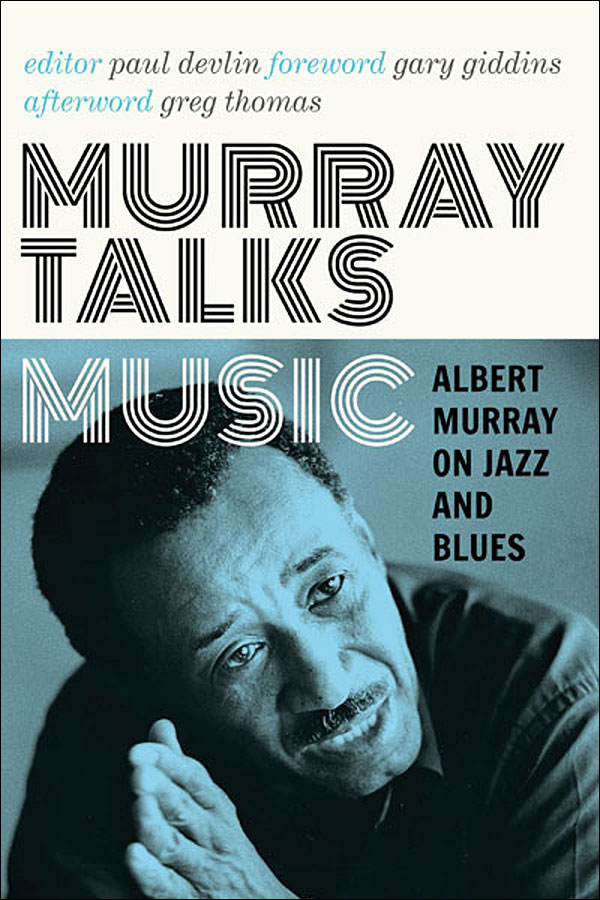
The only mentor I’ve ever had was novelist and essayist Albert Murray, in whose book-lined Harlem living room I spent many Saturday afternoons in the mid-to-late ’90s. In his long, productive life—he died, at 97, in 2013—Murray wrote deeply and influentially about music, especially jazz. (See Stomping the Blues, his take-no-prisoners overhaul of jazz criticism—hell, aesthetic theory, period.)


123amo.book


No populist, Murray made no bones about establishing an aesthetic hierarchy. “Art,” he told me in one of our first conversations, “can take place on three levels. There’s the folk level”: the Guthriesque strummer, with his/her three chords and six-note melodies. “There’s the pop level,” he continued, “which has the widest appeal, but its bane is ephemerality.” That would be Taylor Swift, Phil Collins, the Carters. “The highest level,” embracing Faulkner, Cezanne, or Murray’s hero, Duke Ellington, “is fine art. That’s the ultimate extension, elaboration, and refinement.” Those three words were Murray’s mantra. The more skillfully an artist extends, elaborates, and refines a work’s basic theme, the more profound—the finer—is his or her art.


Murray’s system is too rigidly constructed. Robert Johnson, whom Murray scorned, was a folk artist who broke through repeatedly to high art. When the great Mississippi Delta bluesman wrote, in “Me and the Devil Blues,” that “me and the Devil was walkin’ side by side,” he was using a metaphor, a beautifully terse image, to give listeners a glimpse into his conflicted self, equally capable of good and evil. The guitar solo with which Jimi Hendrix, pop flotsam to Murray, closes “Bold as Love” (from 1:49 on) is a gorgeous, stately, ennobling melody that’s always sounded to me like something Bach might have written. Aretha, with her 20 #1 R&B hits, was a pop singer. And a fine artist, whose gospel album Amazing Grace (her biggest seller) is as sublime a religious work as any of Mozart’s.


But despite our many disagreements, I will go down waving Albert Murray’s flag. Make no mistake, there is indeed an aesthetic hierarchy. All art is not equal. Lester Young’s tenor saxophone solo on Billie Holiday’s 1939 release “You’re a Lucky Guy”—just one chorus, 27 seconds in which Prez gallantly shrugs off his many cares—is on a higher level of grace, sly wit, and harmonic sophistication, acquired over thousands of nights of hard work on American bandstands, than anything either Carter will ever create.


Is it a question of better or worse? That’s a toughie. One can certainly say that some art requires a high level of sophistication, which not every listener/viewer/reader achieves, to fully absorb. What I am not doing is denigrating aesthetic experiences of lesser extension, elaboration, and refinement. I’ve been deeply affected by Howlin’ Wolf’s “Moanin’ at Midnight” since I was 12. It makes my hair stand on end. Does it require a high level of sophistication to fully absorb? It does not. But it is one powerful haunting.


Actually, “Apeshit” represents a cultural advance for Bey and Jay. They’d posed once before in front of the Mona Lisa, in a viral 2014 selfie in which they stood, hogging the frame, their backs to La Gioconda. What chutzpah. This time around, the final shot is of the pair turning toward the painting and, for five seconds (that’s a long time in a music video), quietly taking it in. Of course the Carters belong in the same room as a Leonardo: as viewers in search of enlightenment.

Posted in Uncategorized