Author Archives: Will Pritchard

Deep beneath the streets of London, musical wax cylinders reveal lost histories

Will Pritchard speaks with Adam Tovell and Isobel Clouter at the British Library about their wax cylinder archival project, True Echoes.

“Just imagine it’s the most expensive toilet roll in the world.”

Adam Tovell, the British Library’s head of technical services and processing, is talking through the necessarily delicate process of lifting a hundred-year-old phonograph cylinder from the slatted cardboard box that houses it.

We’re in the Sound Archive, in the labyrinthine basement of the British Library, and the soft wax that coats each cylinder, holding its light grooves, isn’t the only cause for care: these hollow tubes — which, to give Tovell his dues, do resemble a loo roll — contain some of the earliest sound recordings ever made. Replacement is not an option.
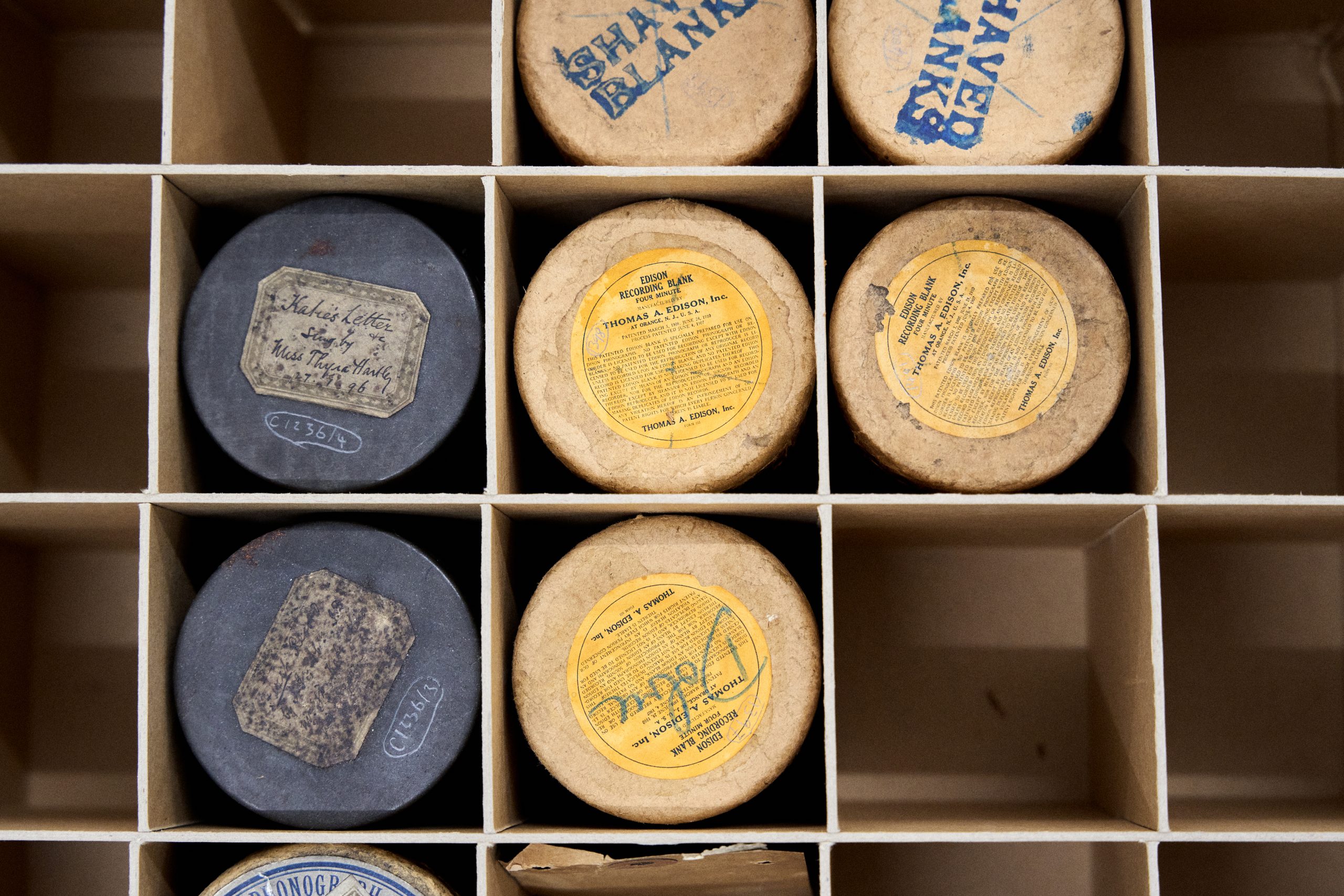
Photo credit: Will Hearle

Above us, the occasional rumble of Victoria Line carriages cuts through the gentle hum of air conditioning that keeps the basement’s temperature within precise parameters of 16-20°C, and the humidity stable around the 50% mark. The lighting—soft white, brand new LEDs, zero UV emissions—flicks on as you reach each aisle.

“Because these cylinders have wax within them, including beeswax and other organic materials,” Tovell explains, gingerly rotating one blotchy, whitened example, “they are fragile and susceptible to humidity, which would encourage mould growth.” Mould, Tovell says, “literally eats away at the recording.” And these particular recordings, gathered from across Oceania over a period of 16 years between 1898 and 1924, contain not just sound, but history itself.
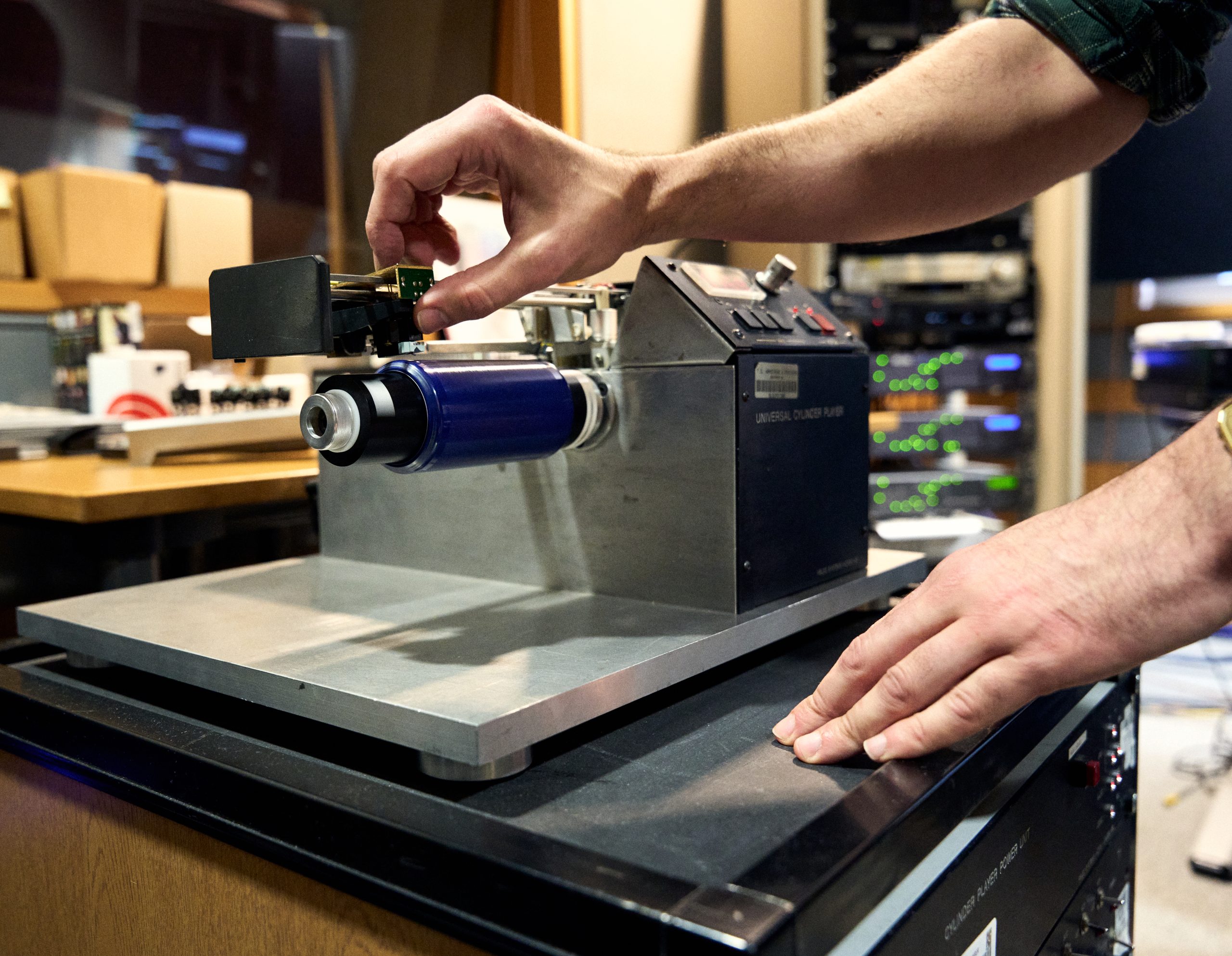
Photo credit: Will Hearle

The process of digitising, labelling, and reconnecting the recordings with the places they were first made—from the villages of Simbo Island in the Solomons, to the outlying regions of Vanuatu, Papua New Guinea, and the earthy flecks of the Torres Strait—is uncovering musical cultures and oral traditions that otherwise risk being lost to the passage of time. Through the combined efforts of researchers based in the UK, Australia, Vanuatu, Papua New Guinea, and the Solomon Islands, under the broader title of True Echoes (the name of this ground-breaking, three-year project), the disparate threads of history are being retwined.
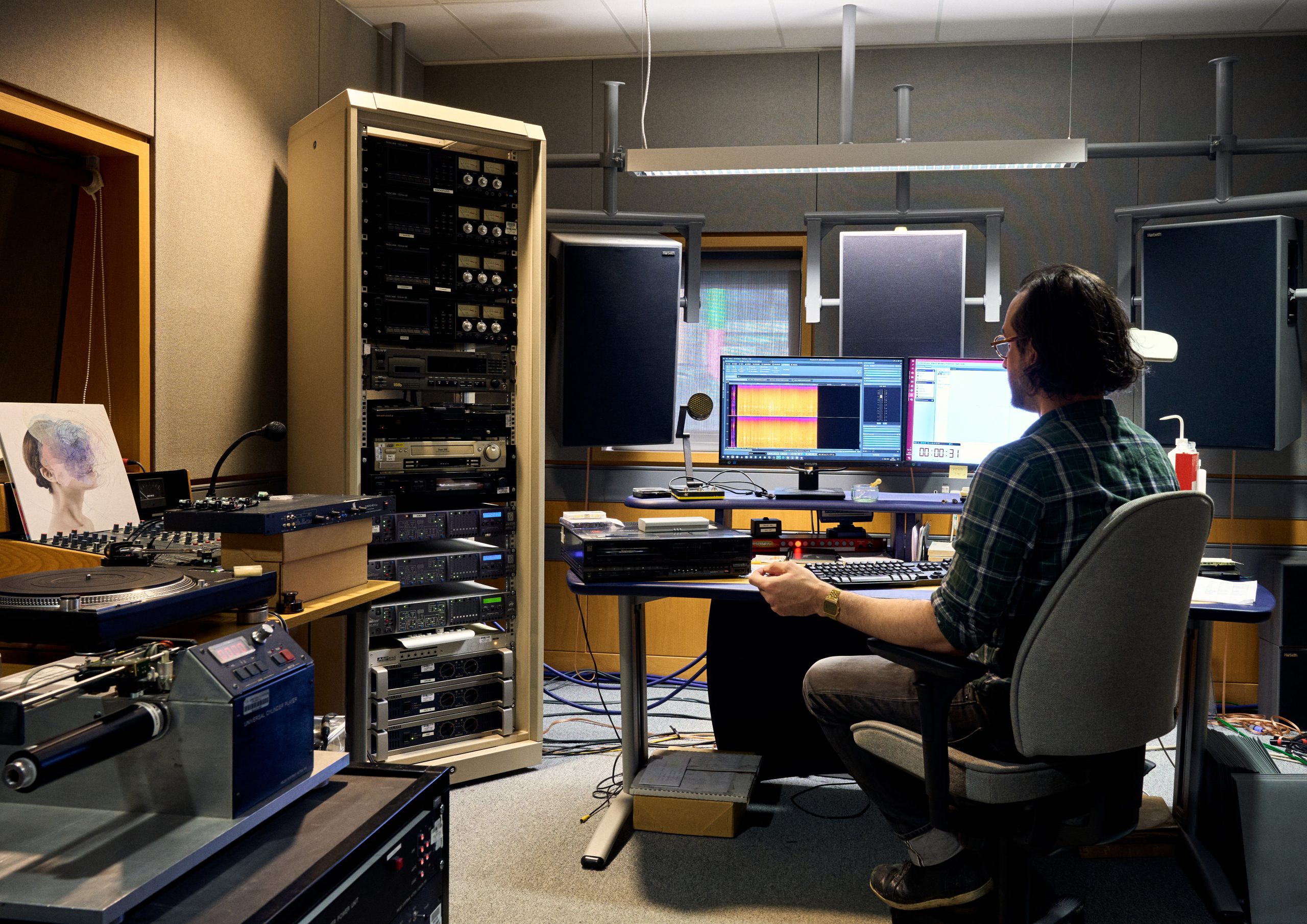
Photo credit: Will Hearle

In all, the True Echoes project catalogues 266 total tubes, with 253 recordings pulled from the wax. They span stories, songs, dance performances, and speech: a naval band sings in the distance on one, women harmonise a three-part polyphony on another; there are flute duets named for local birds, and panpipe solos played through lengths of bamboo. Some are songs welcoming the new year, others offer warnings; ditties about canoes, and, of course, strains made for dancing. The results offer a varied and distinct glimpse of musical, archipelago life in the South Pacific. All are underpinned by the rhythmic thrum of each cylinder turning on the Library’s Pelec Systems Universal Cylinder Player, converting century-old memories into stretches of an orange and yellow waveform on the studio’s computer monitor.
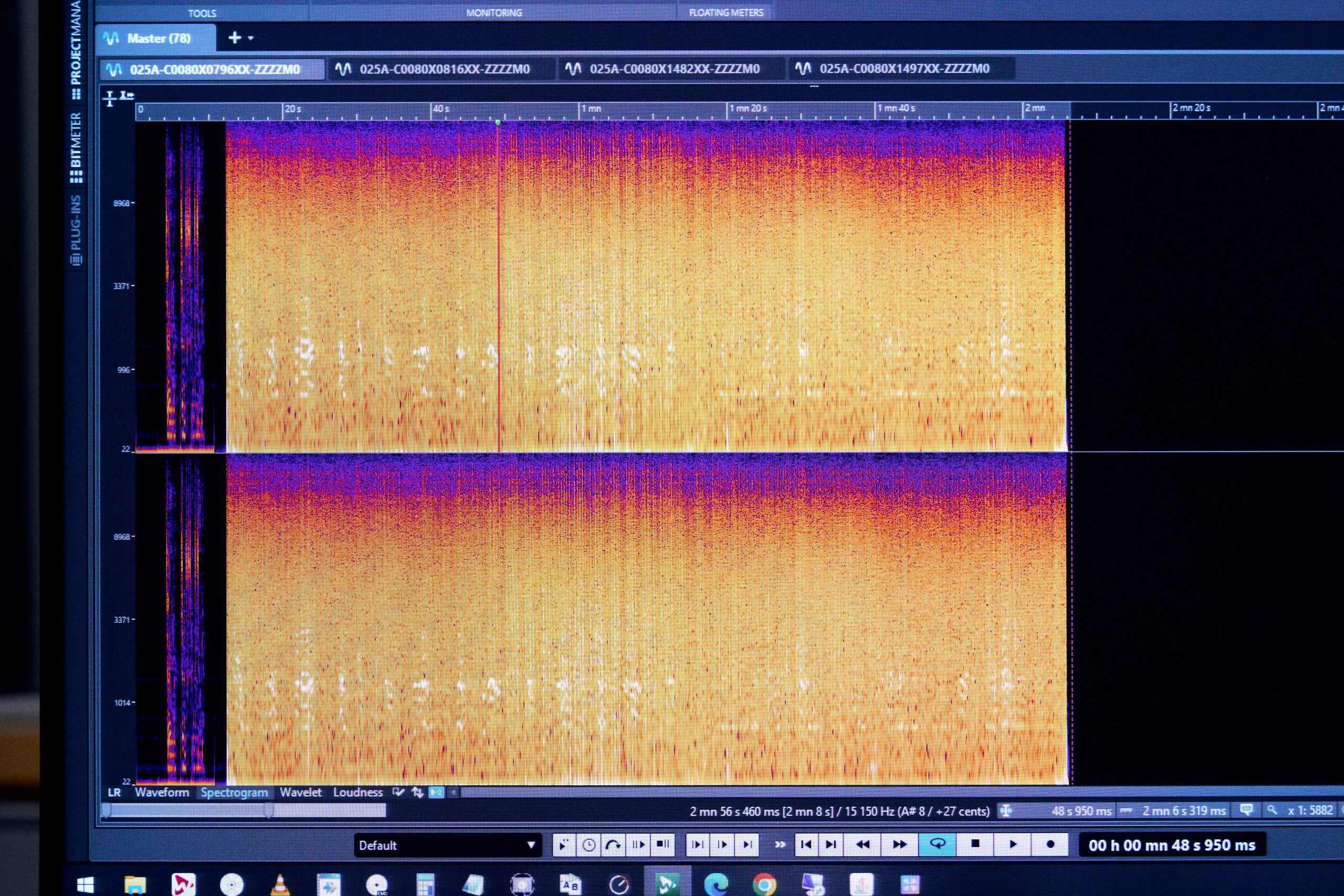
Photo credit: Will Hearle

Digitising the recordings has been a painstaking process. The cylinders, Tovell explains, sit at the apex of concern when it comes to both physical degradation (the creep of mould, for instance) and technological obsolescence (having access to the equipment needed to play or copy the recordings). Most of these digital copies were made in the 1990s, when the Universal Cylinder Player, one of just a handful that still exists worldwide, with its chunky diamond styli, was considered a cutting-edge piece of kit. The Library is currently purchasing new gear that will add capabilities such as laser reading, allowing engineers to work on converting broken or damaged cylinders and gleaning more from the recordings already ripped using the existing system.

Photo credit: Will Hearle

Because the cylinder recordings were made using analogue, hand-cranked recording equipment, there are speed variations to contend with when playing them back. Recordists would use a tuning fork to give the starting note, so playback speed can be matched by lining up to the correct tone — or as close as possible: there’s nothing as simple as a choice between 33 1/3 and 45rpm here. Then, it’s a case of studiously adjusting the player’s tone arm to account for the variable depth of the grooves on each cylinder as playback progresses.

For quieter recordings, often those captured from afar, the grooves are barely visible, and the voices hardly audible. The inherent fragility of the soft wax coating (early commercial cylinders were in fact advertised as reusable, with outer layers able to be shaved off and written over as many as 100 times) only serves to raise the stakes: you only get a few shots at it before the risk of doing irreparable damage becomes too high.

Once digitised, the files are sifted and cleaned. They’re labelled and then meticulously analysed in a process that Isobel Clouter, curator of world and traditional music at the Library, as well as True Echoes’ principal investigator, likens to archaeology—just with fewer brushes, or bones. Working directly with partners in the Oceanic region, the goal is to link past with present.
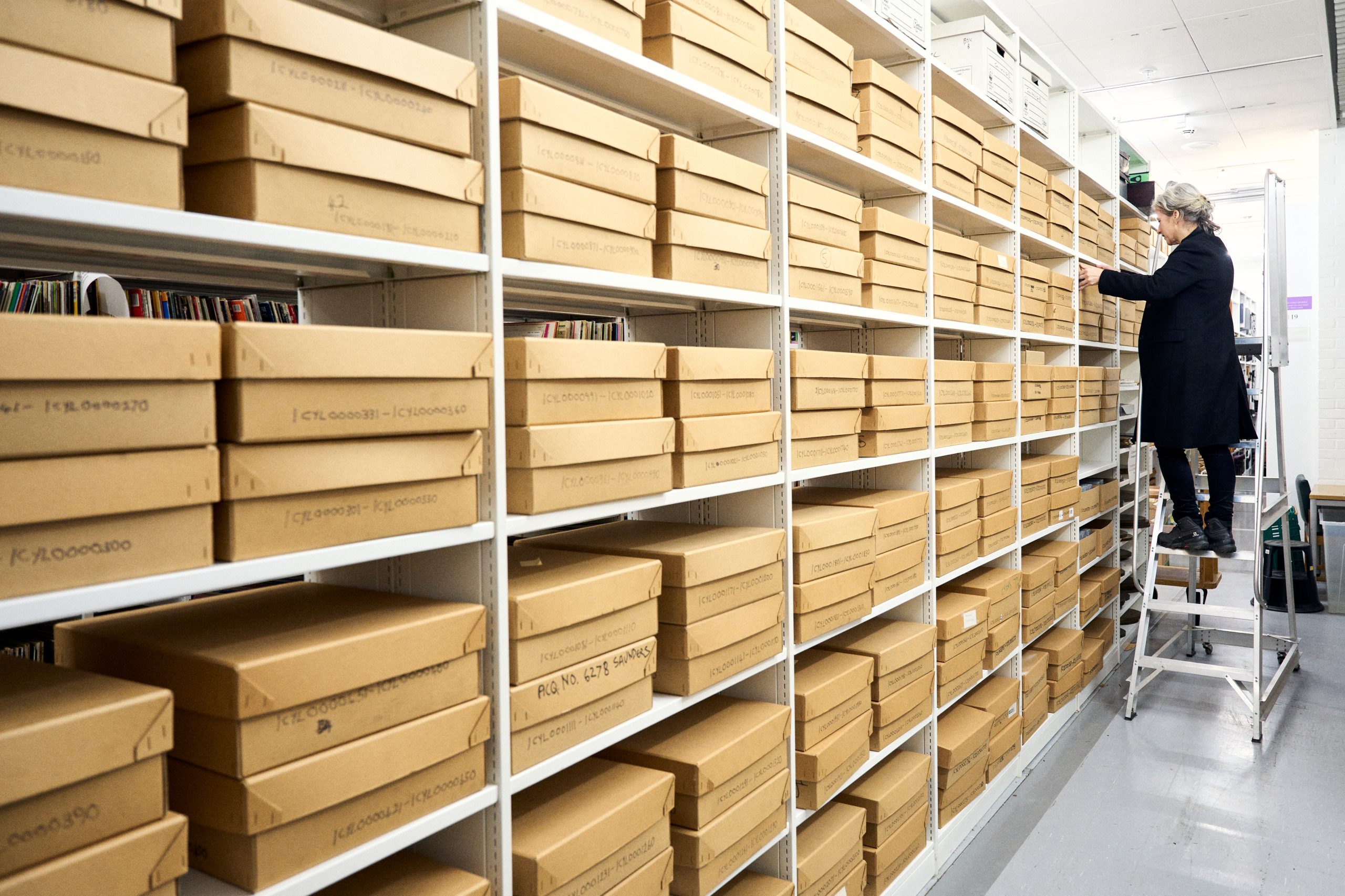
Photo credit: Will Hearle

“It’s reconnection on three levels: between people and country, the music, and the meaning,” explains Clouter, whose enthusiasm brims over when she gets to flicking through the Sound Archives’ extensive collection of music from the South Pacific, her initial route, she explains, into this fascinating world. 

“There was a universal response, from nearly everybody that was interviewed [about the recordings], of a sense of loss. This was a very common thing,” Clouter continues. “Loss meant different things to different people–and not necessarily a sense of loss of people, but a loss of something that was much bigger. So the majority of people were delighted to be able to reconnect.”
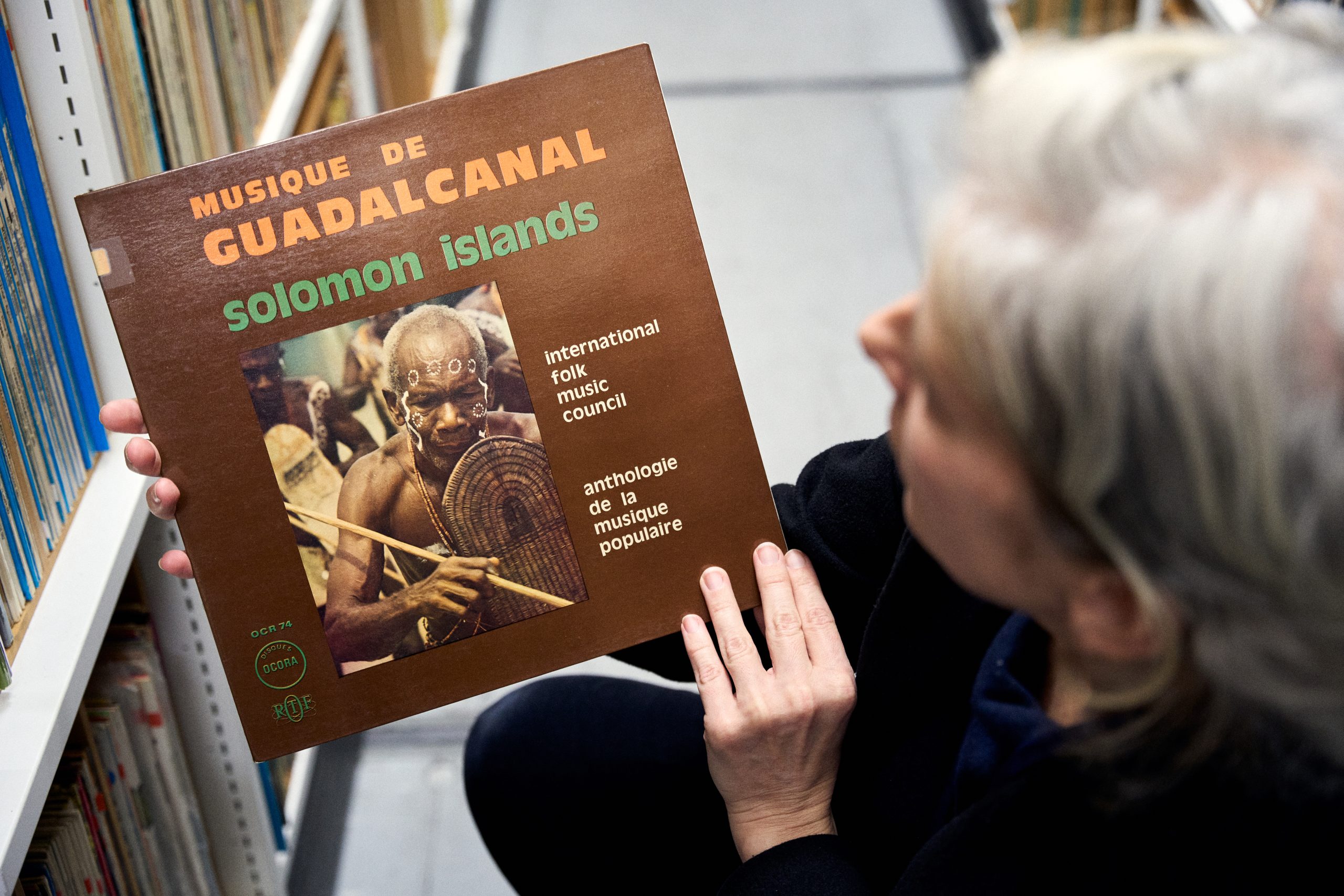
Photo credit: Will Hearle

She pulls up a video on a tablet. Beneath the endless, balmy skies of the Solomon Islands, she’s there, meeting with elders, hearing performances of songs whose skeletons have survived the hand-me-down of oral tradition, and whose germinant versions can be heard via the cylinder recordings. But aside from the hymns that still filter out of churches established by missionaries in the late 1800s, these sonic connections with the past have become less accessible over the years.

With the cylinders too fragile to travel—or at least not without considerable risk—difficult to store, and even harder to coax sound from, the detailed cataloguing process of the True Echoes project has enabled the recordings to live on in more places, closer to their sources, and with a far greater degree of accessibility. This, Clouter says, is one of the guiding achievements of the project. Preloaded tablets allow access to the materials in places where Wi-Fi and cellular coverage are patchy (or non-existent).

Ownership is spread and shared, cultural ties made, and the meticulous work of those pioneering recordists and the people they were meeting is marked down for the record. Clouter describes an ongoing shift in which these songs can move from being merely performed as part of the process of remembering history to taking on a new present-day significance for the people living on the islands today — an effect, she says, that’s become visible in schools on the islands she visited.
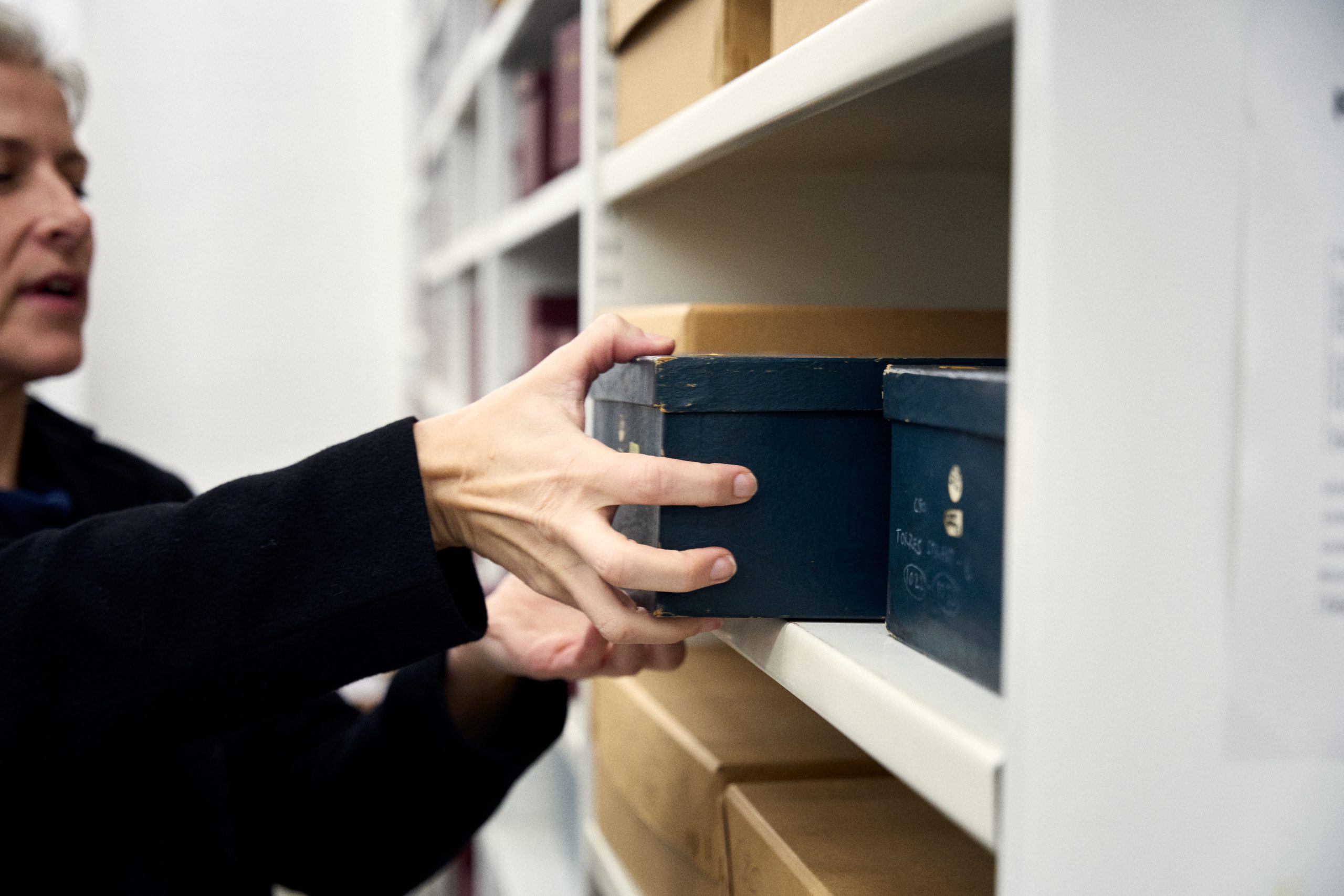
Photo credit: Will Hearle

Label-led projects with a shared ethos, like the Syrian Cassette Archive and the Majazz Project, while not reaching back as far into history as the Library’s funding (and technical gear) allow are achieving similar goals of reconnecting past and present. In turn, these discoveries and rediscoveries can inform new music, and reach new audiences—all with a degree of cultural sensitivity that avoids superficial, uncredited plundering. These are sensitivities that, Clouter says, run throughout the True Echoes project: it is not just the cylinders that should be handled with care.

This careful approach extends to how the team’s discoveries are presented, and when. COVID-19 lockdowns and travel restrictions stunted the project’s scope, which has meant some of the fieldwork through which recordings make their way back to their source in the islands hasn’t been completed yet—so these clips haven’t been made public yet. Elsewhere, materials that might be considered “secret, sacred or sensitive, or have traditional protocols around who can access them” are flagged and the website itself comes with a specific warning for Torres Strait Islander peoples that the site “contains images, voices and names of deceased persons.”

Back in the basement, Clouter has mastered lifting the cylinders from their cardboard chambers. Even now, new details reveal themselves: worn grooves, warnings of mould, undeciphered labels on scraps of paper. What could “SHAVED BLANKS”—stamped in royal blue ink on the top of one container—mean? Tovell says it’s a while since he’s been down here: encountering the never-ending shelves serves only to remind him of the scale of the challenge that preserving and conserving all of this material presents. It’s easy to get lost here.
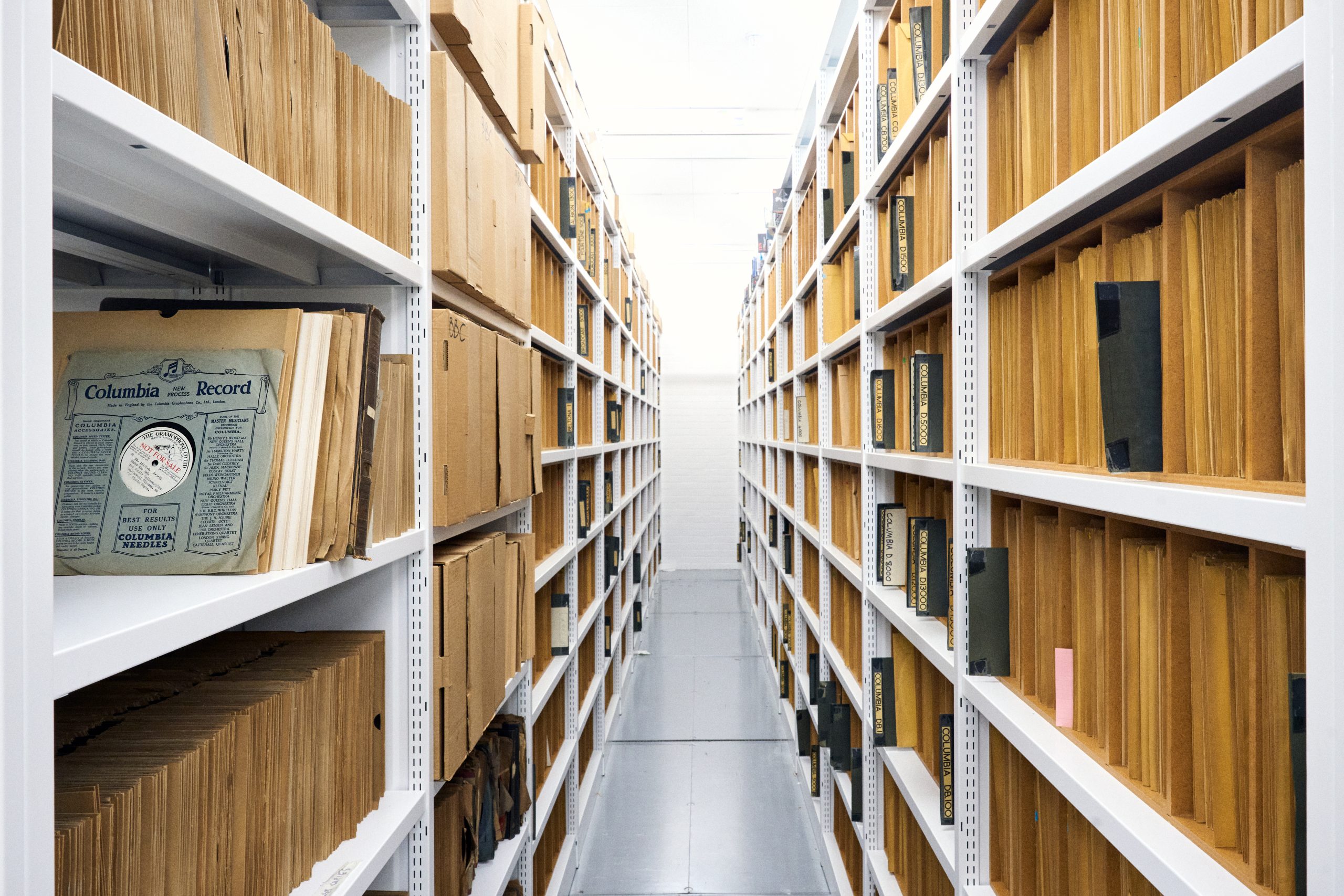
Photo credit: Will Hearle

Clouter is perhaps more sanguine. When she first visited the archive many years ago, she says it felt like being able to walk into her own enormous record collection. The thought embarrasses her now. As time has passed, she’s come to see the value of this space, and the tiers of formats old, new, and obsolete that it holds, in a different way. The real value, she says, is in finding ways to make these objects more visible, more accessible, and more audible to the communities they represent: so that the process of reconnection—between people, music, and meaning—can continue to bear forth.

Nueen explores the notion of silence on new Balmat LP, Diagrams Of Thought

Interrupted ambient textures.

Ambient imprint Balmat has unveiled its fourth release, which comes from Barcelona-based producer Nueen and is titled Diagrams Of Thought. It’ll arrive this October.

Over 10 tracks, the Mallorca-born producer teases out ambient, beatless textures before introducing more rhythmic elements, with liquid drum’n’bass rolls and dub-techno pops and rumbles.

The album, says Nueen, revolves around “the notion of the break, on a conceptual and musical level. What’s temporary and what’s permanent. Thinking and making out of what isn’t there, yet is. Some people would call it silence, but it could also be a skip of the needle, an ellipsis.”

Diagrams Of Thought is available for pre-order from Bandcamp ahead of its 28th October release date. Check out the artwork and tracklist below.

Tracklist:

A1. To Eve
A2. Lev
A3. Sonno
A4. Vig Ase
A5. Mett

B1. Let Me Be Gone For A While
B2. Dome
B3. Veta
B4. Maxima
B5. 4U

Iggy Pop and Catherine Graindorge collaborate on new EP

After first connecting via radio.

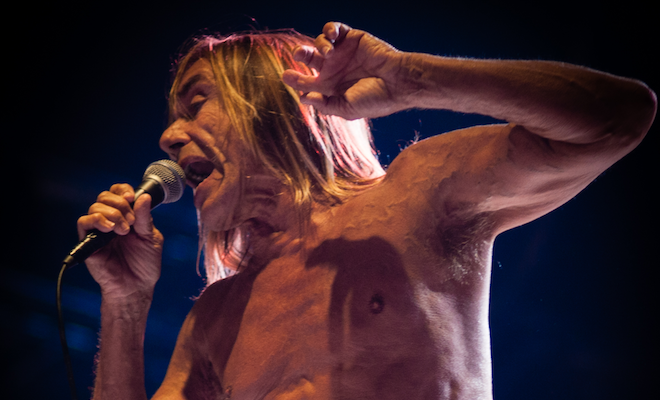
Punk icon Iggy Pop and Belgian violinist and composer Catherine Graindorge have collaborated on a new four-track EP, titled The Dictator and released via Glitterbeat.

The pair first connected after Pop played two of Graindorge’s tracks on his BBC Radio 6 Music show.

The violinist followed up with an email asking if Pop would like to work on some music together — something, she says, of a shot to nothing.

“Catherine, I would love to make a track,” came the reply.

The result is a four-track EP, across which Pop lends his gnarled, radio jockey-style monologues to Graindorge’s shimmering strings and atmospheric electronic bedding.

The Dictator is available now from Bandcamp. Check out the artwork and tracklist below.

Tracklist:

1. The Dictator
2. Mud
3. Mud II
4. Iggy

IKEA’s new turntable arrives next month

Along with a new take on the popular KALLAX shelves.

Flatpack furniture giant IKEA has unveiled a new range of products — including a turntable — aimed at making home studio setups more accessible to budding music producers.

Read more: A guide to record storage and alternatives to IKEA

The OBEGRÄNSAD collection has been developed in partnership with stadium-bothering house music trio Swedish House Mafia. It comprises more than 20 products, ranging from chairs to desks, rugs, and a shelving unit to house records and a DJ console.

A prototype of the new OBEGRÄNSAD DJ console shelves

Details about the turntable remain sparse, beyond the fact that it will be USB-C powered, come with a replaceable needle and cartrdige, and have some Bluetooth compatibility. It will be available from October, along with the rest of the OBEGRÄNSAD range, and is set to retail for $159.99 (around £140).

The DJ console builds on the KALLAX shelving units that have already proven popular with record collectors, adding space for amps, speakers and other gear.

The furniture makers’ previous attempt at developing a turntable for retail never came to fruition.

Step inside Haruki Murakami’s library in Tokyo

Finally open to the public, the space is a sanctuary for study — and jazz.

Haruki Murakami isn’t known for courting the press. So when he called a conference in November 2018 — his first in his native Japan in 37 years — it came with the expectation that what he had to say would be worth hearing.

“After nearly 40 years of writing, there is hardly any space to put the documents such as manuscripts and related articles, whether at my home or at my office,” Murakami told waiting reporters.

To preserve these papers, he would, he said, be establishing a new institute under his own name at his alma mater, Tokyo’s Waseda University.

“It is a very important thing for me, so I thought I should explain clearly,” he went on. “I don’t have any children, and it would cause trouble for me if those materials became scattered or lost.”


Finally opening its doors at the back end of 2021, the library — designed by Kengo Kuma, the architect responsible for Tokyo’s 2020 Olympic stadium, and funded by billionaire Uniqlo founder Tadashi Yanai — houses more than just manuscripts.

Among the materials are records. Lots of records.


Something of a jazz aficionado, if not obsessive, Murakami works music through his stories like its own character. He listens while he writes, and credits this for the development of his uniquely melodic, rhythmic style.

In the ‘70s, he ran a jazz bar and café in Tokyo, called Peter Cat, and has amassed a collection of over 10,000 discs over the course of his life. Mostly, these records have occupied stacked shelves in his writer’s room.

In 2015, this space was made viewable on the author’s website, with the inquisitive able to click through a ‘tour’ of Murakami’s study.

Now, a selection of his records have taken up residence — inside a replica of his study — at Waseda.


Bookings are open for the space, where you’re free to roam the café, listening room (complete with Luxman turntable, Accuphase amplifier, Marantz CD player, and a pairing of Sonus Faber and JBL speakers), exhibition area — and peer in on the replica writing room.

Tokyo-based photographer Jonny Dub did just that. Take a tour through his lens below.


All photography by Jonny Dub

Eva Lazarus brings together soul and soundsystems on Brandy Kisses

Sweet vibrations.

Bristol-based neo-soul singer Eva Lazarus is preparing to release her second album, Brandy Kisses, via Melonskin Records this autumn.

The album follows a successful run of singles and collaborations, with Lazarus writing and recording with the likes of Swindle, Mungo’s Hi-Fi, and Zed Bias. Those experiences, and Lazarus’ own influences within hip-hop and gospel, seep through into Brandy Kisses to produce an album that spans soul, funk, rap and the broad reaches of soundsystem culture.

‘Lessons’ is the latest single to come from the album, and sees Lazarus link up with Birmingham MC Kofi Stone to trade verses over lounging boom-bap.

Pre-orders of Brandy Kisses are available ahead of an expected 28th October release.

Tracklist:

1. Define Me By My Love
2. Empty Pockets
3. Mixed Messages
4. How Am I Looking?
5. No Limits
6. I Prayed For You
7. Lioness
8. I’m On My Way
9. Brandy Kisses
10. If You Ever Leave Your Girl
11. Secrets
12. On God
13. Lessons (feat. Kofi Stone)
14. Royalty
15. Flashing Lights
16. The Party Is Over

Photo: Hannah Lisa Photography

Swedish experimentalists Goat unveil new album, Oh Death

Promising a “delirious gnostic groove”.

Psychedelic fusion group Goat have announced details of a new album, titled Oh Death and due for release via Rocket Recordings in October.

Since debuting in 2012, the group have revelled in mystique: members keep their identities secret, wearing outlandish costumes to perform live, and claiming to originate from a tiny, 500-person village in Norrbotten, Sweden.

This continues with Oh Death‘s announcement, and the label describing the outfit as “formidable psychic warriors, channelers of the mystic and proponents of a spiritual quest that transcends this realm.”

The album promises a heady mix of psych-rock, jazz, funk, and “a delirious gnostic groove that threatens to throw the whole shebang spiralling into orbit.”

Lead single, ‘Under No Nation’ is a groove-heavy Afrobeat-infuenced number, with guitar licks fired off from swinging hips.

The release marks Goat’s first studio album since 2016’s Requiem, which was positioned, as the title suggests, as the group’s final record together.

Pre-orders for Oh Death are available from Bandcamp ahead of an October 21st release date.

Tracklist:

1. Soon You Die
2. Chukua Pesa
3. Under No Nation
4. Do The Dance
5. Apegoat
6. Goatmilk
7. Blow The Horns
8. Remind Yourself
9. Blessings
10. Passes Like Clouds

Renowned jazz organist Joey DeFrancesco has died

A generational talent who had worked alongside Ray Charles, Miles Davis, and Bette Midler.

Jazz organist, composer, and bandleader Joey DeFrancesco has passed away at the age of 51.

A remarkable talent, DeFrancesco inked his first record deal at just 16, beginning a career during which he played, recorded, and toured with the likes of Miles Davis, David Sanborn, Ray Charles, Bette Midler, and Van Morrison.

As well as mastering the Hammond organ, he was a talented trumpeter, saxophonist, and occasional singer, and released more than 30 albums under his own name.

He continued touring and performing live right up until his passing.

The news of DeFrancesco’s death was shared by his wife and manager, Gloria DeFrancesco.

A statement read: “The love of my life is now in peace with the angels. Right now I have very few words. Thank you for the outpouring of love and support coming in from everywhere. Joey loved you all.”

DeFrancesco died on August 25th. A cause of death has not yet been shared.


Photo: Todd Van Hoosear

Contort Yourself curates 1980s DIY cassette culture onto new 2xLP

Spanning minimal wave, industrial, post punk, and experimental electronic sounds.

Glasgow-based techno and industrial label Contort Yourself is releasing a second volume of unearthed cassette recordings from the 1980s this October.

Over two discs, 80s Underground Cassette Culture: Volume 2 draws together tracks spanning minimal wave, industrial, post punk, and experimental electronic sounds.

The compilation aims to deliver a sense of “wanton abandonment; burnt-out artists peddling a punk profanity, marginalised musicians spitting on the establishment and industry,” a note from the label says.

As the name suggests, this is the second instalment in the series, the first edition of which was released in 2017.

Pre-orders are available from Phonica now, ahead of a 3rd October release date. Check out the tracklist and artwork below.

Tracklist:

A1. Die Achse – Under The Church
A2. Nostalgie Eternelle – Peace Of Mind
A3. Years On Earth – As You’re Told
A4. If Bwana – Tiny Bladders
A5. Stefan Schrader – Attempt To Rap

B1. Misteek – Bump Beat
B2. M Rendell – CV In
B3. Dix Ferro – Bienvenidos a Neuchatel
B4. Sluik – Open Window
B5. Pornosect – Pressure Level
B6. The Horse He’s Sick – Projectile Fascination

C1. M Nomized – Nitsed
C2. John J Lafia – Life Is Short
C3. Interaccion – Newton
C4. Die Mysteriösen – Spürhund
C5. Homage a Brinkman – Französisch

D1. Solanaceae Tau – Tekno Pop
D2. Ob Ovo Sha 261 – The CIA, It Dance
D3. Collectionism – We Are All Children Of God
D4. UPM – Anstalt
D5. Wolfgang Wiggers – Slightly Mental