
World News
Body and expertise
Body and expertise
While attending to the HIGHEND 2024 in Munich this spring, I took a time without work simply to go to Haus der Kunst München, and witness Rebecca Horn’s retrospective exhibition (26.4.–13.10.24) designed to supply an summary of this internationally famend artist’s life’s work spanning six many years. I did so believing it will be not less than as related as experiencing new amplifiers, gamers and loudspeakers on the Hi-Fi Show. Why is that?
The first placard tells the next:
“The life’s work of Rebecca Horn, … , is anxious with the boundaries between nature and tradition, expertise and organic capital. Whether described as an inventor, movie director, writer, composer, … Horn describes her observe because the creation of exactly calculated relationships between area, gentle, physicality, sound, and rhythm. Her performative, sculptural, and filmic works discover the connections between people, machines, animals, and the earth. They purpose on the bodily expertise of a visual, tangible, and audible existence.” (my ital.)
Meeting expertise at a Hi-Fi Show could, once in a while, be intellectually difficult, it could be childlike inspiring, it could be romantic, it could be nostalgic, and dozens of different real (primarily male) feelings and different states of thoughts. But there’s a extra profound stage in how expertise surrounds us, and it’s artists resembling Rebecca Horn who’re in a position to delve deeper and convey out these undercurrents, give them an aesthetic look and that means.
“She does it by celebrating the horror of the machine as a continuation of the physique, … creating existences of the unpresentable, and offers a face to the abysmal. Her oeuvre is a lifelong and at present unstable echo of the progressive decentering of humanity.”
Rebecca Horn
Born in Michelstadt, Germany, Rebecca Horn (24 March 1944 – 6 September 2024) initially studied on the Hochschule für bildende Künste in Hamburg within the Sixties, earlier than gaining a scholarship at St Martin’s School of Art in London. In the Seventies and Eighties, she lived and labored in New York and Berlin. She taught as a visitor lecturer on the California Art Institute (1974) and the University of San Diego (1974) and was a professor of multimedia on the Berlin University of the Arts for a few years (1989–2010). In 2007, she based the “Moontower Foundation” in Bad König, Odenwald, which is primarily involved with the preservation, analysis and documentation of her work. Her artistic endeavors, starting from her first works on paper within the Sixties to the early performances and movies of the Seventies, the mechanical sculptures of the Eighties, and the expansive installations of the Nineties as much as the current day. These works have been on show in quite a few exhibitions over the many years everywhere in the world, a far too many to be listed right here.
The beneath is especially taken from the written materials supplied by the museum for the exhibition.
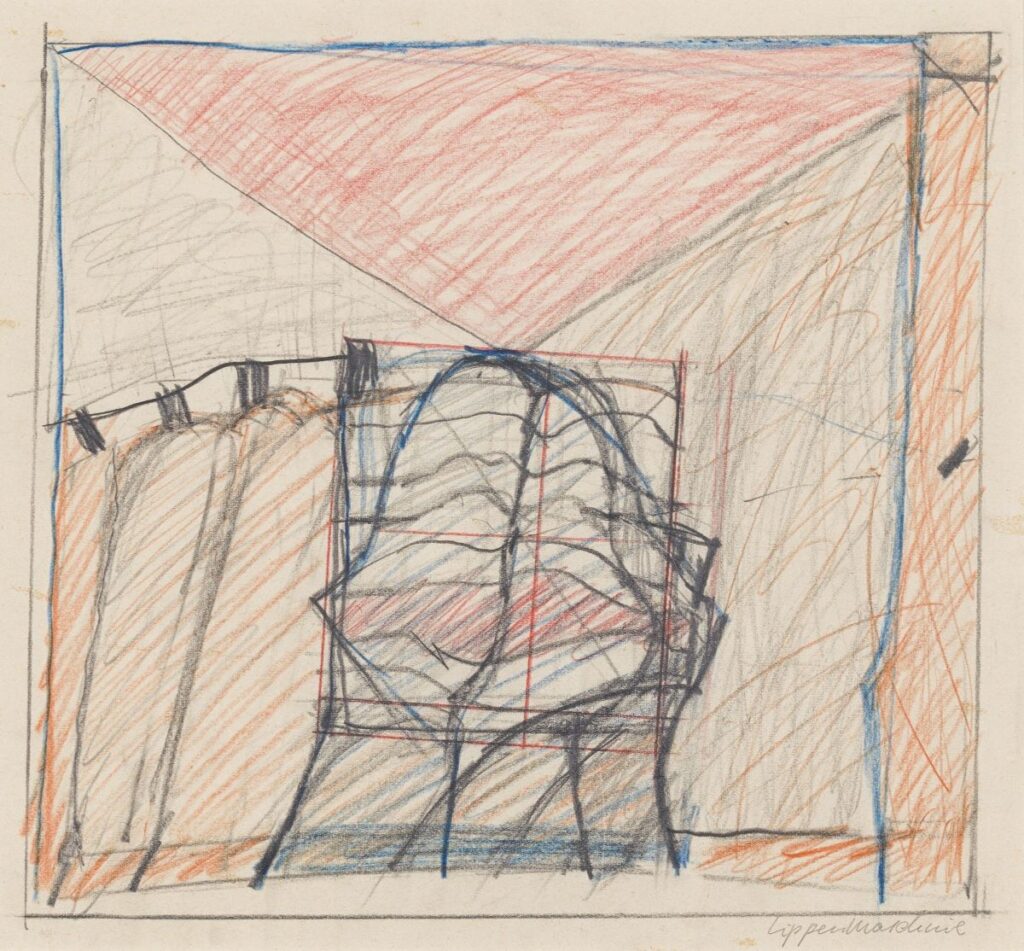
Lip Machine, 1964
In her early work, Horn noticed herself firstly as a choreographer, centering on the human physique and its relationship to nature, tradition, expertise, however she additionally created visionary symbols for the interconnectedness of our bodies and expertise, as proven in her first works on paper within the Sixties. In Lip Machine from 1964, the connections between the human physique and expertise come out because the fragmentation of our bodies, their dissection into particular person elements. The title of the drawing creates a picture of the mechanisation of a physique half learn as female.
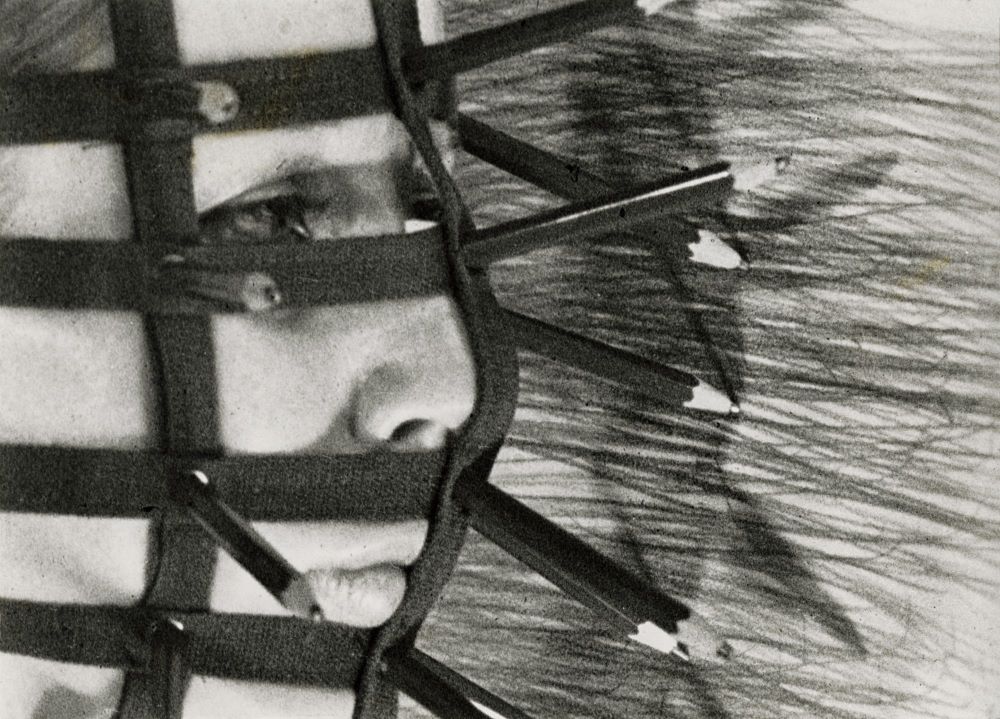
Measure Box, 1970
Even in her earliest sculptures, such because the Measure Box from 1970, Rebecca Horn questions the dissolving boundaries between human and machine. She addresses the safety and vulnerability of the human physique in radical methods, specializing in the connection of our bodies to inside and exterior areas.
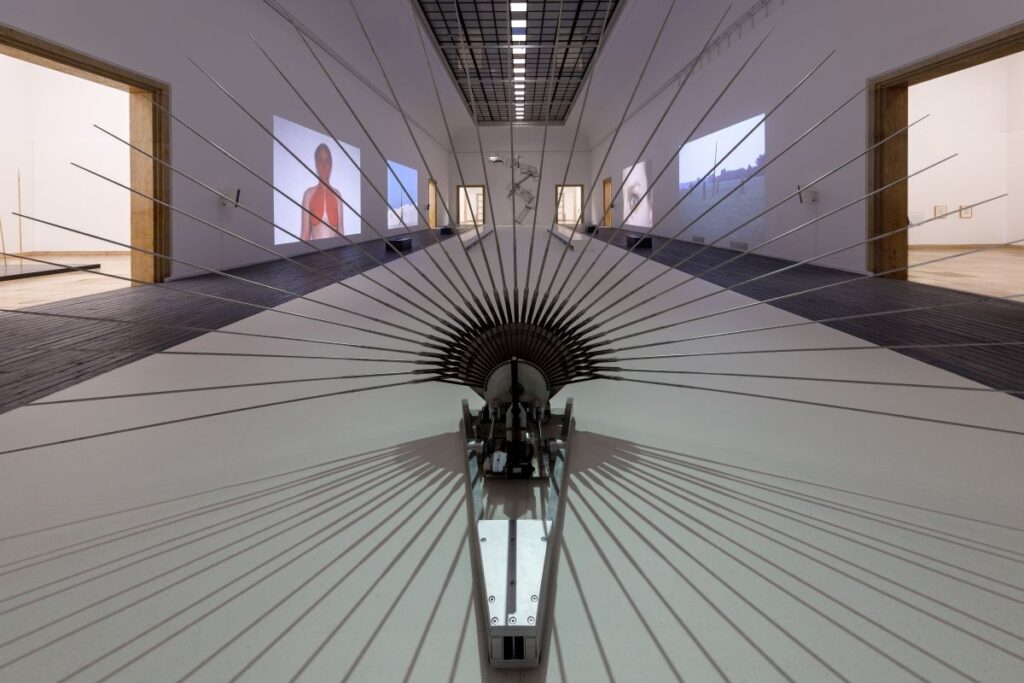
The Peacock Machine, 1982
Horn’s performative early work contains motorized sculptures, such because the Peacock Machine from 1982 with its a number of, lengthy, tapered aluminum rods imitating the spectacular elevating of the tail feathers of male peacocks throughout courtship. The sculpture’s endlessly repeating movement sequence is harking back to the dissection of motion patterns acquainted from industrial manufacturing processes, whereas the mechanical motion gives the look of a dwelling being. The title explains the symbiosis of chook and expertise. Here Horn phases the human concern of not having the ability to management one’s personal physique, referring to automatons and monsters in literature (e.g. Franz Kafka’s The Metamorphosis, 1915).
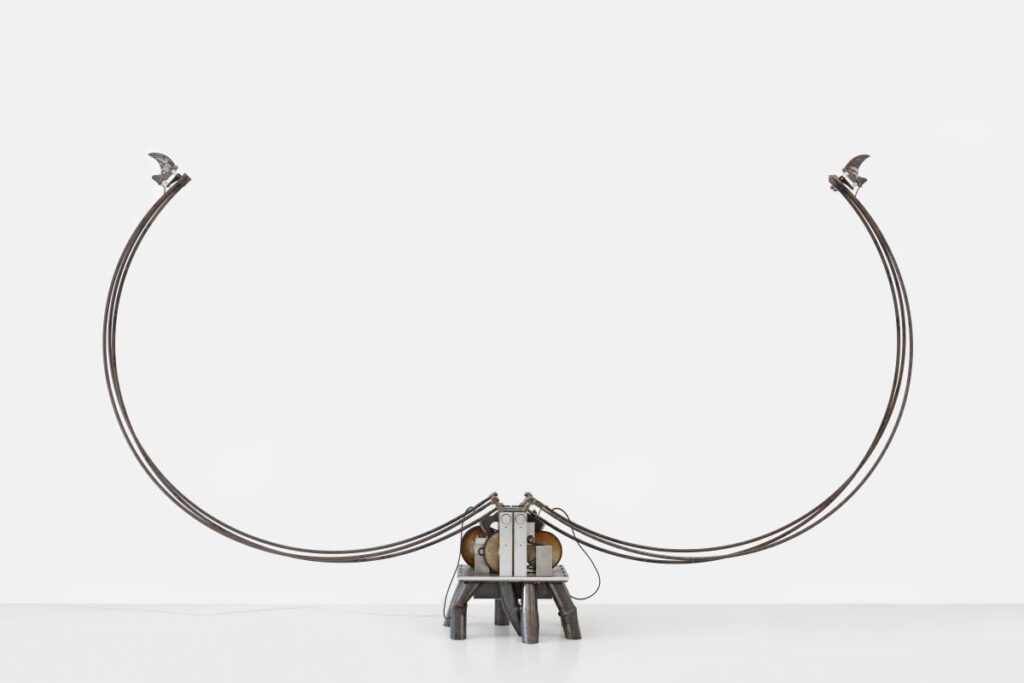
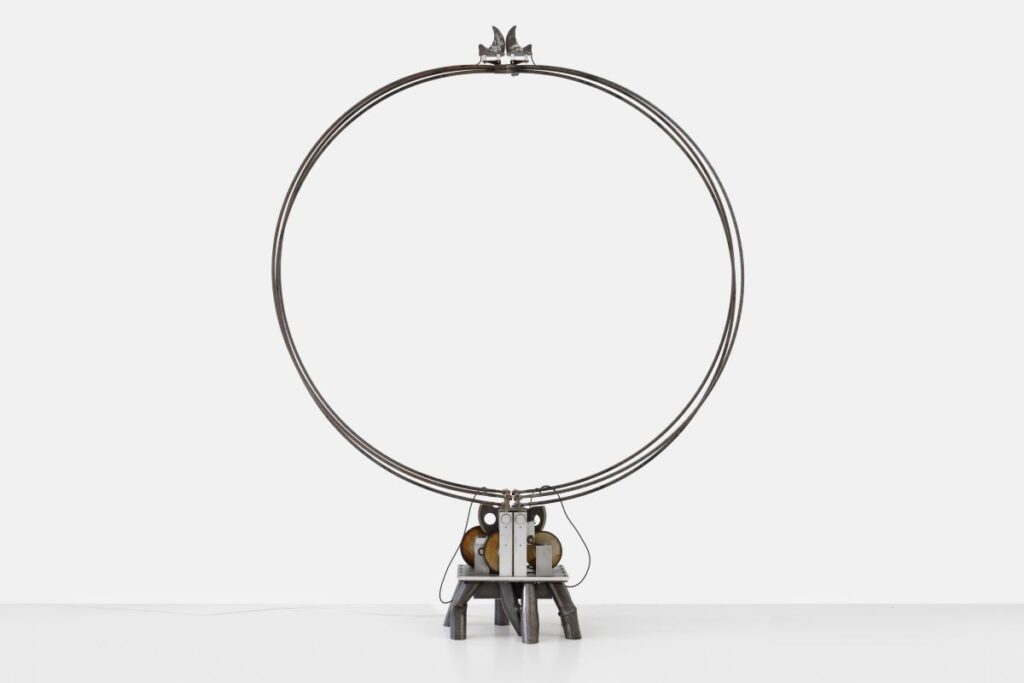
Kiss of the Rhinoceros, 1989
The Eighties onwards Horn’s mechanical sculptures have preserve serving as symbols of the interconnectedness of expertise and the physique, which from in the present day’s perspective look like daring premonitions of a world managed by machines. In Kiss of the Rhinoceros from 1989 two semicircular metallic rods pushed by a motor come collectively to type a closed circle. When the ends of the fragments, harking back to rhinoceros horns, make fleeting contact with one another, {an electrical} discharge happens that has the impact of an electrifying kiss. Here sexual power is visualized in an utmost stripped-down technical method. By presenting interpersonal encounters by means of animal-like, animated machines, the artist factors to the similarities in conduct and have an effect on between human and nonhuman actors.
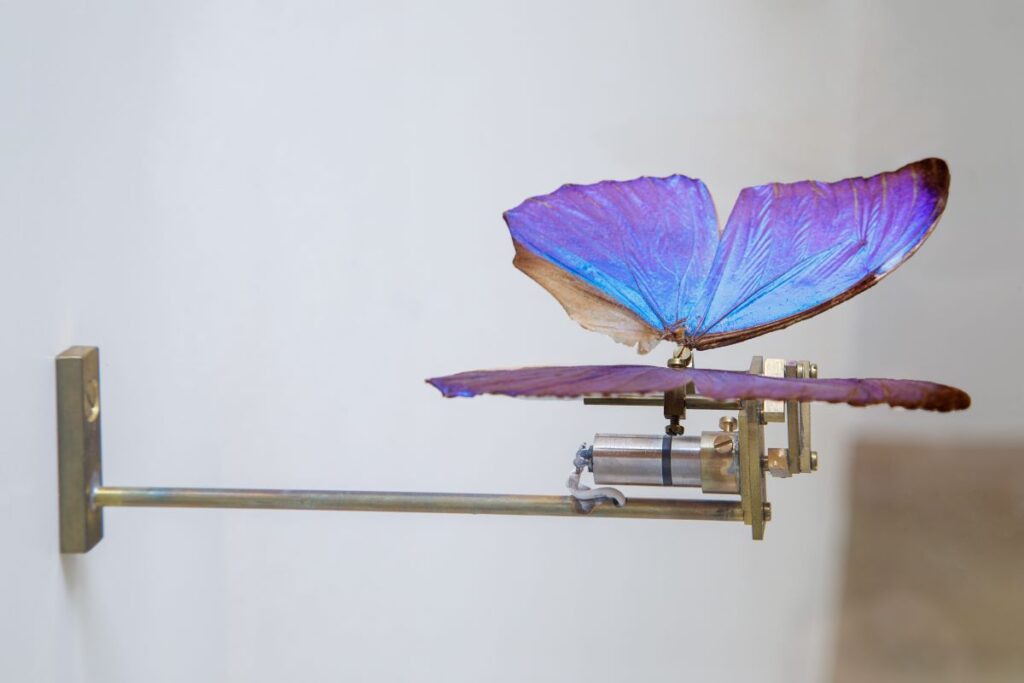
Butterfly, 1990
Here a Butterfly (1990), with a assist of a sensor and a electrical motor, begins to flap its wings as quickly because it’s approached.
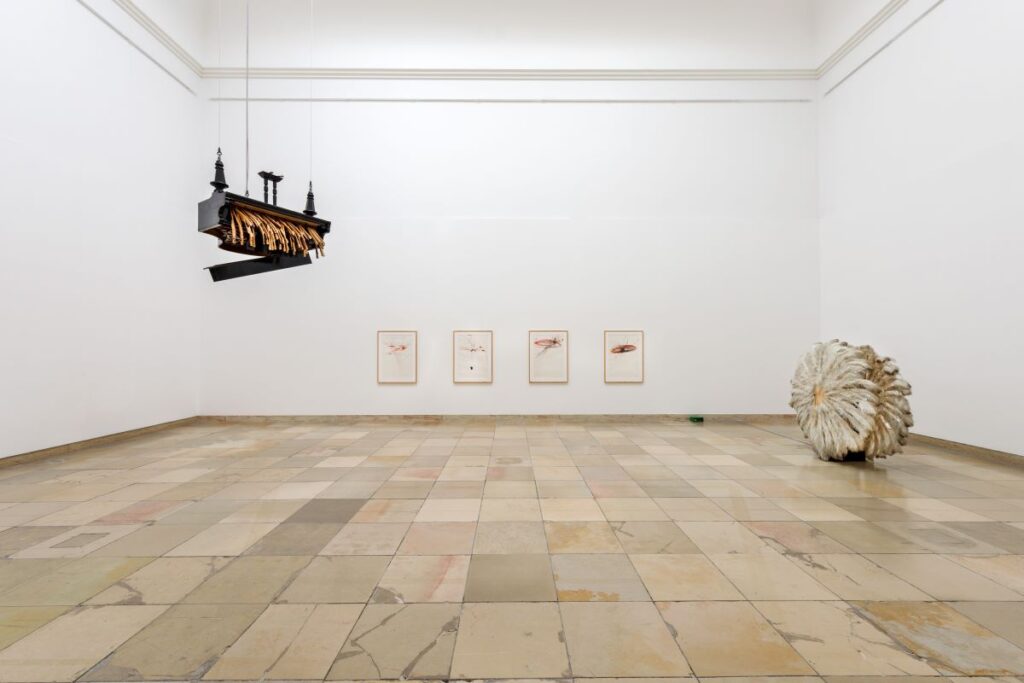
Concert for Anarchy, 1990
An upside-down grand piano, hanging from the ceiling by heavy wires, sometimes coming to life in a loud outburst, spitting out its keys at common intervals, and composing its personal music. This is one instance of how Horn’s machines typically seem to behave like dwelling creatures: “They react as we react. My machines aren’t washing machines or vehicles. They have a human high quality they usually should change. They get nervous and should cease typically. If a machine stops, it doesn’t imply it’s damaged. It’s simply drained. The tragic or melancholic side of machines is essential to me. I don’t need them to run perpetually. It’s a part of their life that they cease and faint.”
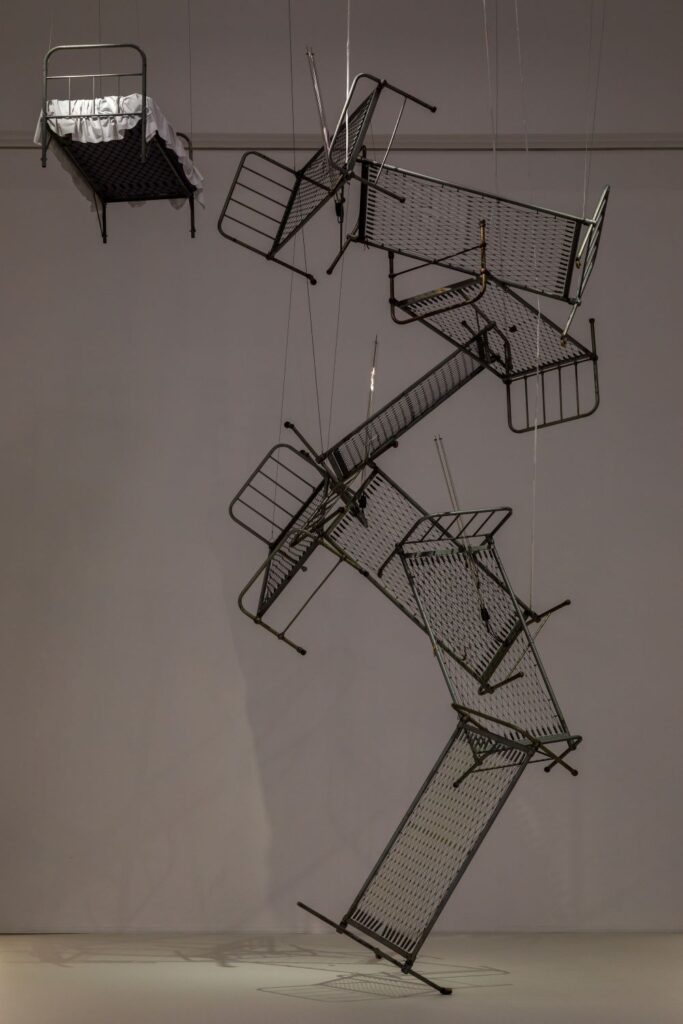
Inferno, 1993
In the Nineties, Horn developed characteristically immersive spatial installations, wherein she deconstructs and restages music. One of the oldest examples is Inferno from 1993, an expansive set up of stacked hospital beds. The set up consists of metallic mattress frames from a psychiatric hospital wedged steeply into one another. Inside the towering construction of dizzying top, glass tubes fitted with electrically charged wires repeatedly gentle up as if in a lightning storm. The work is claimed “to be a multisensory, radical exploration of life’s mysteries, needs, desires, pains, and abysses. For people, the mattress is a spot of formative expertise, from delivery to demise. Through the absence of our bodies, Horn appeals to the ability of creativeness and requires empathy for the struggling of others. The area as an entire thus focuses on the juxtaposition of the presence and absence of our bodies, opening up between our bodies and reminiscence, our bodies and vulnerability, our bodies and expertise.”
Tower of the Nameless, 1994
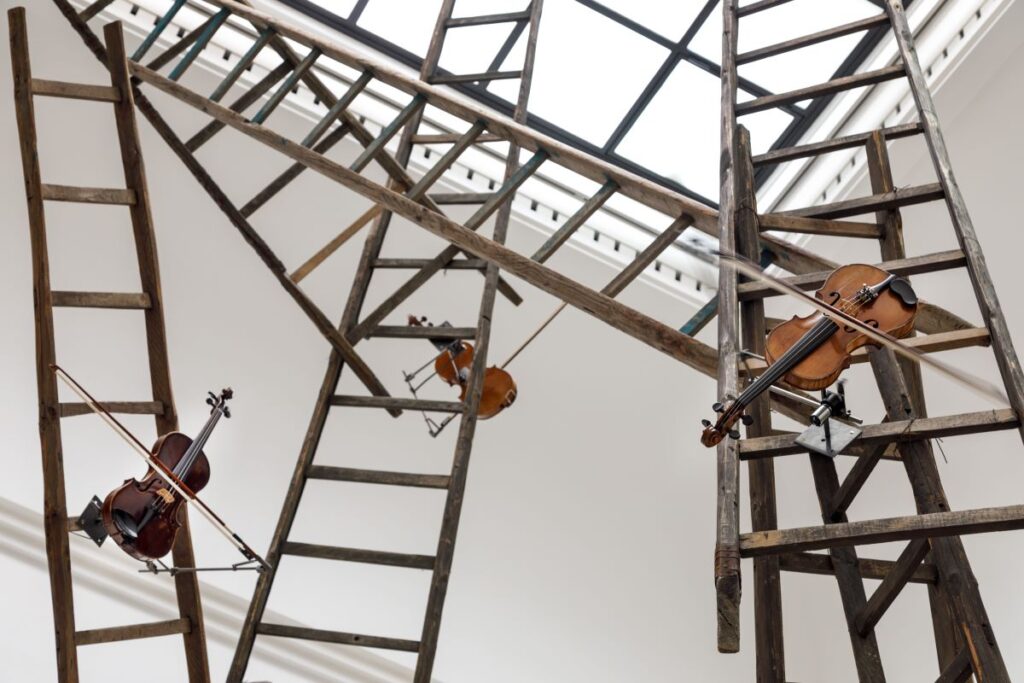
The Tower of the Nameless is Horn’s typical kinetic set up from the Nineties. Violins are mounted in a large number of picket ladders which can be wedged into one another and appear to jut into nowhere. Motorized violin bows produce polyphonic sounds at intervals. Horn transforms the musical devices into machines and on the similar time provides them human capabilities, resembling taking part in a concerto. Through this repetitive, multilayered violin taking part in, the machines are stated “to specific human feelings resembling unhappiness and powerlessness”. The Tower of the Nameless is certainly one of Horn’s most essential works coping with historical past and its catastrophes, resembling warfare, displacement, and demise.
Hauchkörper, 2017
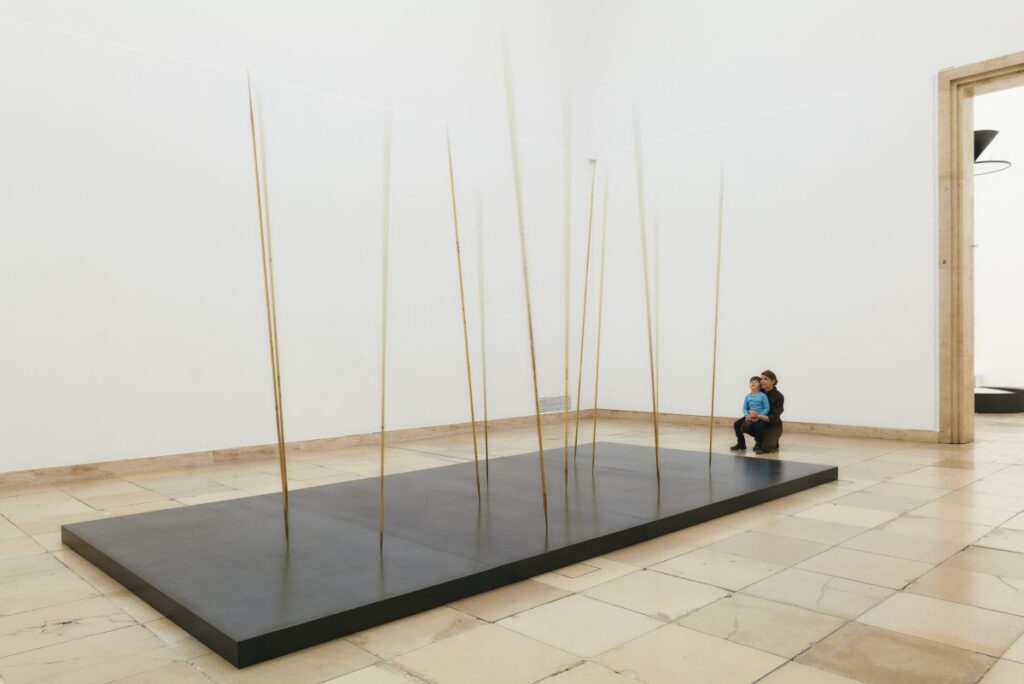
In the latest set up Hauchkörper from 2017 twelve upwardly tapering brass rods, mounted on a darkish metal base and mechanically pushed, sway gracefully. “Their sluggish and asynchronous actions draw consideration to time and its totally different perceptions, and create an nearly hypnotic choreography. Physicality is characterised by a excessive diploma of abstraction. Movement, like respiration, is staged as an invigorating power for human and nonhuman our bodies. The work releases an power which blurs the boundaries between human and machine. Whether Horn’s power comes from human or mechanical motion, it’s used as a power for transformation. This fixed connects the early and late works in mystical, poetic, scientific, and performative methods. The exploration of connections with the surroundings has thus at all times been on the core of Rebecca Horn’s oeuvre.”
HI-FI News
through Inner Magazines https://ift.tt/bGWtmHi
November 4, 2024 at 05:49PM
-
Product on sale
 Audiophile Vinyl Records Cleaning BundleOriginal price was: €83.88.€73.88Current price is: €73.88. incl. VAT
-
Product on saleEasy Start Vinyl Records Cleaning KitOriginal price was: €83.88.€73.88Current price is: €73.88. incl. VAT
-
Vinyl Records Cleaner Easy Groove Concentrate€41.94 incl. VAT
-
Easy Groove Super Set€238.80 incl. VAT
-
Easy Groove Enzycaster – vinyl records prewash cleaner€41.94 incl. VAT
-
Easy Groove Extreme MK. II- vinyl records prewash cleaner€54.00 incl. VAT
-
Vinyl Records Cleaner – Easy Groove Virgin Concentrate€42.00 incl. VAT
-
Easy Groove Spray&Wipe vinyl records cleaner€41.94 incl. VAT







