
World News
Bruckner Symphony No 7
Bruckner Symphony No 7
The splendid gateway symphony to Bruckner – or an elusive work of secrets and techniques and recollections? Peter Quantrill slaughters a herd of sacred cows in his survey of the Seventh on document
Let’s brush apart the previous (however cussed) grievance that Bruckner composed the identical symphony 9 occasions over. For one factor, he wrote 11 symphonies, solely the primary of which was supposed purely as an train, and introduced the final (numbered because the Ninth) tantalisingly near completion. For one other, every has its personal character, which is formed by continuous experimentation, his time of life, and the arrogance and materials collected by exhausting graft. Each successive symphony appears to be like again on its predecessors and units out on a distinct path.
All Of A Piece
Flow is the hallmark of the Seventh. With a only a few momentous exceptions, the argument of the symphony unfolds in 4 intently inter-related spans, uninterrupted by the contrasts and juxtapositions which characterise the symphonies as much as and together with the Fifth. What 7 nonetheless shares with 5 is a way of serenity in its progress. Even because the gradual motion anticipates the soul-searching of the Adagios in 8 and 9, the eventual decision of that pathos isn’t clouded by doubt or concern, as it’s (or could be) within the later symphonies.
Bruckner achieves this wholeness by way of the acquainted Romantic, cyclical tactic of thematic unity, the opening melody of the symphony bringing concord and completeness to the coda of the finale. But he additionally does it by withholding radical modulations of concord till late within the piece – simply as Beethoven did within the ‘Storm’ of the Pastoral. The rhythms of the Seventh are additionally unusually common for Bruckner, even within the skipping (or thundering) momentum of the Scherzo.
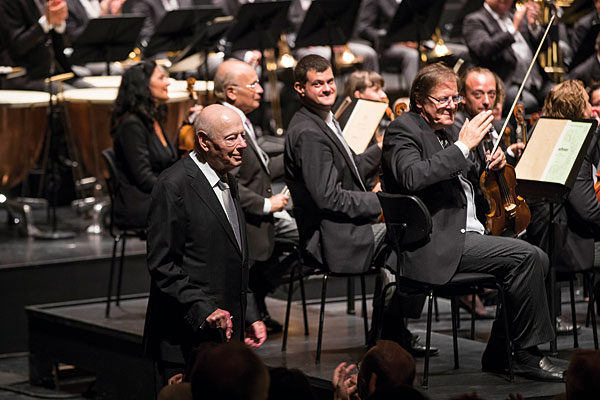
In the listening, it could possibly simply be ignored that the opening Allegro moderato sustains an unprecedented and audacious continuity of thought. There is not any assault or pause for breath till effectively over midway by way of the motion. The paragraphs unfurl just like the pages of a Henry James novel. (James accomplished The Portrait Of A Lady in 1881, the 12 months Bruckner started work on the Seventh).
Among famend mono-era maestros, Furtwängler begins promisingly with a barely-there tremolo of expectation. The push-me pull-you tempo manipulation of first and second themes, nonetheless, reveals him imposing a story that departs from the letter and (I feel) the spirit of the rating. He is doing an excessive amount of, each with and to the symphony. By distinction, Günter Wand (RCA) adopts an angle of scrupulous neutrality that he upholds by way of to a matter-of-fact conclusion. Both conductors have been deep-thinking Brucknerians however neither was at dwelling within the Seventh (certainly, Wand left it alone in comparison with the opposite mature symphonies, particularly 5 and 9).
Happy Medium
The chosen primary tempo of that Allegro moderato has far-reaching implications for the entire symphony. At simply over quarter-hour, Norrington (SWR-Music) produces a pliable, sweetly-toned, usually believable argument for the Seventh as a direct successor to the country Fourth, and one thing like Schubert’s Fifteenth. At 21-22 minutes, Barenboim and Paavo Järvi persuasively draw parallels between the Seventh and Parsifal, premiered in 1882.
In between, round 18 minutes, Michael Gielen [see Essential Recordings, opposite] units the Seventh in movement with an irresistible momentum that attracts the ear easily by way of to the sudden disaster of C minor, ‘like an awesome dam positioned throughout a river’ in Robert Simpson’s phrase. This comparatively swift primary tempo permits for episodes of rest and contemplation, then for a solemn however songful Adagio that by no means drags. This is adopted by a finale of counterbalancing power, the place so usually the motion feels both disproportionately protracted or too light-weight to carry full closure. Everything is linked.

Whether or not Bruckner heard Wagner’s final opera earlier than finishing the Seventh, the symphony as an entire stands as a monument of gratitude and honour which turned a tribute to Wagner’s reminiscence when he died in 1883, whereas Bruckner was nonetheless at work. Not solely the usage of Wagner tubas within the Adagio but additionally quotations within the finale make that relationship express. Karl Böhm was considered one of many interpreters to drag the symphony right into a Wagnerian orbit – or Wagner as he was carried out within the second half of the final century.
While the outcomes are sometimes grand and spectacular, raised to a peak of sophistication in Thielemann’s numerous Sevenths (three obtainable on movie alone), this strategy misses the mark of the Seventh’s distinctively light, burnished glow. Few pre-stereo recordings are price investigating as a result of most of them are both ill-played or undone by recorded sound which bleaches the copper and velvet from Bruckner’s textures. Among them are two swift readings carried out by Paul Hindemith. These are fascinating paperwork all the identical of a fellow composer getting inside Bruckner’s head, and are representatives of an earlier Bruckner performing custom comparatively unburdened by angst.
Bernard Haitink carried out the Seventh all through his profession and I affiliate it with him greater than some other piece. His many recorded variations every bear the stamp of their particular person ensembles, various significantly in particulars of tempo and articulation. But as with Gielen, all of them are animated by a powerful and constant pulse. His first model with the Concertgebouw retains a gripping, plain-spoken logic, however he reconsidered the Seventh one remaining time over the last 12 months of his profession, for performances with three totally different orchestras.
Peak Practice
These are fortunately preserved in several codecs: the Netherlands Radio PO on CD, the Berlin PO on direct-to-disc LP (yours for round £500, if you will discover it) and the Vienna PO on movie. Haitink, at 90, brings an unmatched spring to the Scherzo, and builds the finale to a peak (earlier than the coda) which makes new sense of the coda itself.
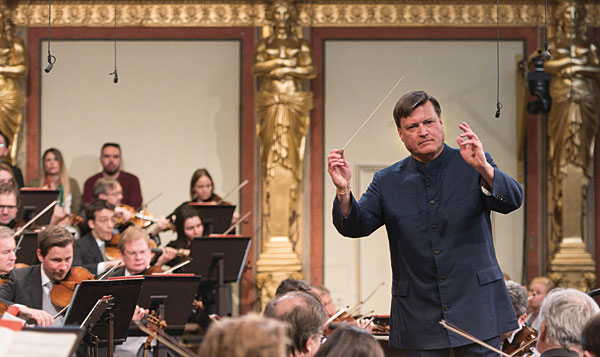
Bruckner conductors are made, not born. Herbert von Karajan’s remaining recording was additionally with this piece, and with the Vienna Philharmonic, and is comparably illuminated by a lifetime’s expertise yielding contemporary revelations with an orchestra who knew what he wished nearly earlier than he did. By some alchemy of nice age and instinct, Karajan retains the fireplace burning below a really gradual Adagio. Giulini, Skrowaczewski and Blomstedt all have their devotees in relation to Bruckner, however right here they stretch the music past the elastic of its pure syntax.
After 30 years of conducting the Seventh, Rattle has additionally tightened his tempi to constructive impact. In this he was maybe inspired by the scholarship of the late Benjamin-Gunnar Cohrs, whose version consists of the cymbal crash and timpani rolls (on the climax of the Adagio) that purchase outsize significance for some listeners. More germane is the phrasing that by no means takes a ‘Bruckner model’ with no consideration, and the clear engineering that reveals all elements of the LSO listening to one another.
Essential Recordings
Vienna Phil Orch/Herbert von Karajan
DG 4390372
Not as artificially spotlit as his BPO variations, extra spontaneously performed with a comparable fireplace to his late-stage Eighth.
Netherlands Radio Phil Orch/Haitink
Challenge Classics CC72895
Less orchestrally opulent than the late BPO and VPO variations, however nonetheless performed with intense dedication and focus.
SWRSO/Michael Gielen
SWR Music SWR19014CD (10CDs)
Solid German radio engineering and enjoying to help a shrewd imaginative and prescient of the Seventh with out false trappings of grandeur.
London Symphony Orch/Sir Simon Rattle
LSO Live LSO0887
‘Period’ accounts by Herreweghe and Venzago however, presumably essentially the most clear and rhythmically sprung Seventh.
Columbia Symphony Orch/Bruno Walter
Sony SMK64482
A pulse as pure as Haitink’s, with a surprisingly flowing Adagio and trenchant finale. Close however not oppressive studio sound.
Pittsburgh Symp Orch/William Steinberg
DG 4864442 (19CDs)
In-depth, Command Classics sound from the ’60s, newly remastered. ‘American émigré’ Bruckner, propulsive however by no means aggressive.
HI-FI News
by way of Hi-Fi News https://ift.tt/I0tXm7H
May 3, 2024 at 10:32PM
-
Product on sale
 Audiophile Vinyl Records Cleaning BundleOriginal price was: €69.90.€59.90Current price is: €59.90. incl. VAT
-
Product on saleEasy Start Vinyl Records Cleaning KitOriginal price was: €69.90.€59.90Current price is: €59.90. incl. VAT
-
Vinyl Records Cleaner Easy Groove Concentrate€34.95 incl. VAT
-
Easy Groove Super Set€199.00 incl. VAT
-
Easy Groove Enzycaster – vinyl records prewash cleaner€34.95 incl. VAT
-
Easy Groove Extreme MK. II- vinyl records prewash cleaner€45.00 incl. VAT
-
Vinyl Records Cleaner – Easy Groove Virgin Concentrate€35.00 incl. VAT
-
Easy Groove Spray&Wipe vinyl records cleaner€34.95 incl. VAT







