
World News
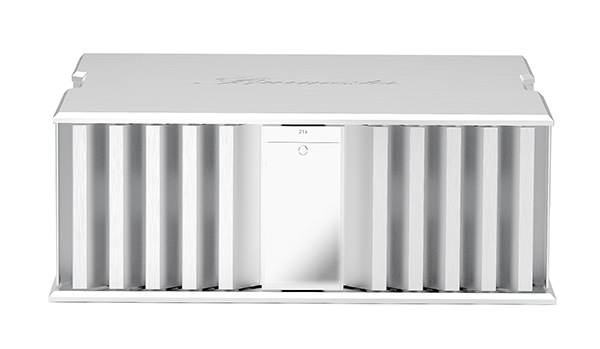
Burmester 216 energy amplifier
Burmester 216 energy amplifier
When I used to be supplied the chance to evaluation a Burmester productthe 216 stereo energy amplifierI accepted instantly, primarily out of curiosity. Berlin-based Burmester is a vital hi-fi model, however I knew little or no concerning the firm and their merchandise. What higher option to be taught greater than to evaluation one among their merchandise?
Burmester’s creation story
When you are constructing a hi-fi system, there’s one thing proper about beginning with the preamp. It simply is sensible. It’s what Dieter Burmester did in constructing a hi-fi firm.
The preamplifier is the operational hub of any hi-fi system (not counting programs that do not have a preamplifier), however that does not absolutely seize the preamp’s import. The preamp is the mind but in addition the brainstem, the spinal twine, probably the center. Its impression on a system’s sound could also be much less apparent than that of the loudspeakers, however that impression is nonetheless elementary, with emphasis on the basis phrase, "fundament": floor, basis. ("Fundament," I’ve simply discovered from an internet dictionary, may imply an individual’s buttocks. Please attempt to neglect that.)
Burmester began up in 1977 with the 777 preamplifier, which, as you possibly can inform as soon as you recognize Burmester’s nomenclature, got here into existence throughout July (the seventh month) of that yr. Dieter Burmester, an engineer and the corporate’s founder, was working within the medical tools area as a consulting engineer. Dieter was additionally an audiophile. He was impressed with the efficiency of sure op-amps utilized in his take a look at devices. He assembled the 777 out of medical-equipment elements.
That’s a chunk of the Burmester origin story: The preamp got here first, was elementary. But each fascinating story could be checked out from totally different factors of view. Looking at it from one other perspective, the historical past of Burmester goes again to an earlier level in Dieter Burmester’s historical past. Dieter Burmester was a guitarist. His first instrument was electrical bass. His tubed bass amplifier failed incessantly. He studied electronics to determine repair it. In time, he certified as a radio and TV restore technician. Then he constructed his personal, extra dependable bass amplifier to take to gigsand that was the beginning of his profession in sound and electronics. If my math is correct, this is able to have been round 1962, when he was 16 years previous. You might hint the corporate’s historical past again to that. Bass, then, is key: the second fundament.
Returning to that preamp: Dieter was pleased with the 777. He determined to arrange an organization. But the financial institution he approached for financing was skeptical. It doubted a lone engineer with little enterprise expertise might compete in an area dominated by large firms. They selected to not give him his mortgage. So Dieter went forward and constructed some preamps20 777salong with his personal arms and soldering iron. He bought them to mates at what was, for the time, a excessive value; on-line sources say the 777 price as a lot as a automobile. Apparently, Dieter had rich mates, fairly just a few of them. The mates who purchased the 777 have been joyful. That preamp will need to have been good.
Those 20 preamplifiers funded the corporate, no financial institution required. One of them made its option to a distinguished Berlin hi-fi seller, the place a distinguished critic for a distinguished hi-fi journal observed it. (Getting observed by a critic for a widely known hi-fi journal is, as everyone knows, the important thing to success on this business.) The following yr1978Burmester GmbH was based.
Told from this angle, the following theme of the storyBurmester’s third fundamentis the high-end factor. When it involves luxury-class hi-fi, Burmester isn’t any Johnny-come-lately. Burmester merchandise have been at all times costly.
For some time, preamplifiers remained at Burmester’s core. The firm’s second product, the 785, was additionally a preamplifier. It was fairly totally different from its predecessor, smaller and easier. The 777 had many knobstone controls, which might nevertheless be bypassed for these looking for purist sound. The 785 had separate left-and-right degree controlsa steadiness management, in impactplus the necessities: quantity management and supply choice. It was a bare-bones preamplifier.
From the 777 to the 785, the change with essentially the most long-term significance was aesthetic: The 777 had a placing gold end. The 785 was silver with a mirror end. That end grew to become the corporate’s aesthetic signature. I’ve by no means requested, however I think the end was meant to ship a message. "Transparency" is not fairly the appropriate phrasemirrors aren’t clearhowever it’s shut: Burmester merchandise mirror again at you no matter is on the recording.
Those early preamps, then, established the corporate’s worth system.
What about amplifiers?
Burmester’s amplifier legacy is newer and fewer well-documented than that preamp-based origin story.
The first Burmester amplifier I recall figuring out about was the 909, launched in 1990. The 909 was shortly adopted by the 911. Both have been stereo. Simon Pope, who handles press relations for Burmester, informed me that two amplifiers preceded these, each monoblocks: the 828 and the 850. The 850 was distinctive in that it got here in two variations, one for audio system with nominal impedance of 48 ohms, one other for 1020 ohms. In an e-mail, Pope described these early amplifiers as "aesthetically fairly quirky" and stated they "bear little resemblance to present merchandise in the way in which that the 909 does."
The 909, then, was the origin of recent Burmester-amp DNA, whereas the smaller 911, launched two years later, is the plain ancestor of the amplifier underneath evaluation, the 216, though there was a mannequin in between, the 956.
The instant predecessor of the 216, althoughthe 216’s daddywas the Burmester 159.
The kick inside
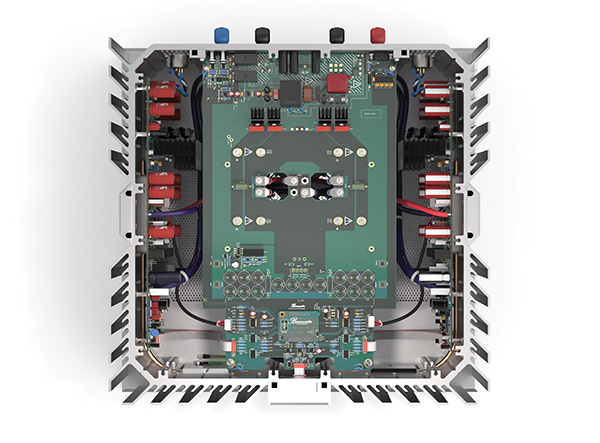
What this implies when it comes to technical designcircuit topology and so forthis not fully clear. Pope took a number of of my extra technical questions again to Burmester’s engineering division, which despatched again solutions. Those solutions are informative even when they do not fairly add as much as a complete, easy, technical story. Certain design rules are clear. Burmester believes in balanced/symmetrical design, direct-coupled enter to output. The 216 possesses these attributes.
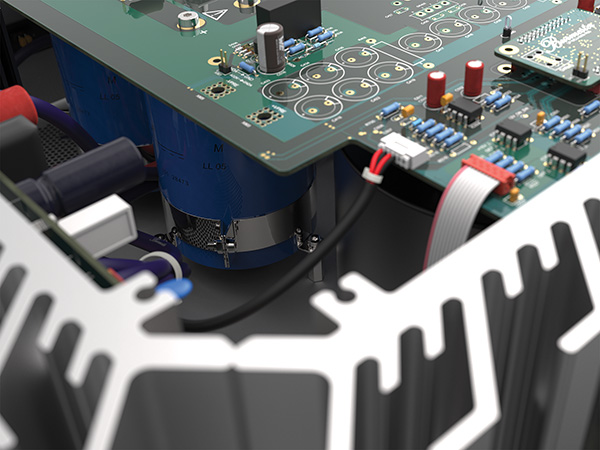
When I requested what had modified from the earlier technologyfrom the 159the primary level made by the engineering workforce needed to do with the "thermal idea," referred to elsewhere because the "cooling idea." In the 216, "there are actually common warmth pipes that permit us to maintain temperatures fixed and low at any level throughout the cupboard. These permit for higher thermal administration, which supplies us extra freedom in design and helps [increase] the lifespan of the facility amplifiers."
Other modifications have resulted from the provision of latest applied sciences, such because the microcontroller used within the safety circuit, which permits operation to be monitored from exterior the sign path. "This permits us to attain the operational reliability anticipated from a Burmester energy amplifier that may simply deal with tough hundreds and creates easy energy supply." Documentation I acquired features a few different fascinating particulars, similar to "silver cable within the enter part." Silver has increased conductivity than copper, however the distinction may be very small. Many declare that silver has a attribute sound; some prefer it, others do not. Certainly silver is per the Burmester design aesthetic.
Other factors from the design temporary apply to each the 216 and its 218 large brother: They have to be bridgeable to mono. They should stay brief sufficient to suit on an ordinary part rack, since that is the place many shoppers will wish to put a stereo amplifier, in distinction to monoblocks, which may fortunately sit on amplifier stands.
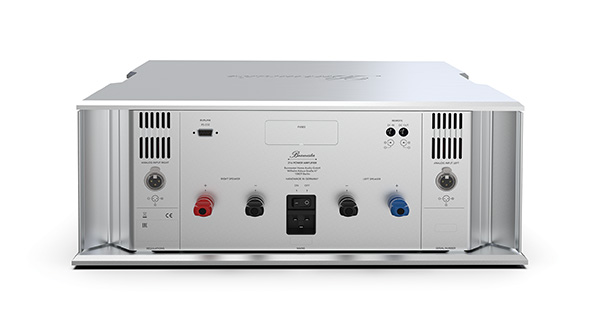
The new amplifiers incorporate Burlink, which, the web says, is both the shuttle service run by Burlington County, New Jersey, or Burmester’s proprietary system for interconnection and management. I’m betting on the latter. A remote-control On/Off operate was carried out with the brand new amplifiers, as was an Auto-Off function. Features like this are without delay unimportant and, within the new world we stay in, compulsory.
What else ought to I say concerning the 216 earlier than I begin listening to it? It would not warmth up my listening room a lot at idle, and it would not run up my electrical invoice as a lot as another amplifiers have, even with two of them operating, bridged for mono. I conclude from this that the output stage operates in class-AB.
The Burmester web site lists fundamental specs, like energy output; some others seem within the proprietor’s handbook. I’ve positioned these within the Specifications sidebar. Here are a few of the essential ones. In stereo, the 216’s most output energy is 100Wpc steady into 8 ohms, 165Wpc into 4 ohms, and 245Wpc into 2 ohms. Continuous energy when bridged to mono is quoted solely as a most: a formidable 490Wno load impedance talked about. In response to a question, Pope informed me it was protected to report that when bridged, the 216 is able to doubling the stereo output. For extra on the 216’s technical efficiency, see the Measurements part.
Regarding that comparatively modest energy specification: Experience convinces me that energy wants are constantly overestimated. As I write this, I’m listening with a distinct amplifier, which possesses an correct energy meter, with the identical audio system I’ve used to audition the 216, the Wilson Audio Specialties Alexx Vs. I’m attaining 80dB common listening ranges with lower than 10W. The "cruising" degree for this technique for critical listeningnot background rangesappears to be round 30W, with barely increased peaks. At 100W, I’m constantly exceeding 95dB; I’d not need music any louder. At this degree, with nominal 4 ohm audio system like these, the Burmester 216 has energy in reserve.
On the opposite hand, these Wilsons, whereas not a straightforward load impedance-wise, are fairly delicate. With less-sensitive audio system, it’s potential you’d want extra energy.
There’s a second method during which energy necessities are overestimated. Even when you might have, on paper, too little energy, the outcomes can nonetheless be satisfying.
A frequent misunderstanding is that most energy impacts bass response even at modest listening ranges. Theoretical energy limitations haven’t any impact on the sound till the facility runs out.
Setup
There’s not a lot to say on this part besides that Burmester despatched alongside two 216s. With the help of Pope, who stopped by for a go to, I put in them in my system this manner (as monoblocks) rather than the earlier monoblocks, two Pass Laboratories XA60.8sand cabled them up. I had at the very least one (and infrequently two) Burmester 216 amplifiers in my system for the higher a part of a yr, eradicating them sometimes to hearken to a distinct amplifier for some time or to ship them off to a Burmester seller for an occasion. I grew to become very conversant in the sound of those amplifiers, in stereo and monoblock configurations. Everything else you might want to learn about setup, yow will discover within the Associated Equipment sidebar.
Listening
There’s an irony inherent in high-end energy amplifiers: You pay so much to get as little as potentialas little character, that’s. This is the way it needs to be in principled hi-fi, and it is usually the way it truly is. That’s one of many issues I respect about this passion. Sure, some of us are aiming to impress their mates with one thing that catches their consideration, however the true fanaticand there are many them on the marketdesires a system that will get out of the way in which of the music, they usually’re keen to pay to get it.
This should trigger entrepreneurs at high-end audio corporations critical complications. How do you stand out from the gang when the purpose is to cover? What different enterprise are you able to consider the place the purpose is to make the product disappear?
HI-FI News
by way of InnerFidelity https://ift.tt/x932kGg
December 15, 2023 at 05:03PM
-
Product on sale
 Audiophile Vinyl Records Cleaning BundleOriginal price was: €69.90.€59.90Current price is: €59.90. incl. VAT
-
Product on saleEasy Start Vinyl Records Cleaning KitOriginal price was: €69.90.€59.90Current price is: €59.90. incl. VAT
-
Vinyl Records Cleaner Easy Groove Concentrate€34.95 incl. VAT
-
Easy Groove Super Set€199.00 incl. VAT
-
Easy Groove Enzycaster – vinyl records prewash cleaner€34.95 incl. VAT
-
Easy Groove Extreme MK. II- vinyl records prewash cleaner€45.00 incl. VAT
-
Vinyl Records Cleaner – Easy Groove Virgin Concentrate€35.00 incl. VAT
-
Easy Groove Spray&Wipe vinyl records cleaner€34.95 incl. VAT


