
World News
Copland Appalachian Spring
Copland Appalachian Spring
A easy Quaker hymn is the important thing to a basic mid-century ballet, says Peter Quantrill,
as he surveys recordings of each the chamber unique and the orchestral suite.
The Gift To Be Simple’, an previous Shaker tune quoted and developed all through Appalachian Spring, may very well be the motto for a significant a part of Copland’s work. Copland might write hard-edged items with one of the best of them, and did so particularly at the start and finish of his profession with works such because the Vitebsk piano trio of 1928 and the magnificent orchestral Inscape (1967). By distinction, his well-known scores of the Thirties and ’40s develop an aesthetic of simplicity and accessibility exemplified by Appalachian Spring, which he composed for the dancer and choreographer Martha Graham.
Rural Living
The unassuming setting is a farmhouse in a pioneer settlement, however Graham and her firm gave the primary efficiency on the Library of Congress in Washington in 1944. Accompanied by a chamber ensemble of 13 instrumentalists, Graham herself danced the a part of a newly married Pennsylvanian farmer’s spouse, the completion of whose home is the focus for a joyous celebration of American rural life within the early nineteenth century.
The following 12 months, Copland expanded the scoring to full orchestra. At the identical time he minimize out some transitional passages and completely omitted the looks of a hell-and-damnation revivalist minister (danced by Merce Cunningham on the premiere), who warns the younger couple concerning the trials that destiny might need deliberate for them. That episode had initially interrupted the set of variations on Simple Gifts, introducing each rigidity and turbulence at an important level and making the return of the hymn-tune within the remaining pages that rather more putting and transferring.
Other fingers have since orchestrated and reinstated Copland’s cuts, leaving us with 4 variations of various authenticity: the complete ballet in each chamber and full-orchestral variations, and his Suite in the identical two instrumentations. As a measure of its instant impression and recognition, the orchestral suite acquired 4 studio recordings inside a decade of the premiere. (Could that be stated of every other piece of classical music?) Conducted by names nonetheless well-known (Serge Koussevitzky) and far much less so (Arthur Rother, Fritz Litschauer and Howard Mitchell), these variations have lengthy since disappeared.
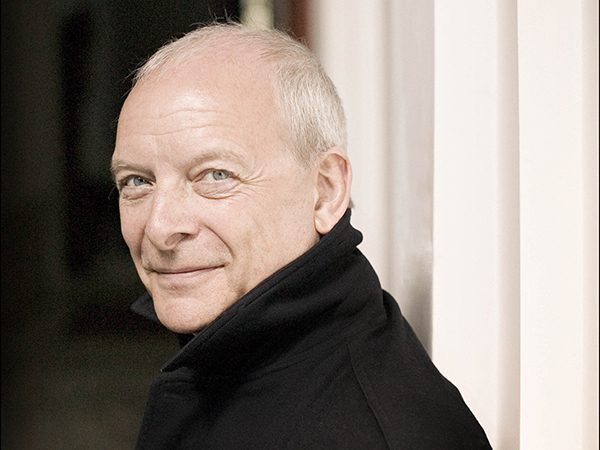
A pioneer and an authority on early music, Christopher Hogwood had an unlikely affinity for Copland
Mark of Genius
The early historical past of Appalachian Spring is documented as a substitute by sonically compromised dwell recordings of the orchestral suite, led by Mitropoulos in New York and Celibidache in Berlin. And no, the Berlin Philharmonic of 1946 haven’t any extra concept what to do with Copland than you’d anticipate. Try to solid your thoughts again to a time when Simple Gifts was not ubiquitously acquainted as an meeting hymn, a sticky ballad or a car for ersatz-Celtic prancing (The Lord Of The Dance). To its first audiences, Appalachian Spring felt fully new however comfortingly acquainted – a mark of genius?
By the time the composer himself stood earlier than a chamber group of session musicians in 1973, making ready to file the unique full ballet, he might start by saying with out false modesty, ‘I assume everyone is aware of this piece’. CBS/Sony left us a useful 17-minute sequence of rehearsal excerpts, which has appeared as soon as extra in a newly remastered field of Copland conducting Copland.
More than any strenuous evaluation, Copland’s off-the-cuff feedback inform you how the piece sounds, and may sound. ‘A heat, gentle sound, with none sense of effort. Not an excessive amount of assault on every observe. Watch out that we don’t get too sentimental, it’s a little bit on the Massenet aspect. Make it extra American in spirit, extra non-committal. This is passage-work, Miss Graham is dancing. The music by itself is heat, you don’t have to assist it. It’s not a lot a loudness as a bounciness that I’m in search of. Marcato however in a playful method. We’re not taking part in the Sacre du Printemps. It’s meant to be mild, bouncy, completely happy. Amerikanisch.

ohn Wilson on Chandos: hauntingly delicate to moments of magic.
No Guessing
All the identical, Copland the conductor serially betrays Copland the composer, being rhythmically disjointed regardless of his greatest efforts and evident intentions. ‘Not collectively! Don’t hurry! Why is that so arduous, gents, don’t guess!’ The most technically polished composer-conducted account is from 1970 with the LSO, nevertheless it’s relative.
For a few years, the model of the suite led by his buddy Leonard Bernstein retained primacy within the catalogue. With all due acknowledgment of Bernstein’s versatility, nevertheless, was Appalachian Spring really his sort of piece? He made two recordings of it, for CBS and DG, and by no means fairly shook off a species of beefy extroversion and Mahlerian depth. ‘More non-committal’ was not a phrase in Bernstein’s vocabulary.
In his personal method, Copland knew precisely what he was doing, writing a half-hour people ballet with ‘spring’ within the title. Mid-war, he spoke on to his viewers, they usually heard what they wanted to listen to in its quiet affirmation of rural middle-American and tonal values, rooted in non-denominational spirituality. (When they wanted a heroic story of perseverance and triumph a number of months later, he gave them that too, within the Third Symphony). Appalachian Spring was embraced as an expression of American historical past and id similar to VW’s Tallis Fantasia for the English.

The 1958 movie of Martha Graham and firm opens out Copland’s rating
Favourite Piece
Even greater than the rehearsal sequence, the 1958 TV movie (on YouTube, and a Criterion DVD) of Martha Graham’s firm dancing Appalachian Spring brings the shape and the gestures of the rating to life. Eugene Lester accompanies with extra sprightly tempi than standard, maybe opening out some Stravinskian affect within the course of (no unhealthy factor). The painstakingly moulded trendy variations by Slatkin (on Naxos) and Tilson Thomas [see Essential Recordings boxout, below] lose this narrative circulate.
Back within the late ’80s, the Orchestra of St Paul beneath Hugh Wolff recorded the whole unique model (for Teldec) with near-ideal sympathy and precision. In its continued absence, attempt Christopher Hogwood in Basle. There’s nothing particularly genuine concerning the vibrato-lite taking part in, however authenticity cuts deeper than that.
Back within the late ’80s, the Orchestra of St Paul beneath Hugh Wolff recorded the whole unique model (for Teldec) with near-ideal sympathy and precision. In its continued absence, attempt Christopher Hogwood in Basle. There’s nothing particularly genuine concerning the vibrato-lite taking part in, however authenticity cuts deeper than that.
Essential Recordings
Basel CO/Christopher Hogwood
Arte Nova 82876506932
The full ballet within the unique chamber model: performed, performed and recorded with lucid, plain-speaking vitality.
San Francisco SO/Michael Tilson Thomas
Sony 82876658402, RCA 09026635112
Full ballet, full orchestra: affectionate tempi and impressionistic textures underlining Copland’s mastery of orchestration.
Ensemble Ok/Simone Menezes
Aparté AP243
Suite, chamber model: faucets into the homespun modesty and ease like few others, however in high-finish trendy engineering.
BBC Philharmonic/John Wilson
Chandos CHSA5164
Suite, orchestral model: the Chandos engineering brings a wide-screen panorama to the open harmonies and durable dances.
Pittsburgh SO/William Steinberg
DG 4864442 (17CDs)
Suite, orchestral model: no-nonsense tempi from Steinberg, analytical Command Classics sound, newly remastered by DG.
Columbia CO/Aaron Copland
Sony 19439977462 (20CDs)
Complete ballet, chamber model: dry sound, even in a brand new remastering, patchy execution, however imbued with distinctive authenticity.
HI-FI News
through Hi-Fi News https://ift.tt/l1MCTL7
July 28, 2024 at 05:05PM
-
Product on sale
 Audiophile Vinyl Records Cleaning BundleOriginal price was: €69.90.€59.90Current price is: €59.90. incl. VAT
-
Product on saleEasy Start Vinyl Records Cleaning KitOriginal price was: €69.90.€59.90Current price is: €59.90. incl. VAT
-
Vinyl Records Cleaner Easy Groove Concentrate€34.95 incl. VAT
-
Easy Groove Super Set€199.00 incl. VAT
-
Easy Groove Enzycaster – vinyl records prewash cleaner€34.95 incl. VAT
-
Easy Groove Extreme MK. II- vinyl records prewash cleaner€45.00 incl. VAT
-
Vinyl Records Cleaner – Easy Groove Virgin Concentrate€35.00 incl. VAT
-
Easy Groove Spray&Wipe vinyl records cleaner€34.95 incl. VAT







