
World News
December 2023 Classical Record Reviews
December 2023 Classical Record Reviews
Richard Rodgers & Oscar Hammerstein: Oklahoma!
CHSA 5322 (reviewed as 24/96 WAV). 2023. Jonathan Allen, prod. & eng.
Performance *****
Sonics ****½
A whole recording of the music of Oklahoma!, the groundbreaking Broadway musical that decided the way forward for this distinctly American artwork kind, deserves a robust welcome. But from the Sinfonia of London fairly than an orchestra based mostly in New York?
Before accusing it of inauthenticity, pay attention up. Not solely is that this the first recording of the entire rating, together with all of the dialogue included inside vocal numbers; it additionally incorporates each pleasant notice in Robert Russell Bennett’s unique orchestrations. With an distinctive solid of singers whose Oklahoma accent is as plausible because the story itself, Oklahoma! sounds as contemporary because it should have sounded when it opened for an unprecedented five-year-plus run on the Great White Way.
Nathaniel Hackmann, beforehand the Broadway lead in Les Misérables, Jekyll and Hyde, and The Hunchback of Notre Dame, performs the lead position, Curly. An alum of San Francisco Opera’s famed career-launching Merola Opera Program, he sounds completely at residence within the Broadway idiom. Once he shifts from the forthright lyricism of "Oh, What a Beautiful Mornin’" to seductive softness within the reprise of "The Surrey with the Fringe on Top," chances are you’ll discover him superior to the unique solid’s Alfred Drake.
You’ll be equally hooked by the orchestral introduction to "Beautiful Mornin’," which sounds as if Richard Rodgers gained inspiration from the character sounds of Richard Strauss’s Alpine Symphony; by Curly’s a cappella introduction, which was omitted from the unique Broadway solid recording together with the important intersong dialogue; and the vary of colours produced by an orchestra of the identical dimension and composition because the one first heard on Broadway 80 years in the past. You’ll even hear genuine devices from the Nineteen Forties.
Simply great.Jason Victor Serinus
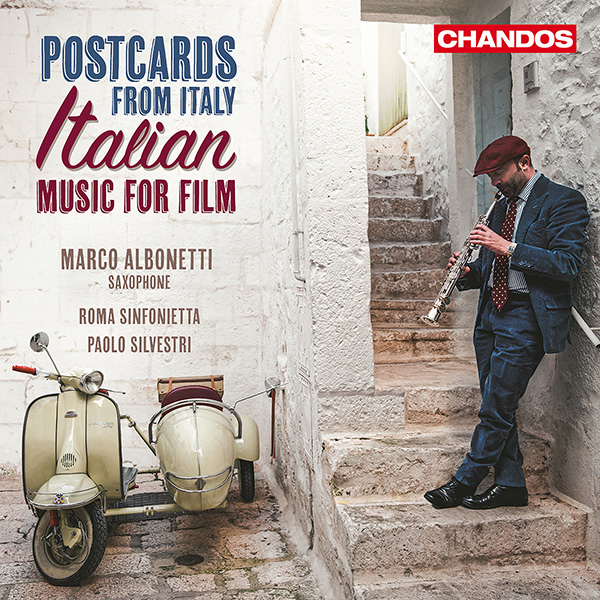
Postcards From Italy: Italian Music for Film
Marco Albonetti, saxophone; Roma Sinfonietta/Paolo Silvestri, cond.
Chandos 20291 (24/96 WAV). 2023. Marco Albonetti, prod.; Franco Patrignani, Davide Dell’amore, eng.
Performance ****½
Sonics ****
With the various earworm hits from Oklahoma! taking part in on repeat in my head, how may I resist one other earworm recording, this one that includes nice film themes from Morricone, Rota, and others? Many components make this recording so successful. Foremost are the melding of Marco Albonetti’s heat, easily seductive soprano saxophone and the silken strings of the Roma Sinfonietta string orchestra. Also contributing are knowledgeable chamber orchestra preparations and orchestrations by the Sinfonietta’s conductor, Paolo Silvestri.
Then there’s authenticity. Silvestri leads the orchestra that recorded a lot of Morricone’s movie scores the primary time, they usually additionally carry out within the heat acoustic of Forum Studios, in Rome, the place most of the nice scores of Italian cinema have been recorded. Piano interjections by Michelangelo Carbonara are one other bonus in a recording that favors appeal and heat.
Morricone’s themes from The Mission, The Legend of 1900, Nuovo Cinema Paradiso, Once Upon a Time in America, and Malèna are all heat, pretty, soothing, and tinged with nostalgia. Romantic to the core, they’re less complicated than "Amapola," an exquisite melody Morricone lifted from Joseph Lacalle for Sergio Leone’s Once Upon a Time in America. Rota’s music for Fellini’s Amarcord and La Dolce Vita, in addition to for Francis Ford Coppola’s The Godfather, is much less romantic, with "The Godfather Waltz" scoring factors for its haunting darkness. Who can neglect the circus components and unhappiness of La Dolce Vita? I’m much less satisfied by Silvestri’s repetitive "Theme from Controvento," and Gato Barbieri’s theme from Bernardo Bertolucci’s Last Tango in Paris jogs my memory as soon as once more of Morricone’s particular means to appease the soul and contact the guts.Jason Victor Serinus
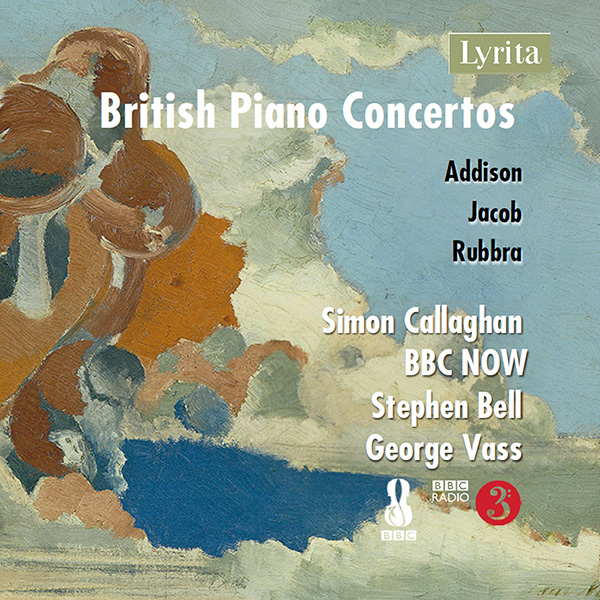
British Piano Concertos: Works by Jacob, Addison, and Rubbra
Simon Callaghan (piano), BBC National Orchestra of Wales/Stephen Bell, George Vass
Lyrita SRCD 416 (CD). 2023. Adrian Farmer, prod.; Andrew Smillie, eng.
Performance ****
Sonics ****
Three midcentury British concerti, unequivocally tonal, every composer utilizing the idiom to completely different functions. Gordon Jacob’s concerto begins out shiny and chipper, like one of many extra congenial postwar symphonists, and maintains a playful temper even by way of some angular traces and considerate, rhapsodic episodes. The gradual motion begins sparely, with woodwinds over sustained basses, ultimately opening right into a cautiously affirmative oboe solo and ambiguously spacious piano writing. A agency tread units the finale’s assertive tone.
At simply quarter-hour, John Addison’s rating begins and ends in brooding introspection; the variations soak up gently dissonant duets; broad, plangent cello and violin traces; and, briefly, a Hollywoodish kind of waltz.
From its brooding cor anglais opening, Edmund Rubbra’s concerto registers as extra substantial. The first motion’s major Allegro goes with a hearty maritime swing, punctuated by aggressive outbursts. An unsettled minor part disrupts the spacious gradual motion; the finale reverts to a proudly strutting Celtic jig.
Simon Callaghan’s clear, light-weight piano sound, crisply articulate, is right for Jacob and Addison, who favor linear figurations over huge, splashy chords. Callaghan is attentive to the various moods, with many pretty moments. In the larger-scaled Rubbra, the fast, rippling scales are limpid, the quiet bits pensive. The conducting serves, though Vass lets a quick passage in Rubbra’s finale come unstuck, and the ultimate chord is oddly unemphatic.
Much of the time, the orchestra sounds pleasing however barely recessed, even within the first of Rubbra’s climaxes. Conversely, expressive reed and cello solos, and the pungent low-clarinet and bassoon assaults, emerge with an nearly tangible presence.Stephen Francis Vasta
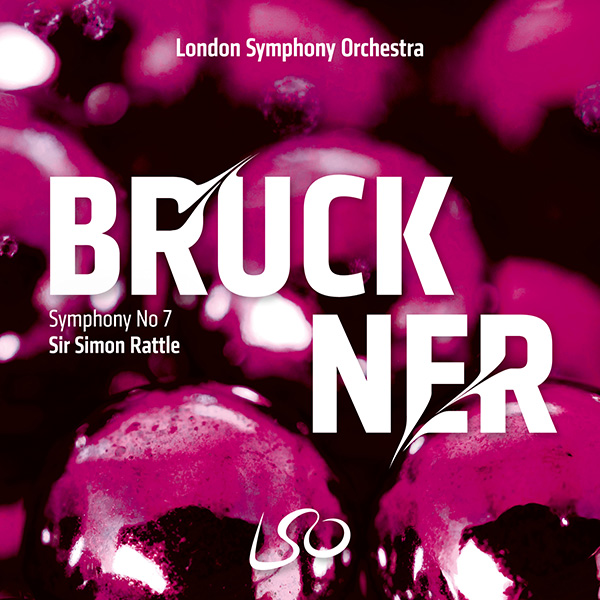
Bruckner: Symphony 7
London Symphony Orchestra/Sir Simon Rattle (cond.)
LSO Live LSO0887 (CD). Andrew Cornall, prod.; Neil Hutchinson, eng.
Performance ****½
Sonics ****
Back within the ’90s, this symphony was among the best entries within the younger Simon Rattle’s considerably checkered recording sequence for EMI. Fully a quarter-century later, he is improved upon it. His method has turn out to be faster and extra flowing, shaving a full six minutes off his earlier timing, but with out sacrificing the required breadth or tonal weight. Rattle notably excels at eliciting the thriller within the growth sections. Quiet passages go along with an exquisite hushthe Scherzo‘s recap is tenderly performedthough some, like the beginning of the ultimate coda, nearly get misplaced. Rattle retains a agency hand on the constructions all through, with no aimless wandering.
The heat, unified cellos at the beginning give solution to clear, uplifting violins; the event is formed with goalthe alla breve stays inside boundsand the recap’s "unique" motif has a proud stride. The Adagio, mournful and grave, rises aspirationally; the second theme is dignified, like a courtroom dance, although a swifter recap loses a few of that. The Scherzo rolls together with lightness and drive, a much less relentless juggernaut than some; its relaxed, singing Trio would not fairly handle "rustic." In the forthright Finale, the strolling basses may tread extra firmly, although the vaulting trombone statements are suitably ominous.
The occasional iffy, frayed assault or smudged arrival nonetheless betrays Rattle’s mainly catch-as-catch-can approach. We hear some tentative ritardsthe structural intent is laudable, the execution uncertain. The LSO is in any other case in high quality kind.
The sonics are pleasing. The first tutti brings a touch of an edge, however the issue would not recur; conversely, massed brasses sound full and current, although with out the anticipated depth. Woodwind and horn soli register properly within the lighter passages, and we hear a superb, deep maestro sniff to begin the Adagio.Stephen Francis Vasta
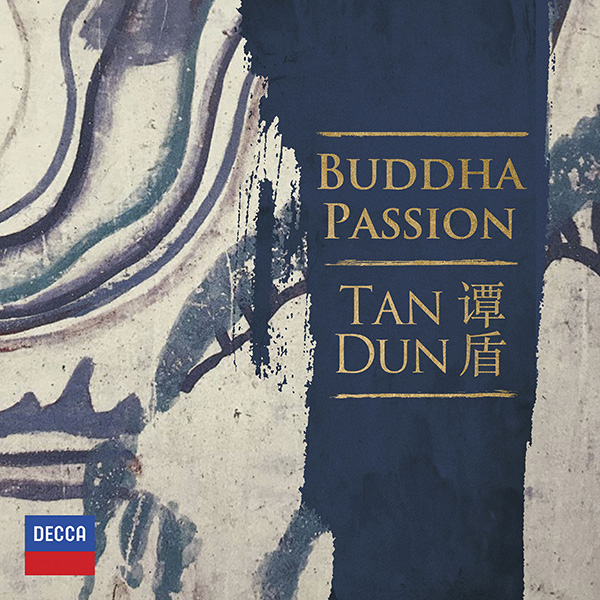
Tan Dun: Buddha Passion
Orchestre National de Lyon/Tan Dun, cond. Internationale Chorakademie
Decca 4854221 (5), 2 CDs (reviewed as 24/96). 2023. Tan Dun, prod.; Pan Bo, UUUStudio, Xiaoxing Lu, eng.
Performance *****
Sonics ****
Ever since I reviewed Tan Dun’s six-act Buddha Passion in Seattle’s Benaroya Hall in November 2022, I’ve eagerly anticipated this stay recording. Its mammoth battery of Western and Eastern devices and voices will check many techniques.
The sound world of Buddha Passion is an unique amalgam of East and West with a beneficiant dollop of three-strip Technicolor Hollywood movie rating within the combine. Inspired by the 2 years Tan Dun spent researching the 750 Mogao caves and 2000+ well-preserved sculptures that miraculously survive within the Buddhist depository and UNESCO Heritage web site within the Silk Road metropolis of Dunhuang, Buddha Passion sprinkles a Chinese fable about selflessness and respect for all dwelling issues with a serving to of echt-Christian disgrace and punishment. In addition to the big refrain, the work requires a baritone (Shenyang), mezzo-soprano (Huiling Zhu), tenor (Chuanyue Wang), soprano (Sen Guo), indigenous feminine singer (Weiwei Tan), indigenous male singer/ Dunhuang xiqin participant (Batubagen), Dunhuang fantan pipa participant (Yining Chen), and percussion: Tibetan double cymbals, rubbed Chinese cymbals, and clear paper cups in tubs of amplified water.
The work begins with chic serenity, evoking the stillness of silent meditation. The music of Act V: "Heart Sutra" is freed from artifice and full of extraordinary sounds. At act’s shut, "The Sutra of Compassion" expresses a paradoxical message: "Form is vacancy; vacancy is kind. … All issues … are in essence vacancy." But "vacancy" can’t describe when each instrument below the solar joins with the vocalists to provide a sensual battering ram of spectacular sound. Special kudos to Shenyang, whose good-looking voice recollects the best Broadway baritones on document. You’ve obtained to listen to this.Jason Victor Serinus
HI-FI News
through InnerFidelity https://ift.tt/7qka8Ad
December 8, 2023 at 09:01PM
-
Product on sale
 Audiophile Vinyl Records Cleaning BundleOriginal price was: €69.90.€59.90Current price is: €59.90. incl. VAT
-
Product on saleEasy Start Vinyl Records Cleaning KitOriginal price was: €69.90.€59.90Current price is: €59.90. incl. VAT
-
Vinyl Records Cleaner Easy Groove Concentrate€34.95 incl. VAT
-
Easy Groove Super Set€199.00 incl. VAT
-
Easy Groove Enzycaster – vinyl records prewash cleaner€34.95 incl. VAT
-
Easy Groove Extreme MK. II- vinyl records prewash cleaner€45.00 incl. VAT
-
Vinyl Records Cleaner – Easy Groove Virgin Concentrate€35.00 incl. VAT
-
Easy Groove Spray&Wipe vinyl records cleaner€34.95 incl. VAT


