
World News
E.A.R. MC4 Step-Up Transformer
E.A.R. MC4 Step-Up Transformer
I’m new to SUTs, higher often called Step-Up Transformers, small passive packing containers that allow your shifting coil (MC) cartridge and phono stage to work to their fullest potential. Many MC cartridges have very low output, a lot decrease than a shifting magnet cartridge; as such, they want extra achieve from a phono stage to be performed at regular listening ranges. While many fantastic phono levels have a piece particular for shifting coils, the expertise used, FETs or tubes, usually provides noise to the system. A well-designed and wound Step-Up Transformer can drop the noise ground decrease leading to higher sound.
Henley Audio gives an in depth rationalization of the science: Where phono levels, as a part of their sign amplification, can have a continuing resistive enter impedance, Step-Up Transformers have a frequency-dependent enter impedance. Step-Up Transformers are additionally passive (i.e. not mains-powered) units, decreasing the possibility of exterior electrical forces impacting the cartridge’s low output sign. The results of a Step-Up Transformer’s design is that they will amplify the MC output stage and produce much less harmonic distortion because the frequency rises – which is the other impact of a phono stage. This ends in a cleaner electrical sign and extra dynamic sound efficiency from the cartridge in a wider, deeper soundstage.
I’d heard of SUTs over time and knew some skilled audiophiles who swear by them however I assumed why add one other field, one other cable? Who wants one when you have a fantastic phono stage? My phono stage is the excellent Phasemation EA-350 Phono Amplifier (USD 6400) with a really fantastic MC part. I’ve by no means used the MM enter, however the EA-350 is a multi-function solid-state unit, good for a busy audio/music reviewer.
During an everyday cellphone name check-in with my good friend John Stratton (of Pure Fidelity Turntables), he recommended I strive a SUT he’d been auditioning; he was listening to distinctive outcomes. “Do you need to strive it”. “Sure, why not”, I replied. A number of days later it arrived on the Island.
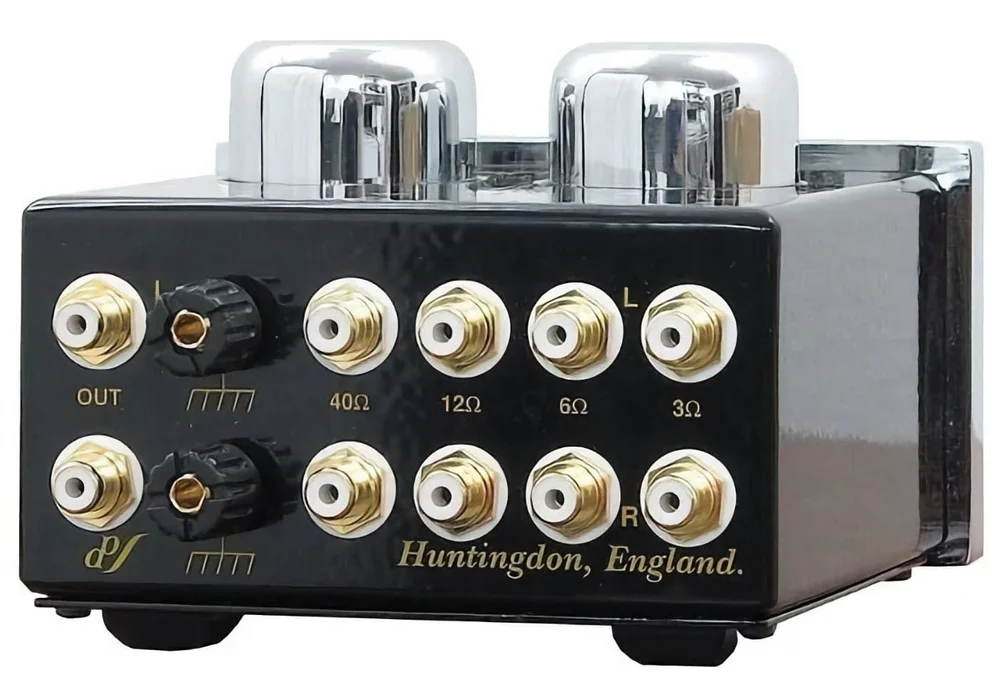
The small unit is the superbly made, placing EAR MC4 Cartridge Step-Up Transformer (USD 2500).

As famous on the thick chrome entrance plate, the MC4 was designed by Tim de Paravicini. Tim died in 2020 from most cancers. I had the pleasure of conversing with him on Facebook earlier than he died—tubes and remastering vinyl records, two of his favorite topics. Tim was a passionate idealist, a superb engineer who by means of his firm EAR Yoshino (1977), designed and manufactured many fantastic tube-based merchandise. Tim was an alchemist with transformers, too. And with SUTs, the magic comes from how the transformers are wound; the “recipe” if you’ll. And nobody was higher at constructing and winding transformers than de Paravicini.
The MC4 was one in every of three SUTs I’ve in-house for audition and comparability. In addition to Stratton, I’d wish to thank David Jensen of Red Leaf Audio for offering the Ikeda IST-201 MC Step-Up Transformer (USD 5400) (assessment up June 1) and Don Corby of Corby’s Audio for offering the Allnic Audio AUT-8000 Step-up (USD 4800). I had a magic backyard of SUTs with which to play.
My Use
SUTs are among the many most straightforward high-end units to hook up. However, it is very important select a transformer that may work with the impedance of your MC cart. I’d be utilizing the three SUTs with my Phasemation PP-2000 MC Phono Pickup Cartridge (4 ohms). 4 is low impedance—the EAR can accommodate cartridges of various impedances.
Connection is simple. The turntable phono cable is plugged into the enter and the output by interconnect to the MM enter in your phono stage (Don Corby recommended utilizing an extra phono cable for higher impedance matching. I used an Ansuz C2 interconnect and an Ansuz phono cable and heard no variations. YMMV). Unlike another SUTs, the EAR can deal with all kinds of MCs—select the impedance enter that finest matches your cartridge. For my 4 ohm Phasemation, I used the 3Ω (30x output). Others are 6Ω, 12Ω, or 40Ω. These produce an output of 24x, 18x or 10x enter voltage, respectively. Be certain to make use of the bottom, though I had no hum points with the MC4.
Specifications
– Frequency Response 3Hz- 100KHz +0.2dB-1.0dB
– Phase Linearity Less than ±5 levels (20-20KHz)
– Rise Time 2µSecs (any stage)
– Channel Balance Less than 0.1dB
– Channel Separation Greater than 70dB (20-20KHz)
– Hum Rejection Greater than 60dB (External Magnetic Fields)
– Equivalent Noise Contribution Less than 1dB
– Voltage Gain X30, x24, x18, x10
– Input Impedances (nominal) 3 ohm, 6 ohm, 12 ohm, & 40 ohm
Sound
Break-in is essential on all three SUTs into consideration. I might hear the enhancements from the EAR over my Phasemation MC part instantly out of the field. But break-in, fairly than annoying, is a pleasure as second by second the EAR continues to disclose probably the most fantastic particulars out of your valued file assortment.
As a gap gambit, I attempted a brand new addition to my file assortment, a near-mint Soria RCA Indianapolis early stamper of Charles Munch’s legendary Berlioz Roméo et Juliette (1839). The vinyl, clear as a whistle, sounds as contemporary because the day it was pressed in 1961. Specifically, I needed to listen to the “Queen Mab” Scherzo, a outstanding feat of orchestration, so fleet and delicate, that solely the easiest in analogue might apply if you’d like the complete impact. Reverting to the bare Phasemation, the sound of the RCA LP was fantastic, however this SUT was including some magic of its personal and proper out of the field.
The EAR’s preliminary efficiency had me grinning. What a beautiful shock—it’s robust to shock this audiophile after numerous evaluations and 30 years within the enterprise. We know for severe audiophiles, even worse, vinylphiles, we’ll stroll a mile for a 1% increment in effectuation. But the EAR was including greater than that; higher soundstage, quicker response however most of all timbral magnificence. The rattling factor sprinkles fairy mud over the efficiency stage. My God, the Boston Symphony muted violins sounded so candy by way of the MC4, regardless of the tempo. And the fantastic thing about their centred tone was magical. The efficiency of this masterpiece beneath the Phasemation MC was very lovely, however the MC4 took it to the divine. Is that 1%? I don’t know, however at first blush, the SUT experiment would now be troublesome to take away. Once heard, troublesome to unhear!
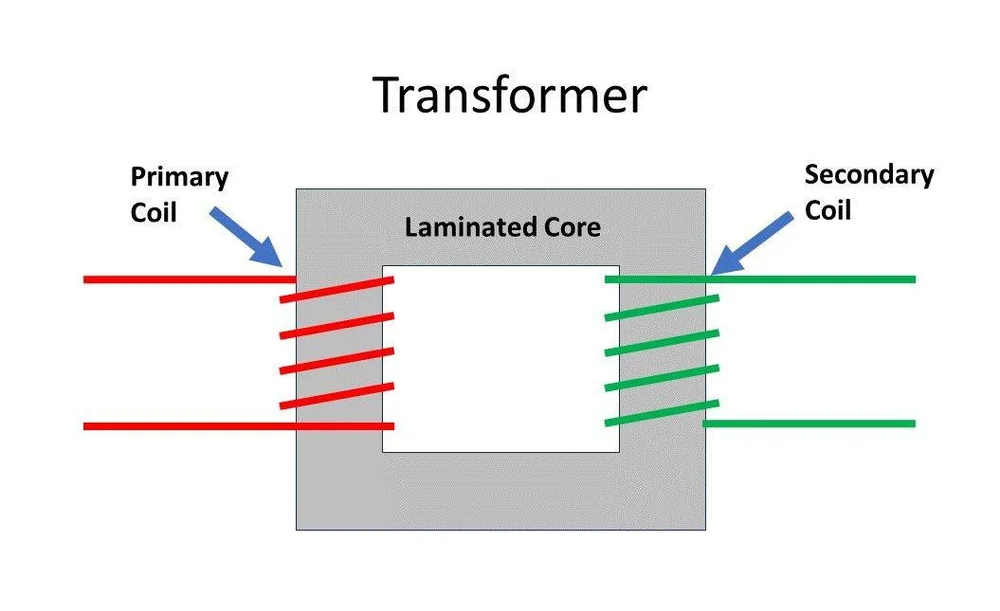
As I used to be listening, I used to be studying every thing I might collect about SUTs and their expertise. I made a decision to maintain it easy and assume large image—transformer winding and the sound emanating from that. But like every thing audiophile electrical, you will be swamped the weeds—impedance, enter, output, major winding, secondary winding, flip ratios, part deviation, transformer noise and hum rejection. Dizzying! You can ignore all that and simply guarantee you’ve got an excellent match to your cart’s impedance, maintain the (high quality) cables as brief as you’ll be able to, place the SUT away from energy provides, and join the best approach. The diagram beneath might be all you’ll have to know for those who’re barely inquisitive.
The beautiful tactile treble from Oscar Peterson’s proper hand by no means ceases to amaze me on We Get Requests. Whether "Quiet Nights Of Quiet Stars (Corcovado)" or "You Look Good to Me", Peterson’s contact is gossamer, however now with much more of that “fairy mud”. Remarkable sound from my Japanese urgent and Peterson’s method. Less mud on Bill Evan’s extra direct method on Bill Evans/Behind The Dikes: The First Official And Complete Release Of The 1969 Netherlands Recordings on Elemental Music Records vinyl. These recordings, now set on three marvellous LPs, are remastered from the unique Radio Hilversum analog tapes by Bernie Grundman. And my recollection of them at first pay attention was vivid—nice sound with Bill’s invention entrance and centre. The MC4 gave me extra Bill, extra of his wonderful trio, and forged a beautiful glow across the orchestral tracks, which I assumed much less profitable than the trio recordings when first auditioning. The orchestra sounds fuller and richer with the MC4 in place.
It was the identical for voices. Compared to the Phasemation’s MC, nothing earth-shattering, merely an interior glow and extra of that transformer alchemy. In all repertoire, the MC4 was extra coherent and tightly managed (in the perfect musical approach) than the Phasemation’s MC part. As such, I’m fully satisfied of the ability of a high quality SUT. And I’ve three from which to decide on. My alternative shall be revealed in a later video on my YouTube Channel (sure, there’s one which has been chosen for my reference—it’s transformative). Yet, within the right here and now, I can advocate this excellent SUT for its fantastic sound and comparatively cheap value. At USD 2500, the EAR is sort of half the piece of the Ikeda and Allnic I’m auditioning. And it performs effectively with all types of shifting coils. A outstanding deal to considerably up your analogue MC sport. Very extremely really useful.
Further info: EAR Yoshino



HI-FI News
by way of Audiophilia https://ift.tt/V8iQCXx
May 1, 2024 at 02:22PM
-
Product on sale
 Audiophile Vinyl Records Cleaning BundleOriginal price was: €69.90.€59.90Current price is: €59.90. incl. VAT
-
Product on saleEasy Start Vinyl Records Cleaning KitOriginal price was: €69.90.€59.90Current price is: €59.90. incl. VAT
-
Vinyl Records Cleaner Easy Groove Concentrate€34.95 incl. VAT
-
Easy Groove Super Set€199.00 incl. VAT
-
Easy Groove Enzycaster – vinyl records prewash cleaner€34.95 incl. VAT
-
Easy Groove Extreme MK. II- vinyl records prewash cleaner€45.00 incl. VAT
-
Vinyl Records Cleaner – Easy Groove Virgin Concentrate€35.00 incl. VAT
-
Easy Groove Spray&Wipe vinyl records cleaner€34.95 incl. VAT


