
World News
EBS Reissues BBB AAA
EBS Reissues BBB AAA
The Original Source titles launched this month are yielding high quality performances and high quality remasterings
After spending my earlier article gushing over Barenboim’s sonically thrilling Bruckner 4, we’re left with the three remaining Original Source titles for this month, that are a number of the most “meat and potatoes” repertoire we’ve seen up to now. Any respectable classical document assortment goes have a duplicate of those three works: Beethoven’s Symphony No. 6, Brahms Symphony No. 1, and Bartok’s Concerto for Orchestra. They are incessantly recorded and carried out cornerstones of what we for higher or worse, name the “canon” of western orchestral music, and every represents the peak of their respective durations of inventive fashion. Beethoven 6 in fact, represents the composer on the peak of early German romanticism (a mode Beethoven was instrumental in establishing), Brahms represents the center of the timeline of romanticism being premiered in 1876, whereas Bartok’s Concerto is kind of a send-off of the late-romantic orchestral fashion, blended with modernist tonality and folks music parts. These three works chart over the course of 140 years the dawn and sundown of the massive orchestral symphony.
Because these works are so typically recorded, these records have some stiff competitors for efficiency and sonics, and I’ll attempt to cowl a few of these on each bit. But there may be excellent news, these are a number of the most sonically constant Original Source releases I’ve encountered up to now, and it means issues are solely wanting up for the reissue label.
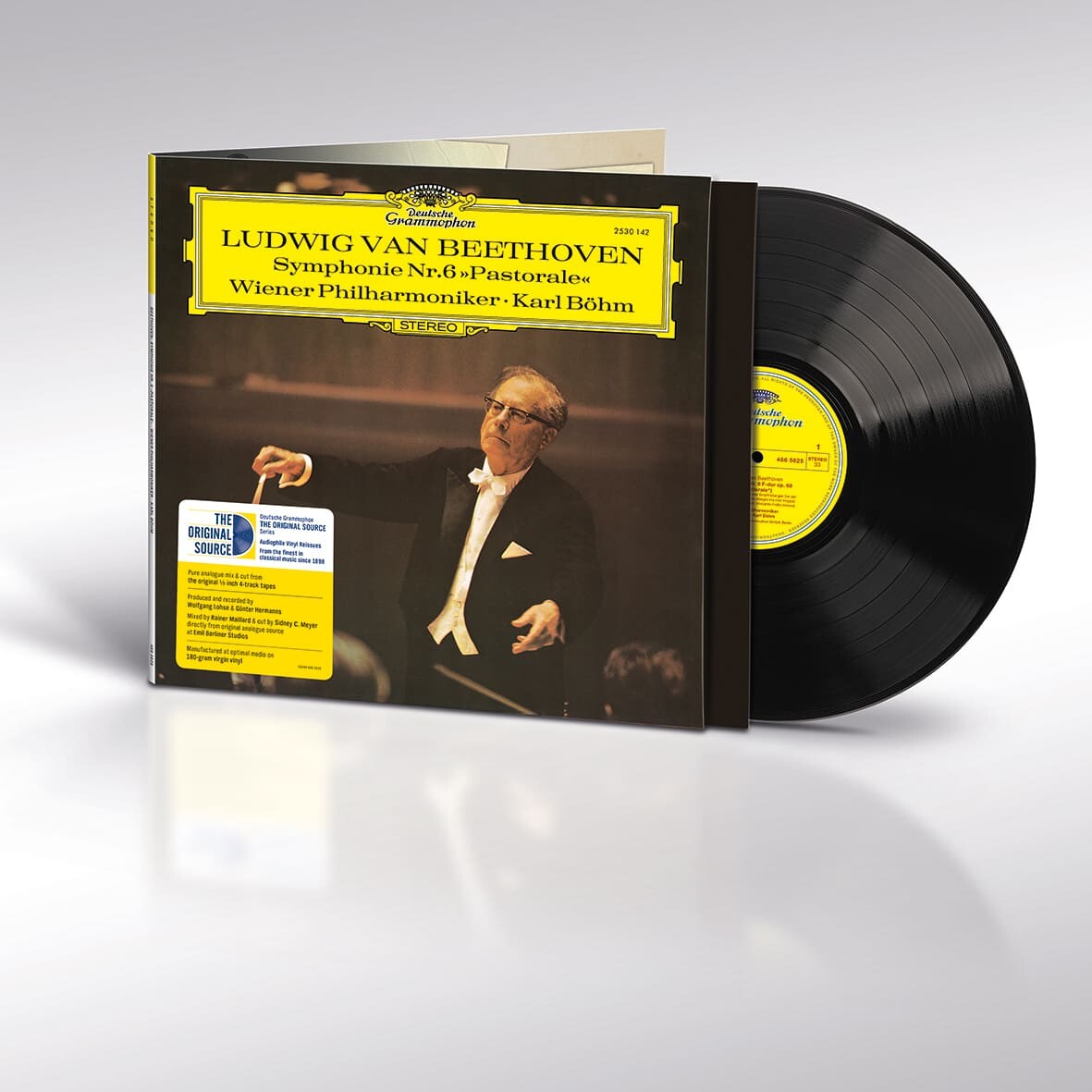
Ludwig van Beethoven’s (1770-1827) Symphony No. 6 in F Major “Pastorale” was premiered in Vienna in 1808 in an infamously poorly acquired live performance the place the well-known Symphony No. 5 in C minor was additionally premiered. The symphony is considered one of Beethoven’s few explicitly programmatic works (music which is supposed to painting particular scenes, occasions, or tales). It can be the one even-numbered Beethoven symphony that’s often programmed (the often-performed symphonies are 1, 3, 5, 6, 7, and 9). The “Pastorale” is likely one of the key works prompting the development of German romantic composer’s obsession with nature and naturalism. Composers typically discovered inspiration in nature, significantly as a result of it represented each social escape, but in addition mysticism and the unknown. This idea could be explored totally in operas like Weber’s Der Freischütz, and naturally Wagner’s Der Ring des Nibelungen. Beethoven’s work is impressed by his lengthy walks by way of the countryside in the summertime months, escaping the noise and inconvenience of metropolis life (and in some respects, the tough realities of his ongoing listening to loss).
The sixth symphony’s 5 actions every carry a subtitle:
-
I. Awakening of cheerful emotions on arrival within the countryside
-
II. Scene by the brook
-
III. Merry gathering of nation folks
-
IV. Thunder, Storm
-
V. Shepherd’s tune. Cheerful and grateful emotions after the storm
One can inform considerably by the titles of those actions, and maybe by the position of this work in the important thing of F Major, that this is likely one of the composers most joyous and lighthearted main works, a stark distinction to the seriousness of the Fifth Symphony. Even the violent fourth motion Thunder, Storm resolves right into a sunny dawn within the fifth motion. If you consider Beethoven as primarily writing anguished music, I extremely advocate you give Symphony No. 6 a attempt, it’s going to present you one other facet of ol’ Ludwig.
There are plenty of glorious performances of this joyous symphony on document. The one I’ve all the time reached for is Columbia MS 6012, a 1958 stereo outing of Bruno Walter conducting the Columbia Symphony. That efficiency is appropriately revered, and is fortunately accessible in each 33 and 45rpm variations from Analogue Productions. On it, Walter provides among the best performances of his high-fidelity profession, and it’s no marvel that it is likely one of the solely classical Columbia titles Chad Kassam has ever chosen to reissue. There’s additionally a exceptional 1959 studying by Pierre Monteux on beautiful RCA Living Stereo (LSC-2316) additionally with the Vienna Philharmonic, that has sadly not been reissued, however is just not too costly to search out in its unique shaded canine format.
The model in query right here has a number of the greatest sound I’ve ever heard from a DG Bohm recording, with taut low finish from the pizzicato low strings, and impactful transients from the timpani strokes within the storm motion. Strings have a beautiful tone and physique to them, and the Vienna woodwinds shine with their distinctive tonal coloration (Vienna woodwinds are distinctive in that they largely nonetheless retain the identical sorts of devices performed on within the mid nineteenth century). I want I may immediately evaluate the fantastic Walter and Monteux performances on document however alas I consider these two albums are nonetheless sitting unpacked someplace in my mother and father’ basement.
I used to be nevertheless, capable of evaluate this new Original Source urgent to a comparatively current AAA reissue of the identical recording from Pro-Ject records due to the generosity of our personal Mark Ward. The Pro-Ject model launched in 2019, is remastered from “the unique tapes” and is all analogue, however I think the unique tapes in query are an older stereo mixdown of the 4-track masters. One level the Pro-Ject model has over the brand new Original Source urgent is that’s spreads the music out over two LPs (with the 4th facet occupied by Beethoven’s “Egmont” overture). However, it appears Emil Berliner is doing one thing proper with these 4-track remasterings as a result of its model handily beats the Pro-Ject. There is way more info offered to the listener, larger element felt, particularly within the excessive register the place strings have larger air and harmonics. The distinction in combine and grasp are particularly felt within the horn calls of the motion 3: Allegro, the place the assaults have a 3 dimensional physique too them, fairly than the considerably tender and mellow entrances portrayed on the Pro-Ject model. The fourth motion “Storm” can be a victory for Maillard and Meyer as their reduce has far larger dynamic slam, imaging, and bass pace.
My recommendation: this can be a high efficiency with the Vienna Philharmonic at residence in repertoire they excel at. Yes, the Walter can be in-print and one of many important darlings of this piece. I can’t let you know which one to purchase, I wouldn’t need to be with out both (and shall be digging to search for my copy subsequent weekend), but when you choose this glorious Original Source urgent you gained’t be dissatisfied in any class.
Music: 10/11
Sound: 9/11
If anybody has typically been thought of the “inheritor” to Beethoven’s musical legacy, it’s German composer Johannes Brahms (1833-1897). In truth, fellow romantic Robert Schumann declared as a lot publicly to start with of the younger composer’s profession. Despite the nice expectations hoisted upon him, Brahms didn’t debut his first symphony till 1876 on the age of 43. Brahms’ first try at a symphony really morphed into his Piano Concerto No. 1 in D Minor. And his subsequent try took him some fourteen years! Brahms was his personal harshest critic and he was continually transforming and destroying his personal sketches. The comparability to Beethoven appeared to be each a blessing and a curse to Brahms, as a result of he continually felt the load of not dwelling as much as his legacy.
However the work, within the public’s eye, seemed to be well worth the wait, as up to date critics lauded the formalism of Brahms composition, even calling it “Beethoven’s Tenth”. The opening really begins with a proper introductory part, heralded by thunderous timpani strokes. The motion then settles into a standard sonata type, and that is the true distinction in Brahms’ music versus his contemporaries on the time; Brahms stored and expanded the formal constructions of the classical and earlier romantic eras. This was in distinction to newer compositional developments rising in Germany on the time, significantly the through-composed works of Richard Wagner who was thought of the way more radical and new musical voice of the time.
 All that stated, Brahms’ music does have its personal voice, and that’s considered one of intense expression and melodic lyricism. To perceive this, all one has to do is take heed to the hovering and stylish melodies of the second motion ‘Andante sostenuto’ to listen to the composer’s eager ear for melodic growth, up there with the chic arias present in Mozart’s greatest operas. The fourth motion ‘Adagio-Allegro non troppo ma con brio’ is the place we actually catch a glimpse of the composer’s experience in type and orchestral richness. The most important theme which enters within the exposition after the introduction is likely one of the most grand melodic traces within the repertoire, and in some ways harkens to Beethoven’s “Freude” tune from the Ninth Symphony. The growth of this theme nevertheless is kind of a bit extra superior than Beethoven’s, and it’s simple to get swept away following all the person fugal traces this melodic content material brings forth. It’s simply the very best motion of the piece and if you happen to’ve by no means heard a Brahms symphonic work earlier than, this can be sure you rope you in.
I personal far too many variations of this symphony, and regardless of that, no model has ever actually blown me away in all features. The one closest to me personally is George Szell’s 1957 recording with the Cleveland Orchestra on Epic Records (BC-1010). This is kind of the recording I grew up listening to, and it is likely one of the most musically satisfying variations I’ve heard. Unfortunately, these Szell recordings with Epic/Columbia simply by no means sounded superb. Just a few years in the past this LP was reissued by Speakers Corner records with enormously improved sound due to Kevin Gray’s remastering job from the unique Epic grasp tapes. However, in comparison with different variations I personal, this recording nonetheless doesn’t fairly reduce it within the audiophile division. That doesn’t matter as a lot to me although, as a result of the taking part in by the orchestra is bar-none in so many respects, with a number of the greatest oboe taking part in I’ve ever heard from then-principal oboe Marc Lifschey. Szell’s interpretation is taut and refined, he’s a management freak, however one which has a deep understanding of the musical type.
One superb sounding model I personal is an early 1961 Karajan "Living Stereo" recorded by the Decca staff with the Vienna Philharmonic (LSC-2537). Actually, I personal it as a part of a considerably uncommon Living Stereo “Brahms Symphonies” field set (LSC-6411) which I discovered years in the past on the previous Amoeba Records on Sunset Boulevard. This model has the trademark lush dwelling stereo sound that provides the violins and violas a 3 dimensionality different recordings simply can’t contact, even when the soundstage is a little more opaque and the general orchestra comes off as a little bit darkish. Karajan’s interpretation is the other of Szell’s, and the efficiency is slower and a bit extra indulgent of musical traces. The Vienna winds are additionally enormously softened right here, versus Cleveland the place they sing out with vibrancy, and there are some intonation points not discovered within the Cleveland studying. But, that is very good sounding LP stuffed with coloration that’s undoubtedly price monitoring down, it’s very comparable artistically to Karajan’s way more well-known Nineteen Sixties Brahms cycle with the Berlin Philharmonic on DG.

Speaking of that Karajan/Berlin Cycle; Emil Berliner really reissued that traditional field set in 2017 (0289 479 7429 1), reduce from the unique tapes by Rainer Maillard. This model may be very comparable in interpretation to his earlier Vienna efficiency, nevertheless I’d say the taking part in is of a bit finer grade (intonation for example, is significantly better right here). Sound is extra dynamic with a lot fuller and quicker bass than the "Living Stereo", though the strings sound fairly laborious and sometimes nearly screechy, as is the case with many DG recordings. It’s undoubtedly not as “lush,” however what you commerce for that’s element, soundstage, and slam. In some ways this mastering is similar to the Abbado EBS reduce, which I’ll in fact be attending to. It’s a disgrace that this Brahms cycle field set is out of print and significantly uncommon now, as a result of that is actually one of many “commonplace” “go-to” Brahms symphony cycle recordings. Deutsche Grammophon ought to actually do one other run of those, I’d assume the plates are nonetheless in superb situation contemplating solely 2250 packing containers have been produced.
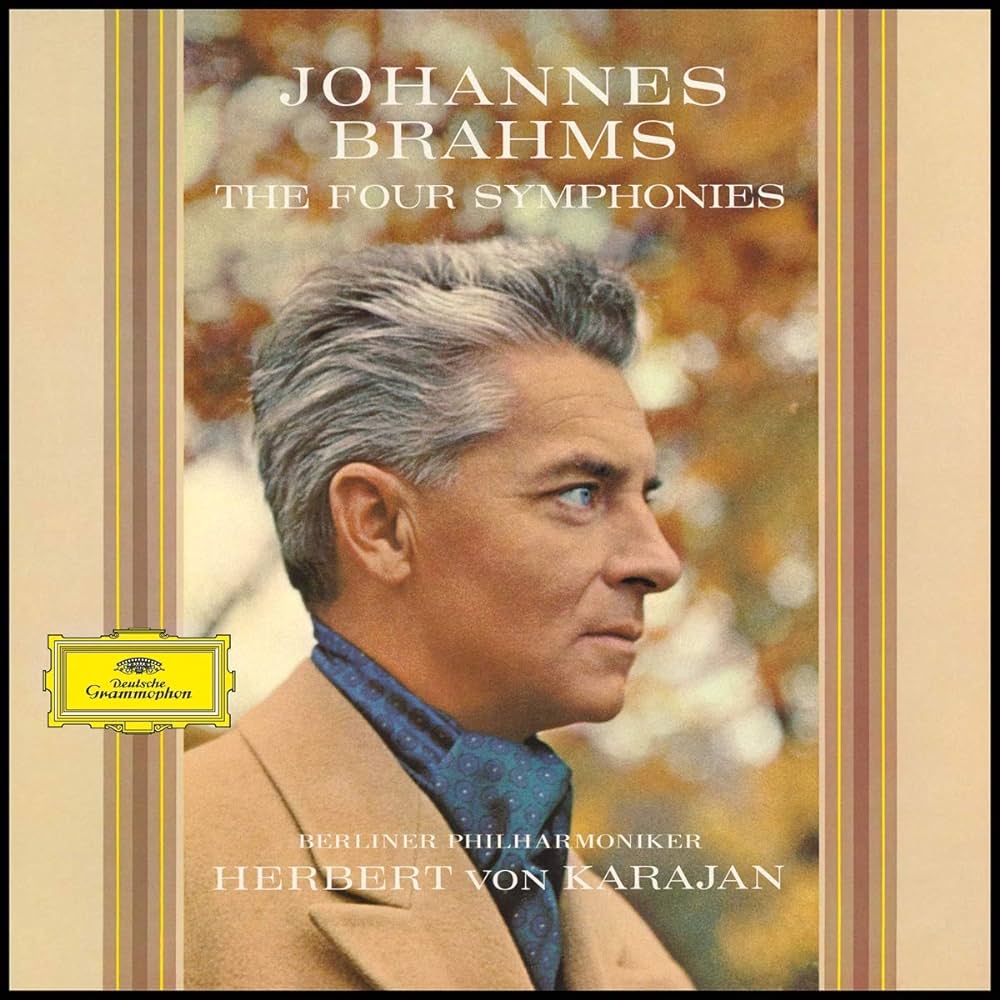 Are there different nice variations I personal? Sure, there’s Kubelik with Vienna on London Blueback (CS 6016), Solti’s full cycle with Chicago additionally on London (CSA 2406), and Maazel with Cleveland once more on London (CS 7007), Horenstein with the LSO on Quintessence (PMC 7028), the artistically glorious however sonically disappointing Walter with Columbia (MS 6389) after which in fact there’s one of many rarest choices: Rattle with Berlin from their binaural direct-to-disc field set additionally reduce by Emil Berliner (BPHR 160041). I did take heed to the Rattle for this evaluation however regardless of the wonderful sound and taking part in, it appeared a little bit of a protected and subdued rendition. The others I simply didn’t have sufficient hours within the day to match! There’s additionally a number of extremely regarded choices I don’t personal: just like the Klemperer/Philharmonia on UK Columbia (SAX 2262) which I’ve been in search of for years, and would like to get my palms on. My level is: this is likely one of the most recorded items within the historical past of the vinyl document, you might have loads of choices, so why contemplate this new reissue?
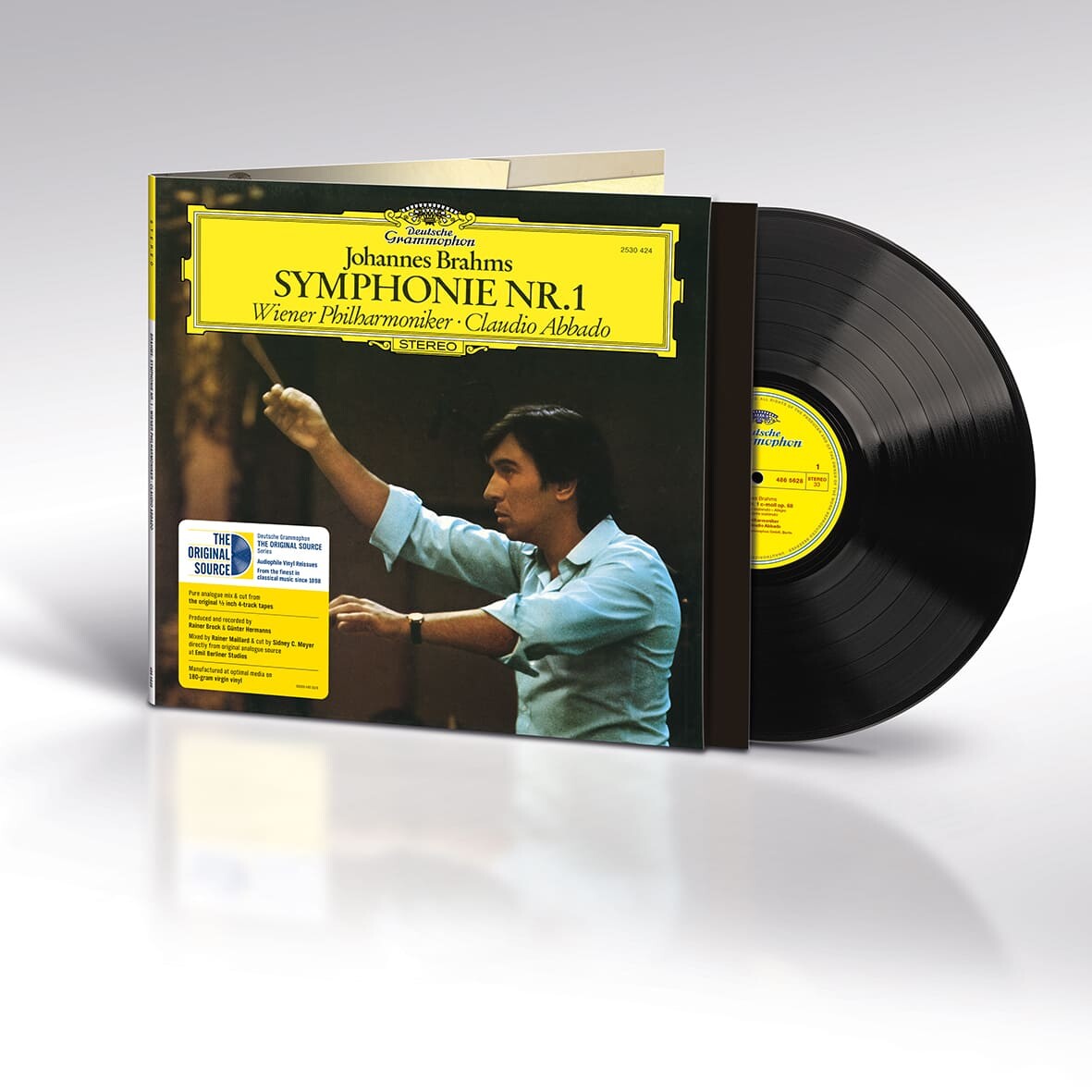
Claudio Abbado is just not somebody I sometimes consider when attempting to find interpretations of Brahms’ symphonic output, but right here with the Vienne Philharmonic the staff summons up a rousing and convincing efficiency. Vienna at this level and time is a extra well-oiled machine than within the 50s or 60s and it is obvious within the degree of taking part in from soloists and the ensemble as a complete. Intonation is worlds higher than the 1961 Karajan outing, and every thing feels extra assertive and assured. Abbado definitely has his detractors (a number of notable classical reviewers contemplate him hopelessly overrated and over-recorded) however as a listener I couldn’t assist however get pleasure from his course right here. There are some minor parts missing: the primary motion, particularly to start with feels a little bit not sure of itself, and sadly you want that rock regular dedication within the introduction to serve the fabric Brahms provides us. Also the fourth motion theme is just not fairly as expansive and grand as Karajan with Berlin, and there’s a bit much less freedom within the sluggish motion. However there are additionally some magical moments on this recording, and as soon as Abbado will get going he serves up some nice power alongside together with his trademark micromanaging of solo musical traces (it really works right here) If that is your first time listening to this symphony, I believe you’re in for a pleasant deal with.
The sound high quality right here is great, particularly within the remaining motion. The mastering EBS has accomplished to this recording helps it to excel over their earlier effort with the Karajan field. Strings are extra spherical, there’s extra air across the devices, and the large crescendos in direction of the tail finish of the work sound much more open and relaxed than the fairly tight and considerably shiny peaks on the Karajan/Berlin. There’s additionally a very nice sense of corridor sound right here, not a lot within the timbre itself, however fairly within the decay of notes and particularly the resonance left over within the massive orchestral “hits.” It seems like what you’d hear dwell within the viewers, and I do have a tendency to understand when recordings can seize that.
One minor gripe I’ve is that facet considered one of my document was drilled/pressed barely off-center, resulting in some unwarranted intonation wobble within the delicate moments of the second motion ‘Andante.’ It actually took me out of the “zone” as a result of if I used to be listening to that from a dwell orchestra definitely a number of the principal winds could be getting warning letters from administration! I gained’t knock the sound high quality ranking for that, as a result of it’s very clearly a urgent subject from Optimal, nevertheless it’s very irritating to come across points like this in classical pressings. None of my classic LPs exhibit such urgent points, and I ponder what high quality management points are occurring in fashionable urgent vegetation to permit this (Classic Records had infamous points with this various years in the past with their classical pressings). When you pay $40 {dollars} for a contemporary audiophile reissue you shouldn’t anticipate defects that warp the sound of the recording they’re supposedly producing essentially the most pristine model of.
I don’t anticipate the overwhelming majority of patrons to come across such a difficulty, so do I like to recommend this recording? Absolutely, particularly if you happen to don’t personal this symphony already on document. It’s a finely performed model in a number of the greatest sound I’ve heard from Emil Berliner but. It’s actually the one in-print audiophile recording of this piece simply accessible proper now, and if it does pique your curiosity in Brahms interpretations, it’s also possible to discover a plethora of different classic variations.
Music: 9/11
Sound: 10/11
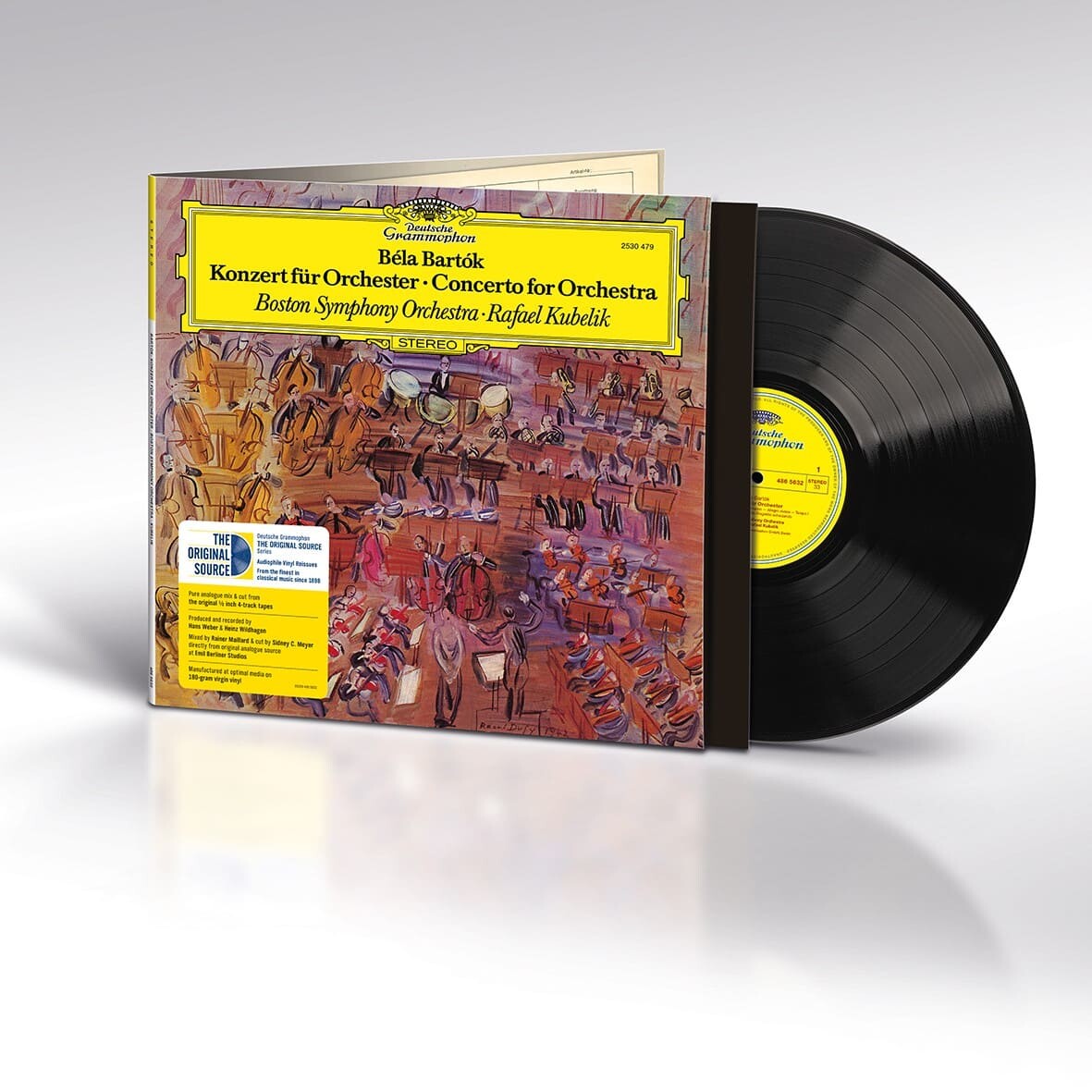
Hungarian composer Béla Bartók (1881-1945) was simply as vital within the growth of twentieth century symphonic music as Beethoven and Brahms have been of their respective careers. Despite an extended and distinguished profession in Europe, by 1940 the composer was in dire straits. He fled Hungary to the United States that 12 months to flee fascism, forsaking many vital connections and work as a conductor. Bartók was a lot much less nicely generally known as a composer within the United States than he was in continental Europe. Coupled with an unfamiliarity with American tradition, he felt like an outsider for the temporary 5 years he spent in New York City. He survived totally on a small analysis fellowship from Columbia University for his equally vital work as an ethnomusicologist (Bartók along with his present for composition, was an vital and thorough researcher on European folks tune traditions).
Moreover, Bartók’s well being was failing him. Soon after his arrival within the US he began experiencing a sluggish and regular onslaught of signs that at one level was believed to be Tuberculosis. It was actually Leukemia, for which the ailing composer wouldn’t obtain a prognosis till 1944.
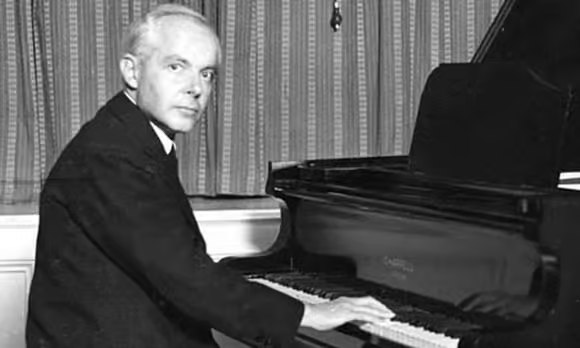 Bela Bartók on the piano
Despite the grim instances, Bartók did have mates and champions in American musical circles. One of these mates was fellow Hungarian conductor Fritz Reiner, who was a longtime champion of the composer’s music and a private good friend. Reiner lobbied one other esteemed conductor; Serge Koussevitzky, then music director of the Boston Symphony Orchestra, to fee a brand new orchestral work to be premiered by the orchestra. Koussevitzky and Boston premiered Bartok’s new Concerto For Orchestra on December 1st, 1944, simply 10 months earlier than the composer’s dying. It was his final orchestral work, and has turn into by far his hottest.
Part of the rationale for the success of the Concerto is the work’s accessibility, particularly in comparison with the composer’s different main orchestral works that are far much less melodic (his first two piano concertos are favorites of mine, however they’ll enchantment to a a lot smaller viewers than a piece like this). So what are the musical concepts and motifs behind this twilight interval work?
Bartók supplied some program notes himself for the premier in Boston:
The basic temper of the work represents, aside from the jesting second motion, a gradual transition from the sternness of the primary motion and the lugubrious death-song of the third, to the life-assertion of the final one… The title of this symphony-like orchestral work is defined by its tendency to deal with the only orchestral devices in a concertant or soloistic method. The ‘virtuoso’ remedy seems, for example, within the fugato sections of the event of the primary motion (brass devices), or within the perpetuum mobile-like passage of the principal theme within the final motion (strings), and particularly within the second motion, during which pairs of devices consecutively seem with sensible passages.
Bartók makes the clear distinction that this can be a concerto for a lot of completely different soloistic voices inside the orchestra, though these solo voices typically are present in doubles like within the 2nd motion Presentando le coppie, or in part tuttis. Despite its harmonic closeness to the orchestral custom, many parts of the Concerto are steeped within the composer’s eager information of Hungarian folks musical traditions, particularly the usage of uncommon modes and creative scale patterns. The use of those parts inside extra traditions kinds such because the Sonata type of the Finale.
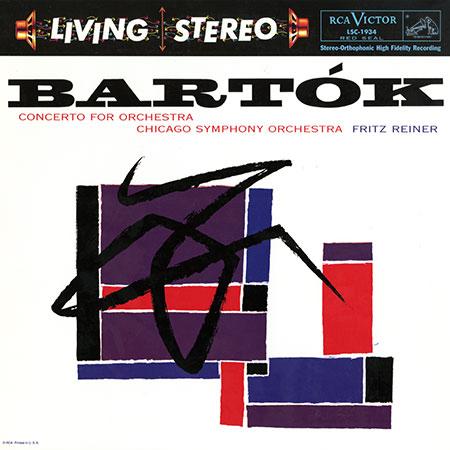
The main reference recording for this work has all the time been Fritz Reiner’s monumental 1956 studying with the Chicago Symphony Orchestra on RCA "Living Stereo" (LSC-1934). It has been reissued by the audiophile labels many time however most just lately (and excellently) by Analogue Productions with mastering by Ryan Okay. Smith at Sterling Sound. Reiner had a deep information and appreciation of this piece, and although Koussevitzky and Boston premiered the work, it all the time felt like Reiner actually had possession of it. However Czech conductor Rafael Kubelik’s 1974 recording with that very same Boston Symphony has made an impression over time as nicely, even lauded over the Reiner iteration by some critics, so I assumed it could be most prodent to match the 2, as they’re each now in-print!
Overall, the Kubelik recording offered here’s a punchy and clear rendition, with glorious soundstage and element, and really thrilling dynamics. It does lack a little bit of the richness of the Analogue Productions Reiner recording, with much less bloom within the low strings, and fewer heat general. I additionally felt a deeper and extra current bass coming from the low brass and percussion on the AP. However, the AP doesn’t have the extent of pinpoint element and readability that this DG remastering possesses, and whereas the bass is just not as uniformly deep or explosive because the AP, it’s tighter and extra refined, and there are a number of choose moments of actually deep bass that may shock these listeners with subwoofers. The incontrovertible fact that I’m weighing the professionals and cons of a 70s Deutsche Grammophon recording with anRCA "Living Stereo" recording reissued by Analogue Productions ought to let you know one thing although: that Emil Berliner has succeeded in making these records aggressive with longstanding legacy audiophile favorites, and that’s an excellent factor.
The taking part in on each renditions is convincing and glorious. The Reiner is extra of a “straight forward” studying, with energy and power, whereas Kubelik and Boston are likely to spend extra time of their phrases with a larger musical flexibility and tonal palate. Also, the person solo voices on the Kubelik come throughout as extra distinctive with larger expression. Honestly, each are excellent in sound and efficiency, and I believe they’re completely different sufficient that they provide distinctive experiences. If I needed to maintain just one, sorry, however the Reiner is staying, it’s lengthy been the go-to recording for therefore many followers of this work, however I’d nonetheless fortunately take heed to this new "Original Source" urgent and never really feel like I’m lacking something. The beauty of this passion is we’re allowed to purchase each, and that’s what I’d advocate right here, since you get to listen to the exceptional variations an interpretation could make to a bit.
Music: 10/11
Sound: 10/11
To sum it up: these releases genuinely impressed me, extra so than did earlier batches and positively greater than did the primary few months of this sequence, which I believe in hindsight can safely be described as early effort hit and miss. Thankfully there aren’t any misses right here. Each considered one of these records is spectacular and it makes the way forward for the in depth Deutsche Grammophon catalogue look very shiny.
HI-FI News
through Tracking Angle https://ift.tt/ac1D43P
May 14, 2024 at 07:54AM
-
Product on sale
 Audiophile Vinyl Records Cleaning BundleOriginal price was: €69.90.€59.90Current price is: €59.90. incl. VAT
-
Product on saleEasy Start Vinyl Records Cleaning KitOriginal price was: €69.90.€59.90Current price is: €59.90. incl. VAT
-
Vinyl Records Cleaner Easy Groove Concentrate€34.95 incl. VAT
-
Easy Groove Super Set€199.00 incl. VAT
-
Easy Groove Enzycaster – vinyl records prewash cleaner€34.95 incl. VAT
-
Easy Groove Extreme MK. II- vinyl records prewash cleaner€45.00 incl. VAT
-
Vinyl Records Cleaner – Easy Groove Virgin Concentrate€35.00 incl. VAT
-
Easy Groove Spray&Wipe vinyl records cleaner€34.95 incl. VAT







