
World News
February 2024 Classical Record Reviews
February 2024 Classical Record Reviews
Reinbert de Leeuw: Der nächtliche Wanderer / Abschied
Netherlands Radio Philharmonic Orchestra, Reinbert de Leeuw & Edo de Waart
Challenge Classics CC72957 (CD, reviewed as DSD). 2023. Anita Wijnen, prod.; Jan Stellingwerff, Frank Mathijssen, engs. Abschied eng.
Performance ****½
Sonics *****
The music of composer/conductor/pianist Reinbert de Leeuw (19382020) is as astounding as something I’ve heard. His remaining two orchestral works, each recorded reside, might have been composed 40 years aside, however each are advanced, layered, and stuffed with darkish, aggressive, and soul-shakingly violent power.
When de Leeuw wrote his Abschied (Farewell) in 1973, he felt he had mentioned all he may probably say via composition. He went out with an emphatic bang, with an nearly 23-minute piece with an air of emphatic finality that seems like universes colliding repeatedly till every part collapses, solely to renew colliding as soon as once more. Thanks to extraordinary digital restoration by Bert van der Wolf and Oude Avenhuis of Northstar Recording Services, the 2017 reside recording, performed by Edo de Waart, is assured to blow you away, assuming your system can deal with it.
Despite writing just a few subsequent works, de Leeuw eschewed composition for full orchestra till 2013, when he created and performed the world premiere of his 46-minute, single-movement Der nächtliche Wanderer (The Night Wanderer) for orchestra and taped accompaniment. (The tape contains accordionist Bart Lelivelt, and actor Steven Scharf reciting, in German, the poem on which the symphony is predicated.) After the remarkably real looking sound of a canine barking within the evening, the reside recording unfolds softly and slowly. Silence and texture are central to haunted passages finally punctuated by large percussive jolts and violent threats. The horror and terror of the music grows and accelerates till Hölderlin’s chilling poem about worry, strangling, and dying reaches our ears. The ending is as unforgettable as all that precedes it.Jason Victor Serinus
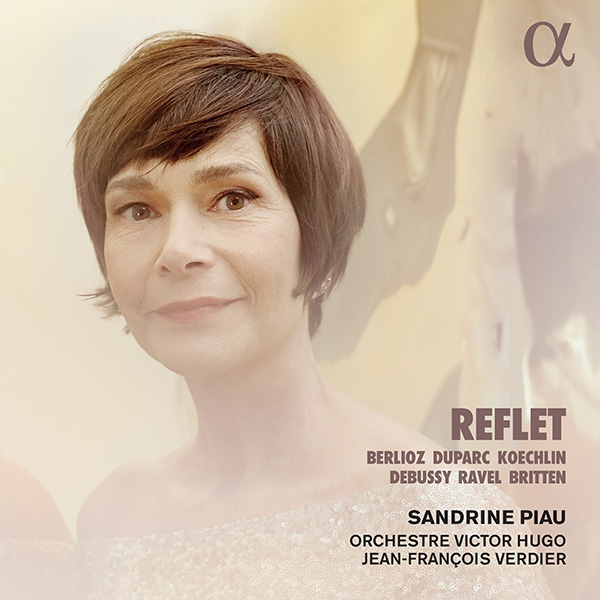
Sandrine Piau: Reflet
Sandrine Piau, soprano; Orchestre Victor Hugo, Jean-François Verdier
Alpha1019, CD (reviewed as 24/96). 2023. Vincent Mons, Laure Casenave, engs.
Performance *****
Sonics *****
Sandrine Piau is one thing of a miracle. Fifty-seven on the time of this recording, she sounds nearly as recent and freed from voice as she did in her late 20s. Her interpretations have grown deeper with the passage of time, however she retains an understated simplicity that transport us with sincerity somewhat than a surfeit of phrase portray.
Reflet consists completely of French songs about mild, illusions, and "the land of luminous transparency." Setting poetry by Baudelaire, Leconte de Lisle, Hugo, Verlaine, and others, it begins with the oldest music on this system, Hector Berlioz’s "Le spectre de la rose" from Les Nuits d’Été. Although Piau voices the very best notes with much less quantity than these instantly beneath them, her voice is so stunning, the sound so chic, the music’s thriller so completely conveyed that the rendition convinces. Then come two of Henri Duparc’s greatest identified songs, "Chanson triste" and "L’invitation au voyage." No one can substitute Maggie Teyte’s haunting slowdowns and idiosyncratic emphases, however Piau’s magnificence is profound, the magic of Duparc’s orchestrations absolutely realized.
Scattered between gloriously performed interludes by Debussy"Claire de lune" from Suite Bergamasque, orchestrated by André Caplet and "Pour remercier la pluie au matin," orchestrated by Ernest Ansermetcome Ravel’s Trois Poèmes de Stéphane Mallarmé, Britten’s Quatre Chansons Françaises, and Koechlin’s much less well-known Quatre Poèmes d’Edmond Haraucourt. Whether the temper be of sensual abandon amidst the dual pulls of affection and dying (Ravel’s "Soupir"), the intoxicating mixture of daytime scents and nighttime wonders (Britten’s "Nuits de juin"), or sheer fantasy (Koechlin’s "Aux temps des fées"), Piau lives every music as if composed for her. This is a wonderful recital.Jason Victor Serinus

Prokofiev: Symphony 5
London Symphony Orchestra, Gianandrea Noseda
LSO Live LSO0379 (CD). 2023. Nicholas Parker, prod.; Neil Hutchinson, ed.
Performance *****
Sonics *****
From the beginning, when the winds undertaking the opening theme with a stately dignity, Noseda lays out the Fifth with a gratifying readability and a strong sense of route. The agency, lyrical stream, removed from undercutting the grinding interjections, render their intrusions extra ominous. The second theme is conspicuously quicker; the forthright improvement underlines the obsessive-compulsive high quality of some accompaniment motifs. Throughout the motion, the broad, highly effective climaxes construct with out straining, and the sonorities, even at their loudest, stay clear.
In the Allegro marcato, the perky clarinet and different melodic parts, punctuated by lean, slashing accents, stand in sharp reduction towards the tick-tock accompaniments. The arrival on the Meno mosso is full-throated; the passage builds affirmatively, and its return is extra reflective. The accented basses present enough tonal weight to deliver off the flowing Adagio; the music slides nearly unnoticed into and out of extra dissonant, menacing episodes. At the climax, the brass triplets are clear and pillowy, not heavy and portentous; the excessive violins ease easily into the opening theme’s remaining recap. After a ruminative opening, the propulsive closing Allegro giocoso chugs alongside properly; the whirling themes give approach to relaxed, lyrical inflections within the second group.
The LSO, as advised, contributes posh, delicate enjoyingkudos to the principal reeds, particularly the clarinet, who retains busy. The wide-ranging engineering, and not using a hint of stridency on the peaks, is equally effective. All informed, that is actually the perfect new Fifth I’ve come throughout in an extended whereas, one which steers an knowledgeable center course between the gentle grandiloquence of the usual studying and the brisk, terse approaches of Szell and Jansons.Stephen Francis Vasta
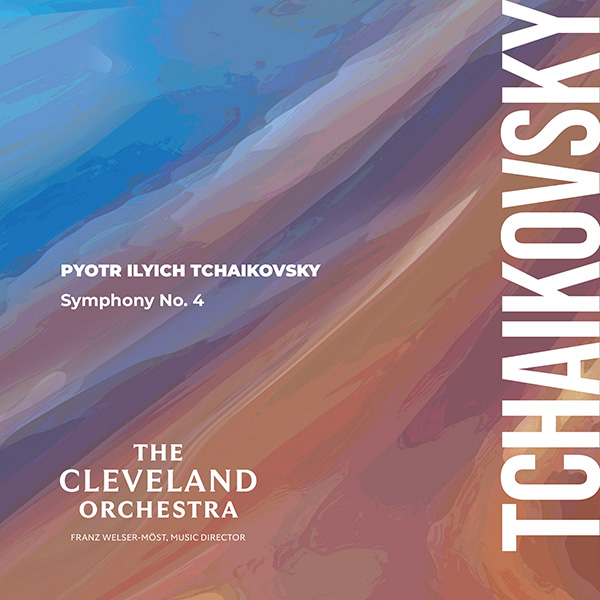
Tchaikovsky: Symphony No.4
Cleveland Orchestra, Franz Welser-Möst
The Cleveland Orchestra TCO0009 (16/44.1 WAV). 2023. Elaine Martone, prod.; Gintas Norvila, eng.
Performance ***½
Sonics *****
If you are on the lookout for a resplendent Fourth, right here it’s. The massive, deep brass replica within the opening fanfares; the clear woodwind definition inside a pure acoustic; the wealthy, resonant bass help because the textures increaseall this makes for probably the most "current," vividly coloured manufacturing ever.
Musically, we’re on barely shakier floor. In the primary motion, Welser-Möst avoids marking off sections within the customary method, enjoying it "all of a chunk." In the method, nonetheless, he can push ahead breathlessly. The horns shave day without work the longer notes of their opening fanfare; the Moderato bumps unceremoniously via its first main cadence; and the motto theme’s returns are hecticit is like a run-on sentence. Even when the conductor permits the clarinet to loosen up, he does not belief it, shifting issues alongside shortly thereafter. In the primary massive climax, the dominant strings push forward of the woodwind countertheme (discreetly obscured by the engineers).
The center actions go properly. The oboe sings merely within the Andantino, which makes a delicate touchdown on the central part; the pizzicato Scherzo, on this context, is surprisingly reasonable. The Finale suffers bouts of instability, the woodwind runs areproperlyrunny, the return of the motto hastens, undercutting its ominous energy. Still, it is bright-eyed and joyous, with good delicacy within the second group.
The enjoying is first-rate. The strings are silky and mysterious on the Moderato‘s beginalthough the bows typically sit unnecessarily lengthyand the Finale‘s forte runs are spanking clear. The reeds are delicate, the brass agency and forthright. The textures are clear, even at full throttle with the percussion going; quiet passages are all a notch above the indicated dynamics however retain a mild demeanor.
So a lot excellence; I want it have been constantly maintained.Stephen Francis Vasta
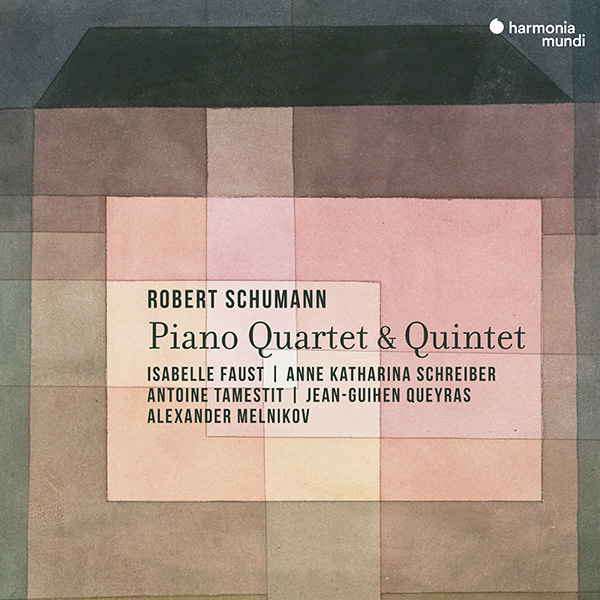
Robert Schumann: Piano Quartet & Quintet
Isabelle Faust, Anne Katharina Schreiber, Antoine Tamestit, Jean-Guihen Queyras, Alexander Melnikov
Harmonia Mundi 902695, CD (reviewed as 24/192). 2023. Stephan Cahen, prod. and eng.
Performance *****
Sonics ****
This dream of a recording unites 5 of our best interval instrument soloists in two of Schumann’s biggest chamber works. Composed in 1842 only a few weeks aside, these wonderful compositions for piano and strings share with the songs of 1841 a love of magnificence and life tempered by high-Romantic sorrows and dramas.
The quartet begins deceptively in a mournful mode earlier than the clouds elevate and lyricism abounds. Even so, amidst the music’s romantic flights, pleasure can by no means be assumed. The second motion scherzo scurries about restlessly earlier than ending on a hopeful word, on the very finish. Song is on the coronary heart of the subsequent motion; the melody is beautiful and tender. Only within the spirited finale does Schumann lastly appear to say that he is writing music like this as a result of he can, so let’s drop our guard, have a good time, and benefit from the chase.
I have not listened to Schumann’s chamber music for a few years. I used to be delighted to search out myself greeting the opening bars of the Piano Quintet with the thought, "Oh, it is this one!" Once you hear the music, you could really feel equally, as a result of the opening melody and wild tumble that observe are unforgettable. The distinction with the second motion’s funeral march is intense. Its melody, too, has such a profound impact on listeners that it is no marvel that it surfaced in Bergman’s movie Fanny and Alexander and in much less chic style in Buffy the Vampire Slayer. The third motion scherzo is one other wild chase, up and down, culminating in delightfully energetic style. Romance reigns within the remaining fugue, which leads a few of the most marvelous music to ever finish a quintet.
Sonically, the intestine strings often sound a mite grainy in fortes, however usually the genuine sonorities of the interval devices seduce.Jason Victor Serinus
HI-FI News
through Stereophile.com https://ift.tt/6JtrnHl
February 9, 2024 at 05:39PM
-
Product on sale
 Audiophile Vinyl Records Cleaning BundleOriginal price was: €69.90.€59.90Current price is: €59.90. incl. VAT
-
Product on saleEasy Start Vinyl Records Cleaning KitOriginal price was: €69.90.€59.90Current price is: €59.90. incl. VAT
-
Vinyl Records Cleaner Easy Groove Concentrate€34.95 incl. VAT
-
Easy Groove Super Set€199.00 incl. VAT
-
Easy Groove Enzycaster – vinyl records prewash cleaner€34.95 incl. VAT
-
Easy Groove Extreme MK. II- vinyl records prewash cleaner€45.00 incl. VAT
-
Vinyl Records Cleaner – Easy Groove Virgin Concentrate€35.00 incl. VAT
-
Easy Groove Spray&Wipe vinyl records cleaner€34.95 incl. VAT


