
World News
February 2025 Classical Record Reviews
February 2025 Classical Record Reviews
Caroline Shaw: Leonardo Da Vinci (soundtrack)
Attacca Quartet, Sō Percussion, Roomful of Teeth, John Patitucci
Nonesuch 075597898408 (LP). 2024. Jennifer Dunnington, David McMahon, and Caroline Shaw, prods; Alex Venguer, others, engs.
Performance ****
Sonics ****½
Film soundtracks are a broad canvas that may open many new prospects in addition to challenges for contemporary composers. On one hand, having an accompanying picture permits for expressive freedom, however that’s usually offset by the often-brief length of cues. Brief, allusive bursts could make for a jumpy, disjointed album. Here the purpose of composing lasting music that may stand alone with out the pictures is gloriously achieved by composer Caroline Shaw, whose numerous résumé contains collaborations stretch throughout a large spectrum of abilities from Renée Fleming to Nas. As a portrait of the genius of da Vinci, or what co-director McMahon calls including "depth and dimension to Leonardo’s interior life," Shaw makes use of these three ensemblesthe Attacca Quartet, Sō Percussion, and Roomful of Teethand jazz bassist John Patitucci, throughout 28 tracks. Recorded in NYC, L.A., and San Francisco, the sonics are peerless and resonant all through. One of Shaw’s apparent missions right here was to mirror non secular music from da Vinci’s time however in a strictly secular means.
Here within the 2:22-long "Atmosphere," she expertly mixes bobbing voices and plucked strings to create the state of its title. "Pleasure and Pain" moodily mixes chanting wordless vocals with a solo violin. "Microcosm and Macrocosm" opens with extra plucked violin however quickly turns into a close to concerto, all of it packed right into a mere 2:41. Again, the brevity of those cues compresses Shaw’s concepts and vitality into small however extraordinarily important packages. The longest observe (5:10), "The Virgin and Child with Saint Anne," makes use of lengthy wordless vocal traces that develop in depth and are uplifting in a means that means da Vinci’s blossoming genius. Like its topic, this can be a soundtrack stuffed with brilliance and invention.Robert Baird

Ethel String Quartet: Persist
Works by Allison Loggins-Hll, Migiwa "Miggy" Miyajima, Xavier Muzik, Sam Wu, and Leilehua Lanzilotti
Sono Luminus DSL-92281, CD (reviewed as 24/192), 2024. Elaine Martone, Sonarc Music, prod.; Daniel Shores, eng.
Performance ****½
Sonics ****½
If you might be unfamiliar with the 5 composers who contributed works to Persist, it isn’t stunning. All acquired commissions from a 15-year-old commissioning program for early-career composers based by Ethel, the ever-adventurous New Yorkbased mostly string quartet that is been exploring new territory since 1998.
All these comparatively younger composers hail from traditionally underrepresented backgrounds. Guest flutist Loggins-Hull, who teamed with Ethel to solicit, choose, and collaborate with the composers, contributes the title work whose music displays the ideas of "perseverance, motivation, and constructive outlook." Most of its actions are extraordinarily compelling, though the one meant to embody a way of urgency and alarm sounds far an excessive amount of like Looney Tunes for its meant that means. The liner notes do not stipulate a percussionist, however the sounds within the motion that remember power, potential, and overcoming adversity are particularly fascinating.
I used to be deeply taken by Sam Wu’s beautiful Terraria. Inspired by varied manifestations of terraria, distinctive tiny closed-loop ecosystems with their very own water and carbon cycles, the music teems with life. Wu writes fascinating music that deserves your consideration.
Motivated by problems with "language sovereignty, water sovereignty, land stewardship, and respect," Leilehua Lanzilotti, the Hawaiian-born 41-year-old Kanaka Maoli composer/sound artist, wrote We Began This Quilt to commemorate the accomplishments of Queen Lili’uokalani, the final monarch of the Hawaiian Kingdom, who was overthrown and imprisoned by a US-led coup whose purpose was the annexation of the Hawaiian Islands. Vital stuff.Jason Victor Serinus

Zlata Chochieva: Works for Piano and Orchestra
Zlata Chochieva, piano; BBC Scottish SO/Karl-Heinz Steffens
Naïve V8448 (CD, 2024). Andrew Keener, prod.; Dave Rowell, eng.
Performance **** (Prokofiev) ***** (Rimsky, Tsfasman)
Sonics ****½
Prokofiev’s Second Concerto is Chochieva’s centerpiece right here. She brings nuanced dynamics and inflections to the primary motion, pointing the angular second theme properly. The scales ripple out with lovely readability, however the uppermost vary exposes her limitations: tender single notes are tight, not pearly, whereas the complete chords are missing in depth. The unhurried Scherzo chugs alongside steadily; the Intermezzo‘s weighty tread recollects Romeo and Juliet’s "Dance of the Knights." Brilliant scherzando gestures and a few extra vigorous chugging hold the Finale going; simply as you assume it is throughout, Chochieva and firm broaden right into a considerate codagood.
Rimsky-Korsakov’s concerto, its three transient actions performed attacca, is the compact lead-in. Piano and orchestral themes alike comply with Russian folks contoursit is the shapes, somewhat than the tunesthat linger within the thoughts. The introspective central piano solo, framed by solo obbligati, means that Rimsky knew Liszt’s second concerto, whereas each outer actions construct to spectacular climaxes. The first motion’s fast scales are dazzling; the colourful closing Allegro gives loads of back-and-forth between soloist and orchestra.
Alexander Tsfasman, a pupil of Horowitz’s instructor Blumenfeld, gave the Russian première of Rhapsody in Blue. His pleasant Jazz Suite places a spin on classical varieties (waltz, polka); it is mild in texture and temper; even in critical moments the orchestral taking part in is targeted and compact. Scurrying patterns in Rimsky’s Finale aren’t all the time collectively, however the cello and clarinet obbligati are shifting. Strings carry Hollywood-ish glamor and sheen to the Tsfasman. Clarinet triplets within the Prokofiev betray an odd resonance; in any other case, the sound is great.Stephen Francis Vasta

Rococo: Works by Tchaikovsky, Chopin, Dvořák, Rachmaninoff, and Shostakovich
Edgar Moreau, cello; David Kadouch, piano; Luzerner Sinfonieorchester/Michael Sanderling, cond.
Erato 5021732430625 (CD, reviewed as 24/96), 2024. Martin Sauer, prod.; Teldex, eng.
Performance ****
Sonics ***½
Don’t be misled by the title; there may be nothing remotely rococo about Rococo‘s repertoire save for the theme of the title work, Tchaikovsky’s beloved Variations on a Rococo Theme, Op.33. The the rest of the repertoireChopin’s beautiful late Cello Sonata in G minor, Op.65, and brief items by the composers listed aboveis equally romantic to the core. Even the closing work, Shostakovich’s jazz-tinged Waltz II from Suite for Variety Orchestra No.1 as transcribed by Kadouch and Moreau, comes throughout as if the performers wished to wrap the complete program with a beautiful, scented bow.
Despite this system’s romantic coronary heart, nobody delivers a heart-on-sleeve efficiency. Moreau favors a fantastically proportioned, even stream that, in Tchaikovsky’s Variations, isn’t disturbed or upstaged by Sanderling’s somewhat reticent, flat-sounding orchestra.
These forces inhabit a far completely different world than that of Mstislav Rostropovich and the Berliner Philharmoniker underneath Herbert von Karajan, the place tempo and dynamic emphasis change ceaselessly, and the orchestra interjects its distinctive voice into the melody line.
The similar holds true for the opposite works. You will discover little of Fritz Kreisler’s unforgettable bending and sliding in his association (for his personal violin) of Dvořák’s Humoresque No.7. Only in Rachmaninoff ‘s orchestration of his beloved Vocalisethe place Moreau and Sanderling select a far slower tempo than somedoes the efficiency absolutely embrace the music’s inherent romance. Ultimately, they’ve given us the right feel-good program, best for dinner by candlelight, by which smiles, heat, and sweetness predominate over sighs and tears.Jason Victor Serinus
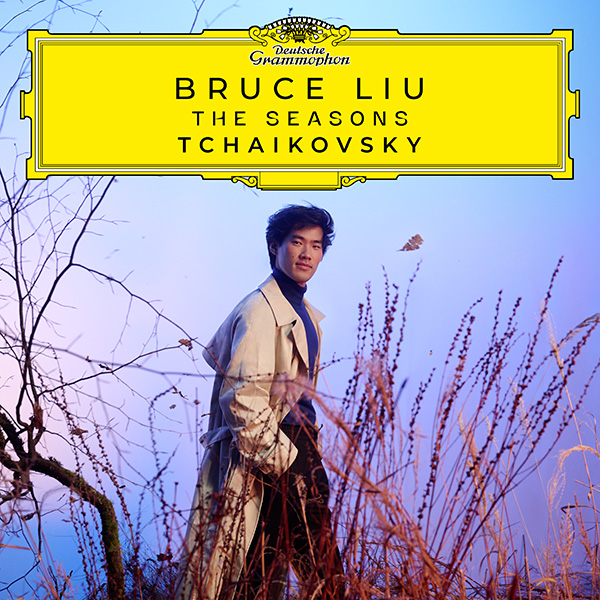
Tchaikovsky: The Seasons; Romance in F minor
Bruce Liu, piano
Deutsche Grammophon 00028948663192 (CD, 2024). René Möller, prod.; Jakob Böttcher, eng.
Performance **½
Sonics ***½
Tchaikovsky composed The Seasonsextra precisely, "The Months"on fee: {A magazine} printed one of many items every month. They’re fairly, largely undemandingthough the "snowfall" of November’s recap will not play itselfcomparatively minor items. That broadly heralded Chopin Competition winner Bruce Liu ought to flip his consideration to them promised one thing particular.
Liu’s technical accomplishments are predictably formidable. Where Tchaikovsky requires runs, arpeggios, and different figurations, they’re crisp, articulate, and atmospheric: The transfer into the recap of November is deft and seamless. The quiet arpeggios, like that in August, are pretty and fluid. Yet his clear, ringy piano tone, as recorded, does not appear to have a lot depth or weight behind it, and the climaxes harden.
Then, Liu appears to not belief the music, burdening it with frequent rubatos and hesitations, typically earlier than establishing a fundamental tempotogether with holding the primary notes of January and February. He establishes a sunny temper in June, then instantly fusses with the pickups. September‘s unbuttoned fanfares are cautious; October, lacking its alla breve stream, feels caught.
The performances work finest the place Liu fusses least. Perhaps he is a summer time participant: the transitions in his cheerful July make sensethough the recap’s ritards really feel arbitraryand he brings a scherzando virtuosity to his nimble, clearly formed August. December‘s waltz could possibly be extra direct, but it surely’s nonetheless gracious. And Liu’s bonus, the F minor Romance, is unique and serpentine in the beginning, crisp and uplifting within the center; the recap’s added counterpoints hold it from sounding salonish.
This is not what I’d anticipated; neither does it reside as much as glowing reviews I’d been getting. An off day, maybe?Stephen Francis Vasta
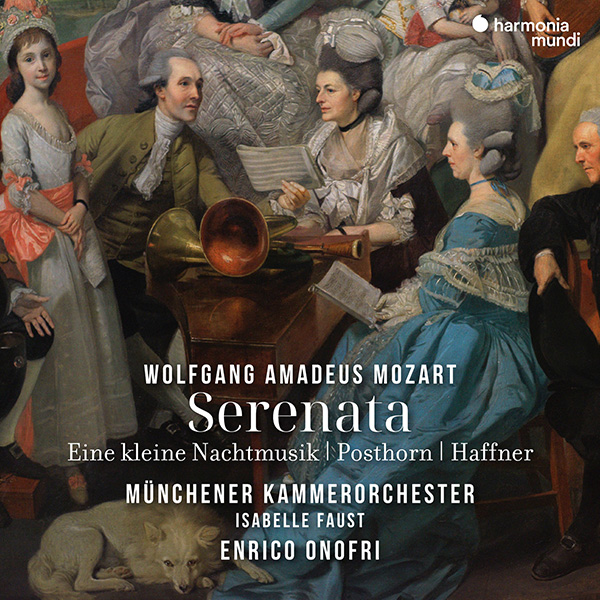
Mozart: Serenata
Eine kleine Nachtmusik | Posthorn | Haffner
Münchener Kammerorchester; Isabelle Faust, violin; Enrico Onofri, cond.
Harmonia Mundi HMM 905396.97 (2 CDs, auditioned at 24/192), 2025. Jean-Daniel Noir, prod. & eng.
Performance ****½
Sonics ****½
What a deal with! Three of the 9 nocturnal serenades that Mozart wrote for his legions of Salzburg followers, every preceded by the march that signaled the beginning of an open-air live performance. These marches and serenades, carried out by standing musicians who typically processed from place to put, had been so widespread that they had been usually heard day by day in the course of the summer time months.
As one of many three affiliate conductors of the Münchener Kammerorchester (Chamber Orchestra of Munich), Enrico Onofri approaches these works as a cofounder and concertmaster of interval instrument ensemble Il Giardino Armonico. His "traditionally impressed" performances mix trendy woodwinds and stringssolely the double basses use intestine stringswith historic brass and timpani. Isabelle Faust’s violin cadenzas in three actions of the Haffner Serenade had been taken from a interval supply, whereas variations and ornaments for the repeats had been composed by Onofri "following the follow and style for embellishment nonetheless widespread on the finish of the 18th century."
Rhythms are exact, with sharply delineated assaults. The bass basis is powerful, and tempos are sometimes brisk. The alacrity with which Onofri launches into the primary motion Allegro of Serenade No.13 in G main, Ok.525, Eine kleine Nachtmusik, took me abruptly till I searched out different variations and located their slower tempi and thicker sound extra reflective of the romantic period than the age of Mozart.
Want to mainline pleasure? Here’s Dr. Serinus’s prescription: Start with the hilarious March in D main Ok.335/1the oboe solo is a hootenjoy Isabelle Faust’s supremely distinguished solos within the Haffner, after which finish with the beloved Ok.525. Addiction is all too straightforward.Jason Victor Serinus
HI-FI News
through Stereophile.com https://ift.tt/cVfgimb
February 11, 2025 at 04:51PM
-
Product on sale
 Audiophile Vinyl Records Cleaning BundleOriginal price was: €69.90.€59.90Current price is: €59.90. incl. VAT
-
Product on saleEasy Start Vinyl Records Cleaning KitOriginal price was: €69.90.€59.90Current price is: €59.90. incl. VAT
-
Vinyl Records Cleaner Easy Groove Concentrate€34.95 incl. VAT
-
Easy Groove Super Set€199.00 incl. VAT
-
Easy Groove Enzycaster – vinyl records prewash cleaner€34.95 incl. VAT
-
Easy Groove Extreme MK. II- vinyl records prewash cleaner€45.00 incl. VAT
-
Vinyl Records Cleaner – Easy Groove Virgin Concentrate€35.00 incl. VAT
-
Easy Groove Spray&Wipe vinyl records cleaner€34.95 incl. VAT


