
World News
Gershwin Rhapsody In Blue
Gershwin Rhapsody In Blue
In this genre-melting, career-defining piece, the composer hoped to seize America’s ‘pep’ and ‘metropolitan insanity’. Peter Quantrill surveys a century of recordings
Imagine being George Gershwin. There you’re at breakfast at some point in January 1924, chewing over concepts to your subsequent musical, when your brother reads out an announcement within the newspaper. The impresario Paul Whiteman has organized a live performance on 12 February. The live performance will reply the query, ‘What is American music?’, and ‘George Gershwin is at work on a jazz concerto’. This is the primary you’ve heard of it.
Gershwin set to work. Lacking each time and expertise of orchestration, he drafted in Whiteman’s chief arranger, Ferde Grofé. Gershwin was on a prepare to Boston when the Rhapsody In Blue took form, unexpectedly. ‘I heard it as a kind of musical kaleidoscope of America – of our huge melting-pot, our incomparable nationwide pep, our blues, our metropolitan insanity.’ Something like that, anyway; Grofé himself later mentioned that it was his thought to insert the massive swoony E main tune midway by way of.
Even with the rating in one thing of a scrambled state – shades of Beethoven, half-improvising the Choral Fantasy again in 1808 – the Rhapsody was a smash. Within 1924 alone, it acquired one other 80 performances. 100 years and not less than 100 recordings later, we are able to see (or slightly hear) the joins the place the piece creaks. When Gershwin bought round to writing a concerto correct, the next 12 months, he took a superb deal extra time and care over each type and orchestration.
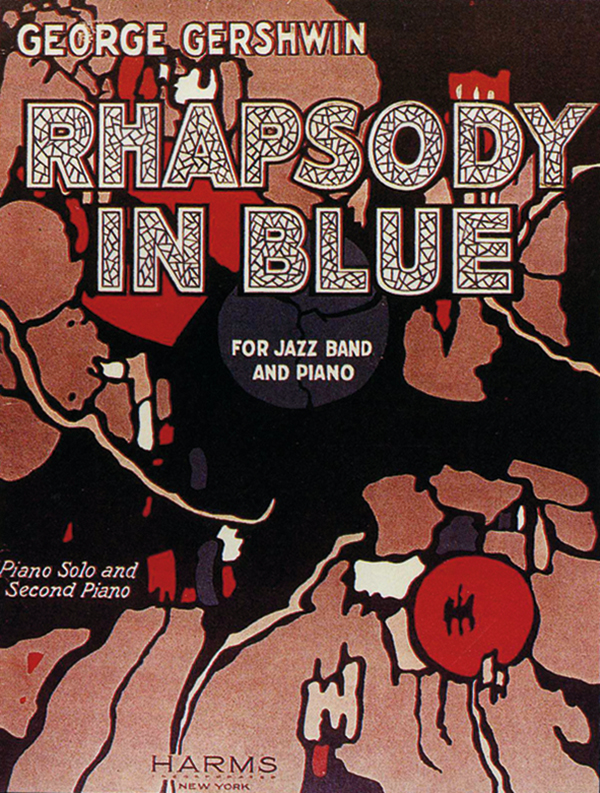
Above: Cover of the unique piano sheet music for Gershwin’s Rhapsody In Blue, issued by Tin Pan Alley writer Harms Inc.
However, that piece – Concerto in F – receives a fraction of the sooner work’s performances, and no surprise. The Rhapsody has by no means misplaced its snap and sass. This regardless of struggling any variety of indignities, from Larry Adler’s wa-wa harmonica association to straight-backed symphonic variations by ‘classical’ pianists who couldn’t even swing in the event that they have been pushed.
Cut and paste
It is within the nature of the Rhapsody’s hasty origins that the piece by no means attained a closing, definitive type. Gershwin recorded it twice with Whiteman’s band, in 1924 and 1927, however in an edit minimize down to suit two sides of a 78. The orchestration even varies between these two early variations, so the place ought to fashionable performers look in a seek for the ‘genuine’ Rhapsody?
‘You can minimize out elements of it’, Leonard Bernstein claimed, ‘with out affecting the entire in any method besides to make it shorter. You can take away any of those stuck-together sections and the piece nonetheless goes on as bravely as earlier than. You may even interchange these sections with each other and no hurt is completed’.
Is it then, to cite the Cole Porter music of 1934, a case of something goes? This discuss doesn’t go down properly with Gershwin purists. I’m not one in every of them, and anyway my beef with Leonard Bernstein will not be what he says however how he performs. Too a lot Rachmaninoff, an excessive amount of Bernstein, an excessive amount of every little thing… besides Gershwin.
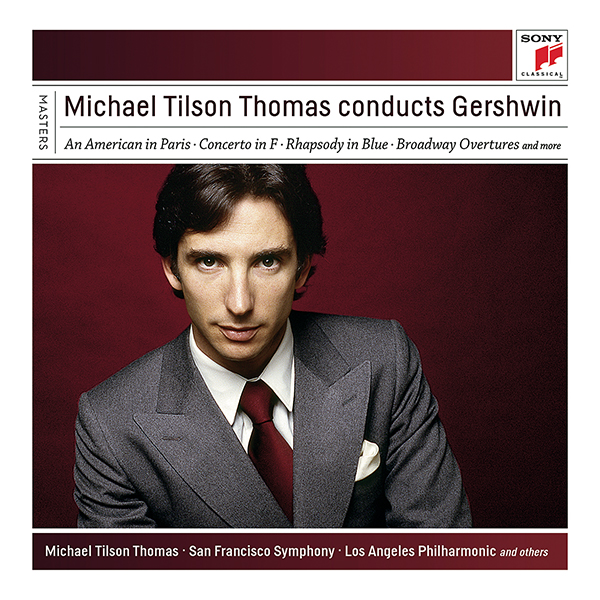
Above: Fellow American Michael Tilson Thomas carried out Gershwin for Sony and accompanied the composer from piano rolls
Did the composer have a grand crossover venture in thoughts? He was at residence with all these disparate types as a result of they have been within the air he breathed, and he (and solely he, maybe) might assimilate them. When it got here to fusing classical and jazz, Stravinsky and Milhaud had bought there first.
Snap, cackle, pop
In reality, placing the textual content itself to 1 facet, Gershwin left some invaluable recommendation about its efficiency. ‘The rhythms of American fashionable music are kind of brittle’, he wrote within the preface to his 1932 Songbook. ‘They must be made to snap, and at occasions to cackle. The extra sharply the music is performed, the simpler it sounds.’ Our Essential Recordings [see Essential Recordings below] all get the thought. Moreover, so did the black British pianist Winifred Atwell, recording Rhapsody In Blue in 1956 with bandleader Ted Heath. (Atwell’s Decca albums of each classical and pop repertoire deserve a contemporary remastering, though they’re simply discovered on streaming providers in the intervening time).
Heath’s band is wind solely, whereas most fashionable recordings try not less than some variant on the ‘jazz orchestra’ devised by Grofé for Gershwin in 1924. Is that completely a superb factor? The Rhapsody by no means belonged in a field marked ‘classical meets jazz’, even when numerous well-meaning musicians needed it to. Tin Pan Alley, Broadway, ragtime, cabaret, blues, stride, Charleston… Gershwin smuggled in flavours of all these discrete substances, and ‘jazz’ as we’d perceive the time period is among the many least of them.
Higher constancy
All the identical, in the event you hear the piece as an authentically American counterpart to Ravel’s Concerto In G or Rachmaninoff’s Fourth, there are a number of full-orchestral recordings aspiring to larger constancy than Bernstein. Gary Graffman romps by way of the solo half, with the New York Philharmonic Orchestra (and Zubin Mehta) accompanying as if they’ve the rating of their bloodstream. As they need to. The close-up Sony sound additionally fits the piece higher than the type of ‘goal’ constancy sought by European labels.
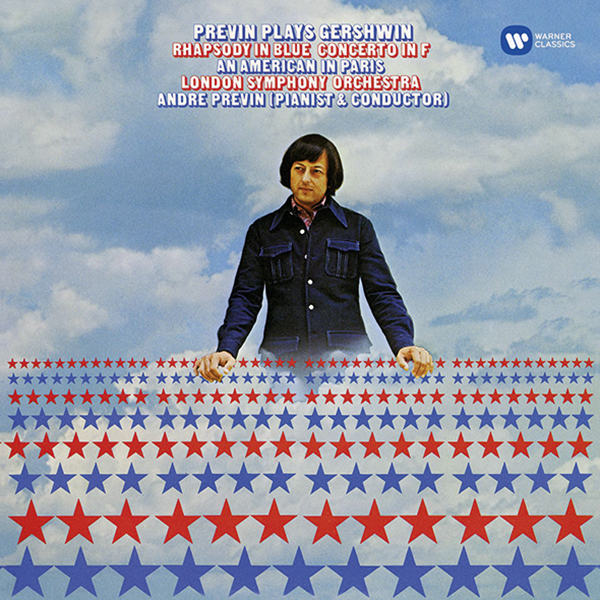
Above: For his 1971 debut on HMV, André Previn recorded the Rhapsody at Abbey Road
André Previn deserves particular point out, as a pianist-conductor with extra cred and extra expertise than Bernstein within the jazz golf equipment of New York. Of his three Rhapsodies on file, I favor the primary one from 1960, led by André Kostelanetz [RCA/Sony]. Later on, with the London Symphony Orchestra for HMV, Previn milks the central cadenza, although it’s arduous to beat Gervase de Peyer within the opening clarinet solo. ‘Gershwin was musically a primitive’, Previn mentioned in 1971 on the time of the HMV launch, remarking on the ‘endearing naivety’ of Rhapsody In Blue: ‘There’s little or no type, little or no growth… He was an American song-writer who wrote a number of the biggest pop songs of all time’.
Staying true to ‘in Blue’
His digital-era Philips album reverts to the pulsing stride rhythm of 1960, now with neater and blander backing from the Pittsburgh SO on spotless studio type. Among Previn’s successors, in the meantime, Michael Tilson Thomas stands out as a musician who has studied and carried out the total vary of Gershwin’s work for music corridor, stage and live performance corridor.
He revived the Second Rhapsody from 1931, when the composer tried to make lightning strike twice (it didn’t). Whether guiding a contemporary jazz band to accompany the composer’s 1925 recording of the entire piano half on a piano roll, or enjoying his personal solos, Tilson Thomas by no means gives the look of patronising the piece with hoochie-koochie rhythms. Nor does he attempt to paper over the structural cracks with symphonic glue. The compilation of his Sony recordings is value anybody’s cash for letting Gershwin be Gershwin.
Essential Recordings
Gershwin, Tilson Thomas
Sony 88875170082 (7CD)
Tilson Thomas accompanying the composer’s pianola recording of the solo half, plus his personal trendy and completely fashionable model.
Gershwin, Paul Whiteman Orchestra
Naxos 8.120510
The unique 1924 jazz-band scoring by Grofé, abridged to 9 minutes, on a full assortment of the composer’s personal 78s.
Levant, Philadelphia Orchestra/Ormandy
Sony 88985471862 (8CD)
Another historic particular: the star of the 1945 Rhapsody In Blue film, in a field that includes many new-to-CD periods by Levant.
Previn, London Symphony Orchestra
Warner Classics 5668912
Previn’s debut on HMV in 1971, marked by a traditional cowl and widescreen Abbey Road engineering, not denatured by remastering.
Donohoe, London Sinfonietta/Rattle
Warner Classics 3886802
Expertly fusing Donohoe’s Ravel-inflected pianism with Simon Rattle’s snappy dealing with of the unique jazz-band scoring.
Grosvenor, Royal Liverpool Phil./Judd
Decca 4783527
Grosvenor (17 on the time) takes no prisoners within the solo half, backed by a slimmed-down, jazzed-up RLPO and high-impact Decca sound.
HI-FI News
by way of Hi-Fi News https://ift.tt/MfhDQrK
June 3, 2025 at 07:44AM
-
Product on sale
 Audiophile Vinyl Records Cleaning BundleOriginal price was: €69.90.€59.90Current price is: €59.90. incl. VAT
-
Product on saleEasy Start Vinyl Records Cleaning KitOriginal price was: €69.90.€59.90Current price is: €59.90. incl. VAT
-
Vinyl Records Cleaner Easy Groove Concentrate€34.95 incl. VAT
-
Easy Groove Super Set€199.00 incl. VAT
-
Easy Groove Enzycaster – vinyl records prewash cleaner€34.95 incl. VAT
-
Easy Groove Extreme MK. II- vinyl records prewash cleaner€45.00 incl. VAT
-
Vinyl Records Cleaner – Easy Groove Virgin Concentrate€35.00 incl. VAT
-
Easy Groove Spray&Wipe vinyl records cleaner€34.95 incl. VAT


