
World News
Graham Audio LS8/1
Graham Audio LS8/1
Although the UK punches above its weight in traditional loudspeaker designs, a number of fashions stand out. The most blatant are the Quad Electrostatic, the LS3/5a and the Spendor BC1. However, of the three, that latter three-way ported design – first seen in 1968 – is the one one to not have a direct Twenty first-century equal. The Graham Audio LS8/1 goes some approach to make up for that shortfall. It isn’t any clone of the traditional BC1. The end result honours and updates that 60s masterpiece.
It’s straightforward to neglect how vital the BC1’s affect was as a result of it occurred 56 years in the past. The Spendor BC1 was one of many first acoustic suspension loudspeaker containers. It competed with the low distortion of electrostatic designs. For its time, it delivered an impressive low-distortion sound with a wonderful frequency response and good dynamic vary.
Entropy
But let’s reiterate this: that design predates Neil Armstrong’s setting foot on the moon. The downside with listening to a Nineteen Sixties loudspeaker in 2024 is fifty-something years of entropy and part ageing. However, quite a bit has modified within the intervening 56 years.
A roll-off occurs in each bass and treble. There’s additionally a ‘as soon as heard, all the time heard’ peak within the higher treble. Bextrene was absolutely the cutting-edge loudspeaker cone materials on the time. But so had been loon pants and informal misogyny. Bextrene is a poor relation to trendy driver tech at present. Saying that is heresy in some Brit-fi circles.
Fortunately for Graham Audio, the LS8/1 doesn’t include that baggage. Yes, it’s a BBC-derived, thin-walled, stand-mount loudspeaker. Sure, it makes use of a mid-bass, tweeter and supertweeter with a front-firing port. And, sure, in fact, the designer of the LS8/1 is Derek Hughes, son of the late ex-BBC designer Spencer Hughes. Derek put his appreciable design smarts into creating this design. Given that he has additionally labored on many comparable BBC-derived tasks, it’s clear that he carries on the Hughes custom. The speaker-designer apple didn’t fall removed from the tree.
This is the BBC!
The three-way Graham Audio LS8/1 loudspeaker retains Hughes’s primary design and has the identical form, cupboard quantity, and development. That design moved with him when he and his spouse Dorothy started constructing loudspeakers underneath the SPENcer-DORothy model title. Given its format, cupboard design, dimensions and drive unit array, an informal look transports you again to the late Nineteen Sixties.
However, nearer investigation reveals {that a} 200mm drive unit encompasses a polypropylene cone, a 26mm tweeter, and a 19mm supertweeter that includes delicate domes. There can also be a swap to present a ±1dB increase or lower to these excessive frequencies. The LS8/1 doesn’t roll off at about 15kHz prefer it was taking part in an episode of Round the Horne on the BBC Light Programme.
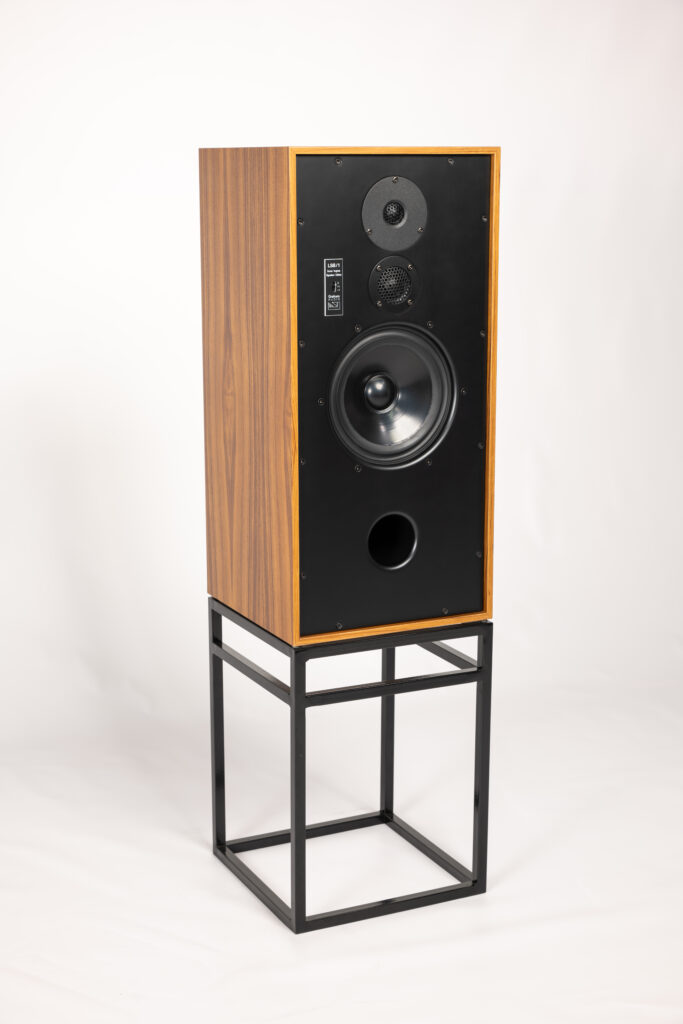
The argument wants restating as a result of this loudspeaker’s seems to be and format have induced a stir amongst those that like the concept of the BC1 however have by no means heard one or haven’t heard one in a long time. The Graham Audio LS8/1 is much less uneven and has higher energy dealing with and frequency extension. It can also be extra constant and has a better quantity ceiling than the BC1. Fortunately, the LS8/1’s existence doesn’t degrade the ‘valuable’.
What occurs if…
A Twenty first-century reimagining of the identical ‘what occurs if…’ thought processes that created the BC1 greater than half a century in the past ought to be a win-win. It irons out bugs that might not be mounted with Nineteen Sixties supplies science.
Regardless, the LS8/1’s sensitivity is barely under common, at a realistically rated 87dB. The impedance is a extremely untroubling eight ohms, with no nasty dips or part angles wherever alongside the frequency vary.
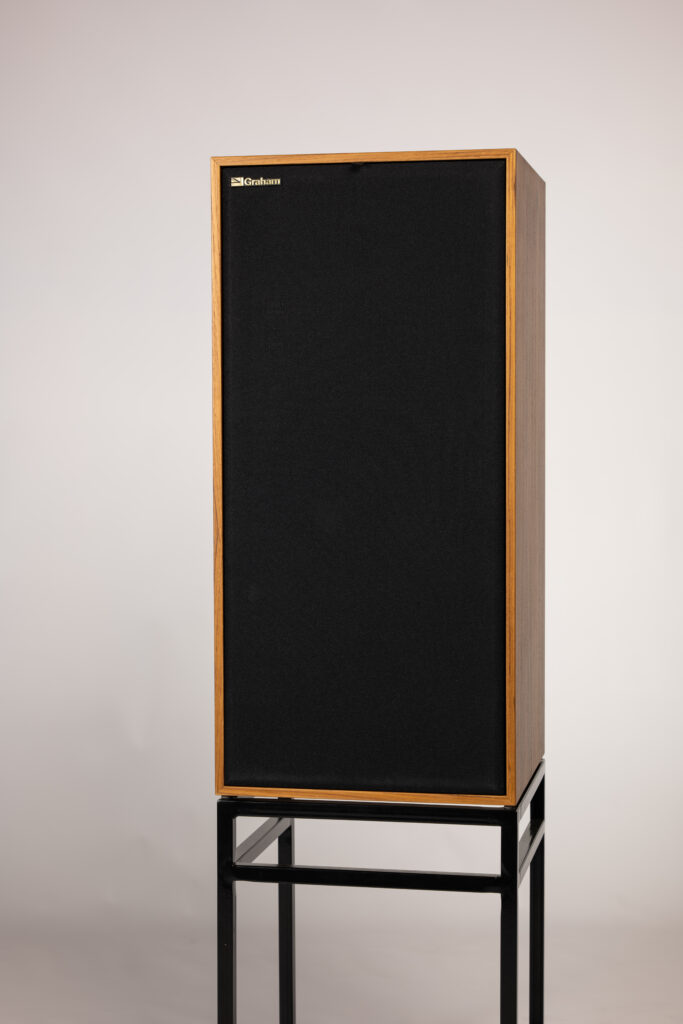
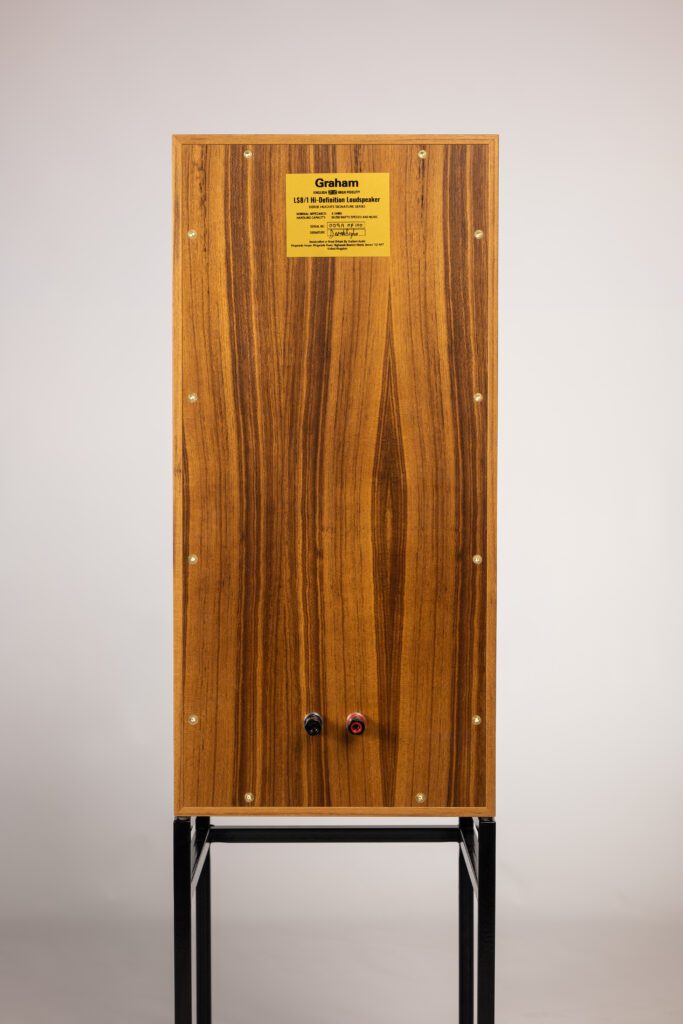
Set-up is simple. Graham Audio’s LS8/1 is single-wired and front-ported. It advantages from a slight toe-in, at the least 30cm of rear and aspect wall respiration house, and light-weight stands. The apparent alternative right here is the open-frame XF fashions custom-made by Something Solid.
I performed the Graham Audio LS8/1 with a number of amplifiers, each solid-state and valve (tube) based mostly, and it labored exceptionally effectively with all of them. My samples of the LS8/1 had been already effectively run-in, so I can’t touch upon their break-in time or efficiency.
Intrinsically beautiful
There’s one thing intrinsically beautiful concerning the sound of the Graham Audio LS8/1. It appears nearly totally incapable of creating a nasty sound. The music sounds so engaging and engaging right here. The efficiency is seductive. It’s additionally a kind of loudspeakers that will get the midrange proper as a precedence. Instruments and music that occupy the midrange (string quartets, tons and many jazz, folks, and something with a stable vocal part) shine right here.
For instance, ‘Canadee-I-O’ by Nic Jones [Penguin Eggs, Topic]. Jones’ percussive, low-tuned guitar and his voice sit within the room between the loudspeakers. It’s like you’re forged again to 1980. The element and precision of the sound are excellent. If you hear rigorously, hundreds of wannabe folks guitarists may be heard having their desires dashed as they try to fail to copy his taking part in type.
The identical holds when taking part in nearly each jazz album from about 1958-65. Herbie Hancock is probably the musician who factors to each ends of the Graham Audio LS8/1’s efficiency. Play ‘Cantaloupe Island’ from Empyrean Isles [Blue Note, from 1964]. It’s like being teleported into the studio with the band. The sound is elegant.
Move to Chameleon
Move throughout to ‘Chameleon’ from the 1973 Head Hunters album [Columbia], and that extra synth-led fusion sound – although nonetheless superb – doesn’t emphasise the funk-oriented groove as effectively. We skip his vocoder-tinged disco years for good causes. ‘Court and Spark’ – that includes Norah Jones – from 2007’s River: The Joni Letters [Verve] restores the order.
The general sound is subtle and refined. The LS8/1 won’t ever be the primary alternative for enjoying rock at ear-splitting ranges, however that was by no means the intention of the unique BBC designs and isn’t the plan right here, both. They can play rock or dance music. It’s simply that they make such a great and convincing portrayal of midrange that you’re drawn to that a part of the music, and in genres that place the accent on gut-crunching bass strains or all-attack synth chirps, you step past the LS8/1’s zone of excellence.
Tradition!
The British custom all the time concerned making a loudspeaker that sounded good in moderate-sized rooms. The bass rolls off within the mid-50Hz (with a clear and sincere roll-off) partly as a result of sub-50Hz sounds can show difficult in its supposed listening areas. It’s not designed to go too loud as a result of that, too, will get uncomfortable in these listening rooms. While that sounds ‘terribly, terribly’ British, it’s additionally a realistic strategy to music replica in typical listening rooms. And it really works. Decades from now, the Graham Audio LS8/1 will nonetheless be taking part in. It will likely be handed down from father to son like traditional audio all the time was.
Wide-baffle stand-mount loudspeakers went out of trend within the Nineteen Nineties, as type and slimline tower loudspeakers dominated the audio world. Despite the slim tower’s dominance, there’s nonetheless a spot for loudspeakers like this one. The LS8/1 would cross muster if it had been a loving recreation of a Nineteen Sixties traditional. However, Graham Audio LS8/1 improves on somewhat slice of perfection for a lot of traditional audio fans. And that makes this loudspeaker one thing extraordinary.
Technical specs
- Type: Three-driver, stand-mounted, bass-reflex box-speaker system
- Driver complement: 200mm (SEAS) mid/bass, 25mm (SB) tweeter, 19mm (SEAS) tweeter
- Crossover: 3.5kHz, 14kHz
- Frequency response: 45Hz–20kHz, ±3dB
- Nominal impedance: 8 ohms
- Sensitivity: 87dB/2.83V/1m
- Maximum output degree: 100dB/pair/2m
- Cabinet: Thin-wall birch plywood, damped
- Dimensions (HxWxD): 63.5x30x30cm
- Weight: 17kg
- Price: £4,712/$9,700 per pair
Manufacturer
Graham Audio
+44(0)1626 361168
The put up Graham Audio LS8/1 appeared first on hi-fi+.
HI-FI News,Audio
through Articles Archive – hi-fi+ https://ift.tt/k0Egcwn
November 13, 2024 at 02:39PM
-
Product on sale
 Audiophile Vinyl Records Cleaning BundleOriginal price was: €69.90.€59.90Current price is: €59.90. incl. VAT
-
Product on saleEasy Start Vinyl Records Cleaning KitOriginal price was: €69.90.€59.90Current price is: €59.90. incl. VAT
-
Vinyl Records Cleaner Easy Groove Concentrate€34.95 incl. VAT
-
Easy Groove Super Set€199.00 incl. VAT
-
Easy Groove Enzycaster – vinyl records prewash cleaner€34.95 incl. VAT
-
Easy Groove Extreme MK. II- vinyl records prewash cleaner€45.00 incl. VAT
-
Vinyl Records Cleaner – Easy Groove Virgin Concentrate€35.00 incl. VAT
-
Easy Groove Spray&Wipe vinyl records cleaner€34.95 incl. VAT







