
World News
Gustav Holst The Planets
Gustav Holst The Planets
The sound of area, the go-to toolbox for Hollywood composers, the house of a hymn to Englishness… Peter Quantrill on the conflicting identities of an orchestral basic
Mars units the tone for any Planets, stay or on report. Under the composer’s baton in 1926, it establishes aggressive intent from bar one. War shouldn’t be on the horizon, however advancing over the following hill. By distinction, the current BRSO/Harding model (BR-Klassik) builds up menacingly, round a fifth slower, in direction of an implacable evocation of a warfare machine.
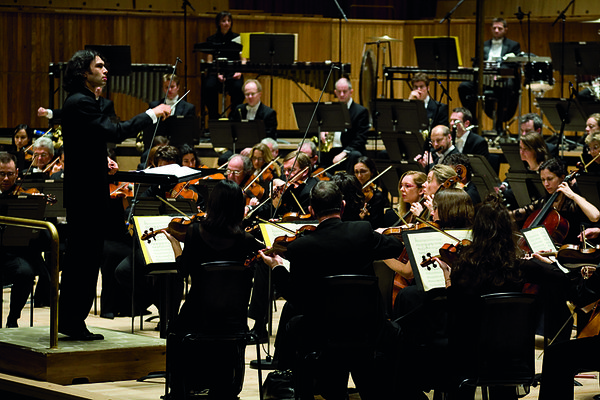 The Royal
Festival
Hall could not
be a straightforward
recording
acoustic, however its
analytical readability
enhances
Jurowski’s pacy
conducting
Tempo Tug-Of-War
Two such totally different visions of the piece do not compel us to determine which one is ‘proper’. Holst left no metronome marks on the rating, simply plain previous Allegro for Mars. Nonetheless, we’d ask ourselves which yet another carefully resembles what Holst had in thoughts. The reply would appear to be apparent – his personal recording! – besides it has usually been stated (to justify a slower efficiency) that Holst needed to conduct the piece extra rapidly as a way to squeeze it on to a 78rpm report.
This is, the truth is, nonsense. Columbia launched The Planets on seven separate records, over the course of just about two years (think about ready for Neptune!). Each motion occupied two sides of the 78, besides Mercury, which fitted on a single facet. Venus is the longest motion of Holst’s recording, at 7m18s, so he may have taken a full minute longer over Mars, if he had wished. But he did not.
If you might be used to slower variations – and most recordings of Mars take simply over 7 minutes – then Holst’s model can resemble a type of speeded-up previous movies. It has even been stated that Solti (for his LPO recording on Decca) unwittingly copied the slowings-down that Holst made for side-breaks. Again, that is idle criticism. Also with the LPO, Jurowski emulates Holst’s velocity in Mars (and nearly in all places else), however he generates unstoppable momentum alongside the best way. Then he pushes straight on to the euphonium-led second theme, bringing to the thoughts’s eye a red-cheeked normal barking orders on some nook of a overseas subject.
Jurowski is drawing upon superior technical finesse on the a part of each ‘his’ musicians and engineers. Also, I enterprise, on his personal significantly extra practised approach as a conductor. Holst knew what he wished, and tips on how to get it, however he was not outfitted to realize the little swells, the niceties of steadiness, the punctuating pause and whiplash assault that put aside the very best Planets performances from the remaining.
At least Holst may conduct in 5/4, a notoriously difficult time-signature. Try marking it for your self in Mars, 1-2-3-1-2, with out getting twisted up. I’m suspicious of the previous story that Karajan was a type of celebrated maestros who could not ‘do’ 5/4 – he appeared to handle Elektra OK – however you possibly can nonetheless hear a number of the tape joins within the VPO Decca recording.
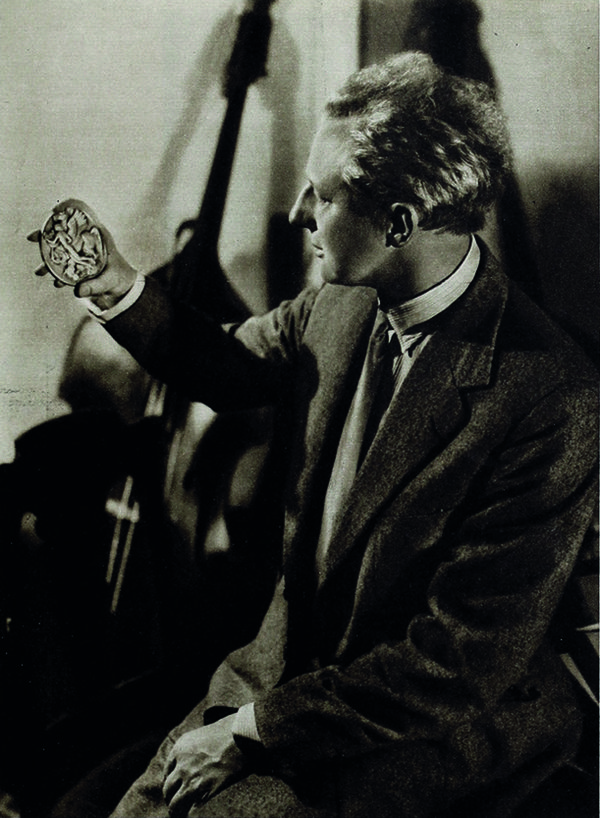 Stokowski
(pictured
right here in 1932)
had been a
scholar on the
RCM in London
on the identical time
as Holst
Some Like It Hot
More pertinently, Karajan by no means did the piece stay, he takes little care over intonation (the euphonium solo is terrible), and he has no feeling for the extra quintessentially English components of the piece. That means, in fact, the center part of Jupiter. It’s value emphasising that Holst didn’t write ‘I vow to thee, my nation’ – British diplomat Cecil Spring-Rice did that, utilizing Holst’s tune.
The authentic rating could not be clearer: non legato. And Holst’s LSO play it that means, with a stiff higher lip, and little pauses after every phrase. If solely extra conductors had adopted Solti’s instance and listened to the composer’s model! Instead, they pour scorching fudge sauce in all places.
All the identical, simply as there’s a plausibly slower and heavier option to carry out Mars, so Jupiter can reply to a broader, extra emotive method. American orchestras and conductors usually carry it off: Stokowski with the NBC [see Essential Recordings, opposite] Mehta in LA, Steinberg and Ozawa in Boston – and John Williams with the Boston Pops. All effective variations, and bringing to the country-dance theme of the primary part a flavour of Thaxted goes to Hollywood.
Foreign-born gamers and conductors usually acquire in constancy to the rating of The Planets what they generally lose in familiarity with the idiom of this or that episode. In any case, Holst’s contemporaries tended to treat him as not a ‘correct’ Englishman owing to his identify and part-German ancestry. There is nothing very ‘English’ concerning the composer’s pursuits in astrology and theosophy which underlie the conceptual scope of his suite.
Planetary Influences
Nor is the rating itself terribly English, borrowing from d’Indy and Florent Schmitt, whereas partially deriving the cumulative energy of its true gradual motion, Saturn (the composer’s favorite motion), from the melody of the Russian-Orthodox Kontakion for the Departed. The most potent affect on The Planets, although was the Five Pieces for Orchestra by Schoenberg, which Henry Wood had premiered on the Queen’s Hall in London in 1912, two years earlier than Holst started work on Mars (some months earlier than the outbreak of the First World War).
Just as Schoenberg later taught the fundamentals of concord and orchestration to many Hollywood movie composers, so The Planets went on to train a formative affect on composers for movie from Vaughan Williams to Hans Zimmer. An understanding of the suite within the context of this lineage comes extra naturally to some conductors than others. Boult gave the premiere, and made a number of recordings, however there’s a sobriety and studied neutrality to them (the opening of Jupiter, for instance, by no means actually dances) that contrasts with the method of his extra flamboyant (and serially under-rated) up to date, Sargent.
In this context, the LPO model led by Bernard Herrmann is surprisingly lifeless. Colin Davis and Slatkin however, Andrew Davis is the very best Planets conductor amongst Boult’s and Sargent’s successors on the helm of the BBC Symphony Orch. His Teldec and Chandos recordings are additionally fantastically engineered – no small consideration within the endlessly absorbing particulars of Holst’s orchestration, in addition to the problem of recording the off-stage refrain in Neptune.
English critics had been typically uncomfortable with the very success of The Planets – too accessible for its personal good – and the composer felt understandably aggrieved that he had moved on, however his public had not moved with him.
Break The Ice
The lasting energy and creativeness of The Planets, although, shines by means of the mono-broadcast sound of Stokowski conducting the NBCSO, and this could be my very own desert-island efficiency, carefully adopted by Jurowski with the LPO. In their palms, Venus and Saturn attain a form of depth adjoining however not similar to up to date scores by Korngold and Mahler. Stoki attracts out the icy reaches of Neptune, and the refrain cuts off on the finish after two bars. Well, nothing’s good.
HI-FI News
through Hi-Fi News https://ift.tt/2KwBOm4
November 20, 2024 at 09:24PM
-
Product on sale
 Audiophile Vinyl Records Cleaning BundleOriginal price was: €69.90.€59.90Current price is: €59.90. incl. VAT
-
Product on saleEasy Start Vinyl Records Cleaning KitOriginal price was: €69.90.€59.90Current price is: €59.90. incl. VAT
-
Vinyl Records Cleaner Easy Groove Concentrate€34.95 incl. VAT
-
Easy Groove Super Set€199.00 incl. VAT
-
Easy Groove Enzycaster – vinyl records prewash cleaner€34.95 incl. VAT
-
Easy Groove Extreme MK. II- vinyl records prewash cleaner€45.00 incl. VAT
-
Vinyl Records Cleaner – Easy Groove Virgin Concentrate€35.00 incl. VAT
-
Easy Groove Spray&Wipe vinyl records cleaner€34.95 incl. VAT







