
World News
Headphone Amplifiers
Headphone Amplifiers
The interplay between headphones and headphone amplifiers is a notoriously tough topic. But what precisely are the difficulties? And extra importantly, how do I ensure that my amplifier can correctly drive my cans? Michael Zähl, founder and proprietor of Zähl Elektronik-Tontechnik, helps us discover the solutions.
In order to grasp why pairing headphones and headphone amplifiers isn’t all the time straightforward, we first have to familiarize ourselves with Ohm’s regulation – so let’s begin with a bit tour.
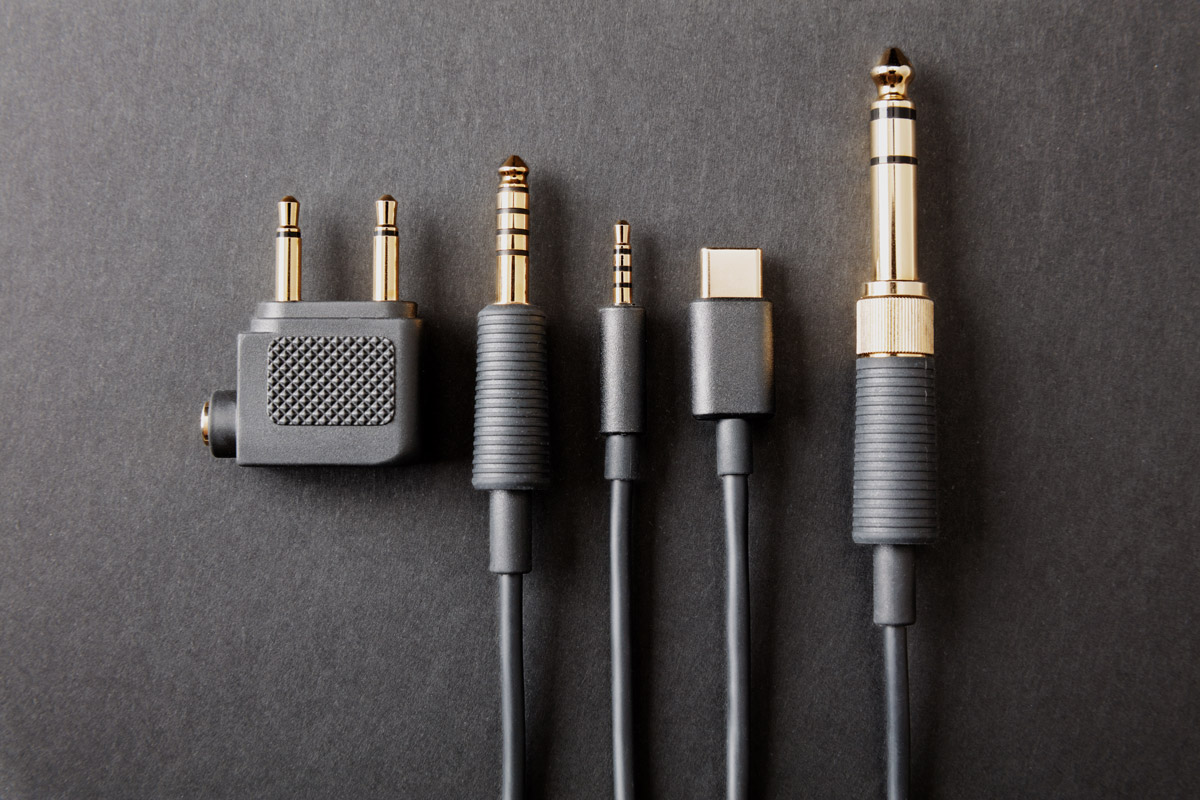
Electrical triangle
Ohm’s regulation states that the present A (measured in amperes) in a circuit will increase in proportion to the utilized voltage V (volts). The quantity of present flowing at a given voltage is set by the resistance – or impedance Z (Ohm) each time we’re speaking alternating present, like in music. The relationship triangle of those parameters might be described utilizing the next three equal formulation:
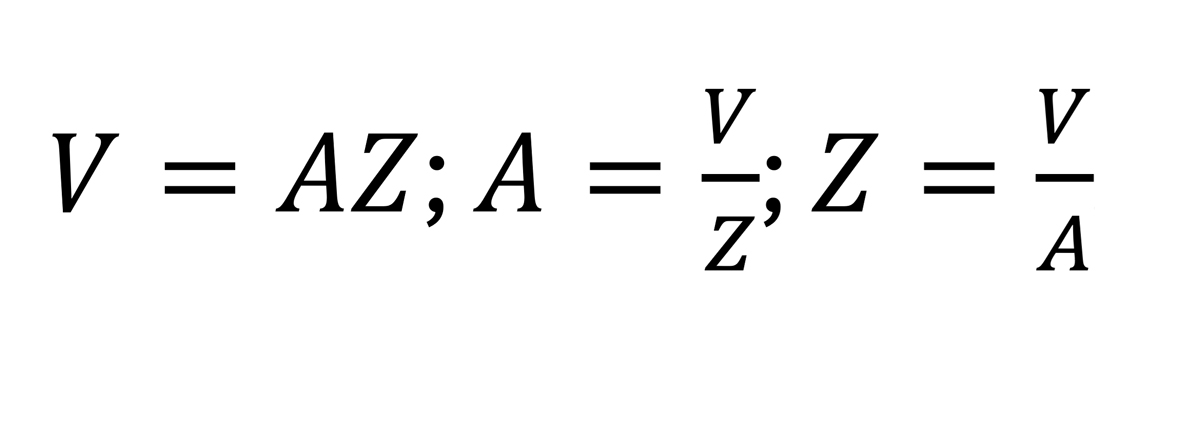
The sensible significance of those summary formulation shortly turns into obvious when you think about the amplifier-speaker interplay, which works essentially the identical manner in each loudspeakers and headphones: The amplifier “pushes” the music sign as a voltage curve into the speaker, which then “pulls” present from the amplifier in response, in line with its enter impedance: An 8 Ω loudspeaker will draw 1/8 ampere from the amplifier for each volt, a 4 Ω speaker will accordingly draw 1/4 ampere. Since voltage instances amperage equals energy, the amplifier will output twice as a lot energy right into a 4-Ω transducer as into an in any other case equivalent 8-Ω mannequin on the similar quantity dial setting and can subsequently play 3 dB louder.
Speaking of energy: the primary query you rightly ask your self once you have a look at an amplifier is whether or not it may well present sufficient of it. The sensitivity ranking of the headphones, which is usually said in dB at one watt, provides you with an thought of how a lot energy they require. What’s essential to grasp right here is that dB isn’t a linear however a logarithmic amount: Every 6 dB enhance means a doubling of the sound strain, or – in electrical phrases – a doubling of the voltage swing. Since twice the voltage means twice the present flowing via the voice coils, the facility required is quadrupled. Headphones with a 92 dB sensitivity will subsequently require 4 instances as a lot energy as a 98 dB can to attain the identical sound strain degree.

The dreaded impedance
Since headphones make the most of small drivers that are additionally situated near the ears, the facility necessities for headphone amplifiers are comparatively low. It’s the impedance that makes the selection of the best amplifier tough. With loudspeakers, that is normally not an excessive amount of of an issue, because the nominal worth normally sits between 4 and eight Ω. Things get a lot trickier with headphones, nonetheless, the place you may encounter values from 15 Ω on the decrease finish all the best way as much as 600 Ω; totally different headphones subsequently can place vastly totally different calls for on the amplifier: High-impedance headphones require extra voltage to attain the identical quantity in comparison with decrease impedance ones with the identical sensitivity. On the opposite hand, the previous place decrease calls for on the present supply functionality as a result of they “draw” fewer amperes with the intention to obtain the identical output. You ought to subsequently all the time know the nominal impedance of your headphones earlier than you begin on the lookout for appropriate amplifier candidates.
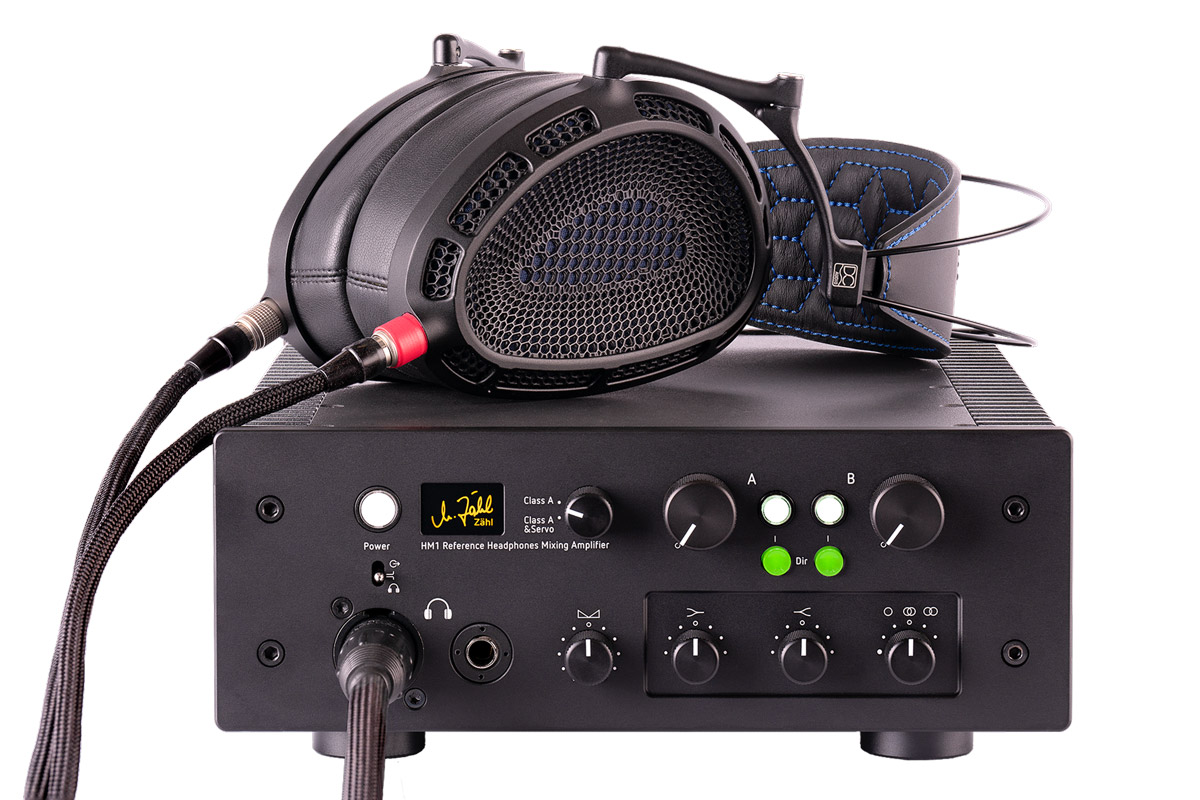
As a basic rule, higher-quality amplifiers naturally have a tendency to have the ability to deal with a wider vary of impedances. “If you’re employed with a stationary energy provide, you may obtain a voltage swing of ±15 to ±18 volts with out an excessive amount of effort,” explains Michael Zähl, including, “in a headphone amplifier just like the HM1, I can comfortably cowl impedances from 15 Ω to round 200 Ω with one structure. When it involves increased impedances, a lot is determined by the sensitivity of the headphones.” A well-designed high-end amplifier will subsequently be capable of drive the overwhelming majority of headphones with none issues. Only extraordinarily high-impedance fashions could name for amps that may swing extra voltage, as in, ±25 volts and extra – in any other case there’s a danger that the total energy reserves of the amplifier can’t be referred to as up even when turning the quantity knob all the best way to the best, which means that you could be end up unable to attain the specified listening ranges despite the fact that your amp has sufficient energy reserves to ship them.
The apparent reply might after all be: Simply construct an amplifier with an excessive voltage swing and excessive present supply capability on the similar time. However, the issue right here is {that a} excessive voltage swing is logically achieved by a excessive voltage achieve, which inevitably will increase the noise flooring. If you had been to attach very low-impedance headphones to such an amplifier, you’d solely use a fraction of the obtainable achieve and subsequently be a lot nearer to the noise flooring. “You shouldn’t hear the noise straight,” says Zähl, ”however you might get dangerously shut.” Of course, excessive voltages mixed with excessive currents are mandatory for headphones with notably low sensitivity, which require excessive voltages regardless of low impedance, whereby mentioned low impedance additionally drives the present up – briefly: in these instances, you merely want numerous energy.
The in-ear paradox
Since low-impedance drivers crave numerous present for a given voltage, it could appear logical to imagine that high-impedance headphones are advantageous for cell gadgets – however in actual fact the precise reverse is the case: “Due to the low battery voltage, we’re after all nicely suggested to attempt to get by with low voltages,” explains Zähl, although that is fairly doable with in-ear headphones because of their even smaller diaphragms, which additionally sit a lot nearer to the eardrum when in comparison with over-ears. Their present and energy necessities are subsequently very low anyway. Since the batteries of cell gadgets all the time characterize a bottleneck as an influence provide, Zähl typically considers these to be quite unsuitable as an influence supply for high-end over-ears – however diplomatically rebuts this assertion in the identical breath: “There is nothing improper with taking your favourite headphones to the park and sacrificing the final little bit of sound high quality on the go – you don’t have splendid situations exterior anyway. When at dwelling, you may then pay attention correctly through a stationary amplifier.”
So, what’s totally different, precisely?
Even although we’re working with totally different numerical values, we are able to see that the identical fundamental ideas apply to headphones as to common loudspeakers – a voice coil is a voice coil. So, what precisely is the distinction between a headphone amplifier and a loudspeaker amplifier? The easy reply: principally nothing, however with a giant however. Zähl places the cart earlier than the horse: “From a technical viewpoint, I might truly simply take a 500 watt amplifier. It’s such a robust supply that I positively received’t run into any issues on that entrance,” and instantly provides the ‘however’: “The drawback is that the structure of such an amplifier has some disadvantages. If you design an influence amplifier that may mobilize a number of hundred watts, you want a corresponding energy provide, giant capacitances, highly effective output transistors and so forth. It ought to be apparent that such a colossus can’t hint microvolt audio indicators with the identical precision as an amplifier whose structure is extra akin to a preamplifier. It’s not simply the voltage peaks which can be essential, but in addition the minimal sign parts, that are extraordinarily essential for spatial imaging.”
Turned on its head, the identical thought experiment illustrates a bonus for the headphone amplifier: Less energy means fewer parts, so you may normally get by with fewer achieve levels. Another benefit of the low energy requirement is that headphone amplifiers can simply work with regulated voltage. If the voltage is simply rectified and filtered utilizing capacitors, a sure residual ripple will naturally all the time stay, i.e. the output voltage of the facility provide will fluctuate. A regulating ingredient – within the easiest case a Zener diode – is a part or circuit that emits a continuing voltage so long as no less than the identical voltage is current at its enter: It reacts to modifications within the incoming voltage by altering its personal impedance and on this manner equalizes the fluctuations on the enter. As an instance: in case you are working with a rectified voltage that fluctuates between eleven and 9 volts, you may insert a regulating circuit designed for eight volts (that is sometimes extra complicated than simply the Zener diode described above) and thus faucet a continuing 8 volts, approaching splendid battery voltage. You could already guess the place the issue lies with increased outputs. The undeniable fact that the enter voltage should all the time be increased than the output voltage signifies that regulated voltage is inevitably lossy. This is ok for headphone amplifiers and preamplifiers, however for giant energy amplifiers this isn’t possible for causes of warmth administration.
Proponents of purist topologies can also see a bonus right here: if you happen to solely want a number of watts per channel, it is sensible to comprehend these in Class A. This is what Michael Zähl did along with his HM1, though he didn’t essentially intend to take action initially. Coming from a studio background, he has no reservations about adverse suggestions: “Negative suggestions is a management loop that compares the enter and output indicators of an amplifier. If the output sign deviates, it’s corrected accordingly.” Logically talking, an error should first happen earlier than it may be corrected. If you think about this on a timeline, the correction essentially follows the error, which may result in hysteresis that manifests because the dreaded ringing on square-wave indicators, for instance. Zähl: “With the present cutting-edge, nonetheless, this correction behaviour might be optimized in such a manner that even such indicators are reproduced completely unaltered.” As far as distortion is anxious, an amplifier with adverse suggestions is thought to measure a lot better below load than a Class An influence amplifier. “However, our listening assessments have proven that Class A can sound extra relaxed with sure sorts of music,” says Zähl. He subsequently leaves the selection as much as the listener – the adverse suggestions might be toggled on the HM1. The HM1 being a Class A tool, the suggestions loop doesn’t need to take care of crossover distortion, however as an alternative merely serves to scale back the output impedance, successfully correcting the non-linearities that the headphones generate on the output of the facility amplifier. With the HM1, the impedance with out adverse suggestions is barely beneath 1 Ω. With adverse suggestions, it’s within the low milli-Ω vary – a transparent advice for power-hungry, low-impedance headphones.
Despite all of the technical issues, Zähl in the end considers the ear to be the ultimate choose – when selecting a headphone amplifier, there may be subsequently just one right strategy in his thoughts: “Listen – every thing else is nonsense.”
Special due to Michael Zähl.
The publish Headphone Amplifiers appeared first on Fidelity Magazine.
HI-FI News
through Fidelity Magazine https://ift.tt/YBjUpxa
August 30, 2024 at 09:40AM
-
Product on sale
 Audiophile Vinyl Records Cleaning BundleOriginal price was: €69.90.€59.90Current price is: €59.90. incl. VAT
-
Product on saleEasy Start Vinyl Records Cleaning KitOriginal price was: €69.90.€59.90Current price is: €59.90. incl. VAT
-
Vinyl Records Cleaner Easy Groove Concentrate€34.95 incl. VAT
-
Easy Groove Super Set€199.00 incl. VAT
-
Easy Groove Enzycaster – vinyl records prewash cleaner€34.95 incl. VAT
-
Easy Groove Extreme MK. II- vinyl records prewash cleaner€45.00 incl. VAT
-
Vinyl Records Cleaner – Easy Groove Virgin Concentrate€35.00 incl. VAT
-
Easy Groove Spray&Wipe vinyl records cleaner€34.95 incl. VAT







