
World News
Leak Stereo 230 built-in amplifier
Leak Stereo 230 built-in amplifier
Sometimes I feel costly elementsI’ll allow you to determine what constitutes costlyought to include a giant crimson sticker on the field that reads "WARNING! This product will most likely not meet your expectations!" That’s as a result of whenever you spend some huge cash on one thing, you count on that one thing to don’t have any flaws and to sound nigh excellent. Why else would you may have paid a lot? As you stare upon it, contact it, and take heed to it, it consistently reassures you that you simply made the appropriate choice by choosing it over all the opposite, much less dear candidates. It must be unambiguously higher than any part of its nature that has handed via your system, or else, what was the purpose in all that upgrading?
That’s quite a lot of expectations for a product to dwell as much as, however then our passion is all about expectations. How many expectations spring to thoughts when you consider strong state, tubes, digital, class-D, shifting coil, LP, CD, streaming, MQA, MDF, energy provides, AC energy, capacitors, shorting plugs, fuses, bass, price, your listening room? Is your head spinning but? If notand probably in that caseyou are an audio fanatic! You thrive on conjecture, guesstimates, intuition, uncertainty, private bias, obscure science, and, above all, hope for a giant sonic payoff. It’s who you might be, and it is why common folks cannot be audio hobbyists. It would drive them mad.
Prior to this evaluation, I had expectations in regards to the product beneath evaluation, the Leak Stereo 230 ($1695 with the walnut enclosure), primarily based on, amongst different components, value. Those expectations appeared justified once I first noticed the Stereo 230’s compact transport carton. I assumed it might weigh a lot lower than it did28lb it seems, heavy sufficient to trigger my outstretched arms to buckle beneath its weight when the UPS man handed the field to me. When that occurred, my first thought was, "I hope he did not discover," adopted by, "Is the Stereo 230’s energy provide that substantial?"
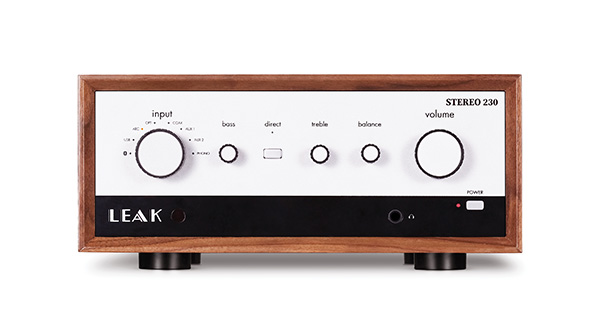
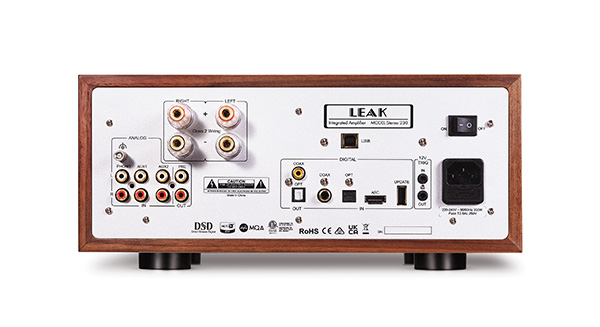
The Leak Stereo 230
Yes, it’s. But first, some background. Leak was on the entrance traces of the audio revolution that begat hi-fi as we all know it. Harold Joseph Leak based the corporate in England in 1934, two years after the electrical guitar was invented, two years earlier than the BBC started tv broadcasting, and 5 years after the beginning of the Great Depression.
Throughout the ’40s and into the ’60s, Leak manufactured amplifiers, loudspeakers, cartridges, turntables, andmaybe extra ubiquitously in North Americatuners, particularly the Trough-line tuner launched in 1955. Among Leak’s different choices had been vital design "firsts": the primary tube amplifier to decrease harmonic distortion to 0.1% (footnote 1); the primary speaker to implement true-piston cone know-how. Production continued till 1979, when Leak succumbed to the pressures of worldwide mass-market competitors.
China-based IAG Groupproprietor of Luxman and a bevy of well-known English manufacturersrevived the corporate by reinstating its design amenities within the UK. In 2020, the yr that will’ve been Mr. Leak’s 113th birthday, Leak’s first new merchandise in 40 years, the CDT transport and the Stereo 130 amplifier, had been launched. The 130 is a rejuvenated Stereo 30 from 1963, stated to be the primary commercially obtainable strong state amplifier. The Stereo 30 put out 15Wpc. Jimi Hendrix owned one.
Launched two years after the 130, the topic of this evaluation seems just like the 130’s twin, however it comes with increased aspirations. Per Leak’s press launch, the Stereo 230 is "the evolution of the acclaimed Stereo 130, providing extra versatility, rather more energy, and improved sonics."
In an electronic mail, I requested Jamie O’Callaghan, world gross sales and advertising director for the IAG Group, how the 230 was basically totally different from the 30. He responded, "We now have 50 years of know-how, innovation, and studying to reinforce the providing.
"One key distinction," he wrote, "was the event of transistors during the last 50 years. The fashionable transistors are designed to supply increased effectivity. This alone represents a serious enchancment over the unique 30.
"Another essential change from the Stereo 30, and from the Stereo 130, is the 230’s use of an clever ‘double parallel’ design in its energy stage. It not solely will increase energy output in comparison with the opposite fashions however permits for simpler dealing with of adverse masses and low-impedance audio system.
"We additionally designed a precision DC Servo Circuit to manage and stabilize the ability amplifier’s DC voltage, leading to improved output high quality, particularly within the bass, and a clear and heat sound, attribute of Leak."
What about that arm-buckling weight? "The energy provide is heavy!" Jamie stated. "Its transformer weighs 2.9kg"that is 6.4lb"and was made solely for the 230. We don’t use off-the-shelf merchandise. It’s a staple of our class-AB designthe transformer is vital to all of it. But, naturally, quite a lot of the 230’s weight can be attributed to its chassis and [optional] casing. It’s an actual wooden veneer and an actual wooden casing, just like the Wharfedale Linton‘s cupboard." Wharfedale can be an IAG model, together with Quad, Mission, and a few others.
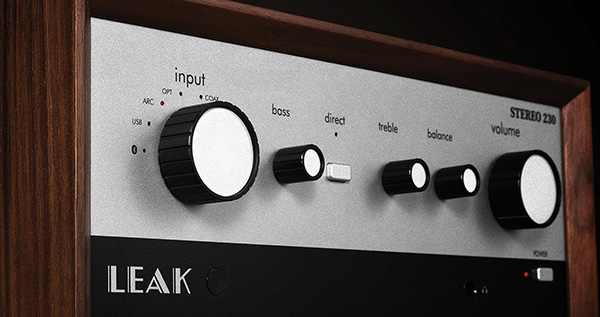
The 230 combines old-world optionsa phono stage, headphone jack, and tone controlsbunked alongside new-world ones that had been half a century into the longer term when the mannequin first got here out. These embrace hi-rez streaming as much as 32/768 PCM, native DSD512, and full MQA decoding. Digital processing is dealt with by a 32-bit ES9038Q2M Sabre Reference DAC chip utilizing proprietary circuitry stated to profit from ESS Technology’s Hyperstream II structure and Time Domain Jitter Eliminator to eradicate noise and enhance excessive dynamic vary. The 230 can be "Roon Tested," which means that Roon verified that the product works with Roon’s administration software program however, in distinction to Roon Ready merchandise, doesn’t use Roon’s RAAT streaming protocol.
The Stereo 230 can be outfitted with aptX HD Bluetooth and HDMI ARC connectivity (to be used with a tv). Its amplification stage is a MOSFET-based class-AB design stated to ship 75Wpc into 8 ohms or 115Wpc into 4 ohms. (We’ll see what JA’s measurements say.)
Why not class-D, which is in style now, even in retro merchandise like this? "Class-D provides many virtues, however it’s simply not Leak," Jamie stated. "The Stereo 230’s child sister, the Stereo 130, was a number of years in growth with a really stringent design objective of creating positive that the ethos and soul of the Leak model weren’t misplaced in pursuit of constructing a contemporary amplifier. The 230 comes 4 years after Leak was revived inside our engineers’ labs. It’s a real innovation for the corporate when it comes to design, compatibility, and energy provide, and it is nonetheless a ‘Leak’. We do not consider that will have been doable to do in a class-D design."
Among the management knobs on the 230’s faceplate is a direct-mode push-button, which bypasses the tone controls. I discovered the enter selector neatly constructed. Active inputs are flanked by a dotted mild that confirms enter choice and blinks when the amount is raised or lowered through the properly completed, slablike distant management.
Encased within the optionally available walnut enclosure, I discovered the 230 engaging in a timeless approach.
Listening
The Stereo 230 arrived brand-new. If I used to be anticipating the unbroken-in Leak to ship a flat, harmonically meager sound in comparison with that of my $15,000 class-A Shinai built-inproperly, that is not what I heard. What initially knocked me again in my seat in a second of sudden incredulity was the depth and integrity of the soundfield. It was architecturally molded.

Granted, I used to be taking part in an audiophile CDContact (Fidelio FACD 001) by Art Johnson and Frédéric Alarie, an analog recording of double bass and an electrical guitar, captured by gear bearing the names Ampex, Tascam, Nirvana, and Transparent. It’s meant to sound intimate, pure, resolved, pure. Fresh out of the field, the Leak introduced that sound out. I had solely needed a style of the Leak earlier than placing it via its break-in paceswith zero intention of judging ithowever decide it I did, as a result of what I heard caught me sudden.
As quickly because the album’s first monitor kicked inStevie Wonder’s "You Are the Sunshine of My Life"I used to be peering down a room transposed into my very own: the recording studio. It stretched fairly a bit past my very own room, about 25′ deep, judging by the acoustic reflections delineating its form. Alary’s double bass sounded well-proportioned and hearty in tone and low-end weight. To borrow the title of an album by The Who, the low notes and their rhythm had been meaty, beaty, huge, and bouncy. And that guitar! String tones sounded lifelike, not simply in big-scale character however in how their smallest shifts revealed various states of string stress. The curlicues on the finish of notes had been appropriately twangy, steely-resonant, and spatially carved-out.
Listening to Contact, even in these early hours, dropped at the fore how fluid and coherent the Leak’s sound was. There was nothing onerous or uneven. Its tonal steadiness tended extra towards candy than heat. I heard no frequency-response bumps, simply an overriding naturalness of timbre and a bloomlike roundness to the notes.
But what spoke louder than any phrase I’d discover to explain the Leak’s sonic attributes was the about-face of my intentions for the day. What I anticipated to be a 3-minute informal audition turned out to be two severe, 30-minute auditions the day I turned it on for the primary time, periods that ended up being written about on this evaluation. I used to be anticipating sound from an unbroken-in, $1695 strong state amp to grate. Another expectation bites the mud.

Three days of steady break-in later, I settled in for official enterprise. I dropped the laser on Tord Gustavsen’s "At Home," from his 2007 album Being There (CD, ECM B0008757-02), and was greeted by a carousel of piano tones endowed with simply the correct amount of string-felt jangle, sultry efflorescence, soft-colored hues, and finely measured pressure. Decays appeared elongated. Again, as with Contact, I heard a mellifluous musical supply, an evenness to the presentation coupled with a rhythmic tempo that was poised and confident. When the drums and double bass joined the piano, the image was huge and extensive, with life-sized devices dwelling inside. But most of all, it sounded totally cohesive. The soundfield was a unified, meticulously sealed complete.
The Leak’s overriding character was considered one of musical buoyancy disposed of sunshine and coloration, with an easy liftoff of notes. It was uplifting psychologically. The impact was mood-altering. At $1695, it is good for a number of remedy periods.
Footnote 1: This evaluation triggered recollections, as my first publicity to excessive constancy (albeit in mono) was in 1964, within the English equal of High School. We had weekly music appreciation courses, with LPs performed again through a Leak Point 1 amplifier and a Leak Sandwich loudspeaker.John Atkinson
HI-FI News
through Stereophile.com https://ift.tt/vYXi8Gy
December 22, 2023 at 03:10PM
-
Product on sale
 Audiophile Vinyl Records Cleaning BundleOriginal price was: €69.90.€59.90Current price is: €59.90. incl. VAT
-
Product on saleEasy Start Vinyl Records Cleaning KitOriginal price was: €69.90.€59.90Current price is: €59.90. incl. VAT
-
Vinyl Records Cleaner Easy Groove Concentrate€34.95 incl. VAT
-
Easy Groove Super Set€199.00 incl. VAT
-
Easy Groove Enzycaster – vinyl records prewash cleaner€34.95 incl. VAT
-
Easy Groove Extreme MK. II- vinyl records prewash cleaner€45.00 incl. VAT
-
Vinyl Records Cleaner – Easy Groove Virgin Concentrate€35.00 incl. VAT
-
Easy Groove Spray&Wipe vinyl records cleaner€34.95 incl. VAT


