
World News
Linear Tube Audio Aero D/A processor
Linear Tube Audio Aero D/A processor
This paragraph from Linear Tube Audio’s web site description of their new Aero DAC units the tone for the story I’m about to inform. "After making an attempt varied choices, we selected the Analog Devices AD1865 R2R DAC chip, which is typically referred to as the ‘vinyl DAC,’ for its natural sound. It is a non-oversampling DAC, with no digital filters. The AD1865 is much-loved by audiophiles and is utilized by at the very least one hi-fi firm in a flagship DAC costing over $150,000."
Check the boards and you discover that the AD1865 chip can be a heavy DIY favourite. Home brewers are drawn to this discontinued, "out of date" 18-bit chip for its simple implementation and unprocessed, music-friendly sound.
Manufacturers of luxury-priced DACs adore it, too. They do not thoughts that it is discontinued; they’ve already purchased 1000’s of chips. The fundamental factor they care about is that it sounds conspicuously musical and interesting. I’ve listened at size to at the very least three well-known, very costly DACs that use this chip, and I might describe their pleasures as the kind favored by long-playing report collectors. I’m pals with the designer of certainly one of these "luxury-priced obsolete-chip DACs," and once I requested him why he selected the AD1865, he instructed me, "We tried all of the others, and this one sounded essentially the most proper."
"After making an attempt varied choices," LTA owner-founder Mark Schneider and his Aero design crewWill Schneider-White, Tony N. Nguyen, and Jacob Knibbapparently got here to the identical conclusion, however I believe they thought they may do "most proper" higher at a decrease price than these luxurious DAC sellers.
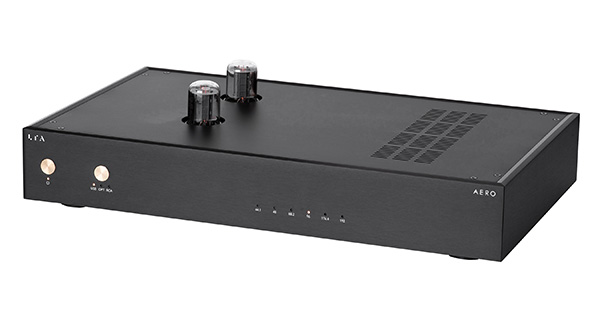
Description
I requested Nicholas Tolson, LTA’s head of gross sales and advertising, how LTA’s Aero DAC challenge obtained began. He replied, "The concept of the primary Linear Tube Audio DAC spent years hovering within the background as a blurry sketch, being redrawn frequently. We knew that if we made a DAC, it wanted to be deliberate and distinctive. Two years in the past, the items began to come back collectively, and we noticed that we lastly had one thing that could possibly be the LTA DAC. Now the Aero enters manufacturing as a generational step ahead for the corporate. It is the primary ZOTL circuit in manufacturing that was not an current Berning design. It is the primary single-ended LTA circuit, the primary balanced output stage in an LTA product, and the primary LTA product with out inter-stage coupling capacitors. Along with the Velo [headphone amplifier], the Aero takes a major step ahead in using greater efficiency SMD parts and PCB structure."
Of course I requested about that "out of date" AD1865 chip. "There is an plain kinship between out-of-production non-oversampling DAC chips and vacuum tube amplifiers. The finest of those chips scale up in sound high quality alongside the best implementation. They additionally don’t add something that then must be filtered or eliminated." The Aero affords no digital filters, no oversampling. Likewise, there is not any DSD or MQA assist and no LCD show.
LTA’s Aero DAC caught my consideration with its twin GE 12SN7 tubes protruding of its hood. The 12SN7 is the 12V heater variation of the venerable 6SN7 medium mu triode, a tube I’ve 40 years of expertise with. I regard the GE model as one of many best-sounding, longest enduring voltage amplifier tubes ever made. Here, it’s used to buffer the output of the digital processer and can most likely outlast the DAC and its house owners.
According to Schneider-White and Nguyen, "The Aero’s analog part begins with a discrete present mirror with a balanced output. This energetic I/V stage permits the DAC chip to work much less laborious; and it sounded higher than passive circuits throughout our testing.
"The sign from the I/V feeds the 4 single-ended amplification phases that make up the balanced ZOTL output stage."
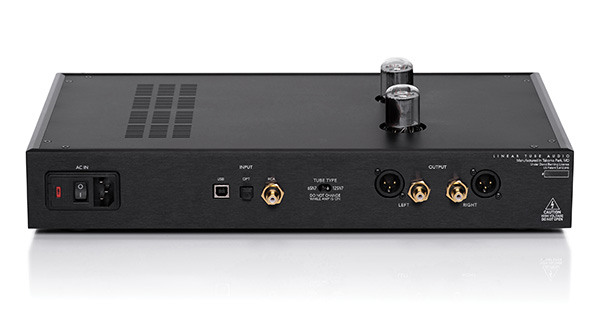
When I put in the Aero, I seen that its brushed-aluminum again panel is similar thickness and end because the entrance and facet panels, and its lettering is as properly engraved. It was clearly designed to be admired as a lot because the entrance panel, or as little.
"The casework for the Aero was designed as a nod to traditional picket tube amplifier chassis, re-interpreted in machined aluminum," Nicholas stated. "As fewer individuals use commonplace gear racks, particularly for headphone listening, we moved away from the fundamental box-with-a-faceplate system and created one thing that may stand alone as an object meant to be seen from all sides. We additionally needed to make the tubes extra seen than our earlier merchandise and permit customers to alter their tubes with out eradicating the quilt."
Don’t snort, however the immediate I turned the Aero on, I smiled large in appreciation for 3 tiny cream-colored LEDs that look soothing reasonably than aggressive. I cringe once I see aggressivenon-soothingchassis designs.
The left brass button and its related LED dealt with Power On; the second button and LED had been for the Input Selector, selecting between OPT (TosLink), USB, and RCA (S/PDIF). The third LED scoots backwards and forwards in a line simply off-center, indicating sampling charges for the incoming sign: 44.1, 48, 88.2, 96, 176.4, and 192. All very elegant and understated.
I obtained so excited once I spied these candy, heat LEDs that I texted Nicholas asking who made that call.
"Quite a little bit of effort was put into the indicator LEDs. We use the identical heat, pure coloration that you’d need for a studying lamp, together with a fastidiously chosen diffuser-plus-filter association to create the best glow with out glare." This is once I started noticing a sample: LTA was basing design choices across the high quality of the consumer’s complete expertise.
Next, I requested Nicholas and LTA CEO Mark Schneider’s crew for some details about the ability provide, which I already knew was a hybrid switching/linear design. He instructed me he was glad I requested, as a result of "mixed, there’s over 300,000µF of storage capacitance within the Aero, which is a ridiculous quantity for a line-level supply part. Power amps usually brag about having 1/3 that quantity."
I am unable to swear to the precise sonic impact of this a lot capacitance, however throughout my auditions the Aero flashed stunning quantities of drive, dynamism, and readabilitytraits I affiliate with well-engineered energy provides and costlier DACs.
Perhaps it is a good time to remind readers that lab numbers do not all the time line up with the character of a part’s listening expertise, and that generally, if we hearken to music with an open sufficient thoughts, we’d uncover how lots of the issues we thought had been vital turn into much less vital or perhaps not vital in any respect.
Starting up
I inserted two American-made NOS GE 12SN7 GTA tubes (provided), linked an AudioQuest Cinnamon USB cable (linked to my Roon Nucleus+), a Kimber Kable D60 coax, and a pair of balanced Cardas Clear Beyond interconnects; then pushed the Power button and used the second button to pick the USB enter on the Aero’s entrance panel. My Aero DAC setup was executed.
Qobuz acknowledged the "LTA Aero" instantly. Ten seconds later, I used to be listening to French violinist Ginette Neveu’s The Complete Recordings (24/96 FLAC, Warner Classics/Qobuz).
That’s plug’n’play digital. My most popular sort.
HI-FI News
through Stereophile.com https://ift.tt/PVewuOz
July 26, 2024 at 04:05PM
-
Product on sale
 Audiophile Vinyl Records Cleaning BundleOriginal price was: €69.90.€59.90Current price is: €59.90. incl. VAT
-
Product on saleEasy Start Vinyl Records Cleaning KitOriginal price was: €69.90.€59.90Current price is: €59.90. incl. VAT
-
Vinyl Records Cleaner Easy Groove Concentrate€34.95 incl. VAT
-
Easy Groove Super Set€199.00 incl. VAT
-
Easy Groove Enzycaster – vinyl records prewash cleaner€34.95 incl. VAT
-
Easy Groove Extreme MK. II- vinyl records prewash cleaner€45.00 incl. VAT
-
Vinyl Records Cleaner – Easy Groove Virgin Concentrate€35.00 incl. VAT
-
Easy Groove Spray&Wipe vinyl records cleaner€34.95 incl. VAT


