
World News
May 2025 Classical Record Reviews
May 2025 Classical Record Reviews
Bryce Dessner, David Chalmin: Electric Fields
Barbara Hannigan, soprano; Katia and Marielle Labèque, pianos; David Chalmin, synths and electronics
Alpha 980 (reviewed as 24/96 WAV). 2025. David Chalmin, prod.; Chalmin and Guido Tichelman, engs.
Performance ****
Sonics ****½
What is that this? That query is cheap to ask after listening to Alpha’s new idea album, Electric Fields. The plans for this recording started with the Labèque sisters. They teamed up with the ever-adventurous soprano Barbara Hannigan and composer/performer David Chalmin, who mixed non secular texts by Barbara Strozzi, Hildegard von Bingen, and Francesca Caccini with music by Bryce Dessner and Chalmin himself. The album accommodates 9 tracks that infuse medieval and baroque sensibilities with meditative, electronically enhanced New Age sonics. The consequence will sound acquainted to lovers of medieval, Renaissance, and baroque harmonies in addition to to aficionados of New Age atmosphere.
Hannigan, who is understood for championing the music of Berg and Messiaen, miraculously transforms her instrument into one acceptable for medieval plainchant. It’s gorgeous to find how a lot she will be able to sound like a traditional early-music soprano. She generally overdubs high-flying sounds and phrases across the dominant vocal line. Together with Chalmin’s space-age electronics, these are as a lot from one other time as they’re out of this world.
I used to be fairly taken by the two-part reframing of Strozzi’s "Che Si Può Fare?" (What Can Be Done?). It begins with an virtually nine-minute improvisation by Hannigan, Katia Labèque, and Chalmin with a number of loops and overdubs. There’s lots to savor, together with a piece that borders on madwoman melodramatics. The second half, Chalmin’s association of the Strozzi composition, provides the Labèque sisters ample alternatives to shine.
Though some could discover this music anodyne, audio present exhibitors able to making a serene demo surroundings may effortlessly transport guests by enjoying Electric Fields.Jason Victor Serinus
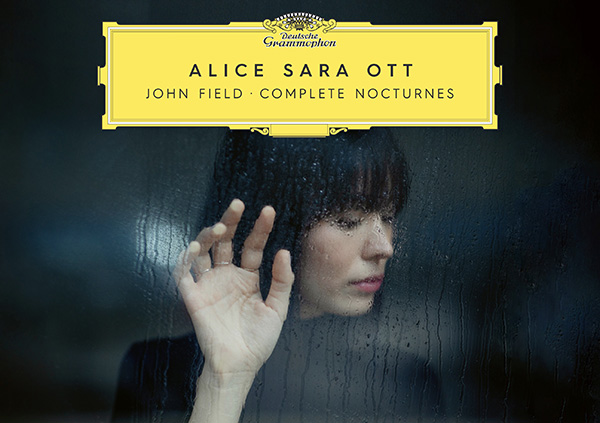
John Field: Complete Nocturnes
Alice Sara Ott, piano
Deutsche Grammophon 0028948662388 (CD, reviewed as 24/192 WAV). 2025. Christopher Tarnow, prod.; Emil Berliner Studios, eng.
Performance ****½
Sonics ***½
There’s such a cushty, at-home really feel to John Field’s 18 nocturnes that the second time I performed his first one, "No. 1 in E-Flat Major," it felt like a reunion with a long-lost pal. These nocturnes and many who adopted are constructed round a few of the loveliest, most sleek and uncomplicated melodies it’s possible you’ll ever encounter.
Chopin is commonly credited with popularizing the nocturne, however John Field (17821837), an Irish composer and pianist, printed his first nocturnes in 1814, when Chopin was solely 4 years outdated. Tutored by Muzio Clementi in London, Field had composed his first three keyboard sonatas by the point he was 20. That similar yr, in 1802, he and Clementi visited St. Petersburg. Clementi left after six months, however Field selected Russia as his base whereas touring throughout Europe to offer concert events. Sadly, his life was marked by sickness, together with most cancers, and a gradual lack of recognition again house on the British Isles, the place he visited sometimes. He died from pneumonia in Moscow at age 54.
None of Field’s sorrows made it into his nocturnes. Possessing each heat and an overarching lyrical high quality, they lack the heart-tugging sentimentality and angst that distinguish a lot of Chopin’s extra romantic works. Yet there’s a elementary, songful integrity to the Irishman’s work that each one however ensures that this recording will restore his nocturnes to the repertoire of many different live performance pianists.
Meanwhile, German-Japanese live performance pianist Alice Sara Ott’s performances are perfect for Field’s music. Everything is neat, tidy, flowing, and in place; her rigorously judged rubati are so completely crafted that you could be hardly discover them. Nonetheless, by recording’s finish, you will doubtless have been transported by the unforced pleasure of her artwork.Jason Victor Serinus
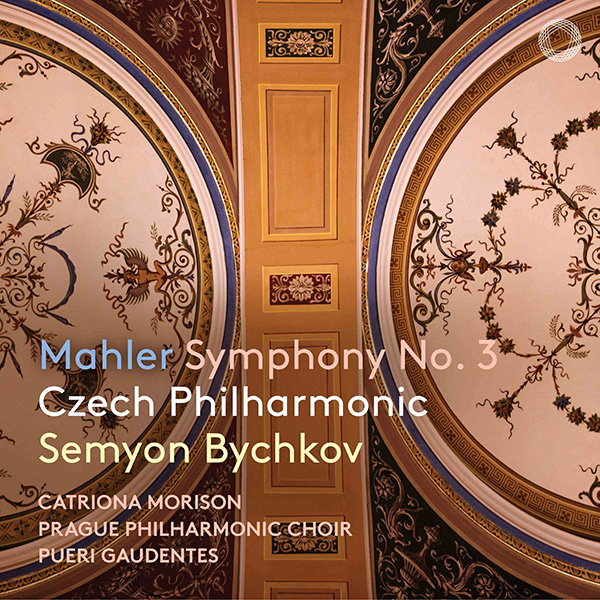
Mahler: Symphony No.3
Catriona Morison, mezzo-soprano; Prague Philharmonic Choir and Pueri gaudentes; Czech Philharmonic Orchestra/Semyon Bychkov
Pristine Classical PTC5187363 (CD). 2025. Holger Urbach, prod.; Stephan Reh, eng.
Performance ***½
Sonics ****
The greatest moments of Bychkov’s Third are superb, nevertheless it takes some time to get there. The discursive first motion steps forthrightly however squarely, however not till the event can we hear the mandatory urgency. Like virtually everybody else besides Horenstein, Bychkov makes an attempt to intensify the ultimate climax, however his setup appears notably clunky and ham-handed.
In the fragile, pointed Menuetto, the strings surge properly into climaxes and Bychkov attentively shapes the violins’ more and more embellished returns. Marked accents underscore the third motion’s Russian-Jewish lilt; the judiciously paced posthorn episodes droop time with out stopping it lifeless (an issue, alas, within the traditional Horenstein account).
Catriona Morison lacks alto depth however sings clearly and expressively; her agency, compact instrument turns simply by means of the highest. The oboe portamentos within the Nietzsche tune are heavy; the layering of girls’s and kids’s choruses within the fifth motion makes a high-quality spatial impact.
Pianissimo be damned, the finale begins too quietly; the tamped-down sonority does not maintain the ear’s consideration, nor does it arrange a distinction with the upper, lighter passage that follows. Once the textures start to fill out, nevertheless, Bychkov impeccably balances the music’s easy cantabile, wistfulness, and aching lyricism. His flowing tempo, whereas permitting the wanted area, tasks the motion as a collection of broad paragraphs, so it does not go adrift. After the ominous climax, the return to the opening temper does not fairly settle in; the decision, conversely, is fulfilling.
The sound is okay, and so is the enjoying, with particularly pure woodwinds. The excessive violins skinny out in some turbulent passages.Stephen Francis Vasta
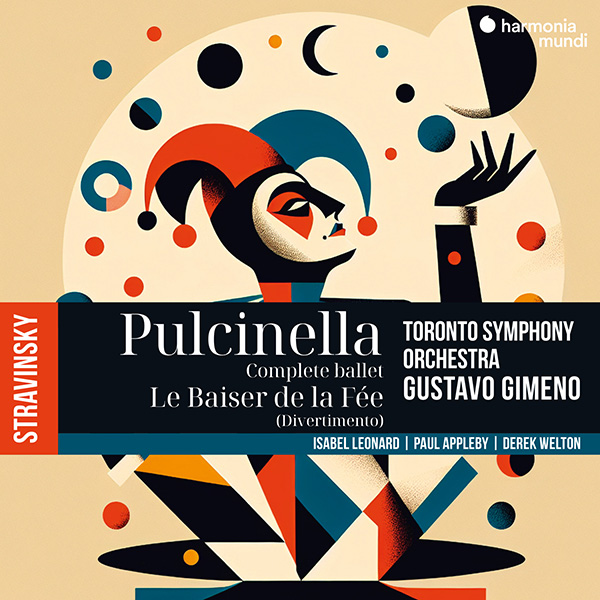
Stravinsky: Pulcinella; Le baiser de la féeDivertimento
Ok.-M. Murphy: Curiosity, Genius, and the Search for Petula Clark
Isabel Leonard, mezzo-soprano; Paul Appleby, tenor; Derek Welton, bass-baritone; Toronto Symphony Orchestra/Gustavo Gimeno
Harmonia Mundi 905384 (CD). 2025. Karel Bruggeman, prod.; Jacob Steingart, asst. eng.; John Newton, bal. eng.
Performance ****½
Sonics ****½
Le baiser de la fée is Stravinsky’s tribute to Tchaikovsky, impressed by that composer’s small piano items; the Divertimento contains many of the acquainted tunes. The higher strings begin the Sinfonia with a beautiful, clear sheen; answering woodwinds, crisply punctuated with pizzicatos, are heat and expressive. The Danses suisses galumph pleasantly in opposition to smoother, harmonically unstable episodes, with a suave merry-go-round waltz afterward. The Scherzo‘s oboe is plaintive; the expansive textures of the Pas de deux might be precise Tchaikovsky.
Pulcinella, based mostly on music attributed (largely incorrectly) to Pergolesi, channels a Baroque aesthetic into Neoclassicismobserve the skeletal wind chords that conclude observe 11. The extra dissonant moments do not final lengthy: Twice, driving Sacre-like chords give approach to nice scurrying. The dance varieties (two Sicilianas, for instance) are largely not tagged as such; there is a gently solemn Gavotta within the house stretch, whereas the Tarantella is hardly Baroque. Isabel Leonard, who takes the lead within the one unison trio, produces pretty wealthy tones. Derek Welton’s bass-baritone sounds versatile and resonant; Paul Appleby’s tenor is stiff fairly than fluid.
Kelly-Marie Murphy’s commissioned piece takes in new-music clichésbell-like accents, oddball woodwind sounds, angular fragmentshowever provides distinctive writing: brass pyramids, a Bartókian orchestral bustle, an unsettled string chorale. What has any of it to do with Petula Clark?
The Toronto Symphony is in high-quality fettle lately, rendering particularly Pulcinella with brilliant, perky sounds. Except for a little bit of glare on the climax of the Sinfonia, the sonics are all proper.Stephen Francis Vasta
HI-FI News
by way of Stereophile.com https://ift.tt/gKyseIv
May 12, 2025 at 04:28PM
-
Product on sale
 Audiophile Vinyl Records Cleaning BundleOriginal price was: €69.90.€59.90Current price is: €59.90. incl. VAT
-
Product on saleEasy Start Vinyl Records Cleaning KitOriginal price was: €69.90.€59.90Current price is: €59.90. incl. VAT
-
Vinyl Records Cleaner Easy Groove Concentrate€34.95 incl. VAT
-
Easy Groove Super Set€199.00 incl. VAT
-
Easy Groove Enzycaster – vinyl records prewash cleaner€34.95 incl. VAT
-
Easy Groove Extreme MK. II- vinyl records prewash cleaner€45.00 incl. VAT
-
Vinyl Records Cleaner – Easy Groove Virgin Concentrate€35.00 incl. VAT
-
Easy Groove Spray&Wipe vinyl records cleaner€34.95 incl. VAT







