
World News
Music Interview: Don Reedman
Music Interview: Don Reedman
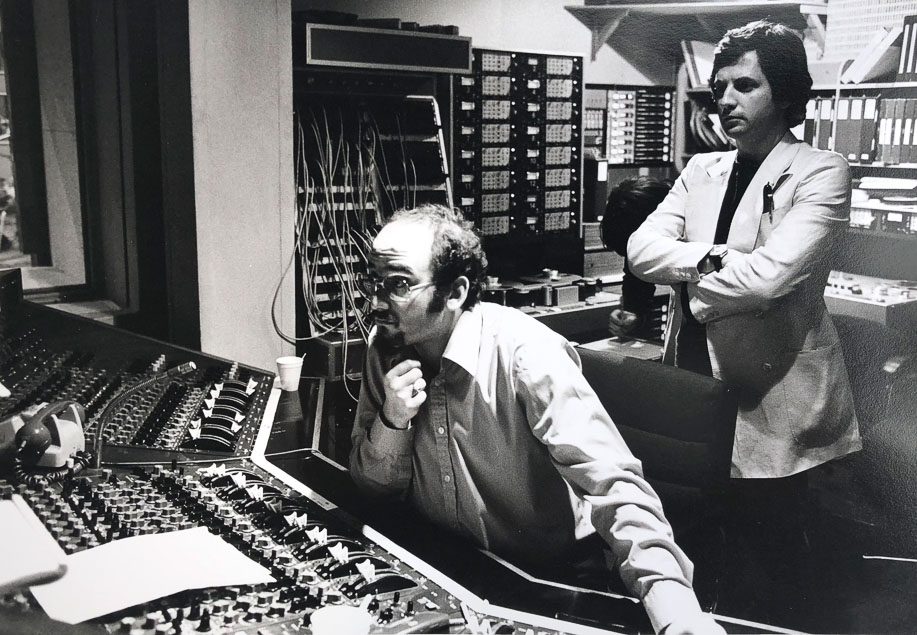
When producers Don Reedman and Jeff Jarratt got here up with the Classic Rock idea in 1978, they pioneered the thought of the orchestral rock and pop crossover – the mission took songs by the likes of David Bowie, The Moody Blues, Led Zeppelin and The Rolling Stones and, with the assistance of the London Symphony Orchestra (LSO), turned them into symphonic rock epics.
The authentic Classic Rock album turned a multi-million vendor – it went platinum – and now, 45 years later, it’s been reissued and remastered as Classic Rock Renaissance, however with some new songs, together with variations of Coldplay’s ‘Viva La Vida’, ‘Hello’ by Adele, Snow Patrol’s ‘Run’, ‘Human’ by Rag ‘n’ Bone Man and Muse’s ‘Uprising.’
hi-fi+ spoke to Don Reedman to find how he invented the Classic Rock idea and recorded the brand new tracks.
SH: Let’s speak about Classic Rock Renaissance, which options new songs from the likes of Coldplay, Adele, Snow Patrol, Rag ‘n’ Bone Man and Muse, in addition to remastered variations of songs from the unique album by David Bowie, Pink Floyd, The Beach Boys, Led Zeppelin, and extra. How did you select the brand new songs to suit alongside the unique recordings?
DR: We really began engaged on it 5 years in the past, however they’re all modern. They have been songs that I felt labored symphonically for numerous causes – the Muse track due to its power and the massive refrain, and ‘Hello’ by Adele has a tremendous huge refrain. It lends itself to an enormous, symphonic association. That’s actually the factors of all of the songs we select – begin with an amazing track after which go from there, use our creativeness and the arranger’s, and see what we are able to provide you with.
Do you assume there are fewer basic songs round these days?
When we began the unique Classic Rock, we had a few a long time of nice music – we ended up doing about 9 albums. We used all of them up, so it’s now tougher to return by as a result of we don’t have that depth to name on, however the materials’s on the market – one’s simply received to maintain one’s eyes, ears and creativeness open.
You recorded the brand new songs at Abbey Road, didn’t you?
Yes – we’ve all the time recorded at Abbey Road. The principal cause is that we would like a consistency in sound. Abbey Road is just not solely vital sonically, however it’s additionally the dimensions of the studio – you’ve to have the ability to slot in 100 musicians without delay.
With Classic Rock, we like to have the ability to document the entire orchestra in a single efficiency. We all the time use Studio 1. We have remastered recordings on the album that are 30 or 40 years previous, however, sonically, they nonetheless sound alike to what we did lately.
Abbey Road has a tremendous vary of valve microphones – the perfect on this planet, however possibly Capitol in L.A. has an analogous assortment. There is a full-time engineer that simply takes care of the microphones. It’s all these subtleties that make Abbey Road primary. That’s why it’s so common for symphonic recordings and film soundtracks – it’s the most costly studio on the town, however it’s all the time full.
It’s 45 years because the first Classic Rock album got here out, in 1978. How do you are feeling about that?
It appears like four-and-a-half years. Going again in there was similar to we went again yesterday. Of course, the orchestra has modified – there are youthful folks and it’s not all the identical faces, though a few of them are.
So, there are folks within the orchestra who’ve performed on each session?
Yeah – there are.
You first received the thought for Classic Rock in 1975, didn’t you? You noticed the London Symphony Orchestra play Tchaikovsky on the Royal Albert Hall, and felt that you can mix the facility of an orchestra with modern rock music…
That’s proper – it was the ‘best hits’ of Tchaikovsky. It was the primary time I’d seen a full symphony orchestra. I received the thought after which the title – Classic Rock. I believed in the event you received the rock music of the The Rolling Stones, The Beatles, Pink Floyd and The Moody Blues, and transposed it for 60 to 100 musicians, you can create Classic Rock.
Up till that time, the favored music that had been orchestrated was elevator music – Mantovani and all that. All very good, however it didn’t rock. I believed I might provide you with one thing completely different and I might hear it in my head. It was completely different to something that had been performed, however we wanted to decide on the repertoire fastidiously.
So, in 1975, you had rock bands like Queen embracing orchestral music…
Exactly – after we have been searching for nice songs, ‘Bohemian Rhapsody’ was primary within the charts, so it began from there. We additionally checked out ‘A Whiter Shade of Pale’, which may be very a lot Bach’s ‘Air on the G String.’ That’s the place it began.
I can bear in mind my dad and mom shopping for the Classic Rock albums after they got here out. Were they geared toward rock followers who didn’t purchase classical music, or classical followers who didn’t purchase rock?
It was in all probability a little bit of each – most individuals’s music tastes are diversified. I assume the rock tracks like ‘Whole Lotta Love’, which was a little bit of enjoyable actually… there are lots of people who wouldn’t have identified that track, however after they hear it symphonically, it appeals to their urge for food – they uncover it and it’s a brand new piece of music. But I feel it appealed to lots of people who weren’t into rock music – they heard the songs and so they might relate to them.
When you first recorded a Classic Rock model of ‘Bohemian Rhapsody’, you didn’t prefer it, did you? Why was that? I might have imagined the monitor can be ultimate for a Classic Rock association.
The orchestral association by Andrew Pryce Jackman was nice – he was a genius – however he didn’t rating the rhythm part. I believed it was basic however it didn’t rock. We scrapped it and I sat down with Andrew and mentioned, ‘This is what I need – it’s received to return in with a robust rhythm part of bass, drums, guitar and so forth.’ He rescored it – we scrapped that session, however there was sufficient in it for me to know that the thought was going to work.
Didn’t it take some time for the music trade to grasp the idea of Classic Rock?
Yeah. I began to buy it round to A & M and Polydor – all the key document firms. I’d paid for the recordings myself. They didn’t actually get it – they simply thought they have been cowl variations of pop songs. They couldn’t hear it as one thing saleable.
It was troublesome to get anybody to take it on board and finance it, so what occurred was that I used to be working for Okay-tel – I used to do their compilation albums. They by no means actually invested in new recordings, however I had a deal the place I used to be free to supply albums of authentic recordings of anybody I needed to document.
When I performed ‘Bohemian Rhapsody’ within the workplace, we had a brand new MD known as Tony Johnson – he mentioned, ‘What’s this? It’s implausible.’ I informed him the story and he mentioned, ‘We’ve received to have it,’ so I ended up doing a cope with my very own firm, which was superb. I used to be happy – it wasn’t a battle and so they ended up making some huge cash from it. We all did nicely – it was a win-win.
Artists together with David Bowie, Paul McCartney, Pete Townshend and Justin Hayward have all appreciated the Classic Rock therapy you’ve given their songs, haven’t they?
That’s true. We had an amazing response from Justin Hayward. I can bear in mind enjoying ‘Nights In White Satin’ to him – I used to be fairly nervous, as a result of I actually needed him to take part.
The authentic concept was to have the artist guesting on the document, however that turned out be very troublesome, and contractually there have been all kinds of issues.
Justin mentioned he beloved the model and that subsequent to the unique he mentioned it was the perfect one he’d heard out of the 65 cowl variations – I used to be actually thrilled about that. He got here within the studio and performed guitar on the document – that’s when Paul McCartney got here in and had a chat with him. He beloved it – he was listening to it on the steps exterior the studio. The LSO are certainly one of his favorite orchestras.
Nowadays, we’re so used to seeing and listening to rock artists reimagining their songs for orchestras, however you began all that, didn’t you? When you probably did the primary album, did you see it as a long-term mission, or a one-off?
I seen it in the identical approach an artist views their profession. If you see [old] interviews with Mick Jagger or Paul McCartney and so they’re requested how lengthy it would final, they are saying, ‘Two or three years – we received’t be doing this after we’re 40.’ Mick’s hitting 80 and nonetheless doing it…
I seen Classic Rock as being profitable for the second after which it took on a lifetime of its personal. It’s like a baby that grows up – you’ve received to take care of it and be a very good dad or mum.
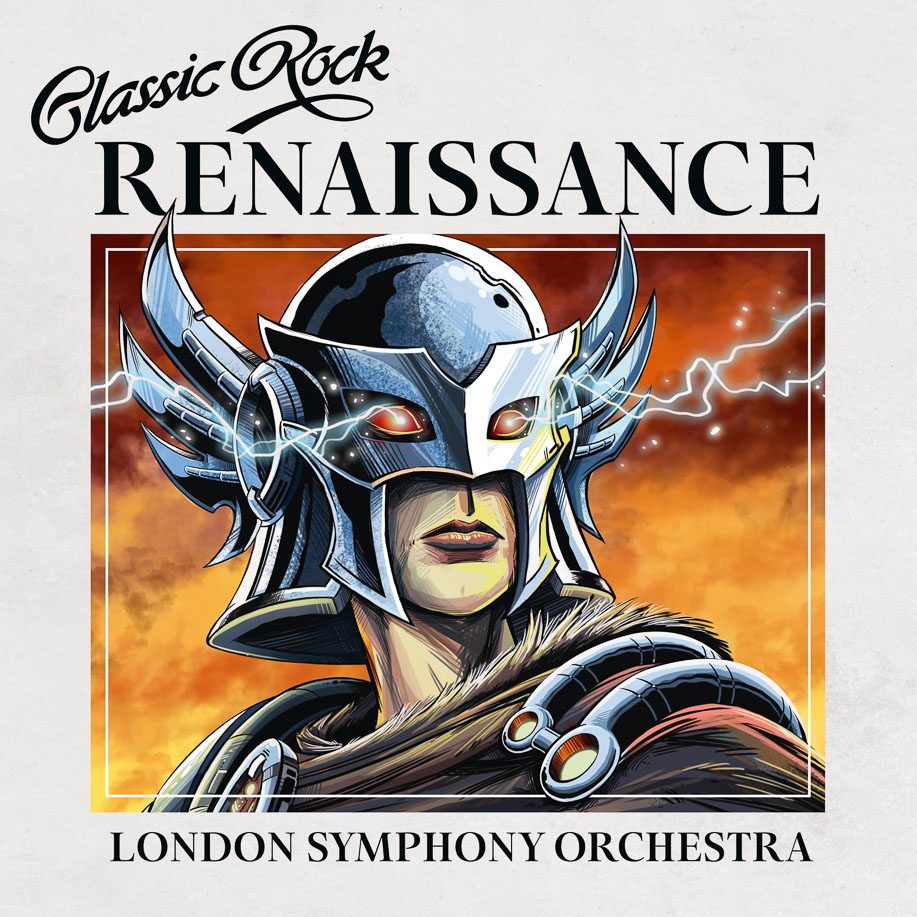
Classic Rock Renaissance is out now on BMG. It’s obtainable digitally or as a three-CD set.
The submit Music Interview: Don Reedman appeared first on hi-fi+.
HI-FI News,Audio
by way of Articles Archive – hi-fi+ https://ift.tt/UgS6uQ4
March 27, 2024 at 06:20PM
-
Product on sale
 Audiophile Vinyl Records Cleaning BundleOriginal price was: €69.90.€59.90Current price is: €59.90. incl. VAT
-
Product on saleEasy Start Vinyl Records Cleaning KitOriginal price was: €69.90.€59.90Current price is: €59.90. incl. VAT
-
Vinyl Records Cleaner Easy Groove Concentrate€34.95 incl. VAT
-
Easy Groove Super Set€199.00 incl. VAT
-
Easy Groove Enzycaster – vinyl records prewash cleaner€34.95 incl. VAT
-
Easy Groove Extreme MK. II- vinyl records prewash cleaner€45.00 incl. VAT
-
Vinyl Records Cleaner – Easy Groove Virgin Concentrate€35.00 incl. VAT
-
Easy Groove Spray&Wipe vinyl records cleaner€34.95 incl. VAT







