
World News
Music Interview: Midge Ure
Music Interview: Midge Ure
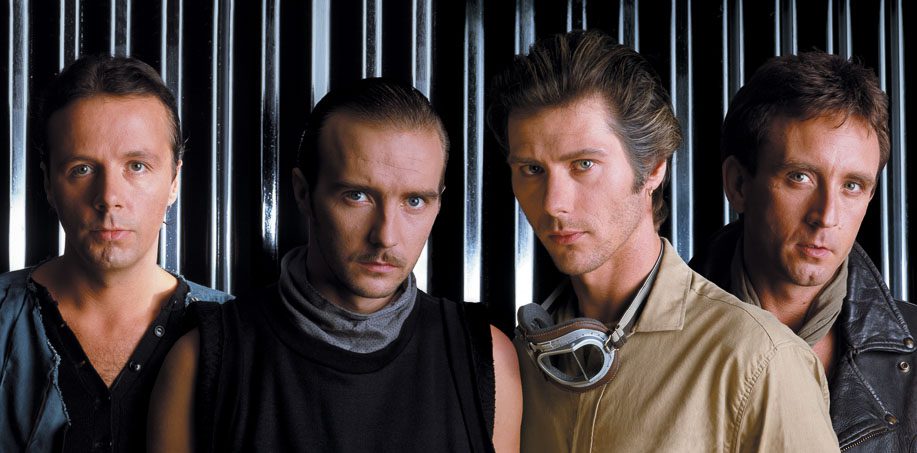
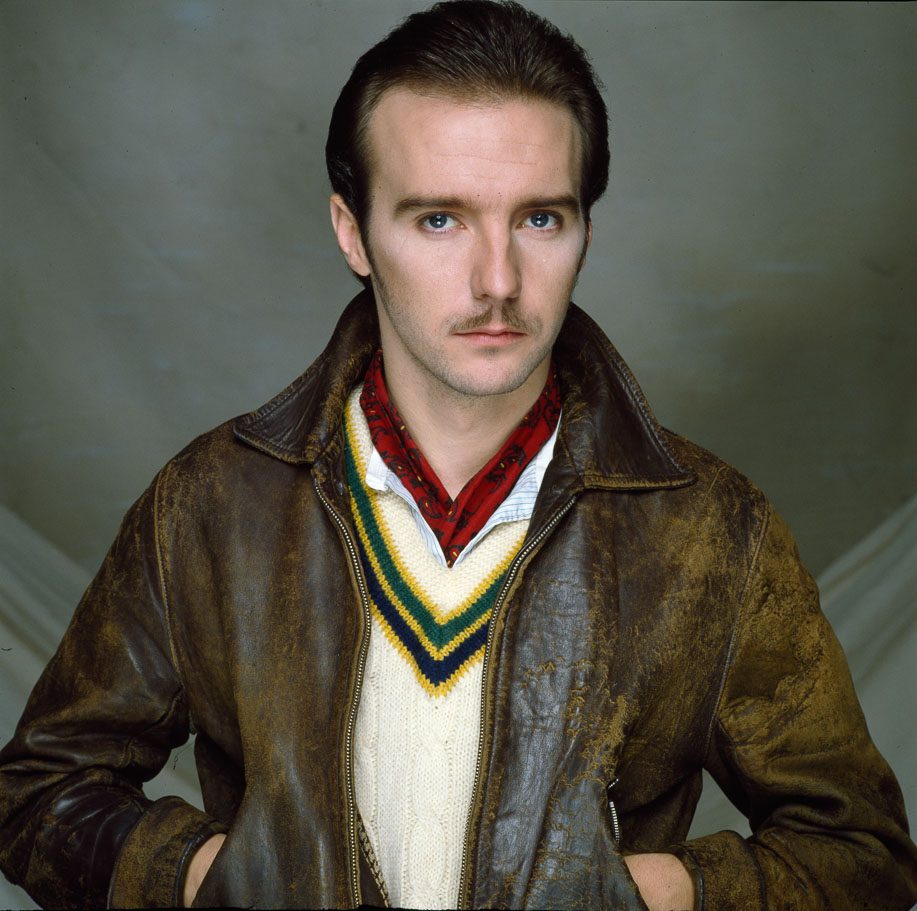
hi-fi+ talks solely to Midge Ure, frontman of British New Wave/synth-pop band Ultravox, in regards to the forthcoming deluxe version field set celebrating the fortieth anniversary of Quartet – the third album he made with them.
Featuring 4 UK Top 40 singles, ‘Reap The Wild Wind’, ‘We Came To Dance’, ‘Visions In Blue’ and ‘Hymn’, it was produced by the legendary George Martin.
SH: Quartet is over 40 years outdated. How do you are feeling about that?
MU: It’s humorous – it doesn’t really feel like 40 years. Everything to me was yesterday, or final week, or final 12 months, however not 40 years.
Like any music, it should have its dated moments. I’ve had to return and have a look at the album once more lately as a part of a tour that I’m doing. Some of it’s a delight and also you uncover issues that you simply’ve forgotten you probably did, and different components you possibly can’t fairly get your head round what you had been considering on the time.
So, it’s a double-edged sword, however as a result of Ultravox at all times tried to push the envelope sonically, there are components that actually rise up. Lots of issues get dated by the expertise you employ on the time.
That’s ironic, isn’t it? You’re utilizing the most recent expertise of the day – Quartet options some early digital synths, which had been innovative on the time – however the sound quickly dates, in contrast to guitar, bass and drums…
It’s humorous – you’re fairly proper. If you concentrate on guitar, bass and drums, since Les Paul’s days, they haven’t actually modified – there’s not a large distinction sonically between listening to Hendrix play ‘All Along the Watchtower’ and listening to one thing that was recorded yesterday.
If it’s guitar-oriented, it’s nonetheless the identical results, however perhaps the recording expertise has modified and made issues clearer, however not essentially higher.
With bands who used nothing however electronics again within the late Nineteen Seventies and early Nineteen Eighties, that dated in a short time – excluding Kraftwerk, as a result of they at all times did one thing totally different. It was a novelty for some time but it surely quickly wore skinny.
Elements of Quartet are barely dated due to the sounds, however the majority of it nonetheless stands up as a result of it’s based mostly round hopefully what are good songs.
Billy Currie [Ultravox’s keyboard and strings player] had these signature sounds – his grungy outdated ARP factor, which was Jimi Hendrix on a synth actually – and some different bits and items, which gave Ultravox a really outlined sound, however, on Quartet, we began to maneuver away from that. Probably due to the expertise and a lack of awareness of the way it may very well be tailored. We used hybrid issues as nicely, like PPG Wave synths, which had been digital with an analogue front-end.
Quartet has a European really feel…
I feel it does. Ultravox by no means delved into that Americanised factor and sung songs about truckin’ down the freeway. It simply wasn’t us. We all got here along with our totally different influences and what popped out was this love of the austere and movie noir soundtrack music, however with a pop bent – that’s what Ultravox did. We may write good, memorable, catchy melodies.
You labored with German producer Conny Plank on the 2 albums earlier than Quartet – Vienna and Rage In Eden. Wasn’t Rage In Eden a tough album to make?
For Vienna, the price range was extremely small – we recorded for 10 days in RAK in London and completed it off in Conny’s studio in Germany.
We did your entire album in three weeks – we had the preparations off pat as a result of we’d had an opportunity to play the songs dwell, so all we needed to do was work out document them technically. But, when it got here to Rage In Eden, we had generated fairly a piece of cash and due to our reputation we had acquired to a degree the place lets say, ‘Well – we don’t wish to go right into a studio and do it like that once more, we wish to do one thing fully totally different’.
We nonetheless wished to work with Conny, however we selected to jot down your entire album within the studio, which is A an idiotic or very courageous factor to do, and B stupidly costly.
We had the wherewithal and the time to make one thing that was as ground-breaking and totally different as Vienna was – not Vienna Part Two.
With Rage In Eden, we made it tough for ourselves by strolling into the studio with nothing however our tools and seeing what our 4 heads may throw collectively.
So, for Quartet, you determined to work with George Martin. How did that come about? He wasn’t a pure match, was he?
If you decide a e book by its cowl, you would possibly assume, ‘George Martin and Ultravox – that doesn’t work’ – however take Ultravox out of the equation and return to George Martin, when studio technicians labored nine-to-five on the BBC or Abbey Road and wore white lab coats with pens of their pockets… he modified all that. He was as radical then as Conny Plank was when he was working with Neu!, Kraftwerk or early Eurythmics.
George and Conny had been radically totally different characters – George wore a go well with and tie, and Conny was a giant, strapping bearded German man – however the essence that acquired them into the business was nonetheless there. It hadn’t gone away.
My one nagging doubt about working with George was would it not be too company? Would he perceive what we had been making an attempt to do?
In the primary assembly we had, he began speaking about LinnDrums – he had one and he’d performed round with it and labored out the delays you wanted to placed on a snare to make it sound extra human. He was actually on the case.
We’d been given the keys to our personal little car – we may do no matter we wished, with whoever we wished. Our document label, Chrysalis, had been very open. They stated, ‘OK – right here’s sufficient rope, go and hold yourselves…’
We at all times got here up with the products, however this time round we thought we might again off a bit and never be so anal. We opened up and let another person into our internal sanctum. The solely particular person we may all agree on was George Martin – no matter whether or not you had been into The Beatles or not, we had been all affected by what he did and the way he modified the music business.
He was the man who insisted that EMI put money into a three-track recording machine so you could possibly nonetheless edit with a stereo image, as a result of he’d seen Quincy Jones use one in America. That’s radical.
With Quartet you’d written the songs earlier than you went into the studio, and Martin labored with you on a few of the harmonies and preparations. Was he extra hands-on than Plank?
Conny was very hands-off when it got here to preparations – he had nothing to do with the creation of the music. He stated his job was to seize the ambiance. George was a way more ‘sit around the piano’ form of man – he acquired concerned.
Quartet was recorded at AIR Studios in London and combined and overdubbed at Martin’s facility in Montserrat. How was that?
It was bizarre – we did it again to entrance. We ought to’ve recorded the fundamental tracks in Montserrat and completed them at AIR. Montserrat was by no means arrange as a mixing studio – it had a large guide Neve desk with 60 channels or one thing – however we had the dream group of George Martin and Geoff Emerick, who had carried out Sgt. Pepper…
There had been ‘pinch me’ moments once you’d assume, ‘My God – these individuals are engaged on one thing I’m engaged on’.
We ended up mixing it manually – old-fashioned stuff, with 10 faders every. You needed to get your strikes, your pans and degree modifications all right and throw your echoes, so it actually was a situation of ‘I feel that’s the combination’ – not like nowadays when all the things’s computerised and you’ll hear the identical combine one million occasions. It was right down to human frailty and talent.
Being in AIR was improbable – it was a superb work ethic. We didn’t need to do late-night recording with George – he’d knock it on the pinnacle at eight o’clock, go house and have dinner. We’d by no means skilled that earlier than.
There are new mixes of Quartet by Steven Wilson within the field set, together with a 5.1 encompass sound model. Are you a fan of immersive audio?
Yes – it’s nice, however in the back of my thoughts there’s a nagging doubt that you simply don’t wish to mess with one thing that has been a sure method and residing in somebody’s head and coronary heart for 40 years. There is a risk you’ll screw it up for them, however once you hand it throughout to somebody like Steven, you belief them to have the ability to eke out the most effective of what’s in there.
I don’t thoughts enjoying the songs, however I don’t wish to return in a time machine. But, I can see why with new expertise you possibly can make clear issues and nonetheless keep the ambiance.
That’s one thing to discover however I’m unsure I’d wish to do it with completely all the things that I’ve carried out. I assume typically it’s higher leaving the our bodies buried.

The six-disc CD and DVD deluxe version field set of Ultravox’s Quartet is out now on Chrysalis Records.
It consists of the unique 1982 analogue album grasp, new Steven Wilson stereo and encompass sound mixes of the album and B-sides, 70 tracks (47 unreleased recordings), a 2o-page booklet containing band notes, unseen photographs and lyrics, and a replica Quartet tour programme.
Midge Ure will proceed his tour within the UAE, Poland, the UK and Portugal throughout 2024: www.midgeure.co.uk
The put up Music Interview: Midge Ure appeared first on Hi-Fi+.
HI-FI News,Audio
through Articles Archive – Hi-Fi+ https://ift.tt/bPqL8hF
February 6, 2024 at 08:00PM
-
Product on sale
 Audiophile Vinyl Records Cleaning BundleOriginal price was: €69.90.€59.90Current price is: €59.90. incl. VAT
-
Product on saleEasy Start Vinyl Records Cleaning KitOriginal price was: €69.90.€59.90Current price is: €59.90. incl. VAT
-
Vinyl Records Cleaner Easy Groove Concentrate€34.95 incl. VAT
-
Easy Groove Super Set€199.00 incl. VAT
-
Easy Groove Enzycaster – vinyl records prewash cleaner€34.95 incl. VAT
-
Easy Groove Extreme MK. II- vinyl records prewash cleaner€45.00 incl. VAT
-
Vinyl Records Cleaner – Easy Groove Virgin Concentrate€35.00 incl. VAT
-
Easy Groove Spray&Wipe vinyl records cleaner€34.95 incl. VAT







