
World News
My New Album!
My New Album!
February 2025 marked the discharge of a brand new recording of my compositions: Fillmore Street/Little Woodstar. This is the sixth album of my music. My first solo outing as a composerSteel Chords i-5, on AudioQuest Musicwas in 1993.
I’m a part of a small music demographic that I described in 1998, in an article in Positive Feedback, as "high-end composer." Another relevant time period could be "audiophile composer." There are others who work this manner, however not many. Few musicians are as as I’m within the recording and copy of their music. I like to listen to the sausage get made.
When I got down to assemble one thing musical, I do not suppose by way of songs, tracks, or playlistsI’m making an attempt to place collectively an album. Even extra old-school: I’m considering by way of an album that has two sides, two elements to this system, like an LP. Figuring out what that program must be takes a very long time.
In the case of Fillmore Street/Little Woodstar, I made a decision on a two-piece set consisting of 1 previous composition and one new one. These two works reside in two totally different musical ballparks. Fillmore Street, on aspect 1 of the LP, is scored for a jazz orchestra. It tells musical tales about three places in California. The older work on the album, Little Woodstar, which I composed whereas in grad faculty, leans classical.
So proper there, I created a problem for myself. The world of music distribution doesn’t welcome recordings in a couple of music style. Many listeners really feel the identical method: Jazz folks aren’t occupied with listening to a classical piece; classical folks do not need to hear jazz. I created a hurdle for myself that wasn’t strictly obligatory.
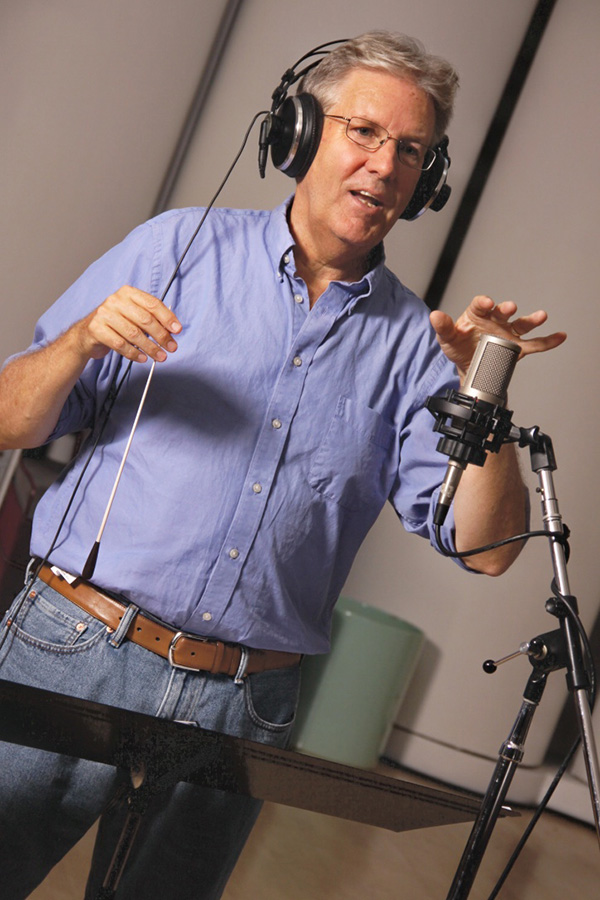
This music is difficult for gamers. One motive is that I like wide-open, Copland-like harmonies that includes uncovered fourths and fifths. If the intonation on these is off, the music is DOA. Fortunately, I had entry to the most effective musicians, and my longtime concertmaster, Peter Kent, who assembled this West Coast studio orchestra, has excellent pitch.
Knowledgeable studio recording using skilled musicians prices cash. Why could not I document pals in my bed room, free of charge? Little Woodstar, a celebratory environmental assertion, was initially composed for a big symphony orchestra and vocal quintet. I rescored it for a 16-piece studio orchestra however saved the vocal quintet. Even so, it might require a really giant bed room! The jazz ensemble had 16 musicians, wholeno vocalistsso it, too, would require an enormous room.
Besides, I’m an audiophile composer: it must sound nearly as good as potential. So I wanted actual musicians, an actual studio, actual engineers. To meet price range, each bit would have to be recorded in a single 6-hour session; solely the perfect studio-savvy musicians may pull that off.
I ended up engaged on each coasts, recording Little Woodstar in Los Angeles and Fillmore Streetthe West Coast workin New York. In every metropolis, I used to be in a position to work with the most effective studio musicians.
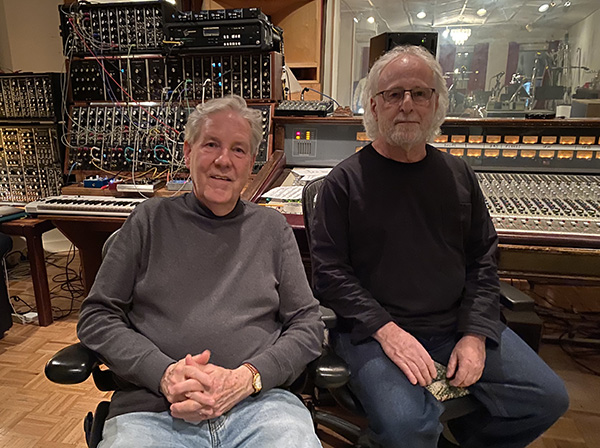
The different aspect of the glass is vital, too. My L.A. engineer was Steve Genewick, who for years assisted Al Schmitt at Capitol. In latest years, Genewick has recorded Diana Krall, Dwight Yoakam, Bob Dylan, and Michael Bublé, amongst others. In New York, my engineers had been Chris Allen and James Farber. Allen’s latest recording credit are a who’s-who of present jazz artists: Kurt Elling, Sullivan Fortner, Steve Davis, Mary Halvorson. Farber’s technical credit are legendary; amongst many different recordings, he’s answerable for a number of latest Stereophile favorites together with Heart and Vintage by Jérôme Sabbagh and 12 Stars and Echoes of the Inner Prophet by Melissa Aldana.
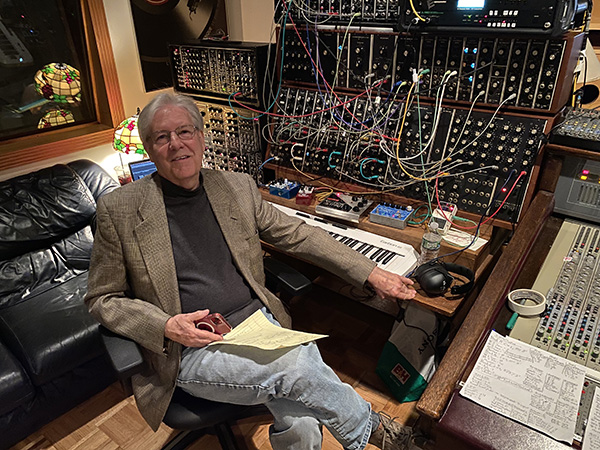
In L.A., I selected Studio 1 at East/West Studios in Hollywood, among the best giant rooms nonetheless operating in Los Angeles. This is the place Frank Sinatra recorded all his Nineteen Sixties Reprise albums. String devices sound nice there, which made it ultimate for recording the classical piece. In New York, I recorded at Sear Sound, which is understood for its in depth assortment of microphones, many bought years in the past by Walter Sear, the studio founder. Sear Sound provided the usage of its classic Moog Model IIIc modular synthesizer, made in 1968 by Robert Moog for Sear, his accomplice. Operated by jazz pianist Adam Birnbaum, this instrument sounded superior!
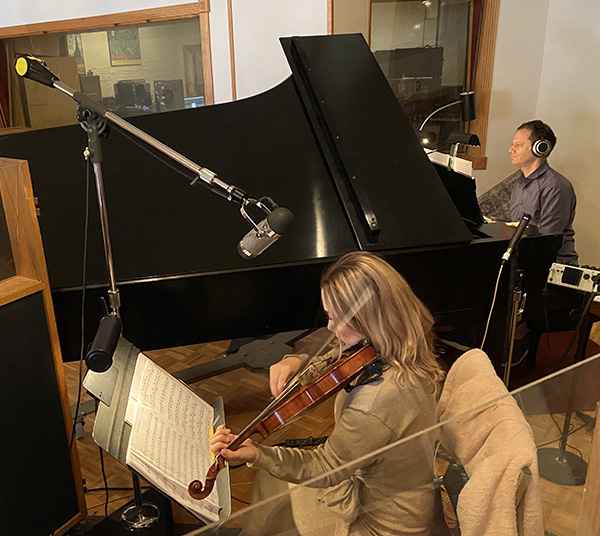
Another key a part of my audio SWAT group had been coproducers John Atkinson and Joe Harley; Harley produced my first album in 1992 and was onboard for the Los Angeles session. Stereophile Technical Editor John Atkinson, who has now labored with me on 4 albums (footnote 1), took cost in New York. Both of those gents are skilled at calling balls and strikes within the warmth of battle and are hands-on with the next enhancing, mixing, and mastering.
My music is melodic, which was out of favor after I first started composing; in these days, tunes had been scarce. Early on, I used to be influenced by Frank Zappa, with whom I received to spend a while. Frank as soon as mentioned to me, "I like music with quite a lot of little notes in it."
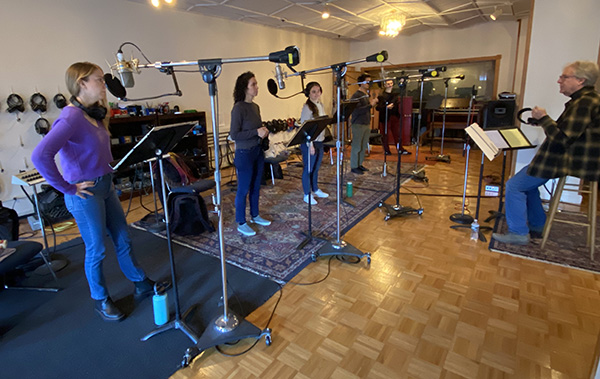
There will be quite a lot of adjustments to maintain up with in my music, recalling Zappa’s collage-like approach. On the brand new album, you possibly can hear this speedy deployment highlighted within the third motion of Fillmore Street, "Mar Vista," as jazz improvised solos coexist with through-composed scoring. This isn’t background music. In his liner notes, coproducer Joe Harley states: "As all the time, Sasha Matson takes you on a journey."
Fillmore Street/Little Woodstar is on the Albany Records label. It’s obtainable on 180gm LP at Acoustic Sounds and different nice retailers, on CD from amazon.com, for obtain through all the standard suspects, and streaming on all the most important providers. More info on Sasha’s compositions and recordings will be discovered right here.
Footnote 1: The first venture of Sasha’s that I produced was his jazz operaCooperstown, which was Stereophile‘s Recording of April 2015 and was rereleased in a revised model in 2019. I additionally produced Tight Lines, and Molto Molto.John Atkinson
HI-FI News
through InnerConstancy https://ift.tt/HsdEcSf
April 22, 2025 at 02:53PM
-
Product on sale
 Audiophile Vinyl Records Cleaning BundleOriginal price was: €69.90.€59.90Current price is: €59.90. incl. VAT
-
Product on saleEasy Start Vinyl Records Cleaning KitOriginal price was: €69.90.€59.90Current price is: €59.90. incl. VAT
-
Vinyl Records Cleaner Easy Groove Concentrate€34.95 incl. VAT
-
Easy Groove Super Set€199.00 incl. VAT
-
Easy Groove Enzycaster – vinyl records prewash cleaner€34.95 incl. VAT
-
Easy Groove Extreme MK. II- vinyl records prewash cleaner€45.00 incl. VAT
-
Vinyl Records Cleaner – Easy Groove Virgin Concentrate€35.00 incl. VAT
-
Easy Groove Spray&Wipe vinyl records cleaner€34.95 incl. VAT


