
World News
Nessie Vinylcleaner ProPlus+ report cleansing machine
I’m a music lover first, not probably the most Type A of audiophiles. Sure, I clear my records, however I’m not obsessive about preserving them immaculate like my audiophile father is; he cleans every report ultrasonically earlier than it lands on his turntable platter, writing the date of every report’s final bathtub and which cleansing machine he used on the surface of a contemporary plastic interior sleeve earlier than sliding the LP again inside. I do not assume his cleansing schedule is inflexible—he has far too many LPs for that—nevertheless it’s common. Whenever I go to with LPs in tow, they have to move via the record-cleaning machine (RCM) gauntlet earlier than they’re permitted to land on his turntable’s platter.
His rule is smart: All sorts of icky muck—lint, ash, mud, lifeless microscopic bugs, mildew, fungi, pet dander, varied human secretions—builds up in these grooves over time. Too a lot filth may even injury gear and prized records. Smooth, clear vinyl helps clear the trail for cleaner sound.
Recently, I attempted out one of many many RCMs at the moment available on the market: the redundantly named Nessie Vinylcleaner ProPlus+ ($2495), which regardless of the title doesn’t hail from Scotland, neither is it a monster; in reality it is smaller than another report cleaners I’ve used.
The Nessie will not be an ultrasonic; as an alternative, it takes the old-school strategy, reaching its purpose with cleansing fluid and a delicate scrub. This German-made RCM has a platter that rotates robotically, backwards and forwards, as the primary arm dispenses Nessie’s personal “Vinylin” cleansing fluid (or the fluid of your alternative), a 200mL bottle of which is supplied. The similar arm brushes the report, and one other arm sucks the fluid up and dries it. The Vinylin fluid is claimed to dissolve filth with out damaging the vinyl. The bundle comes with a micro-fiber fabric meant for precleaning, and a clamp with a rubber seal to maintain your labels dry.
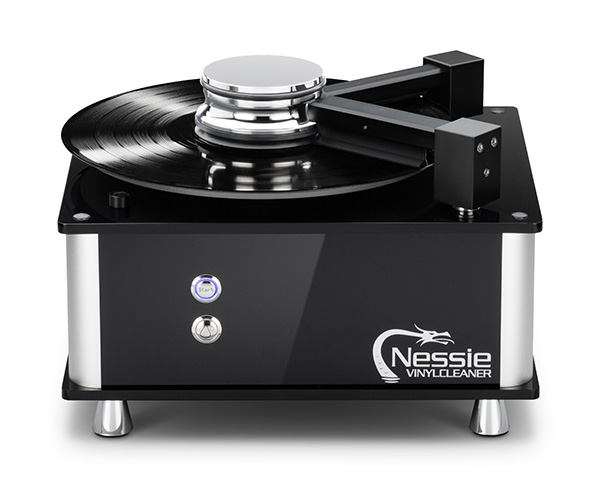
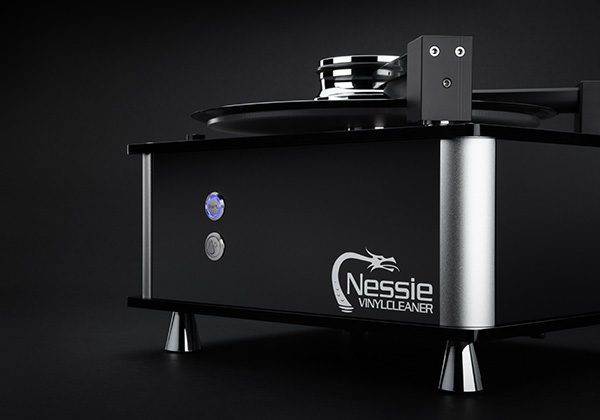
The Nessie’s look is a little more trendy—much less utilitarian—than that of another RCMs. The chassis is made primarily of thick (8mm) shiny black acrylic. The Nessie feels substantial, standing on 4 tall, sturdy chromed toes. A raised, silvery silhouette of the dragon-like “Nessie”—an apparent nod to the Loch Ness Monster—emblazons the decrease proper nook of the entrance panel.
To the left of the Nessie picture are two buttons, a light-weight encircling every. The prime one begins and stops the platter’s rotation. The one beneath it, which is labeled with a droplet graphic, controls a pump that dispenses cleansing fluid from a groove within the brush arm, dispersing it evenly onto the LP floor. I emphasize “LP” right here as a result of, as outfitted, this Nessie solely cleans 12″ records. If you need to clear 7″ or 10″ records, you may want the $275 accent equipment. I did not order the equipment, as I seldom spin these smaller records, or clear them (though only recently I picked up just a few new 7″ singles at a current “Paved Paradise” touring indie-label report present, footnote 1).
The Nessie’s guide recommends setting the unit up on a “wipeable” degree floor—degree to forestall fluid from getting into the unit’s mechanics and circuitry, wipeable as a way to simply clear up spills. (I did not expertise any.) I set the Nessie up on the finish of a protracted metallic desk that serves as an island in my kitchen.
Inside the chassis, there is a motor for rotating the platter, a vacuum motor for sucking up fluid, a cleaning-fluid reservoir, and a wastewater tank. A small hose extends outdoors the chassis for draining accrued wastewater, a step that is beneficial “at any time when you have got completed washing the records” or after each 40 records washed to forestall buildup of mildew and scum and the potential of fluid overflow.
Setting Nessie Up
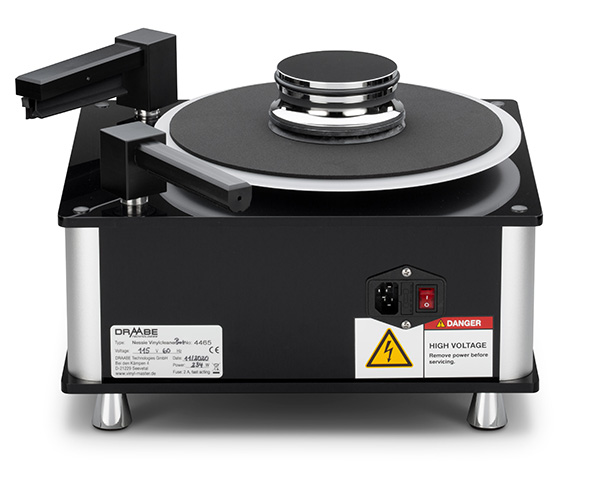
Assembling the Nessie was easy and took only some minutes. The foremost job of meeting is to connect the 2 arms to the highest of the platter: the comb arm, which dispenses and distributes cleansing fluid; and the suction arm, which handles vacuum drying and has a slot on its backside facet that sucks up fluid and is lined with black velveteen.
A transparent, hard-plastic clip on the finish of the hose serves as a clamp to forestall wastewater fluid from leaking out. I frightened that the plastic clip would possibly snap, however the clip held up and maintained sufficient rigidity to do its responsibility. The hose is all the time connected, however throughout use it is tucked away beneath the chassis, held in place by a magnet.
The two arms carry and swivel out of the way in which in order that records will be positioned on the platter and eliminated. The guide recommends training arm-pivoting earlier than you begin cleansing with the Nessie. That would possibly sound foolish, however getting a really feel for the way they carry and swivel was useful: While cleansing a report, you should carry every arm simply excessive sufficient to permit it to rotate onto the report after which off once more; carry it too excessive and it comes off its base. If that occurs? No massive deal: Just put it again on once more.
Once the 2 brushes have been connected, I poured a few quarter of the bottle of Vinylin fluid into the tank, and I used to be able to roll—or relatively, to spin.
The spin cycle
Its two arms connected, and cleansing fluid within the tank, the Nessie was prepared for motion—or virtually. I put Roxy Music’s dwell EP The High Road on the Nessie’s platter, positioned the weighted clamp on prime, then toggled the change on again to energy it up. Before you clear a report, the producer recommends wiping it down with the included microfiber fabric, dampened with heat water, to moisten the floor and take away easy-to-remove particles.
I lifted and rotated the comb arm onto the report’s floor and pressed the highest button to start out the platter rotation. Then I pressed the second button to use the fluid to the vinyl’s floor by way of the comb arm. For most records, I pushed it three to 6 instances, making use of that many doses, relying on how soiled the vinyl was. The LP floor wants a wholesome coating—”a wealthy movie,” the guide says—however to not the purpose the place the liquid swimming pools.
The platter robotically reverses path each 30 seconds or in order the comb on the primary arm continues its contact with the report’s floor. Watching the Nessie alternate between clockwise and counterclockwise was type of enjoyable. So was pushing the buttons. This diploma of senseless engagement will be stress-free.
At least 90 seconds of rotation/cleansing time is usually recommended. If the report was very soiled and also you assume it wants extra brush-mopping time, you possibly can let it rotate longer, including extra fluid if you want (however not an excessive amount of). After 90 seconds, the sunshine surrounding the management button begins to flash, signaling which you can begin the vacuuming and drying course of. First you carry away the allotting/brushing arm. Then you rotate the vacuum arm over and decrease it gently onto the report floor. The vacuum motor begins robotically.
Now it is time to repeat these steps for Side B—however after cleansing Side A, do not simply flip the report over. Side B, which continues to be soiled, has been resting towards the platter this entire time. You do not need to get Side A grimy once more, so take away the report, set it apart on a smooth, clear, lint-free fabric—a second microfiber could be welcome right here, however they’re low-cost sufficient—then fastidiously wipe down the platter. Speaking of platter cleanliness: Between makes use of, you may need to cowl the Nessie’s platter with one thing—perhaps an outdated, disposable (however clear!) report, to maintain the platter mat clear, or you should purchase an additional mat for $35. Probably one of the best thought is a dustcover; the one for this mannequin prices $150 on Music Direct’s web site and likewise, presumably, via your native seller.

Once I began cleansing records, I did not need to cease. It was enjoyable and satisfying to see how shiny the records’ surfaces may get. Sonic enhancements, too, shone via. After cleansing, records have been noticeably quieter. Ticks and pops grew to become rarer—although a few of that is because of a discount in static electrical energy, not filth. Playback monitoring had a greater sense of fluid continuity. Quieter musical passages grew to become extra pleasing. Decay tails appeared longer. Many LPs include delicate sounds which might be apt to go lacking. Toward the tip of “Close (to the Edit)” from the Art of Noise’s (Who’s Afraid of) the Art of Noise (LP, Island Records ZTT 90179-1), a distant egg shaker in the correct channel got here via extra clearly and clearly. Throughout the observe, the near-cacophony of the synthesized percussion results struck extra startlingly, at instances with extra squeal. Samples of oddball mechanical sounds appeared extra distinct and clear-cut.
After cleansing, modern transient assaults appeared cleaner, particularly on percussion. I revisited a fairly clear copy of African Piano by Abdullah Ibrahim (LP, Trio PA-7057/JAPO Records 60002), a dwell recording captured at a 1969 live performance in Copenhagen. Before cleansing, it sounded fantastic. After a fast run via the Nessie, the rhythmic impulses of Ibrahim’s stride-inspired piano felt extra dramatic and common, together with, particularly, “Sunset in Blue.”

I’d just lately seen Rhiannon Giddens carry out dwell with Francisco Turrisi and introduced dwelling a brand new copy of They’re Calling Me Home (LP, Nonesuch Records 075597915730). The efficiency was nonetheless contemporary in my thoughts after I placed on the album, cleaned it, then listened once more. After cleansing, on “O Death,” the tune they opened the present with, I heard an affordable (studio) approximation of dwell, flesh-and-blood folks and devices: Giddens’s spirited vocals, Turrisi on body drum. (On the recorded model, she would not play her flawless clawhammer on her fretless cello banjo.)
Cleaner records convey extra, extra delicate particulars. It’s these delicate particulars that evoke realism, drawing you deeper into the music.
These variations have been comparatively delicate. This was, in any case, a brand new LP, however like too many new LPs, it wasn’t immaculate after I unwrapped it.
Cleaning warped records will not be beneficial—however how warped is warped? I cleaned just a few barely warped LPs with no issues.
Considerations and a few comparisons
Beyond questions of price, there are some sensible elements to contemplate before you purchase a record-cleaning machine: How typically do you clear your records? How deep-cleaned and pristine do you anticipate them to get? How a lot house do you have got? How hands-on are you prepared—or wanting—to be along with your cleansing course of?
Different sorts of report cleaners have totally different benefits and drawbacks. Ultrasonic cleaners, just like the Degritter MkII and the Kirmuss machine, clear each side without delay. They’re platter-free, which suggests there is no horizontal floor for mud to gather on. In most such cleaners, no beforehand dirty brush makes contact with the report. Ultrasonic cleaners might get records cleaner. Then once more, with ultrasonic cleaners, the fluid will get dirtier with each report cleaned, and the filters included with such cleaners range significantly in high quality and sure effectiveness.
I personal the Record Doctor VI. It’s a quite simple, platter-and-brush cleaner, just like the Nessie however extra guide, extra hands-on. It’s useful for infrequent cleansing, and there is no record-cleaner reservoir to mess with: You simply drizzle fluid instantly from the bottle throughout the vinyl’s floor. Use a clamp and a hand to rotate the report, utilizing your different hand to carry a brush in place throughout the report’s radius, wiping as you flip. The Record Doctor is supplied with a robust and environment friendly vacuum for sucking up the fluid and drying the cleaned floor by way of a slot on the underside facet (footnote 2); the liquid goes right into a reservoir for used fluid, and there is a plug for draining it, however I discover draining is never needed. (I assume the fluid should evaporate.) The Record Doctor is fast and straightforward to make use of—and it sits beneath its soft-vinyl mud cowl between cleanings.
I discovered that that guide methodology took about the identical period of time as a median Nessie wash-and-dry cycle—about two and half minutes, minimal, to do each LP sides. I believed the Nessie did a extra thorough job than I often do with the guide cleaner, and its vacuum motor is quieter. That’s essential, as a result of vacuums will be loud. The Nessie guide specifies its most quantity as a modest 57dB. It was quiet sufficient that you might proceed listening to records whereas cleansing different records. Note, nevertheless, that the Nessie prices about 4 instances what the Record Doctor prices.
Every RCM requires upkeep. The Nessie should have its tanks emptied and flushed with water. Its brushes (which commonly are available contact with soiled records) should be cleaned typically and changed often. Ultrasonic machines just like the Degritter should have their fluid—distilled water plus an additive, often—changed continuously, and on those who have filters, they should be changed.
The Nessie should not sit unused for very lengthy whereas full of fluid, lest it develop mildew or scummy buildup on the within. I discovered it simple to unclip the drain hose and launch the fluid from the wastewater tank right into a small container, which I poured down the drain. I then flushed the waste tank by pouring a cup of unpolluted water into the opening the place the suction arm attaches, as beneficial.
Conclusion
There’s one thing to be mentioned for the Nessie’s pleasing methodology of motion, which mirrors a turntable’s motion (aside from these frequent reversals of path). The Nessie is well-suited for vinyl lovers who clear records continuously and prefer to be concerned within the course of—however not too concerned. The Nessie made me need to wash my records, extra typically and extra scrupulously.
The Nessie will not be the least costly report cleansing machine available on the market—neither is it the most costly; Music Direct calls it a Goldilocks machine. It made cleansing records simple and was enjoyable to make use of—even habit-forming. It might sound goofy, however I imply it critically: It’s a great way to spend extra time along with your records. Most importantly, it really works: Records sounded higher after Nessie cleansing—even new records.
Footnote 1: Paved Paradise, a touring report and merchandise honest that includes unbiased labels, made a tour cease in Cincinnati at Rhinegeist, a neighborhood brewery. For extra info, go to pavedparadise.secretlygroup.com.
Footnote 2: I’ve obtained one, too, though it is in all probability an earlier model. This Record Doctor suctions off the underside as you are cleansing the highest—which signifies that it is in touch with the second facet earlier than you clear it—after which in touch with the facet you have simply cleaned. That’s not best.—Jim Austin
-
Product on sale
 Audiophile Vinyl Records Cleaning BundleOriginal price was: €69.90.€59.90Current price is: €59.90. incl. VAT
-
Product on saleEasy Start Vinyl Records Cleaning KitOriginal price was: €69.90.€59.90Current price is: €59.90. incl. VAT
-
Vinyl Records Cleaner Easy Groove Concentrate€34.95 incl. VAT
-
Easy Groove Super Set€199.00 incl. VAT
-
Easy Groove Enzycaster – vinyl records prewash cleaner€34.95 incl. VAT
-
Easy Groove Extreme MK. II- vinyl records prewash cleaner€45.00 incl. VAT
-
Vinyl Records Cleaner – Easy Groove Virgin Concentrate€35.00 incl. VAT
-
Easy Groove Spray&Wipe vinyl records cleaner€34.95 incl. VAT


