
World News
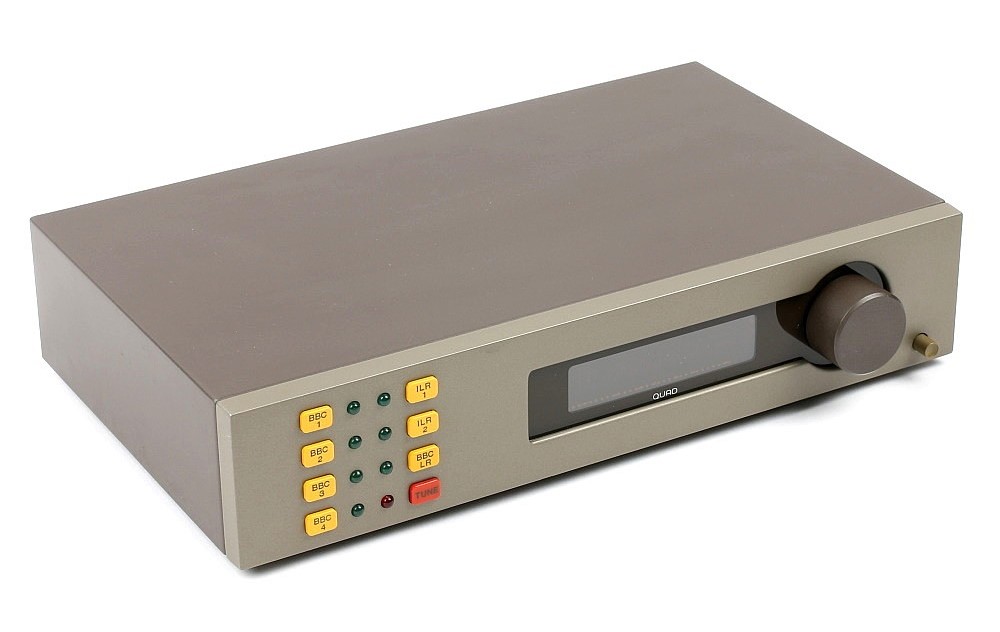
Quad FM4 receiver
Quad FM4 receiver
Tuner know-how peaked within the Seventies and Eighties when Kenwood, Sansui, Marantz, McIntosh and so on. launched tuners with respectable measurements, and sound high quality that’s nonetheless troublesome to beat. Along with many costly classics, there are quite a few competent however inexpensive tuners on the second hand market, by eg. Pioneer, Sansui, Marantz, Yamaha, Sony, Teac, Kenwood, Onkyo, Luxman and Technics. If in an excellent situation, these tuners are able to the identical stage of efficiency than newer tuners by eg. NAD, Creek, Arcam, Cambridge Audio and Rotel, for a similar cash. NAIM NAT05 is dearer however it too provides a wonderful tuner sound.
And then there’s the Quad FM4. Quad (Acoustical Manufacturing Co. Ltd., Huntington) manufactured the FM4, to go along with the Quad 44 preamplifier and 405-2 energy amplifier, from 1982 to 1995. By early 80s Quad’s earlier tuner, the FM3, already had 10 years behind it and was technically a bit of wanting.
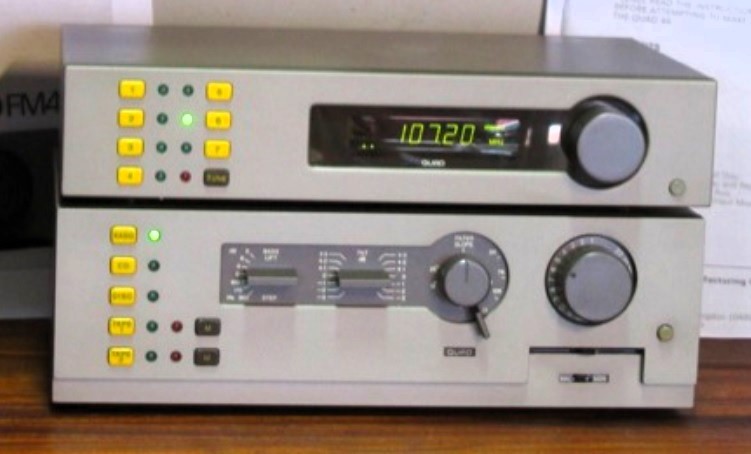
The Quad FM4 is a handbook FM tuner (no AM receiver) with seven presets. The tuning frequency vary extends to 88 – 108 Mhz (87.9 was accessible and audible). Back within the Eighties, Quad followers feared that Quad would make the FM4 their first all-digital tuner. Didn’t occur. The FM4 does conceal a digital microprocessor, however it solely handles the digital show and station preselection. Otherwise, it represents purely conventional analog tuner know-how: enter is linked to the RF stage by way of a transformer and from there the sign passes by means of a band-pass filter to the balanced mixer and the IF amplifier with a ceramic filter. The audio sign goes by means of an LC filter controlling the channel separation to a phase-locked stereo decoder earlier than filtering and buffering. Tuning is completed by driving a reverse voltage throughout adjustable capacitor diodes inside the tuned circuits.
Quad FM4 Tuner is a compact (321 x 64 x 207mm) and stable (3kg) machine with that easy however no nonsense model Quad is understood of. The entrance panel contains a energy swap, tuning knob and preset buttons. The display makes it straightforward to examine when the sign is at its strongest and equally sturdy on each channels. Locking to the tuning frequency and muting between transmission frequencies happens routinely. There is not any adjustment of the width of the intermediate frequency band.
The solely antenna slot is for a 75 ohm coaxial cable for connecting to the central antenna community. Other antennas are usually not advisable. The finest noise ratio (70dB) is achieved with a sign of 1mV-100mV.
Like all Quads, the Quad FM4 Tuner is nicely made. Even so, it’s value checking the situation of the facility provide (leakage), the digital show and so on. when shopping for a used one. Quad itself says in its service handbook that the IC used as an IF amplifier is weak and have to be changed with one other one (CA3053S), because it did in later items. The claimed sensitivity is 2.7uV (FM), selectivity 53dB, noise ratio 70dB, distortion 0.15%. As to the frequency response, the Quad experiences a typical 20Hz to 15kHz (FM). The value of a used Quad FM4 is someplace between 150-300 euros. No scarcity.
GREAT SOUND BUT NOT THE ABSOLUTE BEST
Just a few factors earlier than auditioning. First, the Quad solely has a DIN enter, which implies that for contemporary pre/amplifiers, the interconnect cable should cut up into two RCA sockets on the different finish. Second, the FM4’s output voltage is simply round 100mV, so extra voltage amplification is required than on common. However, having experimented with a number of amplifiers, I’d say that the low output of the FM4 hardly ever poses an issue. Third, FM4 was designed for a 100 kOhm load, such that may be discovered e.g. in Quad preamplifiers. 50 kilo-ohms works fantastic too, however with 10 to twenty kilo-ohm of some preamplifiers, the bass replica of the FM4 could also be affected.
Over the years I’ve listened to the FM4 subsequent to a lot of FM tuners, previous and new ones, from a pair hundred euros to a number of 1000’s, together with the aforementioned Naim NAT05, Magnum Dynalab and Accuphase T-1000 and so on. and so on. On each event, I’ve been principally glad, sound-wise, with what the FM4 is able to. Systematically so. It may need not all the time been the winner however nonetheless generated a sound that I may simply stay with.
The sensitivity of FM4 in each day use with a roof antenna and in a built-up space has been adequate to let the channels, which might be essential to me, come out flawlessly and with fairly a robust sign, together with uncompressed stations with a decrease than regular broadcast stage. The selectivity (the flexibility to separate adjoining channels from one another) has additionally been acceptable.
Compared, for instance, to Accuphase T-1000, the Quad FM4 didn’t fairly ship an identical finesse and cleanliness. That is, the FM4 lags a bit of behind within the so-called decision, and this, I’d say, is mostly true with respect to top-end tuners. The distinction resembles that of an excellent and glorious cartridge, the latter merely choosing up extra musically significant info from the groove. Another important distinction, when in comparison with prime tuners, is that the Quad FM4 seems to be considerably restricted in bandwidth: not the identical treble and particularly not the identical bass. Compared to the fabulous to McIntosh MR 78, the sound of the FM4 was much less mature, not as full and ethereal. All that however, the Quad FM4, along with being completely dependable, provides a really pure and impartial, trouble-free and competent sound. Among all of the units that I’ve owned, the FM4 would possibly nicely the one which has supplied most alternatives to get pleasure from music.
SOME FINAL THOUGHTS
An individual in a Swedish literature program launched himself by saying:
“Politics has all the time been essential to me. Almost all human exercise is politics. I’m suspicious of people that don’t care about politics, don’t take heed to music or learn. Why do folks simply take heed to the radio? Why don’t they select their very own music?”
Why do folks “simply take heed to the radio”? A superb query. Particularly contemplating that majority of radio stations appear to broadcast music that’s extra regressive than progressive, extra typical than experimental, and so and so forth. The industrial stations particularly. Very few channels select to encourage genuinely important or analytical pondering, or enlighten listeners on the music itself. That cognitive strategy has been changed by empty chatter and low cost pleasure. But. There are nonetheless radio channels, principally public, with paid, competent, well-versed and reflective music specialists and journalists. With their information and thoroughly ready reflections these channels usually are in a position to provide new views and worth, and thereby deepen the listeners’ musical consciousness. It pays to observe the radio exactly due to these few high quality channels.
Second, we’re so accustomed to conceive Hi-Fi by way of sonic id between the unique (no matter that’s) efficiency and the reproduced one, that we fail to notice that what finally distinguishes a stay efficiency from its replica, shouldn’t be the sound however, clearly, “time”. The precise efficiency and its Hi-Fi playback virtually all the time occur at totally different instances, with one main exception: FM radio and its stay broadcasts! It is true that direct broadcasts are these days supplied as digital streams too, however tons of of 1000’s FM tuners nonetheless round, the FM radio is the machine with which individuals can preserve the temporal id between the unique efficiency (sometimes concert events of symphony orchestras) and the reproduced one. These radio broadcasts I’d say come closest to an genuine efficiency.
The third motive to take heed to radio, considerably surprisingly, is technical. The finest radio channels (public broadcast corporations) use compression (or different sound altering maneuvers) very fastidiously all through the complete recording and transmission chain. Add that to how the expert and skilled radio sound engineers are in a position to conjure a incredible spatial sound from the live performance corridor the place they work night after one other. As a outcome, the sound of a stay broadcast from these venues will be of high quality hardly ever heard on a report. Hi-Fi lovers who respect the phantasm of being there (within the live performance corridor) ought to undoubtedly fall on their knees in entrance of a FM tuner.
Also, folks usually assume that by way of sound high quality the tuner can’t attain the extent of, say, a CD participant. I’m inclined to disagree. It could be good for everybody to check their prejudices as to how theoretical or actual the variations in measurement values are in apply. That will be executed by directing a sign, equivalent to a FM sign, to the tuner’s antenna connection instantly from a radio transmitter or FM measurement transmitter, eliminating all issues usually brought on by the reception of the sign. The sound produced on this approach can then be in comparison with the sound of a CD participant linked to the tuner by way of the transmitter. My personal expertise (I as soon as made the check) is that below these situations it’s virtually not possible to tell apart a high-quality tuner from a CD participant. Subjective variations, if any, are principally meaningless. I didn’t do a blind check as a result of I knew I’d have failed. I’m certain that individuals could be shocked to listen to how shut a FM tuner can come to a digital participant.
An totally totally different query is whether or not the analog sound of a tuner should be in comparison with the digitally produced one within the first place? When CD gamers entered the market early Eighties, many sellers and importers thought the right approach to consider the sound of a turntable could be to check it to that of a CD participant. Why on earth? A turntable that may sound like a CD participant is just about the worst one would count on from a turntable. It’s the analog sound of the turntables – and tuners – that we cherish.
HI-FI News
by way of Inner Magazines https://ift.tt/iXEyv7b
April 26, 2024 at 12:12PM
-
Product on sale
 Audiophile Vinyl Records Cleaning BundleOriginal price was: €83.88.€73.88Current price is: €73.88. incl. VAT
-
Product on saleEasy Start Vinyl Records Cleaning KitOriginal price was: €83.88.€73.88Current price is: €73.88. incl. VAT
-
Vinyl Records Cleaner Easy Groove Concentrate€41.94 incl. VAT
-
Easy Groove Super Set€238.80 incl. VAT
-
Easy Groove Enzycaster – vinyl records prewash cleaner€41.94 incl. VAT
-
Easy Groove Extreme MK. II- vinyl records prewash cleaner€54.00 incl. VAT
-
Vinyl Records Cleaner – Easy Groove Virgin Concentrate€42.00 incl. VAT
-
Easy Groove Spray&Wipe vinyl records cleaner€41.94 incl. VAT







