
World News
September 2024 Classical Record Reviews
September 2024 Classical Record Reviews
Beethoven: Triple Concerto
Nicola Benedetti, violin; Benjamin Grosvenor, piano; Sheku Kanneh-Mason, cello; Gerald Finley, bass-baritone; Philharmonia Orchestra, Santtu-Matias Rouvali, cond.
Decca 4854624 (reviewed as 24/96 WAV). 2024. Jonathan Allen, prod., Philip Siney, eng.
Performance ****½
Sonics ****½
The tendency to dismiss the Triple Concerto for Violin, Cello & Piano in C, Op.56, as second-rate Beethoven could stem from the seriousness with which so many artists strategy the work. Many carry out itparticularly the well-known second motion, Largowith a profundity bordering on stolidity. In most circumstances (together with a couple of period-instrument recordings), soloists and conductors fail to acknowledge that Beethoven was most likely having a ball as he reworked the concerto’s easy earworm of a theme right into a collection of limitless variations that recall to mind some Schubert composed whereas Beethoven was nonetheless alive.
Benedetti, Grosvenor, Kanneh-Mason, and Rouvali clear away cobwebs. Their smiles prolong past the album cowl; you’ll be able to hear their pleasure in virtually each phrase of the primary and third actions. With their gentle, fleet taking part in fantastically balanced by the burden and depth that the Philharmonia Orchestra brings to this efficiency in Henry Wood Hall, this recording makes a convincing case for essential reassessment.
Many ensembles view the Largo as a possibility to indicate how deep they will go. Rostropovich, in his well-known recording with Oistrakh and Richter, takes 5:35; Kanneh-Mason, whose pretty lightness in some passages harkens again to the sound of gut-stringed cellos, takes simply 4:52. You could not weep, however are we positive that tears are what Beethoven was after?
Filling out this system are Beethoven’s preparations of eight Scottish, Welsh, and Irish songs, mellifluously sung by bass-baritone Finley with nary a touch of affectation (or brogue), and a tackle the Kreislers’ association of "Londonderry Air" that confirms, as soon as once more, that nobody can play it like Fritz.Jason Victor Serinus
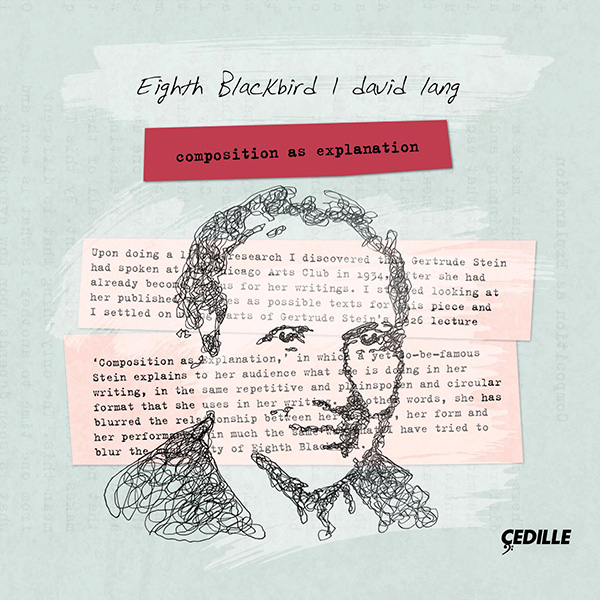
David Lang: Composition as Explanation
Cedille Records CDR9000 230 (auditioned as 24/96 WAV). 2024. Matthew Duvall, Lisa Kaplan, Emily Lazar, Bill Maylone, prod.; Maylone, eng.
Performance *****
Sonics ****½
Wacky because the undertaking could appear, this marvelous world premiere recording of David Lang’s Composition as Explanation units, nearly phrase for phrase, the various, many phrases in Gertrude Stein’s 1926 lecture "Composition as Explanation."
Lang, upon receiving a fee from Eighth Blackbird for his or her upcoming efficiency on the centennial of the Arts Club of Chicago, found that Stein addressed the membership in 1934, after she grew to become a well-known author. Her lecture occurred earlier than her fame as a author approached her fame as a collector of contemporary artwork, artists, and intellectuals. Stein’s lecture could have been designed to clarify her writing type, but it surely probably drove many viewers members into matches of ecstasy, disorientation, or laughter. Most probably all three, concurrently.
We can not see Eighth Blackbird as its members stride throughout the stage, declaim strains with musical authority, write and kind on amplified surfaces, and punctuate declarations that defy punctuation with musical commentary whose type and coherence resembles writer Stein’s. But we are able to really feel the six musicians strongly. Each member of "8BB" has perfected a unique verbal persona whose sturdy contrasts are as delectable as their combination of flute, piccolo, clarinet, bass clarinet, violin, cello, piano, and percussion (glockenspiel, marimba, vibraphone, varied drums, a tuned tom tom, and a kickdrum). Shadings, propulsions, and off-kilter emphases are a pleasant hoot. There are a whole lot of hoots. Not that Blackbirds hootor do they? After listening to an hour of Gertrude Stein, who may be positive of something?
If you take pleasure in witnessing genius discover all of the avenues at its disposal, begin by catching the instrumentation on the finish of "and now to start as if to start." Unfasten your seatbelt and put together to tumble.Jason Victor Serinus
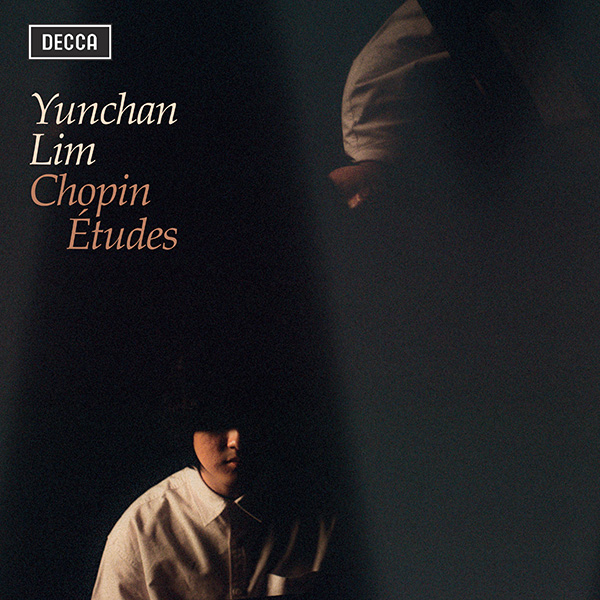
Yunchan Lim: Chopin Études
Yunchan Lim (piano)
Decca 4870122 (CD, WAV obtain). 2024. John Fraser, prod.; Philip Siney, eng.
Performance ****½
Sonics ****½
Given the overwhelmingly favorable scuttlebutt in regards to the younger Van Cliburn winner Yunchan Lim, I needed to hear what the fuss was about. Well, he is particular certainly. You anticipate the arpeggios of the primary piece to be clear and quick, however you do not all the time hear the chord adjustments so clearly. Immediately thereafter, the fragile "Chromatique" does not sacrifice tonal weight.
And so it goes. Left-hand runs, within the "Torrent" and the "Revolutionary," are each bit as deft and dazzling because the right-hand runs. A joyous, unfettered rippling dominates the "Sunshine Étude." The "Black Key" étude, beneath all of the virtuosity, is splendidly playful, although Mr. Lim unceremoniously bangs the downbeat of the recap. (The identical infelicity occurs twice within the "Cello" piece of Op.25.) The "Double Thirds" of the G-sharp minor étude shimmer. He does not simply make all of the coruscating figurations sound straightforward; he feels like he is having a grand outdated time.
Mr. Lim takes the difficulty to convey the music’s harmonic and dramatic components. He brings out and consciously shapes these left-hand harmonic frameworks that help the precise’s cascading torrents. The F minor of Op.10 is a effervescent cauldron, as is the "Octave" of Op.25. In the latter set, "The Horseman" briskly gallops; the "Paganini" has a Hungarian-dance really feel; and the "Wrong Note" étude journeys wittily.
The faults are these of youth: the occasional second of confused metrical scansion; some tentative recap "setups"; an absence of tonal depth within the topmost register. Mr. Lim initiatives the "Aeolian Harp" as a powerful volley, however the inside counterpoint will get swallowed up within the basic cascade. The phrases winding down the lyrical "Tristesse" are all caught in a single colour.
But Mr. Lim is younger. He has loads of time to transcend such flaws. Meanwhile, that is first-class taking part in.Stephen Francis Vasta
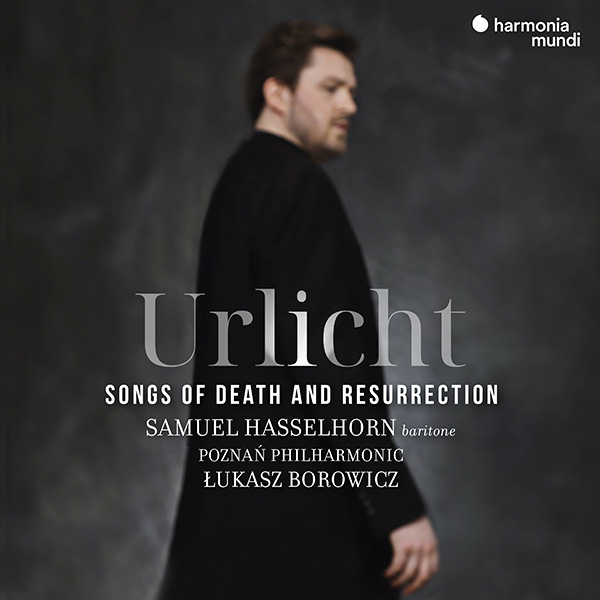
Urlicht: Songs of Death and Resurrection
Samuel Hasselhorn, baritone; Poznan Philharmonic, Łukasz Borowicz
Harmonia Mundi HMM 902384 (CD). 2024. Philipp Nedel, prod.; Matthias Erb, eng.
Performance ****½
Sonics ****
As nineteenth century German composers expanded the dimensions and scope of the Lied, the dividing line between this way and opera grew nebulous. This program illustrates the purpose, mixing acquainted symphonic Lieder with operatic arias and scenes, in idioms from late-Romantic to atonal.
Hasselhorn’s clear, resonant baritone largely makes a very good exhibiting. Especially the place the music stays within the midrange, as in Urlicht, he can diminish and swell inside a well-bound legato. And whereas he permits himself some rhetorical emphasishear the ultimate phrases of his stirring Revelgehe by no means lapses into the gruff parlando of extra well-known practitioners. The high turns tremulous underneath strain, nonetheless, and he fudges the upward reaches; single notes flip into falsetto. Hasselhorn turns simply by a supported head voice in Zemlinsky’s Der alte Garten. Such finesse would have been helpful elsewhere.
Of the much less acquainted songs, Walter Braunfels’s Auf ein Soldatengrab is a well-managed, surging piece of proto-Strauss; in Pfitzner’s Herr Oluf, a sex-changed orchestral Erlkönig through which the Erlking’s daughter spirits off a bridegroom-to-be, Hasselhorn’s closing whispered "tot" is hammy, as is identical phrase closing the Wozzeck duet.
Borowicz’s polished orchestra performs stylishly. The Revelge fanfares are good and alert, and the interlude winds down exactly. Pfitzner’s and Braunfels’s busy textures are effectively balanced; Humperdinck’s Königskinder finale expands handsomely; the Berg is expertly turned.
Hasselhorn is overmiked at first of Pierrot’s Aria, and I’d have appreciated a drier give attention to the reeds in Um Mitternacht; in any other case, the sound is ok. The translators fall into a typical entice, rendering Mondschein as "moonshine."Stephen Francis Vasta
HI-FI News
by way of InnerFidelity https://ift.tt/hnAfSPJ
September 9, 2024 at 03:46PM
-
Product on sale
 Audiophile Vinyl Records Cleaning BundleOriginal price was: €69.90.€59.90Current price is: €59.90. incl. VAT
-
Product on saleEasy Start Vinyl Records Cleaning KitOriginal price was: €69.90.€59.90Current price is: €59.90. incl. VAT
-
Vinyl Records Cleaner Easy Groove Concentrate€34.95 incl. VAT
-
Easy Groove Super Set€199.00 incl. VAT
-
Easy Groove Enzycaster – vinyl records prewash cleaner€34.95 incl. VAT
-
Easy Groove Extreme MK. II- vinyl records prewash cleaner€45.00 incl. VAT
-
Vinyl Records Cleaner – Easy Groove Virgin Concentrate€35.00 incl. VAT
-
Easy Groove Spray&Wipe vinyl records cleaner€34.95 incl. VAT


