
World News
Shootout on the SUT Corral.
Shootout on the SUT Corral.
Dave McNair listens and evaluates 4 shifting coil cartridge step-up transformers.
Dave McNair listens and evaluates 4 shifting coil cartridge step-up transformers.
Once Upon A Time…
…in an audiophile galaxy far, far-off, a brand new species of phono cartridges with excessive decision and meager output was found. This new life kind was often known as movere coil, or shifting coil to non-Latin audio system.
As a younger lad within the mid to late ‘70s, I clearly keep in mind studying concerning the wonders of MC cart sound, evidenced by H.P. and the remainder of The Absolute Sound crew. Maybe there have been a couple of phono levels with sufficient acquire in these days. Still, the widely accepted methodology for utilizing these early, trend-setting wonders was to make use of a field containing some quantity of lively extra acquire in entrance of a regular phono preamp designed for the excessive output of a moving-magnet-style cart or to depend on {the electrical} voodoo that occurs when a wire-wound magnet is in proximity to a different wire-wound magnet.
The enter aspect and the output aspect are related with nothing apart from air between the 2 windings. I’ve all the time been freaked out that present is induced to circulation from the enter (main) to the (secondary) output aspect of the wire-wound magnet. Magic!
If the magnets’ flux and variety of turns are equal, then it’s often known as a 1:1 or isolation transformer, but when the output-connected aspect has extra turns, then the present induced is greater than what went into the enter aspect wire-wound magnet.
Passive, noiseless acquire from this association is the closest factor in electronics to a free lunch. Thus, the step-up transformer (SUT) was born.
Moving coil carts are extra well-liked than ever in at present’s audiophile world. This has given rise to most phono levels, whether or not self-contained in a line preamp/built-in amp or as an outboard phono preamp, together with circuitry designed to amplify the itsy-bitsy sign of low-output, moving-coil carts.
Some phono levels use all lively acquire units; others use a combo of a self-contained SUT for the primary 15 db or so, then hand off to an lively acquire stage(s).
So, what’s the good thing about utilizing an SUT earlier than a lower-gain, moving-magnet phono stage? Is there any profit? This is exactly what I needed to search out out.
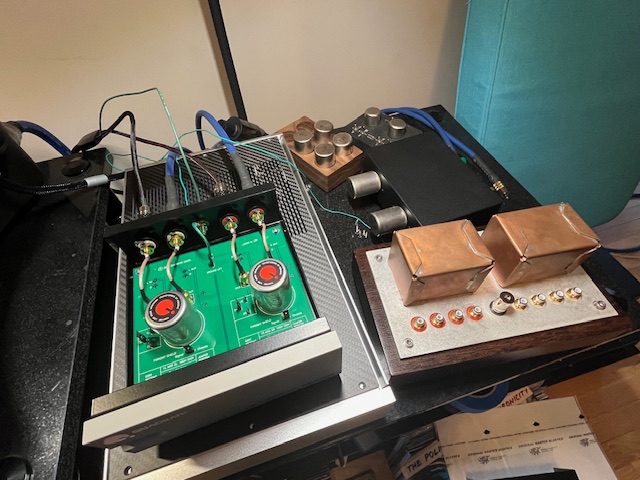
Roll up for the Magical Transformer Tour; Step (up) Right This Way
I need to discuss briefly about my experiences through the years utilizing transformers in music manufacturing. Almost any skilled recording engineer, mixer, or mastering engineer who makes use of gear containing transformers is aware of of their bones that transformers have a sound, and so they all sound totally different.
One well-known compressor utilized in all phases of music manufacturing has a toggle-switchable selection of three totally different output transformers, every utilizing a distinct metallic for the magnetic core. Nickel sounds totally different than metal or iron. Various forms of metallurgy in wire and the wire’s gauges contribute to sonic variations. So does the geometry of the winding. Some transformers made within the ‘40s, ‘50s, or ‘60s are notably revered for his or her sonics and go for steep costs on the used market. Some professional gear use these in circuits that don’t even require a transformer for correct operation – of us simply love that sound.
One attention-grabbing aspect be aware: there was a interval within the ‘70s when everyone pulled out of drugs as many transformers as attainable —tape decks, consoles, compressors, you title it. They have been thought to contribute to the sign undesirable non-linearities and grunge. Doug Sax employed a famously transformerless sign chain at his Los Angeles studio, The Mastering Lab.
During a session I attended, Doug advised me that the one issues inventory in his Teletronix LA-2a vacuum tube/transformer-rich compressors have been the optical resistor and the tubes—not a transformer in sight.
That was the analog period. But sonics (like many different issues) can not escape altering types and tastes.
Now that digital has improved from the early low-rez, plastic sonics, the key fault of current-day SOTA digital know-how is that it provides nothing to the microphone sign. Those Blue Note and Shaded Dog RCA records we love have colour galore – partly due to all of the transformers used within the long-winded sign path of that period.
These days, engineers need so as to add some mojo or colour to the sign on account of a really concise analog sign path between the microphone and the tip listener.
Would this technique apply to vinyl playback? This was my mindset going into my SUT listening extravaganza.
What I Tested and My Listening Methodology
The choice of SUTs I received didn’t have a lot to do with what’s at present well-liked or of a selected worth class. I merely received stuff from of us I knew or was launched to. My objective was to not discover the perfect (which is unknowable for a lot of causes) however to search out what sorts of variations I’d hear and the way they might examine to utilizing a phono stage designed for low-output cart alerts.
The SUTDUT (step-up transformer units underneath check) have been the next:
-
Quadratic Audio MC-1 – $1,795
-
Treehaus Audiolab MC SUT – $3,000
-
Ampsandsound SUT – worth to be introduced
-
A “generic” eBay-sourced SUT, listed at $569.00, was constructed by Ned Clayton in Salt Lake City, Utah.
While I initially experimented with a Westminster Lab – Monolgue phono pre that I’ll be reviewing, I used the built-in phono part in my VAC Master Preamplifier.
The Monologue has inside dip switches for each conceivable acquire, impedance, and capacitance worth you’d need for matching a phono preamp to any cartridge. However, I additionally needed to match the SUT/MM enter to a devoted MC enter. Using the VAC made essentially the most sense as a result of switching cables and turning a rear panel swap was extra easy (and speedy) than unplugging an SUT and altering a number of dip switches within the Monologue each time I needed to match SUT/MM phono stage to the MC phono stage. Using the separate MM and MC contained in the VAC Master Pre additionally required one much less cable run and connectors. This setup extra intently approximated what an actual consumer would encounter – plugging the SUT output right into a (most certainly) inside MM phono enter.
I used my TW Acustic – Raven LS fitted with the Raven 10.5” tonearm and my Dynavector XV-1t cartridge. It has a .35 mV output and 24-ohm inside impedance.
Warning: Approaching Technical Landmine Area. Proceed at Your Own Risk.
Earlier, I wrote that present is induced to circulation between a transformer’s separated, air-gapped windings. This just isn’t the whole story as a result of the voltage is elevated on account of an impedance change. The enter sign is reworked to a distinct impedance (decrease to increased on this case), which permits the receiving acquire stage to react as if the voltage had been elevated.
All the SUTs I examined had a number of main to secondary windings ratio selections. The Ampsandsound SUT achieves this with plugin transformer “cans.” I acquired a cool picket field with locations for the six cans; left and proper for the three ratios. This provides the consumer totally different choices of output impedances to the phono stage leading to roughly acquire. The Ebay SUT had toggle switches and funky diagrams indicating the three ratios accessible. There is extra clarification on the underside of the field. The Treehaus has three discrete, left and proper RCA inputs equivalent to the totally different ratios, and lastly, the Quadratic provides inside jumpers for 2 ratios.
However, when evaluating the SUTs with a 1:10 ratio choice, I observed that the ensuing quantity degree differed barely. Even although the ratios have been the identical, the enter impedances seen by the cartridge might have been totally different.
Higher ratios yield extra acquire, and the output voltage and impedance of the Dynavector cartridge have been such that any ratio previous about 1:20 was an excessive amount of acquire based mostly on how low I needed to put the VAC Master output quantity. I didn’t need to drive the VAC phono enter laborious sufficient to compromise its headroom. Being a vacuum tube circuit (whereas I don’t doubt its dynamic functionality), I didn’t need something to affect my listening impressions. Thus, I used the bottom ratio accessible for every SUT – 1:10 or near it. A ratio of 1:10 is roughly 22 db of acquire added to what the VAC MM acquire is spec’d at, which is 44 db. This additionally made evaluating the VAC MC enter (at 68 db) shut sufficient to the 66 db MM/SUT combo to be no less than Fuji to McIntosh as an alternative of apples to oranges.
Now The Fun Part
First, I loved the sound of all of the SUTs however most well-liked the sound of the Dynavector straight into the VAC MC enter. However, take that with a grain of laudanum as a result of this check solely had one cartridge and the VAC phono sections. There are too many variables to conclude that any MC phono stage is superior to any MM/SUT combo. Onward.
Of course, I listened to the varied SUTs leisurely, however I made a decision early on to make use of a couple of choose cuts for critical comparability listening. What I used would possibly shock you.
While I often hearken to a substantial amount of jazz and classical records, my wheelhouse is varied subgenres of rock – primarily on account of my years of music manufacturing. While I’ve recorded and combined or mastered loads of jazz tasks and even some classical, I’ve a deeper information of the place the “our bodies are buried” in non-jazz and classical, so I’ve discovered I can drill all the way down to the musical gestalt of element variations with extra certainty if I take advantage of that form of music. And it would not should be cuts that I’m extremely aware of or have labored on, though I usually examine these as nicely.
I used “Runaway” and “Senses Working Overtime” from the XTC masterpiece English Settlement, “Wrapped Around Your Finger” and “Tea In The Sahara” from The Police – Synchronicity, “Leave It Alone” and “Cinnamon” from Hayley Williams – Petals For Armor, and “15 Step” and “Bodysnatchers” off the Radiohead album In Rainbows.
In addition to the TW Acustic/Dynavector/VAC pre, my system has just lately developed to incorporate the end-game Acora Acoustics – VRC loudspeaker, at present pushed by Ampsandsound Zion Monos.
Besides being essentially the most satisfying and musical audio system I’ve ever encountered, the VRC is like an electron microscope for listening to upstream element variations, whether or not readily obvious or extremely refined. And they pull this off when taking part in music at any quantity – from very quiet to very loud. My dream speaker in each means.
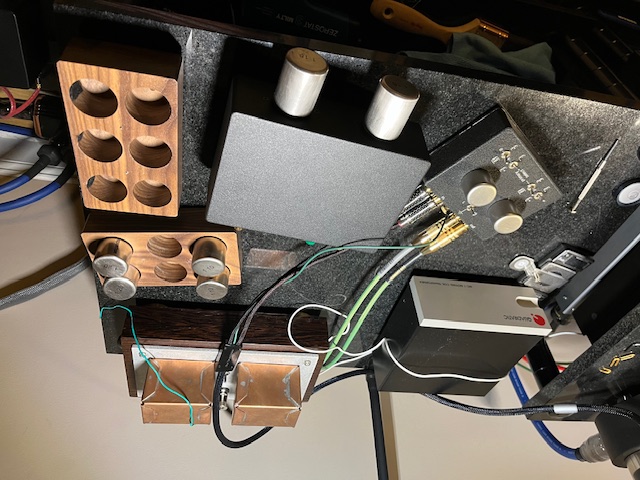 Initially, the sonic variations between the varied SUTs appeared comparatively minor. But as has occurred many occasions earlier than, minor variations grew to become extra pronounced the extra I swapped and listened.
My early favourite was the Treehaus Audiolab SUT. I’m certain my preliminary choice had a lot to do with its outsized, stunning, handcrafted look. The hardwood base, the copper-wrapped artisanal Japanese transformers, and the engraved etchings that point out the ratios of the varied RCA inputs scream audiophile Nirvana. Oh, and it sounded good, too.
The Treehaus sounds prefer it seems—candy and silky-smooth however detail-rich. Musical parts from my choice of check cuts took on a refined saturation in colour. The harmonics and dynamic profile that give an important recording such an pleasant texture have been portrayed by the Treehaus in a mesmerizing means. It concurrently relaxed and energized vinyl playback.
When I had the Treehaus plugged in, I felt like somebody had given me a home made silk kimono to put on whereas I listened to records.
In the 150-250hz area, low frequencies took on glorious focus and a nice heat. Nothing appeared gloopy or blown-up-sounding, however the slight extra density to bass and upper-bass frequencies happy my ear. The prime finish was ethereal, prolonged, and {smooth}, however a hair emphasised.
The Treehaus was additionally essentially the most troublesome to place for the bottom hum.
Oh yeah, hum. All the SUTs added a small quantity of hum. It wasn’t a deal breaker as a result of, by way of cautious positioning, I might get the hum degree low sufficient to not be audible throughout playback. It seems that not solely place but additionally the grounding scheme are massive issues (as is the connecting cable shielding!_ed).
As I like to inform my pals, I’m drawn to vinyl playback primarily due to its excessive price and inconvenience.
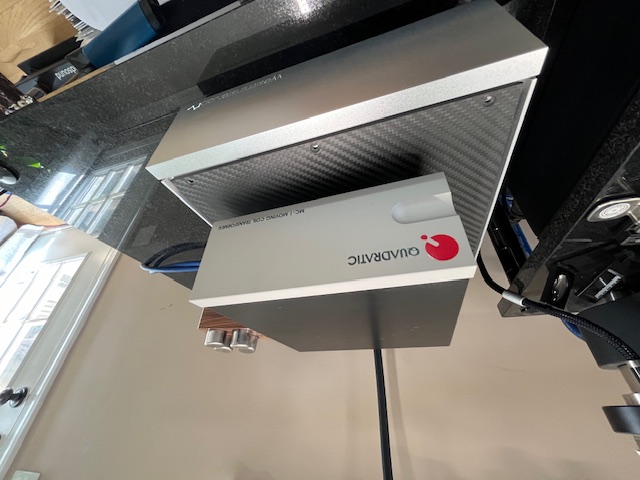 If the Treehaus had essentially the most simply detectable sonic signature, the Quadratic Audio MC-1 was essentially the most impartial. It additionally comes with a well-written handbook that explains the operation and rules of SUT use. As with the opposite SUTs, I attempted each its ratios, that are internally selectable utilizing pluggable jumpers.
The Quadratic produced essentially the most color-free acquire and, of all of the SUTs, sounded the closest to utilizing the VAC’s devoted MC enter.
There’s not a lot I can say right here concerning the sound. I heard no definitive sonic signature, and it by no means received in the way in which of having fun with no matter minimize I performed. If you had advised me it was a field of very clear lively acquire circuits, I would not have guessed it was a transformer—this degree of transparency outcomes from excellent engineering by the Quadratic crew.
If you like the sound of your cart and the remainder of your system but have a nagging suspicion that your MC phono stage is lower than nice, kinda noisy, and is the weak hyperlink, a Quadratic MC-1 into an MM enter may very well be simply the ticket.
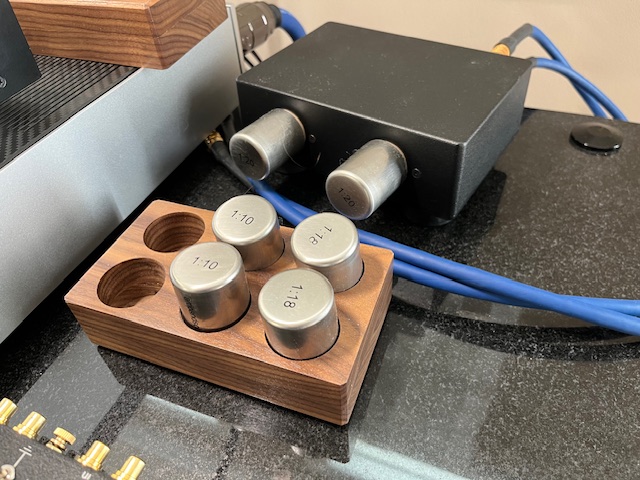 Next up, the Ampsandsound SUT. As a sensible artisan, Justin Weber utilized his plugin transformer can idea (which he makes use of in his newest collection of preamplifiers) to a standalone SUT field. I acquired a gorgeous wooden field to accommodate the six cans (three totally different ratios) and was advised by Justin {that a} buyer might customized order any ratio for his or her cartridge. My increased output and better inside impedance Dynavector was fantastic for comparability functions. Still, MC carts with a lot decrease output voltage and impedance profit extra from a well-matched SUT.
The Ampsandsound field fitted with a pair of 1:10 cans was extra impartial than the Treehaus however lower than the Quadratic. It has a really pleasing density within the midrange. The bass was stable and never notably slanted somehow. The highs appeared to have a really light roll-off that did not make the sound darkish, however didn’t fairly have the additional pleasure of the Treehaus nor the flatness of the Quadratic. I’m speaking tiny levels right here. Overall the Ampsand sound SUT was an easy-to-use, very pleasant hear.
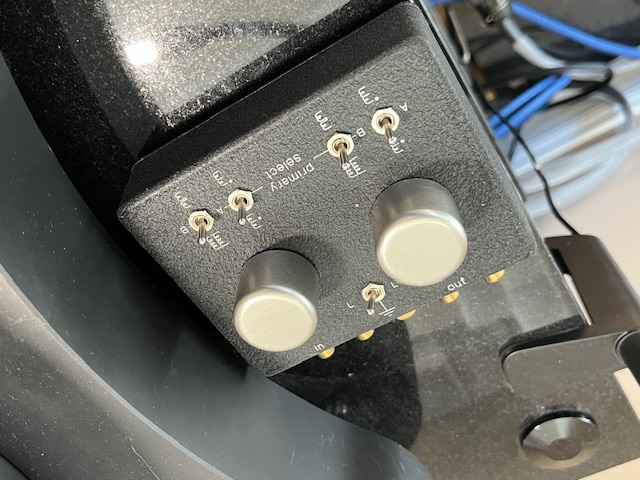 The eBay-sourced SUT by Mr. Ned Clayton was the darkish horse that didn’t disappoint. It was the Goldlocks in my SUT comparability.
It didn’t have sufficient of an overt texture to place a finger(ear?) on, however it was not as colorless because the Quadratic. There was nothing flashy about its presentation, however at a really cheap worth of $569, it greater than held its personal in opposition to the opposite challengers. It was neither bland nor dazzling, however it received the job accomplished, and I used to be very happy to hearken to a lot of records with this “Salt Lake City, everyone off” SUT. Thanks, Jonathan Richman.
Another factor occurred in my SUT extravaganza: one last SUT and a companion cartridge arrived late within the sport. A Lyra Etna SL and Lyra Erodion SUT.
I dutifully fitted the Etna on my TW arm and meticulously used Wally Tools et al. to attain a stable alignment. However, I could not get it to sound nearly as good as I knew it ought to. Shane Buettner, the USA Lyra importer, advised me it was a demo cart that had made a lot of rounds, so he was going to ship it again to Lyra for a look-see.
Even because the Etna sounded dynamically lifeless, a bit too brilliant, and usually not an interesting hear, I might no less than glean extra data utilizing the Erodion SUT on my Dyna cart.
I might inform that the Erodion had a really classy-sounding coronary heart, however it didn’t give the Dyna its correct tonal steadiness. Hmmm.
So despite the fact that it was a bummer that this explicit Etna had issues for unknown causes—I imply, c’mon, it had no household resemblance to the Lyra Atlas I utilized in my Oracle overview a couple of months again. Plus, nobody would describe a correctly working Lyra cart of any mannequin as sounding like this, so it needed to be damaged—it was apparent to me that the Erodion had been designed to work with the Lyra’s low output and low inside impedance because it was not a superb match for the XV-1t.
So What Did I Learn?
Quite a couple of issues.
An SUT is a sound option to get essentially the most from an MC cart, offered you could have a solid-performing MM phono stage and both do sufficient analysis to pattern probably matches on your cartridge’s electrical traits or are prepared to purchase and take a look at.
The different means is to purchase an SUT made to mate with a selected cart(s), just like the Erodion. If I have been a betting man, I’d wager that an Erodion and a Lyra cart into an honest MM preamp stand a very good probability of besting most MC phono acquire levels with a Lyra straight in.
Furthermore, the slight taste of most SUTs is usually a enjoyable means so as to add salt and pepper to attain efficiency targets that is perhaps in your sonic want checklist.
I additionally realized that though three of the 4 SUTs used Cinemag transformers, all three sounded totally different. This ought to trace on the complexity of getting the SUT that works greatest for particular person tastes and carts. I may attest to the refined variations—however just for my cart, phono stage, and the 4 examined SUTs. In a distinct scenario, I can think about very different-sounding outcomes.
Interestingly, I heard little or no distinction in imaging traits between the varied SUTs.
I additionally realized that worth and efficiency might indirectly correlate within the SUT world.
This is typically the case for any hifi element, however usually, I’ve discovered that the high-priced stuff does sound higher. Shopping for the proper SUT on your system may very well be an effective way to search out your private “big killer.”
So go forth and step up your cartridge sport – the enjoyable awaits.
Specifications
HI-FI News
through Tracking Angle https://ift.tt/fK4TcIj
March 20, 2024 at 05:27PM
-
Product on sale
 Audiophile Vinyl Records Cleaning BundleOriginal price was: €69.90.€59.90Current price is: €59.90. incl. VAT
-
Product on saleEasy Start Vinyl Records Cleaning KitOriginal price was: €69.90.€59.90Current price is: €59.90. incl. VAT
-
Vinyl Records Cleaner Easy Groove Concentrate€34.95 incl. VAT
-
Easy Groove Super Set€199.00 incl. VAT
-
Easy Groove Enzycaster – vinyl records prewash cleaner€34.95 incl. VAT
-
Easy Groove Extreme MK. II- vinyl records prewash cleaner€45.00 incl. VAT
-
Vinyl Records Cleaner – Easy Groove Virgin Concentrate€35.00 incl. VAT
-
Easy Groove Spray&Wipe vinyl records cleaner€34.95 incl. VAT


