
World News
SVS Ultra Evolution Pinnacle loudspeaker
SVS Ultra Evolution Pinnacle loudspeaker
How many occasions have you ever been advised by dad and mom and academics that the whole lot profitable should be constructed on a powerful basis? It’s true in music, the place the low frequencies are the inspiration the music rests on, just like the basement framing a constructing. If you get that half unsuitable, the place are you? Sitting within the mud, that is the place. With no probability to handle magnificence within the midrange, texture and air above, or different tasty issues.
Youngstown, Ohioprimarily based loudspeaker producer SVS made foundations its specialty, beginning on the firm’s very starting in 1998, when it began by designing subwoofers and solely subwoofers. The firm did not begin providing common loudspeakers, with midranges and excessive frequencies, till 2012. Over time, SVS’s high-value audio system obtained extra bold till earlier this 12 months, at AXPONA, it launched its most bold loudspeaker but, the full-range, three-way Ultra Evolution Pinnacle ($4999.98/pair).
SVS stands for Stimpson Vodhanel Sound, after the corporate’s founders, Ron Stimpson and Tom Vodhanel; Tom, the chief designer, left the corporate in 2007; Ron, the CEO, bought the corporate in 2011.
"The joke in our business is the highway is plagued by the our bodies of subwoofer firms that attempted to make audio system," Gary Yacoubian, SVS’s present president and CEO, advised me. "Smith Freeman got here on board with others who’re speaker designers versus targeted on subwoofers. It’s been a journey, and the Ultra Evolution Pinnacles are the end result of that to date."
Currently, SVS provides 18 fashions of subwoofer and 20 fashions of loudspeaker. If the Stereophile Recommended Components checklist is any information (and that’s what it’s meant to be), SVS is constructing on a powerful basis: The most up-to-date checklist consists of two SVS subwoofers in Class A and a 3rd in Class B; the Prime Wireless Pro, an lively loudspeaker, can be on the checklist. The Ultra Evolution speaker line consists of seven fashions; the Pinnacle is the highest.
Content and type
The SVS Ultra Evolution Pinnacle is substantial, deserving of the "tower" designation. With ft hooked up, they measure 50.2" excessive, 11.81" broad, and 18.14" deep. Unboxed, every speaker weighs 96.7lb. My overview pair was completed in gloss black; the Pinnacle can be obtainable in gloss white and black oak veneer. A one-piece, magnetically hooked up material grille covers the entrance driver space, until you take away it. Those ft might be both aluminum spikes or floor-friendly elastomer; each are included. Hookup is by way of two pairs of gold-plated five-way binding posts, permitting for biwiring and biamping.
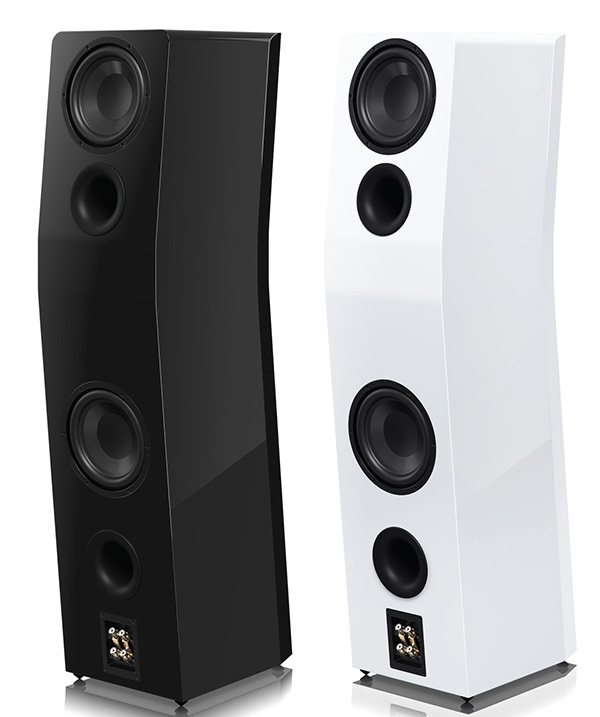
There is a sublime, studied symmetry to the Pinnacle’s entrance panels; consider it as a generalization of the D’Apolito MTM idea however with time-alignment in-built. SVS calls it "Acoustically centered structure." A 1" vapor-deposition diamond-coated tweeter is within the heart, flanked above and beneath by a pair of 5.25" composite glass-fiber midrange cones. This MTM configuration of tweeter and midrange drivers is flanked above and beneath by a pair of 8" woofers which might be just like the midrange drivers in development, with composite glass-fiber cones. Each front-firing woofer is paired with an similar woofer on the rear. Each cupboard, then, has seven lively drivers. There’s a port beneath every woofer on the rear.
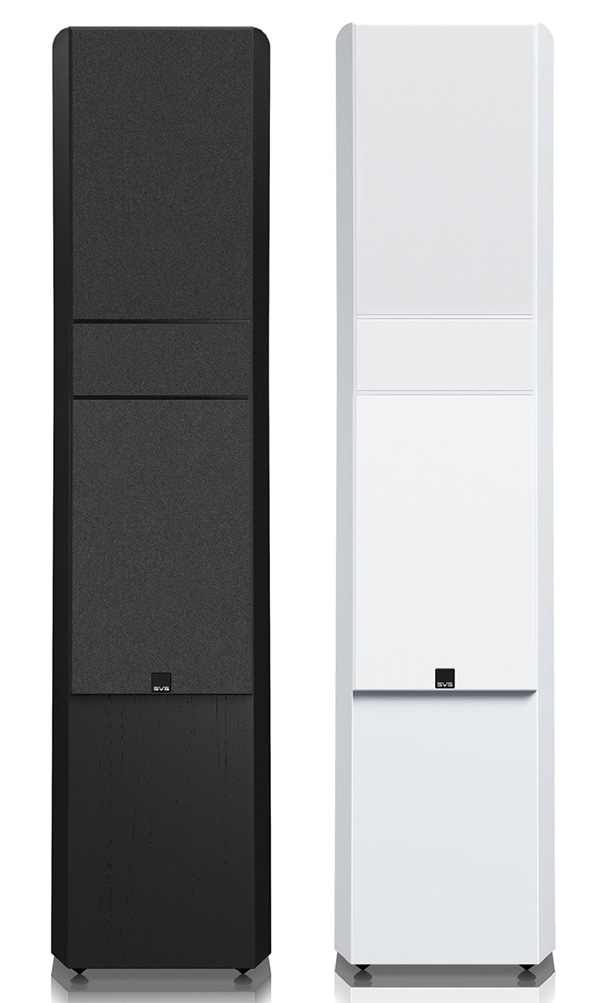
The cupboards are constructed from ¾" MDF, designed utilizing finite-element evaluation to reduce vibration. The baffles, back and front, are 1" thick, and the sides of the entrance baffle are chamfered to optimize diffraction. The tweeter and midrange drivers are sealed in a single acoustic-suspension chamber. The ported woofers are applied in what SVS phrases a Force-Balanced Opposed Array, a bipolar design through which the front- and rear-firing drivers fireplace collectively, attaining the twin benefits of decreasing cupboard motion and mitigating some room interactions. The Pinnacle’s symmetry, then, extends high to backside and entrance to rear.
The three-way design has crossover factors at 140Hz and 1.8kHz, creating a large frequency band for the midrange drivers. That’s difficult for a midrange driver, however the upside is broad protection of midrange frequencies by a single (slightly, a matched pair) of drivers throughout all however the lowest a part of the vocal vary. The crossover electronics make the most of air-core and iron-core inductors, movie and poly capacitors, varied high-power resistors, and wide-trace printed circuit boards.
Working in tandem with the crossovers is a time-aligned, mounted cupboard geometry; observe the dual-slope profile of the entrance baffle. The voice coils and heart of mass for all of the drivers are aligned. The symmetrical format of the entrance drivers locations the tweeter considerably decrease than it’s on many different floorstanders. This can be the vertical heart level of the time-aligned driver arrayso when listening, pay cautious consideration to the peak of your ears relative to the tweeters.
Looking underneath the hood (and on the SVS product specs sheet), one notices high-quality consideration to element and high quality supplies within the development of the drivers. The tweeter is constructed with a "cell lattice diffuser" positioned on high of an "aircraft-grade aluminum dome" coated with "industrial-grade diamond carbon mud" utilizing vapor deposition; SVS calls it a Diamond Coated Tweeter. The midrange drivers make use of cast-aluminum alloy baskets and a vented Kapton voice coil former. The woofers are pushed by a long-stroke motor and suspension, additionally with a vented voice coil former, these from aluminum. The drivers are designed by SVS. Everything is manufactured, and the loudspeakers are assembled, in China.
Basic specs are effectively inside norms for this sort of three-way design. The frequency vary is a large 24Hz 40kHz. The nominal impedance is given as 6 ohms. I requested for an impedance graph, and the bottom level appears to be at about 2.5 ohms at round 8090Hz, climbing from there. John Atkinson’s measurements will reveal exact figures. Sensitivity is pegged at 88dB/2.83V/mfairly common amongst current designs. Recommended amplifier energy vary is 20300 watts. These figures counsel a comparatively benign load for a partnering amplifier, however listening to (and measuring) is believing!
Deployment
I slid the SVS Ultra Evolution Pinnacle audio system out of their bins; slightly, I slid the bins off the audio system. Setup choices are easy: spikes or elastomer footers? Both are adjustable for top. Grilles or no grilles? I selected no grilles.
I do not take into account 96lb gentle, however these audio system should not as heavy as some I’ve handled not too long ago. I used to be in a position to slowly stroll them to the default loudspeaker positions in my front room. I don’t biwire or biamp, so all I needed to do was join the speaker cables and energy up.
In my Downstairs System, I’m at the moment utilizing a hybrid (tubed pre, strong state amplifier) McIntosh MA252 built-in amplifier, which is able to placing out 100W into 8 ohms, 160W into 4 ohms. The overview pair had been model new, so I assumed that the drivers wanted some loosening up. I performed miscellaneous music for greater than every week earlier than I began taking notes. It’s at all times attention-grabbing to take a look at the sound through the earliest phases, and I did. In early cease’n’pay attention moments, I heard some opaqueness over the upper-mids and highs. They opened up over time.
Positioning the Ultra Evolution Pinnacles was attention-grabbing. I’ve not beforehand had loudspeakers with rear-firing woofers in the home. When somebody requested Gary Yacoubian about positioning throughout a Zoom session for EISA, he responded, "slight toe-in, with three or 4 ft from the rear and sides." That’s a typical, generic suggestion, however it’s extra vital with rear-firing woofers: What you’ll not need to do, given the rear woofers, is jam these audio system into corners. They do not want boundary reinforcement, and usually will not profit from it.
While the force-balanced opposed array method could make it simpler to handle in-room low-frequency resonances, that isn’t a given. Like any speakerhowever perhaps extra so for the Pinnaclesspending time experimenting, auditioning a variety of room placements, is an efficient technique to proceed, remembering that small increments could make a giant distinction: larger than you count on, larger than instinct suggests.
In my case, placement of the Ultra Evolution Pinnacles was not unduly difficult, given our largish Victorian double parlor, which has a excessive ceiling.
I Love a Piano
"I like a piano. I like to listen to anyone play, Upon a piano, a grand piano, It merely carries me away."Irving Berlin
Jim Austin visited the SVS room at this 12 months’s AXPONA in April, the place the Ultra Evolution Pinnacle was having its worldwide debut. He preferred what he heard. The selection of music, although, was lower than optimum for an intensive audition; it was (as is common) meant to indicate off the Pinnacles’ most blatant virtuesbroad bandwidth and plentiful bass plus wonderful imaging. Jim famous, although, that "The final take a look at of a pair of audio system like this will probably be whether or not they can reproduce one thing dry and pure, like a well-recorded piano. … I’m assured that Sasha’s upcoming overview of the Ultra Evolution Pinnacle will take a look at this." Talk about throwin’ down!
HI-FI News
by way of InnerFidelity https://ift.tt/R94eh5S
September 13, 2024 at 04:17PM
-
Product on sale
 Audiophile Vinyl Records Cleaning BundleOriginal price was: €69.90.€59.90Current price is: €59.90. incl. VAT
-
Product on saleEasy Start Vinyl Records Cleaning KitOriginal price was: €69.90.€59.90Current price is: €59.90. incl. VAT
-
Vinyl Records Cleaner Easy Groove Concentrate€34.95 incl. VAT
-
Easy Groove Super Set€199.00 incl. VAT
-
Easy Groove Enzycaster – vinyl records prewash cleaner€34.95 incl. VAT
-
Easy Groove Extreme MK. II- vinyl records prewash cleaner€45.00 incl. VAT
-
Vinyl Records Cleaner – Easy Groove Virgin Concentrate€35.00 incl. VAT
-
Easy Groove Spray&Wipe vinyl records cleaner€34.95 incl. VAT


