
If you’re studying Mix, you possible owe your livelihood to your ears. Well, right here’s a query: When was the final time you had your listening to examined?
For practically 40 years, audiologist Dr. Michael Santucci, president of personalized listening to safety specialist Sensaphonics and ASI Audio in Chicago, has been on a mission to guard musicians—and engineers—from the damaging results of loud sound. A musician from a household of musicians, Santucci was impressed to discovered Sensaphonics in 1985, initially researching and evaluating ear-filtering merchandise, after the singer stop the band that he was in as a result of her ears had been ringing.
“I’m all about security, being an audiologist,” he says.
He developed his first customized product for famed voice-over artist and “phrase jazz” exponent Ken Nordine. The Grateful Dead’s engineers had been recording Nordine’s efficiency and requested if Santucci might make some ear displays for the band. “That put me on the map—after which I bought referrals to Aerosmith and Poison, and I actually bought into this factor,” he says.
If you might be an audio skilled, within the studio or in efficiency sound, Santucci has a advice: “Get an annual listening to check.” That method, he says, you and your audiologist can monitor modifications over time and make knowledgeable selections about your profession and the best way that you just work, akin to monitoring at decrease ranges or spending much less time listening.
Your listening to is just not solely important on your job, but in addition for mind operate. It’s difficult, however as neurologists have found, there’s a hyperlink between cognitive skills and listening to, each for higher and for worse. Working as a musician has been discovered to “foster cognitive strengths akin to consideration, working reminiscence and creativity,” as Nina Kraus notes in her 2021 ebook, Of Sound Mind. (Such acuity is shared, she writes, with athletes and people talking two or extra languages.)
Conversely, listening to loss may be an accelerant for dementia. “Google ‘untreated listening to loss and early cognitive decline’ and see what number of hundreds of research come up displaying that it’s the number-one causal relationship,” Santucci suggests.
LISTENING AT SAFE LEVELS
The finest solution to shield your listening to is to observe at a secure stage. Film and TV post-production engineers sometimes combine to standardized reference ranges, whereas engineers working in music manufacturing can observe these suggestions or not, as they want. In dwell sound, all bets are off, particularly if the screaming crowd overpowers the P.A.
So what precisely is a secure listening stage? That, too, is difficult, and topic to evolving science.
The Occupational Safety and Health Administration established authorized necessities for U.S. workplaces in 1981 that restrict publicity to noise. “If you’re at 90 dB, A-weighted, you may be in it for as much as eight hours,” explains Santucci, who’s a core member of the World Health Organization’s Make Listening Safe Initiative and established a Hearing and Hearing Loss Prevention Technical Committee with the AES in 2005.
“If you’re in over eight hours, you’ve bought to put on listening to safety,” he provides. “Every time you go 5 dB louder, you could lower your publicity time in half, so at 95 dB, it’s 4 hours; at 100 dB, it’s two hours; and so forth.”
However, these guidelines are for industrial settings, he factors out, and solely about 5 p.c of workplaces are even at 95 dB or above. Few sound engineers, if any, are working a 40-hour workweek at that stage repeatedly. Live sound engineers are usually effectively above 95 dB, however just for a two-hour present (plus soundcheck, after all).
Even with these guidelines in place, about 28 p.c of individuals have nonetheless misplaced some listening to, Santucci experiences, however alternately, “meaning 72 p.c have maintained their listening to, in order that’s good.”
Enter OSHA’s scientific department, the National Institute of Occupational Safety and Health. “NIOSH mentioned 3 dB is twice the depth, and we’ve seen listening to loss at 85 dB, so we’re beginning at 85 dB, and each time it goes up 3 dB, it’s important to lower your time in half. By the time we get to 100 dB, one scale says two hours and the opposite one says quarter-hour,” he observes. “Which one is the correct one? I don’t know. We know that these security standards work, however I feel that generally they’re overkill for music. However, being a scientist and a hearing-loss prevention physician, I’ve bought to go along with the science.”
PUTTING IT IN PRACTICE
To assist handle your publicity, Santucci says, NIOSH gives a free, Apple-only sound stage meter app: “You obtain it, you set the NIOSH app up and it says you’re this loud and also you’ve reached your dose.”
Santucci can also be about to launch a handheld system, dB Check Pro, that may be inserted into the wired headphone path and contains presets for the most important manufacturers and fashions. “You dial in your headphones, hit Play, and it’ll begin telling you what number of dB you’re listening to. Then it converts that to allowable time in minutes for each OSHA and NIOSH,” he says. It can concurrently meter a room mic on both scale.
ASI Audio 3DME BT G2 Active Ambient In-Ear Monitoring – A Real-World Review
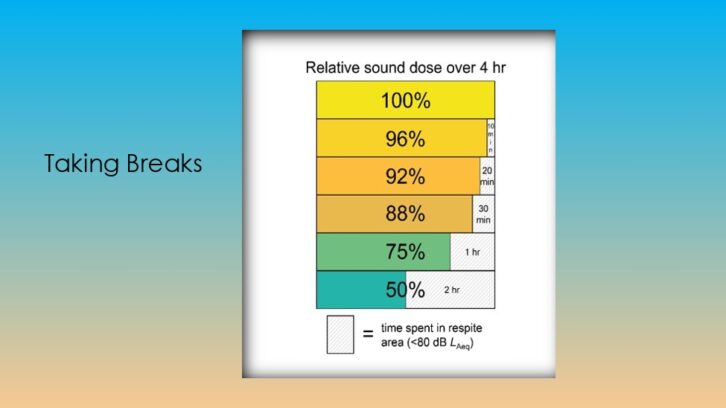
One solution to lengthen your allowable publicity time is to take breaks. “I’ve a chart that reveals the quantity of discount in dosage with taking a 20-minute break, a half-hour break and so forth.” he says. “That means you may hear loads longer.”
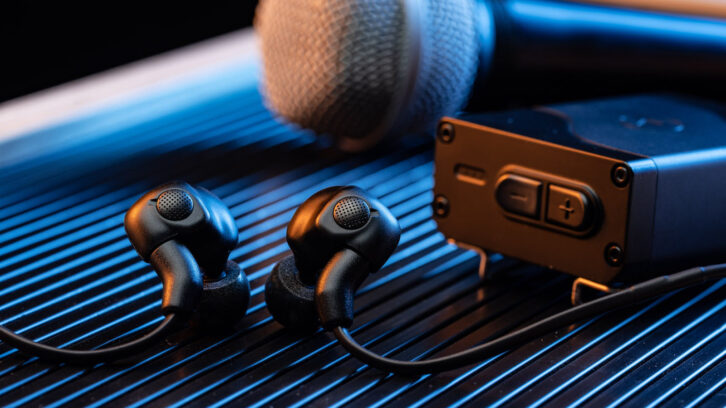
Arguably, most musicians are higher protected than their engineers, who sometimes don’t put on headphones full-time within the studio or throughout dwell reveals—apart from monitor engineers, who often put on IEMs as of late. That mentioned, musicians enjoying in historically unamplified settings, akin to classical music performances, could have endured years of extreme publicity, as have these rock musicians who have a tendency to drag one ear monitor out. Santucci has an answer for that, too, via the ASI Audio x Sensaphonics model of 3DME (Three-Dimensional Music Enhancement) merchandise.
PROTECTION ON STAGE
ASI’s app-controlled 3DME physique pack permits musicians to independently steadiness between the mics embedded within the earpieces and, in amplified settings, the feed from the monitor engineer. That solves the issue for rockers who miss the onstage ambiance and, in unamplified conditions, permits musicians to attenuate close by louder colleagues—or discreetly right for their very own listening to loss.
Wait, is classical music actually that loud? In 2012, knowledgeable UK musician sued after struggling career-ending listening to injury as a result of the brass part that sat behind him generated ranges of over 135 dB. Compare that to steel band Manowar’s studying of 129.5 dB in 1984, which was the Guinness Book of World Records’ loudest efficiency till the class was, for apparent causes, discontinued.
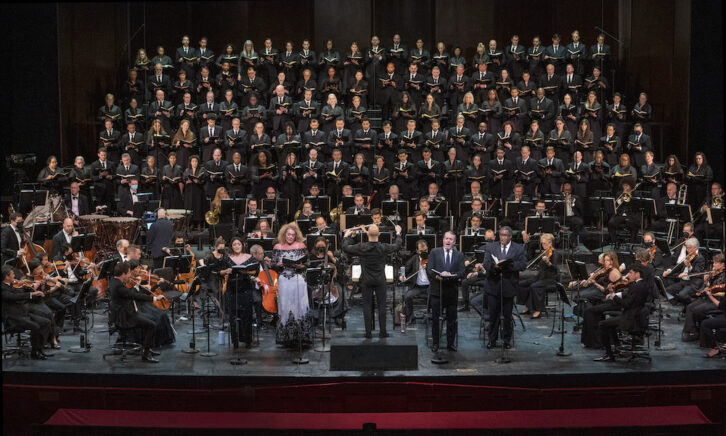
PHOTO – RICHARD TERMINE
No shock, then, that ASI has furnished New York’s Metropolitan Opera Orchestra with 3DME methods. “If you’re a violinist and also you wish to shield your listening to, you set the restrict,” Santucci explains. “Perhaps then your violin doesn’t sound correct, so you may have seven bands of EQ, however you can even amplify as much as 12 dB, in analog. When I do demos for orchestras, I get at the very least 4 or 5 individuals, and the tears begin coming down. They can right their very own listening to loss on their cellphone. Nobody is aware of, however all of the sudden they’re enjoying higher.”