Tag Archives: Blu-ray Disc

The Beatles Let It Be Super Deluxe Editions: Part 1, The Stereo and Surround Remixes

A few weeks ago you might remember that I previewed a new boxed set celebrating the 50th Anniversary of The Beatles’ legendary “last” album that wasn’t really their last, Let It Be.  If you missed that feature, please click here so you can catch up on important background for appreciating this current review.

Crafted during a difficult period for the band, the album was actually recorded before 1969’s Abbey Road but not completed and released until 1970.  This new 50th Anniversary edition of Let It Be features not only new Stereo and 5.1 Surround Sound remixes of the Phil Spector-produced album but it also includes the much anticipated (and long bootlegged) earlier version of the album by engineer Glyn Johns. Plus, we also get a wealth of session outtakes and a beautiful hardcover full color book that is chockfull of important insights and some incredible photography from the period. 

I suspect that the first question some of you may have is: do I need this boxed set? 

The answer to that will depend on how deep of a Beatle fan— and how “into” the Get Back sessions (as they are often called) — you are.  Deep Beatle fans will want this set.  I personally welcome a set like this which curates and focuses our attention on the “best bits” from the sessions. 

In this part of my listening report, I’ll explore the new Stereo and Surround Sound mixes of the original album as heard on the high resolution Blu-ray Disc included with the 50th Anniversary edition of Let It Be.  

I have to preface this review with an admitted bias: I genuinely like the original Let It Be album a lot! I bought it with my own saved-up money when it first came out; dating myself, I was maybe nine years old!  

Yet, like many of you out there in the Beatle universe, I too have mixed feelings about it.  It wasn’t until many years later — when I started to hear grumbles from some Beatle fans who disliked Spector’s dense orchestrations — that I learned that Paul McCartney himself didn’t like Spector’s treatment of his classic “The Long And Winding Road.” All this gave me pause to consider whether Spector’s work was off the mark.  

On the one hand I can see the nay-sayer’s point of view, especially on “The Long And Winding Road,” where the choirs, harps and strings do jump the shark (if you will) into that sort of schmaltzy easy listening vibe which was popular in some 1950s and early ‘60s mainstream pop productions. On the flip side, that Muzak-esque vibe is not all that far removed from the closing track of The Beatles’ White Album, “Goodnight.”

Listening with fresh ears in preparation for this review — and with additional perspective as a songwriter producer myself — I think that in certain instances Spector’s additions do help elevate and escalate the songs as compared to their stripped down counterparts. They certainly made the songs viable for commercial radio play in 1970. 

As cool as it is, I wonder how engineer/producer Glyn John’s stripped down version of the album (which we’ll explore tomorrow) might have fared on AM radio back in the day — to my ear, his album’s sound is ultimately more of an FM oriented vibe. Again, we’ll explore that more tomorrow.

At the end of the day, Spector’s mix is what it is. And at that moment in time it worked as a sort of bittersweet farewell to the band, delivering an end-of-an-era vibe which still can draw a tear from this lifetime Beatle fan. Giles Martin refers to it as a “timeless sound” in the book included with the new boxed set. 

So it is with that perspective that I applaud The Beatles and Giles Martin’s team for deciding to try to make the most of the Spector production for posterity. 

In fact, Sir Paul McCartney himself — again, he the understandably most upset by Spector’s mix — has gone on record in the book accompanying the 50th Anniversary edition of Let It Be saying “The album we made was given to Phil Spector to put the finishing touches to and even though, I must admit, I was not keen on some of his additions it turned out to be a fine Beatles album in the end.”

So, there we have it. Paulie likes it!  Kidding aside, this reminds me of XTC’s Andy Partridge who has acknowledged in retrospect that despite all the challenges they went through creating their masterpiece Skylarking, Todd Rundgren’s production helped shape the album into the beloved recording it is today.

So, rather than strip away the production aesthetics, Giles Martin and his team have preserved Spector’s work and tried to make it sound as good as possible in the context of The Beatles’ original music.  To that, I think Martin has found a nice equilibrium on the 50th Anniversary edition of Let It Be. More on that in a moment.… 

As with Martin’s work on Sergeant Pepper, The White Album and Abbey Road he has made the vocals clearer and the instruments more defined in this new remix.

In general, the acoustic guitars are lush, woody and resonant sounding throughout in these new Stereo mixes, especially noticeable on tracks like “Across The Universe,” “Two Of Us” and “For You Blue.” Ringo’s drums sound beautiful and natural throughout. They are much more distinct now so you can really feel his incredible fills on the rocking bridge section of “I Me Mine.” 

“I’ve Got A Feeling” brings up Lennon’s backing vocals more so the “oh yeah’s” he and McCartney sing feel a bit more raucous and exciting together.  McCartney’s bass on “One After 909” felt a wee bit hot in the mix on my Stereos but that is a minor point and ultimately it does propel the song on better in an appropriately bouncy manner. 

Back to the Spector portions of the mix, his arrangements seem just a tad lower on “Across The Universe.” There is now incredible clarity on “Let It Be” allowing you to hear each of The Beatles’ instruments vividly while the strings and choirs are just a smidge lower in the mix — it is not as much of an assault (if you will) as it is on the original mix, putting the band at the song’s center.  

As I mentioned earlier, arguably the biggest offender in the original mix — which you will read in the book in boxed set just how much it offended Paul McCartney — happened on “The Long & Winding Road.”  On Giles Martin’s new mix, Paul and his piano are more up front (so it feels more like Beatles with strings vs. strings with Beatles, if you will). The bass is more audible and the choirs are pulled back a bit at times as are the harps. Notably, now you can hear Paul’s closing piano flourishes which are no longer buried by the strings — everything is blended together quite splendidly. You can also more clearly hear the subtle emotions in Paul’s voice which at times were overshadowed by the strings (for example, listen how he holds the note singing “let me know the way…” around the 1:20 mark)

Stereo Navigation Screen From The Let It Be Hi Res 96/24 Blu-ray

In general, I was impressed how warm the 96 kHz, 24-bit Blu-ray treats the music. I’ll put it this way: it feels like Let It Be should feel, not an overly bright effort to make it sound modern or whatever. It is clear and crisp but it also sounds remarkably rich.

THE SURROUND SOUND MIX

As nice as the Stereo mix is, I think I like the Surround Sound mix just that much more because it opens up the music. It reveals even more of the original live band feel yet retains that lush and distinctive studio vibe.   

In general, the orchestral strings lean toward the rear channels leaving you to more fully hear the core of the band in the front channels. It is a logical approach that works very well, creating an immersive effect and a new listening experience that is not gimmicky. For those of you still on the fence, this new perspective might help re-define your appreciation of this version of the album.

Keeping the band to the front channels mostly makes for a gently immersive mix with some tasteful touches, periodically using the surrounds for acoustic guitars and lead lines.

“I Dig a Pony” rocks madly in 5.1 surround (be sure to listen for Ringo’s final cymbal crash).

“Across The Universe” is even more haunting in surround sound, if that is possible.  The choirs and harps are somewhat lower in the mix but you can at times almost feel them around you. The only casualty I noticed is that the Sitar sounds much more blended into the mix (this is true on the new Stereo version as well, by the way). As much as I like that detail popping out on the old mix, this new incarnation sounds tighter and more focused, yet no less dreamy. And again, it keeps the listener’s attention on Lennon’s vocals.

Ringo’s kick drum and tom toms on “I Me Mine” are huge and his awesome rolling fills sound massive here. Again, the orchestral parts being a bit lower in the mix feels more natural, less invasive and beneficial to the song.  I can hear more overdriven guitar amplifier tone coming through on the signature boogie in the rocking section.

“I’ve Got A Feeling” puts the core band and driving rhythm guitars up front and center with Billy Preston’s keyboards emanating from the rear with the lead guitar. “The Long And Winding Road” finds the strings and choirs mostly in the back and I even noticed a nice Fender Rhodes-sounding electric piano part there which was not super audible on the original mix.

Blu-ray 96/24 5.1 DTS-HD Master Audio Surround Navigation Screen

Billy’s honky tonk tack piano percolates towards the rear, coming up more in the mix for the solo on “For You Blue,” while John’s slide parts fill up the room.  

And so it goes on the 5.1 mix for the 50th Anniversary edition of Let It Be — there is much surround sound richness to enjoy here!

Tune in tomorrow when we’ll explore the very important first official release of Glyn Johns’ 1969 vision for what the Let It Be album might have been in its original guise as Get Back. 

Let It Beatle: Perspective & Preparations for New Documentary, Boxed Sets, Remixes, Books & More…

You might have noticed that media buzz is again brewing these days about the second-to-last record by The Beatles, long a popular topic for passionate discussion between fans. Let It Be was a massive hit in 1970 despite the challenges making the album as part of a film project. 

Save for hard core fans (like me), most people I know haven’t seen — or even know that there was a movie about — Let It Be back in the day. Many fans found the film a bit of a bummer the way it was put together, seemingly documenting the breakup of the band. After some initial theatrical release, it disappeared until home video LaserDisc and VHS versions surfaced (briefly) in the early 80s (now collector’s items which have been widely pirated).

All that is about to change as an entirely new documentary directed by Peter Jackson is slated to air over Thanksgiving weekend, crafted from footage shot back in the day. This new and expanded film hopes to offer fresh perspective on this challenging but also quite fertile time in The Beatles’ journey.  The upcoming six hour special called The Beatles: Get Back is expected to air on Disney Plus on November 25, 26 and 27.

The film is expected to include the now-legendary complete 42-minute concert performance from the roof of The Beatles’ offices / studio at Apple Records.  It was the band’s first live performance since 1966. It was also their last. Hold on to that thought for a moment… 

In October, a five CD and Blu-ray super deluxe edition boxed set is expected to be released focused on Let It Be. These releases will feature brand new Stereo and Surround Sound mixes as well as a wealth of outtakes from the sessions including an early 1969 mix by acclaimed engineer Glyn Johns. There will also be a new 180-gram vinyl pressing of the 1970 version of the album with the new Stereo mix. I look forward to reviewing these fresh releases here on Audiophile Review soon.

So, this is all fine and wonderful for us millions of serious Beatle fans.  But for those of you who are casually-curious about Let It Be — or even fairly new in your interest in all things Beatle in general — and who may not know much of the back story, the hoopla may be a bit perplexing. I’m sure some of you are probably wondering what the big deal about this album is? It’s ‘just another Beatle record,’ after all and they did go on to create their masterpiece Abbey Road. (note for those not in the know, the Let It Be album was not officially released until 1970, after Abbey Road, even though it was recorded beforehand… got that?).

To help get more insight into the back story, some reading may be in order…

A new book is coming out ahead of The Beatles: Get Back TV special which I am looking forward to reading. According to the official press release: “Beautifully designed and produced, the 240-page hardcover complements the “Get Back” documentary series and Let It Be Special Edition with transcriptions of many of The Beatles’ recorded conversations from the three weeks of rehearsals and sessions and hundreds of exclusive, never-before-published images, including photos by Ethan A. Russell and Linda McCartney.” 

You can preorder The Beatles: Get Back book by clicking here.  Until that arrives, you might want to pick up another interesting and somewhat recent book which I read just recently, written by an Apple Records’ executive, Ken Mansfield. He was one of the relative handful of people who were actually on the roof for that final concert I mentioned earlier.

Mansfield’s book — called The Roof: The Beatles’ Final Concert — is both a personal remembrance and a bonafide historical document. As a pretty serious Beatle fan since literally the beginning, I found this book helped connect many dots of fab four history. 

I won’t spoil the joys of reading The Roof: The Beatles’ Final Concert but I will try to expand on a broader theme that the author explores. It may be hard for some to understand, but The Beatles were almost single handedly responsible for a major sea change in popular music styles and production techniques, the impact of which we can still feel today. Symbolically to some, their final rooftop concert marked not only the end of the Beatles as performers but the end of an era in many ways.  However, I think it also heralded a new beginning…  

Let It Be and that final concert may have marked the end of The Beatles as a performing entity but in some ways the group’s break up gave the world so much more than most of us realize. In a way — again, symbolically — that moment opened the door for generations of other Beatle-influenced songwriters to come. 

In an earlier tribute to one of my favorite Beatle-influenced artists, Emitt Rhodes (RIP), I shared a story from my childhood about how the Let It Be album and a record club opened my ears to Emitt’s music. He challenged my 10 year old mind to consider and accept the next generation of artists borne from what I’ll lovingly call Beatle DNA (if you will). Please click here to read that story as I still find it quite remarkable after all these years that it even happened for me. 

Discovering Emitt’s album at that moment in time was akin to that scene in Jim Carrey’s The Truman Show, ripping a hole in the wall of my childhood Beatle-bubble perceptions to reveal a bustling brave new world bursting with fab-flavored musics. Before long I was hearing — and in some cases buying — records by Badfinger, The Electric Light Orchestra, Todd Rundgren and The Raspberries. And of course there were waves of recordings by the individual solo Beatles themselves which was like getting four times as much Beatle music than before!  You can hear The Beatle’s influence in the next generation artists like Elvis Costello, Squeeze,  XTC and on to one of my current faves, Thomas Walsh’s band Pugwash.

In that way, Beatle-inspired music can be considered an ever-expanding universe and a continuum of a sort. The Beatles were simply the musical “big bang” that got it all going. 

I’m excited about the new Let It Be reissues, expanded editions and the new documentary. 

It some ways, I feel like I’m nine years old again. 

Borrowing a phrase from the song “Two Of Us” …

“We’re on our way home… We’re going home!“

Note: several tracks from the boxed set are being previewed in 96 kHz, 24-bit fidelity in MQA format on Tidal (click here to jump to that) as well as on Qobuz (click here for those). There are also some nifty trailers and previews which have been put out in recent months. Scroll down below to see some of those videos and even a song from the album live on the rooftop from earlier releases.

George Harrison’s All Things Must Pass 50th Anniversary, Part 2: The New High Resolution Surround Sound Remix

Yesterday we explored the fine new 50th Anniversary Stereo remix of George Harrison’s classic 1970 release All Things Must Pass. If you missed that review, please click here to catch up.

Today I will attempt to explore and describe the joys (and periodic hurdles) of enjoying the new surround sound mix of All Things Must Pass, crafted by Paul Hicks of Abbey Road Studios and Dhani Harrison.

While I don’t know exact details of how the mixes were made — and the original production realities which may have impacted critical remix decisions made along the way — in general I found the 5.1 surround sound version of All Things Must Pass quite enjoyable. As I don’t yet own a Dolby Atmos compatible system, here I have been listening to the DTS HD Master Audio version (192 kHz, 24-bit). For what its worth, when I engaged the Dolby Atmos version on my Oppo BDP 203 universal player, it defaulted to Dolby TrueHD at 48 kHz resolution; it sounded markedly thinner so I didn’t spend any time listening to it, realizing it was likely a compromised presentation of the music. 

That said, the 5.1 DTS HD Master Audio mix has its breathtaking moments with some curious twists and turns. At times the mix feels very discrete, other times less so. I suspect this may have something to do with the sound design by original co-producer Phil Spector. 

In many ways, his mix of All Things Must Pass was an extension of his “Wall Of Sound” technique which caused a sea change in music production and catapulted many artists like The Ronnettes and The Righteous Brothers to the top of the charts in the early 1960s. Thus, spreading out — and even removing — elements of his production elements may have been a challenge when making a surround sound remix given how tightly those parts may have been integrated for the original Stereo mix. 

Accordingly, most of the action for the 50th Anniversary surround sound remix of All Things Must Pass takes place in the front channels with lead vocals generally relegated to the center speaker. Periodically, you’ll hear harmonies in back channels as well as support instrumentation, from guitars and banjos to (what sound like) synthesizers. Other times, the mix takes a more soundscape-like approach and is less discrete, filling the room with studio ambiance (and a fair amount of reverb or echo/delay).

Like in the Stereo mix, the drums and bass have received a significant facelift and are much more prominent and distinct. The Tom Toms especially sound fantastic percolating across the front channels (typically).

I did notice that my usual “sweet spot” for listening was not necessarily always the best place to be when listening to this mix of All Things Must Pass. That is not a bad thing, mind you as it prompted me to stand up and walk around the room a bit more. At times I found standing a foot or two back further (ie. behind my couch) was preferable.  If I had to guess, perhaps this was some sort of trickle down effect from the producer’s work on the Dolby Atmos mix (which adds height channels to the surround).  But… I’m just speculating here folks, so take this with a grain of salt, for what it is worth.

Here are some track by track observations you may find tantalizing:

“If Not For You” (co-written with Bob Dylan) works especially well in surround sound, placing George’s big strummy acoustic and electric slide guitars around you.  The country-western flavored “Behind Locked Doors” is particularly gorgeous with great detailing of vocal harmonies and some guitars in the rear channels. Likewise, “What Is Life” places signature riffs and even some (what I think may be a) Banjo in the back speakers.

“Let It Down” rocks like nobody’s business and features some rich sax breaks and slide guitar parts popping up in the back channels. I’ve said this before about the Stereo mix but it bears repeating here as well: the drums are positively huuuuuge! here.  The room-filling acoustic guitars on “Apple Scruffs” sound fantastic and the layered acoustic intro to “Run Of The Mill” is quite spectacular.   

As on the new Stereo mix, “The Ballad of Sir Frankie Crisp” takes on a higher profile than previous editions I’ve heard as that low voice now haunting the track is positively wonderfully creepy!

There are subtle details revealed in this new mix. For example, on the title track All Things Must Pass I never noticed that (I assume it is) Ringo is playing this tight doubled-up kick drum beat which helps to propel the song along with the bass lines. 

I admit that maybe I was imagining it, but it seemed like on “I Dig Love” there were subtle ascending and descending note sequences call-and-response criss-crossing one another diagonally across the room (ie left front and right rear and then switching to front right and left rear). As with much of this mix, even though it was much clearer with a lot of the Spector reverb removed All Things Must Pass remains a lush recording at its root so I suspect there will always be some inherent softness to the final sound.

I will continue to listen to to the 5.1 mix and may update this article with new observations in the weeks ahead. But I think this should give you a good preview of what to expect from the 50th Anniversary surround sound remix of All Things Must Pass.

Tune in next week when I’ll explore the wealth of Demos on the set and the eight-LP vinyl-only version of this fine boxed set series. 

George Harrison’s All Things Must Pass 50th Anniversary, Part 1: The High Resolution Stereo Remix

There is no question that George Harrison’s 1970 release All Things Must Pass is a classic collection of outstanding song-craft. It was an exuberant and emotional release for the then newly ex-Beatle after years of toiling in the shadows of primary songwriters John Lennon and Paul McCartney. The album is also widely considered by many to be the best of the post break-up solo albums issued by any of the solo Beatles in the wake of the band’s break-up. 

In 2017 a fine new remaster of the original All Things Must Pass album as co-produced by infamous – but legendary and undeniably influential — producer, Phil Spector was released. This was a significant reissue, a marked improvement over the original domestic U.S. pressings in many ways. Please click here to read my review of that still important release.

Despite that fine release’s stature, one of the most anticipated new reissues from the Beatle universe is the newer still expanded 50th anniversary edition of All Things Must Pass  coming out this week on a multitude of formats. Included amongst the many options is a tasty five CD plus Blu-ray Disc compact boxed set as well as a luscious eight-LP vinyl version.

Over the next several articles I’ll be exploring those sets in semi-microscopic, quasi-forensic detail. Today we explore the new Stereo remix which was crafted by Paul Hicks of Abbey Road Studios who worked with George’s son Dhani to create a compelling new vision for what All Things Must Pass could be.

Most audibly in general — and this is in keeping with the work Hicks did on John Lennon’s sets of the past several years — the new 50th Anniversary version of All Things Must Pass feels like several layers of gauze and remnant ‘60s haze have been removed. The resultant mix delivers much clearer vocals, more distinctive bass and drum parts as well as increased detailing on sometimes significant melodic parts which somehow were buried in the wake of Phil Spector’s legendary “Wall of Sound” mix design. 

Inevitably some of Spector’s imprint will remain on the album since he drove the recording process. I suspect that there are very likely certain techniques employed which can’t be “undone” even with a new mix. And that is ok. 

Certainly the vocals are much clearer with a significant amount of reverb removed. Yet the new 50th Anniversary version of All Things Must Pass retains the basic aesthetic of what the album sounds like. 

Now you can hear George’s lyrics quite vividly. Ringo’s (and the other drummers on the album) contributions sound especially remarkable with Kick-drum and Tom Tom fills taking center stage with increased presence and vibrance. Klaus Voorman’s bass lines also shine in this new mix allowing you to hear more of his note-perfect melodic inventions.

It is hard to pick favorite tracks at this stage while listening to the high resolution version of the new 50th Anniversary version of All Things Must Pass on Blu-ray Disc — in 192 kHz, 24-bit fidelity. But some initial stand outs which caught my ear include “Wah Wah,” with clearer less muddied vocals, super clear and particularly distinct saxophone parts (especially on the signature hook breaks and the sax solo!). These are details that were somewhat obscured in the original Spector mix. 

There is less reverb overall in this new mix. Be sure to listen for that great bomb-like sound, now much more clearly audible (I suspect it is the spring reverb of vintage guitar amplifier which either was kicked or knocked over — I know that sound intimately as we intentionally put one of those moments on my old band’s album!).  The sound of the car driving away is also much more distinct (another one of those little details I never paid much attention to on the original,  though it clearly was always there). When the band kicks in after the opening riffs, the impact is that much more powerful. 

I can now hear nice cellos chugging along on “Isn’t It A Pity.” ”If Not For You” sounds particularly brilliant with the big acoustic guitars front and center.

The harmonies on “Behind That Locked Door” sound amazing and Pete Drake’s pedal steel on that song is beautiful and clearer than previous versions.

The drums on “Let It Down” are simply huuuge! If you have ever wanted to hear (what I think are probably) Ringo’s Tom Tom fills with Cinemascopic clarity, you’re going to love this version.

Of course the question remains as to whether you need the new 50th Anniversary version of All Things Must Pass for your collection just for this new Stereo mix? That is a question only you can really answer, depending on how much of a fan of the record you are. I for one am proud to include this in my collection side-by-side with the originals so I can compare and contrast them. 

Ultimately, it depends on your listening needs. This new version will probably be much preferred for listening on streaming platforms, in playlist mixes and on mobile devices given the newfound clarity it presents. If you are new to George Harrison’s music, you may want to at least listen to the original mix somewhere first. Even though this new vision is much more direct and punchy sounding with less of the dated production aesthetic of the times on it, it might be just different enough to warrant experiencing the 1970 mix as a bench mark.  Don’t get me wrong, this sounds like All Things Must Pass but all those little revealed details formerly buried in the original mix add up to something a bit different (again, this is not a bad thing!). 

For example, one of the more wonderfully creepy and haunting moments in the new mix can be found on “The Ballad of Sir Frankie Crisp (Let It Roll).” There, we now can hear a very audible low voice chanting his name — the original owner of Harrison’s legendary English countryside estate. It is super cool (and it is down there in the original mix, but just barely audible). But, it is also just different enough that purists might balk.  I like it! But it is important to acknowledge that the new 50th Anniversary version of All Things Must Pass is a distinctly different view of the music. Again, I think this is a good thing.

And for those who get nervous about new remixes, I refer back to my earlier statement about the original mix restoration from 2017 being an important release and that isn’t going away any time soon. Rest easy knowing we can always listen to our original pressings (and I will do that as well!).

In a later installation in the series I will look at the vinyl version the new 50th Anniversary remix of All Things Must Pass. But before that, tomorrow we will explore the Surround Sound remix.  So be sure to tune in again here on Audiophile Review!

Yoko Ono’s Plastic Ono Band, 50th Anniversary Live Session Blu-ray

In 1970 John Lennon released an album called Plastic Ono Band which was quite shocking to most fans of The Beatles’ music; noted for its brutal honesty and raw stripped back presentation, it went on to become a classic which many regard as Lennon’s finest work.

This album has recently been celebrated in brand new 50th Anniversary stereo and surround sound remixes which I reported on last week. In case you missed those reviews, please click on these numbers ( 1, 2, 3 ) to jump to the whole three part series. If you are not familiar with the album or the boxed set (which comes out later this week), reading those reviews will provide useful perspective to understand and appreciate another album recorded during those same sessions.

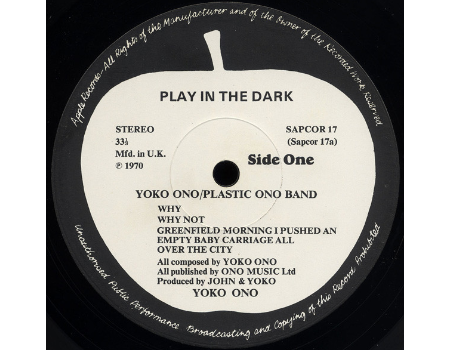
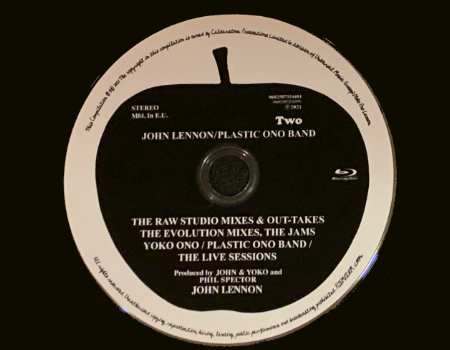
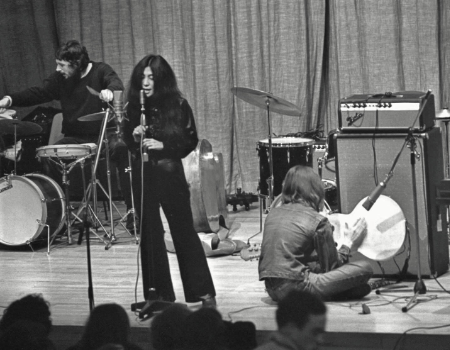
Simultaneous with the release of Lennon’s album, his wife and life partner Yoko Ono also issued her first solo record under the same title. Both albums, however, couldn’t be more different and that is the focus for the review today, looking into Yoko’s brilliant, futuristic and ultimately timeless recording. Included on the second Blu-ray Disc in the deluxe edition boxed set of Plastic Ono Band are the complete live tracking sessions featuring Ono backed by a power trio comprised of Lennon’s electric guitar and feedback with rock solid rhythmic support from drummer Ringo Starr and their close friend Klaus Voorman on bass. These recordings are quite incredible and incredible sounding — presented in 192 kHz, 24-bit fidelity — all offering fascinating insight into how her first album was created. 

These recordings — and her subsequent albums — were extremely influential on artists as diverse as The B-52s, Lene Lovich, Sonic Youth, The Flaming Lips and many others. 

There are some very insightful comments about these live recording sessions included in the Plastic Ono Band 50th Anniversary boxed set from people involved with making the album including Yoko, John Lennon, Klaus Voorman as well as engineers John Leckie and Phil McDonald. These personal notes shine important light on the album, its intent and creation better than I could so rather than edit them I’ll just share these with you complete and unedited:

Yoko: “When John was recording, I was mostly in the control room and John was making his music and sometimes he had to fool around a bit just to get inspired. He just kept on jamming and then suddenly I realized it was just really beautiful jamming, he’d started something very unusual with the guitar. I was listening to what they were doing and I just couldn’t help it. I thought, ‘well, I just have to join them. This is great!’”

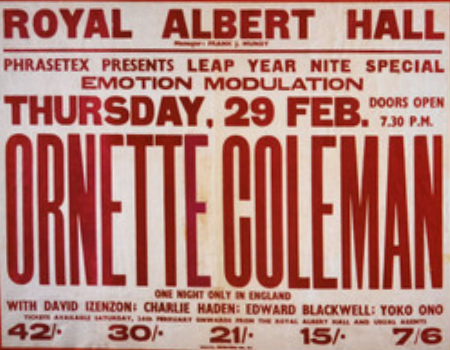
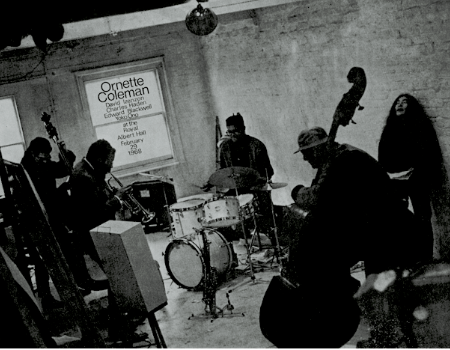
Klaus: “We knew Yoko was gonna do her album. We didn’t know how it was actually going to work or what she was going to do. We heard a few tracks she did and I found that very interesting. There was some great horn player, I think it was Ornette Coleman. She had some great musicians and three jazz players, really really good. So we tried to do the same thing and John was open to it.” 

Yoko: “The kind of improvisation that I was doing by myself only had to do with my body rhythm, when you just totally rely on your body and let your body take you to wherever the body wants to go, it seems like all the strange things come out. I’m letting my body do it and that startles me too. It’s almost like the Primal Therapy thing and like the Japanese kind of vocal, or the operatic vocal, all the moaning and groaning and screaming, all kinds of things that I experienced in my life came out.” 

Phil McDonald: “I think what people didn’t realize was the fact that she sang as in Japanese, which some classical Japanese singers sing, and this screaming that she did was actually part of her culture. To us, it sounded like screaming but to her it was a musical note. To get this ultimate scream, it could take a while to produce. They weren’t ordinary screams, they were yells, demonstrative. They were calculated, and I don’t know how the heck she did it.” 

Lennon: “I’m a cinema verité guitarist and you have to break down your barriers to be able to hear what I’m playing. There’s a point on the first song where the guitar comes in and even Yoko thought it was her voice. It became like a dialogue rather than a monologue and I like that, stimulating each other. And that happened in the drumming and bass too, they get like that too. And it’s very interesting that you don’t know who is really inspiring who, it just goes on like that.” 

Over the course of the live jam session recordings we indeed hear the framework for what became Yoko Ono’s Plastic Ono Band album emerging and it’s a wonderful journey. 

Ringo and Voorman drive the rocking-yet-sympathetic rhythm section, giving Lennon the freedom to generate various noises and feedback created with his guitar, often in a kind of duet with Yoko’s vocal improvisations.  

Where all this gets especially interesting is when you go back and listen to the final album and you can understand better how it was crafted.  Listening to the live sessions sandwiched between reference spins of the final album, you realize Yoko had a quite clear vision for the kind of recording she wanted to deliver.  Lennon, Ringo and Klaus Voorman laid down an array of throbbing proto-punk-ish blues rock jams which Yoko took to another level with her inspired vocal treatments. 

According to the Plastic Ono Band boxed set liner notes: ”Yoko edited, manipulated, sped-up, slowed down and augmented her chosen improvisations, adding sound effects and delays to create her album Yoko Ono/Plastic Ono Band.” I recently bought a nice reissue of Yoko’s Plastic Ono Band album and while the vinyl sounds great — and the final mix terrific — these live sessions are almost rawer and richer if that is possible. Ultimately, however, I do like the final album better as the impact of Ono’s production is important. For example, cutting suddenly from heavy jams into the sound of subway trains churning at approximately the same tempo creates quite an image of the power of the band.  

The innovative tape loop of George Harrison’s sitar playing at the start of “Greenfield Morning I Pushed An Empty Carriage All Over The City” is a haunting introduction to the portions of the jam which were used. Consider that today we hear digitally generated loops every day on most pop recordings and near every Tik Tok video I’ve seen. Yoko and John were working with them in a purely analog manner 50-plus years ago!  I love the bird sounds at the end of that song which feel like the same ones used at the introduction of the original version of Lennon’s “Across The Universe” (the 1968 version prepared for a 1969 LP benefitting the World Wildlife Fund, No One’s Gonna Change Our World)

Another favorite is the very Captain Beefheart-esque “Don’t Worry, Kyoko” (which adds Eric Clapton to the line up).  I can’t emphasize this enough just what a great rock improvisors Ringo and Klaus were together. There are also three previously unreleased improvisations on the Blu-ray Disc which were not included in the final album: “Life,” “Omae No Okaa Wa” and “I Lost Myself Somewhere In The Sky.”

There is a lot to experience here and I am still working my way through it.  So, when you get the Plastic Ono Band boxed set, do take some time to immerse yourself in Yoko’s world. And then, if you don’t already have her album, do get it to fully appreciate her vision. It is a rewarding journey.

John Lennon’s Plastic Ono Band 50th Anniversary Boxed Set, Part 3: The Outtakes, The Alternates & Other Things

My deep dive into the 50th Anniversary super deluxe boxed set celebrating John Lennon’s landmark solo album Plastic Ono Band concludes today exploring some of the outtakes, alternates, and other fascinating bonuses on this rich collection. In case you missed Part II on the new Surround Sound mix, please click here. And for Part I on the Stereo remix, click here. 

Plastic Ono Band presents multiple visions for the album. Each CD — also included on the Blu-ray Disc — gives you 14 tracks, corresponding album tracks plus period singles in various states of being. New “ultimate” mixes of studio out-takes are offered as well as new mixes/remasters of demos and new mixes of the “elements.”  

You get “raw” studio mixes including the outtakes (different outtakes!). And then the “evolution” mixes are mini audio documentaries of each track’s birthing process. There are the jam sessions! And, on the Blu-ray you get all the live sessions the band did with Yoko Ono (which became the core for what became her first solo album, also titled Plastic Ono Band). 

The CDs generally sound excellent but if you want to hear the fullest versions, listen on the Blu-ray Discs which are presented at 192 kHz and 24 bit resolution in Stereo. The vinyl LP version of Plastic Ono Band also sounds excellent but only offers you one series of the outtakes (more on that in a bit).

There is so much here I really can’t get to it all in this already-too-long review series, so I’ll try to be as complete as I can (without going to a fourth review!)

OUTTAKES ’n ALTERNATES

All of these tracks sound amazing and offer incredible fly-on-the-wall insights into the process John Lennon went through creating Plastic Ono Band. The remarkable thing is that for all these years many of us thought that Plastic Ono Band was this stripped down raw affair which couldn’t possibly have been as intense a production as, say, The Beatles’ Abbey Road or Sgt. Pepper.  

But when you look at the number of takes Lennon did of some of these songs you realize he went through quite a process to get to that final sound.  He went through nearly 100 takes of “Mother” to get to the final version that opens the album! 

It takes a lot of work and skill to create something seemingly this simple.

My favorite outtakes thus far include the heavily overdubbed 23rd take of “Isolation” with multiple vocal takes all at once. Take 6 of  “Love” is a simple acoustic guitar demo, like he is playing it on a back porch. Take 2 of “Look At Me” is innocent and folksy. Take 27 of “God” is amazing with its somewhat different introduction and vocal style. Take 1 of “Cold Turkey” mesmerizes.

On the Two LP vinyl version of Plastic Ono Band you get a second disc featuring the “Raw” studio mix outtakes as found on the Blu-ray disc (different than the CD). The LP sounds great if you like that format and is a nice complement to the super high resolution Blu-ray version.  

THE DEMOS

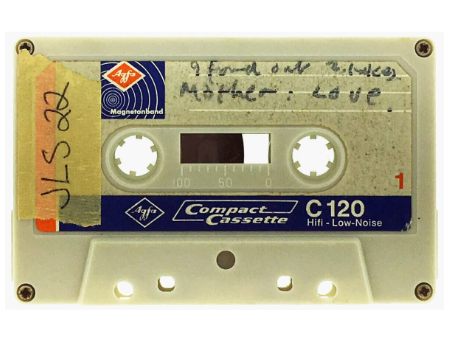
On Disc 6 of the CDs (again, also on the Blu-ray) you get a full set of John’s earliest cassette demos. These “are what they are” sound quality wise, but are an essential part of the journey. Some highlights include the early take of “Mother” played by John on guitar on a heavily vibrato-laden electric guitar. The piano and vocal demo of “Isolation” is a tear jerker as is the similarly produced “Remember.” 

“Look At Me” sounds like it was recorded over a telephone line and is wonderful as the essence of the song is all there even at this early stage. “God” is probably the most radical departure, strummed early on as a somewhat fast folk song on a guitar. 

Essential listening, no doubt. 

ELEMENTS MIXES

Stripping each song down to its most basic essence, these are a fascinating study in the power of isolating performance details

“Mother” is especially haunting, stunning and beautiful presenting Lennon’s vocal take in its entirety without any backing. It is especially harrowing to feel the emotion in his voice toward the end, alone on the high wire without a net.

“Hold On” is beautiful just as a solo electric guitar and vocal mix. “I Found Out” is an alternate vision of the song with funky congas changing up the vibe. Lennon breaks into some rock ’n roll oldies during the ensuing jam session — this would have been an amazing song for Lennon to play live!  

The “Jews Harp” boinging in the background behind “Remember” is a fascinating timekeeper, establishing a bouncing beat reminiscent of McCartney’s bridge section on The Beatles’ “A Day In The Life.” The extra resolution on the Blu-ray Disc version is important here as the harp is more audible their than on the CD — at roughly four times the resolution of a CD, this is an easy to comprehend example of what the 192 kHz, 24 bit version delivers. 

The elements take of “God” places Lennon’s voice in an enormous echo chamber!  His vocal approach is completely different, almost like a quiet church prayer vs. the soul-torching take that ended up on the final take. 

“Cold Turkey” without vocals is tremendous. Listen for the ring of Ringo’s snare drum and bits of sweet feedback chiming from the guitars. Ringo’s kick drum and Klaus’ bass are way up in the mix, making it very powerful on the low end. This sounds especially great on the Blu-ray Disc. 

THE RAW MIXES

These versions may actually rock a bit more than the regular album given they are unencumbered by any real production beyond how the microphones were set up. Each song is mixed raw without effects, tape delays or reverbs.  In someways, these raw mixes are more pure John Lennon without the relative vagueness of Phil Spector’s aesthetics.   

Lennon could have put out Plastic Ono Band like this back in the day and it would have perhaps shocked even more. When you hear his throat-tearing vocals on “Mother” you realize that most of the sound of Plastic Ono Band was nailed down before Spector added his final touches.  “Remember” is remarkable as it rocks madly stripped naked to its core.

THE JAMS

Disc 6 features fun outtake jams from the session with John and the band letting loose working through some rock ’n roll oldies. Included are “Johnny B. Goode” and “Ain’t That A Shame.” They break out  a track the early pre-fame Beatles used to do live called “Glad All Over” (there are BBC recordings of them doing this, with George singing). And there are neat oddities like “Lost John” and The Weavers’ traditional folk classic “Goodnight Irene.” We even get treated to an early acoustic guitar version of a song that ended up on the Imagine album, “I Don’t Want To Be A Soldier,” which sounds more like the Grateful Dead than an ex-Beatle!

THE EVOLUTION MIXES

As in the prior Imagine boxed set, here in this new Plastic Ono Band collection we get a series of fascinating audio-only quasi documentaries. Here the producers take you through the formation of each track leading up to the final take. Its fun hearing John working out “Hold On,” even getting a little playful along the way. “Isolation” with the organ at the start of the song is a fascinating church-like variant.

It is also wonderful to hear John interacting with Yoko from the mixing booth on these recordings. Along the way she offers great input to what Lennon was trying to accomplish and clearly has solid working knowledge of the studio process even that early on in their relationship.  

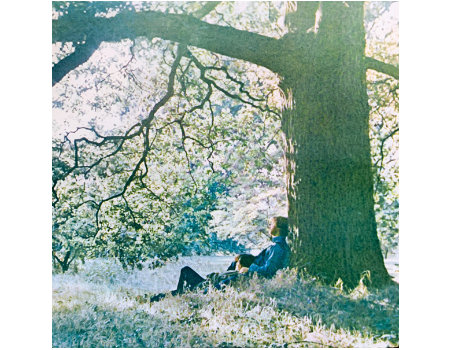
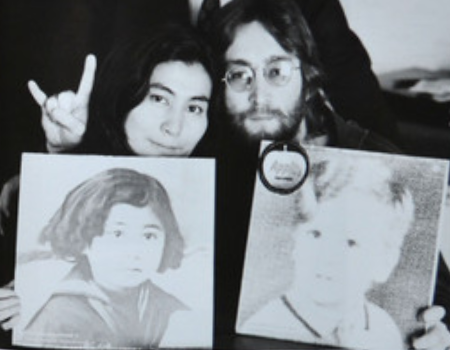
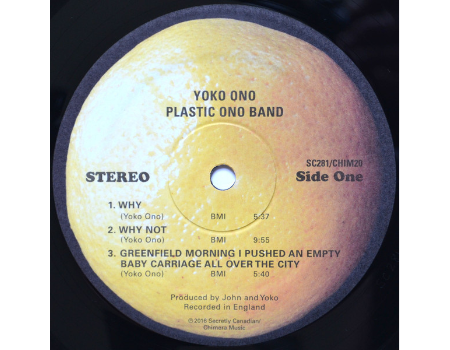
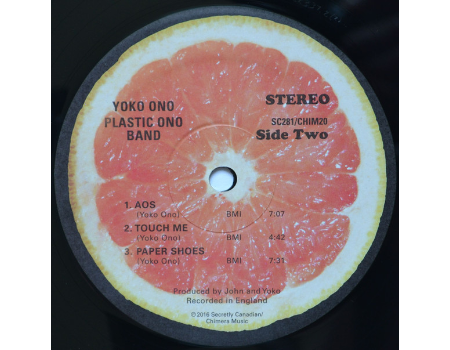
Speaking of Yoko, there is a fascinating bonus Blu-ray Disc in the set which I am still exploring featuring her complete live sessions with the band. These tracks became the basis for her first solo album, also titled Plastic Ono Band and featuring a similar cover design to Lennon’s release here. Once I get deeper into this I plan to write a follow on review as I also recently picked up one of the nice vinyl reissues of her album on vinyl issued on the Secretly Canadian label. More on that soon…

THE BOOK

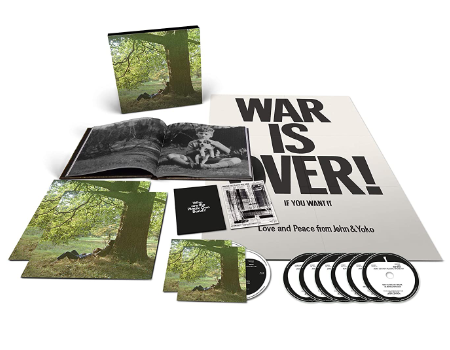
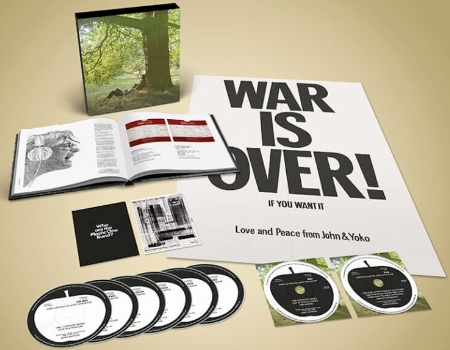
I’d be remiss if I didn’t mention the 100-plus page hardcover book included in the set. This is essential reading as it goes into remarkable micro-detail on all the facets of the set as well as insights into what was going on in John & Yoko’s universe at the time.

Included is fascinating information on the genesis of the Plastic Ono Band name as a group, what it meant and how it was brought out to the world at the time — finally, we get some understanding of the cover image on the “Give Peace A Chance” single! 

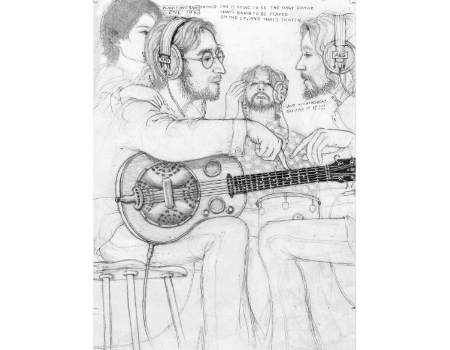
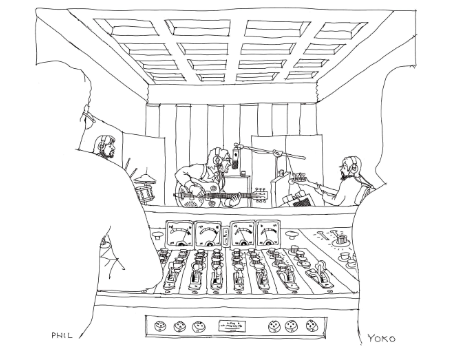
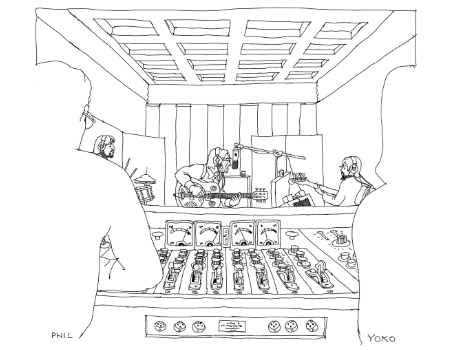
The pictures alone are a fantastic treat, everything from original tape box shots to period pix of John and the band members. Klaus Voormann even contributed drawings he’d made from the sessions (Beatle fans know he drew the iconic cover for The Beatles’ Revolver album). 

You also get a wonderful “War Is Over (If You Want It) poster and postcards featuring art from Lennon’s early singles from this period. 

So… wow!  Plastic Ono Band is 50 years old and sounds more vital than ever. And now we have this fantastic periscope into Lennon’s artistic creative process which will no doubt be important to music scholars and Beatle-philes for ages to come.  

John Lennon’s Plastic Ono Band 50th Anniversary Boxed Set, Part 2: The Surround Sound Mix

Welcome to the second part of my exploration of the fine new 50th Anniversary super deluxe boxed set celebrating John Lennon’s landmark album, Plastic Ono Band. If you missed Part I of this review series, please click here to jump to it as it explores the brand new Stereo remix. 

The new Surround Sound mix of Plastic Ono Band offers revelations one might not expect from such a simple series of recordings. Its all in the details, yet I realize that the logic may not make sense to some of you who are intimate with the recording. 

If you stop to consider, this is an opportunity to get a bit more inside the heart and soul of the raw sound Lennon created for the album.

The challenge of course is how to create a more immersive feel without deconstructing its essence — the core of the album is effectively a power trio of drums, bass and either guitar or piano, with occasional organ or piano doubling at points. The 5.1 mixes create a subtle sense of the recording studios where the album was made, without getting extreme.

Some insights from engineer Paul Hicks on how all the new remixes were considered and prepared (in a very high resolution audio format) will be helpful here:

“With the Imagine album, there was a lot of matching effects and arrangements. With John Lennon / Plastic Ono Band it was all so much simpler and sparser. In fact there was more time spent cleaning up the audio rather than replicating effects. One of the big reasons for going to 192- 24 rather than 96-24 was how sparse it all is, the clarity, how much of the room and how much detail you can hear – in some cases you can literally hear a pin drop, and that’s part of what makes you feel so ‘present’ in the moment. Like restoring an old master painting, all that painstaking clean-up work will be invisible to most ears, but on a good system, the level of sonic upgrade is really incredible and immensely rewarding.”

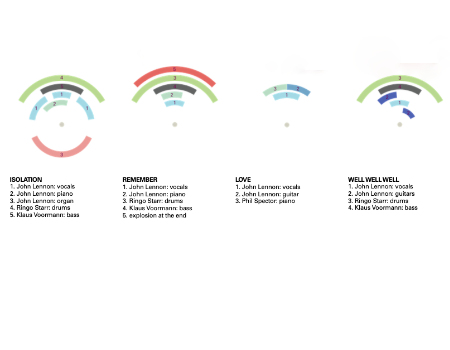
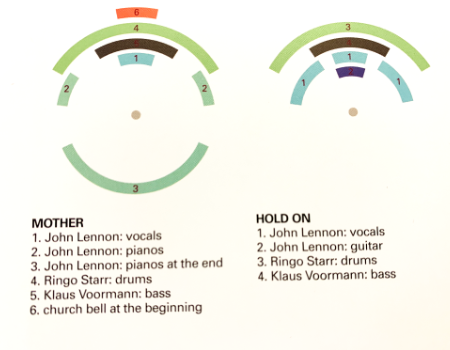
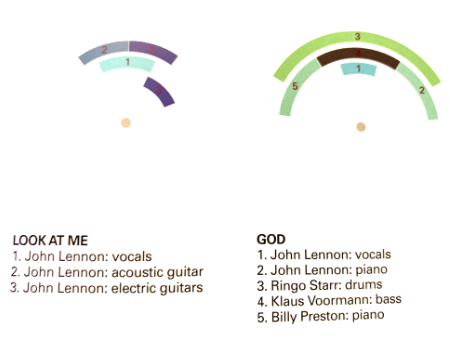
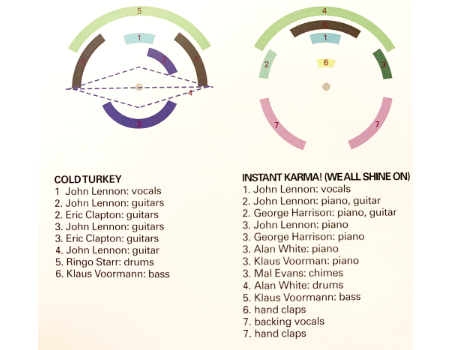
In the lovely hardcover book that comes with the set, engineer Sam Gannon created wonderful sound “maps” showing the approximate placement of particular track elements within the three dimensional surround music field. These are perhaps a bit too honest for their own good as it might make someone think there is nothing going on in the rear surround channels at times — but there is in the form of that aforementioned studio ambiance! However, these maps do emphasize the focus for the recording and where more discrete sounds are roughly located in the three dimensional sound field. 

Wisely, the producers of this new remix opted to keep the focus fairly tight in order to keep true to the original intent and feel of the album, allowing subtle levels of immersion when the opportunity arose naturally

When you play “Working Class Hero,” don’t expect a lot of immersion because the guitar and vocal are wed close together since Lennon was probably playing and singing it in real time. Any ambient flavor of the room it was recorded in would fill out the surround channels. 

Again, an important goal here was to be as true to the original album as possible, so it would not make sense to put John’s piano in one corner and Klaus Voorman’s bass in another (like an early Quadrophonic mix). That might have been interesting for a moment but it would not have the same feel as the original album. So instead, the focus here is the core Stereo mix but with moments where everything fills out more depending on the track.  
My favorites — not surprisingly — are indeed the tracks which tend to wrap around the listener more, such as “Isolation,” especially when the organ comes in from the back. 

Some of the most immersive moments on the Blu-ray Disc in the Plastic Ono Band were not even on the original album at all, but on the singles issued around that period.  So “Give Peace A Chance” envelops the listener with backing vocals and hand claps.

“Instant Karma” sounds bigger still with not only the full band but multiple pianos (played by George Harrison, Alan White and Klaus Voorman) beefing up the sound in co-producer Phil Spector’s classic layered “wall of sound” style recording technique.  

“Cold Turkey is no doubt the most aggressive mix here as the guitar solo sort of floats about you gently in time with the music. It is an appropriately trippy moment that feels right without being gimmicky. See the sound map (to the right) and look for the diamond shape to better understand the motion trajectory of the sound, with you — the listener — the dot in the so-called “sweet spot” in the center.

All in all I really like the surround mixes of Plastic Ono Band and it will definitely be my choice for when I want to listen to the album in high resolution digital form. It doesn’t replace the vinyl or the Stereo mix (for those of you who tend to think in “either/or” terms). but it does provide a wonderfully expanded view of what the album can be, and that is a good thing indeed.

Tune in again here tomorrow on Audiophile Review where I’ll explore the bonus goodies in the set including Demos, Jams and much more.  

Reconsidering Lynyrd Skynyrd: Live at Knebworth, England 1976, Blu-ray

I see now where I screwed up as a mid-1970s teenager in my appreciation for Lynyrd Skynyrd. Then, “Southern Rock” was almost as big as Prog Rock and Disco (maybe even bigger depending on who you talk to). The kings of the genre were The Allman Brothers Band, and The Marshall Tucker band came up quickly in the ranks as a very popular number two, both prototypes for what later got labeled as “jam bands” in the ‘80s and ‘90s. 

I like both of those bands a real lot, and grew up with them because one of my older brothers was into them, I will admit.

But then this band called Lynyrd Skynyrd happened and everybody was saying that they were the best “Southern Rock” band. Clutching my cherished copy of The Allman Brothers Band At Fillmore East, I bristled and ignored Skynyrd as much as a teenager could at the time — which means that even if you didn’t own the albums you heard their music everywhere on the radio, at parties, even as walk-in music at other concerts.  

Skynyrd was huge!

Of course, after the tragic plane crash just as they were beginning their ascent to superstardom, I never had an opportunity to give them a second chance, to see them live in concert, to really find out what they were all about. 

None the less, Skynyrd’s hits have set up shop in the back of my mind and in recent years I’ve actually picked up a bunch of their albums. I now appreciate them for what they were: a really solid rock ‘n’ roll band, not really a so-called “Southern Rock” band.

This is never more in evidence than on the great new Blu-ray disc that is coming out soon from Eagle rock entertainment: Lynyrd Skynyrd Live at Knebworth ’76.  

The Allman Brothers and Marshall Tucker Band’s brand of Southern Rock was a heady brew of jazz-inspired country-fried blues rock with a major emphasis on improvisation over long jams. 

Lynyrd Skynyrd is pretty much a straight-ahead rock ‘n’ roll boogie band (albeit a really tight one!).  They were a big band delivering a rich-but-rootsy wall of classic rock sound — drums, bass and keyboards plus three guitarists and matching backing vocals on stage. Their power is palpable, no doubt. They were a very very tight live band. 

There’s not a lot of slide guitar playing, nor a lot of deep blues and there’s almost no improvisation going on — the solos are great but clearly well crafted and mapped out.

In this fine concert video, lead singer Ronnie Van Zant looks at times a bit unsure of how to handle the giant stage and the massive audience there at the Knebworth Festival, grabbing the microphone stand in awkward rock star poses. But any of his uneasiness is made up for with a strong vocal delivery and — again — the three guitar assault which was a force to be reckoned with.

The other bedrock of this band is the drummer Artemus Pyle who really kick some serious booty driving the sound of this group. 

These guys were tight and well scripted. They knew all their licks, hooks and riffs — so there’s no room for anybody to drop out in creating their big sound. 

The audio on this Blu-ray Disc is generally excellent, presented at 48 kHz and 24-bits in DTS HD Master Audio surround sound. The 5.1 mix is perfectly acceptable for a live concert experience like this with a good sense of ambience and crowd feel. Not surprisingly, most of the music is centered up front and center with a nice stereo separation.

After watching  Lynyrd Skynyrd Live at Knebworth ’76, more than ever I see this group as more of an Americana roots rock band not unlike Northern California’s Creedence Clearwater Revival by way of English groups like Foghat, Savoy Brown, Ten Years After and maybe even Humble Pie. 

They knew how to write some good tunes and they knew how to rock.
There are some exceptions. On Jimmy Rodgers’ “T For Texas” they fall into an Allman’s sound as the song (and arrangement) is very much like “One Way Out.” As soon as the slide guitar kicks in, Van Zant delivers a remarkable Greg Allman-esque performance.  
“Free Bird” of course is another song featuring the slide guitar and it was later dedicated to Duane Allman and Allman’s original bassist Berry Oakley (both of whom were killed in separate motorcycle accidents about one year apart in the early 1970s).

It’s really interesting watching the very English crowd embracing all this American essence of the period — it could have been a festival stage in the U.S.

The video quality on Lynyrd Skynyrd Live at Knebworth ’76 is excellent for a live recording made in 1976. This looks like it was captured on early video tape, so the resolution is what it is —all things considered, even on my trusty old 1080p Panasonic plasma TV it looks pretty darn great. If you’re playing it on a 4K TV it may look a bit more fuzzy (upscaling may help). 

Anyhow, if you are a deep Skynyrd fan, you’ll probably want Lynyrd Skynyrd Live at Knebworth ’76 as it is nice and reasonably priced package. The CD is great too for those times when you just want to hear the music. It also includes a relatively recent documentary film If I Leave Here Tomorrow which I have not had a chance to watch yet as of this writing (but plan to soon!).

Lynyrd Skynyrd Live at Knebworth ’76 is about as close as many of us will get to understanding what this great band was like live in concert.  Worth checking out.

The Frank Zappa Documentary Part I: The Blu-ray Disc

Some of you may remember that last year I was very excited to review a video documentary by producer director Alex Winter about one of my musical heroes, Frank Zappa. This film — simply called Zappa — embodied a multi-level project that not only helped preserve the vast archive of historical media in Zappa’s legendary “vault” archive, but presented a distinctive profile of Zappa’s life not many of us really fully understood. And it was all told pretty much from his vantage point and those who worked closely around him. 

If you haven’t seen the film and want more insight, please click here to jump to my overview / review from when the documentary first was released in digital form (and when the soundtrack appeared on some streaming services). 

Alex Winther did a magnificent job on Zappa and the biopic is now available on Blu-ray Disc for those who like to own physical versions in their collection. There are a number of reasons why you would want this. Zappa is a powerful documentary which contains a lot of great footage in it that I suspect that even hard core Zappa fans had never seen before — at least in this sort of quality — so on that level it is essential. 

It is worth noting here that Zappa fans are a bit like DeadHeads and Springsteen fanatics, collecting the artist’s music deeply beyond the officially released material — radio and concert recordings, TV appearances and more. 

For those types of super serious fans, there are wonderful bonus materials on the Zappa Blu-ray Disc so you don’t want to miss out on that. Included are fascinating demonstrations by Zappa of his Synclavier,  an early digital music production workstation.  There are wonderful out-take interviews with Zappa’s musician including Mike Keneally, Steve Vai and Ruth Underwood, all offering important additional insights. 

There is also video of great question and answer Zoom session featuring Alex Winter and associate producer Mike Nichols, moderated by no less than “Weird Al” Yankovic!  There they offer many more insights into what went into making this fantastic documentary and its underlying intent. 

There, you’ll also get a tantalizing teaser of a sort confirming most every Zappa fan’s dreams that there is much more in the vault yet to see the light of day. Just hearing those words uttered (albeit, non-specifically), confirming the notion that they are still figuring out what to do with all the the material there, is an exciting musical carrot dangling in the future for this Zappa fan.

Perhaps my favorite bonus feature on the disc, however, is the shortest item included: an animated TV commercial for Zappa’s classic 1974 release, Apostrophe. I would love to know where this commercial may have aired back in the day…

The Blu-ray Disc comes with options for Stereo and standard Dolby Digital surround sound. The latter is perfectly adequate for this presentation as there are no whizz-bang super immersive special effects going on. Also, since much of the material presented is taken from vintage TV and archival video sources in frequency-limited mono and stereophonic sound, the surround mix is almost ancillary. It does fill up you home theater viewing space nicely for what it is.

One last tidbit as we wrap up this review is the notion of the cover art used on the Kickstarter edition of Zappa vs. the commercially released incarnation:  each have completely different designs!

At first I was surprised because I thought the original promo poster (and soundtrack album design for that matter) which the Zappa estate created was actually pretty terrific. But I suspect that there is one thing central to that image which is probably difficult to promote these days in mainstream retail outlets: cigarettes.

Zappa fans know he was a lifelong heavy smoker – something that probably contributed to his death (look it up on the web). Whenever you saw him, whether in the studio, his house or on stage in concert, a cigarette was never far away.

So having that image of him smoking on the cover — there is even a silhouette shot of him on the physical discs in the soundtrack packaging — is a reminder, I think at least, to people to not smoke. If you know the story you won’t take this as an endorsement that smoking is anything good. 

However, understanding the realities of brick and mortar retail in the 21st century, I suspect that cigarettes are something that probably can’t be on a product as some people might take to heart as a positive endorsement. There is nothing cool or good about smoking, kids. 

‘Nuff said…

Anyhow, tune in tomorrow when I’ll explore the newly released Zappa Original Motion Picture Soundtrack on compact disc!

Zappa’s Apostrophe Ad from a fan post on YouTube…. the Blu-ray version looks much better than this!

Did I Really Need Another Copy Of In The Court Of The Crimson King?

The 50th Anniversary Blu-ray Disc version of King Crimson’s classic progressive rock landmark, In the Court of the Crimson King is one of those releases I’ve been meaning to pick up for some time. But, time kept marching onward and it never presented itself to me…

Arguably the birthplace for progressive rock as we came to know it, In the Court of the Crimson King was recognized as an instant masterpiece upon its release and it has held on to that crown for 50 years… and counting!

I’ve had this debut album by King Crimson for ages. I have it on a nice original US pressing in mint condition. And I own the 40th anniversary DVD Audio version with the high resolution surround sound mix.What more did I need, my wallet reasoned?  

I admit I don’t yet have the drive to get the even newer massive new Complete 1969 Recordings boxed set (which includes a Dolby Atmos mix, which I can’t play anyhow just yet).  (Note: I do have the 81-84 Discipline box set and the Thrak box of 94-95 era recordings, so I’m not being a slouch here folks)

Still, I have been tempted. I’ve heard that the 200 gram vinyl version of In the Court of the Crimson King is quite stunning but I haven’t been able to justify buying that just yet (I still want an original UK and US white label promo copies, truth be told).  

None the less, the 2019 Blu-ray Disc edition continued to call to me as I was curious to hear the new surround sound mix. I just needed to find it at the right price, time and place. Whenever I went to look for it online it always seemed to be sold out and I never saw it in the stores. That is until recently at Amoeba Music, I found a perfect condition used copy. 

At last, In the Court of the Crimson King 2019 presented itself to me in a manner I could not refuse!

Accordingly, I thought it might be helpful to review it now from my vantage point for those you out there who are also struggling to keep pace with and catch up on the intense flow of archival musics coming from our favorite artists… Better late than never!

For those of you who are wondering about the title of this review and whether I will answer it, you can stop holding your breath.  Yes, I needed this and if you are a fan of the album, so do you.  

Why?

I could hear the difference immediately. First, I did a refresher reference listen to In the Court of the Crimson King via the 40th Anniversary 2009 DVD Audio Disc version which sounded thinner than I remembered. That surround mix is presented at 48 kHz, 24 bit resolution. The new Blu-ray edition is twice that at 96/24 and all that extra disc capacity is in part why it sounds better — you are hearing more of the music.  

But it is also a different mix! 

Clearly, remix producer and surround sound engineer Steven Wilson felt he could do more with the recording, enough to revisit the project anew. No doubt there have been advances in the technologies available for mixing. And, frankly, there is probably even more demand now for hearing this album in the highest quality possible than in 2009, so taking advantage of the Blu-ray Disc’s capabilities makes good sense. 

So how does it sound, you ask? Pretty terrific! 

How is it different than the old DVD Audio mix?

Good question… 

Somebody online asked me if this new version of In the Court of the Crimson King is just louder than the old DVD Audio version. After listening to them back to back several times and sampling select tracks, I do not think so. 

I’m hearing much more detail on the new version in the 5.1 mix in particular, again now presented in 96 kHz, 24-bit fidelity. The most immediate thing I noticed was that Greg Lake’s bass sounds much richer, and if you listen closely you can hear the slap of his Fender bass’ guitar strings, a detail I didn’t hear on the earlier version.

The drums also sound more natural and realistic, effectively delivering a hearty crack instead of just a tap on the snare. The tom tom drums in particular seem to resonate a bit in the room now.  Details like that are super impressive, especially when you consider these are 50 year old recordings of an embryonic band that didn’t yet have access to the finest studios in the land. It was however recorded on an 8-channel multi-track recorder which was still a big deal in 1969.

The overall sound design of the 5.1 mix seems to be fairly similar to the original version yet everything feels more in focus somehow.

That wonderful excitement when you first hear “21st Century Schizoid Man” in surround is preserved as Fripp’s guitar stabs during the verses jump from speaker-to-speaker in time around the room. It is a fun moment that works without feeling gimmicky.  

Similarly on the title track, on those rolling opening drum hits you can almost feel the smack of the drumsticks on the tom tom head, the skins bending as the drummer works his way around the kit. Greg Lake’s vocals sound much better on this new version too, feeling more open and air-y somehow. The cymbals are also now much tighter and natural sounding, delivering more of a ringing ping than just a clink.

There are so many bonus tracks on this Blu-ray Disc, it is hard to go into all the detail. I’m still exploring!  From Burningshed.com we learn it contains:

  • 2019, 5.1 and stereo mixes by Steven Wilson in 24/96 resolution (for the first time)
  • Original master edition of the 1969 album mix in 24/96 stereo.
  • A complete alternate album comprising 2019 mixes by Steven Wilson including a much extended duo version of I Talk to The Wind, a June 19th version of ‘The Court of the Crimson King’ from the band’s final day at Morgan studios in June 1969, an isolated voice dominant version of ‘Epitaph’ & a version of ‘21st Century Schizoid Man’ which combines the Morgan studios instrumental with Greg Lake vocals from Wessex studios and August 2019 overdubs by Mel Collins & Jakko Jakszyk – the latter two mixed by David Singleton.
  • A further album’s worth of additional material drawn from studio takes – much of it mixed by Steven Wilson & including extracts from the ‘wind session’ that produced the intro to 21CSM in stereo for the first time, the single a/b sides of the album title track drawn, for the first time since on disc, from the original master tapes & more are also included.
  • The Blu-Ray is completed by a set of 2019 instrumental mixes and the surviving fragment of black & white footage from Hyde Park in 1969

So, you can see why I’ve been hesitant to get the big 1969 box set – there is so much right here on this disc! 

Of the outtakes I’ve heard thus far, I love the June 1969 basic trio recording of the title track — just drums, bass and acoustic guitar. The latter is significant because you get to hear Fripp’s beautiful acoustic guitar work, something you don’t get to hear much on later King Crimson recordings and which gets sort of overlooked (in a way) in the final mixes. That said, the instrumental versions of the album tracks are lush and wonderful.

Anyhow, I think you probably get the idea by now that this is a fine release. I’m glad I finally got a copy of  this 50th Anniversary Blu-ray Disc version of King Crimson’s In the Court of the Crimson King. 

Perhaps it is your turn to get it now too!