Tag Archives: Contemporary

Music Interview: Graham Day

Graham Day is one of the founding fathers of British garage rock. The vocalist and guitarist was the frontman of cult ‘80s beat‑psych band The Prisoners, who were adopted by the Mod revival scene, but he’s also released albums as The Solarflares, Graham Day and The Forefathers, and his current project, The Gaolers.

Not only that, but he’s worked with fellow Kent coast-based musician, writer and artist, Billy Childish, as a producer, and briefly played drums in Childish’s group The Mighty Caesars and later bass in The Buff Medways.

For a man whose music career spans more than 40 years – Day is 58 – it’s surprising he hasn’t released a solo album… until now… and even that was a happy accident, he tells me, talking on the phone from his home in Rochester.

“It was all down to the bloody pandemic – the album was supposed to be a Graham Day and The Gaolers record, but our drummer, Dan, lives in Alabama. We were going to play gigs in Hamburg, Paris, London and Brighton – I have to make it worthwhile for him to come over – and I’d booked a studio called Ranscombe in Rochester because I’d written the album,” he explains. “That was April 2020 – it was all going to pan out nicely – but then lockdown scuppered that.”
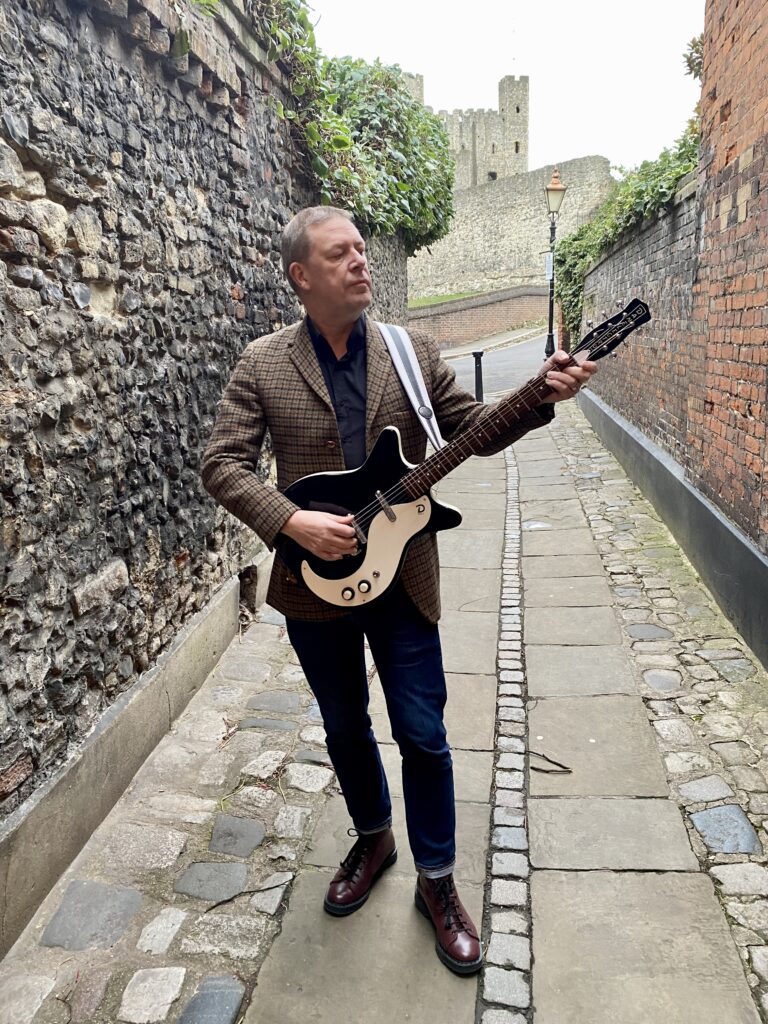
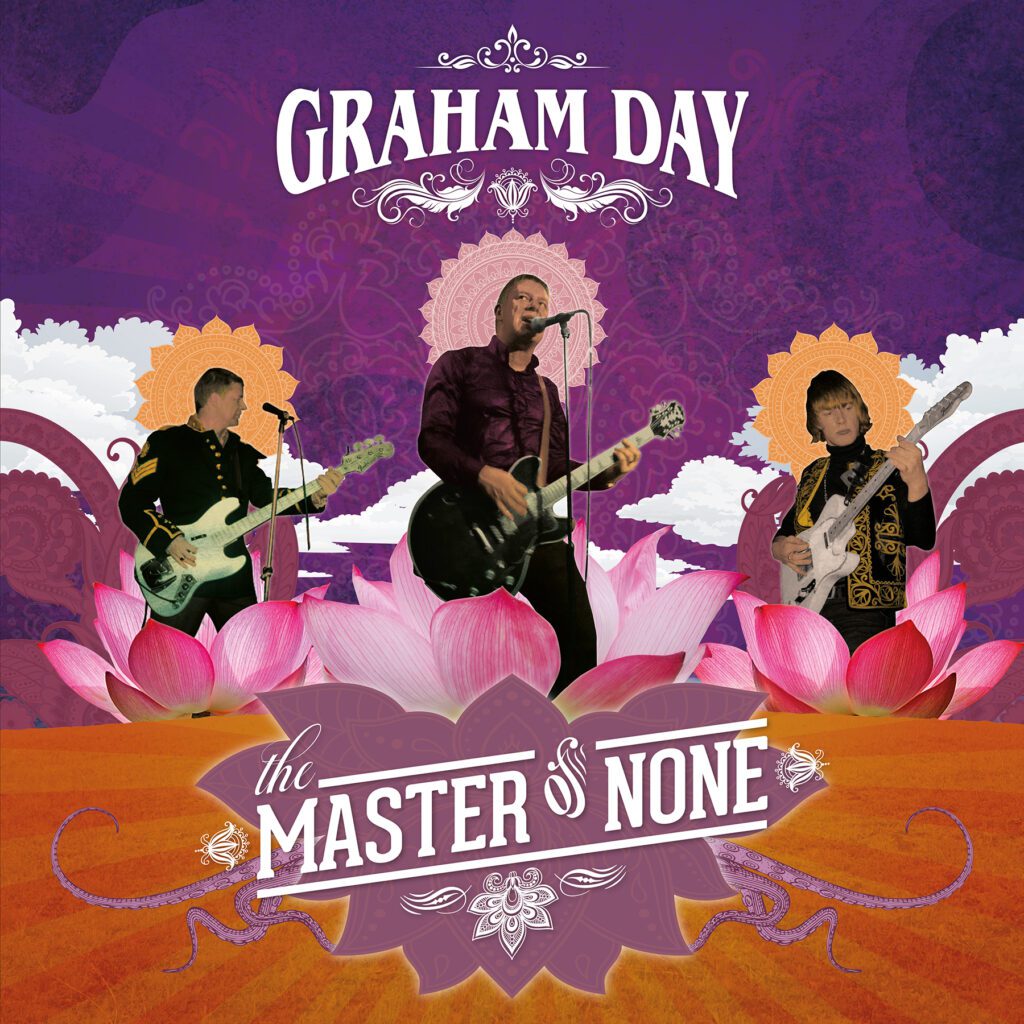
The record we’re here to talk about is The Master Of None – the title is a reference to how it was made. Not being able to meet up with his band, Day turned the Logic Pro X demos which he’d created for his drummer into a proper album. Building up each song from scratch, he added bass, Hammond organ and congas to the guitar and vocal tracks, and then, finally, the drums, which proved something of a challenge.

“I went to my mate’s printing works unit, where he has a drum kit, plugged my headphones in and stuck a microphone in front of the kit and tried to play along, but it was hideous,” he says. “I found it really difficult. I’m a loud drummer and the unit is big and echoey – the drums were so f***ing loud! I had to turn the headphones up to maximum to be able to hear what I was playing along with. I deafened myself – I couldn’t hear anything for nearly a week afterwards.”

The Master Of None is a great record that doesn’t mess around. It’s stuffed full of short, sharp, highly melodic, garage rock songs, like the dirty and fuzzy opener, ‘A Rose Thorn Sticking In Your Mind’s Eye’, the Kinksy, Brexit-themed, ‘Out Of Your Narrow Mind’, and first single, the angry ‘You Lied To Me’, which is a stinging attack on Boris Johnson and his cronies and recycles the vibrato guitar part from ‘Help You Ann’ by US garage-rockers The Lyres.

There are also some more soulful moments – with its Hammond sound, the title track recalls The Spencer Davis Group, while ‘Don’t Hide Away’, which was written about the pandemic, nods to The Four Tops, and has a melancholy organ line, and ‘A Grain of Sand (That Gets Washed Out To Sea)’ has a groovy ‘60s feel, thanks to a Danelectro electric sitar and congas.

Considering he played everything on the album, Day has managed to pull off a great trick – The Master Of None, which took a couple of months to finish, sounds like it was recorded live with a full band.

“Thanks,” he says. “In a way, the battle I had trying to play along with tracks and layering them is probably what makes it sound like it’s a band playing. It’s a little bit scrappy. I don’t like over-rehearsing anyway – I like things to sound like they’re a little bit of a struggle and we’re a bit unsure. I like that edginess.

“I get bored with songs really quickly, so I tend not to listen to anything I’ve recorded ever again – I’d rather record quickly and move on. If I don’t do that, I’ll end up not doing anything, or the songs will be lost forever. Half of this album I rewrote, and I also wrote new songs for it because I was already fed up with the songs that were going to be on the Gaolers record. It doesn’t bear much resemblance to the album we would’ve recorded back in 2020.”

SH: How do you write songs?

GD: I’m not a prolific writer because I’m quite lazy, I suppose – I need to have a goal in mind. I don’t just sit down and say, ‘I think I’ll write a song today’, just for my own benefit.

If I’m going to record an album, I can write quite quickly, and it falls into place if I know I’ve got to do it. I normally write songs when I’m walking my dog – I get a melody and I hum it into my phone. Then when I get home, I work out what the chords are.

When I was younger, I used to play a guitar, get a riff and try and put a melody over the top of it. I can’t do that anymore – there’s nowhere else for me to go with it. I have to come up with a melody and try to figure the song out around that.

I’ll be honest, I really struggle with words. I often have all the music recorded, but I sit there and say, ‘what the f*** am I going to write a song about?’ I’m 58 years old – I’m not an angry young man anymore.

You sound quite angry on the album, though. Some of the lyrics tackle social issues, injustice, politics, the environment… It’s quite a topical record…

I think that was a product of the situation – Brexit, lockdown, all of that s***. I’m sitting there thinking ‘all I want to do is go on holiday and go and play in the band’. I couldn’t do either of those things, which made me really bitter! A lot of it came from that.

Ordinarily, I’m quite a cheerful, quiet person and I’m not bothered. There’s a song on the album called ‘A Grain of Sand (That Gets Washed Out To Sea)’ where I talk about how I moan about a lot of things, but how I’m not actually an activist. I’ll quite happily sit there and grump about everything, but I’m too lazy to get off my arse and do anything about it.

That song has a Danelectro electric sitar on it…

Yes – that’s it. The original ‘60s one was called a Coral – I’ve got an exact copy of it. A few bands from the ‘60s used them. I’ve got a sitar as well, but it’s too much of a pain in the arse to sit on the floor with and tune it. I end up playing it like a guitar and all the strings snap… When I found the electric one, I thought, ‘brilliant’… It doesn’t particularly sound like a sitar, but it has a unique sound of its own, which is really nice.

That and the congas give the song a groovy ‘60s feel…

Yes – I got the congas and some other Danelectro guitars, including a baritone electric, because I’m also in an instrumental band called The Senior Service. I was getting into that ‘60s spy film thing, which I’ve always loved, like Barry Gray and John Barry.

Do you collect vintage gear?

I’ve had so much stuff over the years, but lack of money has forced me to get rid of some of it, which I really regret. I’ve still got quite a lot of guitars – some vintage ones and some more modern. I have Gretsch ones that are only 10–15 years old – some old Gretsch guitars can be a real bastard to play and quite quirky, but they look great. Some of the guitars made in Japan, 10 or 15 years ago, are pretty decent – I have two or three like that.

The song ‘Out Of Your Narrow Mind’ sounds like The Kinks…

I love The Kinks. I think influences are brilliant to have because you can’t invent anything new, unless it’s really awful. You’ve got to have influences, but you’ve got to tread a thin line between that and actually nicking stuff, so I try and go for a similar feel and hope to God that I’m not nicking something.

Often when I write a song I think ‘that sounds vaguely familiar…’ but I press on with it and then, further down the line, I think ‘oh, f***! I know what that is…’

More often than not, I’m ripping my own stuff off! My wife will say, ‘that’s on one of your other albums…’ And I go, ‘b******s!’

The title track has a soul feel. It reminds me of the Spencer Davis Group…

Oh – brilliant.

There’s also a soul influence to ‘Don’t Hide Away’, which is quite Four Tops – it’s one of my favourites on the record. I like the sad organ on it. It’s quite a melancholy song at heart, with a Northern Soul or Motown feel…

I wanted to go for a more upbeat Four Tops/ Frankie Valli kind of thing, but I started putting things on it and it changed without me intending it to. I really liked the haunting organ line – it changed the feel of the song.

The last song on the album, ‘Time Is Running Out’, deals with eco issues…

I don’t like singing about those things – getting on my high horse and all that b******s, but you’ve got to sing about something. And you can only sing about politics a couple of times. You get to a point where you think, ‘I suppose I’d better have a song about that…’

What does a 58-year-old man sing about? I can’t write about a relationship breaking down – my wife wouldn’t be too happy about that.

I think that tune is a little bit too fast, but it works because it sounds like a battle or a race to a climax. I thought I would stick it at the end of the album, and it was a battle because it was really hard to play along to.

It has backwards guitar on it…

I like that. In the old days, we used to do it properly in the studio with tape – cut the tape, turn it backwards and then stitch it back together. I can remember spending all afternoon doing it for one of The Prisoners albums. Now there’s a little button to do it on Logic – it takes minutes.

What’s your home studio set-up like?

I’ve got one microphone and I use a Vox AC30 amp. When I was recording the guitar for the album, which had to be really loud, I asked the neighbours to tell me if they were going out! They’re pretty understanding – they told me they were going for a walk, so I whacked it up and did the guitar parts. The main thing for me is that gritty guitar thing. I stuck the bass straight into the computer and did the Hammond on a MIDI keyboard.

Would you make a record on your own again? How was the experience?

I did love it. I liked the songwriting aspect of it because I’d never worked like that before – having the time to craft the songs. In the last 40 years of playing, I’ve never really bothered with that. If I get a good idea – a riff or a tune – it’s there and it’s simple. I’ve always thought that if a song takes longer than five minutes to write, it’s not worth writing, but with this album it’s a bit more crafted and layered than perhaps I’ve done in the past. I normally wouldn’t have the time or inclination to do that.

I’m really pleased with some of the songs on it.

Have The Gaolers heard the album?

They’ve heard the demos… (laughs).

The Master Of None is out now on Countdown Records. It’s available on LP, CD and across digital platforms.
 

Back to Music

The post Music Interview: Graham Day appeared first on Hi-Fi+.

Music Interview: Paul Draper

Paul Draper’s new record, Cult Leader Tactics, is a darkly funny and edgy concept album that’s a satire on the genre of self-help manuals – in fact, the former frontman of ‘90s indie‑art-rockers Mansun has even written one to accompany it.

The four-CD deluxe version includes a 60-page hardback book that’s a guide to getting ahead in work, life and love by acting in a Machiavellian manner and employing dirty tricks and cult leader tactics to do so – it’s a set of rules on how to be become a complete cult in the music industry.

From the ‘70s heavy rock riffing of the album’s title track, which opens the record, to the ‘80s, Tears For Fears-style synth-pop of ‘Dirty Trix’, the anthemic, Mansun-like earworm, You’ve Got No Life Skills, Baby!’, the robotic Human League-down-the-disco of ‘Everyone Becomes A Problem Eventually’, the Beatlesy ‘Annie’, and the epic closer, ‘Lyin Bout Who U Sleep With’, which features a choir of almost 300 fans, Cult Leader Tactics is a brave, adventurous and always interesting record.

Co-produced by Paul ‘P-Dub’ Walton (Massive Attack, The Cure, Björk), it even includes a collaboration with prog-popper, Steven Wilson – the moody, Depeche Mode-meets-Duran-Duran electro-pop song is called ‘Omega Man’, was inspired by lockdown, and is named after the post-apocalyptic 1971 film in which Charlton Heston plays a survivor of a biological plague that has wiped out most of humanity.

Draper is no stranger to cults – Mansun, who split up in 2003, were named after infamous convicted murderer and cult leader Charles Manson and were also known for their obsessive fans.

“We’ve still got them!” he says, speaking to me from his home studio, The Kitchen.

“We toured a lot and we put out a lot of EPs. Although we weren’t a top radio band or we didn’t sell ten million albums, we did sell millions of records and built up a hardcore fanbase. Apart from the ones who’ve died, a lot of them are still there – they have conventions and fan groups.

“Every now and then, one of them will turn up and tie a horse to your front gate! You get all sorts of stuff… There’s a lot of people out there who love that band – our first album sold a million copies.”

SH: This is your first solo album in just under five years. Did COVID hold this record up? How did the pandemic affect it?

PD: The last one, Spooky Action, came out in August 2017 – when I put that record out, I wasn’t going to do any gigs, but it went into the Top 20 in the UK, and sold pretty well abroad, in places where Mansun had a fanbase, like the States, China, Japan, and Continental Europe.

So, I got on the road and toured North America with Steven Wilson, and played in Europe, China and Japan – we did three UK and Ireland tours and sold out a lot of shows. I’d written a lot of songs on the road, so I got in the studio and blitzed it – I got nine songs done towards the end of 2019, but I was a track short. Then COVID kicked in.

It was pretty much a rock album, but I started working remotely, went back and scrapped one song, then worked on three others – ‘Everyone Becomes a Problem Eventually’, ‘Dirty Trix’ and ‘Omega Man’, which is a collaboration with Steven Wilson – in my home production room. I used all my keyboards and drum machines. The whole thing went back 18 months.

I finished the album off during 2000, for a January release in 2022, and now I’m doing a 21-date UK tour. I just want to get out and have a normal life – I’m a jobbing musician. Without that, I don’t have a purpose in life. It’s been tough, but I’ve got there.

So, Cult Leader Tactics turned out a very different record than it was first intended? It’s got some rock songs on it, but it’s also very electronic at times…

Yeah – I was originally going to make a rock record. The first two songs – ‘Cult Leader Tactics’ and ‘Internationalle’ – are both straight-ahead rock songs, but with a few blips and synth bits – that was how I envisaged the album unfolding.

But what happened was that lockdown came and I couldn’t work with my band – we had one session to do, for three or four tracks… I was stuck at home, so, out of necessity, I recorded some electronic tracks. The album does jump from rock tracks to just me on my own, playing synths.

On ‘You’ve Got No Life Skills, Baby!,’ my drummer, John Barnett, plays on it, but I did everything else over it – it’s a hybrid.

I had a look at the video for it on YouTube – I thought the song sounded like something from the ‘80s, but people had commented that it sounded like Mansun’s ‘Stripper Vicar.’ I thought, ‘oh yeah – I’ve just repeated myself again…’

You’ve only so much brain capacity and ideas…’ I just be myself.

“‘Omega Man’ was a remote collaboration between me and Steven Wilson – we were both stuck in our studios, so we decided to do a track about what was going on.

I sent it to P-Dub, who has a home studio called The Loft – it’s in his garden.

Paul Draper
Images by Tina Korhonen

I picked the best songs from the pre-COVID sessions – I went back and changed some of the lyrics, like on ‘Internationalle’, so they were a bit more COVID-related. I added some little touches. That song was about Boris Johnson using Brexit as a career move, but then it morphed and became more about COVID.

Finally, I sent some tracks to Gam [Gamaliel Traynor], who plays keyboards with me live, and is in a band from Peckham, called Sweat, and asked him to add some strings.

He recorded them and sent them back – P-Dub mixed them in. Gam also did a medley of the melodies and the root chords of the songs, so we dropped that onto the album. What started out as a straight-ahead rock record became quite an eclectic one sonically, skewed by the whole COVID experience.

Let’s talk about some of the songs in more detail. The title track, which opens the album, has a real ‘70s rock guitar riff – it sounds like Led Zeppelin…

On the demo, I had this riff that was generic rock-sounding, but when we recorded it with the band, my guitarist, Ben [Sink] played it through a 1970s Fender Bassman amp and it immediately sounded like Led Zeppelin or Deep Purple. I wasn’t keen on it – I thought it was too ‘70s rock…but it just happened. It evolved.

On ‘Dirty Trix’ and ‘Everyone Becomes A Problem Eventually’ you use vintage synths and drum machines. Do you collect old electronic gear?

Yeah. I’ve just bought a couple of things off eBay – an old Ensoniq Mirage sampling keyboard, which sounds amazing, and a Boss Dr. Rhythm drum machine. I’m always buying odd bits – I have Moogs and Oberheims.

P-Dub collects Italian synthesizers, like Siel, so there’s a lot of those on the album. He had an Italian wife once, so there must be some connection there.

The main drum machine I used on the album was a Sequential Circuits Drumtraks – I’ve always used drum machines.

Mansun was an odd band – we were a synth-pop rock outfit, but our record company wanted us to sound like a Britpop band. We were lumped in with all that. We were a guitar band from that era, but we always had lots of keyboards on the records, so we weren’t that fashionable. I’ve not been in fashion – then or now – so I’ve just kept in my own bubble and made a living from it. I still do it because I enjoy it.

When I was in Mansun, I was a gear head – I used to make lists of things I wanted to use, like specific reverbs and delays. I tried to make something sound like a David Bowie drum kit from 1972 – I like sonics, studios and recording, as well as putting the songs together. I can get involved with the mixing, the mastering and production, as well as playing.

In the box set, we’ve done a 5.1 stereo surround mix of the new album, on a DVD, with the Hi-Res audio files. I love doing that – if you’ve got the gear, the time and the inclination, it’s amazing.

I’m a huge fan of immersive audio. In the past, it never took off, but you had to have a lot of money for it – a hundred grand minimum to wire-in a stereo surround sound home cinema experience in your basement. It was the preserve of the rich, but now, throw up a few Bluetooth speakers around the lounge, have the TV as your main thing, and you’re in business.

When we’re doing our surround sound mixes and you sit in the middle, it’s phenomenal.

My co-producer, engineer and mixer, P-Dub, mixed the entire Björk catalogue into immersive sound, which took him a couple of years. It’s off the scale.

How did the cult leader concept for the album and the book come about?

On Spooky Action, I’d exorcised my demons of coming out of my rock band, so I thought I’d then go back to the start and do what I did on Mansun’s Attack of the Grey Lantern [debut album] which was a satirical, Monty Pythonesque dark comedy on my life experiences.

Whereas Attack of the Grey Lantern was my life experiences as a young person, Cult Leader Tactics is my adult life. It’s a fictitious, satirical dark look at a self-help manual – how to get on in life by being a massive cult!

It gets really sinister, but at the end of album, it says that if you live by those rules, it will be a disaster for everyone, so just go with peace and love, man – it’s the only way.

The last song on the album [‘Lyin Bout Who U Sleep With’] is the epilogue.

I wrote the book – some of it wasn’t publishable… When my manager and my record company read it, they said, ‘You can’t put that out as it is – you need to put a disclaimer in it.’ So, it says it’s satirical and isn’t intended to be taken seriously.

Cult Leader Tactics is a satirical play on the idea of a concept album – it’s a parody.

I’ve come out the other side of the COVID lockdown with a record that’s my all-encompassing story of what happened to me – it’s about getting screwed over and if you try and play it straight in this world, you’ll end up nowhere. But, at the end of the day, I say it’s better to be an idiot, meek or a fool than a Machiavellian sociopath in your chosen field or in society in general. Let there be love.

You’ve always had a thing for cult leaders, haven’t you? Mansun were named after Charles Manson…

Yeah – and we did songs about L. Ron Hubbard, although some people would argue about whether he’s a cult leader…

I was looking at Jim Jones [the Jonestown Massacre]. What he did wasn’t nice, but he looked pretty snappy, in black, with a pair of shades on, so in the video I did for ‘You’ve Got No Life Skills, Baby!’, I wore some sunglasses – I went on eBay and Googled ‘Jim Jones sunglasses’ – but when the video went live, some people said I looked like George Michael…

Maybe Mansun were a bit Jim Jones/George Michael. I should’ve stopped trying to be Johnny Rotten and embraced my inner Jim Michael… or maybe George Jones… I’ve always thought of myself as a bit of an indie George Michael – careful what you wish for.

Who’s the biggest cult in the music industry?

I’ve met a few, but they’d probably all say the same about me.

Paul Draper’s Cult Leader Tactics is out now on Kscope.

pauldraperofficial.com

Back to Music

The post Music Interview: Paul Draper appeared first on Hi-Fi+.

Interview: The Boo Radleys

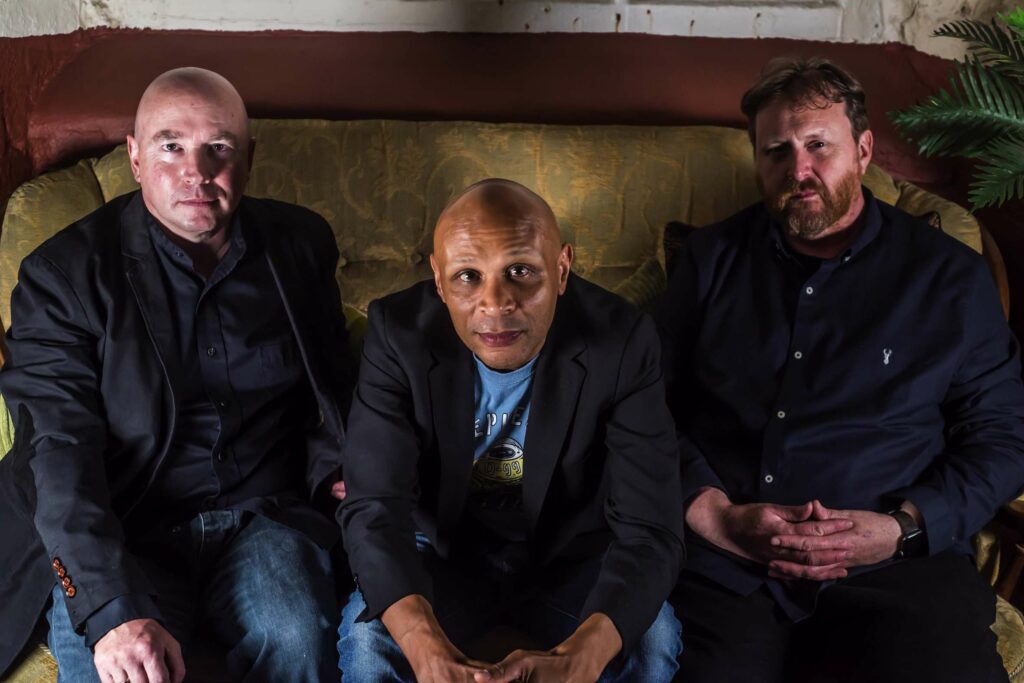
The last time I spoke to Simon ‘Sice’ Rowbottom, frontman/guitarist with The Boo Radleys, was almost 25 years ago – before a gig in Portsmouth, Hampshire.

“Oh my God – that’s mad!” he exclaims, talking to me over Zoom from his home in Oxfordshire, in late November 2021.

Since our initial meeting, in 1997, the ‘90s shoegazers-turned-experimental-pop-pioneers, who were signed to Alan McGee’s Creation Records, have disbanded – they split up in 1999 – and got back together, albeit without chief songwriter, Martin Carr.

Last year, the three remaining members, Rowbottom, bassist Tim Brown and drummer Rob Cieka, announced they were reforming and put out a single, ‘A Full Syringe And Memories Of You’ – the breeziest and catchiest song about euthanasia that you’ll ever hear.

They followed it up with ‘I’ve Had Enough I’m Out’ – another infectious guitar pop tune, with soaring strings and harmonies, which tackled organised religion, and the melancholy, synth-led, New Order-esque ‘You And Me.’

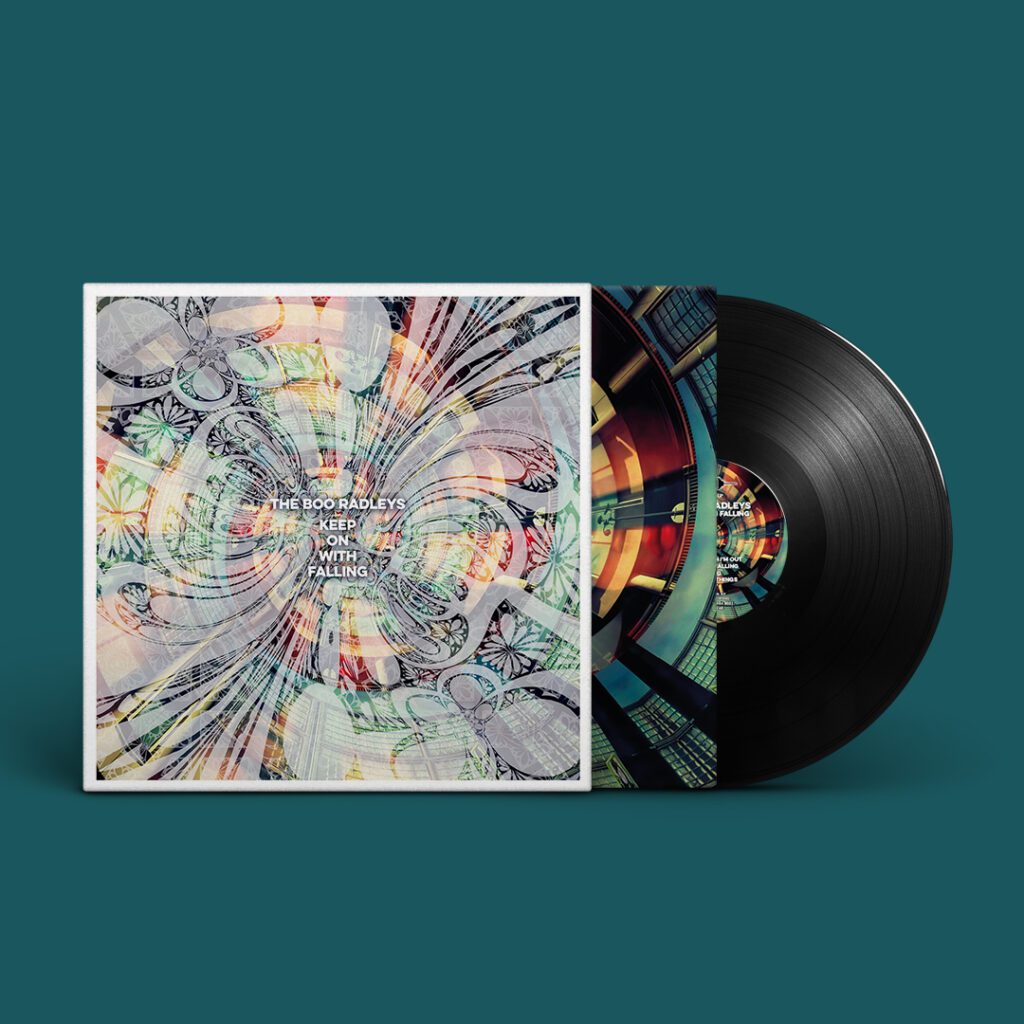
All three songs feature on their new album, Keep On With Falling, which is out in March.

It’s a strong record – full of great melodies, cinematic arrangements and nods to ‘80s pop, like Duran Duran and The Human League, as well as some of the slightly more offbeat Boo Radleys influences of old, like dub, although it isn’t as out there as some of their previous material.

During our interview, Rowbottom hints that their more adventurous side may come out further down the line, as there are at least two more albums planned after this one…

SH: Why did you decide to reform?

SR: It started a couple of years ago, with me and Tim talking about it. He came to my fiftieth birthday party, and we started chatting. Our kids were getting older and going to university, which meant we were finding time to do more music again. We were both writing, so we swapped stuff – that’s how it started. I was also doing some gigs – I’d always said no to it for ages, but I got the bug again. I was going out with an acoustic guitar and playing some of my Eggman [solo project] stuff – Tim came to see one of those gigs and that kicked it off. Then we got Rob in on drums.

You’ve played some comeback gigs. How were they?

They were unbelievable – absolutely fantastic. They were very much a celebration – it was really lovely. We played new and old stuff. It was nice to go out and play to people. There were some people who’d got into us after we’d split up – they never thought they would get the chance to see us.

How is it being back in the band and making music without Martin?

That was kind of an afterthought… Tim’s a really good guitarist – he essentially taught Martin how to play guitar – so, he did some of the guitars and also left on some of the guitar stuff that I’d done. We ended up with the record being pretty finished, so then we were like: ‘What are we going to do with it?’

For a while we toyed with it being released as my solo stuff, but then I did a gig which was advertised as ‘Sice doing The Boo Radleys’ which it shouldn’t have been. Martin got in touch and said: ‘Don’t call yourself that – just call yourself The Boo Radleys.’

So, he gave you his blessing?

Yes, but blessing is a strange word… He’s resigned to it, but I don’t think he was particularly happy about it.

The problem is that it wasn’t the way The Boo Radleys used to work – Martin used to write all the songs, we would work out our parts and then we could come together in the studio. So, when I went to him and said, ‘Look – we’ve done this – do you want to be a part of it?’, I think that’s why he said no.

In his mind, if we were going to do a different way of working, it wouldn’t have been the same. He’s been a solo artist for 20 years – he’s so used to doing his own thing. Stepping out of that, back into a collaborative thing, probably wasn’t his bag, really.

Let’s talk about the new album, Keep On With Falling. Did Covid impact on you making it? How did it affect the record?

It slowed it down, and pushed back the live stuff, but in some ways, it didn’t make a lot of difference with the conception and the recording of the album.

The fact we were able to do it digitally [and remotely] made it all possible – Tim lives in Northern Ireland and Rob lives in Manchester.

If we’d have had to get together physically it wouldn’t have happened – most of the stuff, apart from a couple of days doing live drums and vocals, was done by sending files back and forth. It’s an incredible way to make music.

And very different from how you made the previous Boo Radleys albums…

The whole process of being in a studio was expensive and soul-destroying – we used to get knackered.

We had six weeks or two months and it was a very unproductive way of working.

You had to get it done and then it had to be mixed, but you couldn’t change anything – now, it’s brilliant. You can sit and listen to tracks, leave them for a while and come back to them. You can think of a brilliant harmony or a brilliant guitar line and then add it.

We produced the album ourselves. All three of us are involved in the songwriting process, but it usually starts off with a lyric or a melody from me or Tim. He is far more musical and capable on the production side, so when I get his stuff it’s usually a lot further along. I give him and Rob carte blanche with the stuff I’ve recorded.

Tim uses Logic [music software] – he’s a music technology teacher. I do stuff with GarageBand and send him WAV files – he’s got a hell of a lot of insight and equipment.

How do you write songs?

I write on piano and acoustic guitar – I’m not one of those people who has the song and then has to go and find the backing. I feel my way through a song as I’m going – lyrically as well as musically.

I love the fact that you’ve reunited as a band after more than 20 years apart and the first song on the new record is called ‘I’ve Had Enough I’m Out…’

[Laughs].

It’s a song about organised religion, isn’t it?

Yeah – it’s my ‘growing up as a Catholic’ song and recognising the power and the sway that it has. I’ve become very anti-religious the older I’ve got. I was brought up a Catholic – I was really indoctrinated with it, and I was an altar boy.

The song is about looking back at that and seeing how much of an influence it has on a young mind and the way it controls how you see the world and how you conceptualise everything. It took a long time for me to come out of that.

The song isn’t just about Catholicism – it’s about what I see as the downside of religion.

I love the melody and the string arrangement…

When I wrote the song it was originally very sparse – almost like something off Nick Drake’s Pink Moon – but Tim got hold of it and ran with it. When it came back, I thought, ‘wow – this works brilliantly.’

A lot of the songs on the album are poppy and melodic – there are strings, horns, synths and harmonies – but with a dark, melancholy undercurrent. That’s always been a Boo Radleys trademark, hasn’t it? Even your biggest hit, ‘Wake Up Boo!’ had an element of sadness to it…

I think that’s our personalities. We’ve always been like that – we had sadness, depression and melancholy, but we also had elements to our personalities where we were quite fun-loving and party animals – we would, and still do, laugh a lot.

We love melody and harmonies so much, but you run the risk of being over-saccharine, so we’re always looking for that counterbalance. I’ve always been drawn to that – when you hear a song like ‘Eleanor Rigby’, with a dark side, it really hits home.

The title track is another great pop song, with some lovely Beach Boys-style harmonies on it…

That’s one of my songs – it’s about continuing to fail and making mistakes as part of the learning process. It started out as a piano-drone thing – almost a chant – but Tim built it up, with loads of harmonies. Tim’s quite big on The Beach Boys, but they’ve always been a bit saccharine for me.

That surprises me. I would have thought you were more ‘Beatles’ than ‘The Beach Boys’ in terms of influences?

Definitely, but we went through a huge period of discovering The Beach Boys and Brian Wilson…

I thought if you were signed to Creation, it was written into your contract that you had to like The Beach Boys, as well as Big Star, The Byrds and Neil Young…

[Laughs]. Yeah – it was in the welcome pack.

As well as the downside of religion, other themes in the new songs include euthanasia and alcoholism. You haven’t approached this comeback lightly, have you?

[Laughs].

The new album is less experimental than some of your other records. Was Martin the one who brought the weirder side to the band?

I think so – that’s a fair summation. Martin always liked novelty – he always wanted something new.

His tastes are very eclectic – I’m more in love with classic songs than he is. He was a great filter – he’d bring stuff to the band that we hadn’t heard and say, ‘you’ve got to listen to this.’

I’d think, ‘yeah – that’s absolutely brilliant, but it’s not us’, whereas Martin would want us to incorporate it.

The three of us would have to work out how it would happen – that was our task.

We haven’t got that adventurous yet – we’re still a little tentative about it, so we’re coming back with what we know, which is songs. It’s a fine balance – sometimes Martin’s adventurousness didn’t do him any favours. It’s knowing when to rein it in.

There’s a slight dub feel to a couple of the new songs – ‘I Say A Lot Of Things’ and ‘Here She Comes Again’ – while ‘Call Your Name’ is very cinematic…

‘Call Your Name’ is one of Tim’s – it feels a bit Duran Duran to me. When I listen to the album, I think it has a lot of ‘80s pop sensibilities, like The Human League, New Order and Duran Duran. That’s what we grew up with.

I can hear that. ‘You And Me’ reminds me of early New Order…

Yeah – Tim’s a huge New Order fan. One of the first covers we did was ‘True Faith’ – it was for a Peel session and we called it Boo! Faith. I love that song.

So, are you pleased with the new album?

Boo Radleys album

Yeah, but weirdly I’m more pleased about what’s coming after it.

Since we’ve started doing it again, we’ve banged out 30 songs – we’ve got another album and one after that’s already halfway there.

It’s one of the difficult things with bands –we’ve lived with the new album for so long, we’re almost past it and we’re thinking about the next stuff, but it’s a really good record.

There was always a narrative that Martin was the ‘genius’ behind The Boo Radleys. It never bothered me, but it always felt very unfair on Tim and Rob because they were a huge part of the band.

Not to take anything away from Martin, but we needed to redress the balance and say ‘Actually – that narrative wasn’t quite correct.’ If that comes out, then great.

Keep On With Falling is out now on Boostr Records.

thebooradleys.com

Back to Music

The post Interview: The Boo Radleys appeared first on Hi-Fi+.

Music Interview: Matt Berry

It’s been 10 years since musician/comedian/actor and writer, Matt Berry, signed to iconic British indie label, Acid Jazz, and released Witchazel, an album steeped in his love of ‘60s and ‘70s folk-psych.

Since then, he’s put out eight more albums on Acid Jazz, exploring influences including funk, soul, electronica, garage-rock, vintage TV themes, country, prog and folk-horror.

This month sees some of the highlights from all of them, plus a whole bunch of demos, outtakes, and rarities, collected in a 55-track, career-spanning five-LP/four-CD box set called, rather appropriately, Gather Up. The compilation is also available as a two-LP or single CD edition.

Shortly before jetting off to Toronto for the rest of the year, to film the new series of US horror-comedy What We Do in the Shadows, in which he plays Laszlo Cravensworth, an English nobleman vampire, Berry kindly found the time to give me an interview to talk about his decade of making records for Acid Jazz. There was plenty for us to get our teeth into…

SH: Let’s talk about the Gather Up compilation. Does it feel like 10 years since you signed to Acid Jazz?

MB: No – it feels like two minutes. It doesn’t even feel like five years.

You were a big fan of Acid Jazz before you joined the label, weren’t you?

I was. As a youngster, in the days when you couldn’t search for everything on the internet, they put out some great compilations and stuff. To be signed to Acid Jazz was an honour for me. When I played them my album, Witchazel, I thought Eddie Piller [founder of Acid Jazz] might put out a single, but he put the whole thing out and that was that – it was done – and here I am, 10 years later.

You’ve curated the box set. Do you work quite closely with the label?

Very closely – there aren’t that many of us at Acid Jazz. Everybody is all over every aspect of everything, which is good, because I don’t want to f*** with their brand and everything which goes with that, but, at the same time, whatever I put out must be right for me.

Was it hard to decide what to include in the collection?

It was – no one likes to pick out the best of anything that they’ve done because it’s hard for you to tell. I asked members of my band, and Eddie and Dean [Rudland – Acid Jazz general manager] for them to pick what they consider are the best songs I’ve done on the label so far. They all came back with the same sort of things, so that’s how I arrived at it – I looked at all their lists and just did it from there.

From listening to the box set, it’s clear that your musical output over the past 10 years has been diverse – you have an eclectic range of styles and influences. When you make a new album, do you consciously set out to reinvent yourself, or react against the previous record, or is it more of an organic process?

It’s more organic, but to me it doesn’t sound that different – I’ll just take away some instruments or put every instrument on it. That’s all that I think I’ve really done. I’ve presented my songs in different forms, whether it’s with an acoustic guitar and a slight rhythm section, or with 15 guitars and 43 bass guitars!


The first song on the box set is ‘Take My Hand’, which is also the theme for your show Toast of London. It has a ‘70s pop singer-songwriter feel and the piano reminds me of Elton John’s ‘Song For Guy’…

I was doing a sketch show [Snuff Box] with an Elton John character in it, so I had to have some music for him to play – I came up with something very quickly and had that piano phrase. I must’ve been quite pleased with it because I developed it and it became ‘Take My Hand.’

The post Music Interview: Matt Berry appeared first on Hi-Fi+.

The Killing of Eugene Peeps by Bastian Keb

The film noir world has long been a fascination among the more exciting musicians; it inspired many of Tom Waits’ best works, and avant-garde sax player John Zorn dedicated an album to Mickey Spillane. Likewise, British composer and musician Bastien Keb draws on the dingier side of the 1950s and 1960s soundtracks for The Killing of Eugene Peeps as it’s a tribute to that style and era.

Bastien Keb is the stage name of Sebastian Jones, a multi-instrumentalist whose first love is the guitar. However, he also plays the trumpet, bass, drums, piano, flute and a variety of other instruments on this distinctive album. Keb started out making music for TV and film, and he continues to do so on The Killing of Eugene Peeps; it’s just that no one has made the movie to go with this soundtrack yet. Keb may play all the instruments here, but he employs the vocal talents of Kenneth Viota. Viota provides the narrative voice that gives the album so much of its late-night, back street flavour.

Or at least that’s the way it looks on the credits. Kenneth Viota is a very obscure person, or he’s a figment of Keb’s imagination. Some reviewers refer to him as being ‘a friend’ of Keb, but we’ve heard that one before! Either way, it’s the perfect world-weary voice. A voice powerfully evocative of black and white films from a grimier and seemingly more dangerous era.


One mic master


Keb recorded The Killing of Eugene Peeps with a single mic in his bedroom and did all the production; it sounds like he used samples because there is so much depth and colour in the sounds captured. However, that’s not what the credits suggest. He did have some help from vocalists on various tracks. In addition, Will Morrison wrote the lyrics to two of them, while Kep credits Alex Judd with bringing the strings. Also, there is a sense of there being more than one violin presumably created through multi-tracking. Keb is more than a one-person band, but you have to admire Keb’s production skills.

The album starts with ‘Main Title’ to emphasise its cinematic inclinations. It’s a masterful conjuring of evocative soundscape that plants you firmly in the noir world with strings, horns and what sounds like vibes. Consider ‘Main Title’ a testament to bedroom recording that would once have taken an orchestra and a large studio; it’s now possible with a computer, a mic and a lot of talent. “The city at night is a beautiful thing. Take me away,” says the narrator as a soft melody comes in. ‘Lucky (the Oldest Grave)’ has a more contemporary feel in the Bon Iver style with piano and string accompaniment; its connection to the album is a sense of melancholy.

‘Rabbit Hole’ continues the vibe with a great guitar tone and layered vocals. These sit on top of a background filled with minutiae and texture. Its dreamlike ambience contrasts with the narrator’s return on the ‘God Bless Your Gutters’. This interlude introduces a darker atmosphere, which further develops in ‘Theme for an old man.’  This track’s crumpled brass band beat intro moves into a mellower funky groove worthy of John Barry at his most colourful and exotic.


Schifrin’s spell


The narrator returns for ‘Can’t Sleep’ over a lolling beat, “he can’t sleep with a full neck”, it seems. Lalo Schifrin would appear to have cast his spell over ‘All the love in your heart’. This track combines flute, strings and drum in a perfect pastiche to the great soundtracks of yore.

If I had to pick one track to represent this album, it would be ‘Young Ponies.’ The track’s William Burroughs-Esque narration over piano and bass with harmonised vocals makes ‘Young Ponies’ gloomy yet beautiful with a tremendous choral finale. ‘Street Clams’ provides a contrast with psych-funk guitar and vibes, interspersed with brass to immense effect. ‘Paprika (featuring Cappo)’ is an abrupt switch to rap with synth backing that seems out of place here.

The first nine tracks are perfect in their rendering. The following nine have their moments but don’t add to the whole. Overall this album is a remarkable musical and sonic achievement. It’s also an album that makes a decent system shine, especially on vinyl.

Bastion Keb on Bandcamp: The Killing of Eugene Peeps


Back to Music

The post The Killing of Eugene Peeps by Bastian Keb appeared first on Hi-Fi+.