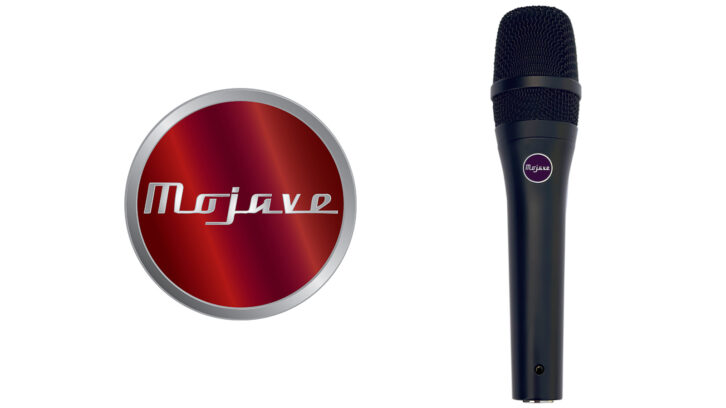
Originally started in a garage by my longtime colleague and prodigious microphone designer David Royer, Mojave Audio has always held outstanding design and innovation as foundational elements of our brand. Since Mojave was founded in 2005, all of our microphones have been designed and built according to David’s exacting specifications, which emanate directly from his lifelong passion for music and audio.
While we are best known for our condenser designs—such as the MA-37 and MA-1000 large diaphragm tube condensers typically used in controlled recording studio environments—we have always wanted to design and develop ‘our take’ on a dynamic microphone. To embark on this journey, we had to ask ourselves what we would do differently—and what we could possibly offer a segment that is already extremely crowded with many other dynamic microphone offerings.
Dusty Wakeman, CEO, Mojave Audio.
From our perspective, there is still a lot of room for innovation to occur in the dynamic microphone space. In fact, some of the more iconic dynamic microphones were designed back in the 1960s—an era when inferior PA systems were commonplace, and microphones were often used as a tool for rescuing poor audio rather than attaining premium sound. Back in the day, having a presence peak was a good thing because it could help a vocal cut through the mix.
Most modern dynamic microphones still feature a ‘presence bump’ around the 5 kHz to 8 kHz frequency range, often coupled with an exaggerated dip just above the 10 kHz range. This led to our question, “What if we could develop a microphone that had a smoother presence, with a little more ‘air’ on the top end?”
Creating this “smooth alternative” for live sound professionals firmly established our design trajectory and became our primary goal in developing the MA-D. By eliminating the presence peak and by introducing a shallow peak around the 10 kHz area, we knew we could attain a smoother response with more “air” at the top end—ultimately producing something of a HiFi sound that is uncommon among dynamic microphones.
One of the obstacles we had to overcome was finding a suitable cartridge that met David’s rigorous design specifications, since most of the cartridges we tested imparted the very presence peak we were trying to avoid. This became a multi-year process that involved a lot of testing, listening and refining. Ultimately, moving to a lighter voice coil material and a thinner diaphragm became a big part of the solution.
The diaphragm we chose for the MA-D is made of thinner material, and the voice coil itself is lighter and wound with thinner wire. These material choices, combined with a careful and more thoughtful design, result in a smoother sound and better transient response than other dynamic microphone designs. Ultimately, we were able to achieve a relatively smooth frequency response from approximately 100 Hz all the way up to 8 kHz, with a broad and relatively shallow peak at around 10 kHz.
At the end of the day, we are pleased to have been able to design and produce a dynamic microphone that could proudly bear the Mojave name. Our new MA-D cardioid dynamic microphone delivers a full frequency response, yet without the midrange harshness that so often accompanies most other dynamic
microphones. While it was initially designed for vocalists and this is indeed its primary application, our new MA-D microphone is able to capture increased richness and musicality on any number of instruments, including drums, guitar, brass and many others.
For Mojave Audio, MA-D is an important product milestone since it breaks the mold and introduces a “smooth alternative” for a myriad of live sound professionals. We are hopeful that both new and existing customers of Mojave recognize the MA-D as an innovative solution that is versatile, dependable and nimble in a wide range of live sound applications.
There’s little doubt that the pandemic has fueled technical innovation, focusing minds on new solutions to the challenges presented by working from home. A number of hardware solutions for remotely mixing audio have emerged over recent times, but Grass Valley has gone a step further, unveiling its cloud-based AMPP Audio Mixer.
The new product is the latest extension of Grass Valley’s AMPP or Agile Media Processing Platform, a SaaS solution for remote and distributed productions. The platform is the result of a project to bring cloud technologies to television broadcast, says Mike Cronk, Grass Valley’s VP of advanced technology and chairman of the board for AIMS, the open-standards IP advocacy group.
There are a lot of technical challenges, he says, such as handling latency, aligning signals and managing time and bandwidth. “We worked on solving those technical problems, got about 17 patents and built a platform that is able to do live production in the cloud. And, if you can solve live production in the cloud, you can also do playout and other post production functions, which are also moving that way.”
The AMPP platform is part of the Grass Valley Media Universe, says Cronk. “We want to build an ecosystem of partners, not just Grass Valley, to provide other software applications and services to bring the capabilities of elastic compute to the industry in a meaningful way, so they can use that to improve their businesses.”
Blizzard Entertainment was the first to put the AMPP Audio Mixer to work, using it on eSports broadcasts in early 2020, he reports. The user base has since grown to include broadcast networks, corporate events and even certain aspects of the Super Bowl.
“Because human ears are so keen on differences and latency between different audio signals, that’s driven the industry to do a lot with dedicated hardware. It takes time to put that into software,” he notes. Since Grass Valley solved some of those issues in a software world with the AMPP ecosystem, he says, “We were able to exploit that and build the Audio Mixer.”
The mixer is an app that runs on a computer and may be controlled via a touch screen or mouse. “That computer could be in AWS, Microsoft Azure or Google Cloud. It also could be running on a general-purpose server right next to you. You run that application up and it serves an HTTPS HTML5 interface.” Multiple instances will run simultaneously on the platform.
The mixer currently offers a feature set that supports productions up to a certain size: 64 audio stems or inputs, eight subgroups, 16 output mixes—enabling the creation of mix-minus feeds or aux sends—plus a main out and eight VCA groups. There’s comprehensive EQ, filters and compression assignable to all inputs, outputs and groups.
For those preferring tactile control, says Cronk, “A lot of our first customers have been using the Behringer X-Touch Compact,” which offers nine faders, 16 rotary encoders and 39 buttons. “We have a service that can run locally that allows you to map any key on a MIDI panel to any function.”
Audio is introduced into the AMPP platform via SMPTE ST 2110-30/AES67, SDI and NDI. “The other thing we do, especially over the WAN and in-cloud, is encode in Opus, which is pretty efficient and low latency,” he says. “Once the audio lands on a compute node that’s under AMPP control, if it’s compressed, we decompress it and we deal with PCM audio.”
The mixer UI incorporates a video program monitor panel, and because the platform carries uncompressed video and metadata, assigning an audio input with associated video brings up a keyframe thumbnail on that channel. An AV multiplexer on each mixer output channel can marry audio to its associated video, with delay compensation, without the need for external apps, he says.
While the AMPP Audio Mixer won’t be handling any super-complex productions quite yet, this is just the initial version and it’s being well received, Cronk reports: “People have found it very intuitive and have been able to up the level of their productions. This is a tool that is groundbreaking in terms of its capabilities in the cloud. We’re really excited about it.”
Recently, we extended our “Synergy” family of microphones to include the new LS-308, which is a microphone expressly designed for recording situations where isolation is essential but nearly impossible to achieve. It is the first large-diaphragm condenser in history to offer a full 270 degrees of off-axis rejection, reducing sounds from nearby sources by up to 25 dB. While the design and development of the LS-308 were fraught with challenges, we are proud to have created a microphone that is a true ‘problem solver’ in the studio, and the first of its kind.
Brian Loudenslager is the founder of Lauten Audio.
The original idea for this microphone came from a conversation I had with an engineer and friend named Fab Dupont. He was experimenting with an old radio microphone that you put right on your mouth, called a ‘lip microphone’. It rejects EVERYTHING except what it’s pointed directly at, but the bandwidth is almost non-existent. Fab asked me if we could do a microphone with similar rejection, but with a large-diaphragm condenser kind of sound. I didn’t think it was possible, but ran the idea by our chief engineer and physicist, Dr. Charles Chen. Charles confirmed my assumption, but I couldn’t get the idea out of my head.
After a good bit of back and forth, I had a “what if” moment: What if we utilized the principles of a shotgun microphone, but made it purpose-built to close-mic loud sound sources like kick drums, toms and guitar amps? Charles began exploring designs based on this idea, but as great engineers often do, came back with something completely different: a concept involving a second-order cardioid pattern that resembles the flame from a lighter, but is actually an ultra-narrow cardioid pattern.
At this point, you may be asking yourself “why even try to achieve such a severe degree of isolation in a studio microphone?” The answer is that we wanted musicians to be able to record with each other in the same room live, while isolating individual sound sources for recording. There is a life and energy that comes with recording this way, but it is extremely difficult to do well—and microphone bleed is a nightmare. Our belief was if we could achieve this level of isolation with a mic that could also handle high SPL, we would have something truly unique that solved a really big problem.
After proving that the polar pattern could be achieved, we needed to take a much closer look at the circuit design—this is where things got complicated. Our original prototypes were really rough; we tried numerous design options, including small-diaphragm capsules because we thought they might be easier to deal with (they weren’t). At the end of the day, we just couldn’t get the timbre or response we wanted because of the physics involved in the design.
The pivotal moment for us turned out to be mastering a double bias circuit, which places two identical microphones into one. It sounds easy enough, but each circuit has to be matched perfectly. If a single resistor is slightly out of spec on one of the circuit boards, it will be unbalanced and introduce phasing issues. You also have to hand-tune two large-diaphragm condenser capsules that are moving around in the same microphone exactly, which is easier said than done.
There were other inherent limitations we had to work with as well, all of which were dictated by physics. For instance, we could only reject 25 dB in sounds below 7-8 kHz. This is why the microphone sonically is more akin to a ribbon than a condenser. This timbre works wonders on intended sound sources, but the mic also takes EQ exceptionally well if you need more top end on a sound.
An unexpected challenge turned out to be how directional this mic is. Most microphones have a wide sweet spot that allows them to be placed similarly with positive results—but not the 308. It hears like a laser, which can be very confusing or even frustrating in terms of mic placement if it’s your first time using the mic. The difference in timbre you achieve just by moving the microphone in ½” increments straight across a woofer, for example, is very significant. We tell users that you have to forget everything you know about mic placement because it doesn’t apply here. When you embrace that, you begin to realize you have the ability to capture some truly unique sounds that you weren’t able to in the past.
The LS-308 is the most unique microphone that we’ve ever made. It’s not going to work on everything, but it’s a problem solver that does what no other microphone can. Want to track electric guitars in front of a live drum kit or the beater of a kick drum with almost no bleed? No problem. Want the perfect vocal mic? This probably isn’t it. Lauten Audio is a tiny, family-owned company that crafts unique microphones to solve problems. Hopefully you enjoy the 308 as much as we do.
Brian Loudenslager is the founder of Lauten Audio.
This article originally appeared in the August 2020 issue of Pro Sound News. Innovations is a monthly column in which different pro audio manufacturers are invited to discuss the thought process behind creating their products of note.
Steve Ellison
When we listen to spatially orchestrated music, elements such as delicate dancing synths, thunderous rolling percussion or floating voices can fully engage us. Unfortunately, in our current environment, social distancing is the norm and venues are for the most part in a state of sonic hibernation. We can only imagine the performances and shared experiences that we miss so much. Perhaps now we can take time to consider how technology can help inspire the artists who in turn inspire us.
Spatial audio technology has undergone a renaissance of late, as tools for both live and cinematic multichannel sound design have been elevated. Building on this, Meyer Sound will introduce Spacemap Go spatial sound design and mixing control software for our GALAXY Network Platform later this year. Spacemap Go provides an easy-to-use interface for multichannel panning using one or more iPads connected to systems comprising multiple GALAXY processors. We have explored how to build a spatial audio performance instrument by turning our primarily theatrical sound design tool upside down.
The roots of this exploration extend back to 2016 when I participated in the North American Theater Engineering and Architecture Conference in New York. There, I met multimedia artist Dave Rife at an intriguing session entitled “Immersive Environments and the 21st Century Audience.” Months later, Dave introduced me to the organizers of Moogfest, a “synthesis of music, art, and technology” in Durham, NC, which I attended the following year. In addition to the music and inspirational setting, I was particularly taken by the already-vital Spatial Sound education track led by Virginia Tech’s Institute for Creativity, Arts and Technology (ICAT). Together, we realized we had a great opportunity at Moogfest to help artists use their existing content to explore spatial sound in their performances.
Meyer Sound Spacemap Go, Channel View
Since 1993, Meyer Sound has developed multichannel sound technology leveraging the Spacemap multi-panner. Spacemap uses a graphical control interface to provide seamless panning over any number of loudspeakers in any arrangement. Multiple Spacemaps are typically used to address a complex system to provide a wide range of spatial mixing strategies. Sometimes all the loudspeakers are used, and sometimes just a few. This flexibility has made it a staple for architecturally-driven sound design. Sound designers and sound artists have used Spacemap in spectacle productions, live theater and sound art installations around the world.
In the theatrical world, a production period of days or weeks allows time for the sound design team to mix and automate one section of a show at a time, with ample opportunity to make adjustments during rehearsals and previews.
But Moogfest provided new challenges. For the most part, none of the spatial mixes would be automated, and there was no time to rehearse. The interface needed to be responsive enough to be played as a spatial audio instrument.
Meyer Sound returned as the Official Sound Parter of Moogfest in 2018. This video from Meyer Sound details the company’s expanded presence at Moogfest 2018, including providing multichannel systems for concerts, workshops, and technology demos at the festival’s anchor performance spaces, including the Durham Armory, the 21c Museum Hotel, and Fletcher Hall at The Carolina Theatre as well as two installations at the Durham Fruit and Produce Company. Many of the events in these venues showcased Meyer Sound’s Spacemap, which provides spatial mixing for any loudspeaker configuration. New user interfaces were developed for Moogfest to provide simple, real-time, spatial audio control.
We agreed to focus on the “Armory” venue, which has a standing capacity of 600. Three artists used this venue each night during the four-day event. Each was afforded 90 minutes to set up and soundcheck. Some brought their mix engineer, and some didn’t. The system provided 51 loudspeakers, including main L/R LEOPARD arrays, 22 surround and overhead positions and quad stage monitoring, and was driven by a D-Mitri digital audio system. Our user interface required a fresh approach, as the primary workflow would be interactive rather than automated. We settled on a design that employed three iPad Pro multitouch surfaces for direct spatial manipulation of 32 independent sound sources.
This interface included dedicated pages for groups of channels as well as a page to focus on a single channel. Any page could be selected on any iPad. The operator could position sound statically or start one or more movements. The three iPads were configured as a spatial audio console alongside the FOH console.
After developing the prototype, we met with some of the artists scheduled to perform in the venue to discuss spatial mix strategies, approaches and the new user interface. Electronic musician Suzanne Ciani and educator/electronic cellist Margaret Schedel developed an ensemble piece led by Ciani’s Buchla synthesizer work, performed as a live score for the silent film The Cabinet of Dr. Caligari. This piece was spatially mixed by student and faculty collaborators from the Berklee School of Music. The student operating the spatial mix took to the interface instinctively. The performance was mesmerizing.
Shabazz Palaces at Moogfest 2018: In this video from Meyer Sound, Ishmael Butler and Tendai “Baba” Maraire of hip-hop duo Shabazz Palaces describe the “future of music” and spatial sound, as well as their experience in the A3, an advanced spatial sound environment inside the Durham Armory created as a collaborative effort by Moogfest, Meyer Sound and Virginia Tech’s Institute for Creativity, Arts and Technology (ICAT).
The electronic hip-hop duo Shabazz Palaces also performed a set, mixed by their engineer, Alejandro Iragorri, with my assistance on the spatial mix. During soundcheck, we strategized on how and when to pull the percussion, voice and synths out into the room. This enveloping experience followed the dynamics of the music and energized the audience.
With this foundational experience under our belt, over the following months, we continued one-on-one sessions with artists, previewed the fledgling interface at trade shows and semi-private sessions, and outfitted a few installations such as National Sawdust in Brooklyn, Seattle Symphony’s Octave 9 and Monash University in Melbourne with this prototype. In 2019, we gave it a second go at Moogfest and focused on spatially mixing artists on-the-fly. We collaborated with synth luminary Patrick Gleeson in a spatial presentation of his work. After this event, he told me his music was “made for this.”
Suzanne Ciani at Moogfest 2018: In this video from Meyer Sound, electronic music pioneer and Moogfest veteran Suzanne Ciani discusses her electronic live score of German silent film “The Cabinet of Dr. Caligari” and experience in the A3, an advanced spatial sound environment inside the Durham Armory created as a collaborative effort by Moogfest, Meyer Sound and Virginia Tech’s Institute for Creativity, Arts and Technology (ICAT).
Shortly thereafter, we began work to bring this technology to our GALAXY audio processor using new native iOS control software for iPad, which we look forward to launching in Q3 2020 as Spacemap Go. Spacemap Go will bring spatial mixing to the entire installed user base of our GALAXY processors, supporting workflows including live mixing, theatrical automation and installed sonic art.
Spatial audio technology can provide opportunities for gatherings to safely experience music together in new ways. Music may be presented that is developed for spatial playback, or perhaps a musician accompanied with playback. These could be performed at regular intervals for smaller audiences who are encouraged to explore the music in space. We hope that the re-emerging music performance landscape will be spatial.
Steve Ellison is Meyer Sound director, Spatial Sound.
For more than 40 years, Ashly has developed and offered a wide range of reliable, easy-to-use software solutions, smart DSP-laden amplifiers, matrix processors, compact digital mixers and good old-school analog signal processors as practical, affordable solutions.
As you can imagine, our support engineers and integrators have done a lot of system design for a vast range of applications. We found that we continually had to work around the limitations of various speaker systems in the market to achieve what the end user needed.
While we’re not out to be a speaker company per se, we wanted to be able to offer complete solutions that best match all the benefits of an Ashly system. The more we got into speaker engineering, the more we realized the scope of benefits from a system that is designed to work together from end to end, fully accentuating what each part of the puzzle has to offer.
For example, our new AW Series on-wall speaker system is a family of weather-resistant (IP52/IP54 rated) install speakers. They’re great for anywhere that needs on-wall speakers with clear foreground speech or background music—areas we find a lot in restaurants, hotels and resorts.
We noticed that small, wall-mount-type speakers from most speaker companies are designed a lot like studio monitors, so they have a very, very tight sweet spot. They may sound great in that sweet spot, but you lose intelligibility as you move out of that position. The whole point of these speakers is to have patrons actually hear and understand announcements, but the small sweet spots of other systems are very limiting.
Our AW Series speakers are designed to have a nice, super-wide sweet spot. Getting it took a lot of unique design work on the interior, as well as reformulating how the speaker is made, how the transformer works and how, just in general, the speaker works.
The AW speakers use Directivity Optimized Crossover, a new, proprietary approach to crossover design that significantly improves vertical axis response. More listeners on the extreme left and right can hear the spoken word better, and music in a restaurant or bar is more immersive and less directional. The AW Series avoids the “studio monitor” configuration that is less than optimal for longer-throw applications, and instead creates a wider sweet spot that is perfect for speech throughout the space.
This also ties back to the very effective synergy of how the system works within an overall Ashly DSP system, which makes it even more apparent that the sweet spot is very wide, and that you can do a lot more with it. With AW Series’ wide sweet spot, superior intelligibility and total DSP integration, an installation can now have significantly better coverage with significantly fewer speakers.
Along the same type of development thinking as with the AW Series, we had issues with the column speaker solutions that were available. An immediate issue that we kept running into was that everybody was using these bolt-on transformers for their column speakers. Basically, they are hard to work with and are unattractive. On top of that, if you have to transform the columns, you get this kind of “cone filter” where speech sounds very tinny and mid-tone saturated. It affects the overall tone of the speakers and reduces their functionality and effectiveness.
We came up with an innovative switch system that allows you to select between 8 or 32 ohms on each speaker. The selectable ohm setting resolves the sonic issues of a transformer and allows a single amplifier to drive a high number of columns.
Ashly Audio’s IS Series Walter Colley
We kept working with the idea, and with the IS System, installers can easily drive 32 speakers from a single, four-channel Ashly amplifier. What’s really impressive is that because the Ashly CA amplifier can run at a very stable 2 ohms, we can run 64 IS Series column speakers off a single amp. As a result, with just a couple of CA amps, we can run 128 column speakers at less than a 20-amp draw. Nobody can do remotely any of that sort of thing with their solution.
Then, on top of it, while IS Series speakers sound great right out of the box, when you add the Ashly DSP factor into the equation, you get a much wider dispersion, so everybody can hear the speakers with excellent intelligibility.
Advanced DSP voice presets for Ashly DSP-equipped amps provide processing that delivers optimal performance for a variety of venues by providing a flat frequency response across the listening area without the need for complicated and time-consuming manual adjustments. IS’s unique driver array offers horizontal and vertical dispersion and very consistent side-to-side coverage, with virtually no deviation in the critical vocal range, even in excess of 80 degrees off-axis.
Developing the AW Series and IS Series speaker systems was a massive effort for Ashly, but the result has been the development of a set of new products that substantially extend the Ashly DSP ecosystem. We’re just starting to ramp up the full market launch of both of these systems, and I invite everyone to give them a close look and an even closer listen—we’re very confident you will like what you find.
Noel Larson is the vice president of marketing and business development at Ashly Audio. His background combines start-ups, agency, and Fortune 500 environments as well as retail experience at a Top 40 ecommerce company.
Since the mid-1980s, a cornerstone of the Lectrosonics wireless microphone line has been the plug-on transmitter. The company’s first product in this form factor was the M33 belt-pack unit with a special machined XLR mount (it also had an RCA connector on the side!) The XLR connector itself relied on the normal Switchcraft locking mechanism which was fine for cables and stationary applications, but didn’t fare so well for interview microphones and the like. The plastic housing of the M33 didn’t inspire much confidence, either. And, without a portable, camera-mount receiver, the M33 didn’t end up to be a big seller.
The next product to come along, though, started the trend we still see today for rugged, plug-on transmitters that can turn just about any microphone into a wireless unit. H175DC already had many of the features associated with Lectrosonics products: an all-metal housing, locking XLR connector, an easy-to-use but secure battery door, and very good sound quality for the time. The successor, the H185, was the one that really caught the market wave in the late 1980s, with its companion CR185 receiver. The 185 saw the addition of the now-famous quick attach and release locking connector for the XLR. Many of these systems are still operational today.
The analog UH190, UH195 and UH200 (the first one with 48 volt phantom power) plug-on units set the standard for their day in the 1990s with rock-solid RF performance, dual-band audio companding and well-known Lectrosonics ruggedness. These were followed by the UH400, UH400A, HM, and HMa Digital Hybrid Wireless units in the 2000s. A special version of the UH400, dubbed the “TM,” extended the low-frequency response by an extra octave and has become the standard plug-on transmitter for PA system alignment, since it does not compand the audio signal and thus avoids interfering with the dynamics and linearity of the PA test signals and musical source material. The TM400 system has been used by most major touring companies, speaker companies and freelance system tuners for the past 15 years.
This latest generation plug-on transmitter from Lectrosonics, the DPR, now has pure digital modulation, a proprietary codec, extremely low latency of 1.4 ms and flat frequency response from 25 Hz to 20 kHz. The new transmitter is part of the D Squared family of digital wireless microphone products, is fully compatible with the DSQD receiver and features an RF tuning range of 470 to 608 MHz (470 to 614 MHz for the export version). Analog to digital conversion is handled at a 48 kHz sample rate and 24 bit depth. The new transmitter includes specially developed, high-efficiency circuitry for extended operating time on two AA batteries, and offers RF power selections at 25 and 50 mW, which is comparable in range to 60 and 125 mW with an analog or hybrid wireless system.
An extra feature in the DPR not found in any of the previous Lectrosonics plug-on units is that the unit can be configured as either a transmitter or a recorder, with files stored on microSD card memory in the industry standard Broadcast Wave .wav (BWF) format at the native 24 bit depth and 48 kHz sample rate. A 3.5 mm TRS jack on the side of the unit allows jam sync with timecode, making audio file alignment quick and easy in post-production. The microSD memory card can also be used to update the unit’s firmware in the field.
Phantom power is selectable to off, 5v, 15v or 48v to accommodate a wide range of microphone types, from dynamic to studio condensers, shotguns and measurement microphones. Studio-quality audio performance is assured by high-quality components in the preamp, wide-range input gain adjustment and DSP-controlled analog limiting. Input gain is adjustable over a 55 dB range in 1 dB steps to allow an exact match to the input signal level, or calibrated noise signal, maximizing audio dynamic range and signal to noise ratio. The two-way IR port ensures quick setup with associated receivers and allows for encryption key transfer and other data sharing between units. The DPR responds to remote “dweedle tone” commands, available via third party apps such as New Endian’s LectroRM, allowing users to change settings including frequency, audio level, record start/stop and lock/unlock, without physically touching the transmitter.
The extremely durable DPR housing is machined from aluminum alloy billet material and plated with an electroless process to increase hardness while maintaining conductivity. The unit is the same size and shape as the previous generation plug-on units, including the HM and HMa, so that standard accessories are compatible with the new unit, including the PHTRAN3 pouch with clip, and the HMCVR weather-resistant silicone cover. The input wiring is also the same as previous generations, allowing the use of existing cable and barrel adapter accessories, including the MCA5X lav mic adapter and MCAM30 for use with Earthworks M30-type measurement microphones. The DPR is powered by two AA batteries.
With an audio frequency response of 25 Hz to 20 kHz +0.0, – 3dB, a dynamic range of 110 dB before limiting and a flat in-band phase response, the DPR is ideal for use as a wireless test and measurement link with calibrated microphones for audio system alignment and monitoring.
The DPR, like all product members of the D Squared digital wireless family, supports encryption in a 256 bit AES, CTR mode format for robust security, meeting FIPS 197 and 140-2 standards. Three different key management modes can be employed, including Universal, where all units in the D Squared family share the same key; Shared, where a unique key is created and can be shared between transmitters and between transmitters and receivers; and Standard, where a unique key is created but cannot be shared between transmitters or from transmitters to receivers. By including the Universal mode, all units work together, right out of the box, without having to generate a unique key. The Shared mode is likely to fit well into sports broadcasting, where several receivers, including stationary units and camera-mount systems, may need to pick up the signal from a signal transmitter. For higher-level security concerns, the Standard key policy is the correct one, where only one receiver can pick up and decode the signals from one or more transmitters.
Since the final measurement of any wireless microphone system is the sound quality, the DPR was designed with special care in this regard. Special shielding prevents stray signals from causing internal interference or noise, and high quality components ensure excellent audio integrity. The DPR is available worldwide via authorized Lectrosonics dealers.
Karl Winkler is VP of Sales and Service at Lectrosonics.
This article originally appeared in the June 2020 issue of Pro Sound News. Innovations is a monthly column in which different pro audio manufacturers are invited to discuss the thought process behind creating their products of note.
Ralph Heinz
It’s not common to set out to design a product that can truly be utilized by everyone in your industry. Typically, in product development, a team is tasked with solving a problem for a specific market, a standard use case, or in response to customer demand. To say “make this product fit for 99 percent of the market you serve” is rare—but, at Renkus-Heinz, we consider ourselves to be a team with a rare pedigree.
The journey to create the ICLive X Series goes back roughly two decades. It ends with a confident declaration that we have developed a solution for 99 percent of the pro-audio market, but it begins with the discovery of a beautifully unique algorithm in The Netherlands.
About 20 years ago, I was busy working on horn-loaded boxes. I had just come up with the formula for Complex Conic Horns and Renkus-Heinz was gaining credibility amongst peer engineers. That credibility led to me giving a few presentations on our technologies around the globe. After a presentation in The Netherlands on our CoEntrant designs, I was approached by Johann van der Werff of Peutz about a unique technology he and his firm had developed. It was the algorithm behind “side lobe” free digital beam steering.
For those who might not know, digital beam steering is the technology that allows you to expertly place audio exactly where you want it: on the audience. It keeps sound away from hard, reverberant sources and allows for extremely high levels of intelligibility in all areas of a room, no matter the configuration or architectural peculiarities that may be in play. With precise placement of audio, you ensure everyone is receiving the same high-quality sound. It has truly matured as a technology—but 20 years ago? Not so much.
A test case of beam-steerable loudspeakers had been installed at Schiphol Airport in Amsterdam. The example worked well, but it was truly an R&D system in the wild, with analog technology being used to provide elements such as delay and low-pass filters. Still, it was quite a marvel to look at.
Renkus-Heinz ICLive X Series
The reason Renkus-Heinz was approached with this information was that Johann believed we were the right folks to commercialize it and bring it into the world. Thus began our decades of work to not just develop the technology of digital beam steering, but truly harness it in a way that provides extreme benefits to those who rely on pro audio.
There have been many challenges we’ve successfully tackled over the years—things such as keeping our loudspeaker footprints small despite implementing cutting-edge technology, for example—but one key obstacle was what we call the “constant lambda array.”
To succinctly explain the challenge, we learned very quickly that with higher quality beams, you ran into an issue where you got solid coverage only in one half of a room – either the front or back. Our solution to this was exciting: We mathematically superimposed multiple beams onto one another to gain the coverage we needed.
It was an almost “point and shoot” solution. We used short, medium and long throw beams, all coming from the same virtual acoustic center, to create excellent coverage across a space. It was an excellent technical fix—but in practice, there was always a lot of training and support involved. While we at Renkus-Heinz dive into the technology every hour, we recognized that our integrator partners might be approaching it only on a monthly basis, and that meant a constantly steep learning curve.
To tackle this challenge, we developed the very first Unibeam—an algorithm creating asymmetric beams that utilizes the entire array for all frequencies. This results in a beam that is louder, can be thrown farther and had the potential to make setup more manageable.
I say “potential” because, at first, the Unibeam was a bit of an R&D oddity. We knew it could not only provide more effective coverage, but also reduce the level of manual input required from an installer. It had every sign of being a great enabler; we just had to find a way to manipulate and generalize it.
And thus we set to task to develop the software that could achieve this. But first, we asked ourselves: When designing the application to control this, what would be the best way to make it accessible to all? It was a question of if we could enable the solution for 99 percent of the market.
As we tackled that development, we soon developed an answer: Streamline the software down to a few button presses. In this moment, the ICLive X Series was born.
Our ICLive X Series are the first speakers in our range that allow for an elegant streamlining in digital beam steering setup. You’re asked for the angle from the bottom of the array to the front of the room and the angle from the top of the array to the back of the room. It then calculates that difference for you. That number is the Unibeam angle you want to deploy—and it is selectable in the software from a drop-down menu.
The result is that more venues can now quickly achieve the uniform results of digital beam steering without the pain points of the past.
The ICLive X is a culmination of a belief we had long held at our creative cores: that digital beam steering could be successfully implemented by all.
With the ICLive X, we have taken the power of digital beam steering from the hands of just the specialists and have given it to everyone, which means every installation now has specialist results.
The result? A solution that works for 99 percent of the market thanks to elegant setup, meticulous intention in design, and the provision of expertly placed audio precisely where you want it: on the audience.