Tag Archives: James Brown

Why Do I Prefer Discovering Vintage Artists Like Lee Moses At Record Stores?

I’ll tell you what folks:  I love going to music stores, places where I get to interact with real people in the flesh, in real time and where I get exchange real information in a meaningful way.  The experience can be akin to capturing lighting in a bottle, personal sea-change moments which spur impulse purchases based on a song being played or trusted friend telling me: “hey, this is good!” 

This is something that the online world can only begin to approximate, purchases usually triggered mostly by pricing, immediacy of availability and occasionally the impact of a review by someone like yours truly! 

But seriously, if I sound like a broken record about this record store thing, I apologize but I have been turned onto so much good music at music stores and in other public listening venues that I find it more valuable than radio or streaming. Shazam is a favorite App I keep at the ready on my iPhone for me for this reason.

Case in point, last week I was looking through the bins at Tunnel Records here in San Francisco and noticed an album called Time And Place displayed on the wall. It looked really interesting, made by a fellow named Lee Moses whose name sounded familiar but I couldn’t place it. So, I inquired with the owner of the shop, Ben. His eyes lit up!

Apparently this very rare 1971 recording had been scouted out and scoured by wise DJs and remix artists for years (check whosampled to backwards engineer this). Accordingly, finding original copies of this album is next to impossible and if you do find one online it’s typically very expensive. There are at time of this writing three VG condition copies on Discogs which begin at $600 and go up to over $1000 (yikes!).

So the reissue of Time And Place appeared too enticing to leave behind and even with the promise of fancy multi-colored vinyl I decided to give it a shot. Apparently it was first issued in 2016 and there have been numerous color variants issued over the past several years.  

I was pleased to find out when I happened to post about this album on Facebook and Twitter and Instagram that a friend of mine actually produced this re-issue! Pat Thomas, a musician, producer, writer and all around great guy has worked on many other archival releases for a variety of labels (this one is issued through Light In The Attic). I reached out to Pat and while its not surprising that the original tapes are long lost, it turns out that this new edition was likely crafted from best available sources (including possibly a clean copy of the original LP and even a CD). 

Don’t get too freaked out audiophiles, as it sounds remarkably good especially given that this was an indie release from 1971 to begin with and has its own raw vibe going on. The music sounds generally very clean with distinct stereo separation and a surprisingly warm and round mid range.  You might hear some distortion here and there but that may well be the sound of an oversaturated original tape, a technique that is sometimes actually employed for effect. It sounds perfectly wonderful, with that sort of misty murkiness one might expect for an independent release, probably done in a small studio back in the day on a non-existent budget.

That said, kudos to the mastering engineers on Time And Place for ensuring that the sound of the final reissued album is consistent from track to track. 

Overall this album sounds great and the pressing sounds remarkably good even though it’s on frequently-problematic splatter colored vinyl. The standard weight record is quiet and it is well centered. 

Musically, Time And Place finds the guitarist/singer working his way through deep jams with a hint of soulful funk and a healthy dose of bluesy rock ‘n’ roll.  Vocally, his style falls somewhere between Otis Redding, Janis Joplin and Screamin’ Jay Hawkins. So if you like that sort of super-emotive, howl-at-the-moon vocal style, you may find this album totally in your wheelhouse.  

I love it. 

Moses does a great job owning the cover tunes he tackles. His slow burn version of “California Dreaming” is super passionate with a full horn section driving the ascending vibe. His slightly funky take on “Hey Joe” works just great even in the face of by-then-iconic versions by the likes of Jimi Hendrix.

Speaking of Hendrix, apparently Moses jammed with him in his early pre-fame days! He also reportedly played shows opening for Gladys Knight and the Pips and shared stages successfully with no less than James Brown.

Time And Place is not without its sense of heartbreak in a song like “Got That Will” which explores the artist’s anticipation for a successful future and making it big like some of his heroes whom he name checks. Sadly, Moses never got even close to the kind of success his heroes and peers like Sly Stone, Dionne Warwick, Aretha Franklin, The Allman Brothers Band and Jimi Hendrix. 

Moses only made this one album, preceded by a handful of singles in the 1960s. 

Fortunately, his music lives on so if you like your soulful funk flavored rock sounds coming at you deep and wide, and you should pick up this album by Lee Moses. 

Time And Place is a keeper!

Sweet New Indie Soul EPs By James Holvay, Grey & The Hit Me Band

Have you heard the new hit track by a new super group called Silk Sonic, pairing Bruno Mars and Anderson Paak, “Leave The Door Open?” It’s a great tune that brings the sound of vintage mid-1970s soul grooves to a new generation — think The Stylistics and The Delfonics and perhaps The Dells and even a bit of Gladys Knight for some quick touch stone references. 

This isn’t quite a “new” trend in that there have been a lot of great groups performing in recent times, mining these classic sounds anew in the 21st Century — from the late great Sharon Jones and Charles Bradley (both, RIP) on to the many fine talents I was recently turned onto via the Colemine Records label such as Thee Sinseers, Ben Pirani, The Resonaires, Kendra Morris and many others.

If you missed my review of Colemine’s fantastic Brighter Days Ahead compilation which I reviewed in February, please click here to read it.

In this light, two recent independent extended play (aka “EP”) CD releases with vintage roots are particularly timely. While they are individually brief listening nuggets, together you could create two sides of a fine LP.

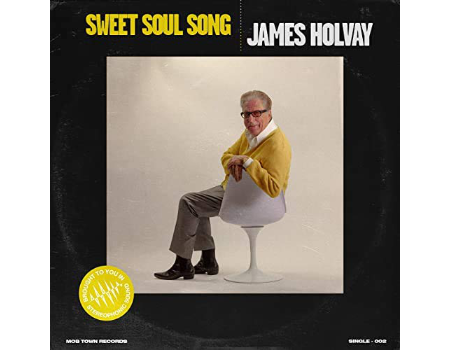
SWEET SOUL SONG 

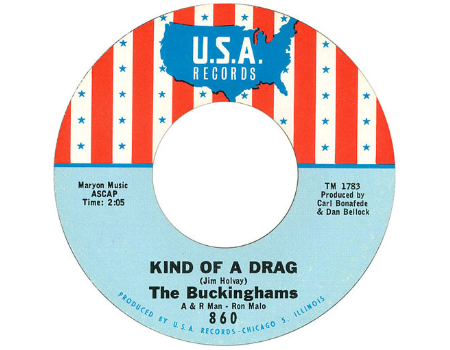
My eyes perked up when I saw the press release come through about a new EP by the fellow who wrote the first big hits for Chicago’s influential mid-60s rock band, The Buckinghams. “Kind Of A Drag” was written by James Holvay who also co-wrote the band’s follow on major label Top 10 smashes “Don’t You Care,”“Hey Baby” and “Susan.” 

Those songs kickstarted that band’s legacy and led to successful careers for other horn-infused rock bands, both with a sound fine tuned by producer James William Guercio, including Chicago and Blood Sweat & Tears.  Holvay began his career with a bit of Beatlemania wave-riding joy (which I happen to own!) called “Beatle Time” by The Livers (seriously folks, click here to hear it!).

Happily, Mr. Holvay’s new CD EP  — called Sweet Soul Song— is exactly what it presents itself as and the results are terrific. With a rich raspy voice that falls somewhere between Dan Penn and Curtis Mayfield, the songs here mine classic 60s soul styles (“Working On It”) and some 70s vibe from native Chicago (via The Chi-Lites) on “Still The Fool” — the latter is my favorite on the album, replete with orchestral strings. Holvay even pulls of the incredibly difficult task of creating a good song that reminisces about a bygone era without being cringe-inducing (“Sweet Soul Song”). “Love Has Found A Way” swings like a lost Jackson Five groove that might have been a hit had they recorded it in 1971 or 72. 

This EP has a nice vintage sound to it so it could easily be spun in a DJ set with other classic tracks. If you want to sample some of the tracks you can find them up on Tidal (click here).

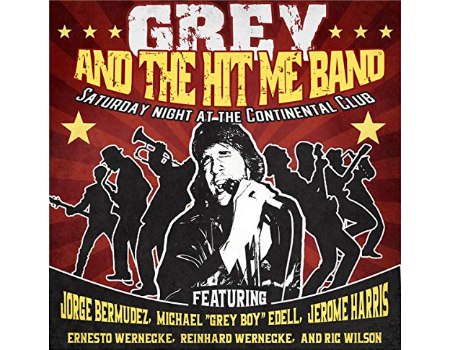
SATURDAY NIGHT AT THE CONTINENTAL CLUB

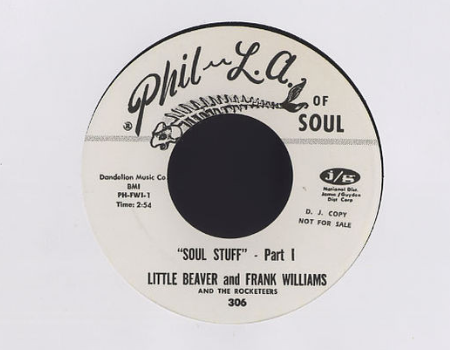
I received this EP from a musician friend who has some terrific roots in 60s and 70s soul. Back in the day, Michael “Grey Boy” Edell had a band in Florida in the ‘60s called The Miami Soul Review which often opened for Frank Williams and The Rocketeers, a popular group to which this EP pays tribute. Across five in-the-pocket grooves, his new ensemble — Grey And The Hit Me Band — recreate the vibe of his days playing with the creme of Miami’s best at the Continental Club. 

Edell has quite a background having served in backup bands for no less than Etta James, The Staple Singers, Sam & Dave, James Carr, Tyrone Davis and many others. His original band has opened for no less than James Brown (with whom he became friends along the way), Ike & Tina Turner, Frankie Valli & The Four Seasons and even the Amazing Kreskin!  His 1971 sides as the Human Race are sweet latin-tinged soul grooves commanding some coin on Discogs these days and even getting reissued by The Numero Group several years back (many copies ending up in the UK not surprisingly, prime sampling material used by DJ Shadow and others).

Given this great history, its no surprise that Saturday Night At The Continental Club serves up a tasty five song menu of swinging modern retro soul grooves.

The songwriting is solid, the performances Ike-and-Tina-Turner-tight and the vocals exemplary. Grey himself has a great range that sounds like what might have happened had Smokey Robinson let loose like Godfather of Soul (“Do Right Man,” “I Feel My Love Coming Down” and the fun EP closer “Soul Stuff”). Opening track “Good Thing” kicks off the James Brown-meets-Joe Tex essence with a vocal by Jerome Harris.  

If you want to compare how Grey And The Hit Me Band nailed the feel for this fine tribute, check out some of the originals up on YouTube (click on the titles here for “Good Thing” and “Soul Stuff”). You can also find their new EP streaming on Tidal (click here) and Qobuz (click here).

There are indeed some grand new classic soul sounds happening these days, for sure! 

Be sure to check some of these tracks posted below…

Drummers Drumming: Bernard Purdie’s Purple Vinyl “Purdie Good!”

It is kind of amazing to stop and think how a drummer who has played on an enormous amount of hit recordings over the past 50 years is not really a household word.  I mean, a quick look at the Wikipedia page for Bernard Purdie lists albums he’s played on by Nina Simone, James Brown, Al Cooper, Shirley Scott, Yusef Lateeef, Eddie Harris & Les McCann, Miles Davis, King Curtis, Aretha Franklin, Bette Midler, Hall & Oates, Jimmy McGriff, Wilson Pickett, Larry Coryell, Dizzy Gillespie, Joe Cocker, Cat Stevens, Steely Dan, Gato Barbieri and so many more. 

Chances are you have a recording in your collection featuring this legendary pulse-maker of popular music. Heck, even on his website he is touted as “the world’s most recorded drummer” (a role he may share with Hal Blaine or Earl Palmer, just sayin’).  

It’s undeniable that he is a session drumming legend.  Musicians and deeper collectors of jazz and soul grooves are into him, for sure. But I suspect that not many average folk know of his albums from the late 1960s and early ’70s, many of which are much sought after collector’s items.  

Thankfully, the good folks at Craft Recordings have reissued a real solid Bernard Purdie album —Purdie Good! — via its Jazz Dispensary subsidiary in conjunction with Vinyl Me Please (subscription club) which might help to open some new ears to this man and his music. The results are excellent.  

Issued in limited colored vinyl editions of 1,000, these albums were all mastered AAA from original tapes, with 180-gram colored vinyl pressing done at the respected RTI (Record Technology Incorporated) plant.  

What makes Purdie Good! stand out is the quality of his group and the material Mr. Purdie lays down.  Right from the start of his driving cover of James Brown’s “Cold Sweat” through to rollicking originals like the title track, it is apparent that Purdie is out to deliver some memorable fun.  The grooves are thick, tight and swingin’…

It is worth noting that pulling off a James Brown cover credibly isn’t easy and Purdie delivers that rich stuttering first-funk groove in a way that hits a bit harder than the original in many ways — the rhythm is the central focus on Purdie Good! and this funky drummer takes it out into territories where the percussion can own the spotlight.

While there is no denying the beatific stride of James Brown’s band The Famous Flames on the original recording, the focus there is pretty much always the vocal until James lets his drummer (I think it was Clyde Stubblefield, if the internet is accurate) take the lead for a bit.`

Just listen for Purdie’s interaction with Conga player Norman Pride during the breakdown in the middle of his version of “Cold Sweat.” While there may be no Maceo Parker firing up the horn section, Purdie more than makes up for the heat with his rhythms… and his band members are no slouches either. 

In general, I think this Jazz Dispensary / Vinyl Me Please reissue of Purdie Good! is pretty great. The recording by Rudy Van Gelder is excellent and the album pressing at RTI is dead quiet and well centered. And it is on lovely opaque purple vinyl with some slight swirls of red and blue. 

Probably the only issue at hand here is the price on this reissue which feels a little high (and some readers on Facebook have asked me about VMP’s pricing in general). There is no doubt its a premium priced platter.

However, finding a pristine original copy would no doubt cost a lot more and probably wouldn’t sound quite as quiet as this one.  There are only a handful of VG+ plus copies on Discogs at present, each costing more than $60 per album. It is no wonder that this purple vinyl edition is already getting some high priced listings (also on Discogs). There is a less costly UK edition out there, but that seems to be a direct metal mastered version from a digital source so it probably won’t sound as nice as this. Food for thought…

If you aren’t quite ready to plunk down the cash for the reissue just yet, you can listen to Purdie Good! streaming in high 24-bit, 192 kHz resolution on Tidal/MQA (click here) and on Qobuz (click here). This might be a good place to start until you can find a vinyl copy. Both streaming versions sound good but don’t deliver quite the same warm vibe I was hearing on the Vinyl Me Please reissue. Of the two, this time ‘round I am leaning toward the Qobuz version which seems to have a little less hard edge to it, but I’m admittedly splitting audiophile hairs here – both sound fine and about the same ultimately. 

Either way, check out Purdie Good!  Sweet grooves live here.