Tag Archives: permanent rotation

Permanent Rotation: LYZZA

In Permanent Rotation, producers, DJs, and musicians go deep on the albums that have inspired them.

Brazilian-born, Amsterdam-based DJ and producer LYZZA is readying for the release of her 10-track alt-pop mixtape Mosquito on Big Dada next month. Combining dark hyperpop, reggaeton and prismatic, hard-edged club tracks, it’s a high-energy thrill ride and the most comprehensive expression yet of the 23-year-old’s knack for hooky, off-kilter electronica.

LYZZA recalls cycling to school in Amsterdam in her early teens, Nicki Minaj’s Pink Friday: Roman Reloaded album blasting through her headphones.

“It gave me so much energy in the mornings,” she says, giggling as she feigns the tutting British accent of Martha Zolanski, one of the characters assumed by Minaj across the record. (Martha is the mother of Roman, Minaj’s best-known alter ego, an outspoken homosexual who features prominently).

“It’s like, you’re 13, you’re going to high school. Obviously, you hate it,” LYZZA reflects. “You’re like, if only I could be someone else, because in school as a Black immigrant in a country like the Netherlands, you don’t feel like you could constantly truly show who you are, you know?”

Minaj’s rebellious alter ego Roman resonated with LYZZA’s own pent-up frustrations about feeling like an outsider at school. “That’s what I needed before heading to school, someone that’s just crazy and like, ‘No, I don’t want this. Roman hates all of you!”
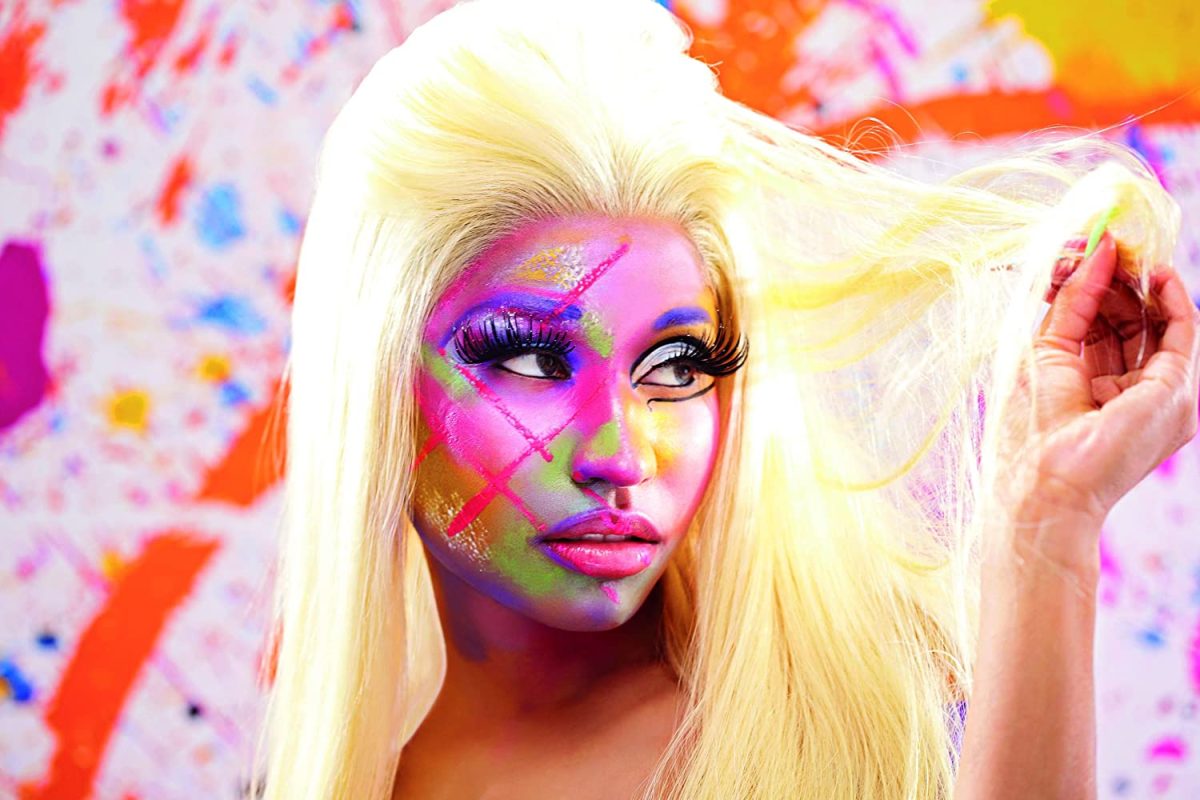
Arriving in April 2012, Roman Reloaded was a revelation in both style and format to LYZZA, aka Lysa da Silva, who names Minaj as one of the first and most prominent artists in the realm of rap and hip-hop to successfully incorporate EDM and electroclash sounds into their music. “We could say technically that Kid Cudi did that with David Guetta,” she observes [on 2009’s ‘Memories’]. “But Kid Cudi’s raps are very different to the way Nicki was rapping, I feel like she was like bringing some oomph and gangsta to the genre. Looking back, I think a lot of people have co-opted the sound from the mixtape but at the time, beats like that [in rap] were not normal.”

It’s a “psychotic-ass record”, LYZZA says, singling out ‘Stupid Hoe’ for its subverted rap beats, in which “the hi-hat is basically a flute, so it’s giving you that rhythm, but it’s a tone.”

“I have this hot take that ‘Stupid Hoe’ launched a lot of underground club music sounds on Soundcloud at the time,” she says. “I feel like that sound and a lot of those crazy broken beats were very resonant. And when I found my community on SoundCloud [she names Ariel Zetina, Jasmine Infiniti and LSDXOXO among them], there were a lot of these elements in their work as well.”

It may or may not have been intentional, but the format of LYZZA’s imminent mixtape, Mosquito, loosely follows the structure of Roman Reloaded, which is top-heavy with rap and bottom-loaded with EDM.

The split on Mosquito is not as obvious, but the second half of the album definitely shits into a higher gear with tracks like ‘Eraser’ featuring Crystal Castle-esque arpeggiating synths, and ‘Mind to Lips’ set to electroclash drum patterns and chilly futurewave arrangements.

“As an artist, I think you can definitely question yourself a lot and wonder if you’re maybe shooting yourself in the foot by choosing to have certain angles within your sound,” LYZZA says. “Roman Reloaded taught me you don’t have to censor yourself, there’s not that many rules to the artistic creation of music.”

For someone like LYZZA, who makes club music that traverses and incorporates many different styles, there was something comforting about seeing an artist who refused to be confined to one genre, especially an artist who looked like her.

“There was always this notion that Black artists should kind of stick to their thing, which for a lot of people was hip-hop and R&B or soul, you know, this very boxed-in thinking. To see a Black woman just throwing herself into pop showed me we don’t really have to care about what kind of music we make as long as we’re having fun and exploring sounds and pushing ourselves.”

In that spirit, Mosquito takes its name from an unusual muse. “Because I am Black and make alternative music, I identify with the disruptive and intrusive nature of a mosquito,” LYZZA says, adding that the fearlessness that’s a hallmark of Minaj’s work is “definitely something that I really wanted to explore.”

That boldness is palpable throughout the mixtape, both in style and in execution. “Listening back to my old work, I can hear the potential, but listening to this, I feel like, it’s not potential, it’s there,” LYZZA says. “It’s a really nice feeling.”

Permanent Rotation: Ariel Zetina

Permanent Rotation is a series in which producers, DJs, and musicians go deep on the albums that have inspired them.

In the decade that she’s been DJing and producing (via a background in theatre and writing and the realisation that music could “express the inexpressible”), Chicago-based Ariel Zetina has established herself as a singular artist whose productions and mixes evince the deep level of thought and care that goes into her work.

Her productions are at turns angular and fluid, and her contribution to the influential Discwoman mix series remains a standout.

Readying for the release of her debut album later this year, Zetina also balances a healthy touring schedule with work that celebrates her community, whether that’s hosting trans electronic music seminars or working at Chicago’s Voice Lab, specialising in gender-affirming voice training.

She talks about one of the records that brought her to this point.

Ariel Zetina’s voice is shot. She’s got a nasty cough (not COVID), prolonged by parties and trying to talk in loud places — “I was at Tinashe and I was yelling” she says — but her demeanour on our video call betrays any sign of illness. Zetina is open, warm, and smiles often, eyes sparkling behind pastel pink frames. Her erudition across music and the arts is casual but obvious as she flits from topic to topic, and when she admits to ambitions of “slowly but surely trying to get hired as a college professor without a master’s,” it seems like a perfectly reasonable plan.

Her chosen album is the work of another artist who has always defied convention: fiercely talented pop oddball Grimes. In 2012, when Grimes released her third and breakthrough album, Visions, Zetina had just moved to Chicago and was making music as Unicorn Florida and with performance art group WITCH HAZEL. “A friend of mine was working at a radio station and she got a promo copy [of Visions] and made a copy for me and I was like ‘Wow, this is truly great’,” recalls Zetina, who had counted herself a fan of Grimes’ previous two albums after being turned onto the Canadian upstart by a friend a year earlier.

Zetina credits Visions with steering her own music at the time towards a “darker sound,” and one punctuated with persistent kicks and hi-hats, grounded in a familiar but expansive structure.

She was transfixed by Grimes’ vocals too – not her voice, per se, but the way she used it as an instrument in its own right. “That really opened my eyes,” says Zetina. “Also, the fact that she’s not a trained singer, she’s doing this in this very specific way. As a producer, I previously felt that everything was so inaccessible, and she really made [me feel] that you can make electronic music in this way, that anybody can do it.”

Grimes’ vocals encouraged Zetina to experiment with voice as a textural detail in her own work, with skill and elocution being tertiary concerns. On her 2019 Organism EP, her own vocals are pitched to a subaquatic warble on ‘Water Nymph’, as if sung while blowing bubbles underwater, while on ‘I Miss The Sea’, Paula Nacif’s airy vocals are complemented by sirenic synths that nod to Zetina’s Belizean background.

Water has been a recurring theme in Zetina’s work, and she credits Grimes’ ‘Know The Way’, the closer on Visions, with providing the “perfect water sample” for inspiration: a calming, flowing stream that features with varying prominence throughout the track.

Asked for her standout track on the album, Zetina picks ‘Oblivion’ – also named by US music bible Pitchfork as the best song of 2014 and, in 2019, the second best song of the decade. It’s a hypnotic, eminently danceable document of surviving a sexual assault.

“‘Oblivion’ is always what first comes to me, I used to watch that video all the time and I think I’m just a sucker for arpeggios,” says Zetina. “It’s just an amazing arpeggio over and over and over and it really trusts itself with that.” She doesn’t often play the track when DJing, but it never fails to trigger squeals when she does. “Every time I play it, there’s always a group of people that come onto the floor to dance,” says Zetina. “I love that that song still has that hold on a lot of people.”

Grimes’ unhinged hyperpop isn’t necessarily an obvious reference point when thinking about Zetina’s clubbier, techno-led releases. But, Zetina says, “those that know, know how I’m influenced by her.” Indeed, closer inspection reveals the outsize impact Visions has had on her creative evolution. If not in the form of “glitchy pop”, then in walls of sound, fanged etherealism, and a rule-shrugging approach to production – the kind that typically yields truly innovative results.

Photo by Colectivo Multipolar