World News
TBT: First Watt Model SIT-1 Solid-State Monoblock Power Amplifier Review

Imagine a single-ended Class A power amplifier comprising a single transistor, that is devoid of any feedback, and which behaves similarly to a power triode? Does this scenario sound too good to be true? Well, that’s exactly what the First Watt SIT-1 is all about. It deploys a unique type of device, a variant of the JFET, referred to as a static induction transistor (SIT). It was invented in the early 1970s by Jun-ichi Nishizawa, a true genius who is considered the “father of Japanese microelectronics.” The SIT enjoyed a brief audio career in power amplifiers by Yamaha and Sony, but has continued to evolve since then mainly for UHF and S-band applications in radar and communication satellite systems. It is a voltage controlled device whereby the signal modulates the electrostatic potential barrier produced by the gate – the grid like element of the SIT. Unlike an ordinary FET whose current-voltage characteristics are pentode like, those of the SIT are triode like. One important consequence of this is the low output impedance even in single-ended operation. And because of its inherent low-voltage and high-current characteristics, no output transformer is required for matching the output stage to a loudspeaker.
-
Product on sale
 Audiophile Vinyl Records Cleaning BundleOriginal price was: €69.90.€59.90Current price is: €59.90. excl. VAT
-
Product on saleEasy Start Vinyl Records Cleaning KitOriginal price was: €69.90.€59.90Current price is: €59.90. excl. VAT
-
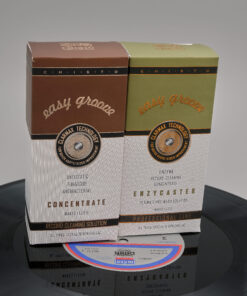
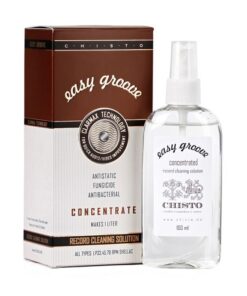
Vinyl Records Cleaner Easy Groove Concentrate€34.95 excl. VAT
-
Easy Groove Super Set€199.00 excl. VAT
-
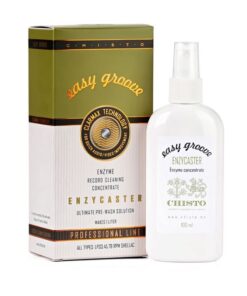
Easy Groove Enzycaster – vinyl records prewash cleaner€34.95 excl. VAT
-
Easy Groove Extreme MK. II- vinyl records prewash cleaner€45.00 excl. VAT
-
Vinyl Records Cleaner – Easy Groove Virgin Concentrate€35.00 excl. VAT
-
Easy Groove Spray&Wipe vinyl records cleaner€34.95 excl. VAT