
World News
TEAC VRDS-701 CD Player
TEAC VRDS-701 CD Player
I grew up on CDs. As a child within the ‘90s, I used to be definitely conscious of vinyl records and their mystique, however music meant CDs to me. I cherished constructing a group and flipping by means of the tiny booklets with liner notes in minuscule font. As my musical horizons expanded, I made numerous mixes, copied library albums and burned stay live performance recordings from The Internet Archive to disc, so CD-Rs turned as huge part of my assortment as industrial releases.
In school, I lastly took the plunge into analog and have become enamoured with the deeper historical past, the cautious playback ritual and naturally the sound of vinyl records. Over the years, my listening turned principally break up between streaming and vinyl. I by no means turned my again on CDs and nonetheless have a group and a participant in my system. “If it ain’t broke, don’t repair it” turned my method to CD playback, and earlier than I knew it my Yamaha DVD-S1700 common participant turned classic. Just my queue to discover the panorama of CD gamers in 2025. Today, the market is buzzing, with recent gamers and transports that run the gamut from extraordinarily reasonably priced to extremely luxe.
The TEAC identify has at all times been floating round in my audiophile consciousness, however most of that notoriety got here from being the dad or mum firm of ESOTERIC. The firm’s historical past goes a lot deeper than ESOTERIC. Originally established within the Fifties as Tokyo Electro-Acoustic Company, TEAC Corporation has been a frontrunner in a number of types of bodily media recording and playback ever since, together with reel-to-reel tape, compact disc, and even manufacturing floppy disc drives. Also beneath the company umbrella is TASCAM, famend for studio gear.
In the previous few years, TEAC has up to date their audiophile-oriented product choices to incorporate three full traces: Reference 300, Reference 500 and Reference 700. When I reached out to the TEAC PR group about reviewing “a CD participant,” I used to be pleasantly stunned to be supplied the VRDS-701 (USD 3999) from the highest 700 line for evaluate. I used to be fascinated to find out how TEAC might apply their deep expertise to a reference-level HiFi part at a extra approachable worth level than the ESOTERIC model.

Features & Specifications
The VRDS-701 is outfitted like a CD-focused digital hub, prepared for quite a few system configurations. With a number of digital inputs, digital outputs, mounted or variable analog outputs and a headphone amp, this unit can function a correct digital preamplifier.
The namesake function is TEAC’s new Vibration-Free Rigid Disc-Clamping System which was designed to remove vibration of the spinning CD and close by mechanicals.
The DAC part eschews fashionable off-the-shelf chips for a customized DSD-capable, FPGA-based circuit. The VRDS-701 solely performs “Red Book” CDs however all PCM indicators are transformed to 1-bit or multibit in keeping with person settings. It can settle for DSD and MQA encoded indicators by way of the USB enter.
TEAC has additionally taken care to implement a completely analog variable achieve amp quantity attenuator which is balanced to attenuate discrepancies between left and proper channel attenuation.
The VRDS-701 is $700 costlier than its transport-only sibling, the aptly named VRDS-701T. Considering {hardware} alone, it’s an inexpensive upcharge for a customized DAC, analog quantity management and devoted headphone amplifier.
Complete specs of the VRDS-701 in keeping with TEAC are right here.
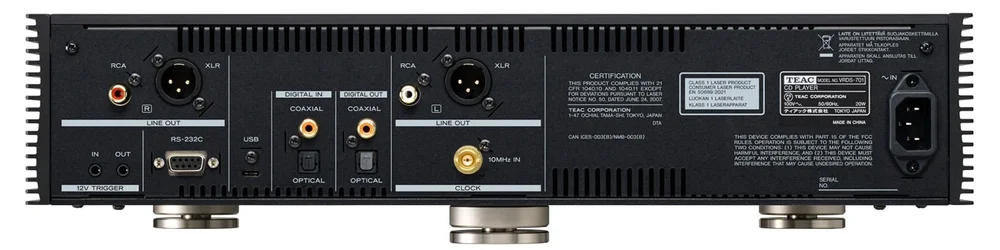
Design & Build
The VRDS-701 is a CD participant that’s constructed like an amplifier—and I don’t imply a Class D amplifier. From the machined aluminum casework and ribbed heatsink-like aspect panels to the pro-inspired rack handles, it is a severe unit. Around this worth level, CD gamers can begin to look a bit decorative, however the VRDS-701 appears to be like all enterprise. The high quality of supplies and stage of ending simply separate the VRDS from a tough and prepared pro-audio product, nevertheless it doesn’t shout.
Physically interacting with the participant is gorgeous, significantly the strong machined standby swap. The velocity of the disc tray is sort of deliberate, however completely clean and quiet.
The included distant is a hefty piece of plastic and aluminum with an array of an identical buttons, requiring a look to pick out the fitting operate every time it’s picked up. Just about each function of the participant is accessible from the distant, which is neat.
Review System
Sources: Yamaha DVD-S1700, Wiim Mini, Bluesound NODE (evaluate forthcoming)
Amplification: PS Audio Stellar Strata Mk2, Parasound HCA-750A
DAC: Ferrum Audio ERCO
Headphones: Sendy Audio Peacock, Sennheiser x Massdrop HD6XX
Loudspeakers: Audio Physic Step
Analog & Speaker Cables: Audio Art Classic
With two streamers, a disc participant, and a number of headphone amps and DACs already in-house, together with the lately reviewed PS Audio Stellar Strata Mk2, I had a number of system configurations to play with. While I attempted a number of comparability workout routines, I spent most of my time with the TEAC taking part in CDs and sending the analog sign to the PS Audio Stellar Strata Mk2.
Listening
One enchantment of CDs as a medium is their suitability for storage and playback of archival recordings and huge discographies. As the resident Deadhead at Audiophilia, that features quite a few non-commercial stay recordings, principally sourced from Archive.org. I nonetheless have CD-Rs of Grateful Dead reveals I burned within the mid-2000s when soundboard recordings have been nonetheless out there for obtain from the Archive. I’ve had blended outcomes with some manufacturers of CD-R, and as they age. Unlike vinyl records, the place listenability declines considerably linearly with situation, CDs both play correctly or they don’t. I dove deep into my assortment with the VRDS-701 and didn’t hear a single skip or blip when taking part in by means of stacks of 20-year-old CD-Rs. I don’t learn or hear a lot about CD-Rs as a medium within the audiophile scene. For audiophiles with a cache of CD-Rs – I do know you’re on the market – the VRDS-701 can learn absolutely anything.
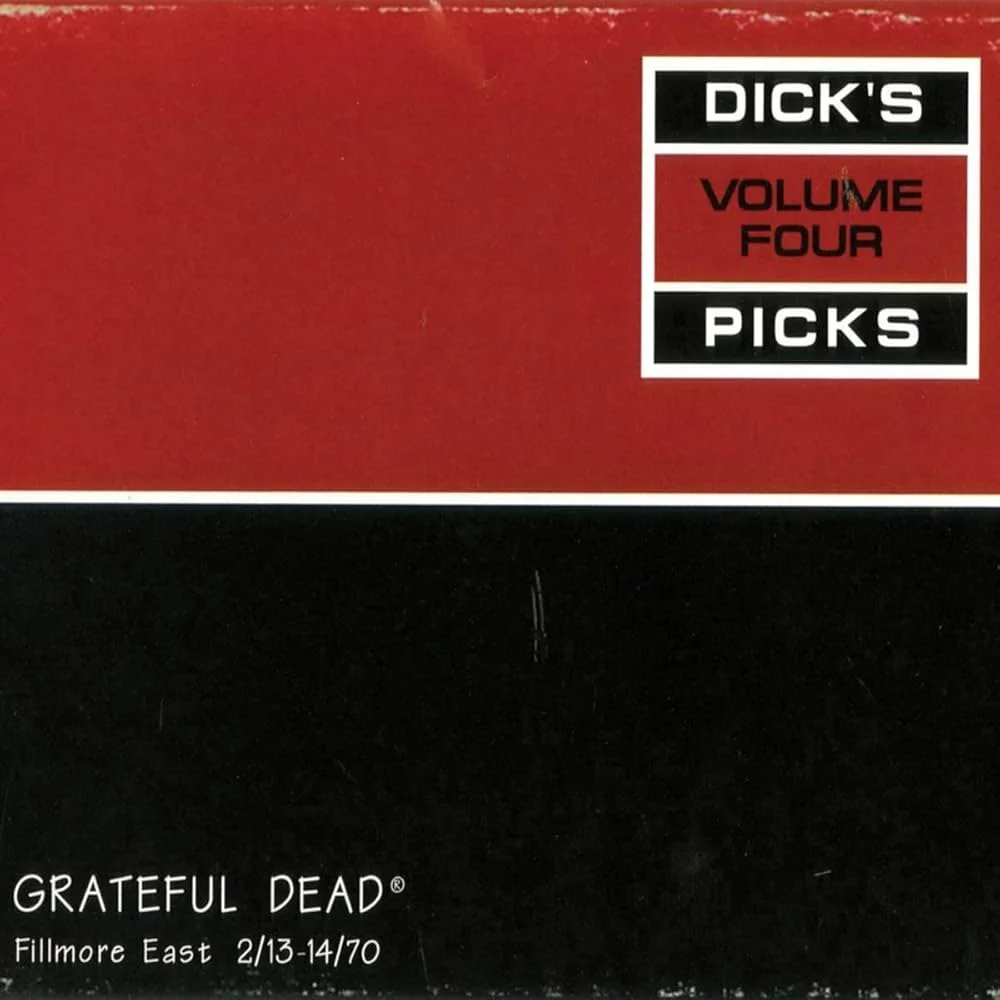
An all time favourite in my Grateful Dead assortment is Dick’s Picks Volume 4 (Grateful Dead Records, 1996), a 3-disc launch compiled from legendary reveals on the Fillmore East in New York City in February, 1970. The Fillmore East was a favorite venue of the band, and their recording engineer (and famed LSD chemist) Owsley “Bear” Stanley went to excessive lengths to precisely document the band there. To put together for the present, Bear and his group performed white noise over the home sound system and measured it all through the venue, utilizing this knowledge to put in efficient acoustic therapies all through the area. The results of this forward-thinking effort is a crackling recording.
The 29-minute prolonged jam, “Dark Star,” one of the legendary the Grateful Dead carried out, is a concise masterclass in what makes the Dead the Dead. Listening to this recording has at all times been immersive, nevertheless it requires some effort to deconvolute every thing that’s occurring. From the mesmeric crowd involvement, the cryptic lyrics, the advanced improvisations involving your complete band, even percussionist Bill Kreutzmann’s insistent however important scratching on the guira, it’s an expertise. With the VRDS-701, I used to be not simply analyzing the recording extra carefully. I used to be not simply feeling the music with all context melting away. It was all the above. More of every thing was offered – wider, deeper and available for absorption. So rather more than I noticed was contained within the bits on my disc, revealing a whole doc suddenly – the music, the area and the recording.
Leaning into the historic facet of CDs, I pulled out my cherished field set Goodbye, Babylon, a 6-disc field set of early gospel recordings (Dust-to-Digital, 2003). These recordings have been captured between 1902 and 1960, an unlimited vary in technological phrases. A shocking theme emerged with the VRDS-701: consistency. I don’t imply the sameness that usually comes with streaming, moderately consistency within the efficiency of the CD participant. I might depend on the TEAC to present me most of what was on each single monitor with out throwing any recording beneath the bus. Not as soon as was I compelled to remain in analytical mode. The musicality was proper there, even when it was clear {that a} recording was rescued from a tough authentic supply. I got here to belief the TEAC’s perception into the recording. And this belief makes it a real reference along with a automobile for musical magnificence.
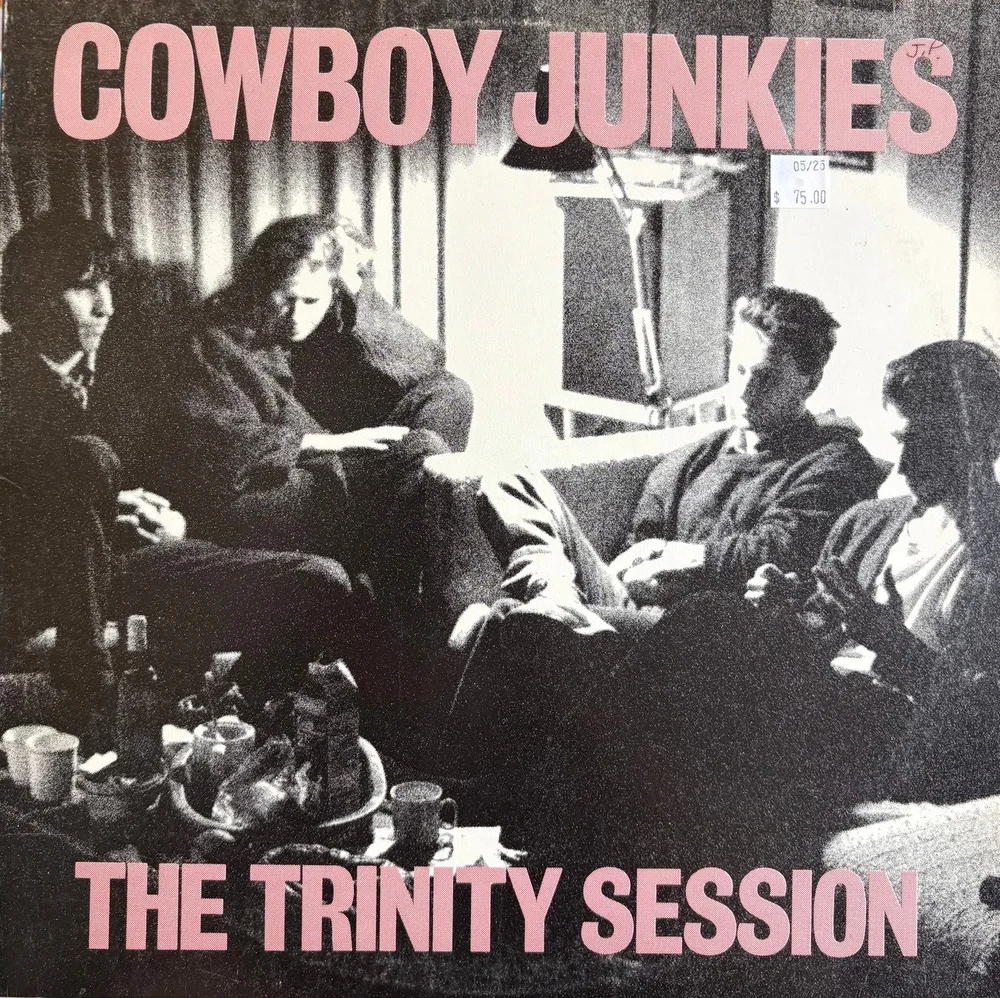
Returning to a extra acquainted reference recording, I really like the Cowboy Junkies’ The Trinity Sessions (RCA, 1988) for its music and as a testomony to potentialities of 16-bit / 44.1 kHz recordings. This album was famously recorded in a Toronto church with a single mic stay to a PCM processor in 16-bit / 44.1 kHz, an very simple sign chain. The Trinity Sessions sound nice on any system, so in fact it was chic on the TEAC. The distinction with the VRDS-701 was scale and area. Walls fell away extra convincingly, placing me within the church as a substitute of displaying me the church by means of a window.
Using the DAC of the VRDS-701, I performed round by evaluating streams to CDs of the identical album. This will be an apples-to-oranges scenario when the provenance of the stream is unknown, nevertheless it strengthened for me that the comfort of streaming sacrifices some musical authority. With the VRDS-701, there was much less distance bodily (as in over the web) and musically between the efficiency and me.
I spent a number of weeks utilizing the single-ended analog outputs of the VRDS-701 in variable mode, driving my Parasound HCA-750A energy amplifier. If I didn’t want analog inputs for a turntable, this might simply be a viable long-term system configuration. Just one other means TEAC is looking for the CD fanatic with the VRDS-701. A compact streamer and an influence amplifier on both finish of the VRDS-701, plus audio system, would make a chic all-digital system.
In this configuration, I used to be leaning on the headphone amplifier within the VRDS-701 as nicely. With the easy-to-drive 50 ohm, 103 dB/mW Sendy Peacock planar magnetic headphones, the built-in amp gave me loads of energy, dynamics and soundstage for severe listening. The amp had sufficient energy for the Sennheiser HD6XX however wasn’t the best match for these 300-ohm cans. Audiophiles excited about a $4000 CD participant might nicely have a devoted headphone amplifier, however those that don’t might contemplate the built-in head amp a reliable value-add. Or it could possibly be an excuse to attempt a primary good set of cans!
Conclusion
For the true CD fanatic, who enjoys the treasures the format can provide, a high-end CD participant just isn’t a splurge however a vital part. In phrases of sound, there isn’t any mistaking the USD 3999 VRDS-701 for analog, however the music appeared unmistakably nearer and extra current than with any digital supply I’ve used. TEAC mixed no-nonsense engineering and audiophile sensibilities into a whole package deal for any attainable CD playback configuration. Particularly for audiophiles not already married to a standalone DAC, the VRDS-701 is a should hear. In my expertise, it elevated each disc to sound its greatest in my room, making it a correct reference participant. The TEAC VRDS-701 is an homage to the compact disc and rather more.
Further data: TEAC

HI-FI News
by way of Audiophilia https://ift.tt/nozQKxY
June 1, 2025 at 12:12PM
-
Product on sale
 Audiophile Vinyl Records Cleaning BundleOriginal price was: €69.90.€59.90Current price is: €59.90. incl. VAT
-
Product on saleEasy Start Vinyl Records Cleaning KitOriginal price was: €69.90.€59.90Current price is: €59.90. incl. VAT
-
Vinyl Records Cleaner Easy Groove Concentrate€34.95 incl. VAT
-
Easy Groove Super Set€199.00 incl. VAT
-
Easy Groove Enzycaster – vinyl records prewash cleaner€34.95 incl. VAT
-
Easy Groove Extreme MK. II- vinyl records prewash cleaner€45.00 incl. VAT
-
Vinyl Records Cleaner – Easy Groove Virgin Concentrate€35.00 incl. VAT
-
Easy Groove Spray&Wipe vinyl records cleaner€34.95 incl. VAT


