
World News
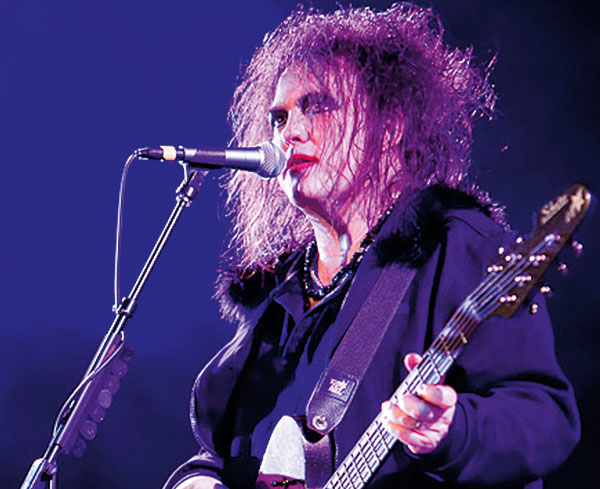
The Cure: Faith
The Cure: Faith
Released in 1981, the third album from the UK kings of Gothic rock constructed upon the stark sounds of its predecessor, added much more melancholy, and contained a track that the band’s chief and singer Robert Smith would later describe as ‘life-changing’
From 1976, UK punk produced such a surge of power that it was like driving a wave, each for musicians and followers alike. The Cure started in earnest in Crawley that 12 months, as The Easy Cure, having grown out of quite a lot of different bands courting again to their schooldays. Robert Smith was on guitar and vocals, Lol Tolhurst on drums and Michael Dempsey on bass. Their sound was sparse and pressing, fuelled by punk however with a finger on the pop pulse.

Existential Angst
Okay, ‘pop’ might be a reasonably free description of their debut single, ‘Killing An Arab’, which is predicated on French existentialist Albert Camus’s 1942 novella, L’Étranger. The major character, Meursault, has moved from France to Algiers and murders an Arab on a seaside after an earlier altercation, and as soon as arrested ponders his guilt and his destiny. Although it is not straightforward to condense a significant literary work right into a two-and-a half-minute track, Robert Smith’s lyrics brilliantly seize the chilling pointlessness of the act.

Previously, The Cure had secured a document cope with Ariola-Hansa by profitable a expertise contest, however the label needed nothing to do with the track and freed them from their contract. The band inked a cope with Chris Parry’s label Fiction Records as a substitute, which put the only out in December 1978 as a double A-side with ’10:15 Saturday Night’.
This debut launch was adopted by the irresistible ‘Boys Don’t Cry’, which led to Melody Maker describing The Cure as ‘The no-image band who do extra with much less to charismatic impact’ – again then the group regarded just about like their viewers, though on the duvet of their 1979 debut LP, Three Imaginary Boys, they’d be drolly portrayed as a fridge, a typical lamp and a vacuum cleaner.

Dark Tales
Seventeen Seconds, The Cure’s follow-up album, arrived in 1980. Bass participant Simon Gallup changed Michael Dempsey and infrequently performed the lead melody traces. The document discovered the group exploring area, with every instrument seemingly occupying its personal zone, whereas making important, delicate contributions to the entire.
The environment was cryptic and shadowy, with a lot of Smith’s lyrics referencing the darkish. ‘At Night’ is a rewrite of the story fragment of the identical identify by Franz Kafka, whereas the only ‘A Forest’ is a Gothic story during which the protagonist is drawn right into a crepuscular woodland by hallucinatory glimpses of a woman. It reached No 31 within the UK chart whereas the album peaked at No 20. It appeared that no matter The Cure launched, it might promote.
Into the ’80s, with their teenagers behind them and with the impetus supplied by punk fading, teams needed to set up their very own identification and likewise attempt to make a residing. U2’s 1980 debut album Boy mirrored these rites of passage, illustrating the journey from youngster to man.
And all this happened towards a background of excessive unemployment, which went hand in hand with social unrest. Smith had claimed he was blissful to be on the dole listening to music moderately than working, and defined that he saved cash by brewing his personal lager at residence. But after Seventeen Seconds he started to significantly query himself, with out discovering the solutions he was searching for. He had been introduced up as a Catholic, however trying again in 2012, when interviewed on the French TV programme Télérama, he mentioned, ‘I hate all faith. I believe faith is on the coronary heart of a lot discontent, and idiocy on this planet. I believe all religion is terror’.

Lacking Faith
In 1980, he was additionally experiencing a private disaster exacerbated by the dying of his grandmother. Smith needed to seek out one thing to consider in, however was unable to take action. He made a degree of visiting church buildings with a pocket book, trying round on the worshippers. ‘I realised I had no religion in any respect, and I used to be scared’, he informed The Face. ‘I used to be 21, however I felt actually previous. I had completely no hope for the long run. I felt life was pointless.’
HI-FI News
by way of Hi-Fi News https://ift.tt/Z3h78Gg
May 18, 2024 at 01:28AM
-
Product on sale
 Audiophile Vinyl Records Cleaning BundleOriginal price was: €69.90.€59.90Current price is: €59.90. incl. VAT
-
Product on saleEasy Start Vinyl Records Cleaning KitOriginal price was: €69.90.€59.90Current price is: €59.90. incl. VAT
-
Vinyl Records Cleaner Easy Groove Concentrate€34.95 incl. VAT
-
Easy Groove Super Set€199.00 incl. VAT
-
Easy Groove Enzycaster – vinyl records prewash cleaner€34.95 incl. VAT
-
Easy Groove Extreme MK. II- vinyl records prewash cleaner€45.00 incl. VAT
-
Vinyl Records Cleaner – Easy Groove Virgin Concentrate€35.00 incl. VAT
-
Easy Groove Spray&Wipe vinyl records cleaner€34.95 incl. VAT







