
World News
Tom Waits’s Island Records Reissues
Tom Waits’s Island Records Reissues
In 2022, Tom Waits determined it was time to remaster the albums he made throughout his stint at Island Records. The Waits classics Swordfishtrombones (1983), Rain Dogs (1985), Franks Wild Years (1987), Bone Machine (1992), and the Waits (with Robert Wilson and William S. Burroughs) musical fable The Black Rider (1993) are the primary new remasters to be launched.
Remastered from the unique tapes (besides one, for which a digital supply was used), all 5 can be found on LP and CD in addition to streaming and obtain. At TomWaits.com and UDiscover Music, the LP variations can be found in colored-vinyl variations: The Black Rider in opaque apple purple, Bone Machine on translucent milky clear, Swordfishtrombones in canary yellow, Rain Dogs in opaque sky blue, and Franks Wild Years in opaque gold. Of the seven albums Waits did for Elektra/Asylum early in his profession, solely Closing Time, recut at half-speed at Abbey Road studios, has up to now been remastered. All the brand new UMG LPs had been pressed in Burlington, ON, Canada, by Precision Record Pressing, which is owned by Czech report urgent big GZ Media.
To lead the undertaking to remaster his catalog, the wizard-poet of sentiment and grit selected Karl Derfler, who has been Waits’s chosen engineerhis third set of ears if you’ll, helping Waits and his spouse, Kathleen Brennanfor all new Waits recordings since 2006’s Orphans: Brawlers, Bawlers & Bastards. Working from California, Derfler is a seasoned engineer with a résumé that is swung backwards and forwards between music with extra industrial potential like Kenny Wayne Shepherd, Dave Matthews Band, Smash Mouth, and Mötley Crüe to extra eclectic tasks like albums by Roky Erickson and Waits. Lately he is been working in movie and tv because the music enterprise has grown much less lively.
"Tom was engaged on a track in a studio in Richmond, California, the place I had my very own room, and we met and he got here in and reduce a observe with me," Derfler mentioned in a latest interview. "I mentioned, you do not owe me something. If you are into it, nice, if not, that is cool too. He referred to as me again from the street and mentioned, ‘Man, that is superior,’ and since then I’ve been very lucky and privileged to be a part of the Waits staff."

When Waits and Brennan grew to become eager about remastering his catalog, Julianne Deery, Tom’s assistant and a part of his administration staff, requested Derfler to supervise the undertaking. Derfler requested Chris Bellman from Bernie Grundman Mastering because the mastering engineer. "I’ve been working with Chris, and I feel he has the flexibility," Derfler defined. "I feel he has an understanding of music. And Tom has such a breadth of musical genres, from mushy to very onerous and angular, that Chris for my part would be capable of cope with. And the Bernie Grundman staff is simply spectacular; I’ve solely optimistic issues to say. They’ve remastered many records I’ve been concerned with, and I’ve by no means needed to go down there. I simply know I can belief him. And if I’ve adjustments, he’ll bounce on it and care for it.
"Also, there have been a few Waits records on Rhino that Tom and Kathleen had been initially very sad with after they first got here out and had all types of bother. Chris remastered them, and every thing was clean, so it was a simple pitch to get Chris to be our mastering engineer."
Typically, Derfler would have had Bellman chopping the lacquers, however one other chopping engineer, Alex Abrash of AA Mastering, was introduced in by Universal Music Group (UMG); as relayed by Derfler, Waits thought Abrash did an excellent job. Abrash’s latest résumé contains remasterings of Bob Marley & The Wailers’ Songs of Freedom, Rodriguez’s Cold Fact, Frank Sinatra’s Watertown, and Steely Dan’s Aja.

The focus right here is on the primary two Island Records releases, each profession highlights. Neither Swordfishtrombones (engineered by Biff Dawes and Tim Boyle) nor Rain Dogs (engineered by Robert Musso) had critical apparent sonic flaws, so the brand new staff’s mission, as they noticed it, was to reinforce the general sonic picture of the unique mixes whereas preserving the strengths of the unique.
"How I bought it was, we wish to match if not beat the unique sound," Derfler continued. "To actually keep the integrity of the OG sources that the followers love, particularly this being the transition interval of Tom’s profession musically talking and his songwriting and so forth. Not make any drastic alterations, not depart from the intent of the unique mixes, however take it to the following stage. There’s now an added depth on the vinyl that wasn’t there within the originals. And it is all delicate stuff; it isn’t prefer it’s dramatic day and night time. Somewhat hotter and total a extra nice sound. Somewhat extra air has been added, and the entire thing simply has just a little extra high quality for my part."
Derfler and Deery went by way of the Waits archives at UMG to seek out the sources, a few of which had been, Derfler mentioned, "type of strewn about." While they’d digital backups for all of the albums, the unique sources for this new remastering had been ½" or ¼" analog reels, aside from Swordfishtrombones; for that album (regardless of claims in a press launch in regards to the sequence) Bellman labored from a 24/192 digital switch of unique tapes. Abrash used Bellman’s 24/192 grasp recordsdata to chop the lacquers.
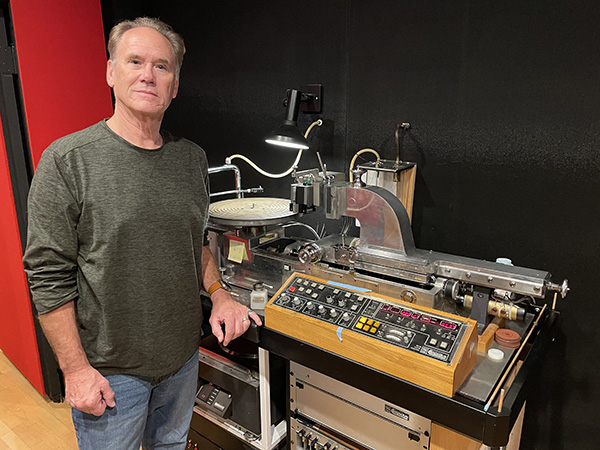
Bellman, who began out mastering LPs within the Seventies and has labored on 1000’s of records throughout almost each style, from dance music and disco to Poison, Charles Mingus, and The Band’s The Last Waltz, has a easy equation for remasters. "I all the time refer again to what it was and what individuals have been listening to, so I do not stray too far," Bellman mentioned in a latest interview from the Grundman store the place he was working. "I do not wish to reinvent it. If I can get the supply that I’m utilizing again to what it was, or perhaps it is already there, then I could make judgments on what might be higher relying on what format I’m going to.
If it is vinyl or SACD, there might be delicate variations."

One sonic oddity is that the unique vinyl albums completed within the Eighties (Swordfishtrombones, Rain Dogs, and Franks Wild Years) had masters that had been direct steel mastering (DMM) cuts. Instead of chopping LP masters right into a mushy lacquer disc of aluminum coated with nitrocellulose, DMM recordings are reduce right into a copper plate. Primarily a European expertise, DMM was one thing of a fad for some time within the Eighties, significantly in jazz. DMM facilitates narrower, extra tightly spaced grooves, permitting the Eighties Waits albums to have very lengthy sides. Bellman, although, is just not a fan of the sound of DMM masters.
"We by no means jumped into it right here at our studio, and we weighed it out a couple of occasions over a long time again when it first got here out, and it actually did not enchantment to us an entire lot," Bellman mentioned. "Now the place DMM shines just a little bit, for example on Franks Wild Years, the A facet is 28 minutes lengthy. So with DMM you may perhaps reduce just a little bit louder. I’m speaking like a dB or much less, however there may be that. But the sonics it imparts on the undertaking will not be interesting to me. It’s too sterile; it loses among the musicality. It’s actually obvious if in case you have a digital supply, then it is like fingernails on a chalkboard."
HI-FI News
by way of Stereophile.com https://ift.tt/ucZD83V
May 8, 2024 at 03:19PM
-
Product on sale
 Audiophile Vinyl Records Cleaning BundleOriginal price was: €69.90.€59.90Current price is: €59.90. incl. VAT
-
Product on saleEasy Start Vinyl Records Cleaning KitOriginal price was: €69.90.€59.90Current price is: €59.90. incl. VAT
-
Vinyl Records Cleaner Easy Groove Concentrate€34.95 incl. VAT
-
Easy Groove Super Set€199.00 incl. VAT
-
Easy Groove Enzycaster – vinyl records prewash cleaner€34.95 incl. VAT
-
Easy Groove Extreme MK. II- vinyl records prewash cleaner€45.00 incl. VAT
-
Vinyl Records Cleaner – Easy Groove Virgin Concentrate€35.00 incl. VAT
-
Easy Groove Spray&Wipe vinyl records cleaner€34.95 incl. VAT


