
World News
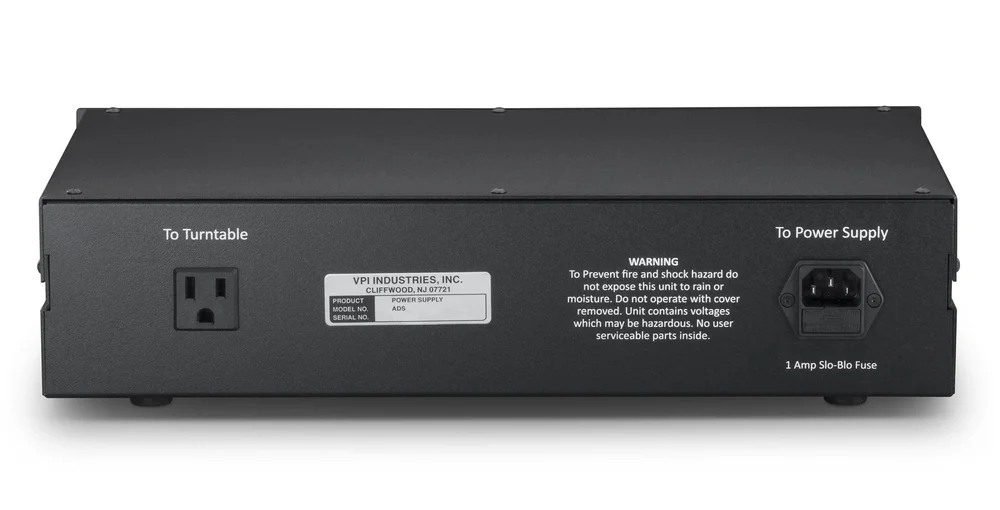
VPI Analog Drive System [ADS]
VPI Analog Drive System [ADS]
Precise platter velocity in a high-end turntable was one thing that I at all times assumed was a given. After all, it appears a elementary design objective. Yet, as I explored this topic additional, I discovered it isn’t fairly the straightforward matter to deal with as one would possibly count on, significantly with the belt drive designs that many audiophiles favour.
This got here to the fore not too long ago once I accepted a deal I couldn’t refuse: a no-cost trade-out of my 25-year-old Basis 1400 for a used VPI Scout with a Classic Platter improve.
It was throughout the substitute and set up of those two tables that I turned conscious of the truth that spot-on platter velocity is extra unusual than not, even with these two well-designed belt drive turntables. The VPI was barely off, and the Basis much more so. It wasn’t only a matter of being barely off velocity. The fluctuations within the velocity had been what involved me. Seeing this drawback with stroboscopic discs and graphs was sufficient to set off some nervousness!
My considerations had been alleviated when my vendor, Oswaldo Martinez of Let There Be Sound, defined that in establishing a whole bunch of belt drive tables, nearly none had been spot on and regular until they employed a velocity correction system. The causes for this are complicated, however one factor is for certain: fluctuating line frequency from {the electrical} grid wreaks havoc on a motor’s capability to offer velocity, accuracy and stability. As you may think, {the electrical} grid right here in southern Florida is something however secure. Voltage (and one would assume frequency) varies wildly all through the day.
My first publicity to this sort of system occurred throughout the setup of the VPI Scout. Oswaldo introduced his VPI ADS to display the way it labored. To see the ADS (USD 950) appropriate the velocity and maintain it locked in was hanging. Though it was a quick demonstration by which it could be tough to listen to the profit, if any, I knew it could at the very least present a peace of thoughts that I discovered invaluable. I instantly ordered the Analog Drive System to enhance my VPI Scout and listened to my “new” entrance finish as I waited two weeks for the ADS to reach.

From the web site:
“The ADS design consists of two pure analog frequency mills that includes low distortion and noise; a excessive present Class-A/B amplifier that’s transformer-coupled to the turntable output; analog management logic for low noise operation; 33/45 RPM analog velocity adjustment controls with middle detent positions which might be manufacturing facility calibrated.”
The setup was comparatively easy. The Analog Drive System was arrange on a shelf under the Scout and plugged right into a wall outlet. The energy wire from the turntable’s motor is plugged into the again of the ADS. Setting the motor to “on” and leaving it in that place permits the consumer to regulate stopping and beginning the platter from a push-button on the entrance panel of the ADS. There is a equipped stroboscopic disc with markings for 33 1/3 and 45. With the disc positioned on the platter, the turntable is began. There are two knobs, one for 33 and one other for 45, on the entrance panel. These are initially set to the factory-calibrated detent place whereas the disc is considered with a 300hz strobe gentle. Fine-tuning, if essential, is achieved by a flip of the corresponding knob. When the strobe markings stand nonetheless, the velocity is perfect. In my case, each speeds had been spot on within the detent place. It’s actually that easy.
Peace of thoughts is one factor, however I puzzled if I might be capable of hear what sort of advantages the system may present musically. Having lived with the Scout for 2 weeks with out the ADS, I had some notion of the place it is likely to be of profit. It was now time to make direct comparisons.
To do that, I first selected a file I believed would possibly show a side that must be instantly noticeable: pitch instability on sustained piano notes. The Craft reissue of You Must Believe In Spring by Bill Evans appeared the right alternative. It’s additionally completely centred, which was essential for this check.
Disconnecting the turntable from the ADS, I plugged it straight into the wall and listened rigorously to Side One of the Craft version of this album, which is minimize at 45rpm. This was adopted up with a take heed to the identical aspect with the ADS employed.
I first reviewed this file once I was utilizing the Basis 1400. Hearing it at present on what’s a totally revamped system utilizing the VPI Scout sans ADS was illuminating. The file was even higher than I imagined, and the VPI / Hana ML introduced it to life in a manner that the Basis / Hana SL could not fairly match. I wasn’t shocked in any respect—nearly each file I’ve performed since putting in the VPI Scout has had higher scale, dynamic nuance, prolonged bass, and extra clearly outlined spatial traits. I made sure to pay shut consideration to any pitch stability points. There gave the impression to be one thing there, however I could not fairly put my finger on it. I believed maybe minor tape points or the very slightest eccentricities of the urgent.
Reinstalling the Analog Drive System, I then repeated the aspect, not figuring out what to anticipate. On “Minor Waltz,” there are a number of moments when a piano word is sustained and fades gently. I observed a purity of tone and a continuousness in the way in which the word decayed that was not fairly as evident earlier than the swap. There was a solidity that gave the music freedom as if it had been unlocked from the confines of an LP. There was an uncanny sense of the intention of every word. Imaging was extra outlined and regular. I additionally famous the general noise ground improved barely. All of those enhancements had been delicate but vital. The slight feeling of mechanical playback had been changed by an exhilarating freedom of musical expression. I ended up taking part in all the set and forgot about analytical listening and loved the recording like by no means earlier than.
Trusting my ears however wanting extra validation over an extended interval, I once more eliminated the ADS, leaving it out for a number of days. I listened to all varieties of music earlier than returning the ADS to the system. There was no query that I most well-liked the ADS within the system.
Summary
As fantastically because the Scout performs by itself, I would not care to be with out the Analog Drive System (USD 950). It permits the turntable to exhibit its full potential, conveying each nuance of expression locked inside every disc. It was far more than mere peace of thoughts or pitch stability. The delicate enhancements throughout the board turned an incredible desk into a unprecedented one. That it may be accomplished for such an affordable worth, with the pliability to work with nearly all VPI turntables, implies that this element can be a necessary a part of my system for years to return.
Reference System
-VPI Scout with Classic Platter Upgrade
-JMW Memorial Tonearm
-VPI Analog Drive System
-Hana ML MC Cartridge
-ModWright PH 9.0 Tube Phono Pre
-Cayin A-50T Integrated Tube Amplifier
-System Audio Pandion 30 Loudspeaker
-Tributaries Series 8 Interconnect
-Herron Audio Interconnect
-VPI 16.5 Vacuum Record Cleaner
-Sweetvinyl Sugarcube SC-1 Mini
-Studer Revox A77 Reel To Reel Tape Deck
Further data: VPI
HI-FI News
through Audiophilia https://ift.tt/sR7gm6E
November 21, 2024 at 10:22PM
-
Product on sale
 Audiophile Vinyl Records Cleaning BundleOriginal price was: €69.90.€59.90Current price is: €59.90. incl. VAT
-
Product on saleEasy Start Vinyl Records Cleaning KitOriginal price was: €69.90.€59.90Current price is: €59.90. incl. VAT
-
Vinyl Records Cleaner Easy Groove Concentrate€34.95 incl. VAT
-
Easy Groove Super Set€199.00 incl. VAT
-
Easy Groove Enzycaster – vinyl records prewash cleaner€34.95 incl. VAT
-
Easy Groove Extreme MK. II- vinyl records prewash cleaner€45.00 incl. VAT
-
Vinyl Records Cleaner – Easy Groove Virgin Concentrate€35.00 incl. VAT
-
Easy Groove Spray&Wipe vinyl records cleaner€34.95 incl. VAT


