
World News
Whitman Audio Wave Collapse Review
Whitman Audio Wave Collapse Review
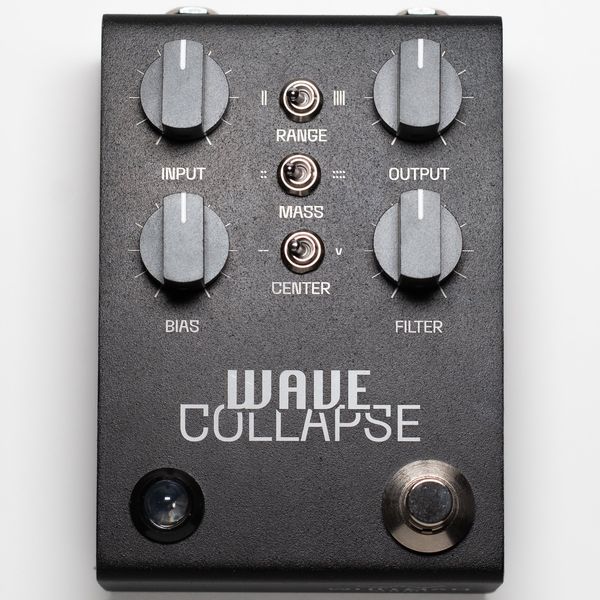
Bold-voiced, super-tunable distortion that excels in contexts from filtered enhance to complete belligerence.
Whitman Audio calls the Wave Collapse a fuzz—and what a really cool fuzz it’s. But classifying it strictly as such undersells the breadth of its sounds. The Seattle, Washington-built Wave Collapse has persona at low acquire ranges and tremendous crunchy ones. It’s responsive and delicate sufficient to enter and contact dynamics to maneuver from mild overdrive to low-gain distortion and degenerate fuzz with a change in selecting depth or guitar quantity. And from the pedal’s personal very interactive controls, one can summon huge, ringing, near-clean tones, desert sludge, or snorkel-y wah buzz.
The Wave Collapse speaks many languages, nevertheless it has an accent—normally an virtually wah-like midrange lilt that exhibits up as faint or super-pronounced. It’s not everybody’s creamy distortion very best. But with the best guitar pairings and a dynamic method, the Wave Collapse’s midrange basis can nonetheless span sparkly and savage extremes that stand tall and distinctive in a combination. There’s a lot that sounds and feels acquainted within the Wave Collapse, however the many surprises it retains in retailer are the true enjoyable.
Heavy Surf, Changing Waves
The absence of a single elementary affect makes it difficult to get your bearings with the Wave Collapse at first. Depending on the place you park the controls to start out, you would possibly hear traces of RAT within the midrange-forward, growly distortion, or the Boss SD-1 in lots of heavy overdrive settings. At its fuzziest, it howls and spits like a Fuzz Face or Tone Bender and may generate compressed, super-focused, direct-to-desk rasp. And in its darker corners, weighty doom tones abound.
The many personalities are intentional. Whitman Dewey-Smith’s design transient was, in his personal phrases, “a large palette starting from soiled enhance to virtually square-wave fuzz and textures that could possibly be clean or sputtery.” A parallel objective, he says, was to encourage tone discoveries in less-obvious areas. Many such gems reside within the advanced interrelationships between the EQ, filter, and bias controls. They additionally reside within the circuit mash-up on the coronary heart of the Wave Collapse. The two most distinguished fixtures on the circuit are the BC108 transistor (greatest often known as a go-to in Fuzz Face builds) and twin pink LED clipping diodes (related, within the minds of many, with clipping within the Turbo RAT and Marshall Jubilee amplifier). That’s not precisely a traditional mixture of amplifier and clipping part elements, nevertheless it’s a giant a part of the Wave Collapse’s sonic identification.
The BC108 drives one in all two core acquire levels within the Wave Collapse. The first stage takes inspiration from early, easy fuzz topologies just like the Tone Bender and Fuzz Face, however with a deal with what Dewey-Smith calls “exploiting the odd edges and interactivity in a two-transistor acquire stage.” The BC108 contributes important character to this stage. The second, post-EQ acquire stage is JFET-based. It’s set as much as work together like a tube guitar amp enter stage and is adopted by the clipping LEDs. Dewey-Smith says you’ll be able to consider the entire as a “pretty” symmetric hard-clipping scheme.
“The magic of the circuit is that these acquire levels are very complimentary. When stage one is working clear, it nonetheless passes a big, unclipped sign that hits the second stage, making these traditional early distortion sounds. Conversely, when the primary stage is working scorching, it clips onerous and the second stage takes a again seat—principally smoothing out the tough edges of the primary stage.” Factor within the modified Jack Orman pickup simulator-style part within the entrance finish, and also you begin to perceive the pedal’s propensity for shock and expressive latitude.
Searchin’ Safari
The Wave Collapse’s many identities aren’t all the time simple to wrangle on the granular-detail degree. The management set—knobs for bias, filter colour, enter degree, and output degree, plus switches for “mass” (acquire,) “vary”(bass content material on the enter), and “heart” (shifts the filter’s mid emphasis from flat)—are interdependent in such a means that small changes can shift a tone’s character considerably, and it may be difficult to seek out your means again to a tone that sounded excellent 5 minutes in the past. Practice goes a good distance towards mastering these sensitivities. One path to reliably reproducible sounds is to ascertain a ballpark tone focus with the filter first, dial within the enter acquire to an appropriately energetic zone, then form the distortion colour and response extra particularly with the bias.
As you get a really feel for these interactions, you’ll be knocked out by the sounds and concepts you stumble upon alongside the best way. In addition to apparent classic fuzz and distortion touchstones I crafted evocations of blistering, compressed tweed amps, jangly Marshalls, and lots of shades of recording console preamp overdrive. The Wave Collapse responds in cool methods to simply about any instrument you situate out entrance. But whereas your outcomes could differ, I most popular the larger headroom and element that comes with single-coil pickup pairings. Humbuckers, predictably conjure a extra compressed and, to my ears, much less assorted set of sounds. I additionally discovered black-panel Fender amps a extra adaptable pairing than Vox- and Marshall-style voices. But nearly any guitar or pickup kind can yield magnificent outcomes.
The Verdict
Though it’s onerous to keep away from its filtered midrange signature solely, the Wave Collapse is a pedal of many masks. Once you grasp the twitchy interactivity between its controls, you’ll be able to tailor the pedal to weave innocuously however energetically into a combination or utterly dominate it. These capabilities are invaluable in ensemble performances, nevertheless it’s tremendous attractive to contemplate how the Wave Collapse would work in a studio state of affairs, the place its focus and efficiency can fill gaps and nooks in colour and vitality or flip a tune on its head. Pedals that stimulate the internal arranger, producer, and punk concurrently are useful instruments. And whereas the Wave Collapse received’t go well with each style, if you issue collectively the pedal’s sub-$200 price, considerate design, high-quality execution, and malleability, it provides as much as a whole lot of utility for a particularly reasonable worth.
HI-FI News
through Premier Guitar https://ift.tt/PebzO81
April 30, 2025 at 10:02PM
-
Product on sale
 Audiophile Vinyl Records Cleaning BundleOriginal price was: €69.90.€59.90Current price is: €59.90. incl. VAT
-
Product on saleEasy Start Vinyl Records Cleaning KitOriginal price was: €69.90.€59.90Current price is: €59.90. incl. VAT
-
Vinyl Records Cleaner Easy Groove Concentrate€34.95 incl. VAT
-
Easy Groove Super Set€199.00 incl. VAT
-
Easy Groove Enzycaster – vinyl records prewash cleaner€34.95 incl. VAT
-
Easy Groove Extreme MK. II- vinyl records prewash cleaner€45.00 incl. VAT
-
Vinyl Records Cleaner – Easy Groove Virgin Concentrate€35.00 incl. VAT
-
Easy Groove Spray&Wipe vinyl records cleaner€34.95 incl. VAT


