
Audio News
Why Michael Jackson keeps poppin’
Why Michael Jackson keeps poppin’
https://ift.tt/cVLwO7d
The music world endured a seismic shock on June 25, 2009—the day Michael Jackson died in Los Angeles at 50. Twitter crashed. Google briefly mistook the surge in searches for a cyberattack. Wikipedia logged nearly a million visits to his page within an hour, among the site’s highest counts ever. Overall, web traffic rose by 11 percent.
For a final moment, ‘MJ’ did what he always did—unite people across age, race, and geography. From global capitals to Indian cities, front pages carried his story.
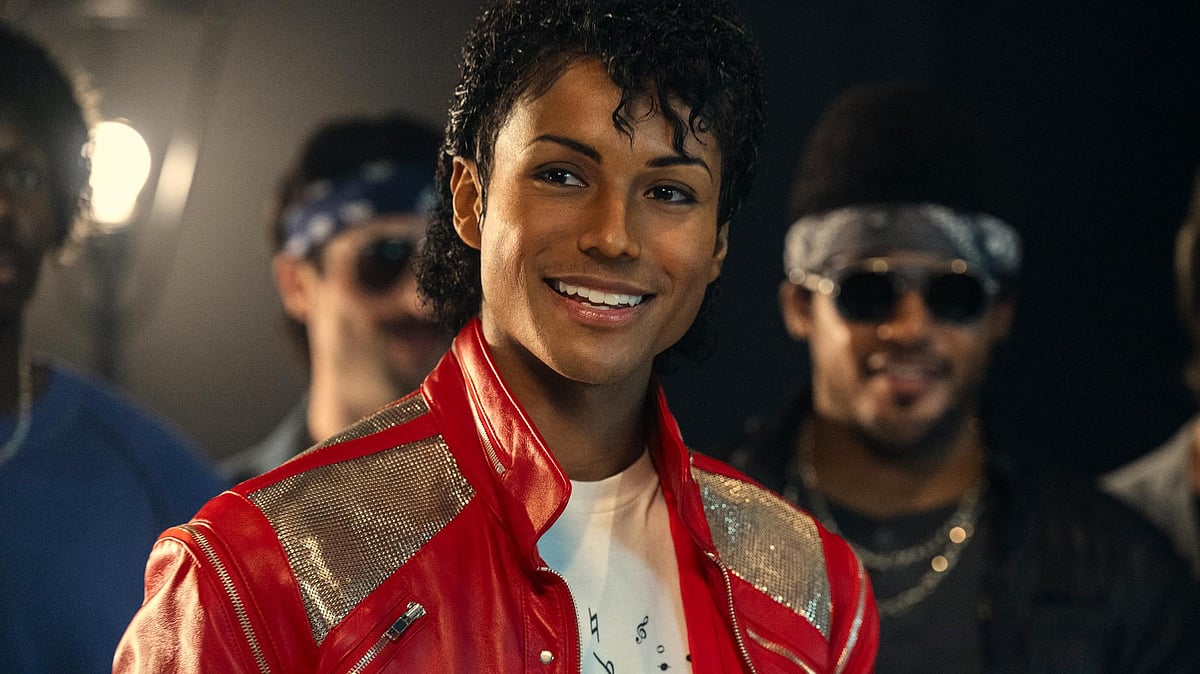
Now, with the biopic ‘Michael’ in theatres, that enigmatic presence returns in a different form. Directed by Antoine Fuqua and starring his nephew Jaafar Jackson, the film traces Michael’s journey from the ‘Jackson 5’ era to his rise as a global icon.
Responses have been mixed, with some critics arguing that the portrayal glosses over blemishes—including allegations of child abuse—that marred his image. Others, meanwhile, note that the film covers only the first 30 years of his life; and a second part is expected to follow.
The debates around the film, however, have not deterred audiences. Reels are trending across social media, and theatres are turning into concert-like spaces, with people singing along to the music he created over the years.
For many, it is about revisiting the music, the persona, and the scale of what made him the ‘King of Pop’. Despite ongoing controversies, what continues to attract the audience is the question of what set him apart. It’s a question we explore through the imprint he left on those who heard him, studied him, and carried parts of him forward.
Retired businessman Raju Subramanian recalls first listening to Michael Jackson in the early 1990s, though he had already read about the musician’s hold over his audiences and his Grammy wins since the early 1980s. “Western music was familiar to people in Tamil Nadu in the ‘80s, but we didn’t have stereophonic systems to listen to songs on. We had access to those systems only in the ‘90s,” he explains.
“So one day in the early ‘90s, my college friend and I went to a cassette shop and saw that the shopkeeper had a Michael Jackson cassette. We had the shopkeeper play his songs, and I listened for the first time. That is how I bought my first Michael Jackson cassette—the ‘Thriller’ album. After that we roamed around shops to collect more of his cassettes,” Raju recalls, noting how the pop legend’s songs would move him to sway.
Singer and musician George Peter got his hands on two cassettes in the late ‘80s, one of which was ‘Thriller’, that his uncle gave him. “I played them endlessly,” he admits. A former frontman of the 13AD band, George remembers being fascinated by the detailing. “The vocal arrangements, the layering, the call-and-response patterns—harmonies behaved like instruments,” he gushes. “Each album felt like a sonic kaleidoscope. He could move across pop, funk, rock, soul, and R&B within a single record, yet it all felt cohesive. Even the basslines had intent.” That sense of intent, he says, is why Jackson continues to connect with people.
The intent was also always evident in the words he wrote, highlights Aravind Suresh, a venture capitalist. Referring to the ‘Earth Song’, he says, “It was probably the first time a global artist took a stand and urged people to think as citizens of the world and worry about the damage we are doing to mother earth.”
It is the effect the King of Pop had over people’s collective thinking and on individuals to reflect that astonishes Aravind. “His song ‘Man in the Mirror’ has so much depth, and I truly believe it helped me shape myself as a person,” he reflects.
Actor, composer, and DJ Sekhar Menon also notes that many of Michael’s hits carried social messages on topics like racism, poverty, and environmental degradation without sounding rhetorical or activist-like. “They were delivered heart-to-heart through music quite beautifully,” he says.
Not just the music—MJ’s dance left an equally strong imprint. The moves he introduced, especially the ‘moonwalk’ and the ‘robot’, became trends among youngsters and children, and continue to hold that appeal even today.
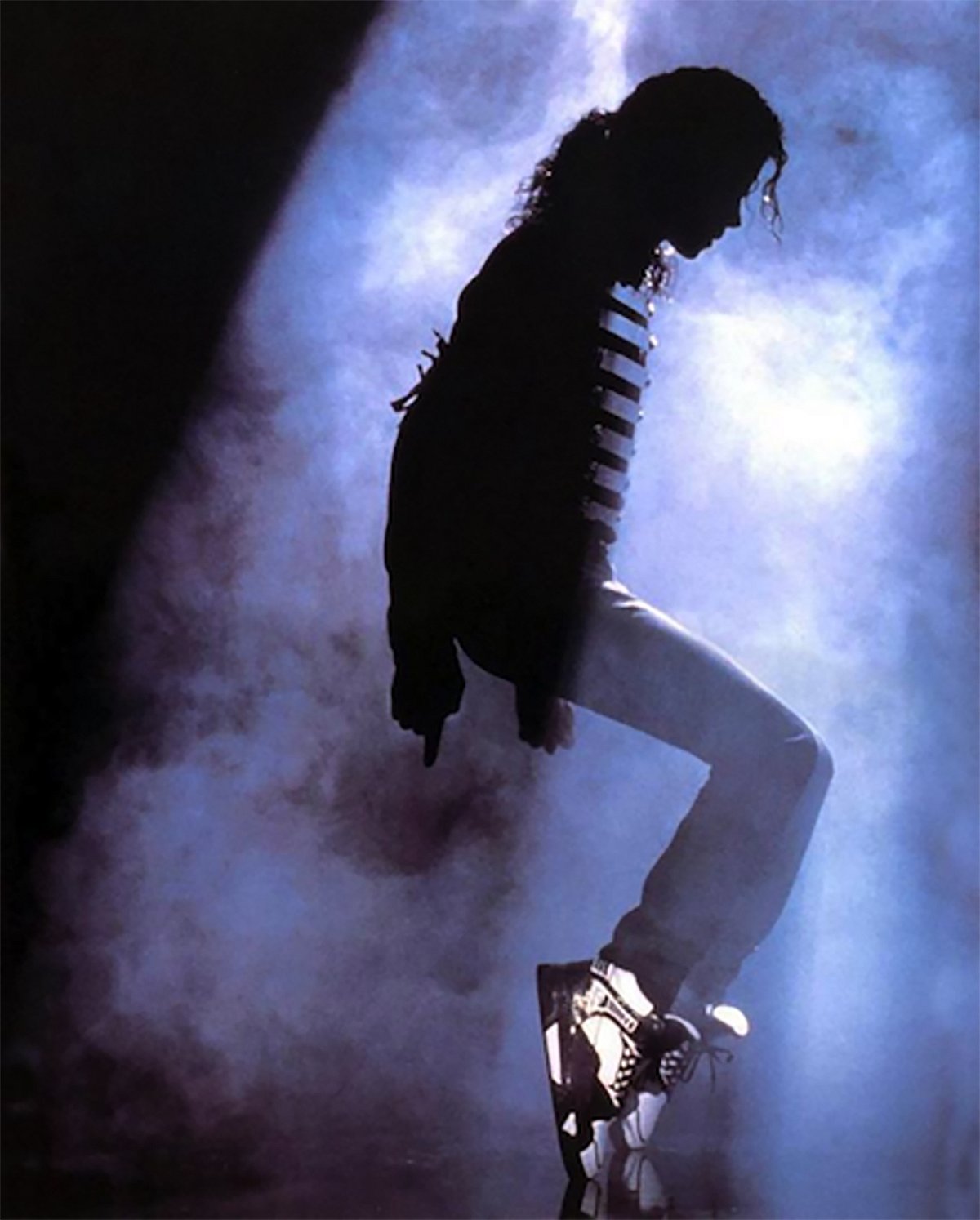
Babu Footlooser’s, a pioneer of breakdance in Kerala and founder of Footloose Crew, recalls the frenzy of the 1980s. “We used to hunt for his posters in tabloids. People grew their hair, wore hats, tried to look like him… That influence has still not faded.”
“People often reduce him to breakdance, but he brought together disco steps, footwork, tap, and more,” he says, with a touch of childlike excitement. “I was drawn to his moonwalk, the gliding, the rapid spins… all done with incredible finesse. I even tried to recreate his costumes at a time when ready-made versions were not available. Almost every prominent dance master in Kerala was influenced by him.”
Michael’s influence also touched individual lives in surprising ways, reaching people far beyond the stage and screen. Divesh, a support analyst and musician from Chennai, says that he began reading up and researching about the global figure after the biopic was announced, although his father had introduced him to his music much earlier in life. “It was Michael Jackson’s kindness that stayed with me. The way he loved children, surrounded himself with animals, and even celebrated Christmas only at the age of 35, it all reflected a sense of innocence, politeness, and compassion that I deeply admire and want to carry into my own life,” he explains.
Comparing the late singer’s music to today’s pop stars, Divesh notes how many today rely on obscene language to get their point across. “MJ became famous without any of that.” Aravind also makes this comparison. “Today’s pop culture is more about flair than the essence of what music can do to you. MJ was more focused on his musical sense, and dance added to it. He was a true pop guy. He was completely original and kept evolving. Today’s artists are very repetitious; they mimic one another, and originality is what’s missing,” he says.
Sujit G Ponoth, who runs JD’s Jukebox in Kochi with a collection of over 6,000 vinyl records, sees that legacy play out in real time. “Michael Jackson records never stay on the shelf,” he notes. “People come from various corners asking specifically for his music. If not available, they don’t pick an alternative. They simply leave.”
Clearly, the MJ sway remains constant. And perhaps that is the simplest way to understand it: his music didn’t belong to a time. Time kept dancing to it.
HI-FI News
via Chennai https://ift.tt/2yVoEr3
April 29, 2026 at 02:35AM
-
Product on sale
 Audiophile Vinyl Records Cleaning BundleOriginal price was: €69.90.€59.90Current price is: €59.90. incl. VAT
-
Product on saleEasy Start Vinyl Records Cleaning KitOriginal price was: €69.90.€59.90Current price is: €59.90. incl. VAT
-
Vinyl Records Cleaner Easy Groove Concentrate€34.95 incl. VAT
-
Easy Groove Super Set€199.00 incl. VAT
-
Easy Groove Enzycaster – vinyl records prewash cleaner€34.95 incl. VAT
-
Easy Groove Extreme MK. II- vinyl records prewash cleaner€45.00 incl. VAT
-
Vinyl Records Cleaner – Easy Groove Virgin Concentrate€35.00 incl. VAT
-
Easy Groove Spray&Wipe vinyl records cleaner€34.95 incl. VAT







