
World News
Yes Forged Ahead with “Relayer”
Yes Forged Ahead with “Relayer”
The starting of the tip of their traditional run?
Amongst contemporaries like King Crimson and Genesis, Yes had greater than sufficient going for it to face out from the gang. The mixture of Jon Anderson’s angelic falsetto and summary lyrics, Chris Squire’s lead-like bass runs, Steve Howe’s experimental guitar explorations, Rick Wakeman’s classically-inspired keyboard prospers, and Bill Bruford’s percussive jazz fills encompassed the trimmings of progressive rock at its most potent.
Yes spent first half of the Nineteen Seventies crafting The Yes Album, Fragile, and Close to the Edge—albums that will develop into a progressive rock bible; the latter arguably their most glorious launch. Just as Yes began to take off commercially and drummer Alan White joined the fold, there was dissension within the ranks. Keyboardist Rick Wakeman’s distaste for Tales from Topographic Oceans, a double album with 4 20+ minute epics that unintentionally parodied the style’s extreme nature, led to his exit from the group.
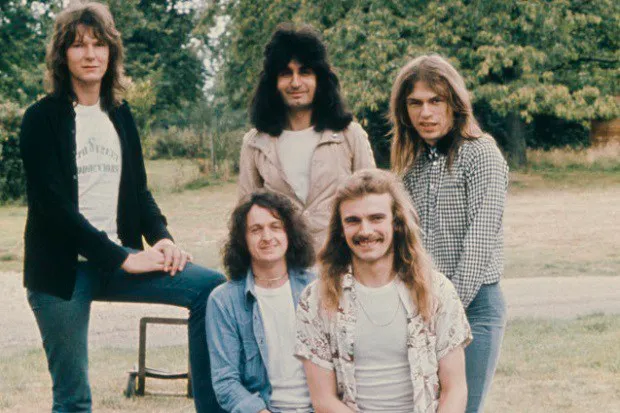
It was enterprise as traditional when Swiss-born Patrick Moraz, contemporary off the heels of working with bands like Mainhorse and Refugee, entered Yes’ roundabout of personnel. After pushing boundaries to a larger extent with Topographic Oceans, Relayer, launched in 1974, recycles the profitable method of Close to the Edge: a side-long epic and two shorter (as in 10 minutes) tracks. “The Gates of Delirium” is a 20+ minute tour-de-force that attracts lyrical inspiration from Tolstoy’s War and Peace and musically encompasses moods that resemble the horrors and hope that intertwine with the idea of struggle. Despite the tune being one of many group’s most dynamic epics, its closing part, launched as a single known as “Soon,” is one in all Yes’ musical excessive factors. Side 2 opens with “Sound Chaser,” a observe that greatest represents Moraz’s jazz affect and is the closest Yes received to dabbling in jazz-rock. “To Be Over” is a fantastic album nearer that encapsulates the group’s beautiful talents with wealthy harmonies and candy melodies.
Though liked by many diehard followers, Relayer is without doubt one of the few staples of the Yes’ canon that hasn’t seen a lot love relating to latest vinyl pressings. All that’s come within the final 15 years was the 2009 Friday Music reissue and Steven Wilson’s good stereo remix of the album on the aptly titled Steven Wilson Remixes field set in 2018. Just in time for the album’s fiftieth anniversary this 12 months, Warner Music determined to revive the album as a part of the extremely regarded Rhino High Fidelity collection.
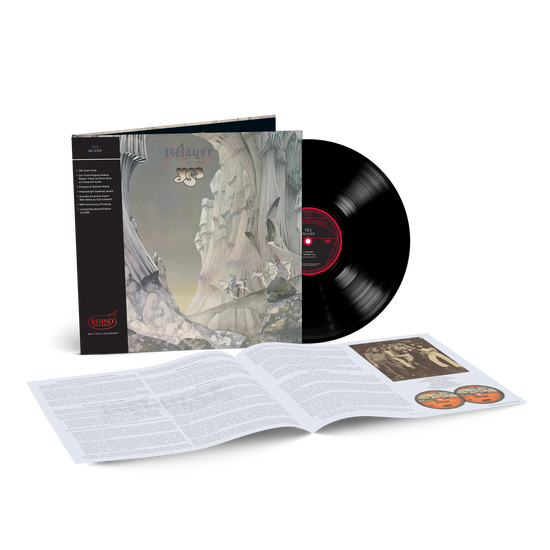
Artist Roger Dean’s fantasy landscapes have develop into synonymous with Yes albums. His rendering of a gothic-looking fortified metropolis with horseback troopers (referencing “The Gates of Delirium”) and snakes seems to be putting on a shiny Stoughton tip-on jacket. All specs of the unique art work, all the way down to the gatefold design and lyric insert are replicated faithfully. Adding the aspect of exclusivity with this Rhino High Fidelity urgent is the OBI strip and four-panel insert that includes tape field scans and an in-depth essay by Syd Schwartz, with recollections from Patrick Moraz. Rhino’s constant heart label showing on all releases within the collection is elegant, however Dean’s customized heart label reprising his gatefold jacket art work for this launch is an apparent omission.
Yes’ option to document Relayer at bassist Chris Squire’s dwelling studio in Surrey somewhat than in one in all London’s typical studios leads to a full of life recording. Squire’s percussive bass tone and Alan White’s heavy-hitting drum work present loads of taste. The syncopation in the course of the introduction of “The Gates of Delirium” is daring and dramatic, signaling a battle cry. Supported by Jon Anderson’s demanding vocal supply, the tune builds with brewing depth and modulated instrumental motifs earlier than settling into the tune’s midsection the place the band takes a again seat, and within the forefront scrap steel percussion performs out the battle.
As the “Soon” part eases in, Steve Howe’s pedal metal guitar and Moraz’s mellotron swell to present the tune a symphonic, ethereal end. White’s drum fills are panned tastefully between the audio system on “Sound Chaser.” The jazzed-out synthesizer runs and the in-your-face vocal chants contribute considerably to the tune’s frantic nature. The electrical sitar on “To Be Over” flows lucidly just like the streams referenced within the lyrics. The vocals and pedal metal guitar cascades are agency reminders of for what folks know and love Yes. Kevin Gray masters each nuance of this document to emphasise its contrasting and generally sudden temper adjustments, making this urgent sound delightfully dynamic from each attainable angle.

Music Specifications
Catalog No: RHF1 18122 / 603497825097
Pressing Plant: Optimal Media GmbH
SPARS Code: AAA
Speed/RPM: 33 1/3
Weight: 180 grams
Size: 12"
Channels: Stereo
Source: Original analog grasp tapes
Presentation: Single LP
HI-FI News
through Tracking Angle https://ift.tt/hXvNknp
August 27, 2024 at 06:08PM
-
Product on sale
 Audiophile Vinyl Records Cleaning BundleOriginal price was: €69.90.€59.90Current price is: €59.90. incl. VAT
-
Product on saleEasy Start Vinyl Records Cleaning KitOriginal price was: €69.90.€59.90Current price is: €59.90. incl. VAT
-
Vinyl Records Cleaner Easy Groove Concentrate€34.95 incl. VAT
-
Easy Groove Super Set€199.00 incl. VAT
-
Easy Groove Enzycaster – vinyl records prewash cleaner€34.95 incl. VAT
-
Easy Groove Extreme MK. II- vinyl records prewash cleaner€45.00 incl. VAT
-
Vinyl Records Cleaner – Easy Groove Virgin Concentrate€35.00 incl. VAT
-
Easy Groove Spray&Wipe vinyl records cleaner€34.95 incl. VAT


