
World News
Music Interview: Swing Out Sister
It’s been over 35 years since British sophisti-pop act Swing Out Sister launched their debut album, It’s Better To Travel.
To have fun its anniversary in 2022, the duo, Corinne Drewery (vocals) and Andy Connell (keyboards), whose second single, ‘Breakout’, was launched in 1986 and received to quantity 4 within the UK singles chart, have teamed up with report label Cherry Red to curate and compile an eight-CD field set known as Blue Mood, Breakout And Beyond – The Early Years Part 1.
Released in late July, this complete assortment spans 1985-1992 and accommodates the band’s first three albums, It’s Better To Travel, Kaleidoscope World and Get In Touch With Yourself, in addition to the Japan-only live performance album, Live At The Jazz Café, and 4 discs of B-sides, 7in mixes, remixes and uncommon variations.
There’s additionally a formidable booklet, sleeve notes primarily based on new interviews with the band, photos of uncommon memorabilia and illustrations by Drewery.

As you’ll count on from an act of Swing Out Sister’s ilk, it’s a cultured and well-presented bundle.
In an unique interview – or ought to that be, ahem, breakout session – with hi-fi+, Drewery and Connell speak about their influences and making these first three studio albums.
You reissued a few of your albums as deluxe CD variations a number of years in the past, however the brand new field set places all the things in a single place, doesn’t it? It’s a pleasant assortment for the followers…
CD: From an avid collector’s perspective, I don’t assume there’s something that they couldn’t have discovered someplace on the earth – excuse the pun – (‘Somewhere In The World’ is the title of a track from their 1997 album, Shapes and Patterns) however, as you say, it’s multi functional place.
Some of the songs have been out there in several nations and are fairly costly to gather – should you’re an actual collector, you continue to need the unique vinyl copies, or the Japanese model with the obi across the sleeve.
Your first album, It’s Better To Travel, is 35 years outdated this yr. How does that really feel?
AC: It’s beautiful, however, in a single sense, it’s horrifying. We have been by no means presupposed to have longevity – we had a singles deal. It was solely as a result of ‘Breakout’ did what it did that the label noticed some sort of legacy with the mission.
The concept that we’ve been by some means doing this for that size of time is weird, however there’s a sure delight – not many individuals stick it out that lengthy. It’s a testomony to our stubbornness if nothing else.
It’s Better To Travel had loads of totally different influences, like ‘60s pop, soul, jazz, funk, however it’s additionally digital at instances, isn’t it?
‘Breakout’ is extra synth-led than I remembered – the intro has fairly a Pet Shop Boys really feel, like ‘West End Girls…’
AC: That’s a very good level. What occurred was that our subsequent albums – actually the second – modified folks’s notion of the primary one.

There are actual strings on the primary album, however not the orchestral factor that turned up later.
On the primary album, Martin [Jackson – original member and drummer] was programming the drums. We’d come from synths – we have been making Street Sounds [electro] records earlier than Swing Out Sister. Our producer, Paul O’Duffy, introduced the orchestral facet in.
It was a beautiful mixture. In hindsight, it appears very astute and cleverly deliberate, however it actually wasn’t within the slightest.
I used synths, however I had aspirations to make use of extra instrumentation if we received the possibility or the funds, and Corinne was coming from one other place – The Supremes, Dusty Springfield…
CD: I feel we at all times had these aspirations. When you assume again to what we might’ve been listening to on the time we have been making our first report, it was mid-‘60s music – the golden period of the Brill Building, like Goffin and King, and Bacharach and David.
We grew up with that and we absorbed it – that was our musical training, and we have been very fortunate to have that.
It was very subtle, however when it got here to creating our personal sounds, we hadn’t paid our sophistication dues, so we have been attempting to emulate that with Emulators and Fairlights.
Although we didn’t have the funds for a full orchestra, we have been utilizing some fairly subtle recording methods – we have been emulating the grandeur of the records we’d grown up with, however in an digital means.
Your music can also be very cinematic…

AC: Our widespread floor was movie music – John Barry and Ennio Morricone.
There’s an actual John Barry affect on the instrumental observe, ‘Theme (From It’s Better To Travel.’ It jogs my memory of ‘Space March’ from the You Only Live Twicesoundtrack…
AC: Exactly.
CD: You received it in a single.
AC: When you say, ‘it reminds you of…’ We’re doing a straight homage!
CD: It was earlier than that complete loungecore, Easy Listening, cinematic sound had actually turn into standard.
Things had been much more stripped-down and synth-oriented, and it then received a bit acid home, heavy home and dance, and a bit Bristol.
What we have been doing wasn’t in sync with all that – it was extra conventional. We have been attempting to create basic records – little three-minute pocket symphonies, as Brian Wilson mentioned – and we had a good time experimenting.
The second album, Kaleidoscope World, is far more grandiose than your first – there’s an actual ‘60s orchestral pop really feel to it…
CD: Our producer, Paul O’Duffy, appreciated the identical stuff as us – on that album, we indulged. We had a bit extra of a funds and we went to city – we even received along with Jimmy Webb.
How was he to work with?

AC: Our mouths have been completely open. It was such a cheeky factor to request – to get him to come back and organize some songs for us. Who did we predict we have been? Seriously. But he was on the primary flight, and he was such an easy, no-nonsense man. He sat and performed the piano within the studio breaks, and we thought, ‘This can’t be occurring.’
John Barry popped into the studio when you have been recording the second album, didn’t he? Sadly, you didn’t get to work with him…
AC: Yes – he did. I’d forgotten that. How may I overlook that?
Our producer had labored on one thing with him – he very graciously got here to the studio for an hour, listened to our stuff and gave it his blessing. He was busy – I feel he was engaged on A View to a Kill, so his calendar was full. That would’ve been fascinating, however it was nice to simply be in his presence.
CD: He gave his blessing to the instrumental model of ‘Forever Blue’, so we didn’t get sued!
AC: It’s a Midnight Cowboy homage…
‘You On My Mind’, from Kaleidoscope World, is one in every of my favorite Swing Out Sister songs. It seems like a basic ‘60s pop single by Sandie Shaw or Petula Clark. The orchestration jogs my memory of Tony Hatch…
CD: You’re hitting all the correct buttons.
AC: That track got here very late within the recording – we had the album after which we had a kernel of an concept that we have been messing round with. We’d received daring by that point – we did a pop association in the old-fashioned sense.
To today, I’m astonished that it wasn’t a much bigger radio hit, as a result of it sounds incredible on the radio – some kind of frequency factor occurred, and it got here alive. It didn’t sound like anything – it leapt out of the speaker.
Your third album, Get In Touch With Yourself, has a string ‘70s soul really feel and a groove to it – there are influences like Isaac Hayes and Curtis Mayfield at play. Was {that a} response to the ‘60s sound of the second report?
AC: I don’t assume there’s ever been a degree the place we’ve sat down and mentioned, ‘We’re going to make this type of report – these are the influences, and that is the sound we would like…’
In a broad sense, Kaleidoscope World is ‘60s, and Get In Touch With Yourself is ’70s, however it’s by no means so simple as that. It didn’t really feel like that on the time.
CD: Because we’d gone to this point down the highway of Easy Listening, lounge and cinema, we needed to put the beat again in.
We have been considering, ‘What’s the least quantity of beat we will put in, or the good means we may do it that wasn’t home music?’
We have been very a lot up in opposition to that complete home motion, which was about stripping all the things all the way down to nothing and holding the vocal in. We have been nonetheless attempting to maintain as a lot music in, but additionally incorporate the groove. It was, ‘Let’s get a groove on.’
AC: Curtis Mayfield is rarely far-off from many of the issues we do.
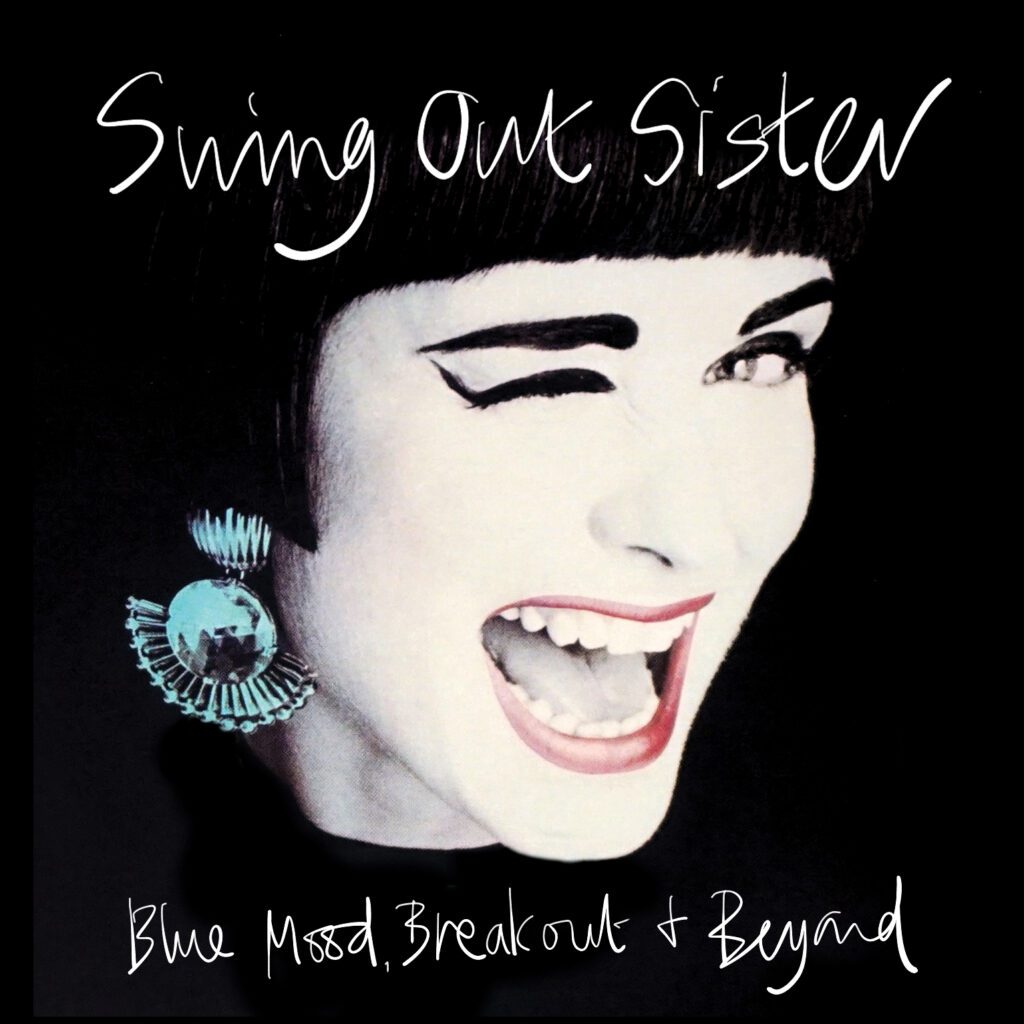
The eight-CD Swing Out Sister field set Blue Mood, Breakout And Beyond – The Early Years Part 1, is obtainable now on Cherry Red Records.
cherryred.co.uk
swingoutsister.com
The put up Music Interview: Swing Out Sister appeared first on Hi-Fi+.
-
Product on sale
 Audiophile Vinyl Records Cleaning BundleOriginal price was: €69.90.€59.90Current price is: €59.90. incl. VAT
-
Product on saleEasy Start Vinyl Records Cleaning KitOriginal price was: €69.90.€59.90Current price is: €59.90. incl. VAT
-
Vinyl Records Cleaner Easy Groove Concentrate€34.95 incl. VAT
-
Easy Groove Super Set€199.00 incl. VAT
-
Easy Groove Enzycaster – vinyl records prewash cleaner€34.95 incl. VAT
-
Easy Groove Extreme MK. II- vinyl records prewash cleaner€45.00 incl. VAT
-
Vinyl Records Cleaner – Easy Groove Virgin Concentrate€35.00 incl. VAT
-
Easy Groove Spray&Wipe vinyl records cleaner€34.95 incl. VAT


