Author Archives: Dave Radlauer

Swingin’ with Casa Loma Orchestra

Casa Loma Orchestra set the highest standards for excellent musicianship, superb arranging, collective spirit, classy presentation, romanticism and hard-driving dance rhythms.  At the outset of the Swing Era, before 1936 and until the rise of Benny Goodman, Casa Loma was the premier popular orchestra playing hot jazz, sweet tunes, riff-based head arrangements and fully written scores.

A vanguard of the Swing Era, Casa Loma was one of the most danceable bands of all time and a rich source of original tunes.  It was a fierce competitor in the big band battles of the 1930s, making records for OKeh, Brunswick, Victor and Decca Record Companies or their subsidiaries and international affiliates and among the most prolific of the era.  They waxed nearly 450 sides between 1929-47.

Their distinctive and cohesive style jelled during 101 consecutive weeks of one-night stands in the Midwest during 1931-33.  On the road in the worst days of the Great Depression, they flourished, despite the rough and tumble of touring on hazardous roads, blizzards and enduring an incident in which the entire band was arrested on suspicion of bank robbery.

Introducing Casa Loma, Swing Low, Maniacs Ball, Limehouse Blues


At the Steel Pier, Atlantic City, New Jersey, September 1931. Towards the center are trombone players Pee Wee Hunt, Billy Rauch and premier soloist, clarinet player Clarence Hutchenrider. To the far right are Glen Gray (alto sax) and arranger Gene Gifford (banjo).

A Popular Dance Band

In his landmark book, Lost Chords: White Musicians and their Contribution to Jazz, 1915-1945 (Oxford, 1999), noted jazz writer, researcher and musician Dick Sudhalter concluded:

“No band of those years was more frequently discussed, more widely admired or emulated . . .  no other band of the day, whatever race, could rival it for popularity, precision and team spirit, or for the ability to bring dancers to the floor.”

Casa Loma Orchestra dominated the dance band field for the first half of the 1930s and was the topic of heated debates in the popular music press: Down Beat and Metronome magazines. It was a prolific source of delightful music and original tunes, particularly the deft arrangements of Gene Gifford who wrote their early hits and was succeeded by several talented scribes.

This was the first dance orchestra broadcasting regularly on network radio, launching the most popular showcase of Swing on radio. The premier broadcast of the of The Camel Caravan program on December 7, 1933 was a Casa Loma performance; they continued on the series until June 1936.

Casa Loma was unusual for being a group of white musicians who competed successfully with the black Jazz orchestras of Harlem for sheer drive and heat– one of the few Caucasian Swing bands admired by their African American competitors.  Yet it was popular with mainstream audiences for sweet and romantic music, appearing dressed elegantly in tuxedos.

Promotional photo, late 1930s.

‘Reeked with Class’

“This orchestra reeked with class . . . both crisp and precise . . .”wrote contemporary observer George Piersol who became the band historian.  He recalled his first impression in 1933:

“. . . the band programmed each set with versatility. They mixed such sentimental ballads as Kenny Sargent crooning ‘I Love You Truly,’ which brought squeals of delight from the female contingent in the crowd, to ending the set with a rousing ‘killer diller’ such as ‘Maniac’s Ball.’  When the program ended, we all filed out of the Steel Pier convinced that ‘Casa Loma Stomp’ had become the collegiate national anthem!”
Casa Loma Stomp – 1930

Future Casa Loma clarinet player Clarence Hutchenrider first heard the ensemble in its nascent form around 1929. He was impressed by their precise reading of intricately written charts and unity of sound, “it didn’t sound like any other band I’d ever heard . . . in a class by itself; something to remember.”

Their outstanding arranger Gene Gifford wrote both some of the hottest music of the 1930s and lushly romantic charts.  Sudhalter suggests that Gifford’s superlative skills generating ‘tone paintings’ show “an even greater flair for ballads, drawing on a varied palette of instrumental colors” as heard in the hypnotic “Blue Prelude” or typified by their radio theme song, “Smoke Rings.”

Smoke Rings – 1932


Blue Prelude – 1933


Natty gents in spats at Lido-Venice in Boston, MA c. 1930.

Origins

Casa Loma Orchestra arose from the remnants of The Orange Blossoms, one of several bands run by impresario Gene Goldkette out of his Detroit office.  Booked to play at a grand Toronto hotel called the Casa Loma, they were stranded when the hotel suddenly closed. To this day it remains unclear whether the band ever played the venue, if they played for a few days or weeks, or never performed there at all before the hotel failed as a commercial enterprise.

Stranded in Toronto, the musicians formed a collectively run corporation under the Casa Loma banner.  For years it was run as co-operative business: the musicians had an active say in band membership, management and finances.

Maturing into a tough, finely-honed outfit, they were widely admired by their colleagues and competitors, white or black.  The fact that there were no big stars in the ensemble strengthened its team spirit.  One writer of the day called it, “the band that’s organized like a corporation and run like a college fraternity.”

Hotel Origins, You Ain’t Been Livin’ Right, Who’s Sorry Now


The Casa Loma Castle.

The Castle

The Casa Loma Castle in Toronto, Ontario, Canada is a fascinating story in itself.  It was conceived and built by a Canadian insurance, real estate and industrial magnate, Sir Henry Pellatt. He spent five million dollars constructing a medieval manor on a hill above the city – Casa Loma meaning ‘house on a hill.’

The sprawling folly of gables, turrets and arches contained more than 100 rooms, 60 bathrooms, 5000 electrical lights, a shooting gallery, its own telephone system and the largest wine cellar in North America.  It was briefly operated as a hotel, but has been owned by the City of Toronto since 1930, remaining one of its most spectacular tourist attractions.

Arranging, Buji, Chant of the Jungle, Ol’ Man River

The post Swingin’ with Casa Loma Orchestra appeared first on Dagogo.

W.C. Handy Remembers

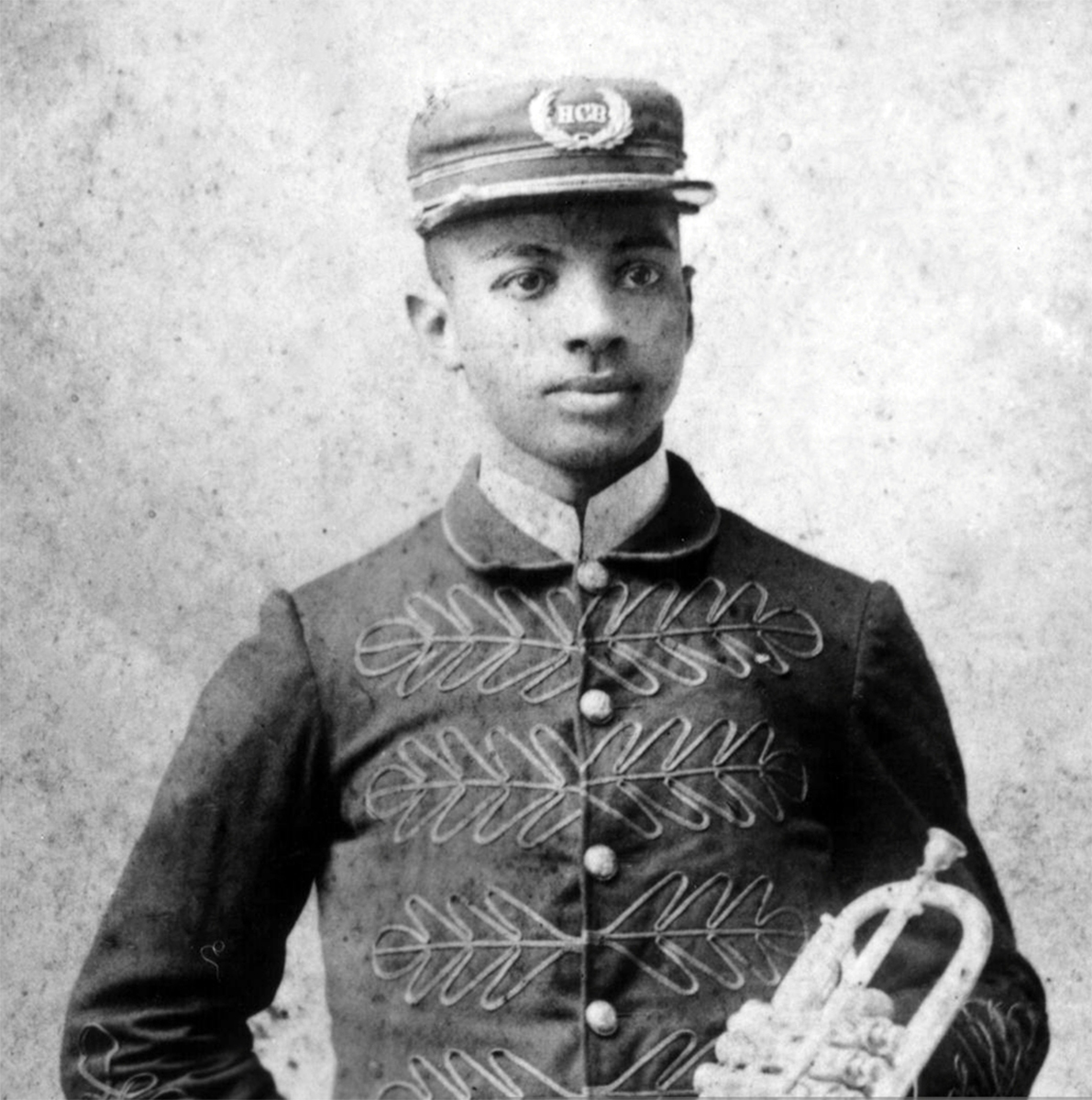
A rarely published portrait of Mr. Handy from sometime before 1900. Courtesy of W.C. Handy Home and Museum and Mister Handy’s Blues.

The music, words and voice of W.C. Handy reveal a passion for music, the Blues and African American culture.  He dedicated his life to the proposition that the Blues are a legitimate and vital musical form in an era when that idea was rejected or ridiculed.  And he was one of the earliest folklorists gathering and preserving the oral and aural folk-Blues, which he successfully incorporated into his songwriting.

This column and audio clips are based on the Gabriel Broadcast Award-winning radio program, W.C. Handy Remembers.  Wherever possible Handy’s words and voice have been used to convey his story.  Many of the photos are newly available courtesy of the W.C. Handy Museum and Home in Florence, Alabama and Joanne Fish, producer of the documentary, Mr. Handy’s Blues.

Whether they know it or not, most Americans know the music of William Christopher Handy (1873-1958). His lovely “Memphis Blues” and “Yellow Dog Blues” are still popular.  A touchstone of American culture, “St. Louis Blues” was the most recorded jazz composition in the early 20th Century.  He was variously a traveling minstrel, cornet player, bandleader, promoter, folklorist, composer, music publisher, campaigner for civil rights and cultural icon.

Handy developed a keen skill for creating great music by blending the lyrical fragments and folk idioms he collected with his own gift for composing.  His best-known songs like “Careless Love,” “Beale Street Blues” and “Atlanta Blues” were crafted from the raw folkloric elements he dedicated his life to compiling and interpreting.  In interviews, articles and his autobiography, Handy always acknowledged his mostly anonymous folk sources.

Introduction and Yellow Dog Blues


Handy on culture:

“When we take these things of our own and develop them till they are the fine things, I think that’s pure culture. You’ve got to appreciate the things that come from the heart of the negro and from the heart of the man farthest down.

The great European classics came from the peasantry of the countries in which these people lived.  It didn’t come from the kings and queens and the great theaters.  It came from the man who dug deep into the hearts of the people he had come up with and loved, the man farthest down.”

Young Mr. Handy became a roving musician. Photo by Michael Ochs Archives/Getty Images.

Early Years

Born to a former slave in Alabama less than a decade after the Civil War, William Christopher Handy was the son and grandson of Methodist (AME) ministers.  Overcoming resistance from his family and society, he gained a thorough musical education, making his living as a professional musician. During the 1890s, he was a wandering trumpet player (cornet,in the early days).

Handy eventually led his own ensembles, writing and arranging music and becoming a beloved bandleader in Memphis, Tennessee.  He started publishing his own songs and was probably the very first to make a livelihood printing and selling the Blues as sheet music, initiating his long struggle to legitimize the form. During decades of roaming, he collected fragments of lyrics, melodies, folk songs, spirituals and work songs, netting like rare butterflies what would otherwise surely have been lost.


Memphis Blues by Handy


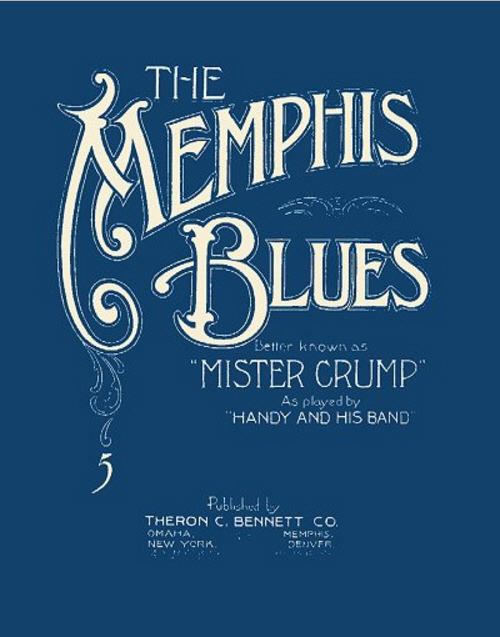
The Memphis Blues

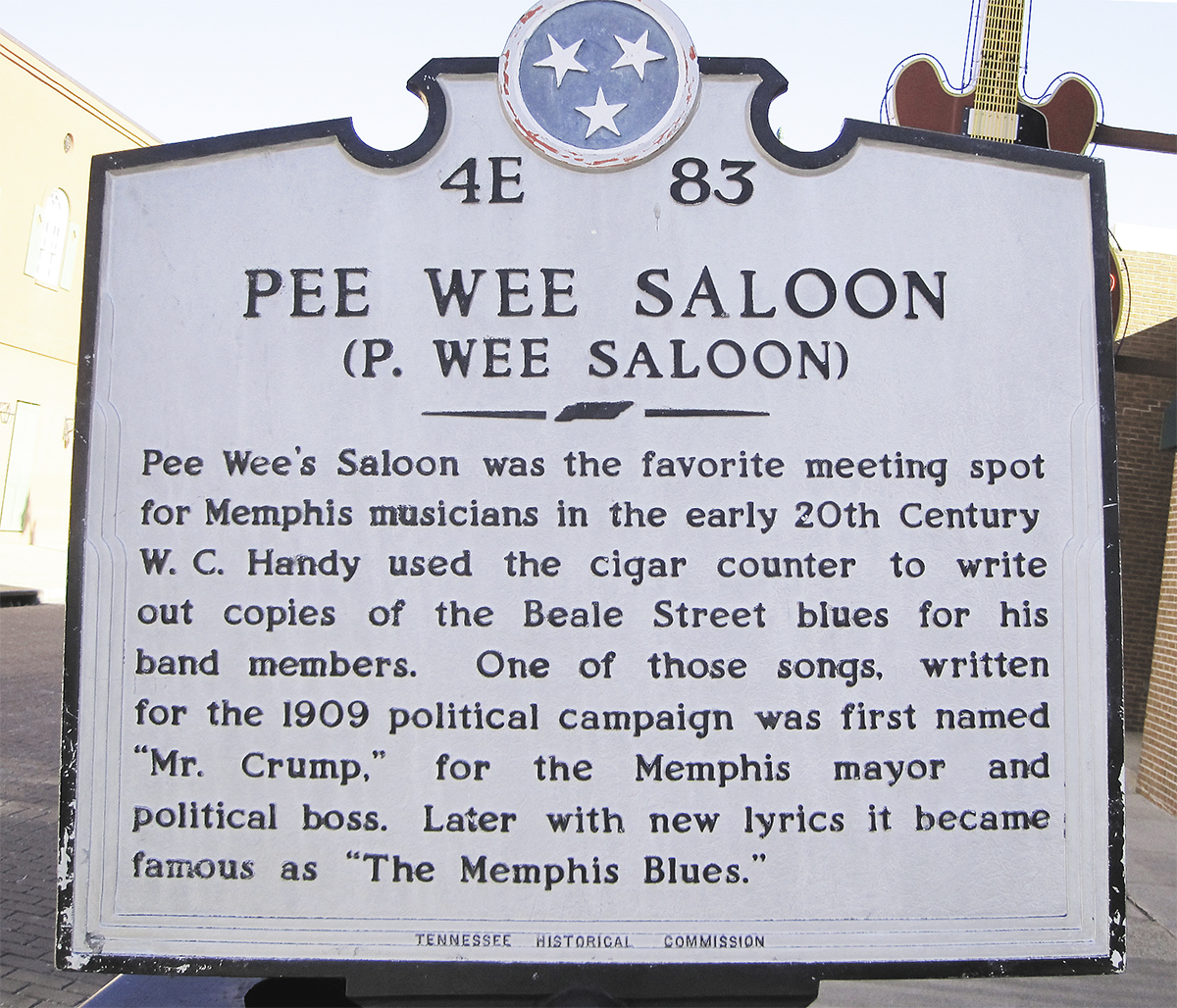
In 1909 his band was hired to play for the mayoral campaign of Memphis political boss, Edward H. Crump.  According to Handy, he won the election thanks in part to the popularity of his song known as “Mr. Crump.”  Though the politician ran on a reform platform opposing vice and corruption, once he was elected both flourished.

Three years later,Handy put it out as “The Memphis Blues” with new lyrics provided by Mr. George Norton.  It was among the very first published Blues songs and a big hit across the country, formally introducing his style of 12-bar blues.

The great success of “The Memphis Blues” in 1912 prompted Handy to form his own company, Pace & Handy Music Co. on Beale Avenue in Memphis.  From 1913 to 1918 they published his most popular songs including “St. Louis Blues,” “Yellow Dog Blues” and “The Beale Street Blues.”

W.C. Handy’s Memphis Orchestra, Handy is center rear, 1918.

Writing the Beale Street Blues:

“I like the life of Beale Street.  It was exciting.  So much so that I was two years trying to write a number called Beale Street, but I couldn’t find words for it. 

One night, after leaving my office, I passed by Pee Wee’s saloon.  Next to it was a barbershop.  This barbershop was open, say about 2:00 o’clock in the morning.  I said, ‘c’mon let’s go home.’  He says, ‘I haven’t closed up cause ain’t nobody got killed yet.’  And I struck myself and said that’s it, Beale Street Blues!  I went home and wrote the words to the Beale Street Blues that night.”

The Beale Street Blues

Memphis was a thriving transportation hub where the railroads met the Mississippi River.  Developing after the Civil War, the original Beale Avenue was a respectable, predominantly African American neighborhood of homes,churches and a grand opera house.

When Handy arrived around 1910, Memphis had sprouted the notorious Beale Street entertainment district, an infamous collection of taverns, pool rooms, dance and gambling halls, brothels and dives.  The lawless section was occupied by hustlers, pickpockets, lowlifes, pimps and prostitutes, attracting country rubes seeking thrills and workingmen, riverfront roustabouts, levee workers, cotton farmers and Pullman porters out spending their hard-earned pay.

Thriving in the rough nighttime traffic of the rowdy quarter, Handy was oddly fascinated, possibly even obsessed by Beale Street, observing razor fights, stabbings, ice pick killings, shootings and worse.

You’ll see pretty browns in beautiful gowns,
You’ll see tailor-mades and hand-me-downs,
You’ll meet honest men, and pick-pockets skilled,
You’ll find that business never ceases ’til somebody gets killed!

If Beale Street could talk, if Beale Street could talk,
Married men would have to take their beds and walk,
Except one or two who never drink booze,
And the blind man on the corner singing Beale Street Blues!

Beale St Blues, Yellow Dog


Yellow Dog Blues


The Yellow Dog Blues

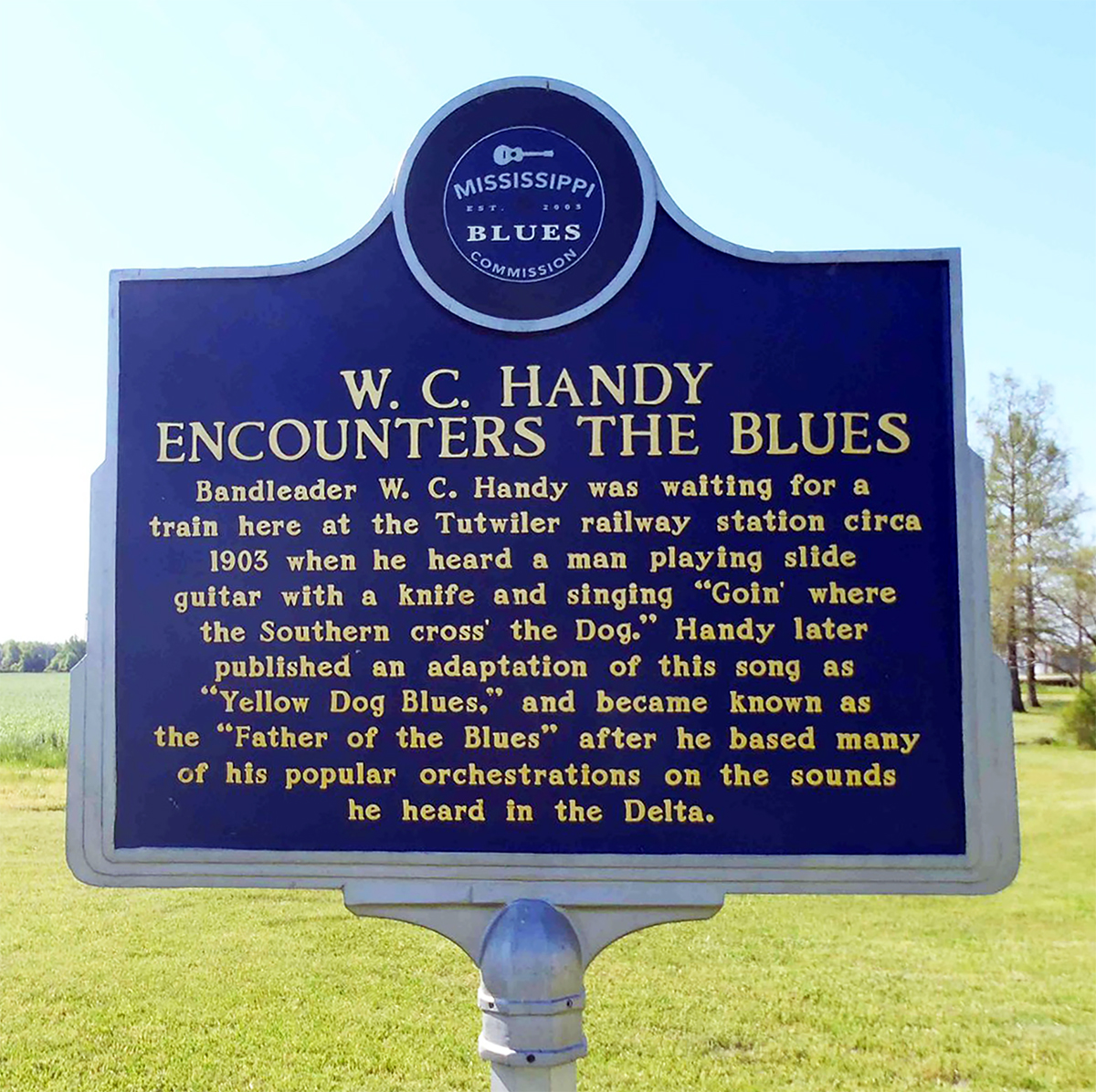
W. C. Handy published the “Yellow Dog Blues” to great success in 1914. One of his simplest and most enduring Blues, it highlights his remarkable skill at carving poetry from the vernacular. He had heard an itinerant singer playing it on a slide guitar a decade earlier in a rural railroad station– a galvanizing early encounter with the Blues.

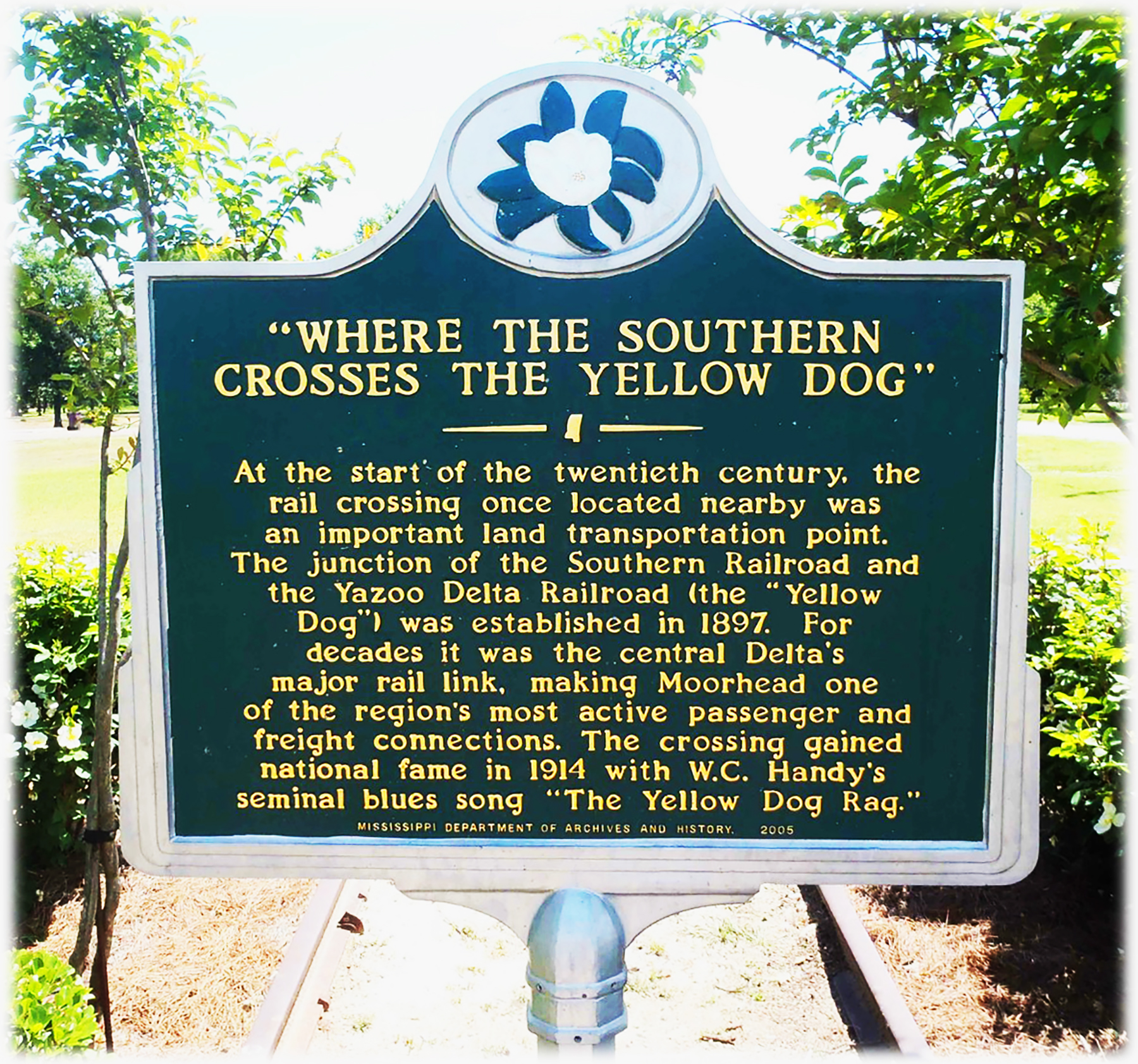
The song tells the tale – real or imagined — of Miss Susie Johnson, who is lamenting that her“easy rider” (lover, pimp or gigolo) has runoff.  The frantic search elicits a letter informing her that he “struck this burg today,” but had left and gone to “where the Southern cross the Yellow Dog.”

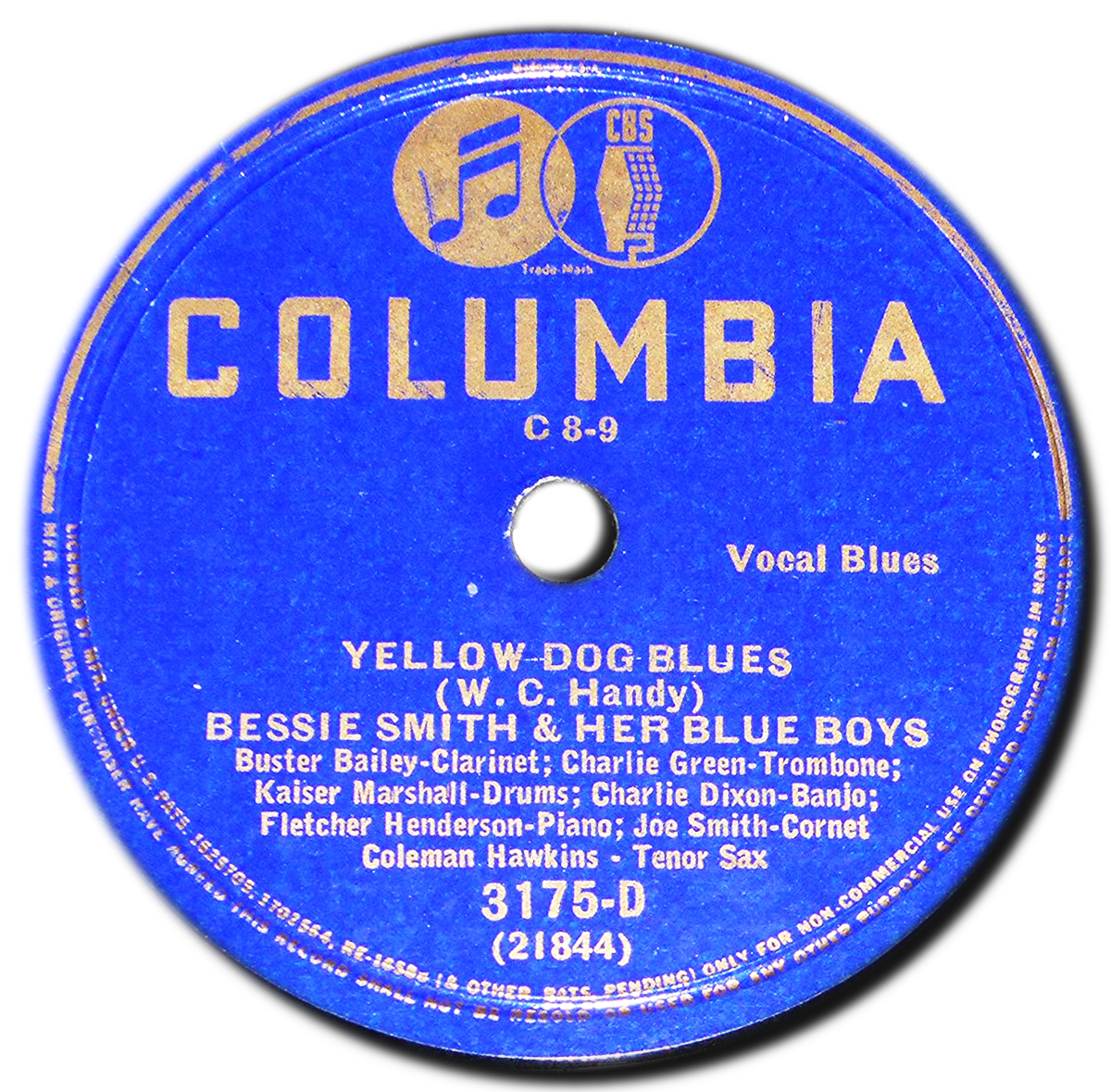
Yellow Dog Blues – Bessie Smith 1925

Commentary on Bessie Smith’s Yellow Dog Blues by Dan Radlauer

For a deeper look I’ve asked an accomplished musician, my brother Dan Radlauer, to assess the best-known rendition by Bessie Smith, accompanied by Henderson’s Hot Six (aka Bessie Smith and her Blue Boys) recorded in New York on May 6, 1925.

“The song starts with standard, predictable blues chord changes and evolves smoothly into some complex and rich variations on that chord progression.  After the truncated blues form intro, where everyone in the band except the singer is playing, we launch into a very simple accompaniment behind Bessie Smith.

Twelve-bar Blues has become the primary “Blues” form, and this song is no exception.  The hallmark of a Blues chord progression is the fifth measure.  Various things can happen before or after that spot, but at that point the defining moment is going to the “IV” chord.

Here the cornet plays subtle fills and long notes, keeping the style and mood.  The first two verses use the simplest of Blues Progressions.  No superfluous chord changes.  Just meat and potatoes Blues. Pretty much: I, IV, I, V, I, V.”

“But at the third verse, all bets are off.  Each subsequent verse gets more harmonically complex and sophisticated. The third verse uses a VERY unexpected chord at the 9th measure. I don’t think this would ever happen spontaneously.  Either it was rehearsed, or there was a written “chart” to help everyone stay on the same harmonic page.

On the YouTube link https://youtu.be/JVL24i38F2s of this song, at about 2:30, listen for a descending line.  This is a very distinctive moment and the band executes it beautifully.  If you listen really close at 2:45, another special moment happens.  The band has hit the important sign post of going to the IV chord in the fifth measure, but in the 6th measure, they switch that chord from a MAJOR chord, to a MINOR chord.  While not unheard of, this is a wonderful little surprise and would most likely be planned ahead of time.

The post W.C. Handy Remembers appeared first on Dagogo.

Book Review: Better Days Will Come Again – The Life of Arthur Briggs by Travis Atria

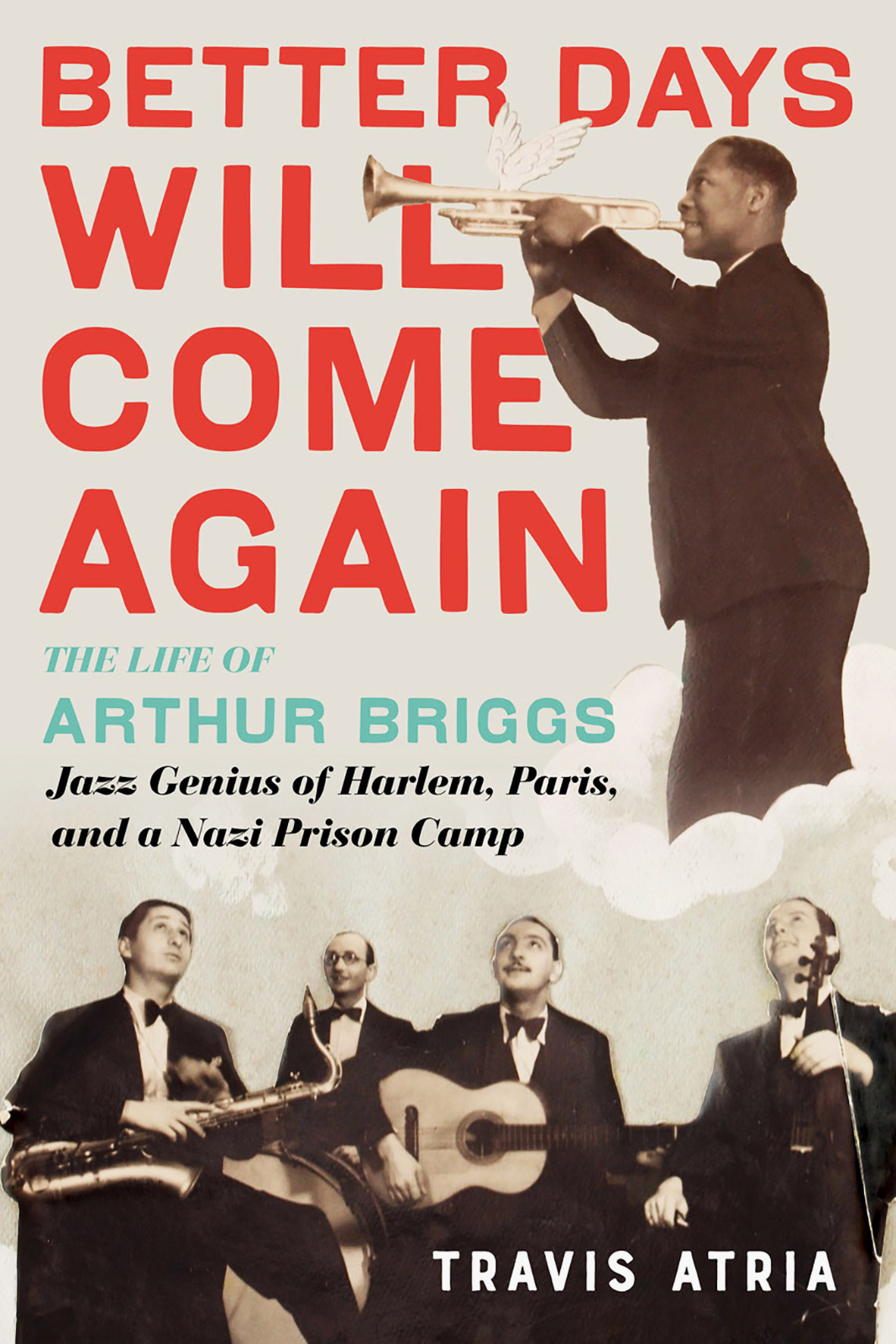
Better Days Will Come Again: The Life of Arthur Briggs – Jazz Genius of Harlem, Paris and a Nazi Prison Camp

By Travis Atria
Chicago Review Press (2020), bibliography and index, 60 photos, 300+ pages.

The book cover is based on a 1935 Hot Club promotional poster with L to R: Alix Combelle, Georges Marion, Django Reinhardt and Stephane Grappelli, courtesy of Denis Pierrat.

Arthur Briggs (1901-1991) was considered the premier Jazz trumpet player of Europe between the two world wars. Living in France continuously after 1931, he deserved his sobriquet “the Louis Armstrong of France.”

A Colorful Tale

This the most exciting and readable new Jazz title in some time, a lilting saga of early Jazz culture and performance in Chicago, Harlem, London, Paris, Berlin and beyond. Written with a novelistic flow, it smoothly traces the arc of Briggs’ stupendous life and career, deftly placing him in both the evolutionary hothouse of early Jazz and the broader context of social history and world events.

Briggs’ close associates were among the most colorful and influential characters of early Jazz: bandleaders James Reese Europe, Will Marion Cook, Noble Sissle and Sam Wooding; dancer and singer Josephine Baker; reed wizard Sidney Bechet; gypsy guitarist Django Reinhardt and saxophone master Coleman Hawkins.

Travis Atria is a fresh name in Jazz scholarship, showing great promise. Having previously only co-written a biography of Curtis Mayfield, his insights and comprehensive research bring into focus the evolution of jazz trumpet and Briggs’ growing understanding of his art. I enjoyed the excellent narration in the audiobook format.

Briggs, incidentally, was born on the Caribbean island of Grenada, a fact he concealed most of his life. Migrating to the United States at age 16, he witnessed and participated in the emergence of Jazz in Chicago, Harlem and the black vaudeville halls of New York City. He was one of the first skilled jazz trumpeters heading for Europe — a handsome musician and strapping young man migrating through the wildest environs of the Jazz Age.

Harlem on the Continent

Briggs went to London in 1919 with bandleader Will Marion Cook (1869-1944). Cook was one of the most formidable musicians of the pre-recording era, a bridge from Ragtime to early Swing, and a mentor whom Arthur called “Dad.” Briggs toured Europe with Cook’s Southern Syncopated Orchestra and Sidney Bechet. We witness Bechet purchase his first soprano saxophone. It stumped him initially, so Arthur gave Sidney his first instruction on the instrument.

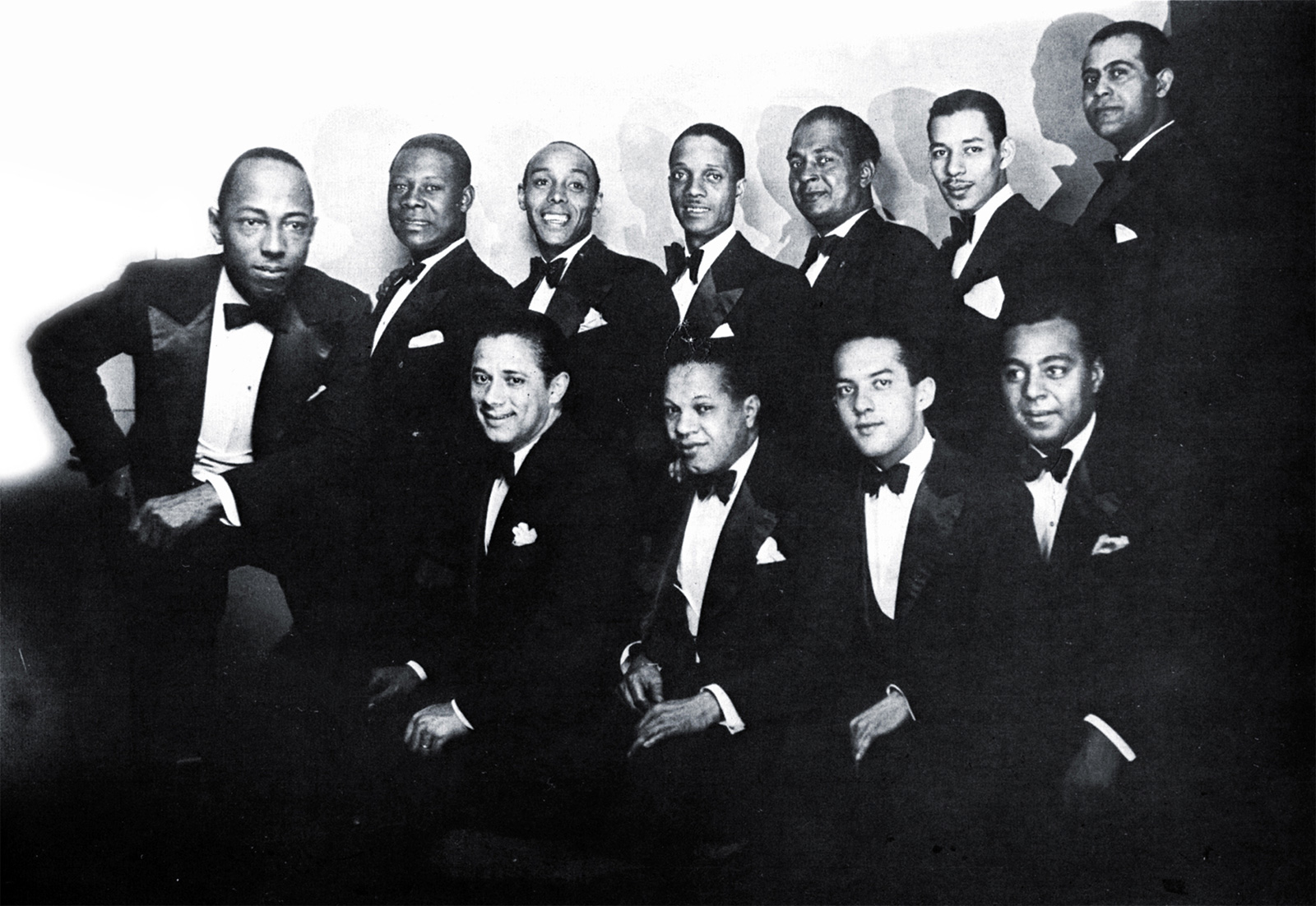
The Johnson-Briggs Orchestra (aka The Harlemites) was the hottest Jazz outfit in Europe around 1932. Freddy Johnson and Arthur Briggs are far left, Frank Goudie far right.

In the early 1930s, Briggs and piano player Freddy Johnson ran The Harlemites jazz orchestra in Paris. Seated below Briggs in the band photo is Peter Duconge, a close associate of Briggs. A New Orleans-born clarinet player with an illustrious Creole heritage, Duconge married cabaret operator Bricktop and toured Europe with Louis Armstrong. Another Louisiana Creole and Briggs associate was Frank Big Boy Goudie who made his recording debut with this orchestra just months earlier.

The 1933 “Harlem Bound” is possibly the hottest jazz recording made on the Continent before 1940.

Harlem Bound – Johnson-Briggs Harlemites Orchestra


The narrative takes us to the heart of Harlem-on-the-Seine at Bricktop’s Cabaret in the Montmartre quarter of Paris. The Prince of Wales, John Steinbeck and a “zozzled” Ernest Hemingway hang out and carry on while Arthur plays background music for the privileged Americans at the club, typified by Zelda and F. Scott Fitzgerald. For songwriter Cole Porter, Briggs premiers “Night and Day.” Then he heads for Berlin at the height of its late-1920s decadence, cutting some 64 sides for the Deutsche Grammophon record label.

Waxed in Paris, the masterful “Japanese Sandman” of 1933 probably replicates the quiet, sophisticated duets he played with Freddy Johnson at Bricktop’s. The spectacular “Braggin’ the Briggs” is a double-sided tour de force for Arthur recorded only months before his arrest in October 1940.

Japanese Sandman Briggs & Johnson duet 1933


Braggin’ the Briggs 1940


Detained by the Nazis

Briggs’ story reached a dramatic climax when he was detained by the German occupation government of France and sent to Saint-Denis Internment Camp. Designated Stalag 220, located on the grounds of an ancient gothic basilica and fortress six miles from Paris, Saint-Denis contained about 2000 interned citizens of Canada, Australia and New Zealand, downed English pilots and miscellaneous detained nationals.

Though harsh, Briggs’ confinement was mild by Nazi standards. Red Cross food shipments probably saved him from starvation and his French common-law wife visited, sometimes bringing hot meals. Overcoming severe adversity, they were eventually wed in the camp’s visitor hut.

He was consigned to organizing and conducting music ensembles. These were not like the demonstration orchestras of Terezin or the ghastly caricatures of music ensembles in the death camps. His music was played for the prisoners, and on occasion their captors. The group received a gift of three new trumpets from the Selmer Horn Company.

With his makeshift orchestra of internees, Briggs transcribed Beethoven’s 5th Symphony, performed Mozart and Handel, Strauss and Smetana, covert American songs and “Night and Day,” the tune he’d introduced a decade earlier at Bricktop’s. Arthur often concluded his prison concerts with a spiritual called, “Better Days Will Come Again.”

Arthur Briggs, Paris 1962. Jazzindex.org

Aftermath and Legacy

Through it all Briggs conducted himself with the calm dignity, moral rectitude and total commitment to his craft that he evidenced throughout his momentous life. After the war, the trumpeter returned to performing for a few years but soon fell out of step with Modern Jazz. Retiring from professional music, he focused on teaching music and his family.

Late in life Briggs married a much younger woman, fathering a daughter. Directing his full attention to her upbringing, they were very close. His daughter, Barbara Pierrat-Briggs writes in the preface that Arthur helped her with homework and “knew all my dolls by name.”

Methodology

After Arthur’s passing in 1991, the Briggs family guarded his legacy until finding a writer willing and able to impart the scope, context and heart that an authorized biography merited. In an epilogue, his nephew James Briggs Murray makes the salient point that his uncle’s generation built the main edifice of Jazz before 1940, calling subsequent developments “an addendum – based on foundations laid down by those who’d come before.”

Crucial to this book was Briggs’ unpublished memoir based on oral interviews. Mr. Atria cross-checked and fortified it with a broad spectrum of documentary sources, first-hand accounts, wartime archives, the African American press of the day and the substantial body of literature that now recounts events of Jazz in Europe before the Second World War.

My one reservation regards the amount of space devoted to Josephine Baker’s story. Briggs worked with Baker on numerous occasions, but her career was tertiary to his, aside from launching Le Tumult Noir in Paris. Nonetheless, the author often tarries from Arthur’s tale to keep us abreast of her story, even though admitting that Briggs didn’t even mention Josephine in his memoir and suspecting that Arthur disapproved of her loose morals and questionable financial ethics. Baker’s story is uplifting, but I found her close-up cameos a distraction from the trumpeter’s chronicle.

This new biography makes it clear Arthur Briggs witnessed and participated in key developments of early Classic Jazz. For two decades he was a driving force in a Golden Age of Jazz, and the best trumpet player of any kind on the European Continent. When confronted by oppression, he demonstrated character, determination and humanity. Congratulations to Mr. Atria for a job well-done and I look forward to his next effort.


The post Book Review: Better Days Will Come Again – The Life of Arthur Briggs by Travis Atria appeared first on Dagogo.

The Maestro and the Gypsy: Andre Ekyan and Django Reinhardt, 1932-50

Reed player, bandleader and impresario, Andre Ekyan and Django Reinhardt.

This column introduces Jazz musician Andre Ekyan (1907-1972) and tells the story of his role mentoring and promoting gypsy guitarist Django Reinhardt, guiding him into the world of professional music performance. Ekyan played alto saxophone and clarinet and made robust contributions to the development of Jazz in France.

A self-taught musician, arranger and bandleader, Ekyan promoted cabaret venues, jazz clubs, recordings, concerts and jam sessions.  An early proponent of Reinhardt, he frequently acted as his informal promoter, agent and valet.  They were frequently associated during the years 1932-1950.

Photographed by William J. Gottlieb, Django’s fire-damaged left hand is clearly visible.

Django: A Musical Force of Nature

Gypsy jazz guitarist Django Reinhardt (1910-1953) was a creative one-of-a-kind talent and musical force majeure.  He was the first to invent an original jazz style outside of America.  The unschooled Manouche gypsy launched an innovative musical form based on guitars, violin and his own creativity in the late 1930s.

Reinhardt was as fundamental to the emergence of guitar as a Jazz instrument as Louis Armstrong had been for the trumpet.  The gypsy was unequaled for dazzling on-the-fly chord changes, intuitive grasp of harmony and brilliant composing.  Though unable to read or write musical notation, Django was one of the most profound musical minds of modern times.

The Hot Clubs of France were a federation of enthusiasts dedicated to popularizing Jazz.  The Paris chapter sponsored the earliest performances and recordings of Django Reinhardt and the Quintet of the Hot Club of France.  His music became the nucleus around which French Jazz coalesced.  The Hot Club Jazz movement is stronger today than ever under the global banner of Gypsy Jazz.

Coleman Hawkins and friends recorded in Paris, April 1937.

Ekyan: A Creative Prodigy

Andre Ekyan’s father was from Armenia and his mother from Hungary. Raised in France, he was something of a child prodigy, taking up the clarinet at a young age and becoming widely popular. Andre was active in London, New York and Paris, recording with the cream of French, British and American jazz musicians. He worked or toured in the orchestras of Jack Hylton (London, 1930-31), Gregor (Paris, 1932-33), Tommy Dorsey (New York, 1936) and the French Swing outfit of Ray Ventura (1938, 1941).

Ekyan probably did more than almost anyone else to lift French music into the Swing era.  He was one of the most original and accomplished Jazz musicians of Europe and a pioneer in organizing, promoting and advocating for the music.  Early in his career, Andre developed his own style independently from the preeminent saxophone stylist of the era, Coleman Hawkins.

Beginning in 1937 the bandleader, clarinet and alto saxophonist made discs on the Swing label with French and American Jazz musicians.  He recorded vigorously for Swing with Django Reinhardt, Coleman Hawkins, Benny Carter (trumpet), Alix Combelle (tenor sax), Frank Big Boy Goudie (trumpet and tenor sax), Joe Turner (piano), Jacques Butler (trumpet), Tommy Benford (drums) and others.

Helater told French jazz writer Charles Delaunay about a jam session with Django at the Swing Time club.  “Benny Carter, Coleman Hawkins and Bill Coleman were also there.  We began to play ‘I Won’t Dance,’ a tune that modulates a lot as it is.  We tried having fun playing it in odd keys.  Bill Coleman gave up first, then Coleman Hawkins.  Finally, it was just Benny Carter and Django.  Two masters.”


Andre Ekyan (alto sax) and Django Reinhardt (guitar),1940-41:

Hungaria


A Pretty Girl is Like a Melody


Rosetta


The Impresario and the Guitarist

Woven through most of the guitar player’s professional career was the supportive, low-key presence of Ekyan.  His clarinet or alto sax are heard on many of Django’s discs, 1937-41 and 1949-50. Ekyan.  The devoted impresario encouraged or organized numerous recordings, concerts, jam sessions and gigs for the guitar player.  Below are highlights of their association.

1932 – Ekyan first encounters Django Reinhardt and brings him into the orchestra of French crooner, Jean Sablon.

1934 – Sablon’s quartet, with Django and Ekyan, appear in London and broadcast from Piccadilly on the BBC.

1937 – Django jams at Ekyan’s jazz club, Swing Time.

1939 – Ekyan organizes Reinhardt’s gig at Jimmy’s Bar.

1940 – Andre participates in Reinhardt’s jam-session-on-disc series known as Django’s Music.

1941 – The bands of Django, Ekyan and Gus Viseur perform on a three-tiered concert stage at Moulin Rouge.

1942 – Joint concert at Salle Pleyel.

1949 – Ekyan persuades Django to resume performing. Residency of the Reinhardt-Ekyan quintet at several nightclubs in or near Paris.

1949-50 – The quintet tours South of France, Switzerland and Italy.


The post The Maestro and the Gypsy: Andre Ekyan and Django Reinhardt, 1932-50 appeared first on Dagogo.

Benny Goodman’s Kingdom of Swing, Part 2 of 2

Also read Benny Goodman’s Kingdom of Swing, Part 1 of 2

Combos, Maturity and Legacy

Benny Goodman 1971

In the late 1930s the innovative Swing combos of Benny Goodman http://www.jazzhotbigstep.com/45801.html (1909-1986) shaped a new small-band Jazz format.  His trios, quartets and sextets introduced sophisticated combo jazz to a broad popular audience.  Goodman did for clarinet what Louis Armstrong had done for the trumpet by giving it a newly assertive leadership role in the jazz ensemble.  The achievements of his small bands alone would have been sufficient to mark Goodman for greatness.

Benny Goodman and his Orchestra were the most popular dance band of the Swing era.  He made about 5,000 commercial recordings that were definitive statements of American popular culture, selling more than 100 million records during a career lasting into the early 1970s.  This article and audio clips are based on the award-winning four-part radio program, Benny Goodman’s Kingdom of Swing.

Clip – From Yale Library Collection


Clip – Live Medley 1959, 1937


The classic Benny Goodman Quartet: Lionel Hampton, Teddy Wilson, Benny Goodman and Gene Krupa.

Chamber Music Jazz 

Benny Goodman’s trios, quartets and sextets — a format that he described as “just like chamber music” — created great excitement among jazz fans, critics and fellow musicians.  Between 1935 and ‘39 he waxed about fifty small band records, some selling up to 50,000 copies.

The combos emerged from his desire to explore new artistic challenges, prompted by his encounters with extraordinary soloists; initially, pianist Teddy Wilson and drummer Gene Krupa in 1935.  Vibraphonist Lionel Hampton was added in 1936 and guitarist Charlie Christian in August 1939.

These groups featured Goodman’s clarinet interacting intimately with equally skilled soloists.  The combos succeeded in part because Goodman was capable of playing infinite fresh improvisations.

Benny’s trios, quartets and sextets proved the commercial and aesthetic viability of the format, inspiring other bandleaders to organize small ensembles.  By the late 1930s Goodman’s innovative ‘chamber jazz’ was widely imitated, with combos spinning off from the orchestras of Count Basie, Tommy Dorsey and Duke Ellington.

Clip – Introduction to BG Small Bands


Gene Krupa.

Benny’s Trios and Quartets

Starting in 1935 Goodman presented trios, quartets and small ensembles of various sizes on record and in live performance which was among his best work.  The combos began with his 1935 trio recordings with drummer Gene Krupa and pianist Teddy Wilson went on for decades with shifting personnel rosters.

A brilliant, highly skilled musician, Teddy Wilson (1912-1986) was formally trained in music theory.  A perfect match for Goodman, Teddy’s right-hand keyboard runs followed the clarinet lines seamlessly with nearly telepathic rapport.

Drummer Gene Krupa (1909-1973) was part of the original Benny Goodman Trio.  He shared those duties with some of the best drummers in Jazz as he developed a successful independent career becoming a big star and bandleader on his own.  Yet, Krupa was the star soloist in 1937 on “Sing, Sing, Sing” — including a lengthy drum solo which was the first of its kind on record. It was also one of the Goodman Orchestra’s biggest hits.  Though he left the orchestra to start his own band in 1938, Krupa performed sporadically with Goodman for decades.

Lionel Hampton.

In 1936 Goodman added Lionel Hampton (1908-2002), launching the Benny Goodman Quartet.  An innovation in Jazz, Hampton’s vibraphone generated both percussive notes and sustained piano-like tones, a complementary blending with Teddy Wilson’s piano and Benny’s clarinet.  Hamp was an extraordinary showman. Though he could play with restraint on velvety ballads, his bubbling solos and raucous call-and-response routines galvanized audiences.

The principal musicians of the original quartet all moved on to independent music careers and were replaced by a dazzling array of subsequent talent.  But they always remained welcome guests.

Clip – BG Sextet Pt 1, Charlie Christian


The Benny Goodman Sextet with Georgie Auld, Benny Goodman, Charlie Christian, Artie Bernstein and Cootie Williams.

Charlie Christian and the Goodman Sextets

Goodman hired amplified guitar player Charlie Christian (1916-1942) after a single late-night jam session.  With the addition of Christian, the Benny Goodman Sextet was created.  The guitar player’s sound was something entirely new and quite different.  A brilliant improviser, he presented a bell-like tone, adventurous chording and confident angular lines that echoed saxophonist Lester Young.

Upon first hearing a melody and chord structure, Christian was instantly ready to play horn-like solos indefinitely.  He rejected the previous conventions generally limiting the guitar to supplying chords and rhythm – certainly on records.  An unschooled but gifted musician, Christian was a dynamic innovator. He likely chose the newly available amplified guitar in order to play powerful single-note melody lines and hold his own with the horns.

Sadly, just as his star was rising, Charlie developed advanced tuberculosis. Coupled with his unhealthy lifestyle (drinking, partying and worse) the disease killed him at age 25.  To his credit, Goodman quietly paid Christian’s medical bills.

Charlie Christian was one of the best-known performers who played amplified guitar in a purely Jazz context.  Down Beat Magazine readers voted him best guitarist three consecutive years in the polls of 1940, ’41 and ‘42.  He was to have a huge impact on Benny Goodman, Jazz, Popular music and future generations of guitarists despite his premature passing.

Clip – BG Sextet Pt 2 – Christian, Lester Young, Buck Clayton


A Goodman Sextet with Christian, Hampton and Krupa.

The post Benny Goodman’s Kingdom of Swing, Part 2 of 2 appeared first on Dagogo.