Decades after their deaths, Ella Fitzgerald and Billie Holiday loom giant over the American music panorama, inspiring each jazz vocalist, particularly the ladies. Fitzgerald and Holiday’s contributions are huge, their work timeless, their joys and sorrows expressed in songs each thrilling and crushing.
Jazz as a type of common music has largely light from America’s music tradition, however Fitzgerald and Holiday’s brilliance lives on, a beacon to their creative excellence. Much proof for that excellence may be heard in two new vinyl units, each produced by Ken Druker.
Neither of those units is pure analog. Ella’s was ready from Ellen Fitton’s 2003 digital transfers, which had been used for Jukebox Ella: The Complete Verve Singles, Vol.1, which documented Fitzgerald’s whole output of singles on the label—50 complete, from 1956 to 1966. Chosen by Fitzgerald with help from her supervisor, Verve Records proprietor and producer Norman Granz, with an eye fixed towards scoring chart hits, these performances reveal Ella’s penchant for swinging, playful materials, which she uniquely remodeled alongside a few of the finest musicians in jazz. Pressed at Precision Record Pressing in Burlington, Ontario, Canada, the three-LP set is dead-quiet, from the earliest mono singles by the late ’50s stereo tracks, organized chronologically. The discs in my set had been ruler flat, the trifold packaging flawless. Poly-lined sleeves would have been a pleasant contact, however regardless of: Most of us will provide our personal. The sound is ok if a bit congested within the strictest audiophile phrases.
Ella sings with heart-crushing intimacy on one music and expounds in joyous, rollicking swing the subsequent. Her vocal picture is giant and centered, the varied ensembles positioned within the background. The info offered within the liner notes is beneficiant, together with an entire listing of personnel for every efficiency and the date of the unique launch.
Fitzgerald’s good diction, rhythmic really feel, contagious move, and luminous tone mild up the third monitor on Side A, “Too Young for the Blues,” supported by a big brass part. The subsequent spotlight, on Side B, is Buddy Bregman’s busy big-band association of “The Silent Treatment,” adopted by “Hear My Heart,” a busy Afro-Cuban burner and one in every of only a few tracks the place the accompaniment threatens to overwhelm Fitzgerald’s vocals. (It does not.)
“Hotta Chocolatta,” a corny single from 1957, swings so arduous it is inconceivable to not get caught up in its spirit. Ella’s rendition of “A-Tisket, A-Tasket,” a model of her 1938 hit with drummer Chick Webb, is unimaginable enjoyable.Hard-swinging Ella is offset by introspective Ella—boisterous organ jazz on “Your Red Wagon” by candy introspection on “Travelin’ Light.” There’s a clutch of Christmas songs, a few bossa nova requirements, some rocking belters, and at the very least one Sinatra-style crooner. The set closes with the devastating “Lonely Is.”
Billie Holiday’s 1952–58 recordings on Verve have lengthy been straightforward to seek out, particularly low-cost reissues and EU-based, digitally sourced vinyl records that defy US copyright legislation. In the late ’80s, Columbia reissued lots of her Thirties/’40s recordings on its Quintessential Billie Holiday Masterworks collection. They did it once more in 2001 on Lady Day: The Complete Billie Holiday on Columbia 1933–1944, utilizing CEDAR audio restoration know-how.
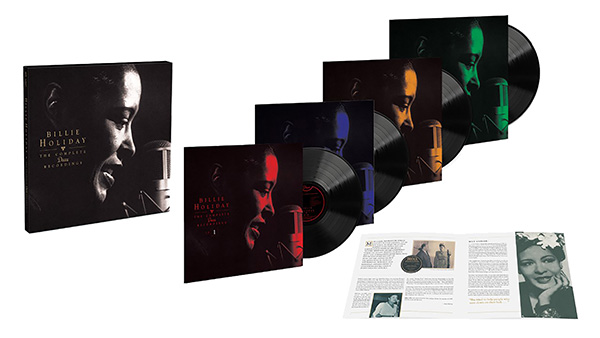
But reissues of Holiday’s Decca recordings, minimize on 78s between 1944 and 1950, had been uncommon till The Complete Billie Holiday Decca Recordings was launched on CD in 1991. This vinyl set I’m reviewing right here—50 tracks on 4 LPs—relies on that digital assortment. It contains grasp takes off all 36 songs she recorded for the label plus additional variations and alternate takes.
Holiday’s unimaginable instrument, its distinctive texture and interior craving, was famously tinged with sorrow, however there have been different tinges, too: of slyness, figuring out, humor. All these qualities shine by n this wondrous vinyl set, pressed at Hand Drawn in Addison, Texas, which was based in 2014 and calls itself the “most superior vinyl urgent facility on the planet.” Few particulars are given.
The tracks on the set come from a variety of sources. Some come from unique acetate security discs, transferred to digital tape by engineer Steven Lasker in 1990. Early Fifties disc-to-tape transfers had been used for 3 titles, and for the tracks recorded between 1946 and 1948, recent transfers from disc had been used. “Engineer Doug Schwartz took particular care to establish which of the varied tapes in MCA’s vaults had been the unique 30ips masters for Billie’s periods between August 17, 1949, and March 8, 1950. This set comprises one-step transfers from these originals,” in line with the liner notes.
Which would possibly clarify why a lot of this set sounds rapid, clear, and pure. It’s as if you happen to’re with Billie, producer Milt Gabler, and the band at Decca’s New York Studios at 50 West 57th Street.
The first half emerges as if from a dream, all doleful torch songs and laments. With “Solitude,” Holiday grows extra playful. Her distinctive, acquainted phrasing turns into extra obvious, coupled with a surreal, disembodied, powerfully disquieting attract. On “Tain’t Nobody’s Business If I Do,” she burns at low simmer, cooking up a stew of refined inflection and easy dynamic management. Animated and in management, Holiday swings and swerves, together with her particular lilt, by “Baby Get Lost,” “Them There Eyes,” a few wry duets with Louis Armstrong, then a hard-swinging “Now or Never.” On the next-to-last monitor—an early recording of “God Bless the Child”—Holiday rises above a mawkish Mitch Millerish refrain with an impressed vocal efficiency.
Not 100% analog, however a humiliation of vinyl riches.
Decades after their deaths, Ella Fitzgerald and Billie Holiday loom giant over the American music panorama, inspiring each jazz vocalist, particularly the ladies. Fitzgerald and Holiday’s contributions are huge, their work timeless, their joys and sorrows expressed in songs each thrilling and crushing.
Jazz as a type of standard tune has largely light from America’s music tradition, however Fitzgerald and Holiday’s brilliance lives on, a beacon to their creative excellence. Much proof for that excellence might be heard in two new vinyl units, each produced by Ken Druker.
Neither of those units is pure analog. Ella’s was ready from Ellen Fitton’s 2003 digital transfers, which had been used for Jukebox Ella: The Complete Verve Singles, Vol.1, which documented Fitzgerald’s total output of singles on the label—50 whole, from 1956 to 1966. Chosen by Fitzgerald with help from her supervisor, Verve Records proprietor and producer Norman Granz, with a watch towards scoring chart hits, these performances reveal Ella’s penchant for swinging, playful materials, which she uniquely reworked alongside a number of the finest musicians in jazz. Pressed at Precision Record Pressing in Burlington, Ontario, Canada, the three-LP set is dead-quiet, from the earliest mono singles by way of the late ’50s stereo tracks, organized chronologically. The discs in my set had been ruler flat, the trifold packaging flawless. Poly-lined sleeves would have been a pleasant contact, however regardless of: Most of us will provide our personal. The sound is okay if a bit congested within the strictest audiophile phrases.
Ella sings with heart-crushing intimacy on one tune and expounds in joyous, rollicking swing the following. Her vocal picture is giant and centered, the varied ensembles positioned within the background. The info offered within the liner notes is beneficiant, together with an entire checklist of personnel for every efficiency and the date of the unique launch.
Fitzgerald’s good diction, rhythmic really feel, contagious stream, and luminous tone gentle up the third monitor on Side A, “Too Young for the Blues,” supported by a big brass part. The subsequent spotlight, on Side B, is Buddy Bregman’s busy big-band association of “The Silent Treatment,” adopted by “Hear My Heart,” a busy Afro-Cuban burner and certainly one of only a few tracks the place the accompaniment threatens to overwhelm Fitzgerald’s vocals. (It would not.)
“Hotta Chocolatta,” a corny single from 1957, swings so onerous it is inconceivable to not get caught up in its spirit. Ella’s rendition of “A-Tisket, A-Tasket,” a model of her 1938 hit with drummer Chick Webb, is unimaginable enjoyable.Hard-swinging Ella is offset by introspective Ella—boisterous organ jazz on “Your Red Wagon” by candy introspection on “Travelin’ Light.” There’s a clutch of Christmas songs, a few bossa nova requirements, some rocking belters, and not less than one Sinatra-style crooner. The set closes with the devastating “Lonely Is.”
Billie Holiday’s 1952–58 recordings on Verve have lengthy been straightforward to search out, particularly low-cost reissues and EU-based, digitally sourced vinyl records that defy US copyright regulation. In the late ’80s, Columbia reissued a lot of her Nineteen Thirties/’40s recordings on its Quintessential Billie Holiday Masterworks collection. They did it once more in 2001 on Lady Day: The Complete Billie Holiday on Columbia 1933–1944, utilizing CEDAR audio restoration know-how.
But reissues of Holiday’s Decca recordings, lower on 78s between 1944 and 1950, had been uncommon till The Complete Billie Holiday Decca Recordings was launched on CD in 1991. This vinyl set I’m reviewing right here—50 tracks on 4 LPs—relies on that digital assortment. It consists of grasp takes off all 36 songs she recorded for the label plus further variations and alternate takes.
Holiday’s unimaginable instrument, its distinctive texture and internal craving, was famously tinged with sorrow, however there have been different tinges, too: of slyness, understanding, humor. All these qualities shine by way of n this wondrous vinyl set, pressed at Hand Drawn in Addison, Texas, which was based in 2014 and calls itself the “most superior vinyl urgent facility on this planet.” Few particulars are given.
The tracks on the set come from a spread of sources. Some come from authentic acetate security discs, transferred to digital tape by engineer Steven Lasker in 1990. Early Nineteen Fifties disc-to-tape transfers had been used for 3 titles, and for the tracks recorded between 1946 and 1948, contemporary transfers from disc had been used. “Engineer Doug Schwartz took particular care to establish which of the varied tapes in MCA’s vaults had been the unique 30ips masters for Billie’s periods between August 17, 1949, and March 8, 1950. This set accommodates one-step transfers from these originals,” in accordance with the liner notes.
Which would possibly clarify why a lot of this set sounds speedy, clear, and pure. It’s as in case you’re with Billie, producer Milt Gabler, and the band at Decca’s New York Studios at 50 West 57th Street.
The first half emerges as if from a dream, all doleful torch songs and laments. With “Solitude,” Holiday grows extra playful. Her distinctive, acquainted phrasing turns into extra obvious, coupled with a surreal, disembodied, powerfully disquieting attract. On “Tain’t Nobody’s Business If I Do,” she burns at low simmer, cooking up a stew of refined inflection and easy dynamic management. Animated and in management, Holiday swings and swerves, along with her particular lilt, by way of “Baby Get Lost,” “Them There Eyes,” a few wry duets with Louis Armstrong, then a hard-swinging “Now or Never.” On the next-to-last monitor—an early recording of “God Bless the Child”—Holiday rises above a mawkish Mitch Millerish refrain with an impressed vocal efficiency.
Not 100% analog, however a humiliation of vinyl riches.
We’re at all times looking out for good — if not definitely nice — phono preamps to get our fingers on to evaluation right here for the AnalogPlanet devoted. Since I had just lately reviewed the Pathos InPol Remix MkII built-in amplifier for our sister website Stereophile, I used to be intrigued to see if the corporate’s newest iteration of the Pathos In The Groove phono preamp may be worthy of our consideration.
“Entirely redesigned,” claims the Pathos website concerning the In The Groove unit, additional stating it “options top quality built-in circuits, becoming with flexibility to any form of phono detector. It is an analog strong state product that includes passive RIAA preamplification made up by two chassis, outfitted with multi-tension linear energy provide and three settings: impedance and capability might be set by the entrance panel, whereas sensitivity [gain can be set] by the rear panel. These settings enable discovering the right match to get greatest efficiency and take advantage of your audio system.” (Hmm, appears like our kinda gear. . .)
At an SRP of $1,895, the In The Groove phono field is competitively priced, and monetarily much like my very own reference piece, the all-tube Tavish Design Adagio MM/MC phono stage that goes for $2,290. Once I acquired the greenlight from AP main domo Mike Mettler, I linked with U.S. Pathos distributor Kevin Deal of Upscale Audio in La Verne, California to get a evaluation unit despatched my means — and we have been formally able to roll.
Specs & Setup
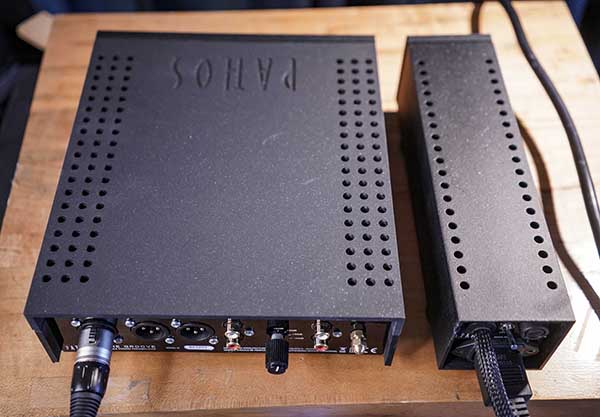
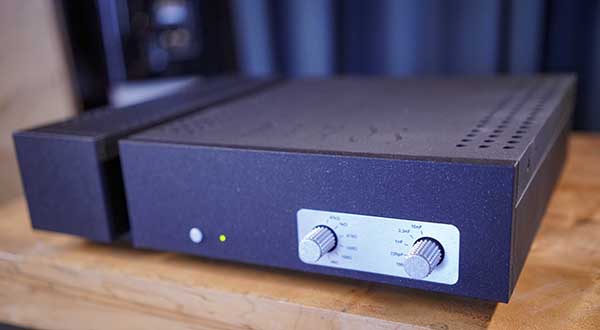
The Pathos In The Groove — a.okay.a. the ITG — is smaller than most phono preamps. It can match virtually anyplace — so long as you make room for its sidekick-like energy provide, that’s. The PSU is lower than half the scale of the principle unit, making for a comfy match wherever the 2 are located. The primary ITG unit stands 7.87 x 2.75 x 10.2 inches (w/h/d) and weighs 5 kilos, whereas the ability provide is smaller, measuring 2.36 x 9 x 2.75 inches (w/h/d) and weighing in at 2.64 kilos — virtually two peas within the proverbial phono-stage pod. Available in two finishes — black and silver — the In The Groove collective, each its enterprise field and exterior energy provide, are constructed of aluminum, and handmade in Italy. (As you’ll be able to see right here, my evaluation unit sports activities the black end.)
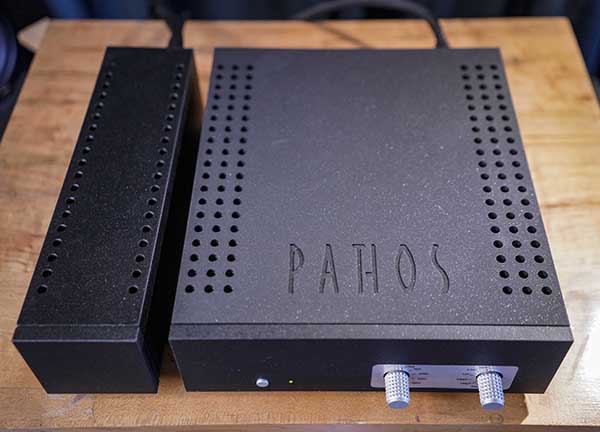
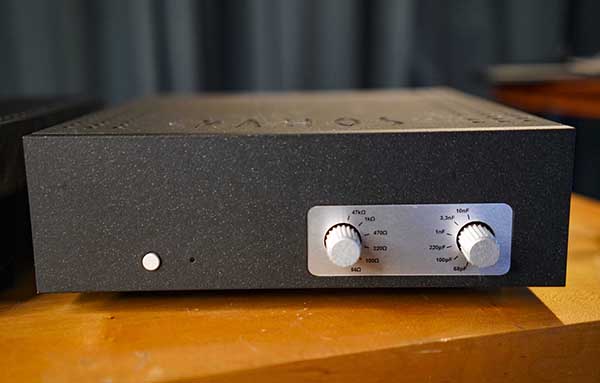
A spartan-looking machine, and delicate in look (in contrast to its extra visually daring Pathos siblings), the In The Groove phono preamp presents an uncluttered façade. A small button prompts energy, and a tiny inexperienced LED signifies the unit is electrically lively. (It turns crimson when not in use.) Two metallic dials deal with shifting coil (left) and shifting magnet (proper) cartridges, respectively. Both knobs really feel substantial to the contact, although they don’t make audible clicks when rotated by way of the settings.
Each dial is roofed in a latticework of raised metallic nubs, affording a good grip. The left dial is marked in ohms for MC/impedance, providing 47k, 1k, 470, 220, 100, and 56 ohms respectively. The proper dial handles MM/capacitance, marked, in descending order, 10nF, 3.3nF, 1nF, 220pF, 100pF, and 68pF. This multitude of settings insures a cushty match with a wide selection of stereo cartridges.
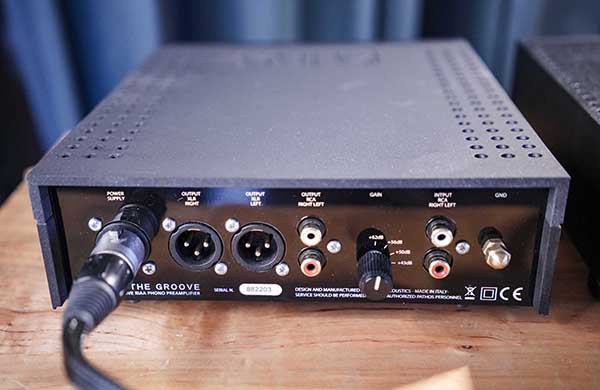
The rear of the principle unit reveals a five-pin energy provide connector, two XLR and two RCA output jacks, a achieve dial with 4 settings (+62dB, +56dB, +50dB, and +43dB), and a pair of RCA inputs. The In The Groove’s grasp energy toggle change is situated on the butt of the ability provide. Each unit is heavier than it seems, and each bit has 4 arduous rubber toes.
Other ITG specs embrace a frequency response of RIAA ±0.2dB; THD as 0.04% @1V RMS, 1kHz; max output stage as 5.5V RMS unbalanced, and 5.5+5.5V RMS balanced; output impedance as 75 ohms unbalanced and 40 ohms balanced; and energy consumption as 10W max (<0.5W in standby mode).
For this explicit ITG evaluation, I used my reference system, along with another tools in hand, together with a Kuzma Stabi R turntable with a Kuzma 4Point tonearm and a Clearaudio Jubilee Panzerholz MC cartridge; a VPI Avenger Direct turntable with a VPI Fatboy 12in gimbal tonearm and an Ortofon Verismo MC cartridge; Miyajima Wo-1 preamplifier; Shindo Haut-Brion energy amplifier; and DeVore Fidelity Orangutan O/96 audio system. Cabling consisted of Triode Wire Labs Spirit II (RCA), Analysis Plus Silver Apex (RCA), Shindo (RCA), and Analysis Plus Silver Apex speaker cables (bananas).
Listening Sessions
Playing a wide range of records and genres, the In The Groove phono preamp spoke with alert boldness, commanding readability, and attention-grabbing dynamics. It didn’t favor a specific space of the frequency vary — its glowing readability made for an equal-opportunity phono sign interpreter. It lacked the honeyed tube bloom of my Tavish Adagio, nevertheless it performed extra cleanly and crisply total. Its soundstage additionally appeared tighter and extra condensed, however didn’t lack depth in comparison with the Tavish. Generally, the ITG was very participating, emotionally stimulating, and fairly sensible in following a musical line. It had movement — that high quality of momentum and life power — in spades.
When taking part in orchestral music although the ITG, every instrument was sharply realized and resolved in a really well-layered soundfield. Fan of tubed electronics that I’m, I needed for a bit of extra heat or bloom at occasions, however was normally glad with the ITG’s distinctive dynamics, cleanly layered soundstage alignment, and talent to drag each iota of element from a recording. In quick, it’s a resolving beast of a phono stage.
Thanks to its low noise flooring, the ITG provided nice low-level element with micro-dynamic shading, drawing me into well-recorded orchestral and jazz vocal recordings. Arguably a shade or two drier than my Tavish, the ITG’s readability, drive, and ambient cues of musicians taking part in in bodily house gave it added oomph and excessive worth.
Tonally, the ITG was constantly impartial and clear to each turntables and recordings, however its total footprint was lighter but extra forceful and well-controlled than my tubed Tavish phono preamplifier. The ITG had a centered density that gave every instrument a jolt of energy and presence.
Classic Records’ reissue of Béla Bartók’s Concerto For Orchestra / Music For Strings, Percussion And Celesta (RCA Living Stereo, Classics Records) performed with pulse-pounding dynamics by way of the ITG, VPI Avenger Direct turntable, and Ortofon Verismo cartridge. The orchestral musical line held collectively on the most intense crescendos. Even with massed devices zooming at fff, the ITG stored its cool demeanor, working with stellar energy reserves and rapt dynamics. Though issues have been hardcharging and well-controlled, I at occasions wished for a contact extra flesh on the bones. The ITG by no means strained to finish its mission, its capability to thrill and chill breathtaking, and whereas it lacked the tonally saturated high quality of tubes, it imaged much more distinctly, with higher focus and readability than my Tavish Adagio. The ITG delivered music with power and exacting, decided instrumental energy.
Head-to-head vinyl comparisons between the ITG and the Tavish proved enlightening. In phrases of taking part in David Grisman’s Mondo Mando (1981, Warner Bros. Records BSK 3618, Art Dudley’s assortment), Pink Floyd’s Obscured by Clouds (1972, Harvest ST-11078), and Art Pepper’s Smack Up (1968, Contemporary Records S7602), each phono phases sounded distinctive, albeit in several methods.
The Tavish performed with a bigger stage, extra blustery atmospherics, deeper but looser bass, and a sure, plain swagger. By distinction, the ITG was much more detailed, incisive, and higher sorted, providing distinctive, clear picture placement and super-defined high octaves — and tighter bass. Where the Tavish performed Pink Floyd’s Obscured by Clouds as if in a big Italian amphitheater with echoes of historical past throughout, the ITG was like listening to Floyd within the studio, ear-hugging headphones leaving nothing to the creativeness. Similarly, Art Pepper’s Smack Up wailed, kicked, and swung loosely and lavishly, drums and bass particularly deep and voluminous by way of the Tavish. The ITG made Pepper get up straight and observe the chart, whereas tightening up the acoustic bass and barely damping down the drums.
Conclusions
The Pathos In The Groove MM/MC phono preamp labored fairly nicely in my all-tube system, although I’m unsure it could work as nicely in an all-solid system. Surrounded by related solid-state parts might close-in the sound of the ITG, not free it and add bloom as did my tube gear. Even so, given its extremely detailed and well-sorted soundstage, tight low-end fundamentals, and largely impartial midrange (with a splash of lushness), Pathos’ In The Groove phono preamp is a strong, successful performer, and it deserves a severe audition in case your pocketbook permits.
For extra details about In The Groove, head to the official Pathos website right here.
If you need to order In The Groove, go right here, click on on the Dealers header situated on the best of the web page, and scroll down to search out one close to you (Upscale Audio handles U.S. distribution).
Author bio: Former musician, former artist, and former authorized wastrel Ken Micallef has written quite a few hi-fi tools critiques for Stereophile and AnalogPlanet, and his byline has additionally appeared inside Mojo, Electronic Musician, and The Grammys. You also can discover him at YouTube (Ken Micallef Jazz Vinyl Audiophile).
We’re at all times looking out for good — if not actually nice — phono preamps to get our arms on to evaluation right here for the AnalogPlanet trustworthy. Since I had just lately reviewed the Pathos InPol Remix MkII built-in amplifier for our sister web site Stereophile, I used to be intrigued to see if the corporate’s newest iteration of the Pathos In The Groove phono preamp is likely to be worthy of our consideration.
“Entirely redesigned,” claims the Pathos web site concerning the In The Groove unit, additional stating it “options top quality built-in circuits, becoming with flexibility to any sort of phono detector. It is an analog strong state product that includes passive RIAA preamplification made up by two chassis, outfitted with multi-tension linear energy provide and three settings: impedance and capability may be set by the entrance panel, whereas sensitivity [gain can be set] by the rear panel. These settings enable discovering the proper match to get finest efficiency and profit from your audio system.” (Hmm, seems like our kinda gear. . .)
At an SRP of $1,895, the In The Groove phono field is competitively priced, and monetarily much like my very own reference piece, the all-tube Tavish Design Adagio MM/MC phono stage that goes for $2,290. Once I obtained the greenlight from AP main domo Mike Mettler, I linked with U.S. Pathos distributor Kevin Deal of Upscale Audio in La Verne, California to get a evaluation unit despatched my approach — and we have been formally able to roll.
Specs & Setup
The Pathos In The Groove — a.ok.a. the ITG — is smaller than most phono preamps. It can match virtually anyplace — so long as you make room for its sidekick-like energy provide, that’s. The PSU is lower than half the dimensions of the principle unit, making for a comfortable match wherever the 2 are located. The foremost ITG unit stands 7.87 x 2.75 x 10.2 inches (w/h/d) and weighs 5 kilos, whereas the facility provide is smaller, measuring 2.36 x 9 x 2.75 inches (w/h/d) and weighing in at 2.64 kilos — virtually two peas within the proverbial phono-stage pod. Available in two finishes — black and silver — the In The Groove collective, each its enterprise field and exterior energy provide, are constructed of aluminum, and handmade in Italy. (As you’ll be able to see right here, my evaluation unit sports activities the black end.)
A spartan-looking machine, and refined in look (in contrast to its extra visually daring Pathos siblings), the In The Groove phono preamp presents an uncluttered façade. A small button prompts energy, and a tiny inexperienced LED signifies the unit is electrically energetic. (It turns crimson when not in use.) Two steel dials deal with transferring coil (left) and transferring magnet (proper) cartridges, respectively. Both knobs really feel substantial to the contact, although they don’t make audible clicks when rotated via the settings.
Each dial is roofed in a latticework of raised steel nubs, affording a good grip. The left dial is marked in ohms for MC/impedance, providing 47k, 1k, 470, 220, 100, and 56 ohms respectively. The proper dial handles MM/capacitance, marked, in descending order, 10nF, 3.3nF, 1nF, 220pF, 100pF, and 68pF. This multitude of settings insures a snug match with a wide selection of stereo cartridges.
The rear of the principle unit reveals a five-pin energy provide connector, two XLR and two RCA output jacks, a acquire dial with 4 settings (+62dB, +56dB, +50dB, and +43dB), and a pair of RCA inputs. The In The Groove’s grasp energy toggle change is positioned on the butt of the facility provide. Each unit is heavier than it appears, and every bit has 4 laborious rubber toes.
Other ITG specs embrace a frequency response of RIAA ±0.2dB; THD as 0.04% @1V RMS, 1kHz; max output stage as 5.5V RMS unbalanced, and 5.5+5.5V RMS balanced; output impedance as 75 ohms unbalanced and 40 ohms balanced; and energy consumption as 10W max (<0.5W in standby mode).
For this explicit ITG evaluation, I used my reference system, along with another tools in hand, together with a Kuzma Stabi R turntable with a Kuzma 4Point tonearm and a Clearaudio Jubilee Panzerholz MC cartridge; a VPI Avenger Direct turntable with a VPI Fatboy 12in gimbal tonearm and an Ortofon Verismo MC cartridge; Miyajima Wo-1 preamplifier; Shindo Haut-Brion energy amplifier; and DeVore Fidelity Orangutan O/96 audio system. Cabling consisted of Triode Wire Labs Spirit II (RCA), Analysis Plus Silver Apex (RCA), Shindo (RCA), and Analysis Plus Silver Apex speaker cables (bananas).
Listening Sessions
Playing quite a lot of records and genres, the In The Groove phono preamp spoke with alert boldness, commanding readability, and attention-grabbing dynamics. It didn’t favor a selected space of the frequency vary — its glowing readability made for an equal-opportunity phono sign interpreter. It lacked the honeyed tube bloom of my Tavish Adagio, but it surely performed extra cleanly and crisply general. Its soundstage additionally appeared tighter and extra condensed, however didn’t lack depth in comparison with the Tavish. Generally, the ITG was very partaking, emotionally stimulating, and fairly sensible in following a musical line. It had circulation — that high quality of momentum and life power — in spades.
When taking part in orchestral music although the ITG, every instrument was sharply realized and resolved in a really well-layered soundfield. Fan of tubed electronics that I’m, I needed for slightly extra heat or bloom at occasions, however was normally glad with the ITG’s distinctive dynamics, cleanly layered soundstage alignment, and talent to drag each iota of element from a recording. In quick, it’s a resolving beast of a phono stage.
Thanks to its low noise flooring, the ITG provided positive low-level element with micro-dynamic shading, drawing me into well-recorded orchestral and jazz vocal recordings. Arguably a shade or two drier than my Tavish, the ITG’s readability, drive, and ambient cues of musicians taking part in in bodily house gave it added oomph and excessive worth.
Tonally, the ITG was persistently impartial and clear to each turntables and recordings, however its general footprint was lighter but extra forceful and well-controlled than my tubed Tavish phono preamplifier. The ITG had a targeted density that gave every instrument a jolt of energy and presence.
Classic Records’ reissue of Béla Bartók’s Concerto For Orchestra / Music For Strings, Percussion And Celesta (RCA Living Stereo, Classics Records) performed with pulse-pounding dynamics through the ITG, VPI Avenger Direct turntable, and Ortofon Verismo cartridge. The orchestral musical line held collectively on the most intense crescendos. Even with massed devices zooming at fff, the ITG saved its cool demeanor, working with stellar energy reserves and rapt dynamics. Though issues have been hardcharging and well-controlled, I at occasions wished for a contact extra flesh on the bones. The ITG by no means strained to finish its mission, its potential to thrill and chill breathtaking, and whereas it lacked the tonally saturated high quality of tubes, it imaged much more distinctly, with higher focus and readability than my Tavish Adagio. The ITG delivered music with power and exacting, decided instrumental energy.
Head-to-head vinyl comparisons between the ITG and the Tavish proved enlightening. In phrases of taking part in David Grisman’s Mondo Mando (1981, Warner Bros. Records BSK 3618, Art Dudley’s assortment), Pink Floyd’s Obscured by Clouds (1972, Harvest ST-11078), and Art Pepper’s Smack Up (1968, Contemporary Records S7602), each phono levels sounded distinctive, albeit in numerous methods.
The Tavish performed with a bigger stage, extra blustery atmospherics, deeper but looser bass, and a sure, plain swagger. By distinction, the ITG was much more detailed, incisive, and higher sorted, providing distinctive, clear picture placement and super-defined prime octaves — and tighter bass. Where the Tavish performed Pink Floyd’s Obscured by Clouds as if in a big Italian amphitheater with echoes of historical past throughout, the ITG was like listening to Floyd within the studio, ear-hugging headphones leaving nothing to the creativeness. Similarly, Art Pepper’s Smack Up wailed, kicked, and swung loosely and lavishly, drums and bass particularly deep and voluminous via the Tavish. The ITG made Pepper rise up straight and observe the chart, whereas tightening up the acoustic bass and barely damping down the drums.
Conclusions
The Pathos In The Groove MM/MC phono preamp labored fairly nicely in my all-tube system, although I’m undecided it will work as nicely in an all-solid system. Surrounded by related solid-state elements could close-in the sound of the ITG, not free it and add bloom as did my tube gear. Even so, given its extremely detailed and well-sorted soundstage, tight low-end fundamentals, and largely impartial midrange (with a splash of lushness), Pathos’ In The Groove phono preamp is a strong, profitable performer, and it deserves a severe audition in case your pocketbook permits.
For extra details about In The Groove, head to the official Pathos web site right here.
If you need to order In The Groove, go right here, click on on the Dealers header positioned on the best of the web page, and scroll down to seek out one close to you (Upscale Audio handles U.S. distribution).
Author bio: Former musician, former artist, and former authorized wastrel Ken Micallef has written quite a few hi-fi tools evaluations for Stereophile and AnalogPlanet, and his byline has additionally appeared inside Mojo, Electronic Musician, and The Grammys. You may also discover him at YouTube (Ken Micallef Jazz Vinyl Audiophile).
My first high-end component was an Audio Note M2 preamplifier, which I bought from former Audio Note distributor/current Stereophile contributor Michael Trei. (Senior Contributing Editor Herb Reichert was Michael’s partner in that 1990s-era Audio Note venture.) Herb can regale you with tales of motoring across the Soviet Union in an unheated Mercedes, trunk full of Audio Note components and American dollars, but that’s a story for another review (most likely to be written by Herb).
The Audio Note M2 preamplifier was one of the most transparent audio products I’d ever heard, its single 6SN7 tube extremely sensitive to tube rolling. I spent countless hours researching RCA 5692s, Mullard ECC32s, RCA VT231s, and Sylvania 6SN7s and trying them out in the M2, each new, used, or new-old-stock tube producing stark differences in resolution, tone, soundstage, bass extension, and immediacy.
NOS tubes were cheap in the 1990s. I had boxes of them, especially of versions of the 6SN7 triode used in the M2. One frigid night, I rescued boxes of ancient radio tubes from an abandoned building on the corner of Mott and Houston in Soho, now a fashionable district with exorbitant rents, barely a 10-minute walk from Fi, Don Garber’s fabled shop at 30 Watts Street. How times and real estate values have changed.
I’ve covered Audio Note rooms at several recent hi-fi shows. After one recent show, Audio Note owner/CEO Peter Qvortrup asked me if I’d like to review one of their most recently introduced products, the Audio Note Meishu Phono 300B Tonmeister. After a quick consultation with Editor Jim Austin, I said yes.
Heavy-duty hi-fi
The Meishu Phono 300B Tonmeister ($19,300) is a class-A, zero negative feedback, single-ended-triode (SET) integrated amplifier. It weighs about 65lb and started shipping in late 2019. I brought it up the stairs to my sixth-floor walkup listening warren with help from Audio Note confrere Robert Lighton. The Meishu Phono’s new pair of Psvane Standard Hifi Series 300B tubes required 1–200 hours to hit their stride, advised NYC Audio Note tech Ben Jacoby. Burn-in commenced.
Lighton also brought along an Audio Note S4 SUT so that I could use the Tonmeister, which has a phono stage that’s MM-only, with my MC cartridges.
Generating just 8Wpc into 4 or 8 ohms, the aluminum-encased Meishu Phono 300B stands a stout 18.1″ wide × 20.9″ deep, and 8.7″ tall. Its weight is mostly in its transformer-bearing rear, which makes hauling it up stairs and moving it on and off my equipment rack a challenging and noisy exercise (grunts, groans, and other emanations). The Meishu’s back panel is made of 3mm acrylic; its fascia, 10mm acrylic.
The Meishu Tonmeister’s volume control—no remote control here—is designed in-house at Audio Note and manufactured by an outside contractor based in the UK. The amp’s snazzy gold knobs are “made for us in Taiwan to our design, as are the RCA jacks, which are plated with 50 microns of silver. XLRs are by Neutrik,” Qvortrup said.
Made for us, or by us, was a common theme in my conversations with Audio Note folks. All Audio Note products are assembled by the company’s 28 full-time employees in the West Sussex Audio Note factory. “We make many of our parts in-house, [including] all signal transformers, signal capacitors, the top-of-the-range Pallas low-capacitance cables for digital, [and] attenuators,” Qvortrup told me. “We make or commission all sonically critical parts, from the way our wires are drawn and the materials in our cables, to the manufacturing technology in our nonmagnetic tantalum and niobium resistors.” Audio Note–branded electrolytic capacitors are made to the company’s specs by Japan’s Rubycon Corporation. “We make our MC cartridges in house from scratch, as well. We have about 4000 processes in our document library.”
Audio Note’s careful selection and control of critical parts is said to play a major role in the hallowed Audio Note sound, including its unerring naturalism.
“The output transformer, interstage transformer, and coupling capacitors are all made in-house at our factory in the UK,” Audio Note transformer expert Andy Grove wrote in an email. “We use whatever materials and techniques get the performance we require, which means some of our equipment is quite traditional and hands-on but other pieces are very modern and high-tech, such as our CNC winding machines. We have large stocks of Kraft paper, Nomex, Kapton, Mylar, etc., in multiple thicknesses and widths; a transformer will always have several of those materials used within it.
“It’s a fine art, understanding differences of various transformer core materials and different winding designs/strategies, both on a scientific level and in [what we call] ‘Kung Fu mastery,'” Audio Note engineer Darko Greguras told me by email.
“The phono, filament, power board, and the PSU board are all point-to-point wired in the Meishu Tonmeister,” Greguras added. “This technique allows us to control the board material (FR4, Tufnol, Permali), the thickness of the board material—copper or silver—which can be from 0.5mm to 1.2mm. We achieve solid electrical connection by twisting a wire around resistor or capacitor leads and valve bases so a board can even work without a solder. Then the components are soldered in position. We use printed circuit boards in our amplifiers up to [but not including] level 3, because it is definitely much easier to populate them; but even then, we pay special attention to a copper thickness, FR4 board thickness, and the width of the traces.” This Meishu Phono 300B Tonmeister is a level three component, with no printed circuit boards.
“The standard Meishu Tonmeister”—including this Phono version—”uses copper wire throughout,” Grove continued, “but everything in the Meishu is balanced and aligned with exactly the same care as it is in our silver-wired uber-products. We select gauge, configuration (stranded or solid core), insulation (for example, PVC, PTFE, silicone, polyurethane, silk) and supplier to provide dimensional freedom in voicing a given product.”
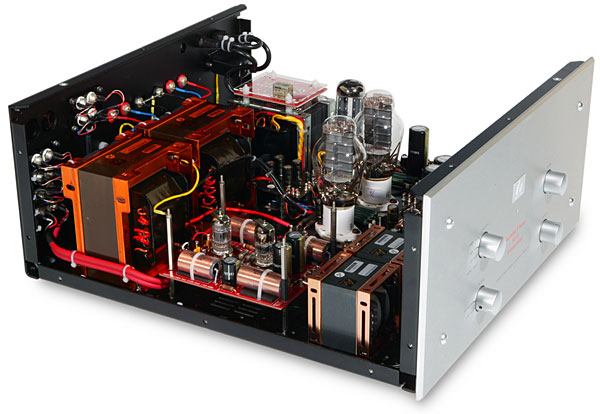
The Meishu Phono 300B Tonmeister uses several tubes to get its mojo working. Audio Note doesn’t make those. The input/ driver stage utilizes a Psvane Hifi Series 12AU7/ECC82 and a NOS Philips ECG 5687WB, which drives an interstage transformer. The output stage is powered by two Psvane 300B tubes. An Electro-Harmonix 5U4GB takes care of rectification. The phono stage uses Psvane Hifi Series 12AX7/ECC83 and either Sovtek/Electro Harmonix 6922s or Russian ECC88s. Grove laid out the topology. These are common tube types, making tube-rolling easy and rewarding.
“In –> Volume control > Input valve –> RC coupling –> Driver valve –> Transformer –> Output valve –> Transformer –> Out,” he wrote. “The input valve is to provide a bit more gain so that the input signal can be line-level. RC coupling is used here because we don’t need a lot of voltage swing and because it allows some flexibility to shape the tone and bandwidth of the system and to avoid cascaded stages of similar nature—which is another advantage of using transformer coupling; it’s kind of like amplifier-stage genetic diversity. Next is the transformer-coupled stage, then the output valve and output transformer, which is common to most amps of this type.”
Greguras then described the Meishu Phono 300B’s tube-rectified moving magnet phono stage, which I used extensively in my listening.
“We call our ECC83 and ECC88 phono stage a classic with good reason,” Greguras wrote. “It’s single-ended with no feedback. … It has the best sonic blend of the ECC83 and ECC88, both in anode followers, with RIAA correction between the stages, optimally biased for a good dynamic transfer, yet sweet transients.
“In the M1 phono preamp, Oto and Soro integrated amplifiers,” Greguras continued, “the [power supply] is based on solid state diodes. But … the Meishu Phono 300B Tonmeister benefits from valve rectification and chokes.” Those chokes, too, are made in-house. “This means less mechanical sound, closer to real life, and richer harmonics.”
The parts in this model are upgraded, from metal-film Beyschlag resistors, standard electrolytic capacitors, and Audio Note tin caps to “a mix of 0.5 and 1W Audio Note tantalum film resistors, Audio Note Standard and KAISEI Electrolytic capacitors, [and] an Audio Note copper coupling capacitor. As we move up on the ladder of parts, there is less sound of its own.”
I asked Qvortrup about the manufacturing philosophy behind Audio Note products.
“We strive for our equipment to have no sound at all but the sound of the recording itself,” he continued. “We use an evaluation method we call ‘comparison by contrast.’ When we audition new equipment, we do not use known recordings. We pick five or ten recordings at random, listen to each of them, and then make a judgment as to whether one or the other piece of equipment individualizes the sound of each recording, and the one that does can then be considered to add/subtract the least from the recording.”
Linger Prints: Above, Samara Joy gets ready to share her jazz truth. Photo by Meredith Truax.
AP editor Mike Mettler asked ace reviewer Ken Micallef to come up with a list of his top jazz releases on vinyl for 2022, and Ken happily complied, and compiled accordingly. Herewith is his list of ten listening year 2022 jazz faves on wax, presented in no particular order.
SAMARA JOY
Linger Awhile. Verve. (1LP)
Though pegged as a Sarah Vaughan devotee after winning the award/competition of the same name, 22-year-old Samara Joy also clearly draws on Ella Fitzgerald and Carmen McRae, but equally so, as well as contemporary singer Carmen Lundy for pure swinging style.
Joy’s lush delivery, elastic pacing, and choice of material is proudly old school. Her dark alto range is enlivened by the young singer’s control, infectiousness, and serious swingability. With a band of ringers including drummer Kenny Washington and guitarist Pasquale Grasso, Samara Joy’s Linger Awhile is the best standards-approach LP of 2022.
GERALD CLAYTON
Bells on Sand. Blue Note. (1LP)
Themes of meditation, solitude, and reflection fill pianist Gerald Clayton’s second Blue Note release, an unlikely album from that reservoir of classic ’50s/’60s jazz profundity and contemporary jazz fireballs.
Bells on Sand is a collection of quietude. Yawning arco bass and lullaby-worthy piano adorn the opening track, “Water’s Edge,” followed by the sober “Elegia.” The warm vocals of 24-year-old Portuguese multi-instrumentalist and composer Maro uplifts a composition by Catalan composer Federico Mompou, “Damunt de tu Només Les Flors,” which has all the beauty of a later-period composition by Antonio Carlos Jobim.
Clayton turns the standard “My Ideal” into a gentle romp, which in turn leads into the funk of his Roy Hargrove dedication, “That Roy,” its lush electric keyboard extended by drummer Justin Brown’s feathery touch. “RIP,” another Clayton/Justin Brown duet, follows, and it recalls ’70s fusion, the pair stretching to gently shake, rattle, and roll. Maro’s sensuous vocal beauty returns on Clayton’s flowing “Just A Dream.”
HATIS NOIT
Aura. Erased Tapes. (1LP)
Sorted in Rough Trade’s “Modern Composition” section, Japanese vocalist/composer Hatis Noit creates everything — melodies, rhythms, counter melodies and rhythms, background vocals, and arrangements, simply by using a Neumann U47 microphone and her manipulated vocals.
Noit can sound like a maniac, a choir, floating air balloons, silent meditations, and heaven-sent thunderquakes. Aura is an eerie yet compelling outerworld that immerses fully, with no release. Think Björk meets Kraftwerk, sans drum machines and maddening vocal screams. Hypnotic, meditative, and levitative. (You can order this LP directly from the artist here.)
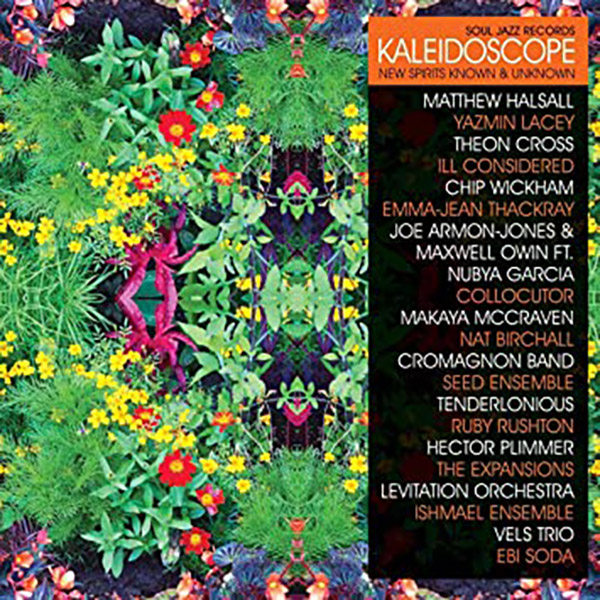
Kaleidoscope: New Spirits Known & Unknown. Soul Jazz Records.
(3LP/1 7-inch 45)
In this reviewer’s humble opinion, the U.S. jazz scene is often as interesting as a bag of hammers. On the one hand, we have the tradition-seeking-tribe, enthralled to all things Duke/Pops/Trane. On the other end, there are the academics who favor rhythm over melody, and numbers over soul. Not so in the UK, where no such tradition exists, allowing those artists to mix in the kitchen sink from electronic music and African beats to Caribbean swing and hip-hop — and somehow do it in consistently interesting fashion to boot.
Such is the multidirectional approach on this 3LP/1 7-inch 45 set dubbed Kaleidoscope: New Spirits Known & Unknown, covering artists ranging from trumpeter Matthew Halsall’s surreal soirees and vocalist Yazmin Lacey’s swinging soul to Hector Plummer’s electronic spew and keyboardist Joe Armon-Jones’ electronic R&B profundity. Though this is a 2020 release, it remains as one of my favorite spins in 2022. Truly Kaleidoscopic in all the right ways. (You can order this multi-LP set here.)
Matthew Shipp:Codebreaker. Tao Forms. (1LP) [Technically, this is a 2021 release, but it’s one of Ken’s 2022 favorites–MM]
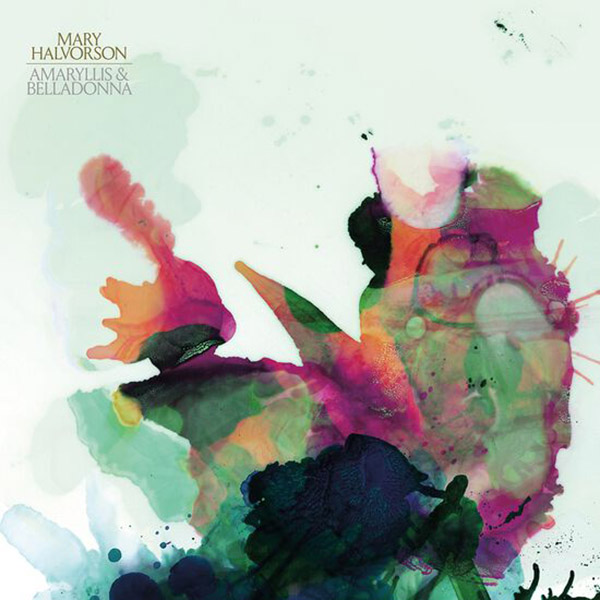
Mary Halvorson:Amaryllis & Belladonna. Nonesuch. (2LP)
Matt Slocum: With Love and Sadness. Sunnyside. (1LP)
Archival
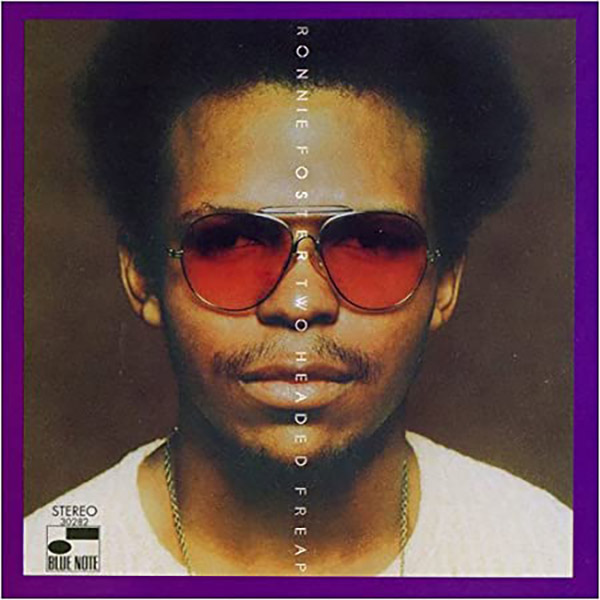
Ronnie Foster:Two Headed Freap. Blue Note. (1972/2022; 1LP)
Charles Mingus: The Lost Album from Ronnie Scott’s. Resonance Records. (2022, 3LP) [MM adds: This very same Mingus release also made the cut on Mark Smotroff’s Top Archival LPs of 2022 list, which you can read here.]
Some turntables can be true objects of art. Indeed, some ’tables can even look downright exotic or even somewhat otherworldly in the photos we see of …
Some turntables can be true objects of art. Indeed, some ’tables can even look downright exotic or even somewhat otherworldly in the photos we see of them — but in person and in practice, they actually look quite beautiful, and work really well. Fact is, regardless of any turntable’s looks, bells, and whistles, at the end of the day, it all comes down to solid and experienced engineering, whether it be by adding mass to deaden resonances or adapting the light-as-a-feather frame approach for ultimate PRaT (a.k.a. Pace, Rhythm, and Timing).
Such were my initial impressions of all the NEO series turntables I had seen from the German manufacturer Acoustic Signature. When looking at the photos of their top-of-the-line ’tables here on AnalogPlanet and elsewhere, they can appear as if they’d been designed for emperors with Versailles or intergalactic travel on their mind.
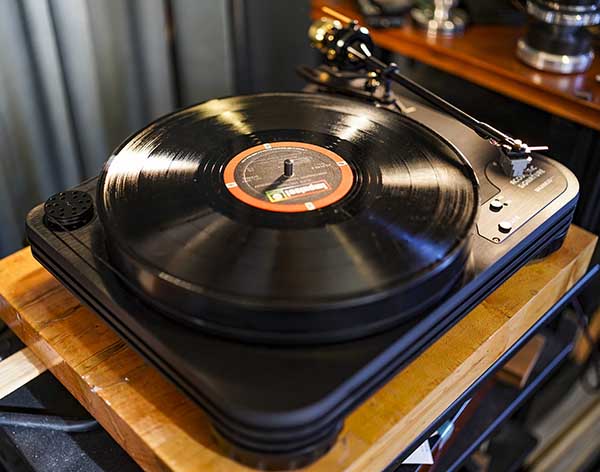
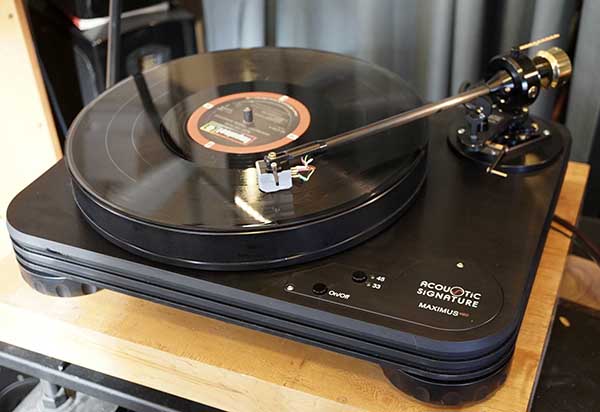
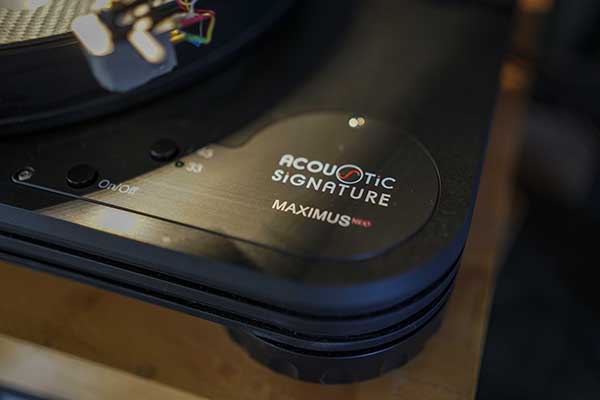
All that said, I wanted to get one of these turntables in hand to see (and hear) for myself, and when I unboxed the subject of this particular review — the Acoustic Signature Maximus NEO turntable — from its form-fitting, custom foam-rubber packaging inside its very solid cardboard box, I was floored by its looks, its performance capability, and its extremely smart and well-considered design. Granted, the name “Maximus NEO” sounds like an unholy alliance of Roman gladiator bloodletting and ’80s-era New Wave fashion, but make no mistake — the Maximus NEO is an exceptional turntable.
And well it should be, you might say, for the asking price of the version I reviewed here comes in as follows: the Maximus NEO turntable itself has an SRP of $4,995; the TA-1000 NEO tonearm is $2,495; and the Maximus MCX3 moving coil cartridge is $1,695. (Yes, you can order the Max NEO with less-expensive options, but still.) At close to $9,200 all-in, the Maximus NEO packages punches well above its class.
Specs & Features
Handmade in Germany, the Maximus NEO — successor to the manufacturer’s still popular Maximus turntable — features an AC motor with external “super-stable multi-voltage power supply” and integrated digital motor controller; Acoustic Signature’s AVC (Automatic Vibration Control) technology; an “Ultraprecise, extremely rigid and robust DTD [Dura Turn Diamond] Bearing with diamond-coated spindle”; a resonance-reducing, aluminum alloy chassis; an aluminum platter; gel-damped adjustable feet; and a five-year warranty (with registration).
In short, Acoustic Signature ’tables, from the top-of-the-line $200K Invictus NEO to the lower-tier Maximus NEO, are overbuilt, beautifully designed, feature innovative technology, and are destined for heirloom status. As with most serious hi-fi manufacturers, lower-tier products often benefit from trickle-down technology, and the Maximus NEO gives you a taste of the company’s top-tier goods via the mostly aforementioned Dura Turn Diamond Bearing, Automatic Vibration Control, and Constraint Layer Damping feature set.
According to the company’s site, “The Dura Turn Diamond Bearing is a super-rigid and virtually ‘indestructible’ bearing that creates the best possible conditions for absolute high-end sound and sets a new benchmark in terms of maintenance, low noise and service life — backed by a 15-year warranty. The DTD Bearing is manufactured for each turntable in the Acoustic Signature NEO series in an individual version adapted to the respective turntable.”
Additionally, the site describes the AVC Automatic Vibration Control as thus: “Every rotating motor generates vibrations [that are] transmitted to the chassis and platter and have a negative effect on the sonic performance of a turntable. Accordingly, it is important to effectively reduce undesired vibrations or even better prevent them from occurring in the first place — so much for the theory. All AC synchronous motors show production-related tolerances that prevent its internal poles and coils from being positioned one hundred percent correctly. Our AVC technology measures the resulting distortions in real time. Based on those measurements, AVC adjusts the phase shifts to the motor signals — also in real time and fully automatic! These digitally monitored corrective measures ensure a drastic reduction of the vibrations — an extra effective benefit for turntables driven by a multi-motor concept.”
Finally, the AS site tells us, “Constraint Layer Damping (CLD) is a mechanical engineering method for the absorption or minimization of vibrations. Our tests led to an optimized material combination consisting of two layers of a special aluminum alloy and an intermediate brass layer. A rigid, yet energy-absorbing chassis based on finite element design principles, and our new CLD approach creates unbeatable units in terms of resonance behavior.”
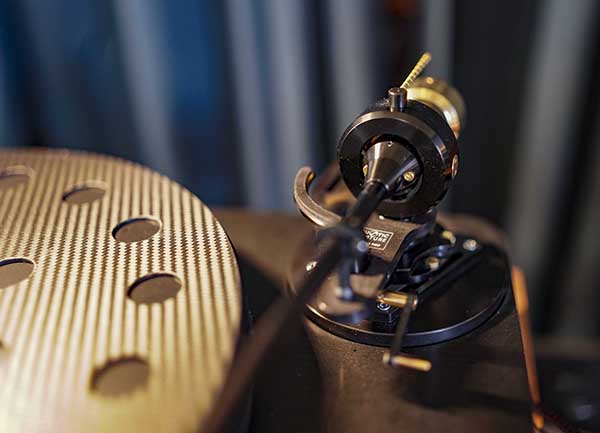
The gimbal-style TA-1000 NEO tonearm comes with high-quality Mogami cabling, features a dual-layer carbon armtube and a low-resonance, rigid tube design using precision miniature ball bearings and a stainless-steel tonearm bearing housing. The tonearm is supplied with an AudioQuest 5-pin copper phono cable (RCA), a brass counterweight, adjustable VTA and azimuth, an anti-skating weight, both Rega- and SME-type mounts, and it comes with a five-year warranty.
Built by Ortofon to Acoustic Signature’s specs, the Acoustic Signature MCX3 moving-coil cartridge features a nude fine-line stylus for exceptional detail retrieval, high-purity copper coils, and a CNC-milled and resonance-optimized chassis.
All of this results in one of quietest turntables I’ve ever heard, making my Thorens TD-124 sound like a truck rumbling over cobblestone streets, in terms of noise. The Max NEO produces exceptionally black backgrounds, a large soundstage, excellent dynamics and detail retrieval, fine tonal shading and instrumental layering, and an overall level of quality that befits its admittedly hefty price tag.
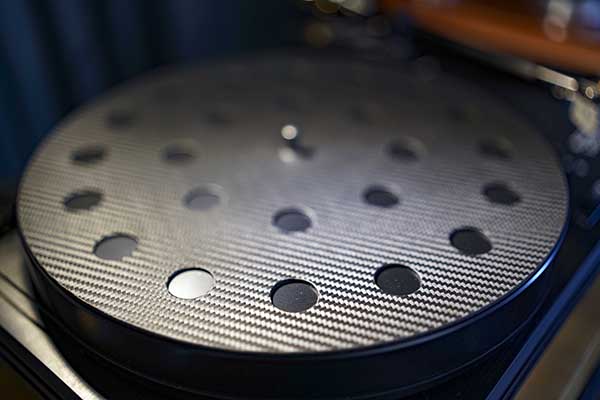
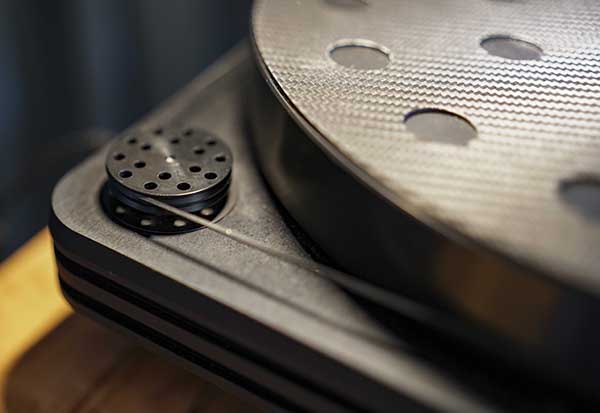
The two-speed, belt-driven Maximus NEO uses an aluminum alloy in its plinth and footers. Aluminum is also used in the turntable’s large, 12.8lb platter. The spindle is made of plasma-coated stainless steel to achieve a super-hard surface. The NEO’s belt is made of precision-grinded rubber, attached to a drive pulley made of POM-C (copolymer acetal) plastic. The included mat, with evenly spaced holes, is made of carbon fiber and seems partially designed to dampen resonances. It has a textured, linen-type feel.
According to AS sales manager Robert Hagemann, the Maximus NEO turntable was voiced using “different setups in the demo room, electronics from Accuphase, McIntosh, Burmester, Mark Levinson, and VAC, [and the] speakers are from JBL, Dynaudio, B&W, and Wilson Audio.”
Not only was this turntable nicely/tightly packaged in form-fitting, PE (polyethylene closed-cell) foam rubber, Acoustic Signature provides helpful YouTube videos on unboxing and setting up the turntable and tonearm (see below). Acoustic Signature makes the process of assembling one of their turntables a satisfying, assuring experience. Needless to say, the manuals were also state of the art, with numbered parts, clear language, and — hold on — illustrations!
Setup
AS includes their own metal alignment tool, but, as always, I used my Feickert Universal protractor. Tracking force of 2.3g was dialed in with a Riverstone Audio gauge. (I’ve found cheap digital gauges are available, as online ones are prone to error.) The supplied counterweight had to be pushed so far back on the tonearm to achieve the correct tracking force that I inverted the weight, so the internal screws would have something to affix to.
For this review, I connected the Maximus NEO to my Tavish Design Adagio phono stage attached to a Mastersound Compact 845 or PrimaLuna EVO 400 integrated amplifier, with a pair of Shindo interconnects affixing phono stage to amp. The amp powered a pair of either DeVore Fidelity O/96, Volti Audio Razz, or MoFi SourcePoint 10 speakers. Analysis Plus speaker cables completed the sonic loop, as it were. I compared the Maximus NEO with the aforementioned Tavish Design Adagio phono stage ($1,895) combo to my Kuzma Stabi R turntable ($8,879), Kuzma 4Point tonearm ($5,696), and Clearaudio Jubilee Panzerholz cartridge ($6,600) setup through a Pathos In The Groove phono stage ($1,895).
A small button turns on the Max NEO, with choice of 33 or 45rpm playback. Once the button is depressed, it takes a solid 6 seconds to attain the correct speed.
Listening Sessions
What first amazed me about the Max NEO was its dead silence. I currently own two turntables — 1) a Thorens TD 124 with Jelco 350 S tonearm and EMT TSD 15 N MC cart, and 2) the previously mentioned Kuzma Stabi R combo. Both of those ’tables weigh more than the Max NEO. There was an absolute improvement in clarity, soundstaging, and noise reduction playing the Max NEO vs. the Thorens (even though the Thorens has been upgraded with new springs and lowered motor). The difference wasn’t subtle. The Kuzma is an entirely different beast requiring two sumo wrestlers to move, and it’s as silent as a deep space telescope. Its soundstage is like diving into the Grand Canyon. While the Max NEO is closer in performance to the Thorens, it wiped the floor with the Swiss legacy product regarding noise-free — or, should I say, rumble-free playback, and black-silent soundstage depth. When the noise floor drops, well, it’s a whole new ballgame.
While the Max NEO didn’t match the Thorens for bolting-out-of-the-gate drive, energy, and power, it did produce a larger, cleaner soundstage with a more balanced frequency range, cleaner bass and highs, and a sweeter overall sound. The EMT, like the Denon DL 103, is a dynamics and texture king, while the AS MCX3 cart is sweeter overall, a mite more laid-back, perhaps more conservative. But it rendered detail, in all styles of music, in more holistic fashion, and was more relaxed.
I played three LPs for comparisons and evaluation here: 1) Ben Sidran’s The Cat and the Hat (1979; Horizon (3) – SP-741); 2) Charlie Haden’s The Golden Number (1977; Horizon (3) – SP-727); and 3) Björk’s Utopia (2017; One Little Indian – tplp1381).
Most cognoscenti agree drummer Steve Gadd’s greatest solo is on Steely Dan’s “Aja.” [Myself included!—MM] I would add to that his speedball-driven, mania-inducing, super-slamming and equally dance-like drum solo from Ben Sidran’s The Cat and the Hat version of Miles Davis and Victor Feldman’s “Seven Steps to Heaven.” Featuring a crack studio lineup, the song burns through Afro-Cuban and straight-ahead sections culminating in Gadd’s ferocious solo. The Kuzma/Clearaudio/Pathos rig put Gadd in my room, with his Yamaha Custom Recording series drums before me. His snare and bass drum had Iron Mike-like slam and attack, in huge images. Gadd is menacing here, and this rig dropped a bomb on me, the music being immediate, visceral, and powerful.
The Max NEO/Tavish rig couldn’t match that slam and attack per se, but it actually bettered the way more expensive rig in terms of 1) tone, which was sweeter; 2) naturalism, which let me relax into the music; and 3) a less dynamic top-end, which was lighter but perhaps more natural, if recessed.
Moving on to Charlie Haden’s “Out of Focus,” which features double-tracked acoustic bass and trumpet, Haden plays strummed chords over long arco notes and individual string plucking on his bass, which is soon joined by Don Cherry’s pocket trumpet. The Kuzma rig made a meaty meal of Charlie with huge, deep-toned rhythms and large images. The Kuzma plays everything with titanic force, Charlie’s basswork filling my room with stentorian gravitas.
The Max NEO pulled the same trick as with the Sidran LP, playing the music with less weight but perhaps more natural flow in smaller images that were perhaps clearer, especially in the long arco notes. Trumpet was less scalding and powerful, but a little creamier and lighter on the ear. The Pathos phono stage works well with the Max NEO, adding tube bloom, tone, and flow. (The Tavish is my choice in general over the Pathos, which is why I paired the weaker stage with the more expensive ’table.)
Finally, Björk’s “Utopia,” from the album of the same name, is a unique combination of Björk’s always stirring vocals, orchestral sounds that replicate Amazon rainforest creatures, and an ominous flash of rushing, rustling low notes that intimate a goliath sea creature flying through the netherworld. It’s like Stravinsky writing for The Jungle Book, with the Glinda the Good Witch of the North as our guide.
The Kuzma played Björk in my room, turning it into Lincoln Center — or perhaps The Metropolitan Opera — so humungous and convincing. But with its added tube sound, the Max NEO had arguably sweeter tone and inarguably clearer low bass.
The Acoustic Signature Maximus NEO bettered my Thorens TD-124 in terms of dead-silent sound and black backgrounds, but couldn’t match its kick-ass dynamo-hum party power. And while it couldn’t raise its game to match my Kuzma’s awesome power, Atlas-worthy weight, and giant images, the Max NEO acted like David to its Goliath, playing with sweeter tone, more natural flow, and a cleaner, if lighter low-end.
Conclusions
Coming in at the $9,200 turntable ballpark complete with tonearm and cartridge included, the Acoustic Signature Maximus NEO combo as reviewed here goes up against the following: 1) J.Sikora Initial ($9,495 without tonearm or cart); 2) Kuzma Stabi R with one arm wing ($8,845, and no tonearm or cart); 3) Rega Planar 10 ($6,375, sans cartridge); 4) Thorens TD 124 DD ($11,999 w/TP 124 tonearm but no cart); and 5) SME Model 6 ($8,995 with SME M2-9 tonearm).
That’s some tall cotton to be measured against, to be sure. But the Acoustic Signature Maximus NEO turntable juts out its chin and demands an audition. It’s a well-built machine that’s dead-quiet, fast off the mark, super-resolving, and uber-lively. In short, it’s a maximally great turntable well worth checking out. Gut gemacht!
For more information about all the Acoustic Signature NEO series offerings, go here.
If you want to find distributor info, go here — and follow the menu prompts to locate one in your region of the world at large.
Author bio: Former musician, former artist, and former legal wastrel Ken Micallef has written numerous hi-fi equipment reviews for Stereophile and AnalogPlanet, and his byline has also appeared within Mojo, Electronic Musician, and The Grammys. You can also find him at YouTube (Ken Micallef Jazz Vinyl Audiophile).