Author Archives: Rogier van Bakel

Endow Audio, Bravura, Hegel, iFi

At 33, David Strunk is one of the younger designers and entrepreneurs at the Florida show—and yet he’s somewhat of a veteran. Strunk started seriously tinkering with electronics and audio when he was still in britches. Five years ago, he and his father, Tim, started Endow Audio with a hugely ambitious goal: redefining high-end speakers’ capacity for sounding just like live music.


In 2019, the Strunks made a splash with their out-of-the-box FS301 point-array loudspeaker. I could describe its otherworldly looks, but it’s probably best if you take a gander at the photo that accompanies JVS’s quick ‘n’ dirty review from that year’s Rocky Mountain Audio Fest. Instantly, you’ll understand what père and fils were going for.


Though JVS declared that the FS301s blew his mind, commercial success remained elusive. In Tim’s words, their scatter-happy brainchild “perhaps lacked in detailed imaging at the primary listening position.” The duo then set out to design a speaker that would keep the point-array idea alive while also catering to audiophiles’ desire for precision in imaging.
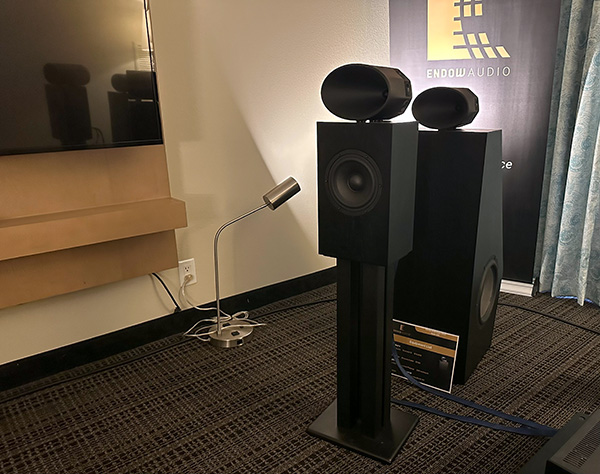


Enter the Bravura 12 ($14,000/pair, 85lb each) and its little brother, the Bravura 7 ($6500/pair, 25lb each). The speakers, with identical carbon copolyester horns that sit atop their respective cabinets, are making their debut at the Tampa show. And once again, they’re unusual beasts.


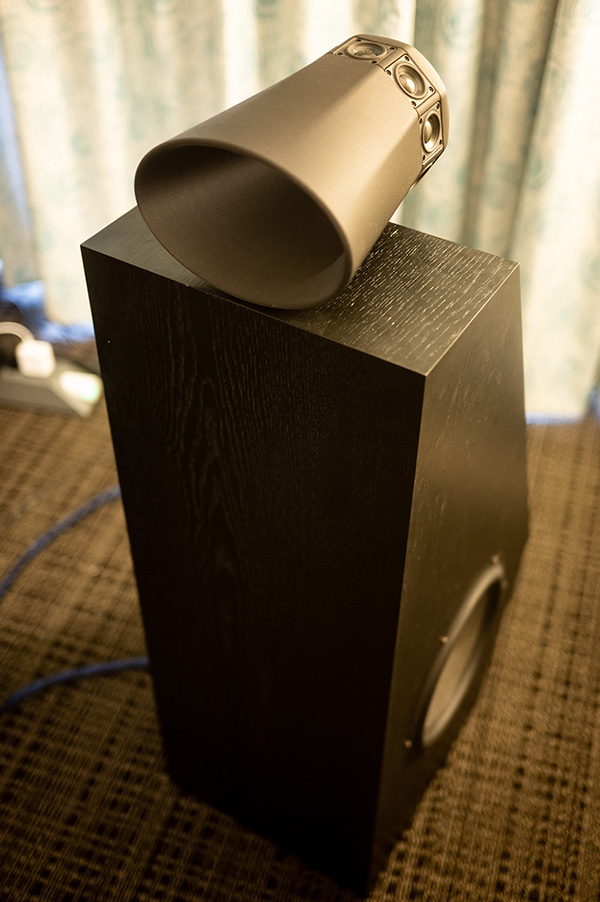
A single 0.9” textile-dome tweeter sits in the oval horn’s center, beaming forward, while nine wide-bandwidth 1.5” midrange drivers ring the rear base of the horn. The Strunks claim that these outward-firing midrangers provide “consistent sound quality throughout the entire room,” and they’re not wrong.


The Bravura 7 has a 7″ Wavecor bass driver on the baffle, mirrored by a 7″ passive radiator on the rear. The Bravura 12 boasts two sealed, side-firing 12″ Morel woofers. The latter model’s low-end firepower bottoms out around 38Hz at –3dB, which won’t please most bassheads but probably isn’t an impediment to listeners looking primarily for purity and an extra-wide sweet spot; both speakers provide that in spades.


Coupled with a $12,000 Hegel H590 integrated amp, a $3499 iFi Pro iDSD DAC and streamer, and $700 Bravura speaker cables, both Endow products gave all the music I heard through them a well-defined immersive treatment. Impressive control and a nice wide soundstage are among their other benefits.


I do wonder whether the model 12 (below) is worth the $7500 premium, given that it only betters the bass performance of the li’l sibling by about 10Hz. Viewed like that, the Bravura 7 seems like the better deal, but you can compare and find out for yourself: Endow Audio sells direct to the public via its website, with a 30-day money-back guarantee that includes shipping both ways.

Børresen, Aavik, and Ansuz

No hyperbole, no exaggeration: This morning, a pair of Danish speakers made me cry. Not mainly because of the hole they’d be burning in my meager finances if I actually shelled out the $100,000 needed to own them, but because of the emotions they evoked . . . without even seeming to break a sweat.


What’s extra crazy is that the song that made my eyes well up wasn’t some audiophile chestnut. In fact, by today’s standards, the 1964 recording leaves lots to be desired. The music was “And I Love Her” by the Beatles, streamed from Qobuz, and the speakers were a pair of just-launched, deceptively diminutive Børresen M1 standmounts. Eyeballing them, I’d estimate that the handsome Danes are around 11″ tall, measure barely 8″ wide, and have dramatically curved side walls perhaps 12″ deep. Their size proved immaterial, however.


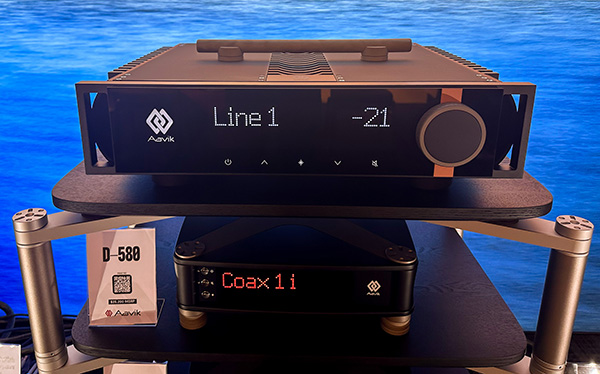
Driven by a gorgeous-looking $70,000 Aavik I-880 integrated amplifier—200Wpc, class-A through the whole power range—the M1s produced unadulterated audio magic to the point where I half-stuttered, under my breath, “This is ridiculous.”


Like everyone and their mother, I must’ve heard the Beatles track hundreds of times—a sweet, simplistic McCartney ditty, lovely but hardly Bach. I’d never heard it like this, though. My ears registered diaphanous acoustic-guitar strings. Crystal-clear claves whose transients arrived at the listening position with a speed that quickened the pulse and delighted the soul. A vocal that had plenty of body and yet also seemed see-through. All on a soundstage that, in my experience, has precious few equals.


It was a strange and sobering thought that even the band itself had probably never heard their music played back at this level; this level didn’t remotely exist in those days.


(If it matters, and it probably does, the streamer was an Aavik S-580 fed into a D-588 DAC. They each retail for $25,200. The cabling was all Ansuz.)


Obviously, I like hi-fi. I love being at hi-fi shows and hearing what’s new, or new-to-me, and I can truly appreciate 70%, 80% of what I hear. Easily half of the gear enthuses me. But this . . . this was different. This was revelatory.


There’s a tale here of great engineering prowess (thank you Michael Børresen); of new ribbon technologies; of custom-printed zirconium driver baskets that cost $3000 to manufacture; of 450 grams of pure silver per channel; of titanium voice coils that run circles around the aluminum competition. But all of that is academic, at least for now, because it engages the brain and not the heart. And right now, I’m still eager to hold on to (and process) the emotions that this incredible rig stirred in me.

Gershman Acoustics, VAC, EMM Labs, Wolf Audio, Cardas

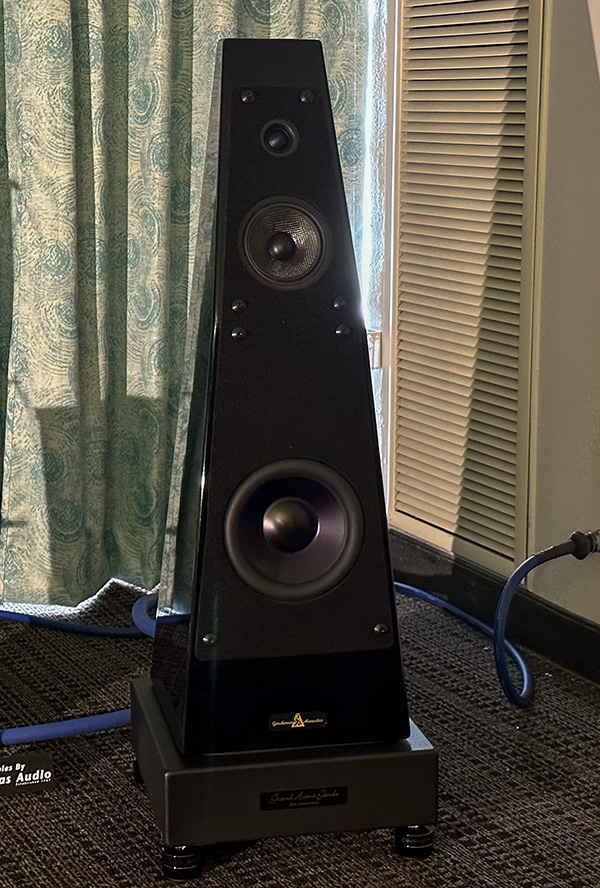
Mind if I slap some quick virtual labels on Gershman Acoustics’ $17,000 pair of Grande Avant Garde speakers? From my notes: “Very big-sounding for small floorstanders.” “Their brawn belies their size.” “Elegant overachievers.”


They’re all that. At 89lb each and just 39″ tall, the three-and-a-half–way dynamic Grande Avant Gardes ought to be top contenders for audiophiles who want full-range sound (down to 20Hz, according to the specs!) but have no use for speakers the size of coffins.


Even long-time fans of the brand might get a surprise when they hear the latest iteration—a 30th-anniversary model that, CEO Ofra Gershman told me, has a redesigned base that coaxes improved low-end performance from the 8″ dual-coil aluminum-cone woofer. (Actually, she said aluminium—Gershman Acoustics is a Canadian company.)


I didn’t expect the speakers to project up as well as they do. Less than a meter tall, they look as if vocals, for instance, might sorta linger at waist level. Perhaps thanks to the shouldered, sloping baffle, that’s not the case at all. Giulia Lorvich’s purring voice on “You’d Be So Nice To Come Home To” was all kinds of correct—timbre, weight, and height, with a nice corporeal flourish. Double basses sounded meaty and substantial, and Plas Johnson’s tenor sax on Henry Mancini’s “The Pink Panther Theme” was as warm and enveloping as I’ve ever heard it.


The realism was helped along by electronics that retail for seven times (!) the price of the Grande Avant Gardes: a VAC Master 300 amplifier with an accompanying VAC Master preamp; EMM Labs’ DA2 DAC; and a Wolf Audio streamer. All are priced right around $30k each. Cardas cables provided the cherry on top.


Posted in Uncategorized

Endow Audio, Bravura, Hegel, iFi

At 32, David Strunk is one of the younger designers and entrepreneurs at the Florida show—and yet he’s somewhat of a veteran. Strunk started seriously tinkering with electronics and audio when he was still in britches. Four years ago, he and his father, Tim, started Endow Audio with a hugely ambitious goal: redefining high-end speakers’ capacity for sounding just like live music.


In 2019, the Strunks made a splash with their out-of-the-box FS301 point-array loudspeaker. I could describe its otherworldly looks, but it’s probably best if you take a gander at the photo that accompanies JVS’s quick ‘n’ dirty review from that year’s Rocky Mountain Audio Fest. Instantly, you’ll understand what père and fils were going for.


Though JVS declared that the FS301s blew his mind, commercial success remained elusive. In Tim’s words, their scatter-happy brainchild “perhaps lacked in detailed imaging at the primary listening position.” The duo then set out to design a speaker that would keep the point-array idea alive while also catering to audiophiles’ desire for precision in imaging.


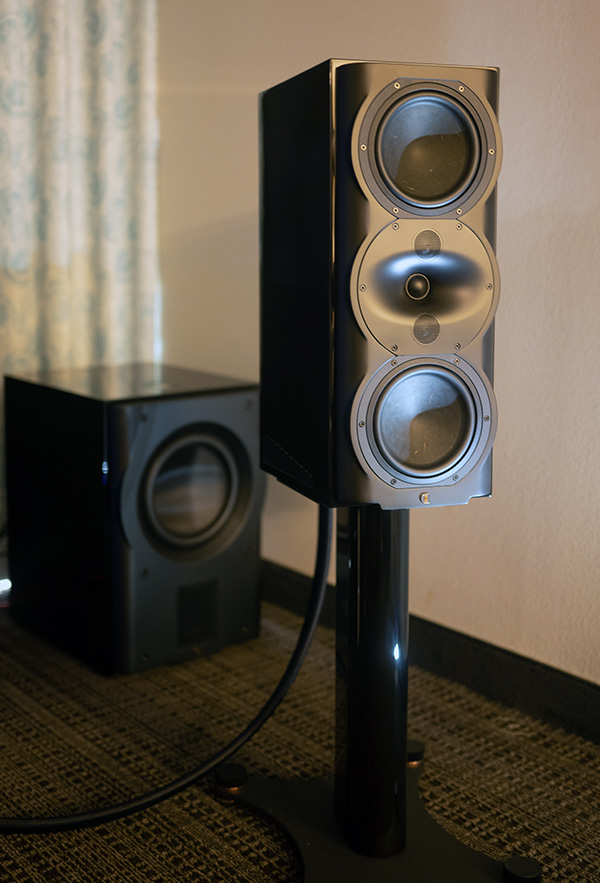
Enter the Bravura 12 ($14,000/pair, 85lb each) and its little brother, the Bravura 7 ($6500/pair, 25lb each). The speakers, with identical carbon copolyester horns that sit atop their respective cabinets, are making their debut at the Tampa show. And once again, they’re unusual beasts.


A single 0.9” textile-dome tweeter sits in the oval horn’s center, beaming forward, while nine wide-bandwidth 1.5” midrange drivers ring the rear base of the horn. The Strunks claim that these outward-firing midrangers provide “consistent sound quality throughout the entire room,” and they’re not wrong.


The Bravura 7 has a 7″ Wavecor bass driver on the baffle, mirrored by a 7″ passive radiator on the rear. The Bravura 12 boasts two sealed, side-firing 12″ Morel woofers. The latter model’s low-end firepower bottoms out around 38Hz at –3dB, which won’t please most bassheads but probably isn’t an impediment to listeners looking primarily for purity and an extra-wide sweet spot; both speakers provide that in spades.


Coupled with a $12,000 Hegel H590 integrated amp, a $3499 iFi Pro iDSD DAC and streamer, and $700 Bravura speaker cables, both Endow products gave all the music I heard through them a well-defined immersive treatment. Impressive control and a nice wide soundstage are among their other benefits.


I do wonder whether the model 12 (below) is worth the $7500 premium, given that it only betters the bass performance of the li’l sibling by about 10Hz. Viewed like that, the Bravura 7 seems like the better deal, but you can compare and find out for yourself: Endow Audio sells direct to the public via its website, with a 30-day money-back guarantee that includes shipping both ways.


Posted in Uncategorized

Børresen, Aavik, and Ansuz

No hyperbole, no exaggeration: This morning, a pair of Danish speakers made me cry. Not mainly because of the hole they’d be burning in my meager finances if I actually shelled out the $100,000 needed to own them, but because of the emotions they evoked . . . without even seeming to break a sweat.


What’s extra crazy is that the song that made my eyes well up wasn’t some audiophile chestnut. In fact, by today’s standards, the 1964 recording leaves lots to be desired. The music was “And I Love Her” by the Beatles, streamed from Qobuz, and the speakers were a pair of just-launched, deceptively diminutive Børresen M1 standmounts. Eyeballing them, I’d estimate that the handsome Danes are around 11″ tall, measure barely 8″ wide, and have dramatically curved side walls perhaps 12″ deep. Their size proved immaterial, however.


Driven by a gorgeous-looking $70,000 Aavik I-880 integrated amplifier—200Wpc, class-A through the whole power range—the M1s produced unadulterated audio magic to the point where I half-stuttered, under my breath, “This is ridiculous.”


Like everyone and their mother, I must’ve heard the Beatles track hundreds of times—a sweet, simplistic McCartney ditty, lovely but hardly Bach. I’d never heard it like this, though. My ears registered diaphanous acoustic-guitar strings. Crystal-clear claves whose transients arrived at the listening position with a speed that quickened the pulse and delighted the soul. A vocal that had plenty of body and yet also seemed see-through. All on a soundstage that, in my experience, has precious few equals.


It was a strange and sobering thought that even the band itself had never heard their music played back at this level; this level didn’t remotely exist in those days.


(If it matters, and it probably does, the streamer was an Aavik S-580 fed into a D-588 DAC. They each retail for $25,200. The cabling was all Ansuz.)


Obviously, I like hi-fi. I love being at hi-fi shows and hearing what’s new, or new-to-me, and I can truly appreciate 70%, 80% of what I hear. Easily half of the gear enthuses me. But this . . . this was different. This was revelatory.


There’s a tale here of great engineering prowess (thank you Michael Børresen); of new ribbon technologies; of custom-printed zirconium driver baskets that cost $3000 to manufacture; of 450 grams of pure silver per channel; of titanium voice coils that run circles around the aluminum competition. But all of that is academic, at least for now, because it engages the brain and not the heart. And right now, I’m still eager to hold on to (and process) the emotions that this incredible rig stirred in me.

Posted in Uncategorized

Acora, VAC, Aurender

If admiring a pair of Acora Acoustics speakers up-close inspires a sudden desire to cut some broccoli or wash the dishes, it’s probably because they’re handcrafted from naturally flecked granite, similar to some bespoke countertops. But there’s nothing wishy-washy—or cold—about the sound of the Acoras I briefly auditioned at the Florida show. Beguiling and authoritative is more like it. In Tampa, Acora paired its brand new VRC speakers with VAC Statement 452 monoblocks ($150,000/pair), an Aurender digital front end consisting of an N30SA streamer ($25,000) and an MC20 clock ($30,000), and a $50,000 LampizatOr Horizon DAC.


The VRCs are double-ported in the rear and sport five drivers mounted on each baffle—two midrange transducers and a tweeter in an MTM array, plus dual woofers down below. The speakers, which weigh 450lb each and are shaped like flat-topped obelisks, are expected to retail for $220,000/pair when they start shipping in April.


Throw in the VAC Statement line stage and phone stage that sat on the far right of the room ($80,000 each), plus the $120,000 loom of Cardas Clear and Clear Beyond cables, and we have a system price slightly north of three quarters of a million dollars. While that’s an absolute fortune, maybe it’s a bargain considering that the rig sounded like, well, a million bucks.


One test track that stood out was TakéDaké’s “Japanese Roots,” a recording of various percussion instruments and a breathy bamboo flute. Through the VRCs, every strike and note were easily-defined points in space, somewhere across a soundstage that seemed a mile wide. I found it remarkable that these not-especially-large speakers filled the very large room with ease and poise.


There’s a reason why Acora head Valerio R. Cora used his own initials to name the product; if the 15-minute demo was any guide, they’re his most accomplished floorstanders yet.

MC Audiotech’s TL-12 speakers at the Florida Show

What does the MC in MC Audiotech stand for? Marvelously Cutting-Edge? Master ‘Coustician? I would’ve guessed Mark Conti; Conti is, after all, the founder of the Pennsylvania-based boutique brand. But the man himself told me—tongue in cheek, I reckon—that MC is actually short for Musica cordis, a Latin phrase that means “Music from the heart.” Works for me, especially after I heard his latest loudspeaker, a blond beauty called the TL-12.


With this newcomer (the TL-12 made its debut at Capital Audiofest last fall), MC Audiotech has successfully married its wideband line-source drivers to a 12” transmission-line woofer, creating a dipole in the 300Hz–20kHz region. Conti claims that his 117lb-each, 92dB-sensitive, $24,900/pair speakers are easily driven by almost any amp rated at 70wpc and above—but of course, more is often better. In the cozy MC Audiotech room on the 10th floor, the speakers were teamed up with Modwright Instruments’ 150 Signature amplifier and LS 300 preamp ($11,000 each), and a PH 150 phono stage ($9750). Digital sources were a Weiss DAC501 ($9645) and a Wolf Audio Alpha 3 music server (starting at $5895). Rounding out the sweet-sounding rig: a VPI Prime Signature turntable ($8999) with a VPI Shyla cartridge ($2000), plus Audience AV frontRow interconnects and speaker cables.


There’s nothing sculpted about the TL-12s’ looks, but for all their 90° angles, they’re hardly boring boxes. One attractive feature: removable grilles that consist of two dozen rubber strings the thickness of clothing line. Perhaps they’re modeled after the grilles on Sonus faber’s Guarneri and Olympica speakers.


Sonic purity was exceptional. The cello on Agnes Obel’s “The Curse” sounded just like the real thing—no fluke, because I soon found that the same was true for Gene Ammons’ tenor sax on “Close Your Eyes.” I took his advice, concentrating mostly on the recording space that the TL-12s convincingly conjured. Absolutely lovely stuff.

Fidelity Imports, Q Acoustics, Audia Flight, Unison Research, Perlisten, and Soulnote

Remarkably, much of the Embassy Suites’ 10th floor was taken up by relative newcomer Fidelity Imports, an import and distribution company started four years ago by industry veteran Steve Jain, who’d held management positions at Klipsch and Pioneer. Jain, 46, likes to move fast. After first signing three British companies in short order—Cyrus Audio (amplification), Q Acoustics (speakers), and QED Cable (duh)—he looked to other parts of the globe for further expansion. These days, his stable includes 17 brands, including Slovakia’s Neo (high-end audio racks), Italy’s Audia Flight (amps, preamps, CD players), and Japan’s Soulnote (amplifiers and other stereo components).


The cool thing about Jain is that, like many businesspeople in the high end, he’s clearly not just in it for the money. His fervor for superior sound and the concepts behind it came into focus repeatedly during the 75 minutes I spent with him in half a dozen Fidelity rooms, including two with very fine-sounding Perlisten speakers (S7ts at $17,990/pair and R5ms at $5990/pair, above).


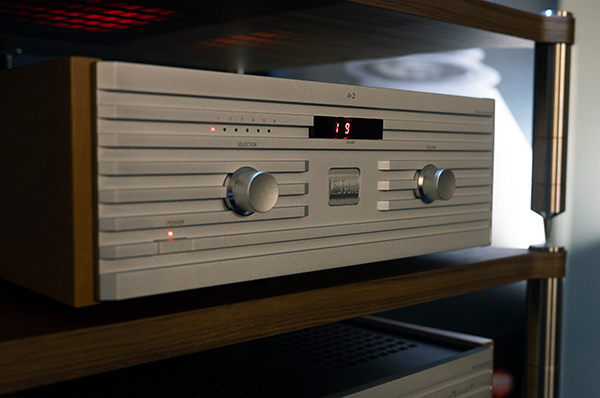
It was almost endearing to watch Jain wiggle the loose-seeming top panel of a Soulnote amp (above), explaining that the Japanese engineers build it like that on purpose because “they don’t like the sound to get trapped in the box.” Pure voodoo and myth-making? Perhaps, but the enthusiasm was genuine, and it’s hard to argue with the results: each Soulnote, such as the $7999 A2 integrated, is gorgeous both cosmetically and sonically.


I listened to two sets of Q Acoustics speakers, both cabled with AudioQuest products. The Concept 300s ($4999 with spindly-legged stands inspired by the design of suspension bridges) were driven by an Italian class-A Unison Research Unico Due hybrid amp that sported a pair of 12AX7 tubes. The 300s’ sound was balanced, accurate, and not unduly polite. I dug it, just like JA did in his full review.


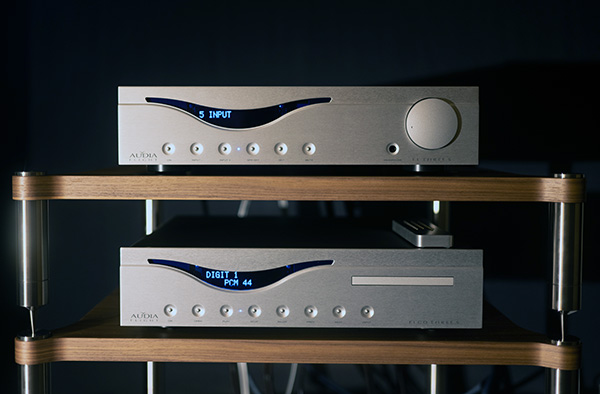
Moving to the Concept 50 floorstanders ($2995/pair) powered by Audia Flight electronics (above), I heard roughly the same sound signature, with the positive caveat that I slightly preferred these less expensive speakers. (Go figure.) The 50s somehow showed an elevated ease, a kind of “flowiness” that made “Green Song” by Anne Sofie von Otter and Elvis Costello go down as smoothly as a single-malt Scotch. I’ll have another anytime.