Tag Archives: Babyface

Babyface Upgrades with New Console

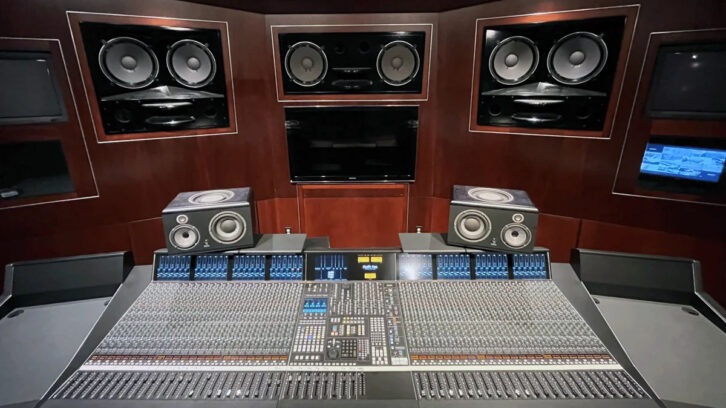
Kenneth “Babyface” Edmonds has updated the A room of his Brandon's Way private recording facility with a 48-fader SSL Duality Fuse.
Kenneth “Babyface” Edmonds has up to date the A room of his Brandon’s Way non-public recording facility with a 48-fader SSL Duality Fuse.

Hollywood, CA (February 22, 2023)—Hitmaker Kenneth “Babyface” Edmonds has upgraded the blending console within the A room at his non-public Brandon’s Way manufacturing facility in Hollywood with a brand new 48-fader SSL Duality Fuse.

The new SSL Duality Fuse is outfitted with angled producer’s bays at every finish, matching the footprint of the 9096J beforehand put in within the facility’s A management room. The new console additionally consists of SSL δelta-Control to combine SSL’s analog console automation with as we speak’s DAW-based workflows. The two-room non-public complicated, which opened in 1996, additionally homes an SSL Duality in Studio B.

​“We had a 96-fader SSL 9000 J Series in Studio A, one of many first,” reviews Paul Boutin, who has been chief engineer at Brandon’s Way for greater than 20 years. “This changed the SSL 4080 G+ that was initially put in.” Studio A finally grew to become a writing room, with Babyface favoring the B room for many of his manufacturing tasks, so the 9096J was used much less often, Boutin says.

David Kershenbaum Works at Home with BiG SiX Consoles

“I’ve a Duality in my room, so I do know the board,” Boutin says, so he steered a second Duality to exchange the getting older J Series desk. The lately put in console in Studio A is SSL’s newer Duality Fuse model, which incorporates a Fusion analog processor built-in into the middle part. Fusion gives six analog coloration instruments for including tonal character, weight and house to stereo stems.

Boutin had been engaged on a undertaking with Babyface at Record Plant for about six months when he was invited to take a full-time place as an assistant on the new facility when it opened in 1996. At Brandon’s Way, he has collaborated with Babyface on two-dozen Gold records, 15 Platinum records and 16 multi-Platinum releases, and has participated on three Grammy-winning albums whereas garnering an extra 18 Grammy nominations.

Babyface, an 11-time Grammy-winner—4 of them for Producer of the Year—a Recording Academy Trustee Award-winner and a 2017 Songwriters Hall of Fame inductee, has labored with a Who’s Who of pop and R&B royalty, together with artists akin to Toni Braxton, Mary J. Blige, Madonna, Mariah Carey, Boyz II Men, Bobby Brown, Aretha Franklin, Katharine McPhee, Vanessa Williams, Celine Dion, Phil Collins and lots of, many others.

The very first manufacturing accomplished in Studio A at Brandon’s Way, which was named to rejoice the beginning of Babyface’s first youngster, was a collaboration with Stevie Wonder, “How Come, How Long.” The track was nominated for a Grammy Award for Best Pop Collaboration with Vocals. Most lately, in November 2022, Babyface launched his eleventh solo album, Girls Night Out, a 13-song assortment that includes a few of R&B’s most iconic singers, together with Ella Mai, Kehlani, Ari Lennox, Muni Long and Queen Naija, which was written and produced at Brandon’s Way.

Babyface Upgrades with New Console

Kenneth “Babyface” Edmonds has updated the A room of his Brandon's Way private recording facility with a 48-fader SSL Duality Fuse.
Kenneth “Babyface” Edmonds has up to date the A room of his Brandon’s Way personal recording facility with a 48-fader SSL Duality Fuse.

Hollywood, CA (February 22, 2023)—Hitmaker Kenneth “Babyface” Edmonds has upgraded the blending console within the A room at his personal Brandon’s Way manufacturing facility in Hollywood with a brand new 48-fader SSL Duality Fuse.

The new SSL Duality Fuse is outfitted with angled producer’s bays at every finish, matching the footprint of the 9096J beforehand put in within the facility’s A management room. The new console additionally consists of SSL δelta-Control to combine SSL’s analog console automation with as we speak’s DAW-based workflows. The two-room personal advanced, which opened in 1996, additionally homes an SSL Duality in Studio B.

​“We had a 96-fader SSL 9000 J Series in Studio A, one of many first,” experiences Paul Boutin, who has been chief engineer at Brandon’s Way for greater than twenty years. “This changed the SSL 4080 G+ that was initially put in.” Studio A finally grew to become a writing room, with Babyface favoring the B room for many of his manufacturing initiatives, so the 9096J was used much less steadily, Boutin says.

David Kershenbaum Works at Home with BiG SiX Consoles

“I’ve a Duality in my room, so I do know the board,” Boutin says, so he steered a second Duality to exchange the getting older J Series desk. The just lately put in console in Studio A is SSL’s newer Duality Fuse model, which includes a Fusion analog processor built-in into the middle part. Fusion gives six analog coloration instruments for including tonal character, weight and area to stereo stems.

Boutin had been engaged on a undertaking with Babyface at Record Plant for about six months when he was invited to take a full-time place as an assistant on the new facility when it opened in 1996. At Brandon’s Way, he has collaborated with Babyface on two-dozen Gold records, 15 Platinum records and 16 multi-Platinum releases, and has participated on three Grammy-winning albums whereas garnering an extra 18 Grammy nominations.

Babyface, an 11-time Grammy-winner—4 of them for Producer of the Year—a Recording Academy Trustee Award-winner and a 2017 Songwriters Hall of Fame inductee, has labored with a Who’s Who of pop and R&B royalty, together with artists reminiscent of Toni Braxton, Mary J. Blige, Madonna, Mariah Carey, Boyz II Men, Bobby Brown, Aretha Franklin, Katharine McPhee, Vanessa Williams, Celine Dion, Phil Collins and plenty of, many others.

The very first manufacturing accomplished in Studio A at Brandon’s Way, which was named to rejoice the beginning of Babyface’s first youngster, was a collaboration with Stevie Wonder, “How Come, How Long.” The track was nominated for a Grammy Award for Best Pop Collaboration with Vocals. Most just lately, in November 2022, Babyface launched his eleventh solo album, Girls Night Out, a 13-song assortment that includes a few of R&B’s most iconic singers, together with Ella Mai, Kehlani, Ari Lennox, Muni Long and Queen Naija, which was written and produced at Brandon’s Way.

Paul Boutin Barrels Through the Pandemic

 Paul Boutin
Paul Boutin

Hollywood, CA (December 4, 2020)—When Paul Boutin looks back at his career as an engineer, mixer, producer and musician, the word “luck” comes up a lot. “It was a lot of luck,” he says, “a lot of being there at the right time and working with the right people.”

Boutin is being modest; it takes more than luck to occupy the chair next to double-digit Grammy-winning super-producers like Humberto Gatica and Kenny “Babyface” Edmonds. And the people he’s worked with? It’s a long list of multi-platinum-selling artists, many known by just their first names: Michael, Janet, Céline, Barbra, Stevie, Whitney.

Born in France, Boutin—now a Grammy-winner himself—was on course to become a biologist but didn’t make it into the only school on his list. “My mother said, ‘Go and do music; that’s what you’ve always wanted to do.’ I was lucky to be accepted at Berklee College in Boston and started doing songwriting,” he says. “But I wanted something concrete, so I did some arranging and some synthesis, then I went into music production and engineering.”

A friend’s invitation took Boutin to Los Angeles, where he picked up regular work at a couple of studios before Record Plant manager Rose Mann hired him as a runner. “I was lucky enough to become an assistant pretty fast and was put on a lot of good sessions. I worked a lot with Humberto Gatica, including with Céline Dion. He became sort of a father figure,” he says.

A six-month stint working on various Babyface projects led to Boutin’s current long-running gig. “Kenny was building his studio at the time and said, ‘Want to come over?’ That was in ’96—and I’ve been here ever since.”

Grammy-Nominated Engineer Louis Bell Breaks Out

The first song produced at Edmonds’ Brandon’s Way facility was a Grammy-nominated collaboration with Stevie Wonder, “How Come, How Long.” Boutin laughs, “We weren’t sure everything was going to work. There were still carpenters in the studio.”

Brandon’s Way opened with a Euphonix CS2000 desk in one room, later upgraded to a CS3000, with an SSL 4000G+, later replaced by a 9000J, in another. “Since then, we’ve moved to an SSL Duality,” he says.

During the current coronavirus pandemic, Boutin has also been employing more modest technology. On Toni Braxton’s new album, Spell My Name, which he co-produced, there were still some minor vocal changes and fixes to do when it became too risky for the singer, who was diagnosed with lupus in 2008, to visit the studio.

“She’s not technical and she doesn’t have a mic, so I told her, do it on your iPhone—because the iPhone microphone is pretty good,” he says. “I had her record in a closet. I said, ‘Listen to the song so you have the tempo, then sing whatever lines you want. Keep singing them over and over and I’ll pick what’s good.’ I figured out what was the proper EQ to make it sound like what we already had, and it worked.”

The tech went up a notch when Boutin and Edmonds worked remotely with Tori Kelly on her A Tori Kelly Christmas album. “We did all the tracks here and she would sing to them. She has a Logic setup and a Sony C-800G mic. There’s a track, ‘Joy to the World,’ that we made gospely. She’s incredible—she sang the whole song to a click, then we put the music around it.”

Edmonds, who caught COVID-19 in March and quarantined at the studio, has since been focusing on live and pre-recorded social media performances. Boutin employed the CEntrance MixerFace portable audio interface on a number of those videos, including an acoustic “How Come, How Long” Edmonds performed in tribute to George Floyd, whose death in police custody sparked nationwide protests in May.

More recently, Boutin has added videographer to his job titles, beginning with a video of Edmonds’ daughter performing a Billie Eilish cover for a school project. “We shot it on the iPhone 11,” he says.

He and Edmonds followed up with a shoot in the studio and surrounding streets for a children’s charity event. “So now I’m shooting videos and editing in Final Cut Pro,” says Boutin. “We did a whole video in a day and it cost nothing. It’s fun!”

Paul Boutin • www.paulboutinonline.com

Recording Babyface’s George Floyd Tribute

New York, NY (June 10, 2020)—Kenny “Babyface” Edmonds recently re-recorded his 1996 Grammy-nominated song, “How Come, How Long,” acoustically for an Instagram video paying tribute to George Floyd, who was killed by police during an arrest in Minneapolis on May 25, 2020.

Grammy award-winning recording engineer Paul Boutin (Whitney Houston, Toni Braxton, Pharrell Williams) used a Shure KSM353/ED microphone and a CEntrance MixerFace portable audio interface to capture Edmonds’ guitar and vocals in one take.

A mobile mixer, recorder and USB audio interface, the handheld MixerFace sports built-in XY microphones, although Boutin opted to employ the Shure bi-directional ribbon microphone instead.

Engineer Paul Boutin used a Shure KSM353/ED mic and CEntrance MixerFace (shown) for the project.

The posted song was a reworking of Edmonds’ Nineties duet with Stevie Wonder, who also co-wrote the track. A Top-10 hit in the U.K., the song went on to be nominated twice for the Best Pop Collaboration with Vocals Grammy Award, first in 1998 for its original version, and then the following year for a live version that appeared on Babyface’s Unplugged album. While the full song deals with a woman who suffers domestic violence, the Instagram version focuses solely on the emotional chorus, adding a new facet to the lyrics.

CEntrance Debuts MixerFace R4B Stereo Recorder

Posted on May 29, 2020, the video has amassed more than 400,000 views at presstime, but the moving clip wasn’t the first time Boutin had put a MixerFace to the test for the artist’s live streams, having just used it days earlier for Babyface’s Waiting to Exhale online event, where the artist/producer broke down various songs on the soundtrack that he produced 25 years ago.

“I used the cute, little MixerFace for Kenny’s Waiting to Exhale music event with guest star Toni Braxton,” said Boutin. “Everything sounded so much better through the MixerFace than all those other ones I tried; it was so very clean. MixerFace is definitely a pro product. I plan to use it on all the upcoming live streams and even Instagram recordings we do straight to video that I engineer for Kenny.”

CEntrance • https://centrance.com

Shure • www.shure.com