Tag Archives: Grammy

Grammy Awards’ Engineering and Production Winners Announced

Grammy awards. Photo: DON EMMERT/AFP/Getty Images.

Los Angeles, CA (February 6, 2023)—The Recording Academy announced the winners of the 65th Annual Grammy Awards, including those categories honoring recording and mastering engineers, mixers, remixers and record producers, on Sunday, Feb. 5.

One of the highlights of the night was Beyoncé’s record-breaking 32nd career win, her fourth of the night, which put her ahead of conductor Georg Solti, who had long held the record (he died in 1997). Beyoncé went into the competition with the most nominations, nine, which took her career total to 88 — a tie with husband Jay-Z for the most nominations received by a musician in Grammy history.

This year’s Grammy awards telecast marked the return of the awards ceremony to its familiar format in Los Angeles at the Crypto.com arena (formerly the Staples Center). Last year, the awards decamped to Las Vegas and were delayed until April due to the coronavirus pandemic.

This year’s engineering and production winners are:

Record of the Year

About Damn Time

Lizzo

Ricky Reed & Blake Slatkin, producers; Patrick Kehrier, Bill Malina & Manny Marroquin, engineers/mixers; Michelle Mancini, mastering engineer


Album of the Year

Harry’s House

Harry Styles

Tyler Johnson, Kid Harpoon & Sammy Witte, producers; Jeremy Hatcher, Oli Jacobs, Nick Lobel, Spike Stent & Sammy Witte, engineers/mixers; Amy Allen, Tobias Jesso, Jr., Tyler Johnson, Kid Harpoon, Mitch Rowland, Harry Styles & Sammy Witte, songwriters; Randy Merrill, mastering engineer


Best Dance/Electronic Recording

Break My Soul

Beyoncé

Beyoncé, Terius “The-Dream” Gesteelde-Diamant, Jens Christian Isaksen & Christopher “Tricky” Stewart, producers; Stuart White, mixer


Best Musical Theater Album

Into The Woods (2022 Broadway Cast Recording)

Sara Bareilles, Brian d’Arcy James, Patina Miller & Phillipa Soo, principal vocalists; Rob Berman & Sean Patrick Flahaven, producers (Stephen Sondheim, composer & lyricist) (2022 Broadway Cast)


Best Historical Album

Yankee Hotel Foxtrot (20th Anniversary Super Deluxe Edition)

Cheryl Pawelski & Jeff Tweedy, compilation producers; Bob Ludwig, mastering engineer (Wilco)


Best Engineered Album, Non-Classical

Harry’s House

Jeremy Hatcher, Oli Jacobs, Nick Lobel, Mark “Spike” Stent & Sammy Witte, engineers; Randy Merrill, mastering engineer (Harry Styles)


Producer of the Year, Non-Classical

Jack Antonoff

All Too Well (10 Minute Version) (Taylor’s Version) (From The Vault) (Taylor Swift) (T)

Dance Fever (Florence + The Machine) (A)

I Still Believe (Diana Ross) (T)

Minions: The Rise of Gru (Various Artists) (A)

Part of the Band (The 1975) (S)

Dan Auerbach

Dropout Boogie (The Black Keys) (A)

El Bueno Y El Malo (Hermanos Gutiérrez) (T)

Nightmare Daydream (The Velveteers) (A)

Rich White Honky Blues (Hank Williams Jr.) (A)

Something Borrowed, Something New: A Tribute To John Anderson (Various Artists) (A)

Strange Time to Be Alive (Early James) (A)

Sweet Unknown (Ceramic Animal) (A)

Tres Hermanos (Hermanos Gutiérrez) (T)

Young Blood (Marcus King) (A)


Best Remixed Recording

About Damn Time (Purple Disco Machine Remix)

Purple Disco Machine, remixer (Lizzo)


Best Immersive Audio Album

Divine Tides

Eric Schilling, immersive mix engineer; Stewart Copeland, Ricky Kej & Herbert Waltl, immersive producers (Stewart Copeland & Ricky Kej)


Best Engineered Album, Classical

Bates: Philharmonia Fantastique – The Making of the Orchestra

Shawn Murphy, Charlie Post & Gary Rydstrom, engineers; Michael Romanowski, mastering engineer (Edwin Outwater & Chicago Symphony Orchestra)


Producer of the Year, Classical

Judith Sherman

Akiho: Oculus (Various Artists) (A)

Bach, C.P.E.: Sonatas & Rondos (Marc-André Hamelin) (A)

Bolcom: The Complete Rags (Marc-André Hamelin) (A)

Felix & Fanny Mendelssohn: String Quartets (Takács Quartet) (A)

Huang Ro’s A Dust In Time (Del Sol Quartet) (A)

It Feels Like (Eunbi Kim) (A)

León: Teclas De Mi Piano (Adam Kent) (A)

Violin Odyssey (Itamar Zorman & Ieva Jokubaviciute) (A)

Works By Florence Price, Jessie Montgomery, Valerie Coleman (Michael Repper & New York Youth Symphony) (A)


Best Classical Compendium

An Adoption Story

Starr Parodi & Kitt Wakeley; Jeff Fair, Starr Parodi & Kitt Wakeley, producers.
Wilco, The Grateful Dead and the Tamsui-Kavalan Chinese Orchestra all won Grammys for album packaging last night

Taking a look at the Grammys packaging winners.

Whilst the focus at the Grammys each year is on the biggest categories, such as ‘Album of the Year’ and ‘Record of the Year’, three important awards celebrate and draw attention to innovation and art in the world of physical format music–’Best Recording Package’, ‘Best Boxed Or Special Limited Edition Package’ and ‘Best Album Notes’.

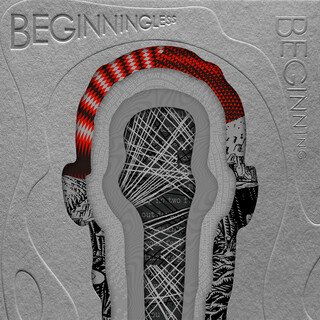
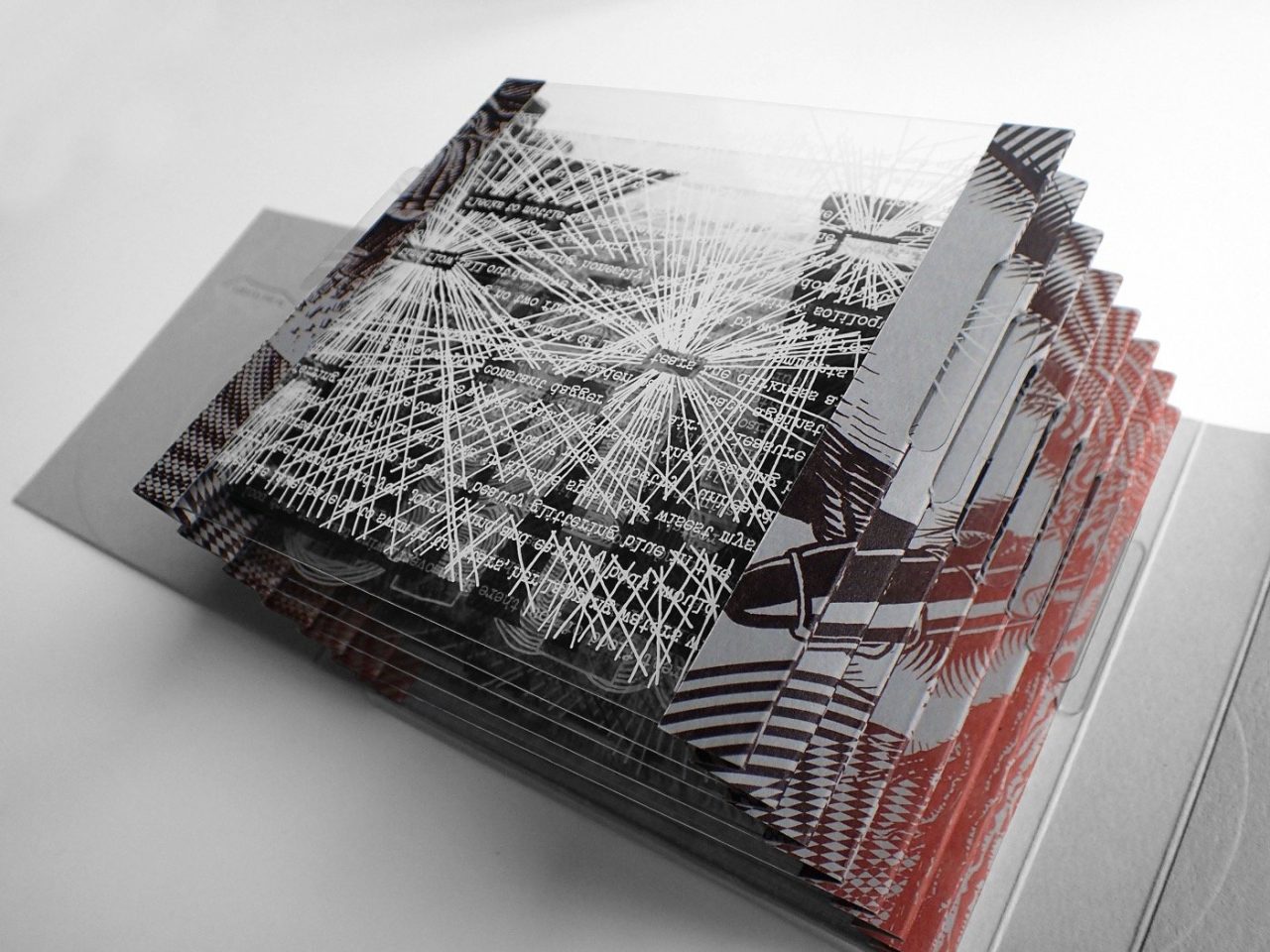
This year, the Tamsui-Kavalan Chinese Orchestra took home the award for ‘Best Recording Package’, beating Soporus, Spiritualized, Fann and Underoath. Their project, Beginningless Beginning, is a soundtrack album for the short film Tamsui-Kavalan Trails Trilogy and its packaging was designed by father and daughter duo Xiao Qing-yang and Hsiao Chun-tien.

This was Xiao’s seventh Grammy nomination, and Hsiao’s first. Check out the packaging below.


Elsewhere, the physical format was celebrated in the ‘Best Boxed Or Special Limited Edition Package’ category. Despite nominations for Black Pumas, Danny Elfman, They Might Be Giants and an Interscope compilation, the winners on the night were The Grateful Dead with In And Out Of The Garden: Madison Square Garden ’81, ’82, ’83.

The 17-CD bundle, which was designed by Lisa Glines, Doran Tyson and Dave Van Patten, includes a series of colourful illustrations and liner notes from music journalist David Fricke.


Whilst CDs won big in the packaging categories this year, the ‘Best Album Notes’ category is something all vinyl fans can get behind. Bob Mehr’s notes took this award home for the 20th-anniversary reissue of Wilco’s Yankee Foxtrot Hotel, which featured on our reissues of the year list for 2022.


Check out the full list of Grammy winners here.

Mobile Fidelity Sound Lab Mastering Process | Announcement

Mobile Fidelity Sound Lab (website) President, Jim Davis, released a statement today regarding their mastering process and transparency. Reporting by Eric Franklin Shook Before we get on about Mobile Fidelity Sound Labs, it bears repeating […]

Black Pumas First Anniversary Modern Rock ’n Soul Classic Deluxe Edition Vinyl

In the history of pop music there have been quite a number of incredible moments when a new artist emerges, seemingly fully formed, armed with a bevy of great songs in their back pocket that just deliver. Other times, there is just one song that defines the group or artist, and that may be all they get known for but that’s still enough to give them a firm place in pop music history.

From Buddy Holly’s tremendous songs written before he died far too young in the 1950s to Elvis Costello’s debut coming out of the gate in the later 1970s with songs like “Watching The Detectives” and “Alison,” sometimes you just know that an artist’s music is going to last for the long haul. It was like that for me the first time I heard Jeff Buckley (RIP).

Certainly for many of us when we heard Boy George crooning “Do You Really Want To Hurt Me?” — he could have stopped right there and he’d be a pop music legend. Multiple Grammy award winner Pharrell Williams’ “Happy” is another one of those instantly likable songs which you know will stand the test of time.   

And so it went for me the moment I recently heard the song “Colors” by Black Pumas for the first time (better late to the party than never!). I immediately got a sense something special was going on. Two weeks later I read about a new special edition reissue of their debut album which was being expanded to a two LP set to celebrate its first anniversary.  I thought that was very cool conceptually — an expanded edition of a still-fresh debut album a more-or-less still new group — so I ordered it right away not having checked any of the other tracks. I just trusted my gut instinct. 

The album arrived and it was exactly what I hoped it might be: a great debut by a young band showing great promise and much room for growth. The songs on Black Pumas are wonderful and certainly the hit “Colors” is a stand out. But there are plenty of other earworms here…

But what is really great about Black Pumas is not just that it has a got a sexy neo/retro soul vibe going on with all manner of groovy street smarts inside and out.  No, the big thing (for me at least) is that these folks can write a good song and they know how to produce a good record. This debut Black Pumas album is a solid listening experience, start to finish.

When first listening to an artist I’m interested in, I always enjoy playing “spot the influence” and Black Pumas are a joy for that game. Beyond the obvious Al Green, Marvin Gaye and Bill Withers aesthetics — and maybe even some Otis Redding and more recent singers like the great Charles Bradley (RIP) — I’m hearing echoes of no less than Jeff Buckley and John Lennon.

For example, you get a sense of the latter on a track like “October 33” which has a deep bluesy acoustic vibe that builds steam and seems to reference back to Lennon’s mid-70s period around the time of albums like Mind Games and Walls & Bridges. “Touch The Sky” has a great acoustic guitar signature driving the song which contrasts neatly with the horn section as the song builds . 

The expanded edition of the album includes their powerful arrangement of The Beatles’ “Eleanor Rigby,” a hard rockin’ quasi-psychedelic gospel-tinged version which recalls no less than the Vanilla Fudge’s interpretation (from their 1967 debut album!). The Black Pumas’ version actually takes their arrangement to a space more akin to the Vanilla Fudge’s version of The Beatles’ “Ticket To Ride” (also on that same debut). It is smart that they put “Eleanor Rigby” on the bonus single that comes with the deluxe edition album as it is very much its own thing that shouldn’t detract from the brilliance of the core album.   

The B-side is a great but straight forward cover of Bobby “Blue” Bland’s 1974 classic Top 10 R’n B hit “Ain’t No Love In The Heart Of The City.”

Their version of Tracy Chapman’s classic “Fast Car” is a poignant homage and the live versions of “Colors” and other key tracks from the original album are strong compliments to the studio takes, underscoring the power potential of this band in a live-without-a-net setting.  I don’t know about you but I’m looking forward to seeing Black Pumas live as soon as it is safe to do so, post Pandemic!

The standard weight vinyl on this new colored vinyl reissue of Black Pumas sounds great and is fun to boot. The main album is pressed on a rich gold wax while the bonus LP is printed on a lovely splatter of deep opaque red and black. Fortunately, it is very quiet — I think the choice of opaque colors may have contributed to that (check my articles here and here on the topic here if you are curious — and well centered. No problems there.  The physical album cover itself is also crafted of very high caliber materials, so this album feels immediately classic when you first pick it up in your hands. All that attention to the little details add up. 

I’ve been listening to Black Pumas a lot since I got it last week and I suspect it will stay in the play bin for a while more.  You can also find it streaming in warm sounding 48 kHz, 24-bits via Hi Res Qobuz (click here) and MQA Tidal (click here). 

If you haven’t listened to Black Pumas yet, do check them out. 

Recording Academy to Honor Ed Cherney, Daniel Weiss, Others

Ed Cherney
Ed Cherney

Los Angeles, CA (December 23, 2020)—The Recording Academy has announced the honorees for its 2021 Special Merit Awards, the honorees of which will be recognized on the 63rd Annual GRAMMY Awards on Jan. 31, 2021. Among the various honorees are a number of behind-the-scenes pros, including producer/artist Kenny “Babyface” Edmonds and the late noted recording engineer Ed Cherney for Trustee Awards, and digital technology pioneer Daniel Weiss for the Technical GRAMMY Award.

“As we welcome the new class of Special Merit Award honorees, it gives us a chance to reward and recognize the influence they’ve had in the music community regardless of genre,” Harvey Mason jr., Interim President/CEO of the Recording Academy, said. “As a music creator and music lover, I am grateful that we are able to look back at our influences and see the impact that they have made on our community. In a year where music has helped keep us together, I look forward to honoring this iconic group of music creators.”

Ed Cherney was one of the most sought-after engineers in the industry. His four-decade career began as an assistant engineer working with Bruce Swedien and Quincy Jones on Michael Jackson’s Off The Wall. Cherney went on to record, mix and engineer albums for artists such as The Rolling Stones, Bob Dylan, Iggy Pop, and Fleetwood Mac, among others. A four-time GRAMMY winner, he also won an Emmy and eight TEC awards over his career, founded the Academy’s Producers & Engineers Wing, was a founding member of the METAlliance, and even occasionally wrote in Pro Sound News.

Producer, recording artists and label owner Kenny “Babyface” Edmonds is an 11-time GRAMMY winner, and has a record four Producer Of The Year, Non-Classical awards. He has been instrumental in the careers of artists such as Toni Braxton, Usher and TLC and has crafted hundreds of pop and R&B hits with artists including Whitney Houston, the Whispers, Brandy, Boyz II Men, Madonna, and Eric Clapton.

A pioneer of digital technology, Daniel Weiss founded Weiss Engineering Ltd. in Zurich, Switzerland in 1985. The company has designed and manufactured digital audio equipment for mastering studios, including the IBIS digital mixing console and the ultra-high-quality Gambit Series digital products.

The Lifetime Achievement Award honorees are Grandmaster Flash & The Furious Five, Lionel Hampton, Marilyn Horne, Salt-N-Pepa, Selena, and Talking Heads, while Benny Golson will also be a Trustees Award honoree.

The Recording Academy • www.grammy.com

The METAlliance Report – The METAlliance on Miking

metalliance
The METAlliance includes: Frank Filipetti, Elliot Scheiner, Chuck Ainlay, Al Schmitt, Niko Bolas and George Massenburg.

The METAlliance — Al Schmitt, Chuck Ainlay, Elliot Scheiner, Frank Filipetti,  George Massenburg and Niko Bolas, along with the late Phil Ramone and Ed Cherney. The METAlliance Mission is to promote the highest quality in the art and science of recording music.

Chuck Ainlay and I were talking about microphones. We thought that it might make a nice column. Then we thought, “Wait a minute—we have the greatest resource in the world right here in the METAlliance. His name is Al Schmitt!” So, I interviewed Al. We not only got a great column, we got a whole series—here’s a portion:

Frank Filipetti: What is the first thing that you look for when you’re deciding on a microphone for purchase, or to go into the studio? Is it frequency response, polar pattern, off axis response, emotional response?

Al Schmitt: I think it’s more emotional than anything. I’ve been doing this for a long time and working on every kind of microphone you can imagine at some point in my career, and yeah, it’s become an emotional thing. I’ll have a favorite mic I love to go to on certain things; sometimes it’s a condenser mic, and sometimes it’s a ribbon mic. It depends on the artist and the circumstances of what we’re doing, and how we’re going to do it. If it’s somebody like Michael Buble, who wants to sing right in the middle of the rhythm section with the band, I’ll use a [Neumann U] 47 on him, in a cardioid position to get some rejection from the other side. He’s got really good microphone technique, so that works for him. Some others, you can’t do that.

Frank: You like to use a U47 in cardioid—part of that is because you’re looking for rejection, but are you also looking for any proximity effect?

Al: Well, a little bit of proximity effect, but it’s more about the setup. If the artist is in an ISO booth, you might use a different mic than if you had them in the room. It also depends on how much time you have—if you’re overdubbing a vocal, guitar, whatever, and you have time, then you can experiment with mics, have a couple of different mics up there, see which ones you like the best, and it’s a great learning process. When you’re doing that, you think, “Oh, I love this 47 a lot” or “This [Neumann U] 67 sounds pretty damn good to me.” And “How about that [Neumann] M50, or even [a Shure] SM7?”  It goes on and on.

Fortunately, we’re blessed; we get to use the best microphones in the world. A lot of people who read these magazines have little home studios, and the most expensive mic they have might be a $300 microphone or even a USB. They have to do the best they can with what they have. I’m fortunate that I have a great microphone collection; I know you do, too. And when I work at Capitol, they have unlimited mics.

Frank: Not only do you have unlimited access at a studio like Capitol, but you know they’re all in tip-top condition.

Al:  Yeah, absolutely.

The METAlliance Report: Sound Aesthetics – It’s Written in Stone

The METAlliance Report: The Recording of Steely Dan’s ‘Aja’

Frank: Let’s say for example, you have an artist who wants to be in the room with the musicians. Do you encourage or discourage that, especially if the producer wants to punch-in or be able to tune the vocal later?

Al: You don’t punch in, especially if they’re in in the middle of the section and you have all that bleed; you’re gonna hear that unless you’re punching in everybody at the same time, so yeah, you can’t do that. You’ll have to redo the vocal as an overdub and then fix whatever parts you want to fix that way.

Years ago, when you couldn’t punch in, the singer sang with the rhythm section and you needed to keep the vocal on top—and you learned which mic works best. Experience taught you how to use your microphones for separation and isolation. In the end, it’s the years of that experience that teaches you how to do that.

Frank: How about today’s way of making records, where isolation of every track is placed at a premium for fixing and tuning after the fact?

Al: Making vocals perfect always bothered me. Some of those recordings, where every note is right on the mark, it just becomes robotic. It doesn’t sound like a human after a while. Frank Sinatra didn’t sing every note in tune. The great thing is, you can fix a thing here and there, but to go in and tune every note, do we really have to do that? I don’t know; I don’t like to make music like that, and I try to stay away from that.

Frank: I do, too. It’s what I call the stonewall effect—that the old stone walls with their lack of symmetry grabs me more emotionally than the newer walls with their straight lines and perfect symmetry. When it gets too perfect, you lose that emotional response.

Al: Totally agree.

To be continued….

The METAlliance • www.metalliance.com

Paul Boutin Barrels Through the Pandemic

 Paul Boutin
Paul Boutin

Hollywood, CA (December 4, 2020)—When Paul Boutin looks back at his career as an engineer, mixer, producer and musician, the word “luck” comes up a lot. “It was a lot of luck,” he says, “a lot of being there at the right time and working with the right people.”

Boutin is being modest; it takes more than luck to occupy the chair next to double-digit Grammy-winning super-producers like Humberto Gatica and Kenny “Babyface” Edmonds. And the people he’s worked with? It’s a long list of multi-platinum-selling artists, many known by just their first names: Michael, Janet, Céline, Barbra, Stevie, Whitney.

Born in France, Boutin—now a Grammy-winner himself—was on course to become a biologist but didn’t make it into the only school on his list. “My mother said, ‘Go and do music; that’s what you’ve always wanted to do.’ I was lucky to be accepted at Berklee College in Boston and started doing songwriting,” he says. “But I wanted something concrete, so I did some arranging and some synthesis, then I went into music production and engineering.”

A friend’s invitation took Boutin to Los Angeles, where he picked up regular work at a couple of studios before Record Plant manager Rose Mann hired him as a runner. “I was lucky enough to become an assistant pretty fast and was put on a lot of good sessions. I worked a lot with Humberto Gatica, including with Céline Dion. He became sort of a father figure,” he says.

A six-month stint working on various Babyface projects led to Boutin’s current long-running gig. “Kenny was building his studio at the time and said, ‘Want to come over?’ That was in ’96—and I’ve been here ever since.”

Grammy-Nominated Engineer Louis Bell Breaks Out

The first song produced at Edmonds’ Brandon’s Way facility was a Grammy-nominated collaboration with Stevie Wonder, “How Come, How Long.” Boutin laughs, “We weren’t sure everything was going to work. There were still carpenters in the studio.”

Brandon’s Way opened with a Euphonix CS2000 desk in one room, later upgraded to a CS3000, with an SSL 4000G+, later replaced by a 9000J, in another. “Since then, we’ve moved to an SSL Duality,” he says.

During the current coronavirus pandemic, Boutin has also been employing more modest technology. On Toni Braxton’s new album, Spell My Name, which he co-produced, there were still some minor vocal changes and fixes to do when it became too risky for the singer, who was diagnosed with lupus in 2008, to visit the studio.

“She’s not technical and she doesn’t have a mic, so I told her, do it on your iPhone—because the iPhone microphone is pretty good,” he says. “I had her record in a closet. I said, ‘Listen to the song so you have the tempo, then sing whatever lines you want. Keep singing them over and over and I’ll pick what’s good.’ I figured out what was the proper EQ to make it sound like what we already had, and it worked.”

The tech went up a notch when Boutin and Edmonds worked remotely with Tori Kelly on her A Tori Kelly Christmas album. “We did all the tracks here and she would sing to them. She has a Logic setup and a Sony C-800G mic. There’s a track, ‘Joy to the World,’ that we made gospely. She’s incredible—she sang the whole song to a click, then we put the music around it.”

Edmonds, who caught COVID-19 in March and quarantined at the studio, has since been focusing on live and pre-recorded social media performances. Boutin employed the CEntrance MixerFace portable audio interface on a number of those videos, including an acoustic “How Come, How Long” Edmonds performed in tribute to George Floyd, whose death in police custody sparked nationwide protests in May.

More recently, Boutin has added videographer to his job titles, beginning with a video of Edmonds’ daughter performing a Billie Eilish cover for a school project. “We shot it on the iPhone 11,” he says.

He and Edmonds followed up with a shoot in the studio and surrounding streets for a children’s charity event. “So now I’m shooting videos and editing in Final Cut Pro,” says Boutin. “We did a whole video in a day and it cost nothing. It’s fun!”

Paul Boutin • www.paulboutinonline.com

Grammy-Nominated Engineer Louis Bell Breaks Out

Louis Bell
Louis Bell, Variety’s producer of the year, works out of works out of Electric Feel Studios in West Hollywood, surrounded by Genelec monitors.

West Hollywood, CA (December 2, 2020)—The Grammy nominations came out last week, and with the announcement that Post Malone’s “Circles” was up for Record of the Year, Louis Bell added yet another Grammy nod to his growing collection of industry plaudits.

In 2019, Bell had more number-one singles than any other producer or songwriter, with Post Malone’s “Wow” and “Sunflower,” Halsey’s “Without Me” and the Jonas Brothers’ “Sucker.” He produced eight Top-10 hits, staying atop the Hot 100 Producers chart for weeks. In September, he equaled Taylor Swift’s record for the most production credits—18—in a single week on the Billboard Hot 100 this century. Oh, and Variety also crowned Louis Bell producer of the year.

The basic tools of Bell’s trade could practically fit into a briefcase: a Sony C-800G microphone, a Universal Audio Apollo Twin Duo interface and a laptop PC running FL (formerly Fruity Loops) Studio and Pro Tools. “I’ll create a really nice loop or different loops in Fruity Loops based on the chord progression, then export it into Pro Tools, which is where I do my arranging and mixing,” says Bell.

“Once we have the song laid down, I’ll spend hours dialing in certain sounds, maybe swapping out drum sounds or layering different things, on my own time. I’ll always try to push things further than they need to go and then dial them back.”

Recording Roddy Ricch for Round Two

Bell adopted Fruity Loops in 2002. “I was in the generation just after SSL and API boards were the standard if you wanted a specific sound to compete on a commercial level,” he says. “It was an economic decision. I wanted something that, if I really learned this one piece of gear, would help me long-term. I wanted to be more flexible and dynamic, and I felt like in-the-box would allow me to have an infinite number of possibilities.”

He hopes he’s setting an example. “It’s good to feel like I could have some positive influence on producers of the next generation and make them realize how much they can do with so little equipment, to help them economically when they’re starting out and not feel that it’s too much of a financial burden.”

While he grew up in Boston, MA, he came to L.A. in 2012 to work with hip-hop artist Mike Stud, who introduced him to his manager, Austin Rosen, founder of Electric Feel Entertainment. Bell signed to the management company and works out of Electric Feel Studios in West Hollywood.

Bell acquired a pair of Genelec 8351B nearfield monitors to supplement the room’s soffited 1035A mains earlier this year. “I’ve been using the 1035As in the A room for the last seven years to mix every record I’ve worked on,” he says. “I honestly don’t feel confident sending off a song until I’ve done this. The mids and vocals are crystal-clear; the high-end is tastefully tamed.” The speakers give the kick drum a chest-thumping punch that cuts through the low-end in every mix, he says.

Since hooking up with Post Malone in 2015, Bell has been his right-hand man ever since. “When I met him, he was 19, I was 33. It’s been an amazing journey, and a pleasure to watch him grow and learn and evolve as a musician and an artist. I feel like he’s taught me more about myself as a producer than I’ve learned from anyone else,” he says.

“I thought I knew who I was and what I was trying to do musically, but it’s never too late to reinvent yourself. It gets harder and harder the older you get, so you have to change your approach every time just to remind yourself that there are no rules and there are no bounds.”

Hollywood’s Bleeding, Post Malone’s third album, was Bell’s highlight of last year, he says. “Any time I get to work on an entire project and oversee it and executive produce it, and make sure that there’s a story being told and it’s being unveiled the right way, and then being able to get the right features on there, that’s a satisfying experience.” Featured artists include DaBaby, Future, Halsey, Lil Baby, Meek Mill, Ozzy Osbourne, Swae Lee, SZA, Travis Scott and Young Thug. Ozzy had never done a feature before, says Bell: “His voice sounds amazing still. He lived up to the hype.”

The Mix Consultancy: Are Modular Synths Useful to Mix Engineers?

Dom Morley
Dom Morley is a Grammy Award winning engineer and producer. Over a 20-year career, he has worked with many artists, including Adele, Sting and Amy Winehouse, and producers including Phil Spector, Mark Ronson and Tony Visconti. Morley can be reached at www.themixconsultancy.com

Unless you live under a rock, you’ve probably noticed the rise in popularity of modular synths over the past few years. I got into it about seven or eight years ago, and I fear I am living proof of just how addictive they can be. I realize I could be accused of a certain amount of self-justification in this article, but trust me, they really are a useful tool for mix engineers.

First, a quick overview for the uninitiated. There are two common set ups, of which the one referred to as “East Coast” style is the more traditional. This is so-called because Moog synths were built on the east coast of the USA, as opposed to the slightly more esoteric Buchla synths which originated on the west coast at about the same time (‘west coast’ style, although hopefully you’d worked that out). The pros and cons of each method can cause some pretty heated debates in the world of synth-heads—debates in which neither Bob Moog nor Don Buchla were remotely interested.

Anyway, I digress.

There are few basic parts that are common to the traditional setup. You start with a voltage-controlled oscillator (VCO). This permanently generates a wave form—sine, triangle, saw and square are generally your choices—the pitch of which is decided by the control voltage (CV) that you send it from your keyboard or DAW. Normally you mix two or three of these VCOs together and then feed them into a resonant filter which shapes the sound by taking away harmonics, which gives us the term ‘subtractive synthesis.’ You’ve still got a permanent tone, so next in the chain is a voltage-controlled amplifier (VCA), which you normally turn down to silent so it can be turned up again by modules called envelope generators (often ADSR-style, if you’re familiar with hardware synths) which fire whenever they receive a ‘gate’ signal—which is triggered when a key on your keyboard is pressed (or, again, from your DAW).

Modular synths are becoming a useful weapon in the arsenal of mix engineers.
Modular synths are becoming a useful weapon in the arsenal of mix engineers. Future Owns Future Owns

That’s the basics, but modular synthesis gets more interesting when you introduce different sources of modulation. Pretty much everything you can think of can be modulated by everything else, with low-frequency oscillators (LFOs), ring modulators and various styles of envelope generator all being part of the arsenal, but that’s another article.

“But,” I hear you wearily ask, “how is this useful to mix engineers?” Well…

  1. Better synth sounds. If you find yourself being handed less-than awesome synth sounds to mix, then you’ve got a simple solution to that. Remember that a new filter can cost you less than £100, and each new filter opens up a whole raft of different tonal possibilities, so even a modest modular system can give you a wide palette of great analogue synth sounds. Ask for the MIDI along with the audio and you can quickly create sounds that not only lift the track but also make the mix easier.
  2. Better filters. I know this sounds like it goes with the previous paragraph, but I mean something different here. In this application, you’re using the filters in your modular system like the filters on an EQ—because if you want to take the top off your bass track, you can obviously do it quickly with a nice clean plug-in, but with an extra minute of effort and a Moog low-pass filter, you’ve added some real character to your mix as well.
  3. Extremely tweakable analogue effects. Although you can do everything in the box these days if you want to, sometimes you don’t. For these out-of-the-box moments, modular synths offer a lot of really fun, tweakable and fantastic-sounding effects, from simple spring reverbs (with up to three tank sizes that you can flick between) to deep granular delays. There are amazing sounding phasers, and tube VCAs that give you incredible distortion effects. If you think that you—or your clients—might enjoy manually playing effects instead of automating a plug-in, then a small Eurorack (3U modular synths) set-up might be right up your street. It’s just like building a small collection of guitar pedals, but one to which you only need to add an oscillator and you’ve got yourself an analogue synth.

The Mix Consultancy: Creating Space in a Mix

It’s beyond the scope of this article to start recommending specific modules (feel free to contact me at themixconsultancy.com if you want advice on this—I can talk modular for days!) but perhaps you will now see a modular synth is not just a hipster’s plaything (although it is also that), or a synth-head’s money-pit (yeah, it’s definitely that, too), but also a useful weapon in the arsenal of a mix engineer.

Modular synths are becoming a useful weapon in the arsenal of a mix engineer.