Tag Archives: Compact Disc

Listening Report: Robert Fripp’s Exposures 32-Disc Boxed Set (Part 3, Live Frippertronics & More)

I could probably continue to write 20 additional reviews based on new discoveries and insights I’m still experiencing while exploring Robert Fripp’s breathtakingly massive and amazingly thoughtful Exposures boxed set.  

With this series of listening reports I hope I’ve at least given you, Dear Readers, a snapshot of what to expect and perhaps given some of you who have been on the fence about purchasing the set rational to — like me — leap off the board and dive into the rewarding waters of Frippertronics.  If you missed part 1, please click here and for part 2, click here.

Before I get into our last listening report of the series on the magnificent Washington Square Church concert recordings, I wanted to share some admittedly flowery, quasi-poetic language that came to me while listening to it. I got to to thinking about how I might explain what Frippertonics sounds like to a novice listener without using technical descriptions about guitars and loops ’n such.   

And then this paragraph came to me:

“Frippertronics sounds like clouds, floating, ebbing and tiding, merging dissipating, thundering and lightning, raining and revealing the sunshine within and around us… Would I be extreme if I said that perhaps Frippertonics is the sound of heaven? We can discuss that some other day…”

Colorful language aside, I felt there was something to these words, enough to include them here. I may continue massaging it over time, but I hope that for now it helps paint a picture of this distinctive and remarkable music.

And now, back to our regularly scheduled programming…

Available as part of the Exposures boxed set (including on CD, DVD and Blu-ray Disc) or as a standalone CD+DVD package (vinyl too!), the Washington Square Church concert is a special — and even unique — gem within the universe of all things Frippertronics. Freshly massaged, mixed and mastered from original tape sources by producer David Singleton, true to the buzz copy on the BurningShed website, this may well be “the finest example of Frippertronics in performance.”

What is so special about this?  

All of Fripp’s basic Frippertronic loops are thankfully in the archives. However, his solos over the loops weren’t always recorded save for this series of shows from 1981.  Unfortunately, they were not labeled properly so there was no clear way to figure out which solo went with which loop. DGM audio engineer Alex R. Mundy saved the day when he realized that the sound of the loops had been recorded at ultra low volume through the guitar pick-ups playing the solos. So by listening to non solo points at ear-bleed volume levels, he was able to identify and match up the solos to the particular loop. It was a painstaking process but the results allowed producer. David Singleton move ahead with mixing the audio of this final concert.

You can read about in the booklet in the Exposures boxed set as well as the individual Washington Square Church CD+DVD set. 

Once you are able to grok — yes, grok — the incredible technical hurdles the producers over came to bring this concert recording to us (a process probably even more painstaking than what the Zappa Estate undertook to bring us the Roxy concert film performances, click here for my review on that), one needs to just sit back and prepare to be mesmerized by this arguable epitome of live Frippertronics. 

Fripp’s playing is on fire in these performances made between July & August 1981. We get to hear a particularly refined and inspired Frippertronics presentation that no doubt benefits from his four years of touring and recording in this mode.  Here, we also get to witness (aurally, at least) Fripp at something of a crossroads given that in a month or so he would be unleashing his new Discipline project on the musical universe (ie. the next King Crimson). So don’t be surprised when you hear him launching into some of that fast, repetitive machine-gun fast fretwork he teased on “The Zero Of The Signified” and which would blossom into full flower in later songs like “Frame By Frame” on the Discipline album.

The song titles on the Washington Square Church DVD Audio Disc and Blu-ray Disc versions are simply labeled “Washington Square” followed by a roman numeral from I-XI. The performances are all variations on classic Frippertronics themes but are particularly focused and powerful in this show. 

Interestingly, as the album’s producers were going through the loops and matching them to solos, they discovered an anomaly: Fripp had played over the same loop at two different concert venues— one  at Washington Square Church and another at Inroads. In a process akin to Frank Zappa’s “xenocrony” concept — where unrelated recordings are combined to reveal remarkable synergy which never existed before in reality — album producer David Singleton was able to combine both solos into the final track on the album, “Washington Square XI.” 

Mr. Singleton describes the process in the liner notes. The two solos deliver very different feelings, one with a sort of “Scary Monsters” (Bowie) vibe while the other features the rapid-fire typewriter-on-steroids “Frame By Frame” (King Crimson) sort of playing. Together, these solo appear as a bit of a virtual duet. Interestingly at the point where one fades out the other picks up  as if it was planned. It wasn’t, the segue just happened when the two performances were aligned in the multichannel recording software. 

Another wonderful and wondrous moment in the Exposures boxed set. There is so much more but I think after these three listening reports you now have some idea of what to expect. There is much visual joy to look forward to as well in the booklet and the fantastic reproductions of concert posters and other memorabilia from the period included in the set.  

Exposures is arguably the most complete and in-depth multi disc boxed set to date from the King Crimson universe, if not all music in general.  It is that good.  If you are a Fripp fan, you need this one…

Listening Report: Robert Fripp’s Exposures 32-Disc Boxed Set (Part 2, Exposure, Under Heavy Manners, Dolby Atmos/DTS HDMA Surround & More)

If you missed part one of my exploration into Robert Fripp’s excellent new boxed set called Exposures, please click here to jump to it and catch up. I’ve tucked in much useful back up information and perspective there which will make today’s listening report that much easier for anyone reading to appreciate.

Assuming everyone is all caught up on all things Fripp-tastic, lets dive right in… 

Please note that this is technically my first formal review of an Atmos mix and I can’t think of a better maiden voyage than with Robert Fripp’s Exposure recordings as mixed by the great Steven Wilson. I have recently upgraded my living room home theater system so that I can now listen to the wealth of Dolby Atmos releases I’ve received in the past year. Prior to this review, so far I’ve been somewhat underwhelmed by many of the Atmos mixes I’ve tried — and thus have not written about any yet. But, I’m not entirely surprised as it is a new medium and some mixing engineers are probably getting instructions from the powers-that-be to not get too crazy on their titles. 

But it is worth noting that there is a difference between an outwardly wacky gimmicky mix vs.  one which tastefully uses all the surround fields to create an appealing immersive listening experience. 

Save for the Atmos mix of producer Steven Wilson’s own most recent solo release (click here for my earlier review of his The Future Bites which I hope to update at some point about the Atmos mixes), the mixes here on Exposures are the first compelling home audio use of the new Dolby technology which I have heard to date!

Not all of the albums included in Exposures are mixed in Dolby Atmos or DTS HD Master Audio, probably for very good reasons beyond the scope of this review.  But the ones that have been are significant within Robert Fripp’s catalog. 

The core original Exposure album is available here in 96 kHz, 24-bit DTS HD Master Audio 5.1 surround sound as well as 48 kHz, 24-bit 7.1 Dolby Atmos (and in Stereo!). Both options have their benefits and the two options mostly support one another for easy comparison and contrast. Even though technically the Dolby Atmos option is about half the size of DTS HD MA option, I didn’t notice any significant loss of fidelity between the two versions (so kudos to mixing engineer Steven Wilson for working that magic!). 

Listening to the “Fourth Edition” of Exposure in a new 2021 mix, one of the first things I noticed was that the ‘height” channels in the Dolby Atmos mix were (happily) being used for discrete instrumentation as well as room ambiance.  This is one of the big issues I had with many other Atmos mixes I’ve heard — most had opted to just throw some lazy reverb-y ambiance in there, much in the way that poorly crafted 5.1 mixes sometimes handle in the rear surrounds. I understand it is a safe method — keeping everything “true” to the original Stereo mix — but being bland doesn’t add any value to the surround mix. That approach is almost always ultimately disinteresting (at least to me, and I suspect others who hope for a bit more muchness from their home theater listening experiences).

Thankfully, Exposure in surround sound is not lacking in muchness here on Exposures! Plenty of it here to go around!

So for example, on “North Star” I heard delicate pedal steel guitar parts and scraping effects emanating from the Atmos channels toward the end of one song.  On “I May Not Have Had Enough of Me but I’ve Had Enough of You” there are these fantastic odd guitar “punches” (if you will) which percolate there. 

In addition to discrete information, the Atmos channels here are often used for height information which seems to help everything sound bigger, more to scale of the room they were recorded in. Not necessarily louder but just bigger, if you will. 

So on the title track “Exposure” the drums are particularly huge. At times it feels like the kick drum is in your face, as if you were standing in front of the stage in a club or small venue. 

“Mary” is utterly gorgeous, Terre Roche’s voice sounding hauntingly direct as is Peter Gabriel’s vocal on “Here Comes The Flood.”  “NY3” is more manic and intense than ever, if that is possible. 

When I listened to the Atmos mix of Under Heavy Manners, the impact was quite spectacular.  “Zero Of The Signified” is especially jaw-dropping with much huge sounding Frippery going on including (what sounded like a sort of) detuning of strings on his guitar to make fat roaring rhinoceros like sounds (akin to what his future band mate Adrian Belew would be doing in Discipline-era King Crimson and on his solo albums). There are some incredible washes of Frippertronica (if you will) flowing over and around at the end, with one loop sort of whipping behind the listener.  It is a subtle effect, but it is there for sure.

The extend mix of ”The Zero of The Signified” is a standout for me. Fripp’s wicked repetitive guitar signatures seem to ping-pong more aggressively around in the surround fields while Frippertronics tides crash on the shores of your listening sweet spot. Amazing, achingly beautiful feedback guitar — which I believe would make Hendrix cry — plus even more rhino rips appear front and center while frippertronics loops soar around.

At this moment I can more fully appreciate why Fripp eventually connected with Adrian Belew — they were both working on similar concepts from different directions!

“Red Two Scorer” is one of the most immersive Frippertronics mixes I’ve heard thus far, with seeming diagonal passes of sound at times, flying left-front to right-rear, left-rear to right-front. And its not gimmicky, just very very cool. I have only heard that attempted once before by none other than Frank Zappa (on the QuAUDIOPHILIAc version of “Waka Jawaka”)!

Perhaps the only curious — and maybe negative — detail I’ve found so far in comparing the different mixes happened when I switched to the DTS-HD Master Audio mix of Under Heavy Manners to attempt a crude A/B comparison of the two versions. The difference was almost too dramatic. The DTS mix felt immediately less immersive but it seemed to be more than that… Fripp’s guitars were toned down to the point where I wondered if there might be a problem with the technology delivering that particular mix.  I’m not sure what is happening there and it is certainly not a deal breaker for me at this point now that I’m Atmos-equipped, but thought it was important enough to bring up for those of you who might have any issues. 

There are also many many bonus options you’ll find in this realm worth exploring on Exposures. 

For example, Daryl Hall’s vocals on “Mary” on early versions of the Exposure album — presented as the wonderfully titled Breathless or How I Gradually Internalized The Social Reality Of Manhattan Until It Seemed To Be A Very Reasonable Way Of Life and Last Of The Great New York Heartthrobs — is mind numbingly gorgeous.  Hall’s vocals — which were initially blocked from release due to industry machinations back in the day, thus prompting the recording of Terre Roche’s beautiful but different replacement take, as heard on the first commercially released edition of the album — had eventually been released on CD several years back.  But honestly, hearing it in this form is like hearing it for the first time. Darryl feels like he’s right there in the room singing to you against Fripp’s beautiful electric guitar finger picking.  It is pretty knocked out!

“Morning” is another of the bonus tracks which jumped out at me while exploring Exposures on the Blu-ray Disc in the set.  This track feels like a preview of the rich acoustic sounds Mr. Fripp refined during his instructional Guitar Craft years (some of which you can hear on the League of Crafty Guitarists album) but with haunting Frippertronics flown in over it all. It is beautiful!

And so it goes on the Exposures boxed set.  One mesmerizing joy after another.  

Stay tuned as I’ll soon explore the amazing Washington Square Church performances in part three.

Listening Report: Robert Fripp’s Exposures 32-Disc Boxed Set (Part 1, A Frippertronics Primer, Surround Sound & More)

If you know David Bowie’s hit song “Heroes” you are familiar with the sound of Robert Fripp’s guitar playing of its signature riff. If you’ve ever heard the landmark progressive rock album by King Crimson called “In The Court of the Crimson King” then you know some of Robert Fripp’s early work as well.  There is so much more…

That said, if you haven’t heard his 1979 release called Exposure you probably don’t have a complete picture of what Robert Fripp and his music is about: where it came from, where it went and where it might still be going. Arguably, in many ways this album helped shape the sound of popular music in the ‘80s and beyond.

The genesis of Exposure is a very involved story worthy of super deluxe boxed set. The new 32-disc boxed set, appropriately named Exposures, celebrates the album and this fertile period of Mr. Fripp’s life. This collection tells his story in music and words  about the evolution and exploration of a new sound, the power of a rich artistic statement which would effectively drive his career through into present times. 

Central to  Exposures was the development of his tape-loop recording process known as “Frippertonics” which blossomed from his work with Brian Eno on 1973’s No Pussyfooting and 1975’s Evening Star, in particular.

More Frippertronics music emerged, including solo live performances as a self-contained “small, intelligent, mobile unit.” Fripp toured with his guitar and several Revox reel-to-reel tape recorders, along the way refining and redefining his sound. The resulting performances and a series of formally released albums were immediately mind-boggling and breathtaking, simultaneously timeless and futuristic.

This music — and musical mindset — which Fripp crafted between the years of 1977 and 1983 (or thereabouts) is the heart and soul of the Exposures boxed set. 

As a Fripp fan from way back, I find this new boxed set as exhilarating as it is exhausting — but its a good exhausting! However, I can certainly understand that many casual listeners might not be able to wrap their head around an undertaking this massive. However if you are into the King Crimson universe and all things Fripp – and there are millions of us out there around the world – you probably want to invest in this madly wonderful collection if you haven’t already.

In Exposures we get several original albums from the period Including Exposure (and its several variant incarnations which the album underwent due to music industry machinations) Let The Power Fall, Under Heavy Manners, and The League of Gentlemen. We get this music on CD and on DVD Audio discs. And, we also get everything and more on Blu-ray Discs including brand new Steven Wilson produced remixes into 5.1 DTS HD Master Audio surround sound and even 7.1 Dolby Atmos! 

But wait, Krimson shoppers… There’s more!
On the Blu-ray especially we get the full archive of Fripp’s real-time tape loop performances from his concert series and other appearances, recorded between 1977 and 1982.  These stereo sequences seem to last on average about 30 minutes each, filling up two entire Blu-ray discs. This is a whole lot of music! I did some crude math and it seems that one of the discs alone has something like 30 hours of Frippertronics on it!

We get live concerts including the spectacular Washington Square Church show from 1981 which has also been mixed into 4.1 quadrophonic sound.

This is admittedly a bit involved and takes a great deal of open minded-ness to get one’s head around all that is happening here. In that sense, this set is a fantastic academia-worthy study not only on the artistic process but also on the evolution of new musical concepts and sounds. Nothing before or since sounded quite like Frippertronics!

“But for the uninitiated, what exactly does Frippertronics sound like?,” you ask…

That is a good question and it is difficult to answer easily in a way that anyone might be able to understand… but I’ll try (and I’m sure I’ll fail even though I’ve been trying to explain it to people since the early 1980s!). Fortunately in the boxed set Mr. Fripp has not only given us a replica of his press kit from that period of his career — with requisite publicity photos and lovely reproductions of concert posters, ticket stubs and memorabilia one would hope for in a super deluxe boxed set of this nature —  but he’s also included a photocopied background document explaining how it all works!

Anyhow, first recognize this music was made in pre-digital times — Frippertronics was initially an all analog process — many years before sampling and looping foot pedals existed. Using professional tape recorders, Fripp was able to record loops of very long, warm sounding, distorted and sometimes arpeggiated electric guitar tones which would regenerate upon themselves and decay naturally over time as new layers of sound were added.

The core of Fripp’s musical constructions feel almost classical in nature, almost waltz-like, often build upon a progression of single string picked short notes which — as they loop upon themselves — start to form chord-like washes of musical sound.  These loops would then become the musical bed for Fripp’s solo guitar improvisation on top of it all. 

The result is a haunting kaleidoscopic and hypnotic music which I can feel fairly safe in saying that it sounded like nothing else before or since. 

It is this intersection of structured musical invention and spontaneous improvisation which makes Frippertonics so powerful.  You know that the artist has had to think about certain sounds and note structures from the start before interacting with those recordings live without a net. 

Its almost like Jazz but it isn’t anything like Jazz. Its almost like minimalist classical music but it isn’t anything like minimalist classical music. It is just… Frippertronics!  When you stop to think about all he was doing then on these recordings, you realize this is the work of a master musician/composer at an early peak. 

If this Frippertronics music doesn’t sound enticing enough as a simple Stereo experience, try to consider how it might sound in surround sound.  I have been dreaming of hearing this music in a multi-speaker environment since I first started listening to it in the early 1980s… Talk about dreams coming true!

I’ve began my journey into Exposures by listening to two of the original albums included in the set on the Blu-ray Discs. These showcase very different aspects of the Frippertronics process, presented in rich sounding 96 kHz, 24-bit DTS HD Master Audio (you can also listen in high resolution PCM Stereo).

Let The Power Fall (navigation screen)

Let The Power Fall is a powerful pure Frippertronics listening experience, all taken from live performances. Steven Wilson’s wonderful and sympathetic new surround sound mix is gently immersive without feeling gimmicky — it is quite subtle and tasteful as the burbling bubbling layers of free flowing Frippery gently envelope the listener via the surround channels. At times, the music seems to fill the room and almost wash over and through you. Imagine if you were lying in the sun on an isolated island beach as small waves of gentle tropical waters lapped their way over you. 

It must have been a temptation to avoid having Frippertronic musical passages ping-ponging around the room in a discrete speaker-to-speaker manner.  As fun as that might be for one listen I am glad they took this more musical and non-gimmicky approach to the mix. 

The bigger surprise was how great the new wave punk oriented League of Gentlemen album fairs in surround sound: it’s almost like hearing an entirely new album and I mean that in the best possible way.  This album came out in the early 1980s — featuring Barry Andrews from XTC on keyboards and Sara Lee on bass who would soon after join The Gang Of Four — and it was an effort to mix Frippertronics with rock song structures. It was effectively a stepping stone toward the new incarnation of Fripp’s King Crimson which emerged later that year.   

The League Of Gentlemen (navigation screen)

The surround mix opens up this very dense and angular music significantly and seems to rock a lot harder than my old LP version. While I haven’t had a chance to compare/contrast it with the new remix, that idea seems almost a moot point here — the original vinyl mix will always be there and it will always be what it is (I have heard from some folks online that there have been some edits made to this new version). 

This surround sound mix is a new way of appreciating this music and this short lived band. You can better appreciate the connectivity between the supporting instruments and Fripp’s interwoven guitar tapestries. One of the bigger stand outs whose playing I appreciate much more on this mix is keyboardist Barry Andrews. His parts just jump out of the speakers in the best possible way, interlocking wonderfully with Fripp’s playing to unleash fascinating new sound combinations. The League of Gentlemen album still sounds fresh and energetic after all these years and even more so in surround sound.

Yes, this is Frippertronics that you can dance around to in the mosh pit!

There’s so much more to go into in this review series exploring Robert Fripp’s epic Exposures boxed set. Please stay tuned as my journey into this set will continue…

Listening Report: Zappa/Erie Live Boxed Set From Pennsylvania

I suppose that I was a bit musically spoiled having grown up in the New York area which afforded me numerous opportunities to see one of my all time musical heroes, Frank Zappa. Along the way, I seem to have acquired an admittedly misguided-yet-subtle sense of snobbery, previously leading me to think Zappa was at his best in the Big Apple

His shows there were often great, no doubt.  And compared to the shows I saw while in college in Syracuse, those relatively so-so shows only reinforced my semi-snootiness.

But the more I dig down into these wonderful archive releases which the Zappa Family Trust has been graciously bringing us fans, I realize that Frank indeed played many great shows wherever he could. And sometimes, the great shows were not in big cities like New York or even Los Angeles.

Now, I respect the Zappa Estate’s Vaultmeister Joe Travers immensely to the point where I knew that if he decided to issue a set dedicated to concerts specifically from his hometown of Erie, Pennsylvania, they were not going to be lackluster.

Simply called Zappa/Erie, this latest in the archive series is fascinating snapshot of — if you’ll excuse me for referencing Ten Years After — a very specific space in time. Across six CDs worth of music culled from a semi-isolated north-western corner of Pennsylvania, we hear several different — and even rare — incarnations of Zappa’s band.

The official Zappa website summarizes it thusly: “Three complete shows from the Vault based on appearances made in and around the Vaultmeister’s hometown of Erie, PA: Edinboro College and Gannon University ’74 with Erie County Fieldhouse ’76.  Also includes bonus tracks from the same tours. Three separate band line-ups, newly mixed from the original 4-Track tapes by Craig Parker Adams and mastered by John Polito at Audio Mechanics. Historical essays by Dan Schell & Joe Travers. Available on 6CD Box Set.”

Exceeding expectations, these Pennsylvania performances are indeed notable and worthy of your exploration. Obviously Zappa was happy with these recordings as he used portions of them to create the versions of “More Trouble Every Day” and “Son Of Orange County” found on the Roxy & Elsewhere album (this was some of the “elsewhere” material!)

Just looking at the track listing for the first show from Edinboro, Pennsylvania (5/9/74), I got super excited.  As it was the 10th anniversary of The Mothers of Invention, Zappa had worked up a medley of his own oldies-but-goodies which take up much of the second CD in Zappa/Erie.

I had always dreamed of seeing a set like this where he does a lot of material from the days of the original first version of The Mothers Of Invention (Freak Out, We’re Only In It For The Money, etc.). Alas, I never got to see one of these shows, but at least now I can listen to one in excellent quality on Zappa/Erie! 

From the 1974 shows we also get bunches — bunches, I tells ya! — of songs which never made it out on to his official rock releases back when Frank was still alive, including “Tush Tush Tush (A Token Of My Extreme),” “Dupree’s Paradise” and “T’Mershi Duween.”  

There are also tremendous moments from 1976 featuring keyboardist / singer Lady Bianca who was only in the band for a month before disappearing from Zappa’s musical landscape. She was in the band for my first Zappa show I saw that year! Also, young Terry Bozzio was still relatively new to the Zappa universe that year.

On the 1976 shows we hear early versions of future Zappa standards like “City Of Tiny Lights.” This segues into a lovely version of “A Pound For A Brown” with — it is worth noting for those not familiar — some epic and always fascinating solo improvisation by Zappa.

Zappa fans know this, but many casual listeners don’t realize that Zappa was one of the great band leaders of our times, customizing his music arrangements and compositions toward the strengths of his players at any given time. This was a practice Duke Ellington was known for and Mingus and others later followed his footsteps.  

That said, there is a fascinating version of “Black Napkins” — then a brand new tune Zappa from his Zoot Allures album which had just been released about a month earlier — featuring Lady Bianca! Here, she contributes a rich bluesy scat-jazz vocal solo before handing over the spotlight to violinist Eddie Jobson (Roxy Music, UK, Curved Air). I can’t say I have heard every version of “Black Napkins” out there in the collector’s universe but I have heard many and as far as I know this is only the second version like this to be officially released.  There is a slightly earlier version on the 2009 archive release Philly ’76 which also features the Bianca/Jobson combination. 

Lady Bianca also takes the lead on a fabulous Gospel-soul tinged arrangement of “You Didn’t Try To Call Me,” supported in close harmony from guitarist/vocalist Ray White.

As we’ve become accustomed from the Zappa Estate in recent years, the production quality of the Zappa/Erie set is very high both as a listening experience and a physical memento. This time the producers have taken a slightly different approach to the packaging, housing it all in a lovely hard cover book styled format. This LP-sized package features a fun full color glossy photo of Frank on the cover and many fun reproductions of concert advertisements from the time and other memorabilia.

I’m still working my way though the rest of Zappa/Erie but I think you get the idea that this is a great collection. If you like this mid-70s period of Zappa’s work, you’ll probably want to grab this one soon. 

If you have subscriptions, streamers can enjoy the new Zappa/Erie set in 96 kHz, 24-bit fidelity on Qobuz Hi Res (click here) and Tidal MQA (click here). It is also available on Apple Lossless (click here).

Listening/Viewing Report: Elton John’s Madman Across The Water 50th Anniversary Boxed Set Preview (Part 1 – The Bonus Videos)

I’ve waited 50 years to review one of my all time favorite albums and about 20 to talk more publicly about the surround sound mix (which I’ll do later this week). The new 50th anniversary super deluxe edition box set of Elton John’s fourth studio album Madman Across The Water — coming out later this week! — is a wonderful celebration of a crucial crossroads in the artists’ career. It also happens to be a very important album to me personally.

Keeping a long boring story short, when I was around 10 years old my Dad noticed I was playing my older brother’s first Elton John album a lot. So he started buying me Elton’s subsequent albums as they came out, first Tumbleweed Connection and then Madman Across The Water.  I can’t underscore how much this latter record meant to me then and still does today.

While I will soon get to the Surround Sound and Stereo mixes ’n demos ’n stuff in an upcoming segment of the this listening report, I thought it would be fun to begin this boxed set journey with one of the happy surprises included in the set: high quality broadcast video from the period.  On the Blu-ray Disc are two live performances filmed at the BBC: Sounds For Saturday (taped November 11, 1971, aired April 29, 1972) and The Old Grey Whistle Test (broadcast December 7, 1971).  The video quality — especially the Sounds For Saturday piece — looks pretty incredible for its age.  

The Old Grey Whistle Test material has some visual anomalies but it is important to consider that it is amazing that this footage even still exists! The BBC was notorious (especially in the 60s, and I assume into the early 70s) for “wiping” video tapes after a performance had been broadcast.  Given that this was recorded on relatively primitive color video of the day, it looks pretty terrific all things considered, even playing on my 50-inch 1080p television. There might have been clips of this circulating among fans on VHS back in the day but I suspect that most of us haven’t seen early footage of Elton from this period in quite this quality. Some of this footage seems to have been previewed on Elton’s YouTube channel in recent years but its great to be able to add it into the collection, accessible whenever we’d like without having to worry about internet connectivity. 

Navigation screen from the Blu-ray Disc of Madman Across The Water

Of course the performances are exemplary, with Elton and his band — drummer Nigel Olsson and bassist Dee Murray — remarkably delivering the necessary buoyant lift to these songs which on LP were often wrapped in lush orchestral studio creations. If you’ve ever heard Elton John’s live album from 1970 (originally titled 17-11-70 in the UK and 11-17-70 in the US) you know just how rocking they could get when performing material from the prior albums.  

To hear tracks like “Indian Sunset,” “Levon” and “Tiny Dancer” in this manner is spectacular. We get to hear different arrangements and even some alternate lyrics (there is an extra verse in the live version of “Holiday Inn” which is fun, though I can understand why it was left off the studio release). 

It is especially rewarding to hear “Madman Across The Water” live as it became a platform of improvisation for Elton. Given that there are none of Paul Buckmaster’s over-the-top (and wonderful) orchestral arrangements here, Elton and the band rock and jam out on the song for quite some time, with often great washes of sound coming from his piano.

The Old Grey Whistle Test performance is exciting for me as Elton performs a solo piano version of arguably my favorite of his songs, “All The Nasties” live, a song which I suspect he didn’t have much opportunity to play live at the time. That it is a fantastic performance makes it all the more mesmerizing.  

Taken together, these performances give us a complete live version of the Madman Across The Water album!

It is worth noting how impressive Elton is on these live-without-a-net performances, especially as they were taped at the end of their exhaustive U.S. tour. He appears incredibly calm and confident, barely breaking a sweat under the no doubt hot studio lighting (especially when wearing likely polyester clothing at the time!).  The band is perfectly in sync with Elton, especially their harmonies on tracks like “Razor Face” and “Rotten Peaches.”  The vocal blend is just about perfect.

Included in Elton John’s Madman Across The Water 50th Anniversary edition is a dedicated CD of the Sounds For Saturday performance which you can enjoy on its own. The audio quality is excellent for its age.  While it sounds like it is Monaural — broadcast television was only mono at that time folks —the fidelity is terrific to the point where I wonder if they had a dedicated audio recorder capturing the performance as a back up (vs. just taking audio off the video tape).  Whatever the source, is I’m grateful this has been officially released. 

There is so much more to talk about on this set which I’ll get into tomorrow in part two of my listening report on Elton John’s Madman Across The Water 50th Anniversary boxed set. Stay tuned! 

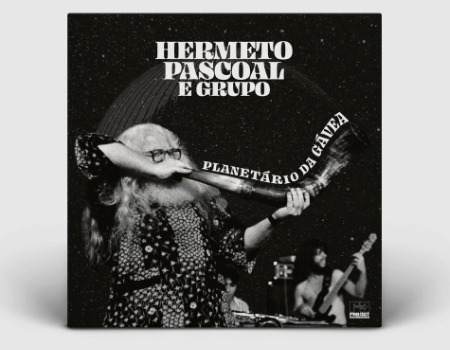
Listening Report: Hermeto Pascoal’s New Live Album Recorded In A Planetarium

I remember excitedly reading the news of a live album coming out from one of my more recent musical obsessions, Hermeto Pascoal. But as there are so many releases coming out rapid fire and erratic these days, coupled with all the trials and tribulations of life in these trying 21st Century tymes, I honestly forgot about it. However, the buzz came back to me when scouring the racks at Amoeba Music last week when I found the new release from my new musical hero. 

Planetário Da Gávea is an archival release featuring Pascoal with his then new band (eventually named O Grupo), an assemblage which would last 11 years (some members remain in the group to this day!). Recorded in 1981 in a Rio De Janero planetarium, the album is a terrific snapshot of everything that tickles my fancy about his music and keeps me digging down deeper into his catalog.

The album’s liner notes help to visualize it: “On the Planetário Da Gávea recordings though, Hermeto is cast as the “sorcerer” or the “cosmic emissary” (as the great Brazilian guitarist Guinga once called him), exhibiting an intuitive sense of harmony and melody beyond that of our own world.”

I’ll be more direct: if you’ve ever enjoyed music by Frank Zappa (especially the “Grand Wazoo” and “Roxy” eras of his band), Return To Forever and even Charles Mingus you might well enjoy this music. And if you perhaps wondered how they might all sound together, well — again — you might enjoy this music!  

I have written about Hermeto in the recent past. Please click here for a link to several of my reviews of his albums and related guest appearances on albums by Airto and Sean Khan. 

So, you may be wondering why you need to hear Planetário Da Gávea — which was sourced from a lone remaining soundboard-recorded cassette — in your Hermeto journey? Well first off, the tape sounds excellent all things considered and the performances are exemplary. You can really hear the band finding its groove on the stage and coming together as a tight unit. Apparently Pascoal used to rehearse his bands much as Zappa did, nearly seven days a week, eight hours a day. The band’s collective vision shines on these live-without-a-net recordings.

Again, I’ll reference the liner notes which do a good job of encapsulating this music on Planetário Da Gávea:

“Across the recording of the Planetário concert, wild improvisation meets groovy, virtuosic vamping on progressive, extended psychedelic jams. The tracks are generally built around a beautiful, transcendent melody; instantly recognizable as being Hermeto’s, and for the most part, the musicians then solo over extended two chord vamps. There’s a plethora of powerfully delivered rhythms, wild solos and the performances are punctuated by Hermeto’s unpredictable, at times comical sonic antics.”

That describes what I’d like to imagine a resultant music would sound like if Mingus jammed with Zappa’s band at a Return To Forever festival. 

Many of the songs on Planetário Da Gávea had never been recorded before this concert (many still unique to this concert) including ‘Homônimo Sintróvio,’ ‘Samba Do Belaqua’ and ‘Vou Pra Lá e Pra Cá.’

Wait until you hear his vocal solo with himself and a horn mouthpiece (probably from a trumpet) on ‘Bombardino’!

The vinyl pressing from Far Out Recordings is excellent. Planetário Da Gávea is also available on CD and you can find it on the finest streaming services including Tidal and Apple Music. (click the service name to jump to the recording there if you have access to those services).

Miles Davis once called him “one of the most important musicians on the planet.“  

What are you waiting for?   Check out Hermeto Pascoal’s music and Planetario Da Gavea.

This is the good stuff.

T-shirt available from Pascoal’s Bandcamp page

Listening Report: How To Appreciate Hassan Ibn Ali’s Stunning New Archival Recordings

A new archival release from Omnivore Recordings features the recently rediscovered solo performances by the obscure but revered pianist Hassan Ibn Ali. Last year the label issued an eye-opening previously unreleased second album that was long thought to not even exist anymore. I encourage you to click here to read my review of that fine and fascinating album as it presents useful backstory I don’t repeat here.

Hassan Ibn Ali’s new Retrospect In Retirement Of Delay: The Solo Recordings was never really meant for commercial release. But, it is a blessing that his friends who were students at the time had the insight to capture these fascinating raw recordings. As detailed in the copious liner notes, most of these sessions were made in various dormitory lounges at the University of Pennsylvania between 1962 and 1964. It is an equal blessing that these tapes were preserved by the center for Jazz Studies at Rutgers University in Newark, NJ. 

Retrospect In Retirement Of Delay: The Solo Recordings is a fascinating “fly on the wall” experience of listening to this overlooked and under-appreciated player fine tuning his remarkable technique.  His sound falls somewhere between Thelonious Monk, Bud Powell, Oscar Peterson and – – godfather of high speed piano wizardry — Art Tatum.  

And yet, that is not enough to describe him fully because he’s playing with time and space on these performances. The way he holds onto phrases and improvises around them for extended moments leans toward the sort of progressive rock spectacle one might hear from later synthesizer wizards like Rick Wakeman at his peak. The swirling and floating intro to his version of “On Green Dolphin Street” could be a prog rock intro to an epic performance of Yes’ “Siberian Khatru.” And I am saying this in the most positive way possible. This was music breaking boundaries of then current song structures so its no wonder it confused many of his peers — ahead of his time is an understatement. 

He swings. He soars. He surprises. 

There is speculation that Coltrane spent time with Ali and that the saxophone legend’s “sheets of sound” technique was built out of this inspiration. That makes good sense.  Ali’s playing also pre-echos players like Don Pullen who explored that sort of process on the ivories in the 1970s and beyond.

I admit that I have had to listen to Hassan Ibn Ali’s Retrospect In Retirement Of Delay: The Solo Recordings in fits and starts. This album is akin to eating a very rich five course meal in a very upscale restaurant: one needs to pause and cleanse one’s palate between courses.

I’ll try the  lemon-vodka sorbet, thank you… 

If you give yourself the time and pause to consider what he was doing — track by track — I suspect you’ll be awestruck and interested in exploring his other available recordings. 

Some of you may out in the land of audiophiles may be wondering just how “raw” these recordings actually sound.  Well, we know they are Mono and made in a college dormitory lounges.  So that should cue you in a bit.  The liner notes indicate that Baldwin and Steinway pianos were used in some of those spaces but — true to the state of most “public” instruments (if you will) like that — they could have used some tuning… Later recordings on Disc 2 were played in apartments in Philadelphia and New York, so they were probably smaller instruments still.  

The point is, folks, these are not recordings made at Abbey Road or with Rudy Van Gelder or in Hans Georg Brunner-Schwer’s studio in the Black Forest of Germany.  Set your expectations accordingly!  A CD is more than adequate for the fidelity here. These mono recordings were probably made on some sort of consumer grade portable recorder of the times, so the fidelity is not optimal. Many audiophiles would consider it poor quality. 

But sound quality isn’t why you buy this album. You listen to these recordings because you want to hear this rarely recorded artist and are interested in hearing any available documents of his playing. This listening experience is all about the jump into the magnetic tape time machine. Step inside, take a breath and set the wayback machine to those dormitory lounges where you will hear this frighteningly gifted musician who never really got his time in the spotlight, perform for you. 

This is a cool release. Now, when will there be a reissue of his one album officially released in his lifetime?

Listening Report: Muddy Waters’ The Montreux Years on Vinyl, CD, Streaming.

It’s all about authenticity, folks… 

When it comes to certain types of music like blues and jazz especially, there is often a palpable difference detectible between someone who has got that “real thing”magic vibe going on and others who are simply walking through the motions, play acting the role. Both types of artists can be popular, mind you. But only some will stand the test of time.  

I grew up in the early 60s where my first exposure to the blues came from rock era musicians who were embracing the form (if you will) and trying to take it some new places: Jimi Hendrix, Cream, Savoy Brown, Mountain, The James Gang, Johnny & Edgar Winter, etc. That’s not to say they were bad and some are quite good, But, as I’ve gotten deeper into the form I realize that there are certain aesthetics the only certain people can pull off effectively.

The new live recording from the Montreux Jazz Festival archives — culled from three performances in 1972, 1974 and 1977 — features the legendary Muddy Waters and is pretty amazing in that sense. 

Here in a matter of moments Muddy transforms this hallowed concert stage into a steamy intimate club in Chicago, a skill learned from a lifetime performances. There are great liner notes highlighting his career which began in the 1930s.  By 1972 Muddy was enjoying a career renaissance including his first Grammy award (for They Call Me Muddy Waters) and by 1977 he issued his first album produced by Johnny Winter which many consider among his finest, Hard Again.

Muddy was on a roll for sure… 

Sure, he doesn’t have some of the over-the-top overdriven electric fire power the rock kids were jamming out to at the time, but in retrospect I find this kind of performance much more authentic, heartfelt and believable.

Viewing it objectively, you really can’t compare someone like Muddy Waters to later electric rock artists who tackled the blues.  Hendrix played with a lot of classic blues templates adding his own doses of amplified overdriven lysergic prayer that made it work. Even someone like Stevie Ray Vaughan — who clearly mined that Hendrix template — brought his own Texas twist to the table which made it believable and authentic. And that is where many others fail along the way in trying to play the blues (and many other forms of music for that matter). Truth is essential and the performances on Muddy Waters: The Montreux Years certainly ring true. 

As with other albums in this series I’ve reviewed, the producers must be commended for their ability to craft a consistent album listening experience from 16 songs across different eras of the artist’s career. 

The black vinyl pressing of Muddy Waters: The Montreux Years is also consistent with others in the series I’ve explored by Nina Simone and Marianne Faithfull (click on their names to jump to the reviews). The thick 180-gram pressings are dark, well centered and dead quiet. These recordings were again mastered using MQA technology. 

You can also find Muddy Waters: The Montreux Years streaming in 96 kHz, 24-bit Hi Res form on Qobuz (click here) and Tidal MQA format (click here). 

It is hard to pinpoint any one track I like over others on Muddy Waters: The Montreux Years but across the four sides (and the single CD) you’ll hear many classics like “Mannish Boy,” “Rollin’ and Tumblin’,” “Same Thing” and “I’m Your Hoochie Coochie Man.”

Whether you’re a deep fan of Muddy or a casual listener just beginning to explore the man’s music, Muddy Waters: The Montreux Years is a fine listen.

Martha & The Muffins’ Marthology: The In & Outtakes

Sometimes a recording comes out of nowhere that is so happy making and oddly life affirming that you want to get up and dance. That is how I felt about a new release from one of my favorite underdog bands of the early 1980s, Martha & The Muffins (aka M+M) called Marthology: The In & Outtakes.

Hailing from Canada, Martha & The Muffins sprang on the scene in 1980 with an infectious new wave pop hit called “Echo Beach” and its equally strong debut album, Metro Music. After a good but somewhat transitional-sounding second album — with some great tunes including the title track “Trance & Dance” — the group rebounded with three recordings produced by future uber soundscape magician Daniel Lanois (this band is where the future U2 producer began his career). The first two albums he worked on in particular were wonderful artistic statements that elevated the group’s reputation significantly (This Is The Ice Age and Danseparc). 

However, artistic integrity doesn’t necessarily put food on the table and by their fifth album the group name was reduced to a pair of initials –  M + M — and the focus was no doubt on trying to capitalize on the dance pop craze of the times. They needed some hits and this effort scored them decent traction on MTV with “Black Stations / White Stations.”

After that the group sort of disappeared from visibility in America even though there were some releases internationally. And then, time seemed to simply march on and I found myself watching my rear view mirror to see if Martha & The Muffins would appear on the horizon catching up. 

They issued a few albums over the years, keeping my faith in the group — I really enjoyed the 2010’s Delicate. I fully believe that if these folks could make albums as good as This Is The Ice Age and Danseparc they’ll probably deliver again when the time is right. 

Anyhow, all this is set up to talk about the new album. I was pleased to receive an email from their fan list not long ago that a new CD titled Marthology: The In & Outtakes was coming out.  I ordered it promptly and I’m enjoying it immensely. 

Even though Marthology: The In & Outtakes is a collection of tracks from different stages of their career, the way it is sequenced it plays like a vintage Martha & The Muffins release. This is exciting for fans like me!  

Given it is a retrospective of unreleased tracks across the ages, you’ll hear some sounds that are more new wave-y and rocking, while others are more ambient. 

Others still are kind of pop-funky, bearing that mid 80s dance vibe.  

The opening track “On a Silent Summer Evening” is a moody-slinky groove setter that recalls some of their ambient textures. Listen closely and slowly but surely you’ll realize that this song is also a twist on their first hit “Echo Beach” — not quite a remix but something new ultimately. 

“Summer of Song” was formerly an Internet-only release that is beautiful and poignant.  It feels like a track Bruce Springsteen could cover (I mean this in the best possible way as I’m a big Bruce fan).

Perhaps my favorite track so far on Marthology: The In & Outtakes is from 2011, a demo written for another artist that rocks like nobody’s business! “Act Like A Woman,” sounds like what might happen if Kim Deal or Pat Benatar sang lead vocals for Queens of the Stone Age. It’s that good and while not characteristically in the Martha & the Muffins vein, its ballsy-punky attitude makes the tune a total winner. “Do You Ever Wonder?” sounds like classic early Martha & The Muffins even though it was recorded in 1999.

And so it goes with this fun collection… clearly there have been many gems in their archives waiting for this sort of archival release.

In general the sound quality is excellent on Marthology: The In & Outtakes even though some of the tracks are demos. As CDs go it sounds pretty great! The bottom line if you’re a fan of the group, you need to own this one!

Here’s the other exciting bit of news: Martha & the Muffins are reportedly working on an entirely new album slated for release in 2022! This is a cause for celebration and something very happy to look forward to in the New Year. 

What a great way to wrap up 2021!

Why Do You Need Springsteen’s 1979 No Nukes Concert Video?

You may have heard that an acclaimed Bruce Springsteen concert has been released on home video formats recently called The Legendary 1979 No Nukes Concerts. Whether you are a deep Springsteen fanatic or just mildly curious about this legendary artist, this is a near perfect performance that is just long enough to be satisfying for hardcore fans and yet short enough to not overwhelm the uninitiated.

Now… A little background…

After Springsteen’s double whammy of releases in the mid-1970s — the groundbreaking Born To Run in 1975 and its powerhouse follow up, Darkness On The Edge of Town — Bruce was ascending very rapidly to superstar status. I first saw him live at Madison Square Garden in 1978 and the energy in the room — the connection between fans and the band as well as the emotional impact of the concert — made me a fan for life… And, I’d already been following him since his second album!

In 1979, Bruce was invited to perform at a benefit concert for Musicians United For Safe Energy (aka MUSE). Unfortunately I was in upstate New York at that time in college so I couldn’t go to the show but I really wanted to. It was no doubt going to be a special evening with all the artists on the bill including Tom Petty Bonnie Raitt, Jackson Browne and many others.

A soundtrack album from those concerts — No Nukes: The Muse Concerts For a Non-Nuclear Future — was issued in the early 80s.  Referred to most people I knew at the time as simply the “No Nukes” album, it was a good snapshot of the event but certainly not representative of everything that Bruce put the table that day.

His performances there have long been fan favorites and in need of an expanded view of what went down in those shows. 

Now, with The Legendary 1979 No Nukes Concerts  we finally have the best possible document of Bruce’s legacy from those shows: a film with a high-quality Stereo soundtrack.

When I first started watching The Legendary 1979 No Nukes Concerts I have to admit that I teared up because it captures that same energy and emotion that I experienced a year earlier in that same venue. Bruce is perhaps extra amped-up here because he knew he was being filmed — and this is significant given that by this time Bruce was renown for his fever pitch three-plus hour shows, increasingly giving even Dead Heads a new benchmark for epic concert experiences (for those not in the know, The Grateful Dead were by this time well known for there long dynamic concerts).  

Bruce always delivers and in this show he and the band pull out all the stops, firing with all cylinders 1000-percent on. It is a spectacular experience. 

If you didn’t have the chance to see Bruce this early on, you really need to experience The Legendary 1979 No Nukes Concerts film to better understand what his first wave of star power was like…

Bruce breaks out early versions of some songs that would appear on The River a year later including the title track and “Sherry Darling.” There is a spectacular version of “Rosalita” and the “Jungleland” performance is simply spine tingling. 

Honestly it’s hard to pinpoint one favorite moment on The Legendary 1979 No Nukes Concerts because they’re all great and really need to be seen as a whole to best appreciate.  Even the famous (so called) “Detroit Medley” (which was on the original No Nukes soundtrack) is way way more impactful taken in context with the full show. 

And as good as it is to listen to just the audio soundtrack – available on CD and vinyl –  when you watch the film and see Bruce interacting not only with the band and the audience, that is where his magic lies.  Talk about knowing how to control and work an audience, I saw him reduce the 1978 Madison Square Garden crowd to hushed silence where you could hear the air conditioning system hum.

Consider that Born To Run was just a few years old at that point when Bruce breaks into “Thunder Road,” so listen how the audience sings along in perfect time with the band during a key verse. They know the lyrics down cold. If you’ve ever been to a rock show where people try to sing along with the group usually it’s a messy affair but these fans tapped in to the heart and soul of what Bruce was doing.  

In that sense, the audience here on The Legendary 1979 No Nukes Concerts is almost as important as the band itself. Bruce was the hometown hero and he was clearly the champion of Madison Square Garden at that point in time.

The film quality is excellent on the Blu-ray. It hasn’t been digitally cleaned up so expect to see periodic scratches and certainly film grain but in general the lighting and camera work are outstanding. Much of it was captured on handheld cameras working the floor of the show, improvising in the moment, capturing the essence of what Bruce was about on stage. 

The audio sounds really good and is mostly in stereo. The 5.1 surround sound mix uses the rear channels mostly for a concert hall ambience. I’m ok with this because if you consider yourself as a fan sitting in the front row of Madison Square Garden at that time, this film is as close as any of us will get to that feeling of what it was like at that time and place.

In that sense, more than ever you need to own The Legendary 1979 No Nukes Concerts, your time machine to front row center with Bruce and The E-Street Band. 

You even get a concert ticket stub reproduction with the package. And how cool is that?!