Tag Archives: power conditioner

IsoTek V5 Elektra energy conditioner

IsoTek is extremely in style in delivering energy merchandise with a wonderful value to efficiency ratio. In producing its V5 vary, the corporate is generally changing new for outdated, however within the Elektra, IsoTek has created a stripped-down mannequin that delivers a lot of what the V5 Aquarius does in a cheaper method.

The curved case of the V5 vary remains to be on present with the Elektra, however the thicker fluted panel of the V5 Aquarius (examined in Issue 200) and V5 Titan (examined in Issue 209) is changed by a extra uniform black or silver wrap-around with a black top-plate. Heat vents fastidiously hidden within the aspect cheeks of the larger boys are throughout the highest plate, and the Elektra makes use of an influence swap and fuse system as an alternative of resettable thermomagnetic fuses.

Under the pores and skin

There are variations beneath the pores and skin, however the V5 Elektra and the V5 Aquarius share lots in widespread too. Both have 4 unbiased supply part inputs (5A for the Elektra, 6A for the Aquarius) and two high-power unbiased inputs (10A and 16A respectively). Both are absolutely star earthed with excessive purity, silver-plated copper inside wiring with FEP dielectric (6N copper within the Elektra, OHNO copper within the Aquarius). The large on paper adjustments is the higher surge safety and 5dB higher RFI rejection within the larger mannequin. As the V5 Elektra presents as much as 67,500A of safety, that is nothing to smell at.

IsoTek V5 Elektra

Each outlet of the V5 Elektra makes use of 4 unbiased, six-stage ‘delta filter’ energy cleansing networks. These give nearly 20dB of energy cleansing at 1kHz (reference 600 Ohms), which improves to almost 40dB at 10kHz. An extra 5 unbiased filter phases are positioned between every output mixed with IsoTek’s Adaptive Gating system. Most energy filters of this fashion ‘widespread’ output sockets collectively, operating every in sequence connection. IsoTek feels this implies Differential Mode noise, created by the related load (your audio parts), will cross-contaminate between the output sockets. This means {the electrical} structure and a number of energy cleansing networks, one for every output socket of the V5 Elektra, dramatically scale back each Differential Mode and Common Mode noise.

It’s most likely OTT at this stage, however IsoTek consists of its System Link for extending the variety of shops whereas sustaining star earthing. It’s additionally optimised for IsoTek’s personal cables.

I’m busy evaluating the V5 Elektra with the V5 Aquarius, which is a bit foolish. The actual cash is on the way it works subsequent to the EVO3 Aquarius, the mannequin that the V5 changed. There are a whole lot of these glorious energy conditioners in the marketplace, each new ones promoting at deep low cost within the wake of the substitute and older fashions as folks improve. Should you go for the older EVO3 design or the brand new V5 Elektra?

Simple query, easy reply – sure. Would you want an extended reply – hell sure! Unless you may get the EVO3 Aquarius for an absolute steal, go for the V5 Elektra each time. It presents extra of all the things besides background noise. There’s on paper much more filtration and conditioning, so you’re getting cleaner juice, each from the wall and from retaining every product’s palms clear within the context of the entire system. This means higher focus to the sound, much less grit and grain within the excessive frequencies and midband, cleaner and extra clearly outlined bass notes on the different finish, and even much less of the ‘boat anchor’ impact on rhythm that used to plague energy merchandise used with smaller amplifiers.

In actuality, the EVO3 Aquarius did away with the ponderous sound related to energy conditioners on this setting, however the V5 Elektra cuts by that slowing impact with much more vibrancy and rhythmic expressiveness. I believe that is one thing distinctive to the V5 upgrades as a result of all of the IsoTek designs on this new launch to date simply get out of the best way of the rhythm of a system.

Feeling sizzling, sizzling, sizzling!

As ‘luck’ would have it, the V5 Elektra turned up throughout certainly one of 2022’s heatwaves, and the warmth did odd issues to unfiltered energy. On the upside, no-one was round and electronics have been turned off as a way to maintain cool. On the opposite hand, the sound high quality was horrible! The V5 Elektra got here to the rescue brilliantly. While this could be an in extremis instance of its efficiency, if the V5 Elektra can maintain the poor juice of heat-struck transformers sounding good, it would do wonders throughout regular working hours.

Like different IsoTek merchandise, the V5 Elektra brings a way of calm to the sound. It’s not as spatially enhanced because the V5 Aquarius, which has an uncanny impact of creating loudspeakers disappear and making a picture wider. The V5 Elektra has a few of these properties, and extra so than earlier EVO3 editions. By earlier requirements, the V5 Elektra is holographic.

IsoTek V5 Elektra

As you climb the IsoTek ladder you get extra smoothness and refinement, but when that is your first IsoTek rodeo, having heard the V5 Elektra, your first phrases on studying that could be ‘More?’ The V5 Elektra is a particularly spectacular mains filter/cleaner/conditioner, one which makes a hell of a whole lot of sense in techniques in and round £5,000. In that context, that is an improve that’s all-but irresistible, and can set listeners on a path to incorporate energy merchandise – and doubtless IsoTek energy merchandise – of their techniques for good.

Sometimes energy product critiques are a bit tough to write down and place in context, however perhaps that’s as a result of we’re being well mannered about their efficiency. The IsoTek V5 Elektra wants no apologies or excuses; you plug it in, you hear what it does, you purchase it. It will maintain your system cosseted in nice energy till you attain some very high-end audio package.

Technical specs

  • Number Of Outlets 6
  • Type Of Outlets UK, EU, US, AU & CH
  • Mains Inlet 10A LEC C14
  • Mains Voltage 100–230V/50–60Hz
  • Medium Current 230V X4 (5A – 1,150W Total), 115V X4 (5A – 575W Total)
  • High Current 230V X2 (10A – 2,300W Total), 115V X2 (10A – 1,150W Total)
  • System Link X1
  • Surge Protection 67,500A
  • Dimensions (W×H×D) 450 × 10.6 × 35cm
  • Weight 9.0kg
  • Price £1,595


Manufacturer

IsoTek Systems

www.isoteksystems.com

UK distributor

Fine Sounds UK

 www.finesounds.uk    

+44(0)1592 744710

Back to Reviews

The publish IsoTek V5 Elektra energy conditioner appeared first on Hi-Fi+.

Coherence Systems ADD-Powr Sorcer X4

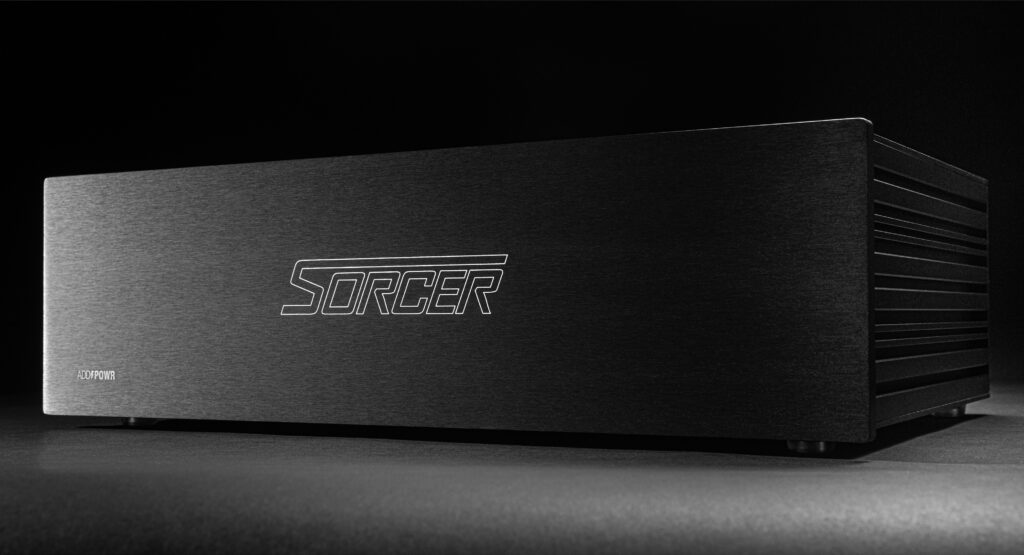
Coherence Systems has launched a extremely attention-grabbing and modern product within the Sorcer X4 in its ADD-Powr (quick for Algorithm Digital Defined Power) vary. Getting your thoughts round what the Sorcer X4 is and what it does may take a little bit of considering because the Sorcer X4 doesn’t simply slide into one of many 5 or 6 primary gear classes at your seller’s hi-fi store. However, since you’ve gotten already entered this imaginary audio salon, stroll over to the shelf with all the facility conditioners and there one can find the Sorcer x4, which is technically labeled as an digital harmonic resonator.

 I can think about your faces and sure, you might be coming to the right conclusion that earlier than choosing up this journal as we speak you didn’t know you wanted one more new class of substances to boost your electrical setting. Truthfully neither did I after I realized of the X4 evaluation alternative. I instantly known as ADD-Powr principal and inventor Bill Stierhout to get briefed on what precisely was en route for my residence evaluation.

Innovative arms

One factor was instantly clear from my dialog with Bill is that he’s certain he has an innovation on his arms right here. Bill’s enthusiasm and pleasure for the harmonic resonator concept have been fairly contagious and I used to be shortly holding on for pricey life as he plunged me straight down the rabbit gap to look at the maths behind his concept. ADD-Powr tools is indebted to French mathematician Joseph Fourier’s discoveries relating to sq. wave types being expressed as a harmonic collection and time part relationships.

ADD-Powr Sorcer X4

The Sorcer X4 makes use of its utterly parallel designed micro-controlled digital amplifier, 4 line transformers, with graphene handled wire connections to interface with your own home’s secondary AC with the intention to propagate and introduce a low frequency wave disturbance of a selected oscillation sample to your native electrical grid that then will resonate with the audio indicators in your hi-fi system. With the Sorcer X4 what was once direct present is now a DC voltage reference with harmonic sine waves.

Your system will now get pleasure from a rise in power as the first, 2nd, third, and so forth harmonics will likely be scaled upwards and can actually resonate (think about a tuning fork) with the music sign that passes to your amp. As esoteric as this sounds, in layman’s phrases that is largely “exterior the field” considering and ADD-Powr is pitching that they will enhance you sign chain in a method that no different firm can.

Tetris-free zone

In the sensible area mercifully including the Sorcer x4 is not going to require taking part in element Tetris with a crowded tools rack. Bill assured me that the X4 can be 100% efficient at any outlet in my home. It may in truth be positioned within the storage by my electrical panel, or in one other room altogether. This is a aid as a result of the X4 just isn’t small beer at 16.4kg and a stout 43×130.1×11.4cm body which might be honest to explain as cumbersome. The X4 is constructed round an aluminium chassis with black anodised aluminium panels and the specified look appears be deliberately understated avoiding pointless consideration. There are fairly actually no controls, no dials, no shows, and no toggles. This piece was made to plug ‘n’ disappear.

At $3,999 the Sorcer X4 is not going to be for everybody’s funds and can possible be competing in opposition to any variety of different critical element improve for a lot of in our group. Bill means that the Sorcer X4 will possible discover its area of interest with those that have already spent a substantial amount of time rigorously assembling their stereo parts, are already fairly pleased with their system’s sound, and at the moment are in search of that final little little bit of magic to push their meticulous efforts excessive. In my expertise the X4 was extra of a delicate however nonetheless deeply impactful actor in my system. For a musical reference I’ll communicate to my newest favorite Tone Poet du jour Wayne Shorter’s All Seeing Eye [Blue Note]. This musically difficult jazz LP had been getting regular rotation earlier than the X4 arrived so it grew to become my pure evaluation foil for example the X4’s results in A/B comparisons because the cosmic screeching had been seared into my thoughts like a sizzling cattle prod.

Plugging within the X4 and giving it about 60 minutes to work together with my electrics, I didn’t must squint or scratch my head to find out the consequences. It was clearly clear from the beginning the X4 allowed for extra pleasing high quality and tone. The session’s horns simply didn’t appear to grate at my eardrums in the identical method, they have been all extra polished, rounded, and the sound was much less harsh. I already use valves in my Luxman LX-380 built-in, however the impact of including the X4 was comparable from going strong state to tubes.

Microphones… reposition!

Sorcer X4’s sound was demonstrably extra cohesive and stress-free and appeared to have a power in rearranging the depth of the soundstage as if it was in a position to reposition microphones through the recording of the session. When the X4 was eliminated it was sadly obvious that the butter mushy edges have been additionally gone with the wind. The artist’s interaction now felt blocky, sq., and immediately too inflexible. Herbie Hancock’s delicate accents have been nonetheless there, however they have been now veiled by shadow once more and felt too distant to be accessible.

ADD-Powr Sorcer X4

The X4 made my stereo sound the best way I needed my stereo to sound: easy, inviting, detailed, rigorously organised and I’ll say it once more, cohesive. The Sorcer X4 just isn’t low-cost, to carry it aboard you may need to make the un-sexy selection of sticking together with your present tools as a substitute of an extended anticipated improve. I’ll inform you the X4 gave me a contemporary love for my present gear and made me really feel grateful for what I’ve assembled in my reference system. My sound with the Sorcer X4 is simply very good, I can’t think about giving it again. I might quite wait on these new audio system or that new pre amp and hold having fun with what the X4 has accomplished for my listening.

Price and call particulars

  • Price: $4,399.95

Manufacturer

ADD-Powr

URL: www.add-powr.com

Tel: +1 310-954-4837

Back to Reviews

The put up Coherence Systems ADD-Powr Sorcer X4 appeared first on Hi-Fi+.

Coherence Systems ADD-Powr Sorcer X4

Coherence Systems has launched a extremely fascinating and revolutionary product within the Sorcer X4 in its ADD-Powr (quick for Algorithm Digital Defined Power) vary. Getting your thoughts round what the Sorcer X4 is and what it does would possibly take a little bit of considering because the Sorcer X4 doesn’t simply slide into one of many 5 or 6 primary gear classes at your seller’s hi-fi store. However, since you might have already entered this imaginary audio salon, stroll over to the shelf with all the facility conditioners and there you’ll discover the Sorcer x4, which is technically categorized as an digital harmonic resonator.

 I can think about your faces and sure, you might be coming to the right conclusion that earlier than choosing up this journal right this moment you didn’t know you wanted yet one more new class of substances to boost your electrical atmosphere. Truthfully neither did I after I discovered of the X4 evaluate alternative. I instantly known as ADD-Powr principal and inventor Bill Stierhout to get briefed on what precisely was en route for my house evaluate.

Innovative fingers

One factor was instantly clear from my dialog with Bill is that he’s positive he has an innovation on his fingers right here. Bill’s enthusiasm and pleasure for the harmonic resonator concept have been fairly contagious and I used to be rapidly holding on for expensive life as he plunged me straight down the rabbit gap to look at the maths behind his concept. ADD-Powr gear is indebted to French mathematician Joseph Fourier’s discoveries relating to sq. wave varieties being expressed as a harmonic sequence and time section relationships.

ADD-Powr Sorcer X4

The Sorcer X4 makes use of its utterly parallel designed micro-controlled digital amplifier, 4 line transformers, with graphene handled wire connections to interface with your own home’s secondary AC with a purpose to propagate and introduce a low frequency wave disturbance of a selected oscillation sample to your native electrical grid that then will resonate with the audio indicators in your hi-fi system. With the Sorcer X4 what was direct present is now a DC voltage reference with harmonic sine waves.

Your system will now take pleasure in a rise in power as the first, 2nd, third, and many others harmonics will likely be scaled upwards and can actually resonate (think about a tuning fork) with the music sign that passes to your amp. As esoteric as this sounds, in layman’s phrases that is largely “exterior the field” considering and ADD-Powr is pitching that they will enhance you sign chain in a approach that no different firm can.

Tetris-free zone

In the sensible area mercifully including the Sorcer x4 is not going to require taking part in part Tetris with a crowded gear rack. Bill assured me that the X4 can be 100% efficient at any outlet in my home. It might actually be positioned within the storage by my electrical panel, or in one other room altogether. This is a aid as a result of the X4 will not be small beer at 16.4kg and a stout 43×130.1×11.4cm body which might be truthful to explain as cumbersome. The X4 is constructed round an aluminium chassis with black anodised aluminium panels and the specified look appears be deliberately understated avoiding pointless consideration. There are fairly actually no controls, no dials, no shows, and no toggles. This piece was made to plug ‘n’ disappear.

At $3,999 the Sorcer X4 is not going to be for everybody’s funds and can possible be competing in opposition to any variety of different critical part improve for a lot of in our neighborhood. Bill means that the Sorcer X4 will possible discover its area of interest with those that have already spent a substantial amount of time fastidiously assembling their stereo elements, are already fairly proud of their system’s sound, and are actually searching for that final little little bit of magic to push their meticulous efforts excessive. In my expertise the X4 was extra of a delicate however nonetheless deeply impactful actor in my system. For a musical reference I’ll converse to my newest favorite Tone Poet du jour Wayne Shorter’s All Seeing Eye [Blue Note]. This musically difficult jazz LP had been getting regular rotation earlier than the X4 arrived so it grew to become my pure evaluate foil for instance the X4’s results in A/B comparisons because the cosmic screeching had been seared into my thoughts like a sizzling cattle prod.

Plugging within the X4 and giving it about 60 minutes to work together with my electrics, I didn’t need to squint or scratch my head to find out the results. It was clearly clear from the beginning the X4 allowed for extra pleasing high quality and tone. The session’s horns simply didn’t appear to grate at my eardrums in the identical approach, they have been all extra polished, rounded, and the sound was much less harsh. I already use valves in my Luxman LX-380 built-in, however the impact of including the X4 was comparable from going strong state to tubes.

Microphones… reposition!

Sorcer X4’s sound was demonstrably extra cohesive and enjoyable and appeared to have a energy in rearranging the depth of the soundstage as if it was capable of reposition microphones through the recording of the session. When the X4 was eliminated it was sadly obvious that the butter tender edges have been additionally gone with the wind. The artist’s interaction now felt blocky, sq., and immediately too inflexible. Herbie Hancock’s delicate accents have been nonetheless there, however they have been now veiled by shadow once more and felt too distant to be accessible.

ADD-Powr Sorcer X4

The X4 made my stereo sound the way in which I wished my stereo to sound: clean, inviting, detailed, fastidiously organised and I’ll say it once more, cohesive. The Sorcer X4 will not be low cost, to deliver it aboard you might need to make the un-sexy selection of sticking together with your present gear as an alternative of a protracted anticipated improve. I’ll inform you the X4 gave me a contemporary love for my present gear and made me really feel grateful for what I’ve assembled in my reference system. My sound with the Sorcer X4 is simply excellent, I can’t think about giving it again. I’d slightly wait on these new audio system or that new pre amp and preserve having fun with what the X4 has accomplished for my listening.

Price and make contact with particulars

  • Price: $4,399.95

Manufacturer

ADD-Powr

URL: www.add-powr.com

Tel: +1 310-954-4837

Back to Reviews

The publish Coherence Systems ADD-Powr Sorcer X4 appeared first on Hi-Fi+.

IsoTek V5 Aquarius power conditioner

IsoTek has a significant range of power products, but perhaps the one that has always been resoundingly popular is the Aquarius. Its predecessors – the Mini Sub and then GII Mini Sub – put IsoTek on the map. Both the Mini Sub models and subsequently the EVO3 Aquarius that followed were conditioners admired by those most reluctant and curmudgeonly of power product buyers – Naim Audio users. Having been programmed not to like the idea of power conditioners by Naim’s most zealous supporters, they bought the Mini Sub and EVO3 Aquarius in droves. However, time moves on and the EVO3 line is making way for the V5 models from IsoTek and they come in their spiffy new livery. How will IsoTek’s buyers react?

The IsoTek EVO3 Aquarius was first debuted at the Munich High End Show in May 2009 and officially released to market towards the end of 2009. Since then, EVO3 Aquarius has been considered a benchmark for mains cleaning as it represents that sweet spot of performance and value for money – not only within just the IsoTek range, but in a wider context.

V5 is a bold departure for IsoTek. The company has used a very similar case work for its products throughout the 21st Century. It’s established as IsoTek’s ‘look’… and the V5 line migrates from that look completely towards something far more ‘now’; cleaner lines, curved edges, all very modern and minimalist. There’s the option to have the IsoTek V5 Aquarius in black or silver; it has previously been available in black and silver, but until V5, the black version always looked like a bit of an afterthought (at least, it did to me.) Not so now – it is rightly marketed as a beneficial feature.

Today’s V5 Aquarius is a multiple power cleaning system, featuring six independent power cleaning networks in a single chassis, two outputs running for high-current devices such as power amplifiers, while the remaining four are designed for preamplifiers, source and network components. As with the EVO3 it replaces, its role in life is to reduce Differential Mode Mains noise, and the risk of cross-contamination between individual inputs, so that the connected loads do not influence each other’s performance.

The V5 Aquarius, along with the rest of the new V5 range, might be the product of a total redesign from the ground up, but it still stays true to the company’s design principles. This meant IsoTek’s team subjected the EVO3 Aquarius to rigorous questioning to reconsider and ultimately improve its job in hand, the result being the V5 Aquarius. It appears no single element was overlooked in the V5-ification process!

The post IsoTek V5 Aquarius power conditioner appeared first on Hi-Fi+.

Black Lion Audio Launches PG-2 Power Conditioner

Black Lion Audio PG-2 Power Conditioner

Chicago, IL (June 11, 2021)—Black Lion Audio has debuted its new PG-2, a pro power conditioner with a 120 V Power Grid of 14 outlets in a 2U rack-mountable chassis.

The PG-2 sports proprietary PG-99 Filtering Technology, alongside a suite of status and alert capabilities, all of which Black Lion says helps the unit provide an average of 99.7% of noise filtering.

The power condition features Panasonic and Wimi capacitors, and offers filtration with a reported power absorption rating of 2,775 joules. Also, the PG-2 features a bank of 12 switched, filtered, and surge-protected outlets on its back panel arranged as three groups — four Digital Audio Outlets, four Analog Audio Outlets and four High Current Outlets.

Black Lion Audio Unveils Revolution 2×2 Audio Interface

The Analog Audio Outlets and High Current Outlets are time-delayed to ensure that speakers and power amplifiers are the last to turn on and the first to turn off, thereby preventing the ‘pop’ that can occur if speakers receive power at the same time as sound sources.

A front panel provides two filtered Unswitched Outlets for convenience alongside a (5V 1A) USB charger connection and a suite of status and alert capabilities, courtesy of Voltage Monitor and Amperage Monitor metering for real-time analysis, as well as Ground OK, Wiring Fault, Clean Power On, Abnormal Voltage, and Protection On LED (Light Emitting Diode) status. An audio alarm also helps highlight Abnormal Voltage.

PG-2 is currently available for $399.00.

Black Lion Audio • www.blacklionaudio.com

Shunyata Research Everest 8000 AC Power Conditioner and Omega XC Power Cord

As a long-time user of various Shunyata Research AC power conditioners and power cords, I’ve been fascinated to discover how the company’s products have evolved with each new generation. In performance there’s been unmistakable forward progress, with lower noise and an attendant increase in clarity, resolution, and soundstaging. But Shunyata’s new flagship Everest 8000 power conditioner breaks this trend; rather than offering an incremental improvement, the Everest 8000 represents a significant leap in sound quality—one that redefines what’s possible in AC power conditioning.           I think it’s no coincidence that the Everest benefits from some of the technologies Shunyata founder and designer Calin Gabriel developed for his AC power conditioners used in medical laboratories. A few years ago, a cardiologist who spent much of his time battling residual noise while looking at extremely low-level electrical signals in heart patients made a surprising discovery. The cardiologist, an audiophile who happened to use a Shunyata power conditioner in his home-audio system, speculated that if the Shunyata conditioner lowered the noise floor in his music system, it might confer similar benefits in his medical lab.

After plugging his lab equipment into the Shunyata conditioner, he was surprised and delighted to discover that the AC conditioner allowed him to more clearly see the heart’s low-level electrical signals. He contacted Shunyata to share his experience, which eventually led Shunyata to start a whole new company, Clear Image Scientific, to design and manufacture AC power-conditioning devices for cardiac labs. The new company has grown exponentially, leading Gabriel to research and develop advanced new techniques to isolate, to an unprecedented degree, sensitive medical equipment from AC line noise. Some of those techniques have now been deployed in Shunyata’s AC conditioners for audio. How Clear Image Scientific sells its products says much about their efficacy; the company demonstrates the gear in a hospital for cardiologists, who can see for themselves the effect of reducing noise on the AC powerline.

Turning back to audio, the Everest is a vertical tower with a sloping front panel that narrows toward the top in a kind of truncated-pyramid shape (as seen from the front). This vertical form factor means the Everest sits on the floor next to your equipment rack rather than taking up shelf space. A blue LED, which is mercifully faint, indicates when the Everest is powered on. The rear panel holds eight AC outlets, each supported by Shunyata’s excellent cable-cradle system, which secures the AC cord to the power conditioner. An IEC C19 AC jack (20 ampere) accepts the AC cord that connects the Everest to your wall socket. The Everest isn’t supplied with this C19 cord; you need to provide your own. Because this cord essentially supplies your entire audio system, you’ll want to use a good one. Shunyata sent me its new Omega XC for this application, which costs nearly as much as the Everest ($8000 vs. $7000). An electromagnetic breaker switch turns the Everest on and off, but this switch is not a master power switch for your system. Rather, it is an over-current protection device. 

The Everest features Shunyata’s Ground-Plane Noise-Reduction (GP-NR) system, which consists of four grounding posts on the rear of the unit. The idea is that you run a wire from each of your components to the Everest’s grounding posts so that all your equipment is grounded to the same electrical potential. Although most components (preamps, DACs, servers, etc.) lack a grounding post, you can connect the ground wire to a chassis screw and achieve the same effect. Shunyata offers grounding cables made from flexible stranded wire that’s easy to work with. Ground posts are common on professional and telecommunications gear for good reason: If some of your components’ grounds are at a different electrical potential (voltage) than other components, and those components are connected through interconnects, a small amount of electrical current will flow along the ground path provided by the interconnect. We hear this current flow as noise and hum. Preventing these noise-inducing “ground loops” is why I specified that each run of 10AWG to the five dedicated AC lines to my listening room be of the same length. With identical-length runs, the ground potential will be the same in each line. It’s common in professional gear for every component in a metal rack to be grounded with a braided wire to the rack.


The Everest’s technology is based on that of the Hydra Triton and Typhon conditioners, but with some new twists in technologies, construction, and materials. Before describing the Everest’s design, we should review the goal of a power conditioner. In addition to distributing power to multiple components, an AC conditioner should block noise on the AC line from getting into your audio components. Most people think that this is a conditioner’s primary function. But a conditioner’s most important job is preventing noise from traveling from one component to another. Think of a digital component, filled with chips that switch high-speed digital signals on and off. This switching creates noise that gets on the component’s ground plane. The AC cords in your system are the conduits for that noise, conducting it from one component to all your other components, degrading performance. A good conditioner blocks and dissipates this noise, isolating the components from each other.

Each of the Everest’s eight outlets features Shunyata’s CCI (Component-to-Component Interface) filters—a series of multi-stage filters that removes noise. Noise is further reduced by Shunyata’s patented NIC (Noise Isolation Chamber), a device that contains a ferroelectric material that absorbs high-frequency noise. The NIC was originally developed for the Hydra Triton. A different type of noise filter, called “CMode,” reportedly reduces common-mode noise.

Another technology from the Triton/Typhon products is QR/BB, a circuit that delivers additional instantaneous current for brief transients, reducing dynamic compression. Unlike many conditioners that diminish the ability to deliver high-current pulses, QR/BB is claimed to increase impulse-current delivery via a circuit that lowers the inductive reactance. The Everest’s QR/BB device is three times the size of that in the Denali, Shunyata’s previous flagship conditioner. This feature is useful when power amplifiers or integrated amplifiers get their power through the Everest. Unlike a preamp or a DAC that draws a small amount of current continuously, a power amplifier pulls current from the wall in very short bursts (at the tops and bottoms of the 60Hz AC sinewave). If the conditioner restricts these instantaneous current surges, the amplifier will be starved for power, compromising musical dynamics. In designing the Everest, Shunyata relied on its proprietary test instrument, called the Dynamic Transient Current Delivery (DTCD) analyzer, to measure instantaneous current flow through low-impedance conductors and contacts.

The outlets are Shunyata’s CopperCONN, with contacts and conductors made from thick pieces of solid high-purity oxygen-free copper. They also provide better grip on the blades of an AC cord plugged into them than conventional AC outlets. I installed these outlets in each of the five dedicated AC lines that run to my listening room when I built the room. The Everest’s internal wiring is Shunyata’s ArNi conductors, made from certified OFE C10100 copper, and fashioned into hollow tubes to reduce skin effect. The conductors are treated with Shunyata’s KPIP (Kinetic Phase-Inversion Process), which reportedly eliminates the need for break-in, and improves the sound. Many of the components are cryogenically treated in Shunyata’s own cryo lab. Finally, the chassis and internal structures are treated with vibration-damping panels, and the outlets are physically de-coupled from the chassis for further vibration isolation.

I know that’s a mouthful of alphabet soup, but illustrates that the Everest is packed with technologies that Shunyata has developed over the past 25 years, many of them patented.

The Omega XC power cord features Shunyata’s VTX-Ag conductors that are made from an outer tube of purified copper surrounding a silver conductor. The cord has CopperCONN connectors encased in a carbon-fiber housing at both ends. Once assembled, the Omega XC is treated with the KIPP processing described earlier. Note that the step-up power cord, the Omega QR, incorporates noise-reduction technologies within the cable. Nonetheless, Shunyata recommends the Omega XC with the Everest. Both Omega Series cords are available in a range of carbon-fiber colors.

I replaced the Hydra Triton and Typhon combination that I’d been using for a few years with the Everest to power my front-end equipment. My equipment racks are at the back of the room behind the listening seat, and the power amplifiers are at the other end between the speakers. The power amps were plugged straight into the wall sockets.

When I’ve upgraded Shunyata’s conditioners in the past, I’ve usually heard an incremental improvement in dynamics, soundstaging, and the rendering of instrumental timbres. But the Everest/Omega XC combination realized, by far, the most significant improvement in my system. The change in sound quality was more of a step function than an incremental advance. It’s worth noting that my current system is extremely revealing of every change, good or bad.

Swapping in the Everest and Omega XC brought out the best in my system, heightening those qualities I value. The most immediate improvement was in the way the soundstage expanded in all dimensions, particularly in depth. Interestingly, the entire stage became slightly less forward and immediate, like moving from Row C to Row M. But at the same time, the spatial presentation became more three-dimensional, with instruments toward the back of the stage sounding much farther away. The apparent distance between instruments in the front and back of the orchestra expanded. A few minutes into The Rite of Spring (Eiji Oue, Minnesota, Reference Recordings, MQA at 176.4kHz) a contrabassoon plays a short, virtually unaccompanied passage. The Everest presented the instrument as way back in the orchestra, with very fine resolution of the reflections and reverberation that supply the brain with distance cues. Despite the slightly less immediate spatial perspective, the sense of vividness and tangibility increased.

But that’s not what make the Everest/Omega XC so compelling. Rather, it was the way this new conditioner resolved the air and space between instruments, giving the sound a greater dimensionality that was closer to what one hears from live music. I could hear a more tangible sense of the cushion of air around each instrument, particularly on dynamic passages. The feeling of sound expanding from the instrument was more realistic. This impression was heightened by the tighter focus of the image itself, along with the greater delineation between the image and the air around it. This may sound like an esoteric analysis of a not-that-important perception, but this more realistic portrayal of instrumental images, the immediate space around them, and the greater space of the hall went a long way toward making me forget I was listening to a recreation of music. It was just more organic and lifelike. In addition, the finer spatial resolution and more vivid presentation of individual instruments made it easier to follow each instrument’s musical line within the whole. The track “The Cowboys Overture” from John Williams at The Movies (176.4/24 downloaded from Reference Recordings) took on much more sonic and musical clarity, with each instrument, section, and musical line more clearly resolved.

I’ve noticed that my colleague Andrew Quint mentions in his reviews a track that I also happen to like, and also use in evaluating equipment. “Back Row Politics” from Gordon Goodwin’s Big Phat Band Act Your Age features three virtuoso trumpet players trading off extended, high-energy solos. After adding the Everest to my system, the trumpets had less glare, along with more richness, warmth, and body.

Finally, I heard an increase in dynamic impact, particularly in the bass. This is one of my system’s strong suits, but the Everest took transient fidelity and visceral impact to another level of realism.

The Everest 8000 AC conditioner and Omega XC power cord are, in my view, the best components to come out of Shunyata Research, a company with a long history of developing great products. The Everest allowed the outstanding components in my system to perform at their highest level by providing them with an ultra-quiet and clean power source. The Everest 8000 and Omega XC have become essential parts of my reference system.

Specs & Pricing

Everest 8000
Type: Eight-outlet AC conditioner
Maximum continuous current: 30A (US version)
Maximum continuous current per outlet: 15A (US version)
Isolation zones: Six
Noise suppression: Input to output (100kHz–30MHz): >50dB reduction; zone-to-zone (100kHz–30MHz): >60dB reduction
Over-current protection: Hydraulic electromagnetic breaker
Wiring: 8 -gauge ArNi® VTX™ Buss system; 10 gauge ArNi® VTX™ wiring
Dimensions: 8″ x 20.75″ x 14.75″
Weight: 34 lbs.
Price: $8000

Omega XC Power Cord
Technology: VTX-Ag conductors
Price: $7000

SHUNYATA RESEARCH
26273 Twelve Trees Lane, Ste D
Poulsbo, WA 98370
(360) 598-9935
shunyata.com

Associated Equipment
Loudspeakers: Wilson Audio Chronosonic XVX, Wilson Subsonic subwoofers (x2), Wilson ActivXO crossover
Analog source: Basis Audio A.J. Conti Transcendence turntable with SuperArm 12.5 tonearm; Air Tight Opus cartridge; Moon 810LP phonostage; DS Audio ST-50 stylus cleaner
Digital source: Aurender W20SE and Wadax Atlantis servers, Berkeley Audio Design Alpha DAC Reference Series 3 and Wadax Reference DACs; Berkeley Alpha USB USB-to-AES/EBU converter; Shunyata Sigma USB cable; AudioQuest Wild Digital AES/EBU cable
Amplification: Constellation Altair 2 preamplifier; Constellation Hercules 2 monoblock power amplifiers, Constellation Centaur 2 stereo (driving subwoofers)
AC Power: Five dedicated 20A lines terminated with Shunyata AC outlets
Support: Critical Mass Systems Olympus equipment racks and Olympus amplifier stands; CenterStage2 isolation
Cables: Shunyata Sigma interconnects; AudioQuest WEL Signature interconnects; AudioQuest Dragon Zero and Dragon Bass loudspeaker cables
Acoustics: Acoustic Geometry Pro Room Pack 12
Room: Purpose-built; Acoustic Sciences Corporation Iso-Wall System
LP cleaning: Klaudio KD-CLN-LP200, Levin Design record brush

The post Shunyata Research Everest 8000 AC Power Conditioner and Omega XC Power Cord appeared first on The Absolute Sound.

Clarus Announces the Sextet Power Conditioner

The following is a press release issued by Clarus.

December 9, 2020 — Clarus, high-end audio cable brand and sister company to Tributaries A/V cables, introduces the Sextet, the third model in their power conditioner lineup. The Sextet offers the same functionality as the flagship Concerto with fewer outlets for a more affordable option. The Clarus power conditioning line brings an entirely new approach to the implementation of filtering systems designed primarily for two-channel audio systems.

Meet Sextet
The Sextet’s high-performance hospital-grade outlets are engineered with advanced materials to ensure electrical contact reliability over time. Each duplex outlet is isolated to prohibit interaction between adjacent outlets. To provide the highest level of filtering, Sextet’s outlet banks are labeled specifically for the appropriate component-type. There are six outlets in total:


  • 2 – ANALOG: Allowing analog music to bloom, the analog outlets are fed byfilters that provide AC power specifically conditioned for analog components. Engineered with proprietary C-Core filters ensure there is no restriction of dynamics. The technologically advanced C-Core has superb magnetic properties that perform and sound better than any other analog audio filter available.
  • 2 – DIGITAL: Connected to filters that are specifically designed to deliver clean power to Digital Audio equipment like DACs and CD players. Clarus’ proprietary design of complex multi-level filtering offers the best attenuation of AC line noise for digital components.
  • 2 – HIGH CURRENT: Conditioned power is provided for power amplifiers by a proprietary filter system providing full dynamics.


C-Core Technology
The Clarus line of power conditioners are made with proprietary Clarus Core or “C-Core Technology” which in the Sextet, is employed in the Analog outlet filter circuit. C-Core’s high permeability and core loss are hardly affected by mechanical stress due to near-zero magnetostriction – a property of ferromagnetic materials that causes them to change their shape or dimensions during the process of magnetization. Furthermore, its low magnetostriction significantly reduces audible noise emission when the voltage and current applied to the core are in the audible frequency range. No other core keeps your AC signal silent and clean.

TMOV
The Sextet protects from AC line surges with highly sophisticated Thermal Metal Oxide Varistors (TMOV). If the surge suppression circuit is compromised the front panel Protection Fault LED will illuminate and the unit will shut down for safety. Ground and Polarity LEDs when lit indicate that the power cord and outlet to which the Sextet is connected is in phase and properly grounded.

The Sextet will be available February 15th, 2021 in black and silver for $2,000 US Suggested Retail Pricing.

The post Clarus Announces the Sextet Power Conditioner appeared first on The Absolute Sound.