Tag Archives: Recording

John Cale Returns Bearing ‘Mercy’

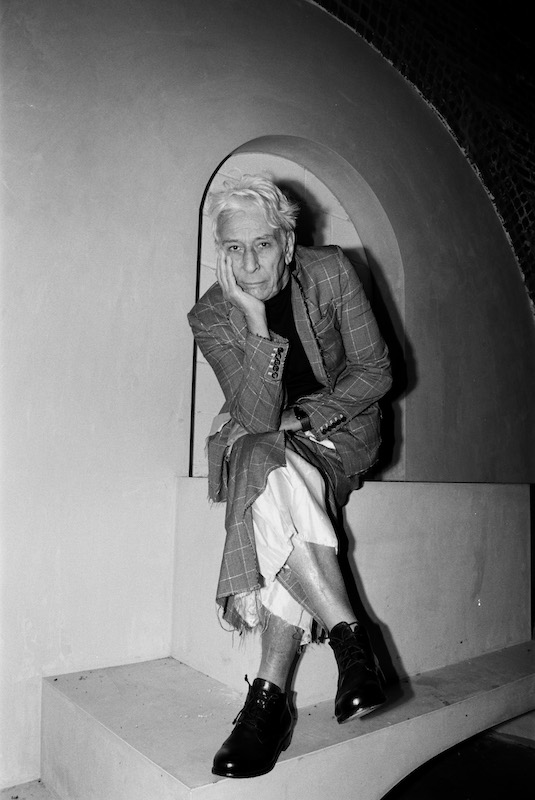
John Cale. PHOTO: Marlene Marino

John Cale, who will celebrate his 81st birthday in March, has an enviable resumé, but he’s not one to rest on his laurels. Neither does he show any sign of slowing down, releasing this month his 17th solo studio album, Mercy, a project as fresh as anything that he’s put out during a long and storied career.

“There are no rearview mirrors with John Cale,” says Dustin Boyer, a guitarist in Cale’s band and his in-house engineer since 2005. “He’s always moving.”

Cale has certainly earned the right to retire. Born in Wales and classically trained in London, he moved to New York City and, in 1962, co-founded one of rock ‘n’ roll’s seminal bands, the Velvet Underground, whose albums subsequently became a touchstone for so many musicians. His first production gig was the 1969 debut studio album by another legendary band, the Stooges. Since 1970, he’s released a long, long list of solo albums, movie scores, collaborations and productions.

Cale Visits Ocean Way

The 12-song Mercy album emerged over the past few years, Boyer says, and was almost entirely recorded at Cale’s private ARM Studios in downtown Los Angeles, where the pair work together as many as 300 days a year. The facility includes a tracking room that doubles as a rehearsal space for the road band, a tape archive room that’s about to become a drum booth, and a gym plus other amenities.

“It’s an awesome workspace and we never leave,” Boyer laughs. “It’s really intimate here in the control room; we sit about three feet apart.”

Nita Scott, Cale’s manager and executive music producer, oversaw a major remodel of the studio during the pandemic. The control room still features the modified 32-channel Toft Audio Designs desk that was installed in 2010 and Cale’s trusted Genelec monitors from 1994. An RME Fireface interface has more recently been supplanted by a UA Apollo, Boyer reports.


CORE BAND, PLUS GUESTS

The Mercy album features Cale’s longtime drummer Deantoni Parks and bassist Joey Maramba, plus, of course, Boyer. Cale contributes various keyboards, viola, bass, drums and vocals. There are also guest appearances by the late Nigerian drummer Tony Allen, Laurel Halo, Weyes Blood, Tei Shi, Animal Collective’s Avey Tare and Panda Bear, Dev Hynes, Sylvan Esso, Actress and Fat White Family, most of whom were recorded in-house at ARM Studios.
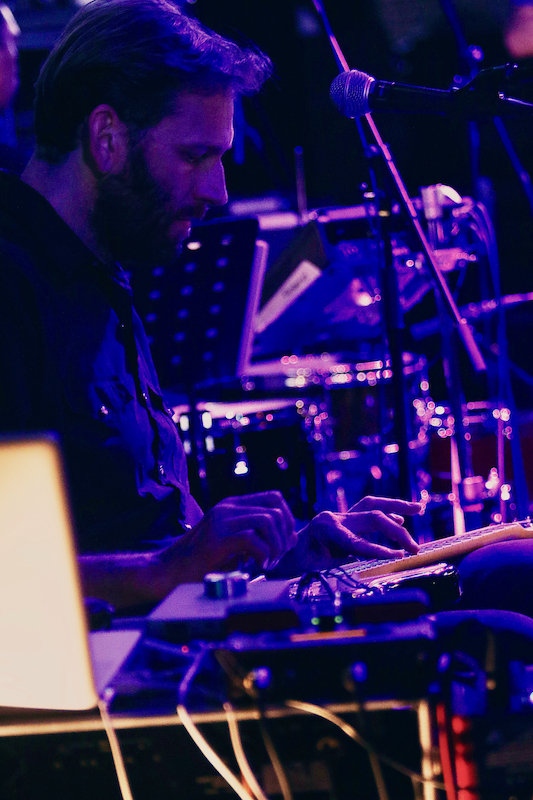
Longtime John Cale engineer Dustin Boyer also plays guitar in his band. PHOTO: Courtesy of Dustin Boyer
Longtime John Cale engineer Dustin Boyer also plays guitar in his band. PHOTO: Courtesy of Dustin Boyer.

“We went to London and recorded Tony Allen,” reports Boyer, who later co-mixed the song, an alternate version of “Mercy,” with Nita Scott. The rest of the tracks were sent out to be mixed by Seven Davis, Jr, Mikaelin “Blue” BlueSpruce, Tokimonsta and Justin Raisen. “We haven’t really done that before. They’re all cutting-edge and they all have the same passion that John has.” The album was mastered by Joey Bozzi at Bernie Grundman Mastering.

There’s little doubt that Cale keeps moving forward. There are relatively few similarities between his milestone Paris 1919 or Music for a New Society albums of the 1980s and Mercy. “He’s an avid fan of modern hip-hop and the way it’s recorded,” Boyer says, especially the sparseness of a song like Snoop Dogg’s “Drop it Like it’s Hot.”

If anything, Cale has always been ahead of his time. Take his 1980 song, “Rosegarden Funeral of Sores,” which was covered and popularized by Bauhaus. “I hear that and I’m like, ‘That distorted vocal; how’d you do that?’ It could have been recorded last week,” Boyer marvels.

When Cale comes into the control room every morning, he’s ready to work, so Boyer keeps everything patched. “He’ll start with an idea,” Boyer says. “Sometimes it’s on piano. He might tap his legs or knock on the body of a guitar. He’ll hum something or do a pseudo beatbox.” They might use a click, but lately, he says, “We’ve been doing little drum loops—it’s a lot more fun.”


RECORDING AT ARM STUDIOS

Cale uses Apple’s MainStage software live, and in the studio will build a rhythm using its Ultrabeat feature, the iMPC app or the Koala sampler app. “We do a few little noises and whatnot, then throw it into the simple sampler in Pro Tools,” Boyer says, noting that Logic is also sometimes in the mix.

Boyer used a Neumann U 87 on vocals, drums—in addition to Royer ribbon mics—and other applications on this album. But Cale’s vocals were mainly captured in the control room on a Shure SM7, often while he also played a keyboard. “The SM7 has been awesome; I love those mics,” he says. “Mostly we leave the speakers on; we don’t go into cans. You hear some of the keyboards tapping [through the SM7], but there’s pretty minor bleed.”

The vocal chain includes a Grace Audio dual-channel mic pre and a Distressor. “I like the Toft mic pres, too, and dirty them up a little bit,” he adds. “That’s on a lot of the vocals running on an auxiliary bus. We just randomly scroll through [the presets].”

The use, abuse and misuse of technology comes up frequently in conversation with Boyer. “If it’s too straight, we get itchy in here,” he laughs. “John will say, ‘What if we make that very un-guitar?’ So I head over to SoundToys and destroy it. SoundToys’ MicroShift is pretty much on every vocal; we love that sound,” he notes, also singling out the brand’s Crystallizer plug-in for guitar, along with others. “We also used Little AlterBoy, not as a vocal plug-in but on strings. We would detune them ever so slightly. I can’t get enough of those crazy guys at SoundToys.”

Many of the effects on the record run through Line Six POD Pro racks. “I run them all in succession and they sound wild. Run a bus out to them and you don’t know what you’re gonna get,” he chuckles.

John Cale plays live in Montreux, Switzerland. Photo: Nita Scott

LOOKING FOR SOUNDS

They are always open to happy accidents, too. “When something malfunctions, that’s when we get really excited,” Boyer says. He linked all the MIDI instruments, machines and modules through iConnectivity boxes during the remodel, which can produce some unexpected results: “Hit the spacebar, and you can run into something interesting.”

John Cale - MercyThe main keyboards on Mercy include the Nord Lead, Arturia’s Brute, MiniBrute and MatrixBrute, and a Moog Sub 37. A couple of songs feature a Swarmatron: “It’s a very strange instrument, a drone-y thing that makes crazy low-bit, low-fi noises. There’s also an Orchestron; John recorded it at a session at Vox Studios, when they were still open.”

You might expect that tracks laid down during the early stages of a song would get replaced, but they often make it to the mix with Cale. “Mostly John wants to get the sound right during the writing process,” Boyer explains.

That said, songs will evolve over time. Indeed, Mercy was ready for an early 2020 release, but they hit pause in the face of the pandemic. In June 2021, they listened back and made a few changes. “We just wanted to refresh everything. A few songs even got a little bit more interesting with some sounds,” he says, and they added a song, “Night Crawling,” about Cale and David Bowie’s time together in New York.

“John’s always changing arrangements,” he says. “We never sit still.”

Mixing Stormzy in Dolby Atmos

Heff Moraes and Will Reeves at PMC Studio London

London, UK (January 12, 2022)—Producer Will Reeves recently visited PMC’s Dolby Atmos demo facility in London to mix the immersive version of UK rapper Stormzy’s third album, This Is What I Mean, for the Def Jam label.

Reeves was commissioned to create the Atmos mixes in October, having previously mixed a number of Atmos tracks for other Def Jam artists. He asked PMC if he could use its demo facility in London because he was already collaborating with the company on a Beyond the Mix seminar showcasing Atmos mixing techniques.

Reeves and his assistant, Pierpaolo Demarchi, created the Atmos mix for the single “Hide & Seek” and then followed it with the mix for “Firebabe.” Once Def Jam had approved both mixes, the rest of the album was quick to follow using stems provided by the stereo mix engineers. Most of the stereo mixing was carried out in Los Angeles by engineers Alex Ghenea and Leandro Hidalgo, who worked in their own respective studios.

LA Studio Digs into Immersive Sound

“It was challenging because we had to gather material from a number of different sources,” Reeves said, “but once we got underway it was very straightforward and we had the whole project finished in less than a month.”

“PMC’s facility is an amazing room with exceptional acoustics and monitoring,” he added. “I knew that by mixing the album of there I would have the best possible chance of making it sound incredible. Delivering great results with Atmos involves skill and a thorough understanding of the format, but it also involves great monitoring so that you can really hear what is happening with the soundfield.”

This Is What I Mean, which was No. 1 in the UK album charts for three weeks, is now also available as an immersive audio experience on streaming services such as Apple Music.

The Legacy of George Crumb

George Crumb wrote some of the most exotic, and often electrifying music of the modern era. And yet the composer, who died in February 2022 at the age of 92, radiated a demure persona that was utterly at odds with his ferociously original music. His soft voice, tinged with the gentle drawl and rhythms of his native West Virginia, contrasted with the extreme emotions that inhabited his scores; I can recall attending a recital of a group of his many settings of the poetry of Federico Garcia Lorca (with the composer in attendance) that elicited a shriek of terror from an audience member.

Crumb’s distinctive voice was well established by the time he was awarded the Pulitzer Prize in 1968 for Echoes of Time and the River. His music, which was influenced by a diversity of figures including Mahler, Debussy, Bartók, and even Thelonious Monk, bravely broke away from the academic orthodoxy that embraced serialism as the only serious way to write. He also introduced extra-musical elements into his work, such as requiring the musicians in Vox Balaenae (Voice of the Whale) and Ancient Voices of Children to wear masks. His instrumentalists were sometimes instructed to chant. And he engraved his meticulously hand-written scores in unusual patterns, such as rendering the staves in a spiral (which, he admitted, was mainly decorative and has minimal effect on the way the music is performed).

It was also during this period that Crumb started to incorporate unusual instrumentation, including vast percussion batteries, electronic amplification, and, notably, prepared piano. The piano is featured in all four books of his great homage to Bartók, Makrokosmos, which he completed over the course of seven years, from 1972–1979. One of the original pianists for book three, Music for a Summer Evening, was James Freeman, who recalls the novelty of the composer’s directions. “I remember that George dropped off the score for the first time at my house, and I was amazed at the work I had to do on it—besides lots of notes, rhythms, and all kinds of extended things inside the piano which I’d never done before. There was even a thumb piano part in my section that wasn’t easy. Now everyone is used to playing these inside-the-piano things. But it wasn’t so then. They were really new. For the recording session of Makrokosmos III for Nonesuch Records, we learned that the Steinway Company refused to allow us to use their pianos, because of all the inside-the-piano playing. Baldwins were rented instead. But the metal bars in Baldwins are in completely different positions than those in Steinways, and of course it was for Steinways that George had written the piece, and on which we’d learned and practiced our parts. That really made things difficult for Gil [Gilbert Kalish, his piano colleague] and me. I don’t remember how we actually managed to play some of those things, but we did, I imagine by somehow stretching our hands and fingers into really awkward positions.”

Freeman also recalls that the composer himself ended up taking part in the performance, although it was not planned. “In the fourth movement, Myth, George calls for someone to groan three times. It was written into Gil’s Part (Piano I), but all four of us tried the groaning. George didn’t like what any of us did—one was too sexual, one too sleepy, one too nasal, one too hoarse. We urged him to do it himself, and he eventually agreed. So it’s George himself groaning on that record, though the liner notes do not acknowledge that!”

Crumb’s best-known work is probably his 1970 amplified string quartet, Black Angels, at least as measured by the number of recordings made of it, by now at least ten. The work created a sensation immediately. It actually inspired the creation of the Kronos Quartet. David Bowie included a recording of the piece on his list of top 25 favorite records. In 2004, I engaged the composer in a lengthy conversation about Black Angels, during which a few truisms about the work were brought into question. Principally, the concept that this was Crumb’s “Vietnam quartet” is not exactly correct. At least it was not conceived as such.

Black Angels, a 20-minute work in 13 sections, took Crumb almost a year to complete. It was commissioned by the Stanley Quartet, then in residence at the University of Michigan. The Vietnam connection, which he came to accept as valid, snuck up on him. “I didn’t approach it that way. It was very late in the compositional process that I became aware of associations with that period. Some have suggested that even some of the titles refer to the geography of Vietnam, such as Night of the Electric Insects. I came to recognize that there was something of the feeling of that strange time. That’s when I called it music in tempore belli, in time of war.”

Then there is the question of numerology. He warned against reading too much into this. “Yes, this business of 7’s and 13’s came into the music. I don’t remember what they even mean. It was more technical, structural. I got carried away with the Friday the 13th thing [the date inscribed on the score]. I think it is important in all music not to reveal too much. Beethoven doesn’t give us all of what’s in his mind. There are references to Shakespeare in his letters, but not in the score. Mahler’s Third originally had descriptive titles for all of the movements, but he dropped them. Even more abstract music is probably connected with other ideas—poetry, landscapes, and other things. Let the listener make the connections.”

In the course of our conversation I was able to conjure an uncharacteristic flicker of pride from Crumb, and even a sense of artistic competition when I asked him about a possible connection to another sensational work, Krzysztof Penderecki’s 1960 Threnody for Victims of Hiroshima. That work opens with a sort of hysteria for high strings that Crumb goes one better in the startlingly slashing violence of the three threnody sections in Black Angels, including the very opening of the piece. “I did know the Penderecki. There was a kind of anguish there, but it is kind of monolithic. I tried to cover a lot more moods.”

 Some of the overtly dramatic elements of Crumb’s performance directions have drawn ridicule over the years, but have been largely embraced by musicians and audiences. Flutist Mimi Stillman, founder and artistic director of Dolce Suono Ensemble, was coached by the composer for their performance of Vox Balaenae. “As a performer, I find it endlessly inspiring and fun to present the theatrical elements to an audience, as they contribute to the overarching message of Crumb’s powerful music. The sense of theatricality is intrinsically tied to executing his music—in some sense what makes it theatrical is not really extra-musical. One feels a sense of ritual and drama performing these elements, and they contribute to a sense of wonder and awe for the audience.”

Crumb’s modest demeanor carried over to his important career as a teacher, which could be a challenge for his students. One of his composition students from his long tenure on the faculty of the University of Pennsylvania, Daniel Dorff, recalls his frustration with Crumb’s mild-mannered approach. “I asked Dr. Crumb to be more critical and incisive with me, adding that I came here for constructive criticism to develop my skills, and that my self-confidence wasn’t fragile. That registered loud and clear with George, essentially giving him permission to say whatever he thought about my sketches toward new pieces. From then on, he let loose in the most polite and constructive way, but not holding back with specific troubleshooting and advice. Once he even raised his voice because my motivic structure was so unfocused. That was a great lesson!”

Dorff jokes that “there used to be a saying that talking with Crumb about music is like talking to a tree about nature, meaning that one learns by observing the source rather than by discussing.” This was, in a sense, true for Jennifer Higdon as well, and led to a revelation that transformed her way of thinking about her music. “I had a moment in a lesson when George turned to me and said, ‘You know Jennifer, in the end, all that really matters is how the music sounds.’ And this carried special resonance because I was in the Ph.D. program at Penn, where we worried all the time about being able to theoretically justify every note we put on the page. He was right; in every piece that we love, no matter the genre, the one thing we can always say is that we love how it sounds. So I realized that maybe, if that’s what really matters, I should change my approach to composing, and just follow the sound. I learned to trust my ears and gut instinct in making all of my compositional choices. It’s quite a different approach to thinking theoretically.” And that approach is an essential element of the legacy of George Crumb.

The post The Legacy of George Crumb appeared first on The Absolute Sound.

Mix’s Top 20 Articles of 2022, Part 4

Mix’s Top 20 Articles of 2022, Part 4

New York, NY (December 22, 2022)—Join us as we look back at our most popular articles of 2022, according to Google Analytics. The Mix Top 20 of 2022 lists our most-read news stories, reviews, blog posts, profiles and interviews of the year, so this Top 20 was chosen by YOU, our readers (Don’t miss Part 1, Part 2 and Part 3)! We’ll see you tomorrow with the conclusion — Mix’s Top 20 Articles of 2022, Part 5!

8. Genesis Live: Turn It On Again…One Last Time (1/18/22)

By Clive Young. After announcing a farewell tour in March, 2020, Genesis finally hit the U.S. in the fall of 2021…and then Covid struck the audio team.


7. Burning Man’s Robot Heart Gets A Transplant (4/22/22)

By Clive Young. Burning Man’s jaw-dropping Robot Heart sound-system bus headed to New York’s Central Park to party this year—and reinvent itself in the process.


6. Dolby Atmos Personalized Rendering Enters Public Beta (3/16/22)

By Tom Kenny. Dolby Atmos Personalized Rendering, for pros creating Atmos content while headphone monitoring, entered public beta.


5. Dead & Company Debut PANTHER on Tour (6/27/22)

UltraSound fielded a giant stadium system comprised of 72 Meyer Sound PANTHER Loudspeakers for Dead & Company.

Mixer Bernie Kirsh Switches Coasts, Speakers

Bernie Kirsh with his Amphion One18 speakers.

Clearwater, FL (December 2, 2022)—When recording and mix engineer Bernie Kirsh relocated to Florida to continue working with long-time collaborator Chick Corea and set up a home workspace, he switched to Amphion speakers.

After starting his career at Electric Lady Studios in New York in the ’70s, Kirsh decamped to the West Coast to be closer to jazz pianist and composer Corea, both in the studio and on the road.  In Los Angeles in 1981, he and Corea opened Mad Hatter Studios, which served as Kirsh’s base of operations for two decades until he followed Corea (who passed away in 2021) to Florida. There, Kirsh put together a minimalist home mixing studio.

“I’ve got my own little setup, which is very simple,” he says. “A converter, a laptop and a couple little speakers from a company called Amphion.”

Though Kirsh had retained a pair of trusted speakers from his West Coast studio after his move, relocating to a new workspace made him realize something was missing. “I began to feel like I didn’t have the certainty I needed,” he says. “I was mixing with what I thought I should be hearing rather than what I was actually hearing. A friend suggested I try out Amphion.” Kirsh finally demoed a pair of One18 speakers with a Amp700 power amplifier in his space.

Amphion Loudspeakers Opens New HQ

Delving into his mixes, he found the results from the Amphions promising. “Right away, they gave me the clarity to do what I needed to do,” he says. “I wasn’t guessing anymore.”

In addition to examining works in progress, Kirsh also revisited favorite recordings from other artists and engineers. “With material that I’d heard many times before, recorded and mixed by engineers that I respect, I found that the Amphions were providing me with a wealth of information,” he says. “It really allowed me to hear what the engineer was doing. The ability to hear things clearly makes me secure in any changes I make. I can quickly discern when something is too bright or too dark in the top end. And there’s also plenty of clarity in the midrange.”

The low-end performance surprised Kirsh the most. “Despite their size they deliver plenty of low end for my needs,” he notes. “It’s amazing that the design of the speaker can produce those frequencies so accurately despite the smaller diaphragm. The bass is well defined without being hyped, so I never end up light on bass in my mixes.”

Sylvia Massy and Jimmy Douglass Join METAlliance

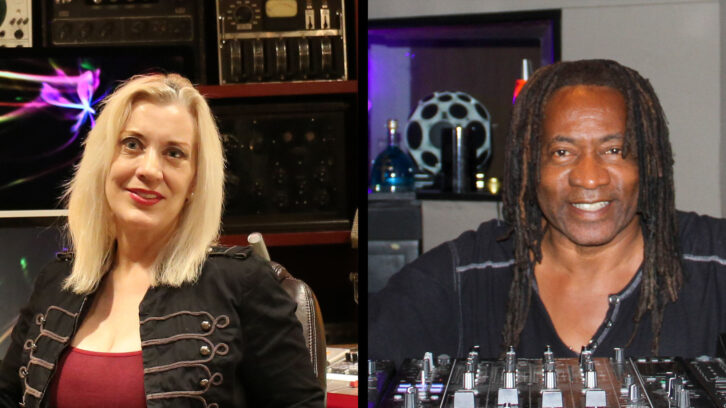
Sylvia Massy and Jimmy Douglass.

Nashville, TN (November 30, 2022)—The METAlliance (Music Engineering & Technology Alliance) has welcomed two new members to its ranks, with Sylvia Massy and Jimmy Douglass joining Chuck Ainlay, Niko Bolas, Frank Filipetti, George Massenburg and Elliot Scheiner.

Massy is an award-winning music producer and recording engineer for groundbreaking rock artists such as Tool and System of a Down, and has also worked with Prince, Johnny Cash, Red Hot Chili Peppers, Taylor Hawkins, Jason Isbell and many other legendary and upcoming musicians. From indie rock to dance to pop to country to R&B to metal, Massy’s career has spanned nearly every aspect of the music industry from composing to festival development.

She is also an accomplished fine artist of extremely detailed illustrations often containing vignettes drawn from experiences of studio life. Currently she is working out of her Pacific Northwest OddioShop, an Atmos 9.1.4 equipped mixing and art studio where she owns the world’s largest collection of vintage microphones.

A Pro Audio Holiday Gift Guide 2022 Addendum

Douglass is a four-time Grammy-winning recording engineer/producer. He was trained by and has worked with some of the greatest engineers, producers and record moguls ever, including Tom Dowd, Arif Mardin, Jerry Wexler and Ahmet Ertegun. He went on to work with artists such as Aretha Franklin, Hall & Oates, Roberta Flack, Donny Hathaway, Foreigner, Led Zeppelin and AC/DC. Douglass has engineered and mixed many celebrated artists, including The Rolling Stones, Roxy Music, Genesis and Gang of Four, John Legend & The Roots, Ludacris, Al Green, and Duran Duran.

Elliot Scheiner says, “I’ve been a longtime fan of both Jimmy and Sylvia. All of the members feel we’ve broadened the METAlliance enormously with their remarkable production and engineering history.” Frank Filipetti added, “For years Sylvia had been on my mind for the METAlliance. She’s smart and creative, and we feel incredibly honored that she has joined us. She’s a wild thing that makes my heart sing! And I’ve been a fan of Jimmy since my early days. As a person he is the best, and as an engineer/mixer he has the emotion thing down pat. He puts the groove in everything he touches. In fact, he makes everything groovy!”

METAlliance managing member Jim Pace stated, “The METAlliance strives to represent the recording community in all its many forms. Sylvia and Jimmy bring us a wealth of experience and across-the-board production know-how.”