
It’s easy to get really carried away with audio cable, especially in a high-end title like Hi-Fi+, where we’ve come across a significant amount of super high-end cable designs that cost as much as a new car. So, it’s refreshing to come across a brand that delivers the goods without a price tag that can frighten people at 20 paces. And Better Cables is that brand; it makes a range of solid, low-noise, low‑BS cables with very good connectors under its Blue Truth line. We looked at the Blue Truth loudspeaker cables in Issue 188 and were so impressed we wanted to try some more in the series. A Blue Truth Ultra XLR cable and Blue Truth USB cable were duly dispatched, and they do exactly what the loudspeaker cable did; offer great bang for the buck.
For affordable cables, the Blue Truth Ultra has some pretty high specifications. The XLR, for example, uses top-end Neutrik plugs throughout. Inside its woven outer shell (black with a subtle blue thread running through it), Blue Truth Ultra uses a dual conductor, twisted pair configuration. It features 99.999% pure silver-coated copper solid core conductors with a silver-coated 100% coverage shield of similar purity and foamed FEP Teflon dielectric. These are rated at 110Ω, making them notionally ideal for both analogue and AES/EBU digital connections.
The USB cable uses four silver-coated copper conductors using HDPE as the dielectric. This gives a precise 90Ω connection, and the high-grade gold-plated type A and type B USB connectors are of similarly high grade to the Neutriks used in the XLR.
The power problem
A problem unique to USB that Blue Truth addresses directly is that – unlike almost all other audio signal cables – two of the four conductors inside a USB cable potentially provide power from the host device. That 5V voltage can be a source of noise on the data conductor, which is why Better Cables doubles down on shielding that data pathway, using a combination of two layers of aluminium isolation; a 100% coverage foil and an 85% coverage braid.
Blue Truth Ultra XLR needs some burning-in to remove an out-of-the-packet zing to the upper midrange. Still, a thorough run-in with a Blue Horizons cable burner-inner removes that slight metallic edge to the sound. Still, it leaves the extension and the detail and considerably opens the soundstage. I let the cable run in for a long weekend before commencing. The USB cable didn’t need the same degree of attention (and I don’t have a USB connection for my Blue Horizon cable burner), but I gave it a few days of digital feed before critical listening.
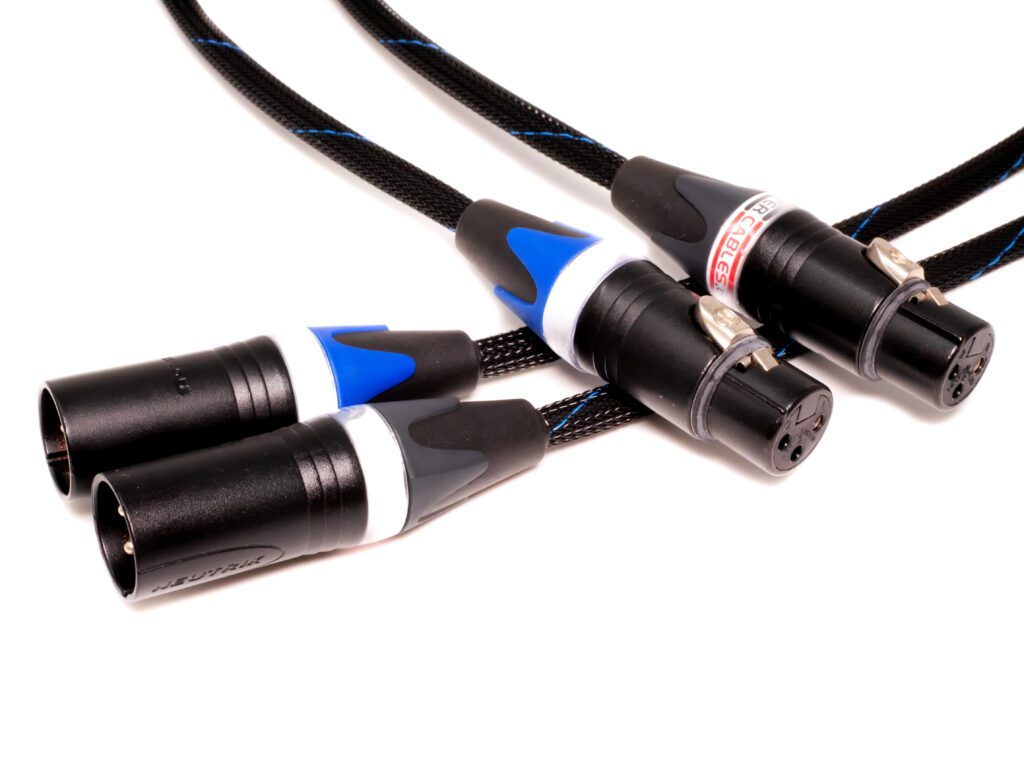
These are very detailed and analytical cables, with the XLR, in particular, having a forward, expressive presentation. I made some quick and dirty comparisons between Blue Truth Ultra using Burmester’s designs, Nordost’s Blue Heaven, and Cardas Clear when connecting a Burmester 088 preamp and 911 Mk 3 power amplifier. This might seem like over-egging the pudding (using a relatively inexpensive XLR cable between two Top Line products costing just this side of £40,000). Still, it exposed the cable and highlighted any issues it might have… and the Blue Truth Ultra didn’t let the side down. In many respects, Blue Truth Ultra went toe-to-toe with Nordost Blue Heaven, although the additional speed and poise of the Nordost design ultimately showed what spending more buys you. Similarly, the Cardas Clear XLR retained a greater sense of musical refinement and naturalness that Blue Truth Ultra can only hint at.
Substantial
If anything, the changes brought about by the USB cable were even more substantial than with the XLR. This is perhaps understandable given that XLR’s pro audio use eliminates noise across long cables, so any cable characteristics are also likely minimised. But XLR’s inherent noise-busting notwithstanding, the improvement Blue Truth brought to USB was marked. Like its Ultra analogue sibling, Blue Truth is extremely detailed across the board, with extremely clean treble and deep, stentorian bass. Unlike the XLR cable, Blue Truth USB has a sense of effortless refinement and ‘listenability’ that is at odds with Blue Truth Ultra XLR’s more expressive presentation. Both are also good at broad-brushstroke dynamic range and close-combat microdynamics. However, I’d give the XLR the edge in the macrodynamic world, and the USB takes the microdynamic prize.
This brings me to my only caveat with Blue Truth in general; while USB is usually outside the purview of ‘cable loom’ thinking, the sonic difference between USB and both XLR and loudspeaker cable is marked. The USB is more rounded and relaxed than the forward nature of the analogue cables that carry the same name. I’d go so far as to say those who like Blue Truth USB might not be as smitten with Blue Truth Ultra XLR and vice versa. They are both equally good in outright terms but different.
Not filters
OK, so if you are wanting your cables to be filters these are not the cables for you. And if you are looking for that ‘the whole is greater than the sum of the parts’ synergy, you’ll need to keep looking (and probably looking at an order of magnitude more expensive). But both Blue Truth cables offer a glimpse into a much bigger world of high-end cable design, with both the XLR and USB punching above their respective weight classes.
Better Cables has come up with the goods with Blue Truth Ultra XLR and Blue Truth USB but – in my opinion – especially the latter. Both represent fine introductions to the world of high-end cables without necessarily spending high-end bucks. Of the two, I find the USB to be the show’s real star, but the XLR is no slouch either and, after a good run-in, does the Better Cables ‘punching up’ thing well. Both are well worth seeking out!
Price and Contact details
- Blue Truth Ultra XLR: $239.95/1m pair as tested
- Blue Truth USB: $169.95/1.5m as tested
Manufacturer:
Better Cables
URL: bettercables.com
The post Better Cables Blue Truth/Blue Truth Ultra appeared first on Hi-Fi+.
